
2.03 The GDR and reunification
The test is held only in German. This lesson explains everything in your language and shows the German terms in brackets – learn them, because exactly these words appear in the test.
In this lesson you learn what life was like in the GDR (DDR) and how Germany became one state again in 1990. You also learn important symbols and numbers about Germany today.
The GDR: a state without freedom
The GDR (DDR, Deutsche Demokratische Republik, German Democratic Republic) existed from 1949 to 1990. It was a dictatorship (Diktatur). In a dictatorship there are no free elections and no freedom of opinion (Meinungsfreiheit). One party, the SED (Sozialistische Einheitspartei Deutschlands), had all the power.
The GDR had a secret service (Geheimdienst). A secret service secretly collects information about people. It was called the Ministry for State Security (Ministerium für Staatssicherheit), or "Stasi" („Stasi“) for short. The Stasi watched many citizens. It arrested people who were against the government.
The economy of the GDR was a planned economy (Planwirtschaft). This means: the state planned what was produced and how much. Supply and demand (Angebot und Nachfrage) were not important. In the West, on the other hand, there was the market economy (Marktwirtschaft).
In the Cold War (Kalter Krieg), the GDR belonged to the East. The Cold War was the long conflict between East and West without a direct war. The GDR was a member of the Warsaw Pact (Warschauer Pakt). This was the military alliance of the Soviet Union and its partners. The Federal Republic (Bundesrepublik), on the other hand, belonged to NATO.
Symbols of the GDR

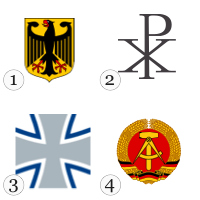
The coat of arms of the GDR (Wappen der DDR) showed a hammer (Hammer) and a compass (Zirkel) in a wreath of ears of grain (Ährenkranz). The wreath of grain was wrapped in a black-red-gold ribbon. This symbol was also in the middle of the GDR flag. Do not mix it up with other symbols: the black eagle (Adler) on a yellow background is the coat of arms of the Federal Republic. The cross with a blue edge is the symbol of the German armed forces (Bundeswehr).
Uprising, Wall and Ostpolitik
On 17 June 1953 (17. Juni 1953), there were strikes and a popular uprising (Streiks und ein Volksaufstand) all over the GDR (DDR). People protested against high work quotas and for freedom. Soviet soldiers ended the uprising with violence.
In 1961, the GDR built a wall (Mauer) through Berlin. From 1961 to 1989, Berlin was divided by a wall (durch eine Mauer geteilt). People from East Berlin (Ost-Berlin) were no longer allowed to go to the western part of the city.
In the 1970s, Federal Chancellor (Bundeskanzler) Willy Brandt (SPD, Sozialdemokratische Partei Deutschlands) wanted better relations with the states in the East. He made treaties with the Soviet Union, Poland and the GDR. These treaties are called the "Eastern Treaties" („Ostverträge“).
1989 and 1990: the Wende and reunification
In autumn 1989, very many people in the GDR (DDR) went out into the streets. They demonstrated peacefully for freedom and free elections. On 9 November 1989 (9. November 1989), the Wall in Berlin (Mauer in Berlin) was opened for everyone.
This time is called "the turning point" („die Wende“). The GDR changed politically from a dictatorship to a democracy (von einer Diktatur zur Demokratie). In March 1990, there were free elections in the GDR for the first time.
On 3 October 1990 (3. Oktober 1990), Germany became one state again. This is called reunification (Wiedervereinigung). In this process, one state did not occupy the other. The five eastern federal states (fünf östliche Bundesländer) joined (beigetreten) the Federal Republic of Germany (Bundesrepublik Deutschland). To join (beitreten) means: to become a member. Since then, people celebrate the Day of German Unity (Tag der Deutschen Einheit) on 3 October. It is a public holiday (Feiertag).
The Federal Chancellor (Bundeskanzler) at that time was Helmut Kohl (CDU, Christlich Demokratische Union Deutschlands). He is called the "Chancellor of German Unity" („Kanzler der Deutschen Einheit“).
With this accession, the new federal states also belong to the European Union (Europäische Union). Since 1990, Germany has had the borders it has today.
The five new federal states
Five of today's federal states (Bundesländer) used to be part of the territory of the GDR. They are often called the "new federal states" („neue Bundesländer“):
- Mecklenburg-Western Pomerania (Mecklenburg-Vorpommern)
- Brandenburg
- Saxony (Sachsen)
- Saxony-Anhalt (Sachsen-Anhalt)
- Thuringia (Thüringen)
East Berlin (Ost-Berlin) was also part of the GDR. States like Bavaria (Bayern), Hesse (Hessen), Lower Saxony (Niedersachsen), Schleswig-Holstein, Bremen, Saarland or North Rhine-Westphalia (Nordrhein-Westfalen) always belonged to the West. Be careful: not every state with "Sachsen" in its name is in the East. Lower Saxony (Niedersachsen) is in the West.
Germany today and remembrance
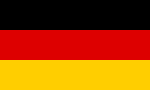
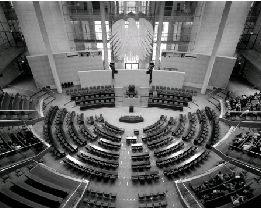
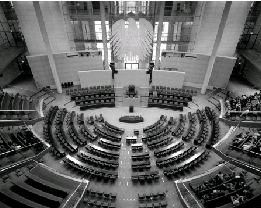
The full name of the country is Federal Republic of Germany (Bundesrepublik Deutschland). About 83 million people live in Germany. The flag is black-red-gold (schwarz-rot-gold). In the plenary hall (Plenarsaal) of the Bundestag hangs the Federal Eagle (Bundesadler). The plenary hall is the large hall where the members of parliament (Abgeordnete) meet.
Germany remembers the victims of National Socialism (Nationalsozialismus). 27 January (27. Januar) is an official day of remembrance (Gedenktag). On this day in 1945, the extermination camp (Vernichtungslager) Auschwitz was liberated.
In many cities there are "stumbling stones" („Stolpersteine“). These are small brass plates in the pavement. They lie in front of houses where victims of National Socialism lived. Each stone shows the name and the fate of one person.
Key points to remember
- The GDR (DDR) existed from 1949 to 1990. It was a dictatorship (Diktatur) with a planned economy (Planwirtschaft).
- The "Stasi" was the Ministry for State Security (Ministerium für Staatssicherheit), the secret service (Geheimdienst) of the GDR.
- The GDR was in the Warsaw Pact (Warschauer Pakt). Its coat of arms: hammer and compass in a wreath of ears of grain (Hammer und Zirkel im Ährenkranz).
- 17 June 1953: strikes and a popular uprising (Volksaufstand) in the GDR.
- From 1961 to 1989, Berlin was divided by a wall (Mauer). In 1989, the Wall was opened.
- The turning point (Wende) in 1989: from dictatorship to democracy.
- 3 October 1990: five federal states joined (beitreten) the Federal Republic. Day of German Unity (Tag der Deutschen Einheit).
- New federal states (neue Bundesländer): Mecklenburg-Vorpommern, Brandenburg, Sachsen, Sachsen-Anhalt, Thüringen.
- Willy Brandt stands for the Eastern Treaties (Ostverträge), Helmut Kohl is the "Chancellor of German Unity" („Kanzler der Deutschen Einheit“).
- Germany: about 83 million inhabitants, flag black-red-gold (schwarz-rot-gold), borders since 1990. 27 January and the stumbling stones (Stolpersteine) remind us of the victims of National Socialism (Nationalsozialismus).
Important German words
- die Diktatur – the dictatorship
- A state where one person or one party rules alone. There are no free elections.
- die Planwirtschaft – the planned economy
- The state plans and controls the whole economy.
- der Geheimdienst – the secret service
- An authority that secretly collects information.
- die Wende – the turning point
- The political change in the GDR in autumn 1989.
- die Wiedervereinigung – reunification
- The unification of the GDR and the Federal Republic on 3 October 1990.
- beitreten – to join
- To become a member of a group, a club or a state.
- der Gedenktag – the day of remembrance
- A day when people remember important events or victims.
- der Stolperstein – the stumbling stone
- A small memorial plate in the pavement for a victim of National Socialism.
Read the lesson first, then practise the official questions in German.
Practice Questions (30)Practice Questions (30)
-
Question 1 of 30
Wann wurde die Mauer in Berlin für alle geöffnet?
-
Question 2 of 30
Welches heutige deutsche Bundesland gehörte früher zum Gebiet der DDR?
-
Question 3 of 30
Von 1961 bis 1989 war Berlin …
-
Question 4 of 30
Am 3. Oktober feiert man in Deutschland den Tag der Deutschen …
-
Question 5 of 30
Welches heutige deutsche Bundesland gehörte früher zum Gebiet der DDR?
-
Question 6 of 30
Warum nennt man die Zeit im Herbst 1989 in der DDR „Die Wende“? In dieser Zeit veränderte sich die DDR politisch …
-
Question 7 of 30
Welches heutige deutsche Bundesland gehörte früher zum Gebiet der DDR?
-
Question 8 of 30
Welches heutige deutsche Bundesland gehörte früher zum Gebiet der DDR?
-
Question 9 of 30
Mit der Abkürzung „Stasi“ meinte man in der DDR …
-
Question 10 of 30
Welches heutige deutsche Bundesland gehörte früher zum Gebiet der DDR?
-
Question 11 of 30
Welche der folgenden Auflistungen enthält nur Bundesländer, die zum Gebiet der früheren DDR gehörten?
-
Question 12 of 30
Zu wem gehörte die DDR im „Kalten Krieg“?
-
Question 13 of 30
Wie hieß das Wirtschaftssystem der DDR?
-
Question 14 of 30
Wie wurden die Bundesrepublik Deutschland und die DDR zu einem Staat?
-
Question 15 of 30
Mit dem Beitritt der DDR zur Bundesrepublik Deutschland gehören die neuen Bundesländer nun auch …
-
Question 16 of 30
Woran erinnern die sogenannten „Stolpersteine“ in Deutschland?
-
Question 17 of 30
In welchem Militärbündnis war die DDR Mitglied?
-
Question 18 of 30
Was war die „Stasi“?
-
Question 19 of 30
Welches war das Wappen der Deutschen Demokratischen Republik?
-
Question 20 of 30
Was ereignete sich am 17. Juni 1953 in der DDR?
-
Question 21 of 30
Welcher Politiker steht für die „Ostverträge“?
-
Question 22 of 30
Wie heißt Deutschland mit vollem Namen?
-
Question 23 of 30
Wie viele Einwohner hat Deutschland?
-
Question 24 of 30
Welche Farben hat die deutsche Flagge?
-
Question 25 of 30
Wer wird als „Kanzler der Deutschen Einheit“ bezeichnet?
-
Question 26 of 30
Welches Symbol ist im Plenarsaal des Deutschen Bundestages zu sehen?
-
Question 27 of 30
In welchem Zeitraum gab es die Deutsche Demokratische Republik (DDR)?
-
Question 28 of 30
Wie viele Bundesländer kamen bei der Wiedervereinigung 1990 zur Bundesrepublik Deutschland hinzu?
-
Question 29 of 30
Die Bundesrepublik Deutschland hat die Grenzen von heute seit …
-
Question 30 of 30
Der 27. Januar ist in Deutschland ein offizieller Gedenktag. Woran erinnert dieser Tag?