
2.04 Germany in Europe
The test is held only in German. This lesson explains everything in your language and shows the German terms in brackets – learn them, because exactly these words appear in the test.
In this lesson you learn where Germany is in Europe and what role it plays in the European Union (Europäische Union). You get to know the neighbouring countries, the most important treaties and the European Parliament (Europäisches Parlament).
Germany's neighbouring countries
Germany is in the middle of Europe. It has nine neighbouring countries (neun Nachbarländer). A neighbouring country has a shared border with Germany.
- in the north: Denmark (Dänemark)
- in the east: Poland (Polen) and Czechia (Tschechien)
- in the south: Austria (Österreich) and Switzerland (Schweiz)
- in the west: France (Frankreich), Luxembourg (Luxemburg), Belgium (Belgien) and the Netherlands (Niederlande)
Countries like Spain (Spanien), Portugal, Hungary (Ungarn), Romania (Rumänien), Bulgaria (Bulgarien), Greece (Griechenland), Norway (Norwegen), Sweden (Schweden) or Finland (Finnland) are not neighbouring countries. They do not have a shared border with Germany.
In Austria (Österreich), almost all people speak German. German is also spoken in one part of Switzerland (Schweiz).
How the European Union began
After two world wars, the states in Europe wanted one thing above all: peace (Frieden). They wanted to work together instead of fighting each other. This union of European states is called European integration (europäische Integration). Here, integration means: the states grow together into one community.
In 1957, six states signed the "Treaties of Rome" („Römische Verträge“) in Rome. The Federal Republic of Germany (Bundesrepublik Deutschland) was one of them. With these treaties, they founded the European Economic Community (EEC) (Europäische Wirtschaftsgemeinschaft, EWG). This is why the 50th anniversary of the treaties was celebrated in 2007. The EEC later became the European Union (Europäische Union). The abbreviation EU means European Union.
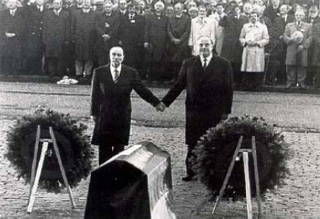
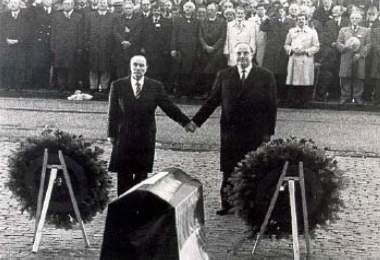
An important image for peace in Europe comes from the year 1984. The French President François Mitterrand and the German Federal Chancellor (Bundeskanzler) Helmut Kohl stood together in Verdun and held hands. In the First World War (Erster Weltkrieg), there was a very bloody battle in Verdun. The two politicians remembered the dead of both world wars together. The image shows one goal of the EU: peace and security (Frieden und Sicherheit) in the countries of the EU.
The EU today
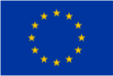
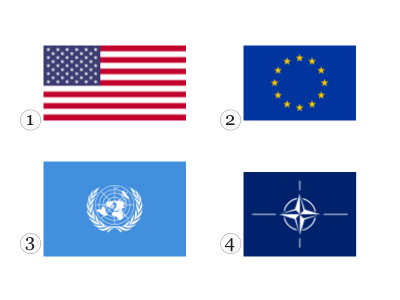
Today the EU has 27 member states (27 Mitgliedstaaten). Its flag is blue. On it there are twelve golden stars (zwölf goldene Sterne) in a circle. Do not mix it up with other flags: the flag of the United Nations (Vereinte Nationen) is light blue with a white map of the world. The flag of NATO is dark blue with a white star like on a compass.
Since 3 October 1990, the east of Germany has also been part of the EU. At that time, the GDR (DDR) joined (beigetreten) the Federal Republic. This accession is generally called German reunification (Deutsche Wiedervereinigung).
Germany is also a member of the Schengen Agreement (Schengener Abkommen). An agreement (Abkommen) is a treaty between states. This means: Germans can travel to many countries in Europe without passport control (ohne Passkontrolle). But this is not true for every country in the world. And it also does not mean that every person may enter Germany without a check.
The euro
In Germany, people have paid in cash (bar) with the euro (Euro) since 2002. Cash means: with coins and banknotes. Before that, the Deutsche Mark was the money in Germany. Not all countries of the EU have the euro. And not every country in the Schengen area (Schengen-Raum) has the euro. So Schengen and the euro are two different things.
The European Parliament
The citizens of the EU elect the European Parliament (Europäisches Parlament). This election is called the European election (Europawahl). It takes place every five years (alle fünf Jahre). In the European election, you elect the members of the European Parliament (Abgeordnete des Europäischen Parlaments). A member of parliament (Abgeordneter) is an elected representative of the people.
You do not vote directly for the European Commission (Europäische Kommission) in the European election. The Commission is something like the government of the EU.
The seat (Sitz) of the European Parliament is Strasbourg (Straßburg) in France. The seat is the official main location. But the Parliament works in three places: in Strasbourg, in Luxembourg (Luxemburg) and in Brussels (Brüssel).
Key points to remember
- Nine neighbouring countries (Nachbarländer): Denmark, Poland, Czechia, Austria, Switzerland, France, Luxembourg, Belgium, the Netherlands.
- In Austria (Österreich), there is a large German-speaking population.
- EU means European Union (Europäische Union). Today it has 27 member states (Mitgliedstaaten).
- The EU flag is blue with twelve golden stars (zwölf goldene Sterne) in a circle.
- European integration (europäische Integration) is the union of European states into the EU. Its goal is peace and security (Frieden und Sicherheit).
- The "Treaties of Rome" („Römische Verträge“) of 1957 founded the European Economic Community (Europäische Wirtschaftsgemeinschaft, EWG).
- Schengen (Schengener Abkommen): Germans can travel to many countries in Europe without passport control (ohne Passkontrolle).
- The euro as cash (Bargeld) has existed in Germany since 2002.
- The European election (Europawahl) is every five years. You elect the members of the European Parliament (Abgeordnete des Europäischen Parlaments).
- Seat (Sitz) of the Parliament: Strasbourg (Straßburg). Places of work: Strasbourg, Luxembourg (Luxemburg) and Brussels (Brüssel).
Important German words
- das Nachbarland – the neighbouring country
- A country that has a shared border with another country.
- die Europäische Union (EU) – the European Union (EU)
- A union of 27 states in Europe.
- der Mitgliedstaat – the member state
- A state that is a member of a community like the EU.
- die europäische Integration – European integration
- The growing together of the European states into the EU.
- das Abkommen – the agreement
- A treaty between two or more states.
- die Passkontrolle – the passport control
- The check of ID cards or passports at a border.
- die Europawahl – the European election
- The election to the European Parliament every five years.
- der Sitz – the seat
- The official main location of an institution.
Read the lesson first, then practise the official questions in German.
Practice Questions (20)Practice Questions (20)
-
Question 1 of 20
Deutschland ist Mitglied des Schengener Abkommens. Was bedeutet das?
-
Question 2 of 20
Welches Land ist ein Nachbarland von Deutschland?
-
Question 3 of 20
Welches Land ist ein Nachbarland von Deutschland?
-
Question 4 of 20
Was bedeutet die Abkürzung EU?
-
Question 5 of 20
In welchem anderen Land gibt es eine große deutschsprachige Bevölkerung?
-
Question 6 of 20
Welche ist die Flagge der Europäischen Union?
-
Question 7 of 20
Welches Land ist ein Nachbarland von Deutschland?
-
Question 8 of 20
Wie wird der Beitritt der DDR zur Bundesrepublik Deutschland im Jahr 1990 allgemein genannt?
-
Question 9 of 20
Welches Land ist ein Nachbarland von Deutschland?
-
Question 10 of 20
Das Europäische Parlament wird regelmäßig gewählt, nämlich alle …
-
Question 11 of 20
Was bedeutet der Begriff „europäische Integration“?
-
Question 12 of 20
Wer wird bei der Europawahl gewählt?
-
Question 13 of 20
Welches Land ist ein Nachbarland von Deutschland?
-
Question 14 of 20
Wo ist der Sitz des Europäischen Parlaments?
-
Question 15 of 20
Der französische Staatspräsident François Mitterrand und der deutsche Bundeskanzler Helmut Kohl gedenken in Verdun gemeinsam der Toten beider Weltkriege. Welches Ziel der Europäischen Union wird bei diesem Treffen deutlich?
-
Question 16 of 20
Wie viele Mitgliedstaaten hat die EU heute?
-
Question 17 of 20
2007 wurde das 50-jährige Jubiläum der „Römischen Verträge“ gefeiert. Was war der Inhalt der Verträge?
-
Question 18 of 20
An welchen Orten arbeitet das Europäische Parlament?
-
Question 19 of 20
Durch welche Verträge schloss sich die Bundesrepublik Deutschland mit anderen Staaten zur Europäischen Wirtschaftsgemeinschaft zusammen?
-
Question 20 of 20
Seit wann bezahlt man in Deutschland mit dem Euro in bar?