
1.1.03 Warunki drogi i pogody
Opanuj zasady jazdy w niesprzyjających warunkach pogodowych i drogowych. Moduł ten obejmuje najważniejsze zasady bezpieczeństwa często sprawdzane na egzaminie teoretycznym.
warning Brud, błoto i olej na drodze
Nawierzchnie dróg mogą stać się niebezpiecznie śliskie nawet bez deszczu. Jest to powszechne na obszarach rolniczych lub po wypadkach. Niebezpieczeństwo polega na tym, że śliska warstwa jest często niewidoczna, dopóki nie stracisz przyczepności.
Uważaj na:
- agriculture Pojazdy rolnicze: Często pozostawiają na drodze duże kępy błota, szczególnie w okresie żniw.
- water_drop Wycieki ropy: Szukaj tęczowych połysków na asfalcie. Niezwykle śliskie.
- nature Mokre liście: Jesienią mokre liście mogą być śliskie jak lód (efekt czarnego lodu).
lightbulb Wskazówka dotycząca egzaminu
Jeśli zobaczysz znak ostrzegający o „brudnej drodze” lub „placu budowy”, właściwą odpowiedzią jest zawsze natychmiastowe zmniejszenie prędkości, a nie tylko „przygotowanie się do hamowania”.
rainy Mokre drogi i ulewny deszcz
Aquaplaning (Aquaplaning) Dzieje się tak, gdy pomiędzy kołami pojazdu a nawierzchnią drogi gromadzi się warstwa wody, co prowadzi do utraty przyczepności. Zasadniczo „unosisz się” na wodzie.
Przyczyny aquaplaningu
- Wysoka prędkość (główny czynnik)
- Zużyte opony (mała głębokość bieżnika)
- Rowki w drodze (Spurrillen)
Prawidłowa reakcja
- Do nie kieruj się gwałtownie.
- Do nie mocno hamować.
- Zdejmij nogę z pedału przyspieszenia.
- Rozłącz sprzęgło (jeśli jest ręczne).
- Poczekaj, aż opony odzyskają kontakt.
ac_unit Warunki lodowe, mroźne i zimowe
Czarny lód jest jednym z najniebezpieczniejszych warunków, ponieważ jest niewidoczny. Zachowaj szczególną ostrożność na mostach i w leśnych nawach, gdzie słońce nie dociera do drogi.
Zrób to (poprawnie)
- check_small Jedź z niską prędkością obrotową na wysokim biegu, aby zapobiec buksowaniu kół.
- check_small Delikatnie przetestuj reakcję hamulca przy niskiej prędkości, aby sprawdzić przyczepność.
- check_small Umożliwić 3x normalna droga hamowania.
Unikaj tego (źle)
- close_small Jazda na wysokich obrotach (powoduje utratę przyczepności kół).
- close_small Gwałtowne ruchy kierownicą.
- close_small Rozgrzewanie silnika na postoju (nielegalne w Niemczech).
texture Tory tramwajowe i bruk
Tory tramwajowe
Metalowe gąsienice zapewniają niemal zerową przyczepność, zwłaszcza gdy są mokre. Pojazdy dwukołowe (motocykle, rowery) są tutaj szczególnie zagrożone.
Kostka brukowa (Kopfsteinpflaster)
Powszechne w historycznych centrach niemieckich miast. Są hałaśliwe i znacznie wydłużają drogę hamowania, gdy są mokre.
foggy Mgła i widoczność
Dostosowywanie prędkości do widoczności
Złota zasada widoczności brzmi: „Jeśli widoczność wynosi X metrów, Twoja prędkość nie może przekroczyć X km/h”.
Zasada dotycząca tylnych świateł przeciwmgielnych
Tylne światło przeciwmgielne można włączyć TYLKO wtedy, gdy widoczność jest ograniczona mniej niż 50 metrów z powodu mgły.
Podstawowa zasada egzaminu
W każdej kwestii dotyczącej plucha (deszcz, mgła, śnieg) lub złe warunki drogowe (błoto, olej, liście), prawidłowa odpowiedź prawie zawsze brzmi:
- arrow_downward Znaczące zmniejszenie prędkości
- space_bar Zwiększanie bezpiecznej odległości
- visibility Przewidywanie nagłych zagrożeń
- do_not_touch Unikanie gwałtownego hamowania/kierowania
assignment Uniwersalny wzór egzaminu
W przypadku pytań dotyczących warunków drogowych poszukaj tych słów kluczowych. Często wskazują prawidłową odpowiedź.
Practice Questions (16)
-
Question 1 of 16
Gdzie należy się szczególnie liczyć z zanieczyszczoną jezdnią i niebezpieczeństwem poślizgu?
1.1.03-0013 PunktówWyjaśnienie
At junctions of dirt roads and at construction sites, the roadway is likely to be heavily soiled with soil, clay and dirt. Vehicles coming from there bring the dirt onto the road with the tread grooves of their tyres. In wet conditions, this means an increased risk of slipping.
-
Question 2 of 16
Gdzie należy się szczególnie liczyć z oblodzeniem jezdni?
1.1.03-0034 PunktówWyjaśnienie
You must expect increased icing on the road in the following areas: in damp, shady and windy locations that favour the formation of ice on the road. These include, above all, forest locations and bridges. In forests, the cold lasts longer than in open fields. Because of the shade, moisture takes longer to evaporate here. On bridges, roadways store less heat than on the ground. Bridge roadways are therefore colder and ice up faster. The moisture of the surrounding water and the increased wind due to the unprotected location also promote icing.
-
Question 3 of 16
Na jezdni znajduje się olej. Jak powinni się Państwo teraz zachować?
1.1.03-0054 Punktów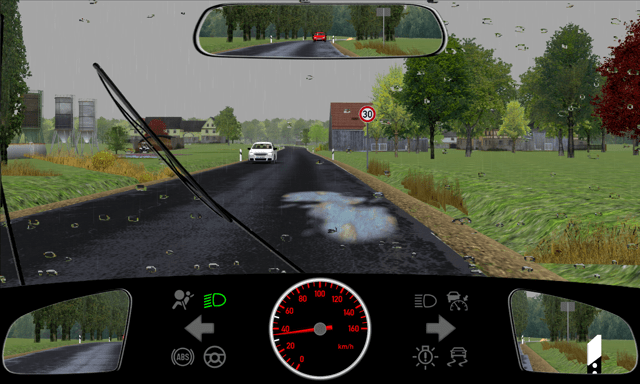
Wyjaśnienie
If there is oil on the road, avoid jerky steering and heavy braking; there is a risk of slipping. Provided other road users are not endangered, you can move to the left lane. Notify the fire brigade so that the oil can be bound.
-
Question 4 of 16
Na co muszą się Państwo tutaj nastawić?
1.1.03-0063 Punktów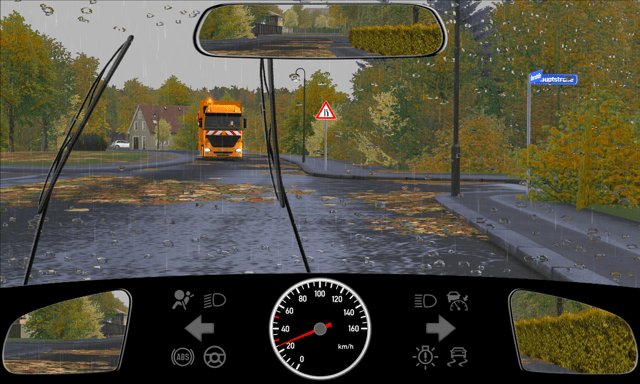
Wyjaśnienie
Due to the weather and the corresponding conditions on the road, you have to be prepared for an extended braking distance, for a vehicle coming from the right (right before left) and for a narrowed lane.
-
Question 5 of 16
Jadą Państwo po ulewnym deszczu. O czym powinni Państwo pamiętać w tej sytuacji?
1.1.03-0074 Punktów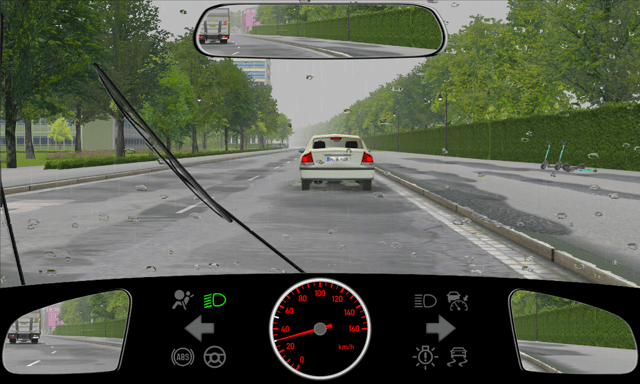
Wyjaśnienie
When it rains, your view worsens. Therefore, you should enlarge your safety distance to the vehicle in front, as your braking distance is extended. Spray water can be whirled up from the vehicle in front by a wet road. This means that bumps are difficult to recognize.
-
Question 6 of 16
Dlaczego na tej drodze należy jechać ze szczególną ostrożnością?
1.1.03-1024 Punktów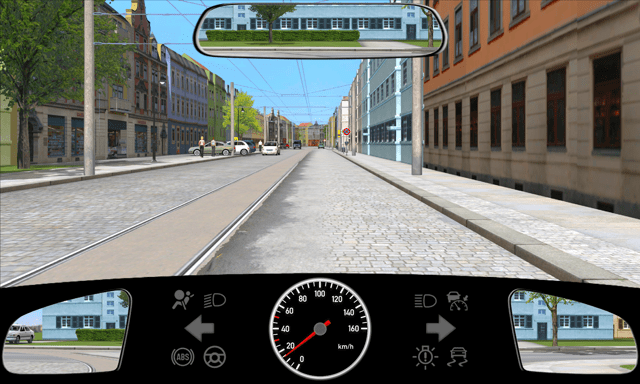
Wyjaśnienie
A tram may come towards you on the tracks, in which case the lane becomes much narrower for you. Tram tracks are also dangerous, especially when wet, because they become slippery. In addition, as there are also cobblestones, the road surface is uneven and has varying degrees of grip. This can increase the braking distance.
-
Question 7 of 16
Droga jest oblodzona na krótkim odcinku. Czego należy tu w miarę możliwosci unikać?
1.1.03-1044 PunktówWyjaśnienie
On icy roads, your tyres do not grip as well as usual. Therefore, you should avoid dangerous situations, i.e. neither brake nor accelerate abruptly. You should also refrain from sudden steering movements. This could cause your vehicle to skid. Only brake and steer away from the icy surface.
-
Question 8 of 16
W jaki sposób bez powodowania zagrożenia można podczas jazdy stwierdzić, czy droga jest oblodzona?
1.1.03-1054 PunktówWyjaśnienie
Test the condition of the road by braking carefully at low speed. Be sure to pay attention to the traffic behind you. Avoid jerking the steering or accelerating sharply. This could cause your vehicle to swerve and become uncontrollable.
-
Question 9 of 16
Dlaczego należy tu jechać szczególnie ostrożnie?
1.1.03-1083 Punktów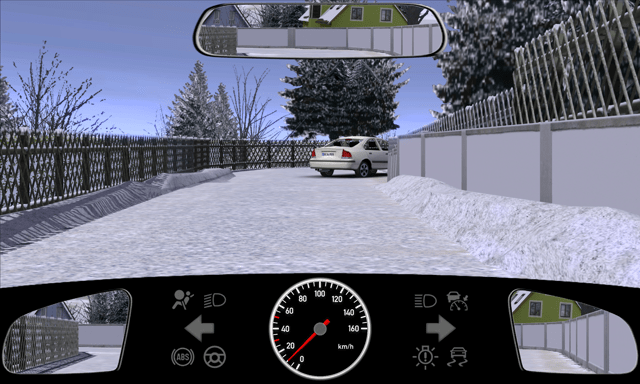
Wyjaśnienie
Snow makes the road slippery. There is a curve in front of you that is difficult to see and a car is parked there. You will have to pull out into the oncoming lane to drive around it. Therefore, drive extra carefully to be able to react at any time. In addition, your vehicle needs suitable tyres for good grip.
-
Question 10 of 16
Gdzie należy się liczyć z nagle występującą mgłą?
1.1.03-1093 PunktówWyjaśnienie
Humidity at low temperatures favours the formation of fog. Therefore, fog is more likely to occur around lakes, watercourses and rivers as well as moorland areas.
-
Question 11 of 16
Co należy zrobić, jeżeli przed Panią/Panem mgła bardzo ogranicza widoczność?
1.1.03-1104 PunktówWyjaśnienie
Adjust your speed and driving style to the visibility conditions. Make sure that you can stop within sight. If necessary, increase the safety distance to the vehicle in front. Fog with a visibility of 50 metres, for example, means that you may drive at a maximum of 50 km/h.
-
Question 12 of 16
Jak zachowają się Państwo tutaj właściwie?
1.1.03-1124 Punktów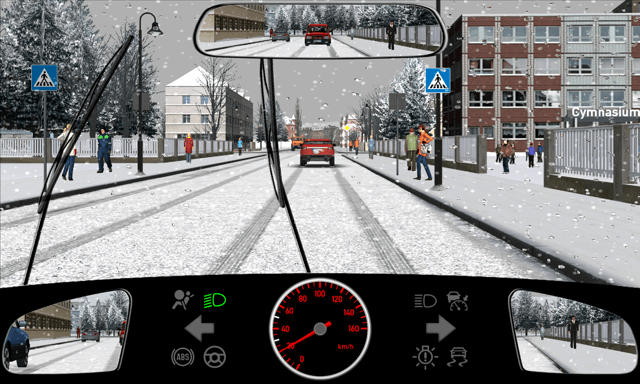
Wyjaśnienie
Even if the lane marking is not visible, the traffic signs show the presence of the pedestrian crossing. Brake carefully to prevent your vehicle from skidding.
-
Question 13 of 16
Na co musisz tutaj szczególnie uważać?
1.1.03-1144 Punktów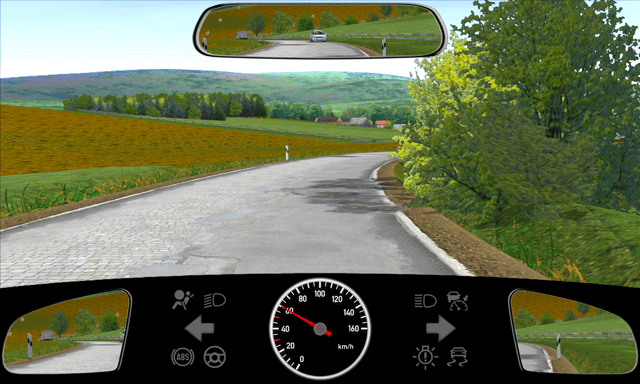
Wyjaśnienie
There is a long curve in front of you, the end of which you cannot see. A fast-moving vehicle could come towards you from there and cut your lane. The road surface is also uneven and does not have an even surface. So anticipate insufficient grip and drive at an adapted speed.
-
Question 14 of 16
Dlaczego skręt w prawo w tym miejscu może być niebezpieczny?
1.1.03-1164 Punktów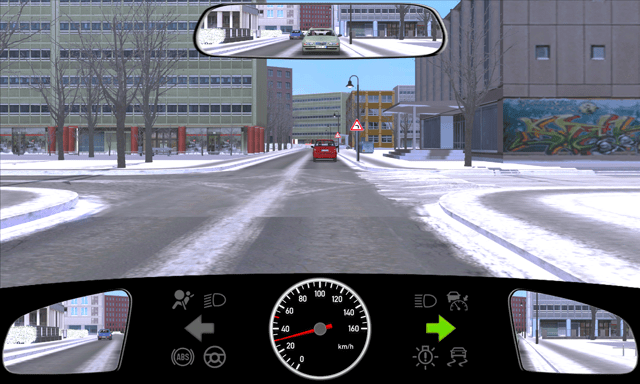
Wyjaśnienie
The winter weather makes the road slippery and increases the braking distance at the intersection. Your car or oncoming vehicles could skid or slide away uncontrollably. Therefore, reduce your speed in good time and do not brake abruptly. The road on the right is still full of snow and therefore even slicker. Watch out for pedestrians when turning. They always have priority when you turn.
-
Question 15 of 16
Jak zachowają się Państwo właściwie w tej sytuacji?
1.1.03-1203 Punktów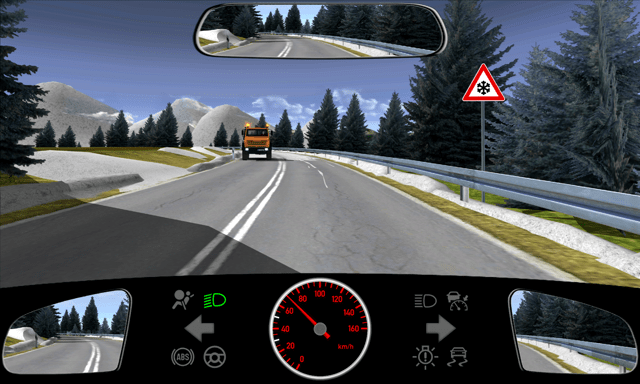
Wyjaśnienie
Drive carefully, slowly and avoid abrupt steering or braking, because slippery snow or ice can occur at any time.
-
Question 16 of 16
Podczas jazdy nagle zaczyna mocno padać. Jak powinni się Państwo zachować?
1.1.03-1214 PunktówWyjaśnienie
Extra care should be taken when driving in heavy rain. This includes adjusting speed, increasing the safe distance and avoiding heavy acceleration, which creates a risk of slipping.