
1.3.01 Vorfahrt, Vorrang
Hier lernen Sie Schritt für Schritt, wer an Kreuzungen zuerst fahren darf: Rechts vor links, Vorfahrtstraßen, Abbiegen, Kreisverkehr und mehr.
DIE GRUNDREGEL
Wenn KEIN Schild, KEINE Ampel und KEIN Polizist etwas regelt:
➡️ RECHTS VOR LINKS
Wer von RECHTS kommt, darf zuerst fahren.
🏆 Was gilt zuerst?
1. Polizei
Was der Polizist anzeigt, gilt immer zuerst.
2. Ampeln
Ampeln gehen Verkehrszeichen vor.
3. Verkehrszeichen
„Vorfahrt gewähren“, Stoppschild, Vorfahrtstraße usw.
4. Rechts vor links
Die Grundregel, wenn sonst nichts geregelt ist.
➡️ Rechts vor links
✅ Gilt hier
- An Kreuzungen ohne Vorfahrtschilder
- An Einmündungen (T-Kreuzungen) ohne Regelung
- Oft in Wohngebieten
- An kleinen Kreuzungen in der Stadt
❌ Gilt NICHT
- An Vorfahrtstraßen
- Im Kreisverkehr mit Schildern
- Wo Feld- oder Waldwege auf eine Straße treffen
- An Grundstücksausfahrten, abgesenkten Bordsteinen und am Ende eines verkehrsberuhigten Bereichs
⚠️ Wichtige Ausnahmen
Feld- und Waldwege
Wer aus einem Feld- oder Waldweg auf die Straße fährt, muss immer Vorfahrt gewähren.
Aus einer Ausfahrt
Fahren Sie aus einem Grundstück oder über einen abgesenkten Bordstein auf die Straße, haben alle anderen Vorrang.
Kreisverkehr
Wer schon im Kreisverkehr fährt, hat in der Regel Vorfahrt.
🔄 Richtig abbiegen
↩️ Links abbiegen
- Lassen Sie den Gegenverkehr durchfahren
- Auch entgegenkommende Radfahrer, die geradeaus fahren
- Auch Straßenbahnen, die geradeaus fahren
- Warten Sie, bis der Weg frei ist
↪️ Rechts abbiegen
- Achten Sie auf Radfahrer rechts neben oder hinter Ihnen
- Lassen Sie Fußgänger über die Straße gehen
- Schauen Sie gründlich in die Spiegel – und über die Schulter
- Beachten Sie die Vorfahrtstraße
🛣 Die Vorfahrtstraße
Auf der Vorfahrtstraße bleiben
Wer auf der Vorfahrtstraße bleibt, darf zuerst fahren.
Von der Vorfahrtstraße abbiegen
Biegen Sie links ab, müssen Sie trotzdem den Gegenverkehr durchfahren lassen.
Auf die Vorfahrtstraße einbiegen
Wer einbiegt, muss warten – und auf Fahrzeuge von links und von rechts achten. Ist die Sicht schlecht, tasten Sie sich vorsichtig in die Kreuzung hinein.
⭕ Im Kreisverkehr
✅ Richtig
- Vor dem Einfahren Vorfahrt gewähren
- Wer schon im Kreis fährt, hat Vorfahrt
- Beim Ausfahren blinken
❌ Falsch
- Zu schnell einfahren
- Das Blinken beim Ausfahren vergessen
- Radfahrer übersehen
🧠 Eselsbrücken
Von rechts = zuerst
Linksabbieger warten
Vorfahrtstraße schlägt Nebenstraße
Unklar, wer darf? Warten, beobachten und sich mit den anderen verständigen
📚 Wer darf zuerst?
| Situation | Wer hat Vorfahrt? |
|---|---|
| Kreuzung ohne Schilder | Wer von rechts kommt |
| Sie biegen links ab | Der Gegenverkehr |
| Sie fahren in den Kreisverkehr ein | Wer schon im Kreis fährt |
| Sie fahren aus einer Grundstücksausfahrt | Alle anderen |
| Vorfahrtstraße trifft Nebenstraße | Wer auf der Vorfahrtstraße fährt |
🎯 Tipps für die Prüfung
✅ Merken Sie sich
- „Rechts vor links“ ist die Grundregel
- Linksabbieger lassen den Gegenverkehr durch
- Achten Sie immer auf die Vorfahrtschilder
- Behalten Sie Radfahrer und Straßenbahnen im Blick
❌ Typische Fehler
- Radfahrer von rechts übersehen
- Beim Abbiegen vergessen, wer durchfahren darf
- Eine Nebenstraße für gleichrangig halten
- Zu schnell in unübersichtliche Kreuzungen fahren
Übungsfragen (47)
-
Frage 1 von 47
An welchen Stellen ohne vorfahrtregelnde Verkehrszeichen gilt die Regel „rechts vor links“?
1.3.01-0015 PunkteErklärung
At intersections and T-junctions without a traffic-regulating traffic sign "left yields to right" applies. If a vehicle leaves a property or a restricted traffic area, all other road users, including pedestrians and children on the sidewalk, have priority.
-
Frage 2 von 47
An welchen Stellen ohne vorfahrtregelnde Verkehrszeichen gilt die Regel „rechts vor links“?
1.3.01-0025 PunkteErklärung
At intersections and T-junctions without priority signs, the vehicles coming from the right have priority. The same applies to roads that are equally ranked according to their signage. Lanes with drop kerb, drives as well as field and forest trails are an exception. If you are on one of these roads, you must give priority to other road users.
-
Frage 3 von 47
Sie kommen an eine Kreuzung, an der Sie die Vorfahrtlage nicht gleich überblicken. Wie verhalten Sie sich?
1.3.01-0035 PunkteErklärung
There are situations that are difficult to understand in terms of the right of way. If this happens to you wait and watch other car drivers. If the situation remains difficult, you can communicate with each other by clear hand signals. To simply continue straight ahead or act according to the rule "left yields to right" would be too risky and accident-prone.
-
Frage 4 von 47
Welches Verhalten ist richtig?
1.3.01-0075 Punkte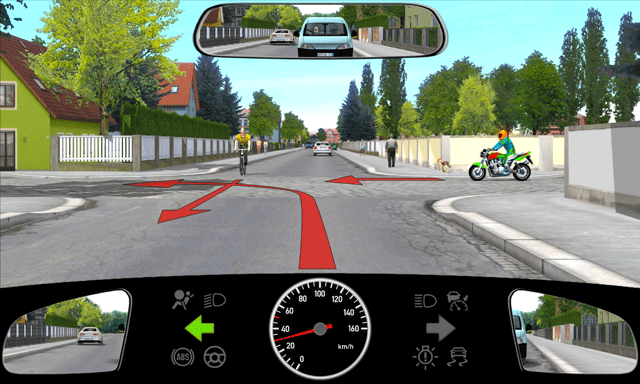
Erklärung
It is necessary to comply to the left yields to right rule. Grant the motorcyclist from the right the right of way before entering the intersection. Next, you as a left-turning driver, have to give priority to the oncoming cyclist. For the motorcyclist the cyclist comes from the right and thus has priority.
-
Frage 5 von 47
Welches Verhalten ist richtig?
1.3.01-0135 Punkte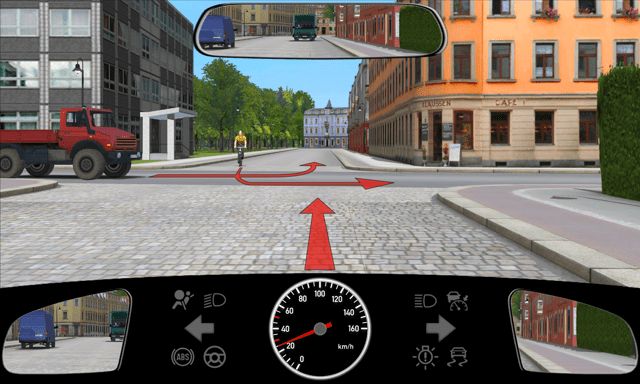
Erklärung
Left yields to right applies in intersections and T-junctions without a traffic sign. Since no vehicle comes from the right, you may first cross the intersection. After that the truck drives and finally the cyclist.
-
Frage 6 von 47
Welches Verhalten ist richtig?
1.3.01-0165 Punkte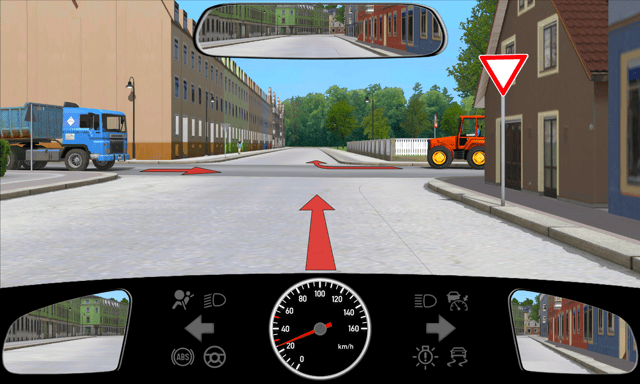
Erklärung
The traffic sign "Give way" regulates the right of way here. That means you have to wait and let both, the right and left vehicle, pass.
-
Frage 7 von 47
Welches Verhalten ist richtig?
1.3.01-0175 Punkte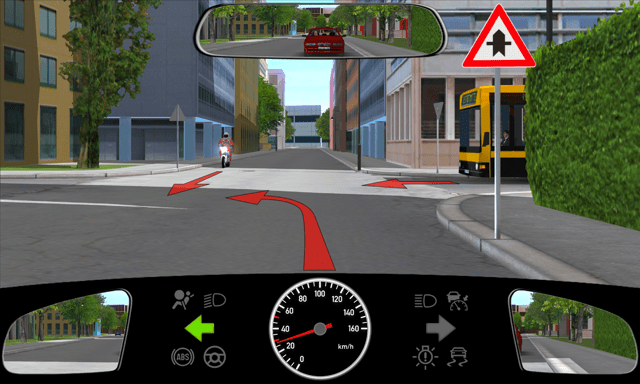
Erklärung
Here the traffic sign "right of way at the next intersection or T-junction" applies. Since you want to turn left you will have to let the oncoming vehicle pass. You may then turn in front of the vehicle coming from the right.
-
Frage 8 von 47
Welches Verhalten ist richtig?
1.3.01-0185 Punkte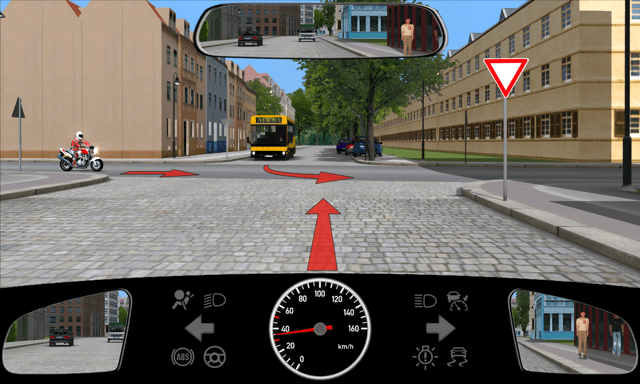
Erklärung
The traffic sign "Give way" suspends the left yields to right regulation. Thus, the motorcycle coming from the left has priority. You have to wait. Then the left-turning driver of the oncoming traffic must first let you cross the intersection before he can turn.
-
Frage 9 von 47
Welches Verhalten ist richtig?
1.3.01-0215 Punkte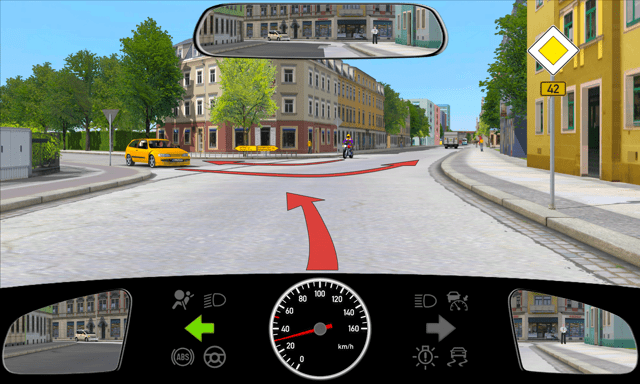
Erklärung
The traffic sign stands for a "priority road". You may therefore turn in front of the vehicle coming from the left. First, however, you must let the oncoming vehicle turn, because you have to wait as a left-turning driver.
-
Frage 10 von 47
Wie verhalten Sie sich hier richtig?
1.3.01-0345 Punkte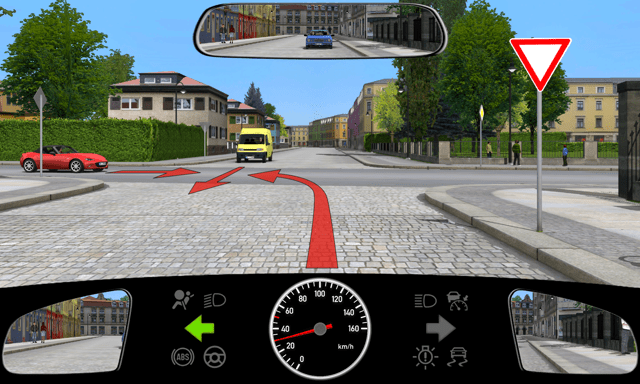
Erklärung
The right-of-way rule says that you have to let the yellow vehicle drive through.
-
Frage 11 von 47
Welches Verhalten ist richtig?
1.3.01-0355 Punkte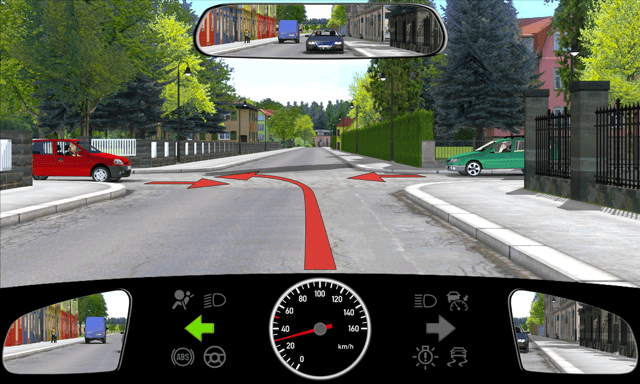
Erklärung
Since there are no signs at this intersection, which determine the priority of the drivers, the right of way "left yields to right" applies. For this reason, you need to let the car on your right pass first. Afterwards, the driver on the left has to give you the right of way.
-
Frage 12 von 47
Welches Verhalten ist richtig?
1.3.01-0385 Punkte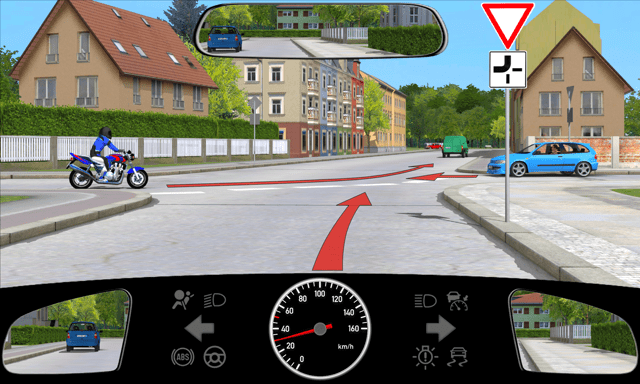
Erklärung
According to the signage, the motorcyclist is on the priority road and is therefore allowed to drive first. Both the driver of the blue car and you are on a lane with the "Give way" sign. As this does not clear up the situation, "left yields to right" applies. For this reason, you have to let the other vehicle drive through.
-
Frage 13 von 47
Wer darf hier zuerst fahren?
1.3.01-0395 Punkte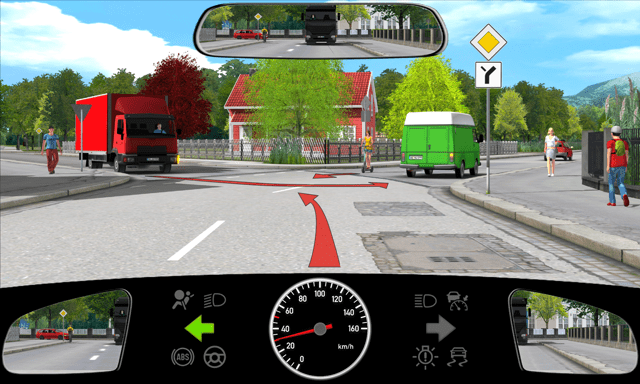
Erklärung
The electric scooter follows the priority road and therefore has the right of way.
-
Frage 14 von 47
Welches Verhalten ist hier richtig?
1.3.01-0405 Punkte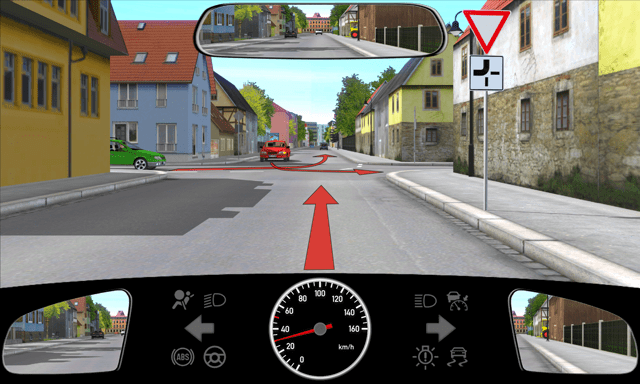
Erklärung
The green and red cars are on a turning main road. You are on the secondary road. The green car remains on the main road, which means that the green car is allowed to drive first, then the red car and you are allowed to drive last.
-
Frage 15 von 47
Welches Verhalten ist hier richtig?
1.3.01-0415 Punkte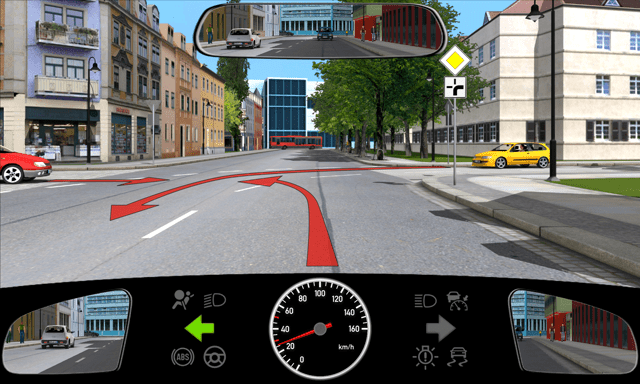
Erklärung
You and the yellow car are on a turning main road. The red car is on a secondary road. Because the yellow car remains on the main road, it is allowed to drive first. You may drive second and the red car can drive last.
-
Frage 16 von 47
Welches Verhalten ist richtig?
1.3.01-0425 Punkte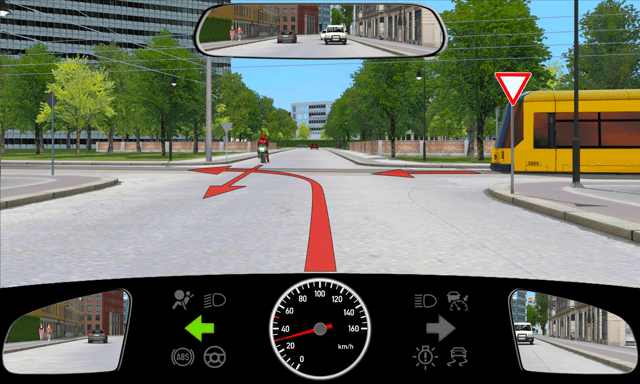
Erklärung
The sign at the intersection indicates that you must give way. Since you want to turn left, you must let the tram as well as the oncoming motorbike pass and enter the intersection last.
-
Frage 17 von 47
Welches Verhalten ist hier richtig?
1.3.01-0435 Punkte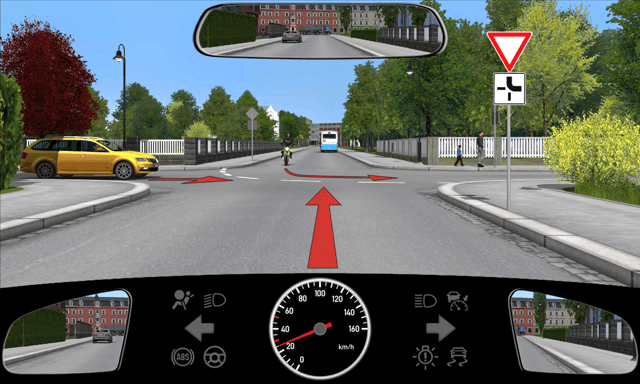
Erklärung
The motorbike is on a turning main road and is allowed to turn in front of the yellow car and you. According to the "right before left" rule at crossroads, you may drive in front of the yellow car.
-
Frage 18 von 47
Welches Verhalten ist hier richtig?
1.3.01-0445 Punkte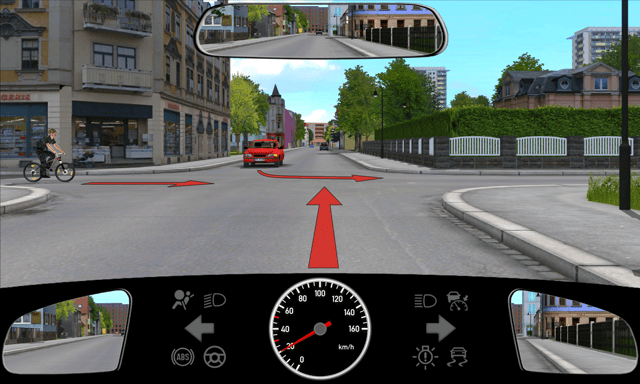
Erklärung
At this intersection applies to the right before left. So you can drive first. "Right before left" applies to intersections where the right of way is not regulated by signs, traffic lights or traffic police officers.
-
Frage 19 von 47
Welches Verhalten ist hier richtig?
1.3.01-0455 Punkte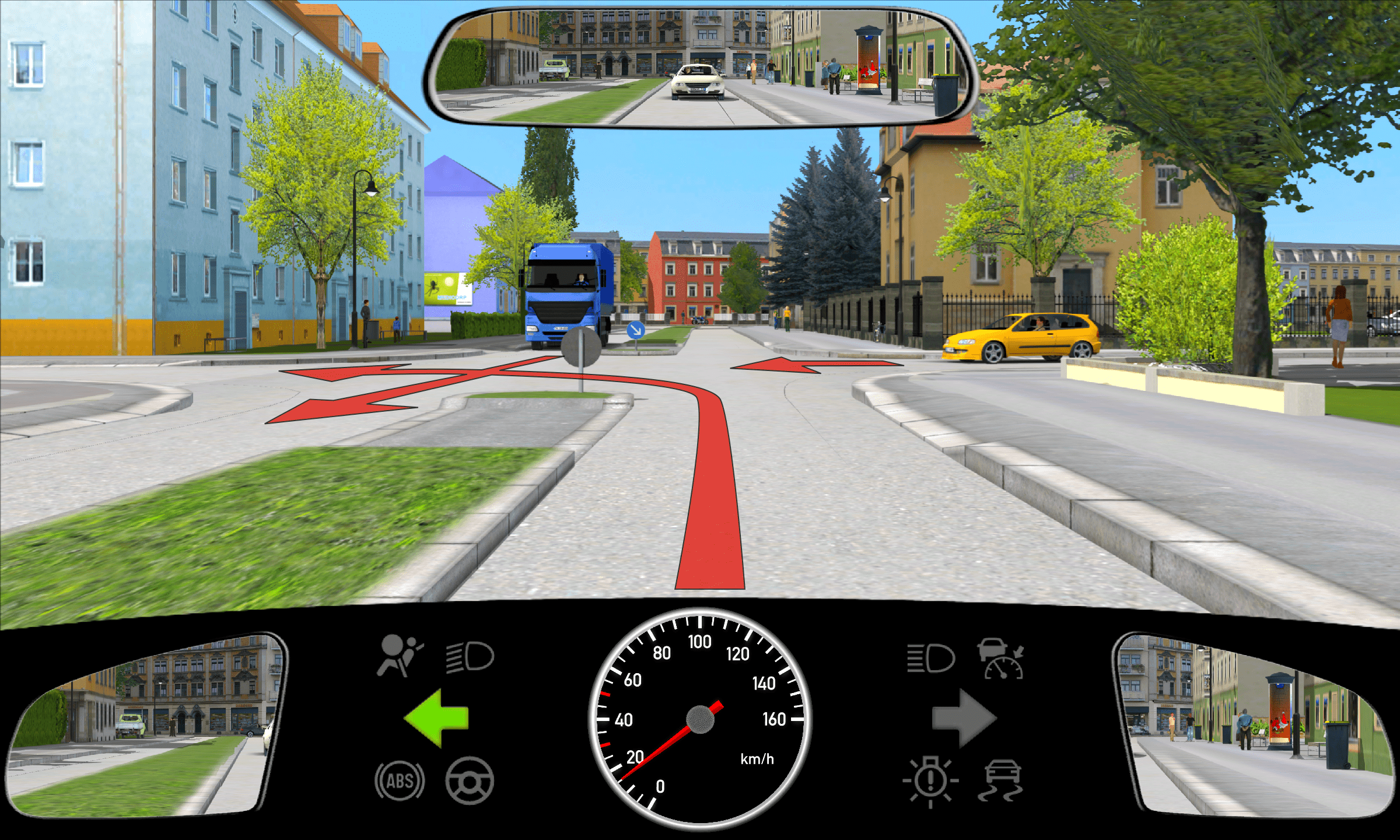
Erklärung
At this junction, the right before left rule applies, which means that you must let the yellow vehicle pass. You must also let the lorry through, as you want to turn left and the lorry wants to continue straight ahead in its lane.
-
Frage 20 von 47
Welches Verhalten ist richtig?
1.3.01-0465 Punkte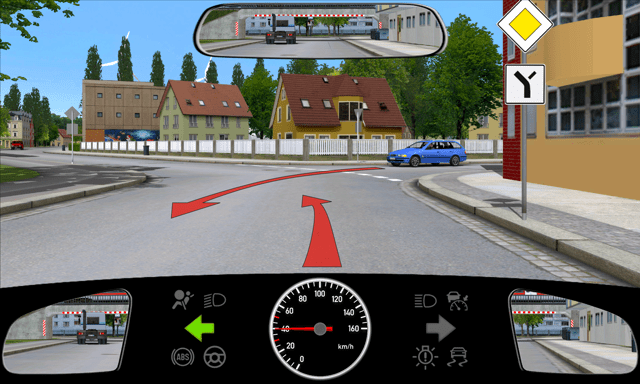
Erklärung
You are on the turning priority road and follow its course. Therefore, you must drive first and the other vehicle must wait.
-
Frage 21 von 47
Welches Verhalten ist hier richtig?
1.3.01-0475 Punkte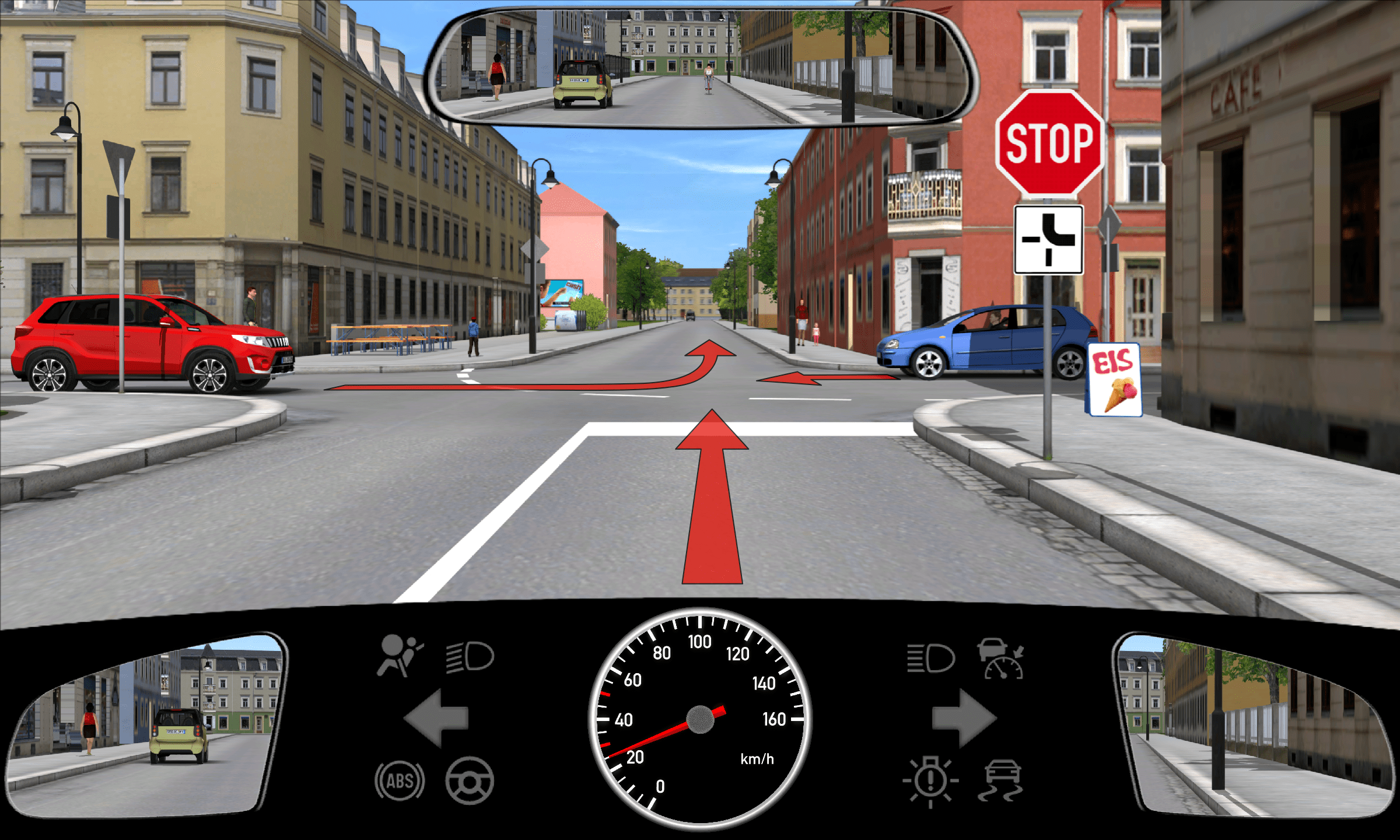
Erklärung
You are approaching a priority road that is about to turn. As you are coming from a side road, you must allow the blue car leaving the priority road to pass. You must also stop at a stop sign at the stop line before you are allowed to enter the junction.
-
Frage 22 von 47
Welches Verhalten ist richtig?
1.3.01-0485 Punkte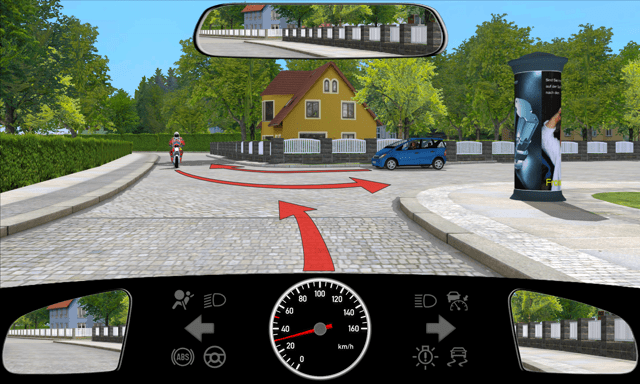
Erklärung
At an intersection, which has no traffic signs, "left yields to right" applies. If a car drives from the right wants to turn right, he is allowed to drive first and you have to wait. On the other hand, if a vehicle approaching you wants to turn left, you have the right of way, because if a driver wants to turn, must always give priority to oncoming traffic.
-
Frage 23 von 47
Welches Verhalten ist richtig?
1.3.01-0495 Punkte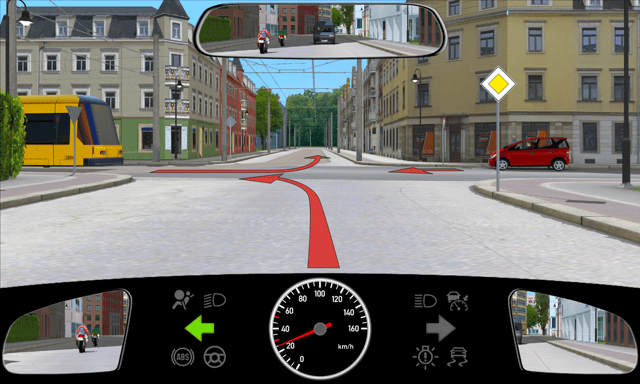
Erklärung
The traffic sign indicates that you are on a priority road. The tram and the driver of the red car, on the other hand, must follow the sign "Give way" and wait. You drive first.
-
Frage 24 von 47
Welches Verhalten ist richtig?
1.3.01-0505 Punkte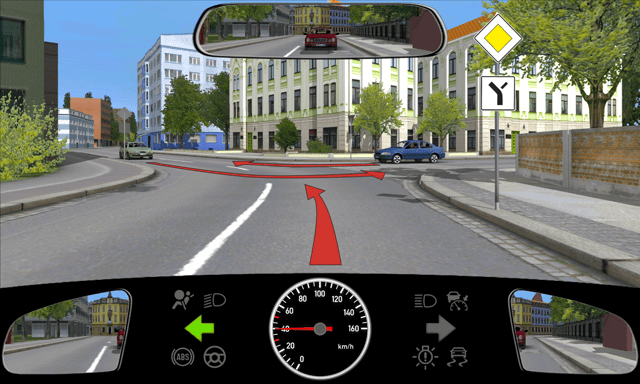
Erklärung
If you are traveling on a priority road, you are always allowed to drive first. A car that meets you and wants to turn left, however, has to wait. If a car driver wants to turn into your street from the right, he/she must also give you the right of way, since you are on a priority road.
-
Frage 25 von 47
Welches Verhalten ist richtig?
1.3.01-0515 Punkte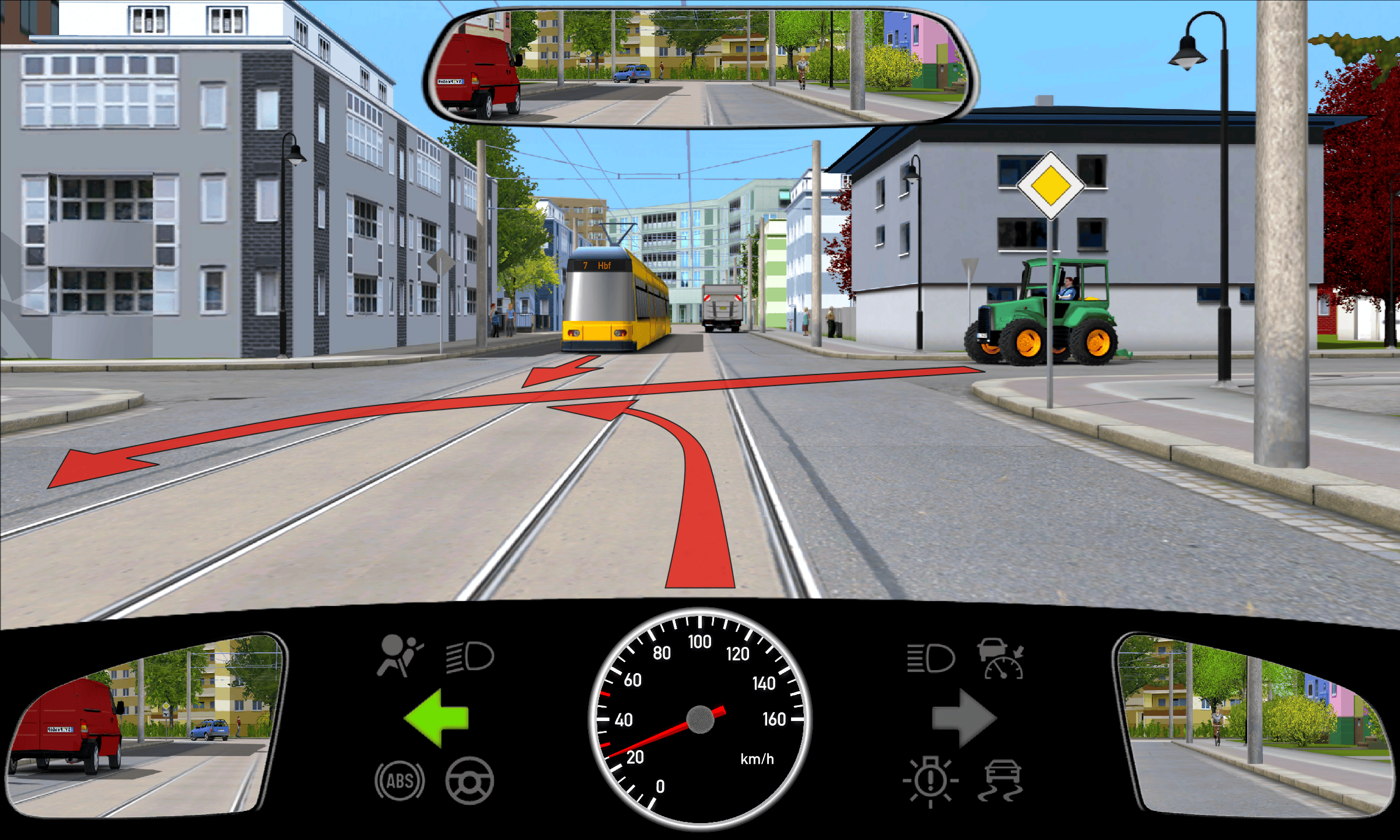
Erklärung
The following hierarchy applies on a priority road: In principle, vehicles on a priority road always have priority. However, when leaving a priority road, you must give priority to oncoming vehicles. However, vehicles that want to drive onto a priority road must give priority to other road users on the priority road. This means you have to give priority to the tram because it is traveling on a priority road, does not change direction and you want to turn left.
-
Frage 26 von 47
Welches Verhalten ist richtig?
1.3.01-0525 Punkte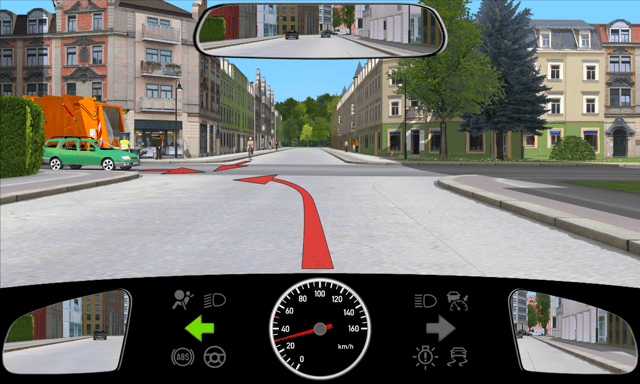
Erklärung
Due to the rule "left yields to right" you would have priority over the green car. However, you must give priority to the oncoming cyclist whose lane you would be crossing. To ensure the traffic flow, it is therefore advisable to let the driver of the green car first enter the intersection.
-
Frage 27 von 47
Sie möchten nach rechts in eine Vorfahrtstraße einbiegen. Worauf müssen Sie achten?
1.3.01-0535 PunkteErklärung
If you turn right into a priority road, you must give priority to all road users. This applies both to vehicles that come from the right and those that pass from the left. In addition, be sure to take care of cyclists and pedestrians who are to your right or behind you.
-
Frage 28 von 47
Wie verhalten Sie sich richtig?
1.3.01-0565 Punkte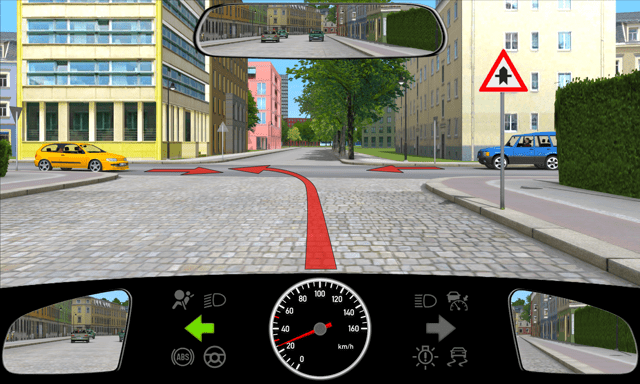
Erklärung
At this intersection you have right of way. This is indicated by the traffic sign. That's why the vehicles have to wait from the right and left and let you drive first.
-
Frage 29 von 47
Wie verhalten Sie sich richtig?
1.3.01-0575 Punkte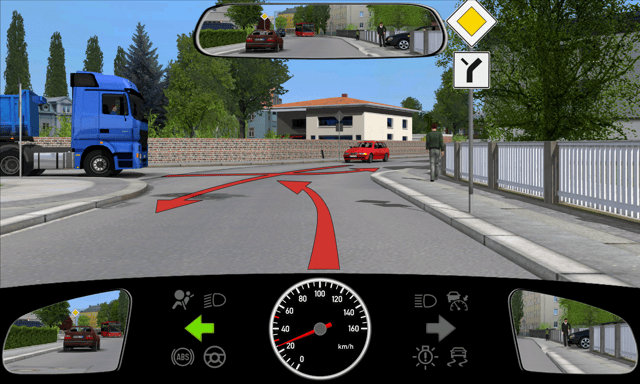
Erklärung
If you want to turn left from a priority road and another car is driving next to you, which remains on the priority road, you must give priority to this car driver. A vehicle that is not on the priority road, on the other hand, has to wait.
-
Frage 30 von 47
Was gilt in dieser Situation?
1.3.01-0585 Punkte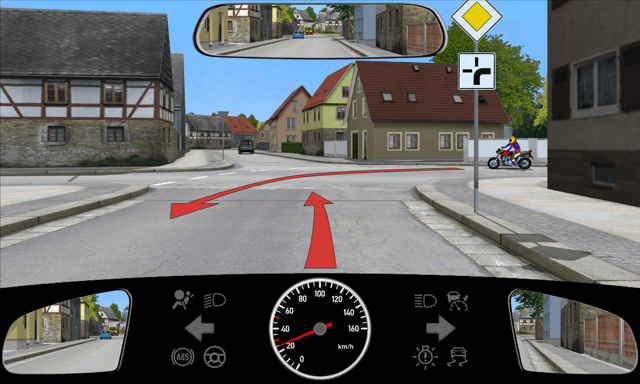
Erklärung
You are on a turning priority road, but you don't want to follow it to the right and instead continue straight ahead. From the right a motorcycle follows the course of the priority road. You have to wait and give priority to this vehicle.
-
Frage 31 von 47
Wer darf zuerst fahren?
1.3.01-0595 Punkte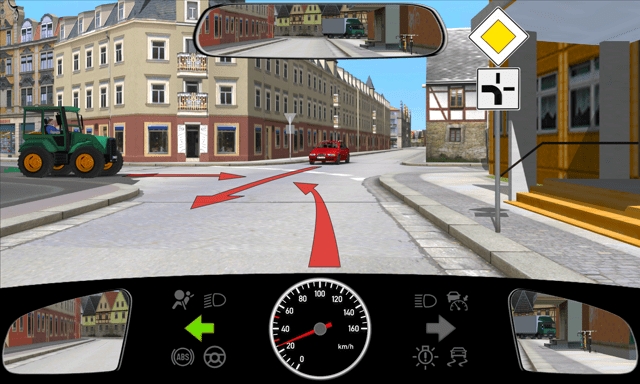
Erklärung
You follow a turning priority road. Therefore, you have priority over the driver of the car driving straight ahead. The driver of the tractor also has to wait because he/she leaves the priority road and the rule left yields to right applies to you.
-
Frage 32 von 47
Welches Verhalten ist richtig?
1.3.01-0605 Punkte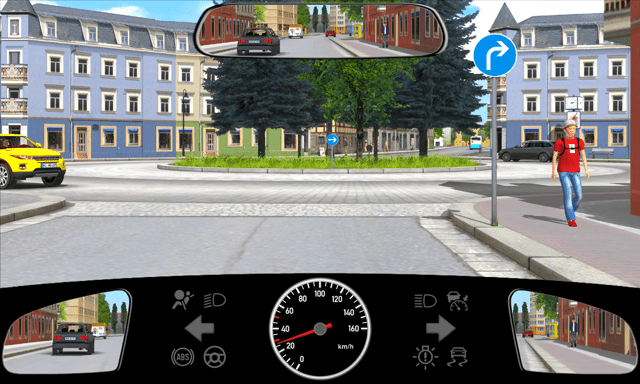
Erklärung
If no traffic signs have been erected to regulate the right of way, this is so-called circular traffic. Here, the basic rule of right before left applies. As you are turning into circular traffic, you must signal.
-
Frage 33 von 47
Welches Verhalten ist richtig?
1.3.01-1035 Punkte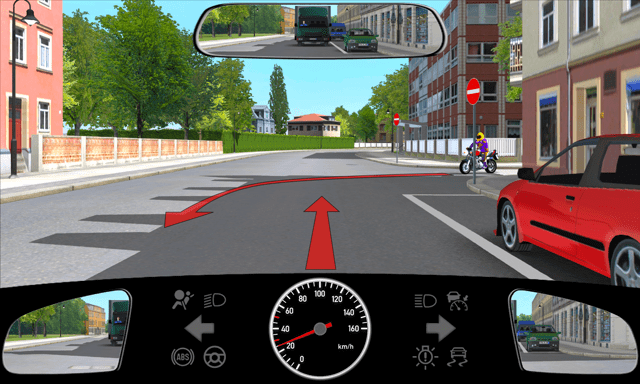
Erklärung
Who comes from the right, has right of way at intersections and T-junctions. Because if there is no priority-controlling traffic sign, "left yields to right" applies. No matter the size and type of the vehicle.
-
Frage 34 von 47
Sie wollen nach links abbiegen. Wer muss warten?
1.3.01-1125 Punkte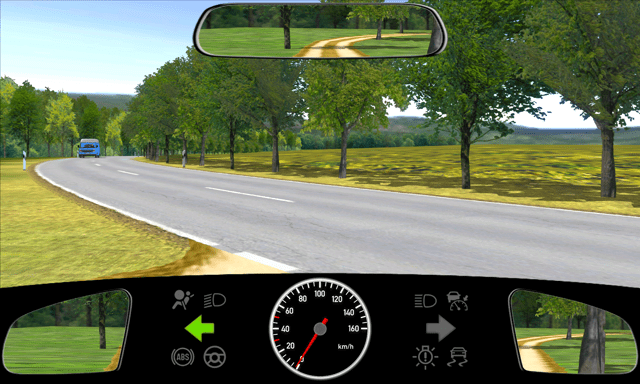
Erklärung
At intersections and T-junctions without a traffic-regulating traffic sign, the rule "left yields to right" applies. Field and forest paths, however, are subordinate traffic routes. If you want to turn from a field or forest path onto a road, you have to wait.
-
Frage 35 von 47
Welches Verhalten ist richtig?
1.3.01-1135 Punkte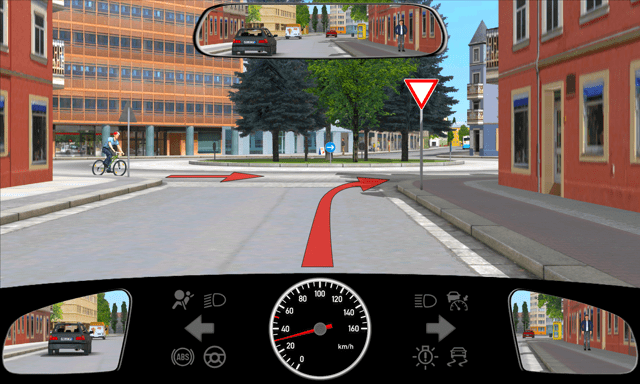
Erklärung
If you want to turn into a roundabout, you will be asked to wait by the "Give way" traffic sign. The drivers driving in a circle have priority here.
-
Frage 36 von 47
Welches Verhalten ist richtig?
1.3.01-1145 Punkte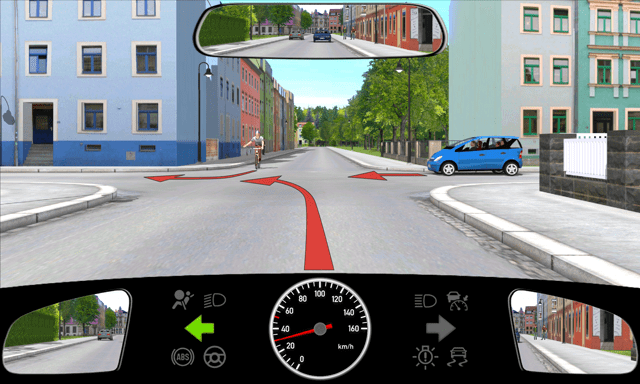
Erklärung
Here, "left yields to right" applies as well as the rules for left turns. The car coming from the right may drive first. Since you want to turn left, the oncoming cyclist has right of way.
-
Frage 37 von 47
Welches Verhalten ist richtig?
1.3.01-1165 Punkte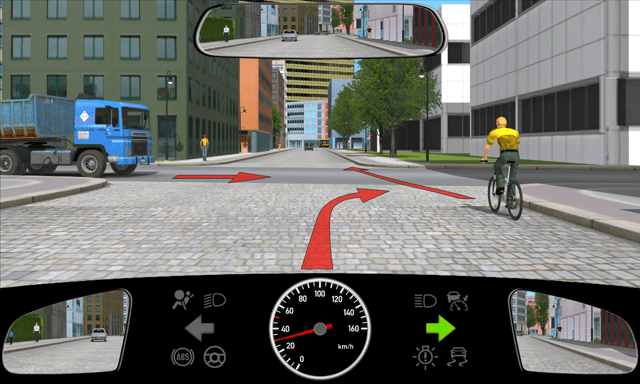
Erklärung
At this spot, the right of way is not regulated by traffic signs. Therefore, at this intersection left yields to right applies. Here the straight driving cyclist has priority over you as you want to turn. The truck coming from the left may drive last.
-
Frage 38 von 47
Welches Verhalten ist richtig?
1.3.01-1175 Punkte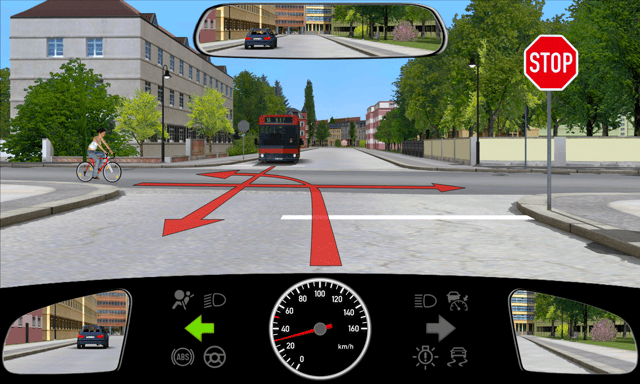
Erklärung
A vehicle coming from the left is already on the priority road. Therefore, it is allowed to drive first. If you turn left, you will have to let oncoming vehicles drive past first. Due to the traffic sign, you have to stop at the stop line ("Give way") or stop completely and are not even allowed to trundle ("Stop sign").
-
Frage 39 von 47
Welches Verhalten ist richtig?
1.3.01-1185 Punkte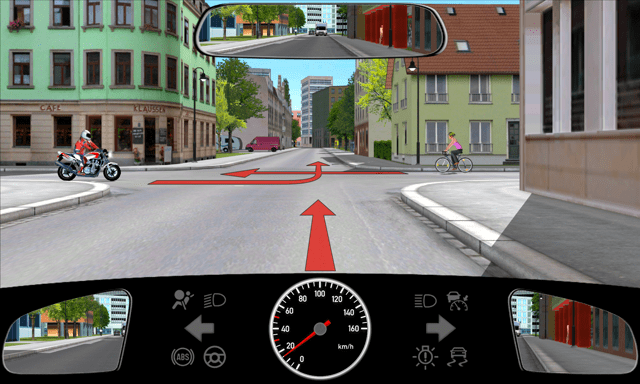
Erklärung
Since the right of way here is not regulated by traffic signs, left yields to right applies. This means: you must stop and grant access to vehicles from the right. The bike coming from the left has to let you in.
-
Frage 40 von 47
Sie möchten eine Vorfahrtstraße überqueren. Die Sicht nach beiden Seiten ist durch parkende Fahrzeuge stark eingeschränkt. Wie verhalten Sie sich?
1.3.01-1195 PunkteErklärung
If visibility is limited you should only proceed with caution. Slowly get into the intersection until you can see the priority road. This is how you act responsibly.
-
Frage 41 von 47
Welches Verhalten ist richtig?
1.3.01-1205 Punkte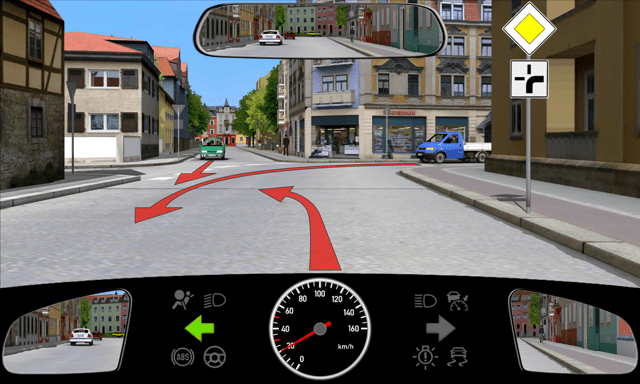
Erklärung
If you are on a priority road and you want to turn left, you will have to let oncoming cars drive by. If a vehicle drives next to you, which contrary to you remains on the priority road, then this car driver has priority. However, if a vehicle from another street with the traffic sign "Give way" wishes to turn into your priority road, he/she may only drive last.
-
Frage 42 von 47
Welches Verhalten ist richtig?
1.3.01-1255 Punkte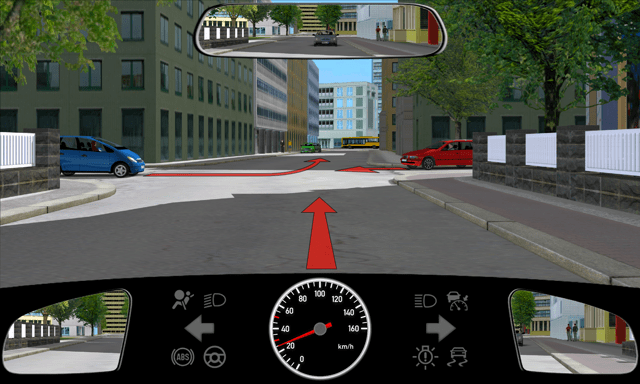
Erklärung
Without additional priority-regulating traffic signs or traffic lights, the general "left yields to right" rule applies. The car coming from the right must be given priority. You have priority over the car coming from the left.
-
Frage 43 von 47
Welches Verhalten ist richtig?
1.3.01-1265 Punkte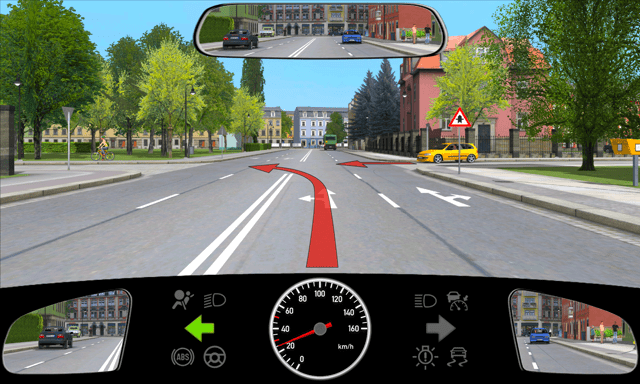
Erklärung
At the traffic sign "right of way at the next intersection or T-junction", you may drive first at the next intersection. A vehicle coming from the left must wait.
-
Frage 44 von 47
In welcher Reihenfolge müssen die Fahrzeuge hier weiterfahren?
1.3.01-1275 Punkte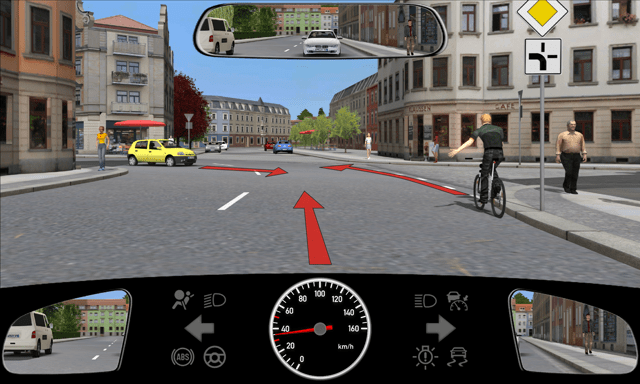
Erklärung
You are on a turning priority road and you want to leave straight ahead. The cyclist follows the course of the priority road and therefore has priority over you. The car from the left must grant you right of way according to the rule "left yields to right".
-
Frage 45 von 47
Wer darf in dieser Situation zuerst fahren?
1.3.01-1285 Punkte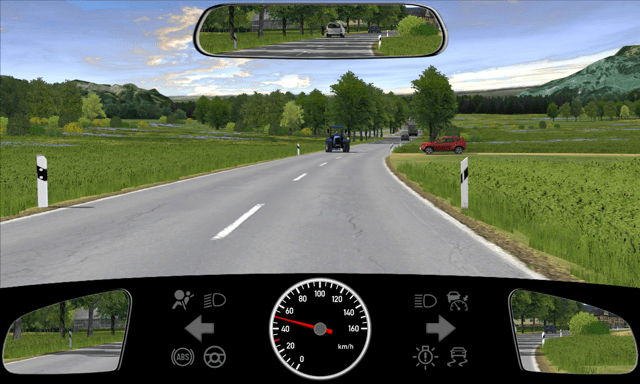
Erklärung
The basic rule "right before left" does not apply to vehicles driving out of a field or forest path onto another road.
-
Frage 46 von 47
Wie verhalten Sie sich hier richtig?
1.3.01-1295 Punkte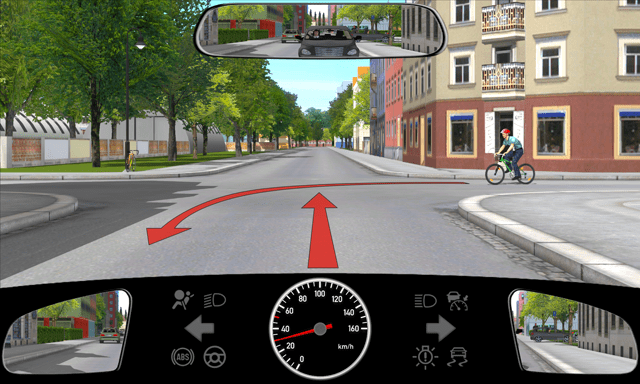
Erklärung
At intersections and junctions, whoever is coming from the right has the right of way.
-
Frage 47 von 47
Was ist in dieser Situation richtig?
1.3.01-1305 PunkteErklärung
You can see from the signs that this is not a roundabout. Therefore, right before left applies.