
1.3.01 Priorité
Apprenez facilement les règles de priorité allemandes les plus importantes : Juste avant la gauche, routes prioritaires, règles de tournage, ronds-points, et bien plus encore.
RÈGLE LA PLUS IMPORTANTE
S’il n’y a AUCUN panneau, AUCUN feu de circulation et AUCUN policier :
➡️ LA GAUCHE Cède à la DROITE
Les véhicules venant de la DROITE sont prioritaires.
🏆 Hiérarchie des priorités
1. Policier
Les instructions de la police passent toujours en premier.
2. Feux de circulation
Les feux de circulation remplacent les panneaux de signalisation.
3. Panneaux de signalisation
Céder le passage, s'arrêter, route prioritaire, etc.
4. Droite avant la gauche
Règle de base si rien d'autre ne régule la circulation.
➡️ Droite avant gauche (Rechts vor Links)
✅ S'applique ici
- Intersections sans panneaux
- Jonctions en T sans régulation de la circulation
- Rues résidentielles
- Petit carrefour urbain
❌ Ne s'applique PAS
- Routes prioritaires
- Ronds-points avec panneaux
- Sentiers champêtres et forestiers
- Allées et bordures abaissées
⚠️ Exceptions importantes
Sentiers champêtres et forestiers
Les véhicules quittant les champs ou les sentiers forestiers doivent toujours céder le passage.
Quitter la propriété
En quittant une propriété ou une allée, tous les autres ont la priorité.
Rond-point
Les véhicules déjà présents dans le rond-point sont généralement prioritaires.
🔄 Règles de tournage
↩️ Tourner à gauche
- Cédez le passage au trafic venant en sens inverse
- Cédez le passage aux cyclistes allant tout droit
- Cédez le passage aux tramways qui vont tout droit
- Attendez que la voie soit libre
↪️ Tourner à droite
- Attention aux cyclistes à droite
- Observez les piétons traverser
- Vérifiez soigneusement les miroirs
- Respecter les routes prioritaires
🛣 Règles de route prioritaires
Rester sur la route prioritaire
Les véhicules restant sur la route prioritaire roulent en premier.
Quitter la route prioritaire
En le quittant, vous devrez peut-être céder le passage au trafic venant en sens inverse.
Entrer dans la route prioritaire
Les conducteurs entrant doivent toujours attendre.
⭕ Règles du rond-point
✅ Exactement
- Céder avant d'entrer
- Les véhicules à l'intérieur sont prioritaires
- Signal à la sortie
❌ Faux
- Entrée trop rapide
- Oublier le clignotant
- Ignorer les cyclistes
🧠 Astuces de mémoire faciles
Côté droit = priorité
Les tourneurs à gauche attendent
La route prioritaire bat les routes secondaires
En cas de doute : ralentissez et communiquez
📚 Tableau de priorité rapide
| Situation | Qui a la priorité ? |
|---|---|
| Aucun panneau à l'intersection | Véhicule de droite |
| Tourner à gauche | Trafic venant en sens inverse |
| Entrée au rond-point | Véhicules déjà à l'intérieur |
| Quitter l'allée | Tous les autres usagers de la route |
| Route prioritaire | Véhicules sur route prioritaire |
🎯 Conseils d'examen
✅ Rappelez-vous
- Juste avant la gauche est la règle de base
- Ceux qui tournent à gauche attendent généralement
- Les routes prioritaires sont très importantes
- Surveillez attentivement les cyclistes et les tramways
❌ Erreurs courantes
- Ignorer les cyclistes de droite
- Oublier les règles de priorité des virages
- Des routes secondaires confuses avec des routes égales
- Conduire trop vite dans des intersections peu claires
Questions d’entraînement (47)
-
Question 1 sur 47
En l'absence de signalisation réglementant la priorité, quels sont les endroits où s'applique la règle de la "priorité à droite"?
1.3.01-0015 pointsExplication
At intersections and T-junctions without a traffic-regulating traffic sign "left yields to right" applies. If a vehicle leaves a property or a restricted traffic area, all other road users, including pedestrians and children on the sidewalk, have priority.
-
Question 2 sur 47
En l'absence de signalisation réglementant la priorité, quels sont les endroits où s'applique la règle de la "priorité à droite"?
1.3.01-0025 pointsExplication
At intersections and T-junctions without priority signs, the vehicles coming from the right have priority. The same applies to roads that are equally ranked according to their signage. Lanes with drop kerb, drives as well as field and forest trails are an exception. If you are on one of these roads, you must give priority to other road users.
-
Question 3 sur 47
Vous abordez une intersection sur laquelle vous n'avez pas reconnu sur le moment l'ordre de priorité. Comment devez-vous vous comporter?
1.3.01-0035 pointsExplication
There are situations that are difficult to understand in terms of the right of way. If this happens to you wait and watch other car drivers. If the situation remains difficult, you can communicate with each other by clear hand signals. To simply continue straight ahead or act according to the rule "left yields to right" would be too risky and accident-prone.
-
Question 4 sur 47
Quel est le comportement correct?
1.3.01-0075 points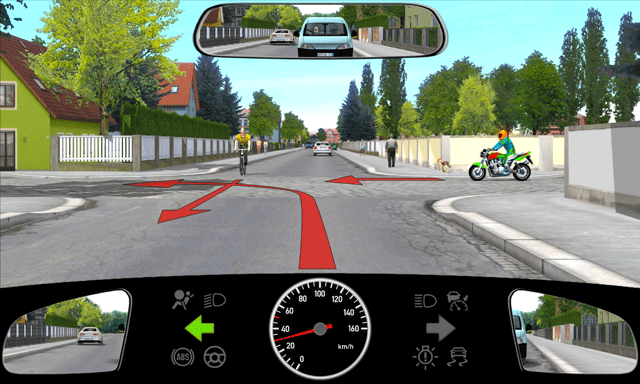
Explication
It is necessary to comply to the left yields to right rule. Grant the motorcyclist from the right the right of way before entering the intersection. Next, you as a left-turning driver, have to give priority to the oncoming cyclist. For the motorcyclist the cyclist comes from the right and thus has priority.
-
Question 5 sur 47
Quel est le comportement correct?
1.3.01-0135 points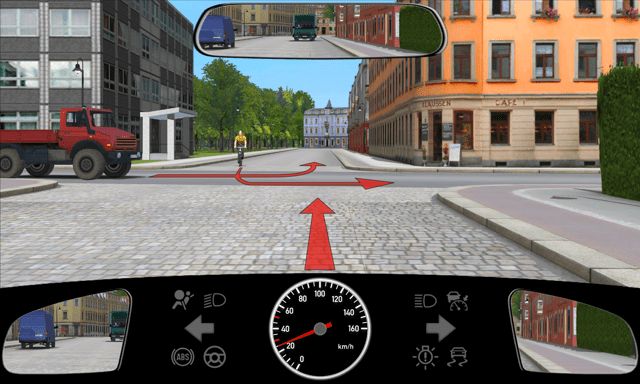
Explication
Left yields to right applies in intersections and T-junctions without a traffic sign. Since no vehicle comes from the right, you may first cross the intersection. After that the truck drives and finally the cyclist.
-
Question 6 sur 47
Quel comportement est correct dans cette situation?
1.3.01-0165 points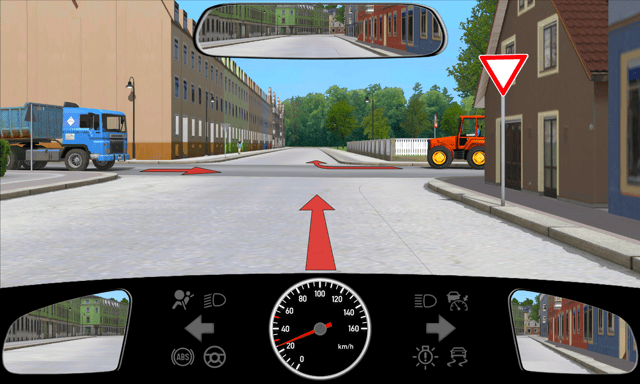
Explication
The traffic sign "Give way" regulates the right of way here. That means you have to wait and let both, the right and left vehicle, pass.
-
Question 7 sur 47
Quel est le comportement correct?
1.3.01-0175 points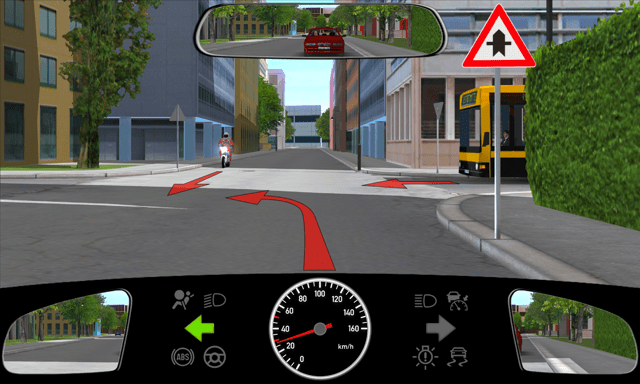
Explication
Here the traffic sign "right of way at the next intersection or T-junction" applies. Since you want to turn left you will have to let the oncoming vehicle pass. You may then turn in front of the vehicle coming from the right.
-
Question 8 sur 47
Quel est le comportement correct?
1.3.01-0185 points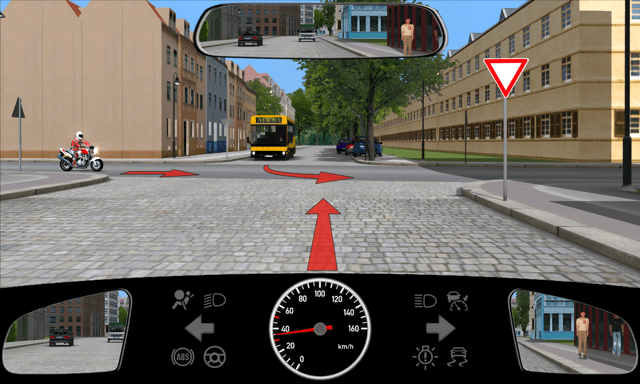
Explication
The traffic sign "Give way" suspends the left yields to right regulation. Thus, the motorcycle coming from the left has priority. You have to wait. Then the left-turning driver of the oncoming traffic must first let you cross the intersection before he can turn.
-
Question 9 sur 47
Quel est le comportement correct?
1.3.01-0215 points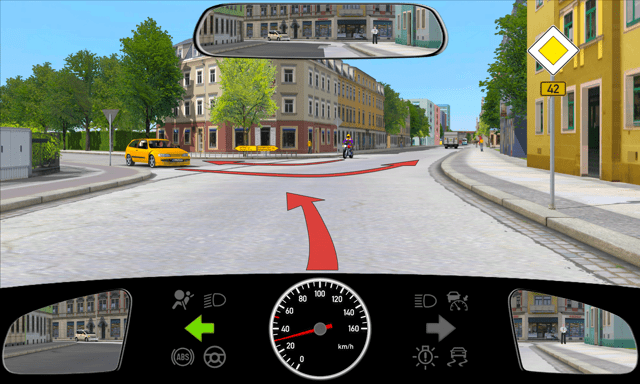
Explication
The traffic sign stands for a "priority road". You may therefore turn in front of the vehicle coming from the left. First, however, you must let the oncoming vehicle turn, because you have to wait as a left-turning driver.
-
Question 10 sur 47
Quelle est la bonne conduite à adopter dans cette situation?
1.3.01-0345 points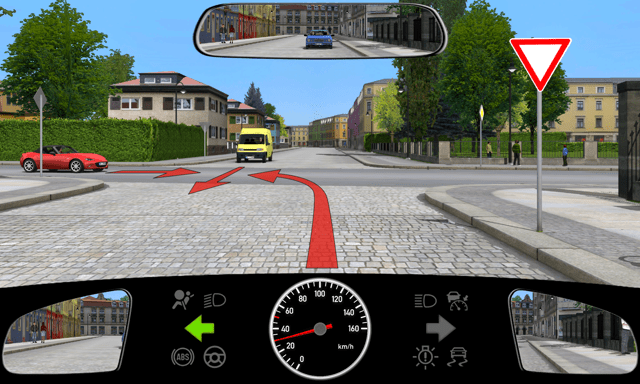
Explication
The right-of-way rule says that you have to let the yellow vehicle drive through.
-
Question 11 sur 47
Quel est le bon comportement?
1.3.01-0355 points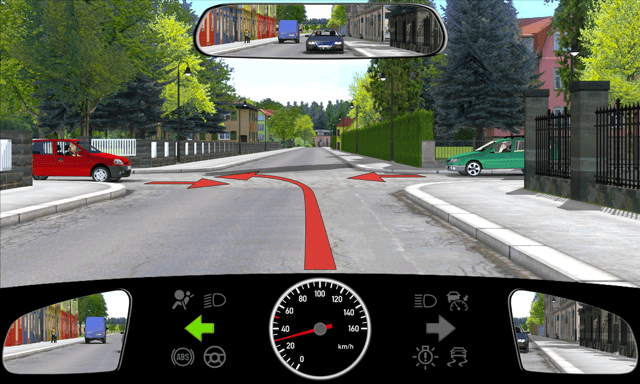
Explication
Since there are no signs at this intersection, which determine the priority of the drivers, the right of way "left yields to right" applies. For this reason, you need to let the car on your right pass first. Afterwards, the driver on the left has to give you the right of way.
-
Question 12 sur 47
Quel est le bon comportement?
1.3.01-0385 points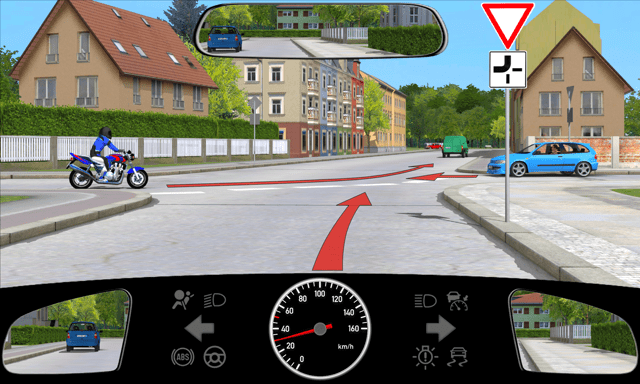
Explication
According to the signage, the motorcyclist is on the priority road and is therefore allowed to drive first. Both the driver of the blue car and you are on a lane with the "Give way" sign. As this does not clear up the situation, "left yields to right" applies. For this reason, you have to let the other vehicle drive through.
-
Question 13 sur 47
Qui a le droit d'avancer le premier dans cette situation?
1.3.01-0395 points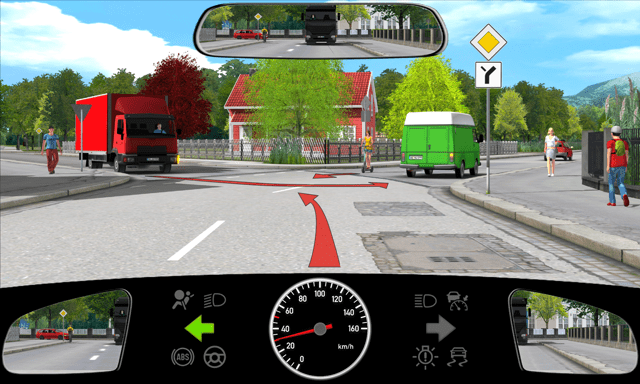
Explication
The electric scooter follows the priority road and therefore has the right of way.
-
Question 14 sur 47
Quel est le bon comportement à adopter dans cette situation?
1.3.01-0405 points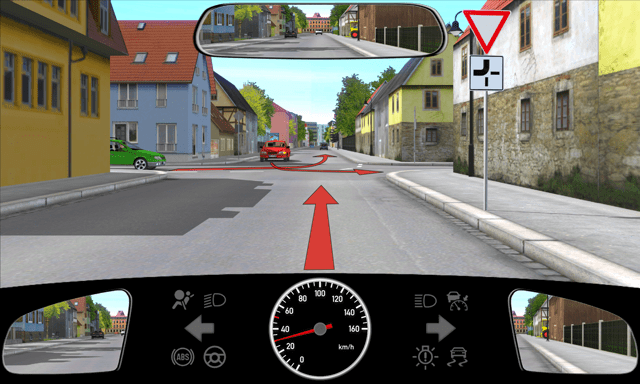
Explication
The green and red cars are on a turning main road. You are on the secondary road. The green car remains on the main road, which means that the green car is allowed to drive first, then the red car and you are allowed to drive last.
-
Question 15 sur 47
Quel est le bon comportement à adopter dans cette situation?
1.3.01-0415 points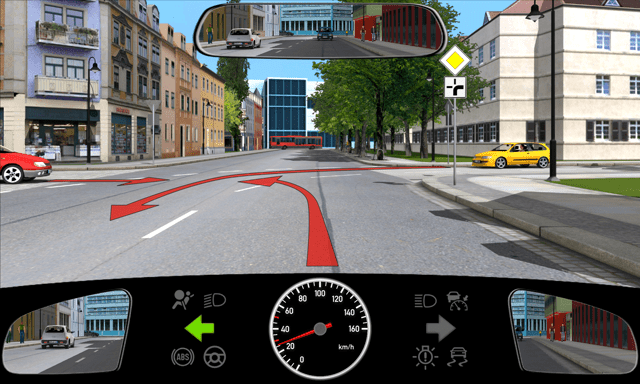
Explication
You and the yellow car are on a turning main road. The red car is on a secondary road. Because the yellow car remains on the main road, it is allowed to drive first. You may drive second and the red car can drive last.
-
Question 16 sur 47
Quel est le comportement adapté?
1.3.01-0425 points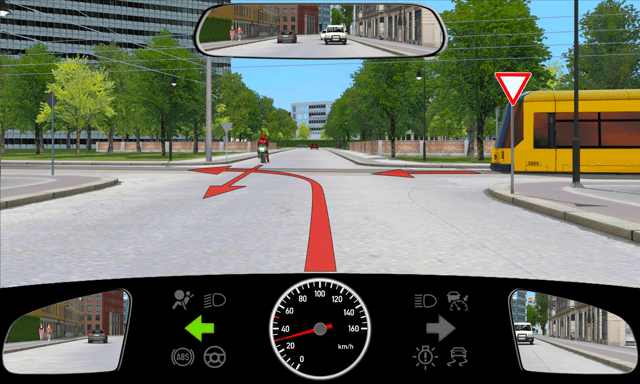
Explication
The sign at the intersection indicates that you must give way. Since you want to turn left, you must let the tram as well as the oncoming motorbike pass and enter the intersection last.
-
Question 17 sur 47
Quel est le bon comportement à adopter dans cette situation?
1.3.01-0435 points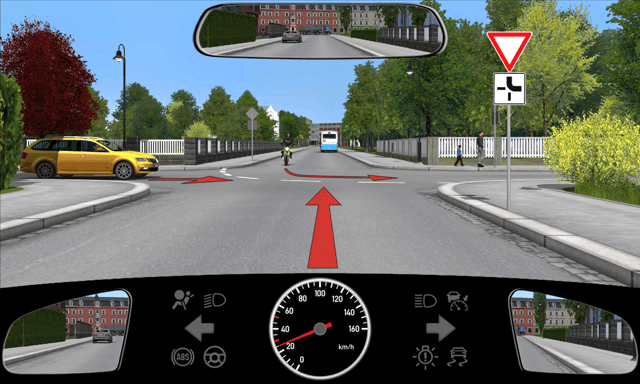
Explication
The motorbike is on a turning main road and is allowed to turn in front of the yellow car and you. According to the "right before left" rule at crossroads, you may drive in front of the yellow car.
-
Question 18 sur 47
Quel est le bon comportement à adopter ici?
1.3.01-0445 points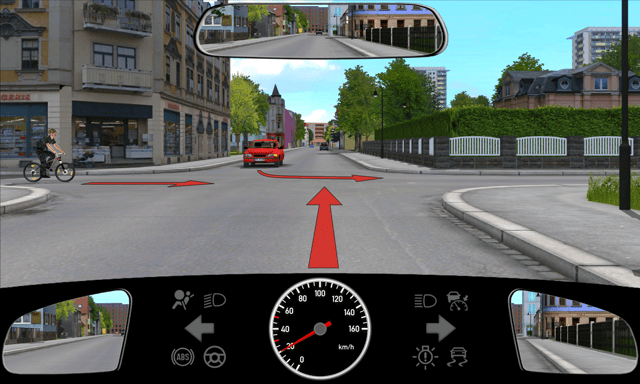
Explication
At this intersection applies to the right before left. So you can drive first. "Right before left" applies to intersections where the right of way is not regulated by signs, traffic lights or traffic police officers.
-
Question 19 sur 47
Quel est le bon comportement à adopter ici?
1.3.01-0455 points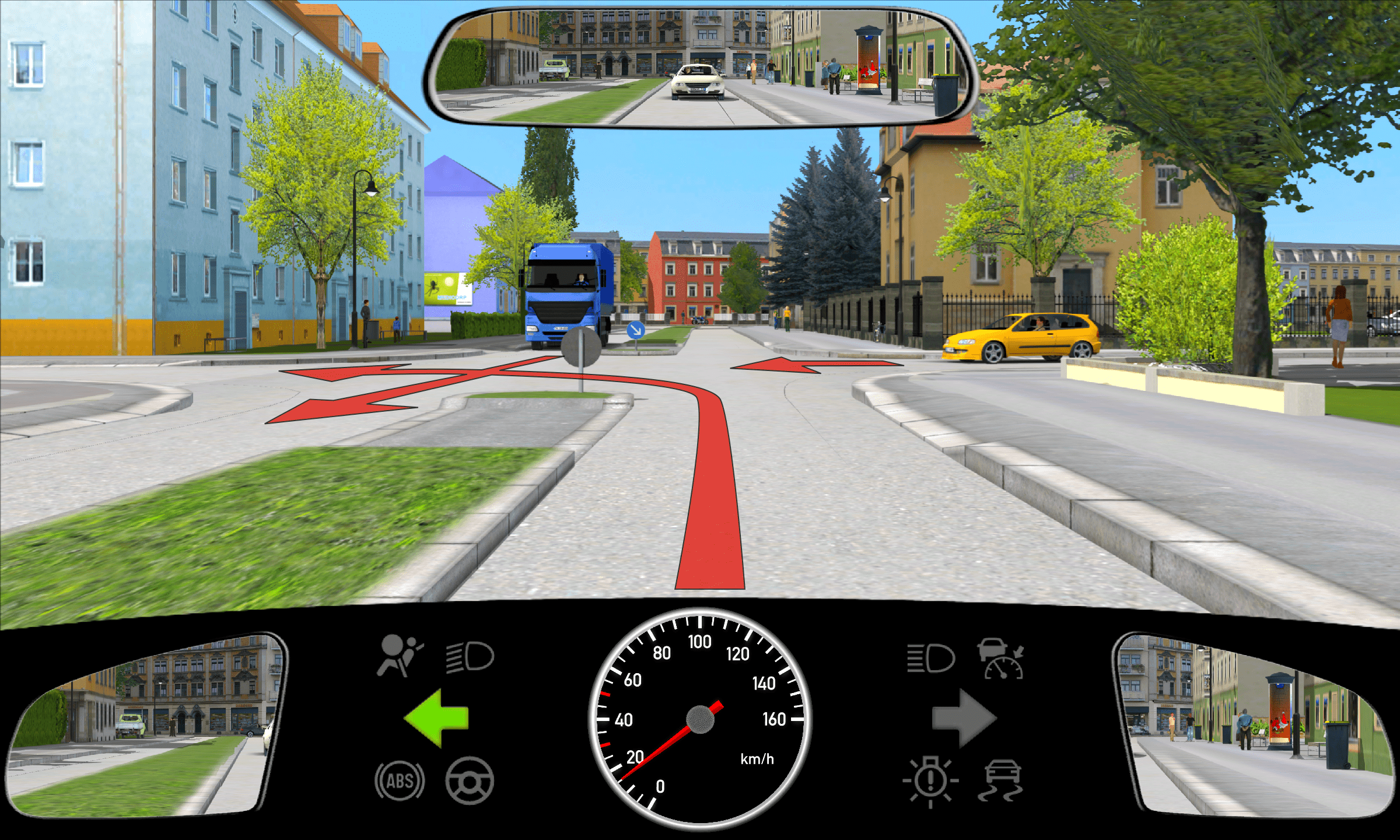
Explication
At this junction, the right before left rule applies, which means that you must let the yellow vehicle pass. You must also let the lorry through, as you want to turn left and the lorry wants to continue straight ahead in its lane.
-
Question 20 sur 47
Quel est le comportement adapté?
1.3.01-0465 points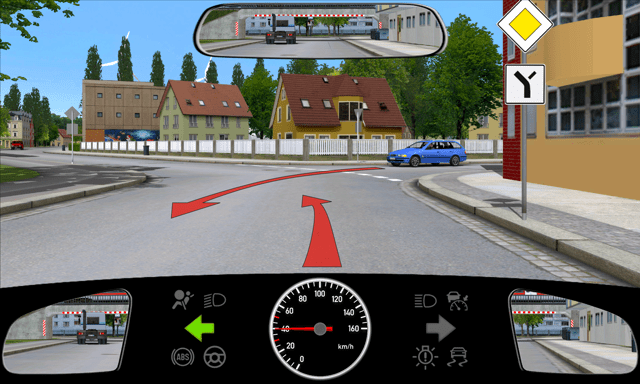
Explication
You are on the turning priority road and follow its course. Therefore, you must drive first and the other vehicle must wait.
-
Question 21 sur 47
Quel est le bon comportement à adopter ici?
1.3.01-0475 points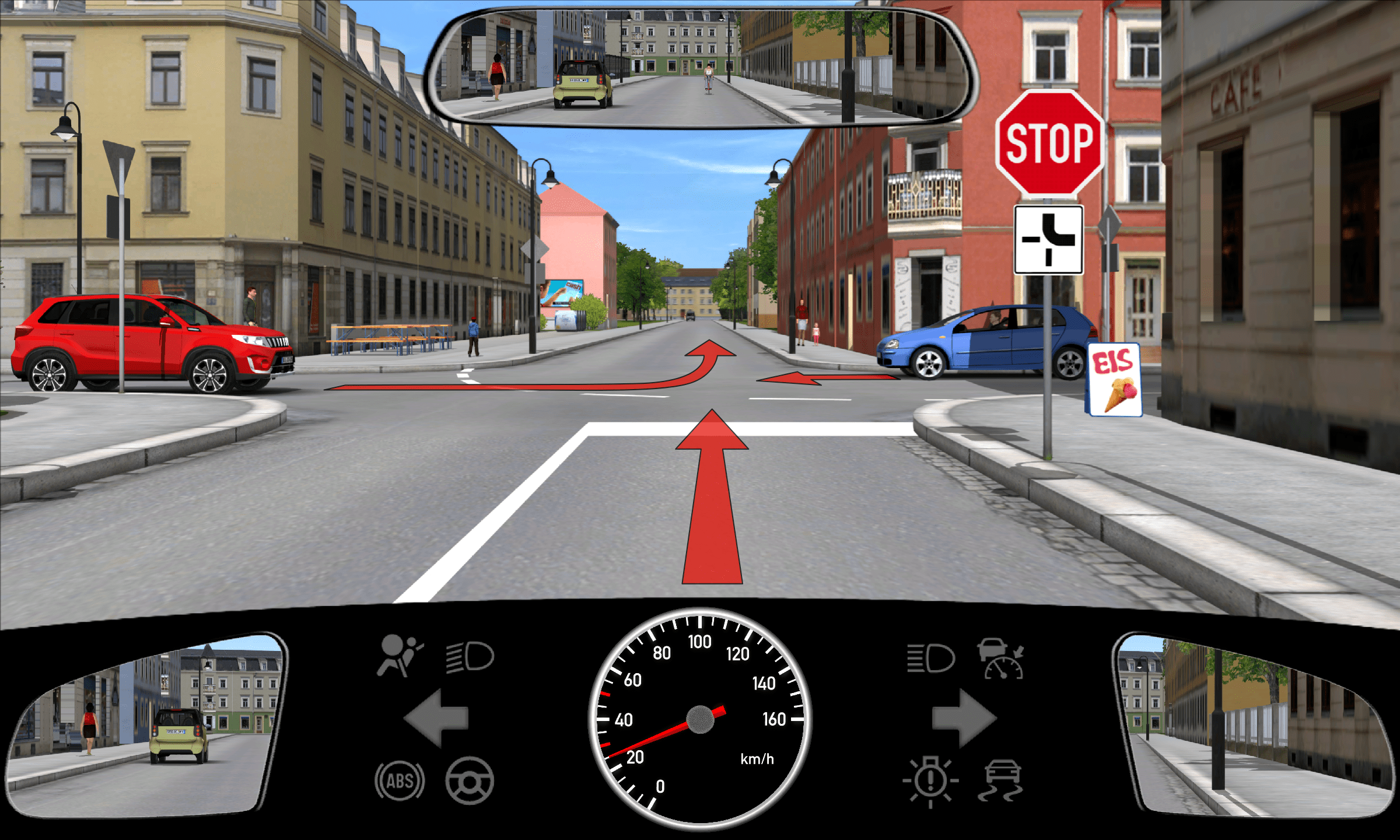
Explication
You are approaching a priority road that is about to turn. As you are coming from a side road, you must allow the blue car leaving the priority road to pass. You must also stop at a stop sign at the stop line before you are allowed to enter the junction.
-
Question 22 sur 47
Quel est le comportement correct?
1.3.01-0485 points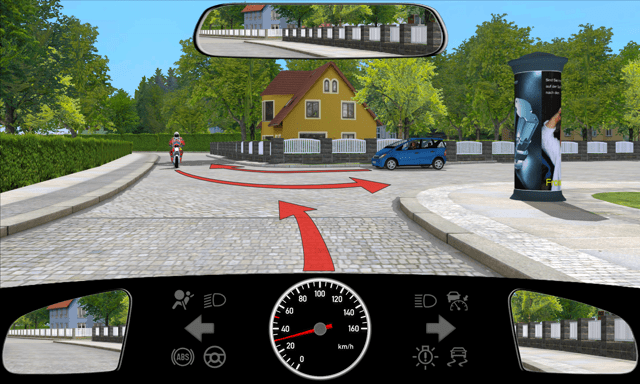
Explication
At an intersection, which has no traffic signs, "left yields to right" applies. If a car drives from the right wants to turn right, he is allowed to drive first and you have to wait. On the other hand, if a vehicle approaching you wants to turn left, you have the right of way, because if a driver wants to turn, must always give priority to oncoming traffic.
-
Question 23 sur 47
Quel est le comportement correct?
1.3.01-0495 points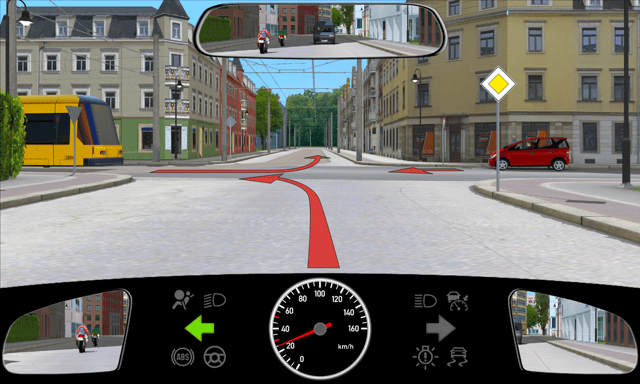
Explication
The traffic sign indicates that you are on a priority road. The tram and the driver of the red car, on the other hand, must follow the sign "Give way" and wait. You drive first.
-
Question 24 sur 47
Quel est le comportement correct?
1.3.01-0505 points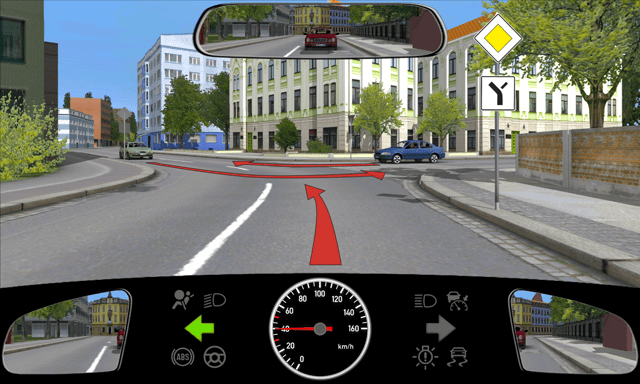
Explication
If you are traveling on a priority road, you are always allowed to drive first. A car that meets you and wants to turn left, however, has to wait. If a car driver wants to turn into your street from the right, he/she must also give you the right of way, since you are on a priority road.
-
Question 25 sur 47
Quel comportement est correct?
1.3.01-0515 points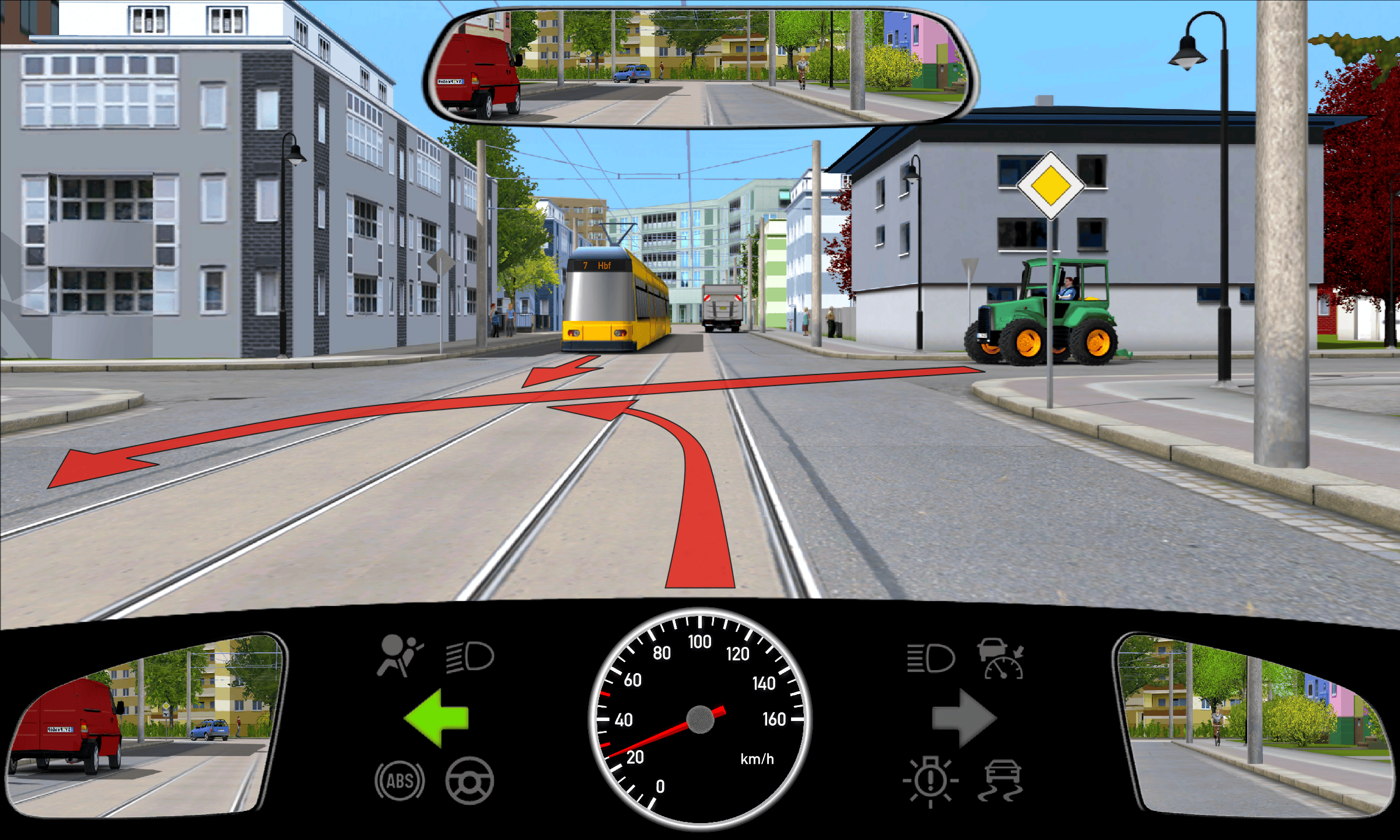
Explication
The following hierarchy applies on a priority road: In principle, vehicles on a priority road always have priority. However, when leaving a priority road, you must give priority to oncoming vehicles. However, vehicles that want to drive onto a priority road must give priority to other road users on the priority road. This means you have to give priority to the tram because it is traveling on a priority road, does not change direction and you want to turn left.
-
Question 26 sur 47
Quel comportement est correct?
1.3.01-0525 points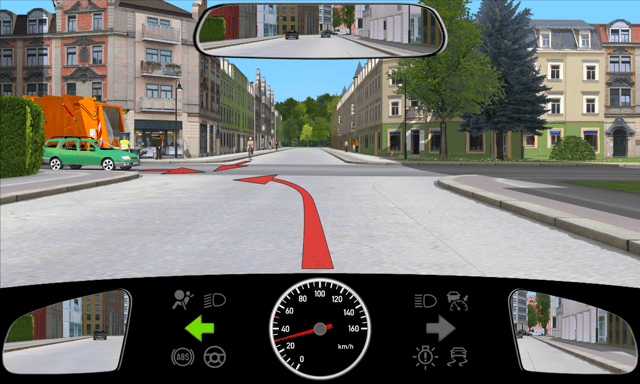
Explication
Due to the rule "left yields to right" you would have priority over the green car. However, you must give priority to the oncoming cyclist whose lane you would be crossing. To ensure the traffic flow, it is therefore advisable to let the driver of the green car first enter the intersection.
-
Question 27 sur 47
Vous souhaitez tourner à droite dans une rue prioritaire. À quoi devez-vous faire attention?
1.3.01-0535 pointsExplication
If you turn right into a priority road, you must give priority to all road users. This applies both to vehicles that come from the right and those that pass from the left. In addition, be sure to take care of cyclists and pedestrians who are to your right or behind you.
-
Question 28 sur 47
Quel est le bon comportement à adopter?
1.3.01-0565 points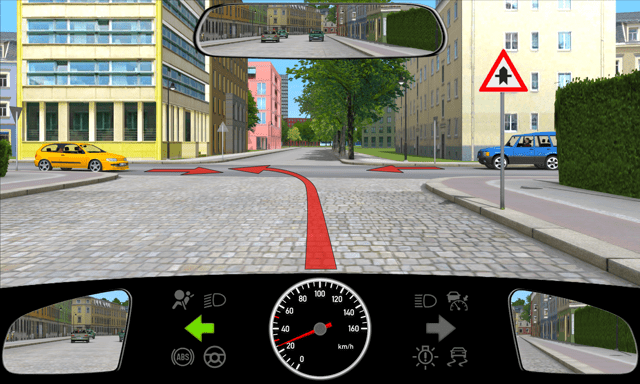
Explication
At this intersection you have right of way. This is indicated by the traffic sign. That's why the vehicles have to wait from the right and left and let you drive first.
-
Question 29 sur 47
Quel est le comportement correct?
1.3.01-0575 points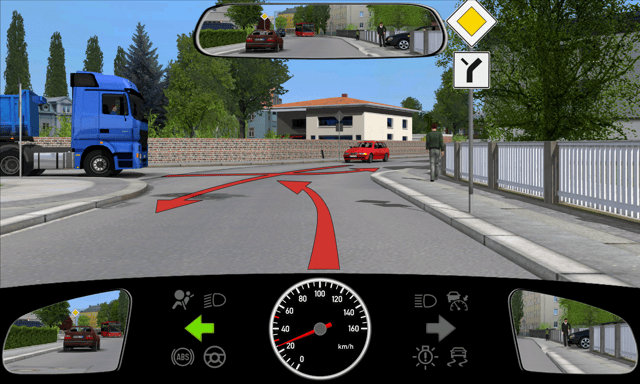
Explication
If you want to turn left from a priority road and another car is driving next to you, which remains on the priority road, you must give priority to this car driver. A vehicle that is not on the priority road, on the other hand, has to wait.
-
Question 30 sur 47
Quel est le bon comportement dans cette situation?
1.3.01-0585 points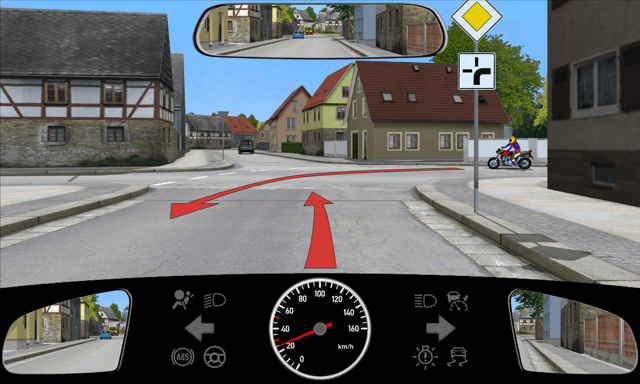
Explication
You are on a turning priority road, but you don't want to follow it to the right and instead continue straight ahead. From the right a motorcycle follows the course of the priority road. You have to wait and give priority to this vehicle.
-
Question 31 sur 47
Qui peut passer en premier?
1.3.01-0595 points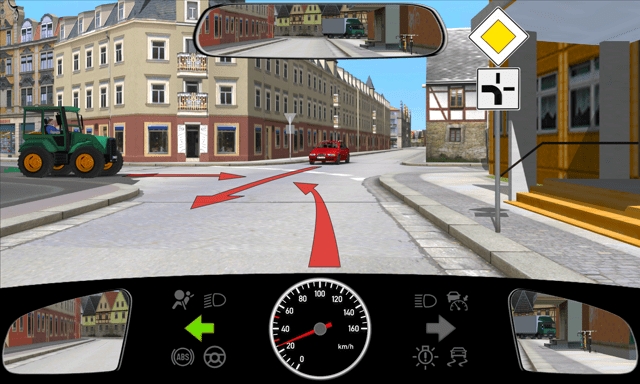
Explication
You follow a turning priority road. Therefore, you have priority over the driver of the car driving straight ahead. The driver of the tractor also has to wait because he/she leaves the priority road and the rule left yields to right applies to you.
-
Question 32 sur 47
Quel est le bon comportement à adopter?
1.3.01-0605 points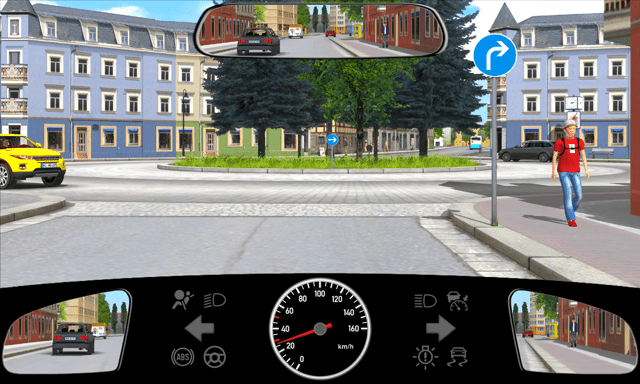
Explication
If no traffic signs have been erected to regulate the right of way, this is so-called circular traffic. Here, the basic rule of right before left applies. As you are turning into circular traffic, you must signal.
-
Question 33 sur 47
Quel est le comportement correct?
1.3.01-1035 points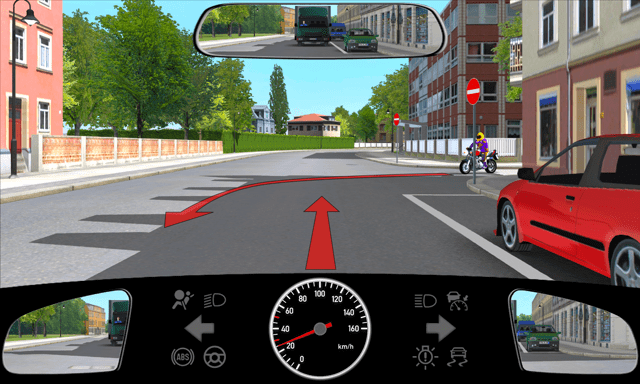
Explication
Who comes from the right, has right of way at intersections and T-junctions. Because if there is no priority-controlling traffic sign, "left yields to right" applies. No matter the size and type of the vehicle.
-
Question 34 sur 47
Vous voulez tourner à gauche. Qui doit attendre?
1.3.01-1125 points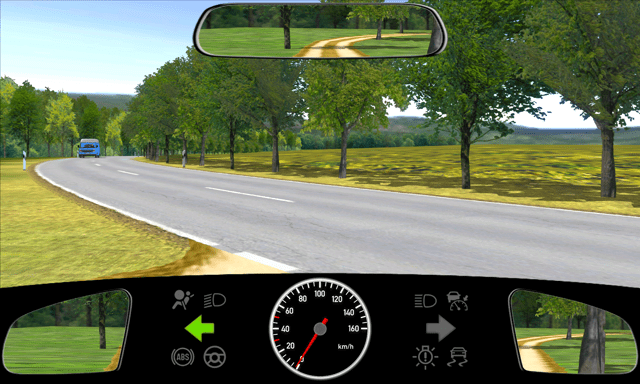
Explication
At intersections and T-junctions without a traffic-regulating traffic sign, the rule "left yields to right" applies. Field and forest paths, however, are subordinate traffic routes. If you want to turn from a field or forest path onto a road, you have to wait.
-
Question 35 sur 47
Quel comportement est correct?
1.3.01-1135 points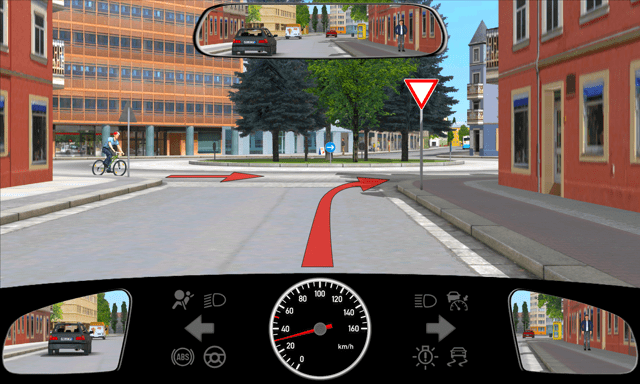
Explication
If you want to turn into a roundabout, you will be asked to wait by the "Give way" traffic sign. The drivers driving in a circle have priority here.
-
Question 36 sur 47
Quel comportement est correct?
1.3.01-1145 points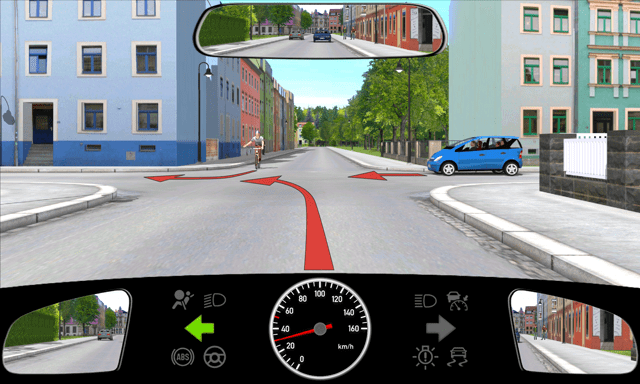
Explication
Here, "left yields to right" applies as well as the rules for left turns. The car coming from the right may drive first. Since you want to turn left, the oncoming cyclist has right of way.
-
Question 37 sur 47
Quel comportement est correct?
1.3.01-1165 points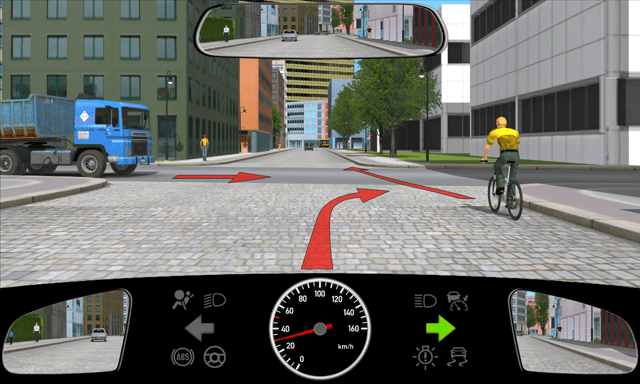
Explication
At this spot, the right of way is not regulated by traffic signs. Therefore, at this intersection left yields to right applies. Here the straight driving cyclist has priority over you as you want to turn. The truck coming from the left may drive last.
-
Question 38 sur 47
Quel comportement est correct?
1.3.01-1175 points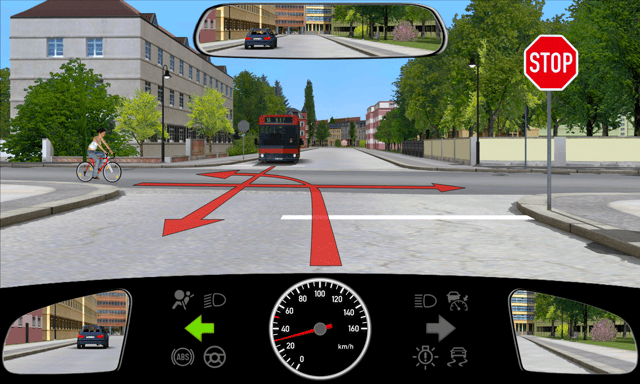
Explication
A vehicle coming from the left is already on the priority road. Therefore, it is allowed to drive first. If you turn left, you will have to let oncoming vehicles drive past first. Due to the traffic sign, you have to stop at the stop line ("Give way") or stop completely and are not even allowed to trundle ("Stop sign").
-
Question 39 sur 47
Quel comportement est correct?
1.3.01-1185 points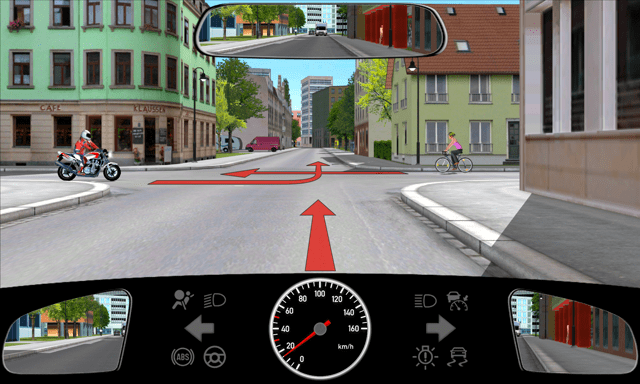
Explication
Since the right of way here is not regulated by traffic signs, left yields to right applies. This means: you must stop and grant access to vehicles from the right. The bike coming from the left has to let you in.
-
Question 40 sur 47
Vous souhaitez franchir une route prioritaire. La visibilité, des deux côtés, est fortement entravée par des véhicules stationnés. Comment vous comportez-vous?
1.3.01-1195 pointsExplication
If visibility is limited you should only proceed with caution. Slowly get into the intersection until you can see the priority road. This is how you act responsibly.
-
Question 41 sur 47
Quel comportement est correct?
1.3.01-1205 points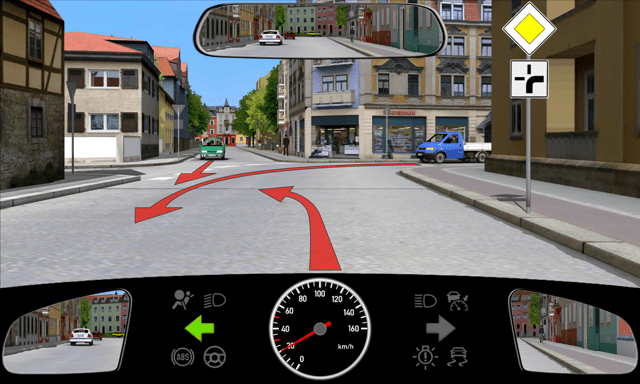
Explication
If you are on a priority road and you want to turn left, you will have to let oncoming cars drive by. If a vehicle drives next to you, which contrary to you remains on the priority road, then this car driver has priority. However, if a vehicle from another street with the traffic sign "Give way" wishes to turn into your priority road, he/she may only drive last.
-
Question 42 sur 47
Quel est le bon comportement?
1.3.01-1255 points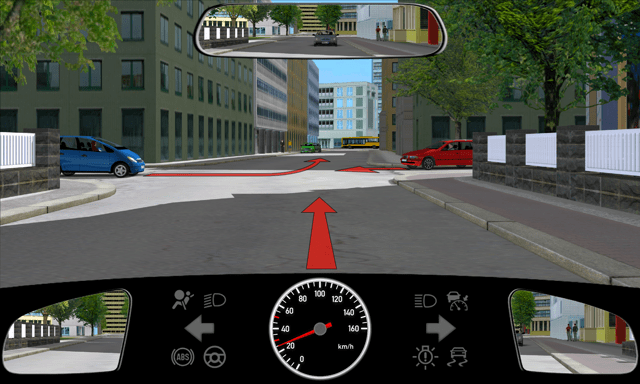
Explication
Without additional priority-regulating traffic signs or traffic lights, the general "left yields to right" rule applies. The car coming from the right must be given priority. You have priority over the car coming from the left.
-
Question 43 sur 47
Quel est le bon comportement?
1.3.01-1265 points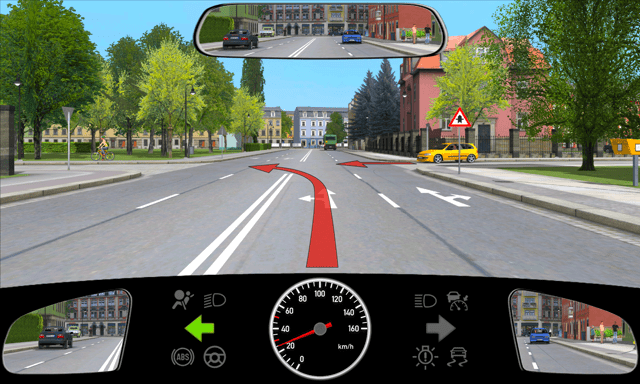
Explication
At the traffic sign "right of way at the next intersection or T-junction", you may drive first at the next intersection. A vehicle coming from the left must wait.
-
Question 44 sur 47
Dans quel ordre les véhicules doivent-ils rouler dans cette situation?
1.3.01-1275 points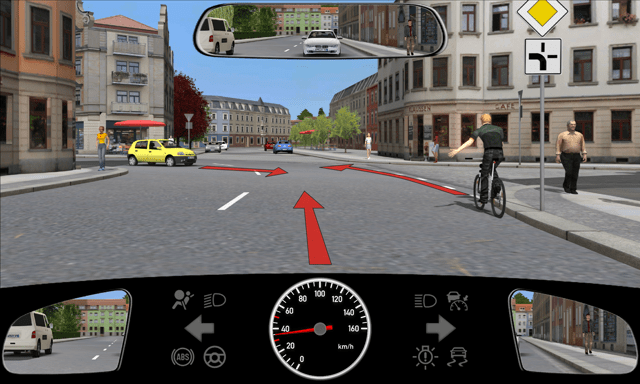
Explication
You are on a turning priority road and you want to leave straight ahead. The cyclist follows the course of the priority road and therefore has priority over you. The car from the left must grant you right of way according to the rule "left yields to right".
-
Question 45 sur 47
Qui a le droit de passer le premier dans cette situation?
1.3.01-1285 points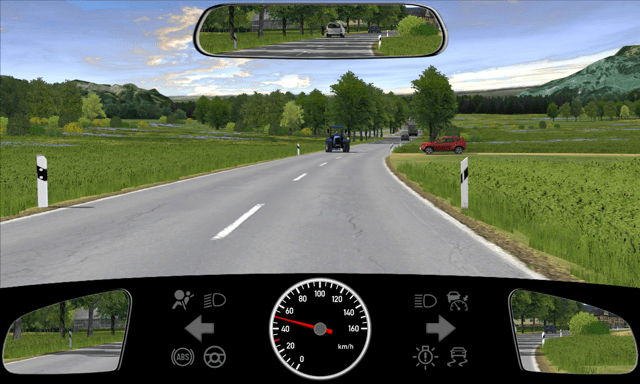
Explication
The basic rule "right before left" does not apply to vehicles driving out of a field or forest path onto another road.
-
Question 46 sur 47
Quel est le bon comportement à adopter ici?
1.3.01-1295 points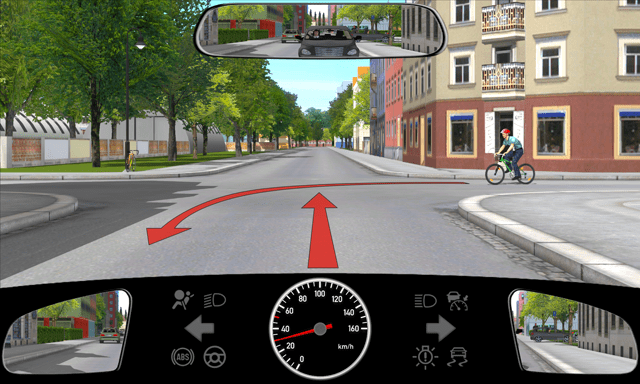
Explication
At intersections and junctions, whoever is coming from the right has the right of way.
-
Question 47 sur 47
Quel est le bon comportement à adopter dans cette situation?
1.3.01-1305 pointsExplication
You can see from the signs that this is not a roundabout. Therefore, right before left applies.