
1.3.01 Prioridade
Aprenda facilmente as regras de prioridade alemãs mais importantes: Logo antes da esquerda, estradas prioritárias, regras de viragem, rotundase muito mais.
REGRA MAIS IMPORTANTE
Se NÃO houver sinalização, NENHUM semáforo e NENHUM policial:
➡️ RENDIMENTO DA ESQUERDA PARA A DIREITA
Os veículos vindos da DIREITA têm prioridade.
🏆 Hierarquia de prioridade
1. Polícia
As instruções da polícia sempre vêm em primeiro lugar.
2. Semáforos
Os semáforos substituem os sinais de trânsito.
3. Sinais de trânsito
Ceder, parar, estrada prioritária etc.
4. Direita antes da esquerda
Regra básica, se nada mais regula o tráfego.
➡️ Direita antes da esquerda (Rechts vor Links)
✅ Aplica-se aqui
- Cruzamentos sem sinalização
- Entroncamentos sem regulamentação de tráfego
- Ruas residenciais
- Pequena encruzilhada urbana
❌ NÃO se aplica
- Estradas prioritárias
- Rotatórias com sinalização
- Caminhos de campo e floresta
- Calçadas e meios-fios rebaixados
⚠️ Exceções importantes
Caminhos de campo e floresta
Os veículos que saem dos caminhos do campo ou da floresta devem sempre ceder a passagem.
Saindo da propriedade
Ao sair de uma propriedade ou entrada de automóveis, todos os demais têm prioridade.
Rotunda
Os veículos que já estão dentro da rotatória geralmente têm prioridade.
🔄 Regras de viragem
↩️ Virando à esquerda
- Renda ao tráfego que se aproxima
- Rendimento para ciclistas em linha reta
- Renda-se aos bondes em linha reta
- Espere até que a pista esteja livre
↪️ Virando à direita
- Cuidado com os ciclistas à direita
- Observe os pedestres atravessando
- Verifique os espelhos com cuidado
- Respeite as estradas prioritárias
🛣 Regras de trânsito prioritárias
Permanecendo na estrada prioritária
Os veículos que permanecem na estrada prioritária circulam primeiro.
Saindo da estrada prioritária
Ao sair dele, você pode precisar ceder ao tráfego que se aproxima.
Entrando na estrada prioritária
Os motoristas que entram devem sempre esperar.
⭕ Regras da rotatória
✅ Correto
- Renda antes de entrar
- Veículos dentro têm prioridade
- Sinal ao sair
❌ Errado
- Entrando muito rápido
- Esquecendo o sinal de mudança de direção
- Ignorando ciclistas
🧠 Truques fáceis de memória
Lado direito = prioridade
Viradores à esquerda esperam
Estrada prioritária supera estradas vicinais
Se não tiver certeza: diminua a velocidade e comunique-se
📚 Tabela de prioridade rápida
| Situação | Quem tem prioridade? |
|---|---|
| Sem sinalização no cruzamento | Veículo da direita |
| Virando à esquerda | Trânsito que se aproxima |
| Entrando na rotatória | Veículos já dentro |
| Saindo da garagem | Todos os outros usuários da estrada |
| Estrada prioritária | Veículos em estrada prioritária |
🎯 Dicas para exames
✅ Lembre-se
- Logo antes da esquerda é a regra básica
- Os que viram à esquerda geralmente esperam
- Estradas prioritárias são muito importantes
- Observe os ciclistas e bondes com atenção
❌ Erros Comuns
- Ignorando os ciclistas da direita
- Esquecendo as regras de prioridade de viragem
- Confundindo estradas secundárias com estradas iguais
- Dirigindo muito rápido em cruzamentos pouco claros
Perguntas de Prática (47)
-
Pergunta 1 de 47
At which places where there are no traffic signs regulating priority does the rule "right before left" apply?
1.3.01-0015 PontosExplicação
At intersections and T-junctions without a traffic-regulating traffic sign "left yields to right" applies. If a vehicle leaves a property or a restricted traffic area, all other road users, including pedestrians and children on the sidewalk, have priority.
-
Pergunta 2 de 47
At which places where there are no traffic signs regulating priority does the rule "right before left" apply?
1.3.01-0025 PontosExplicação
At intersections and T-junctions without priority signs, the vehicles coming from the right have priority. The same applies to roads that are equally ranked according to their signage. Lanes with drop kerb, drives as well as field and forest trails are an exception. If you are on one of these roads, you must give priority to other road users.
-
Pergunta 3 de 47
You are approaching a crossroads where the priority situation is not clear to you straightaway. What do you do?
1.3.01-0035 PontosExplicação
There are situations that are difficult to understand in terms of the right of way. If this happens to you wait and watch other car drivers. If the situation remains difficult, you can communicate with each other by clear hand signals. To simply continue straight ahead or act according to the rule "left yields to right" would be too risky and accident-prone.
-
Pergunta 4 de 47
What is the right course of action?
1.3.01-0075 Pontos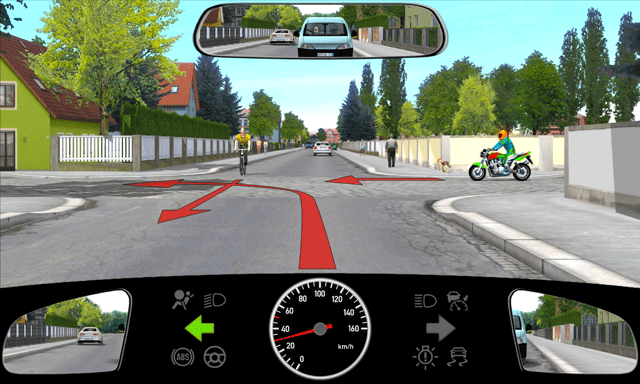
Explicação
It is necessary to comply to the left yields to right rule. Grant the motorcyclist from the right the right of way before entering the intersection. Next, you as a left-turning driver, have to give priority to the oncoming cyclist. For the motorcyclist the cyclist comes from the right and thus has priority.
-
Pergunta 5 de 47
What is the right course of action?
1.3.01-0135 Pontos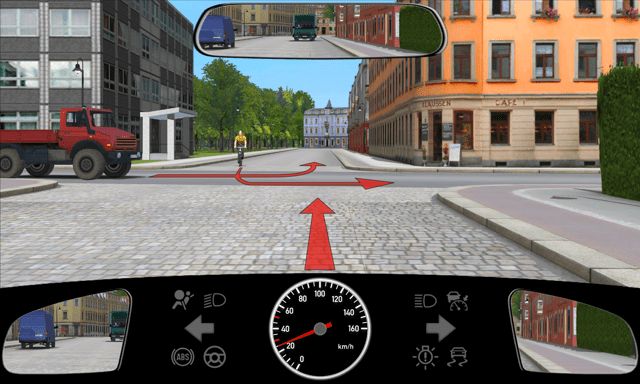
Explicação
Left yields to right applies in intersections and T-junctions without a traffic sign. Since no vehicle comes from the right, you may first cross the intersection. After that the truck drives and finally the cyclist.
-
Pergunta 6 de 47
What is the right course of action?
1.3.01-0165 Pontos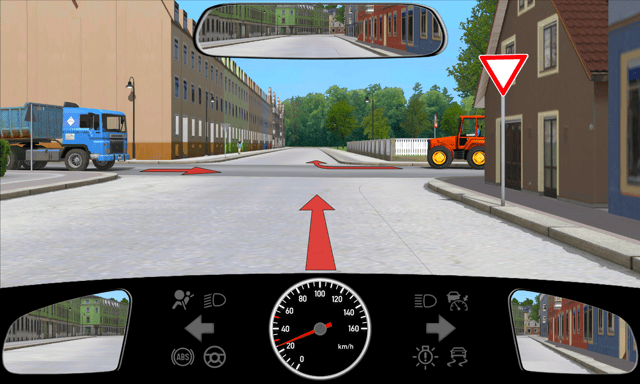
Explicação
The traffic sign "Give way" regulates the right of way here. That means you have to wait and let both, the right and left vehicle, pass.
-
Pergunta 7 de 47
What is the right course of action?
1.3.01-0175 Pontos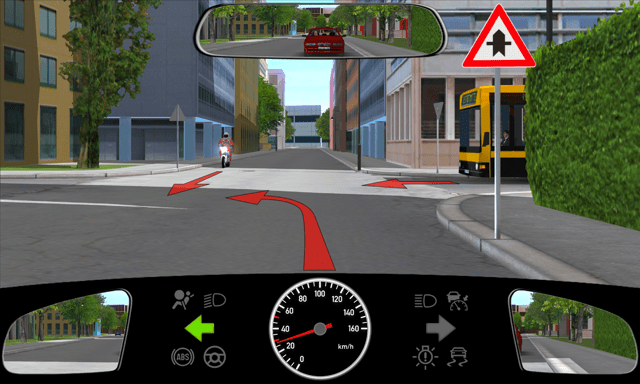
Explicação
Here the traffic sign "right of way at the next intersection or T-junction" applies. Since you want to turn left you will have to let the oncoming vehicle pass. You may then turn in front of the vehicle coming from the right.
-
Pergunta 8 de 47
What is the right course of action?
1.3.01-0185 Pontos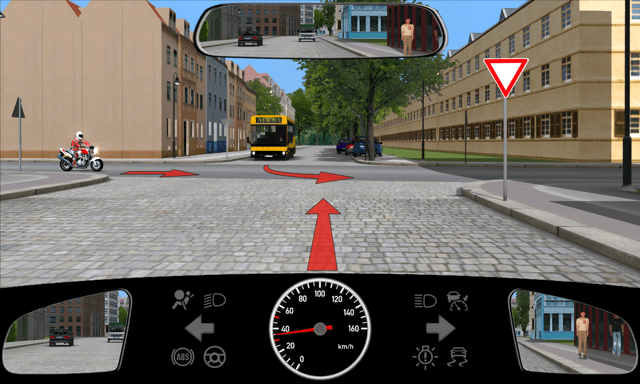
Explicação
The traffic sign "Give way" suspends the left yields to right regulation. Thus, the motorcycle coming from the left has priority. You have to wait. Then the left-turning driver of the oncoming traffic must first let you cross the intersection before he can turn.
-
Pergunta 9 de 47
What is the right course of action?
1.3.01-0215 Pontos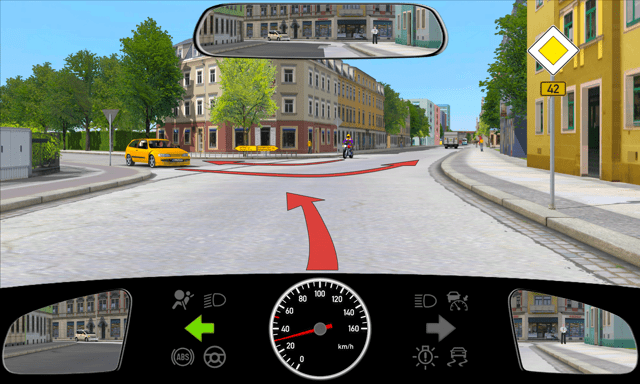
Explicação
The traffic sign stands for a "priority road". You may therefore turn in front of the vehicle coming from the left. First, however, you must let the oncoming vehicle turn, because you have to wait as a left-turning driver.
-
Pergunta 10 de 47
What is the right course of action here?
1.3.01-0345 Pontos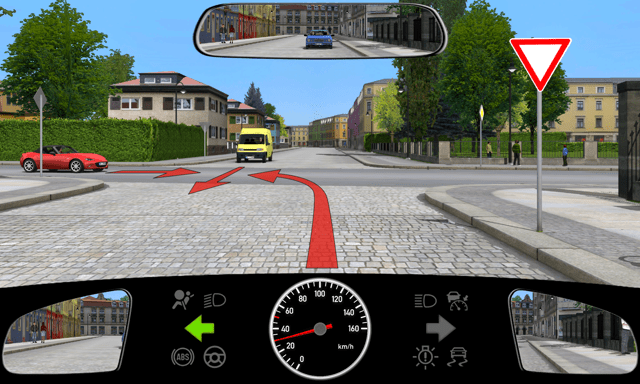
Explicação
The right-of-way rule says that you have to let the yellow vehicle drive through.
-
Pergunta 11 de 47
What is the right thing to do?
1.3.01-0355 Pontos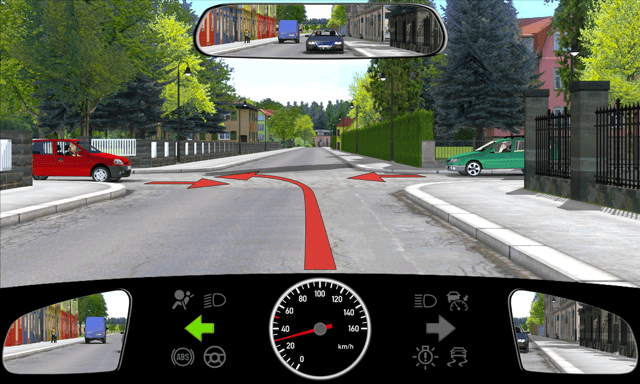
Explicação
Since there are no signs at this intersection, which determine the priority of the drivers, the right of way "left yields to right" applies. For this reason, you need to let the car on your right pass first. Afterwards, the driver on the left has to give you the right of way.
-
Pergunta 12 de 47
What is the right thing to do?
1.3.01-0385 Pontos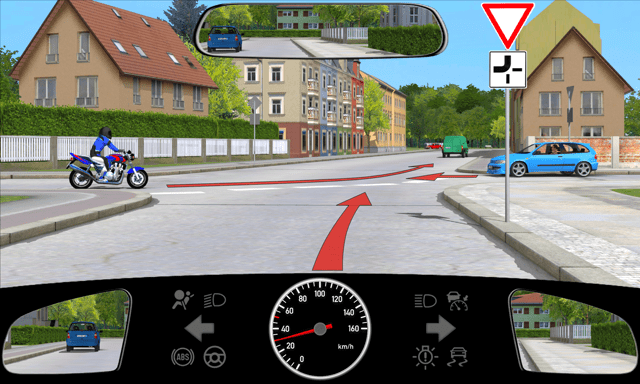
Explicação
According to the signage, the motorcyclist is on the priority road and is therefore allowed to drive first. Both the driver of the blue car and you are on a lane with the "Give way" sign. As this does not clear up the situation, "left yields to right" applies. For this reason, you have to let the other vehicle drive through.
-
Pergunta 13 de 47
Who has priority here?
1.3.01-0395 Pontos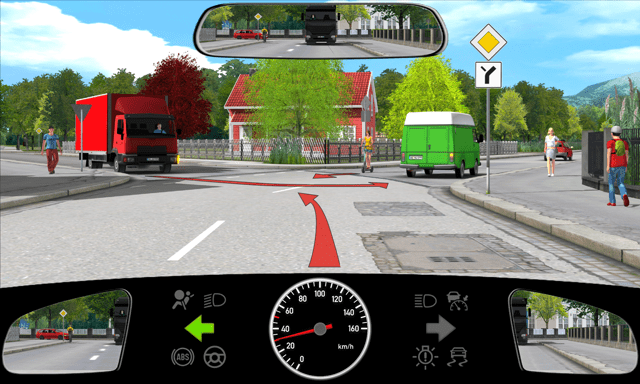
Explicação
The electric scooter follows the priority road and therefore has the right of way.
-
Pergunta 14 de 47
What is the right course of action here?
1.3.01-0405 Pontos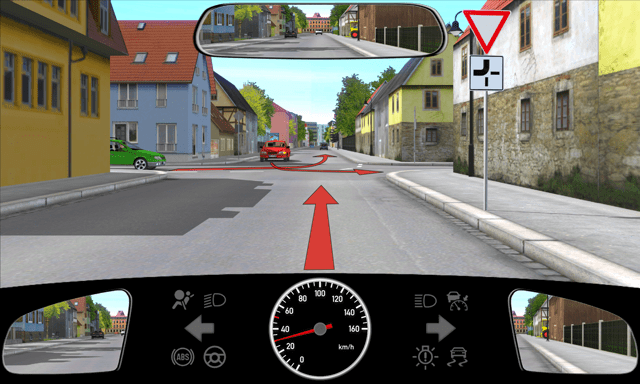
Explicação
The green and red cars are on a turning main road. You are on the secondary road. The green car remains on the main road, which means that the green car is allowed to drive first, then the red car and you are allowed to drive last.
-
Pergunta 15 de 47
What is the right course of action here?
1.3.01-0415 Pontos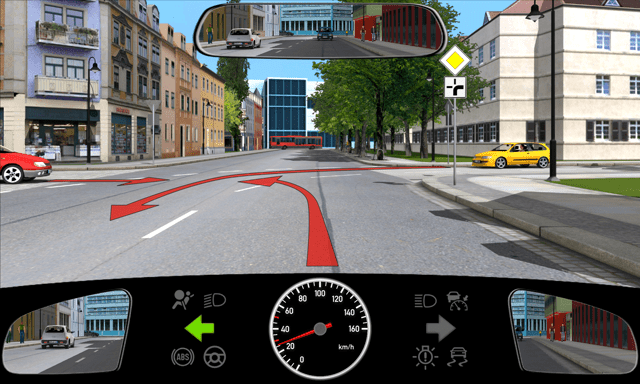
Explicação
You and the yellow car are on a turning main road. The red car is on a secondary road. Because the yellow car remains on the main road, it is allowed to drive first. You may drive second and the red car can drive last.
-
Pergunta 16 de 47
What is the right course of action?
1.3.01-0425 Pontos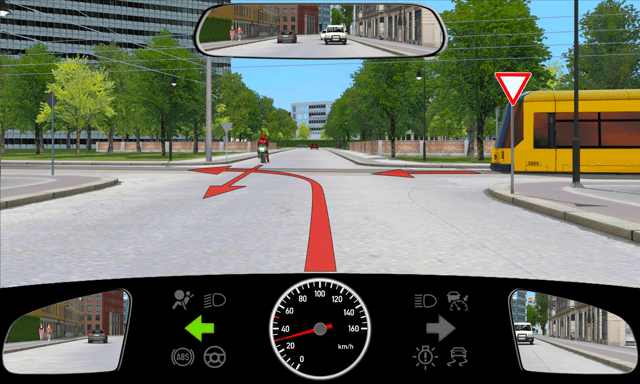
Explicação
The sign at the intersection indicates that you must give way. Since you want to turn left, you must let the tram as well as the oncoming motorbike pass and enter the intersection last.
-
Pergunta 17 de 47
What is the right course of action here?
1.3.01-0435 Pontos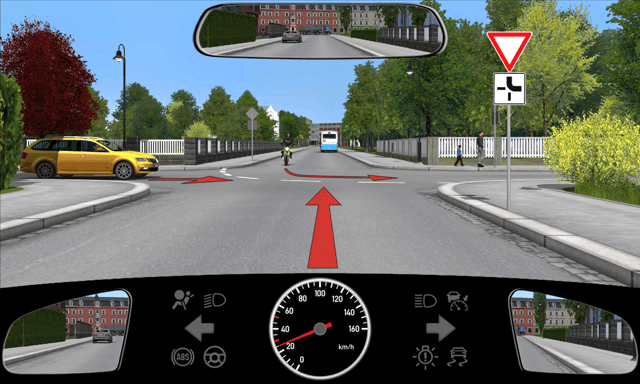
Explicação
The motorbike is on a turning main road and is allowed to turn in front of the yellow car and you. According to the "right before left" rule at crossroads, you may drive in front of the yellow car.
-
Pergunta 18 de 47
What is the right course of action here?
1.3.01-0445 Pontos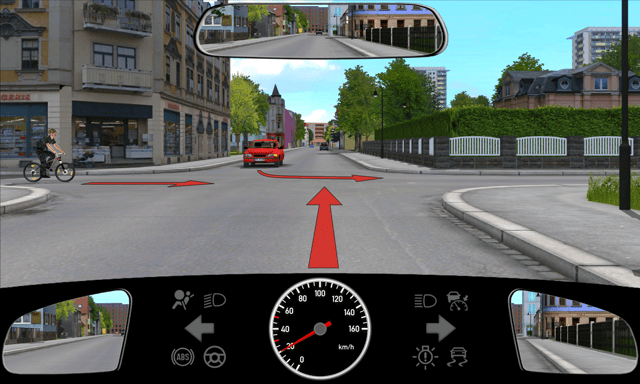
Explicação
At this intersection applies to the right before left. So you can drive first. "Right before left" applies to intersections where the right of way is not regulated by signs, traffic lights or traffic police officers.
-
Pergunta 19 de 47
What is the right course of action here?
1.3.01-0455 Pontos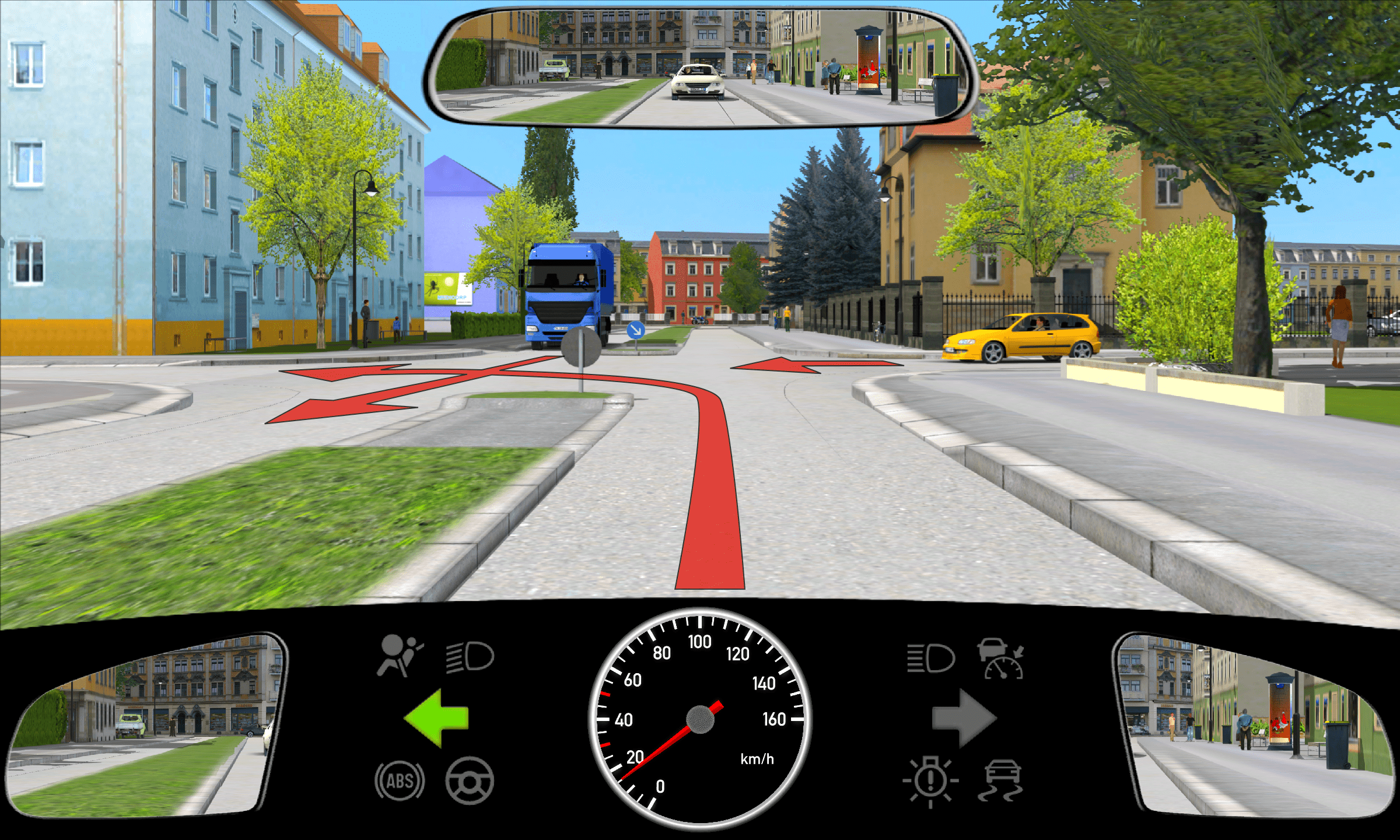
Explicação
At this junction, the right before left rule applies, which means that you must let the yellow vehicle pass. You must also let the lorry through, as you want to turn left and the lorry wants to continue straight ahead in its lane.
-
Pergunta 20 de 47
What is the right course of action?
1.3.01-0465 Pontos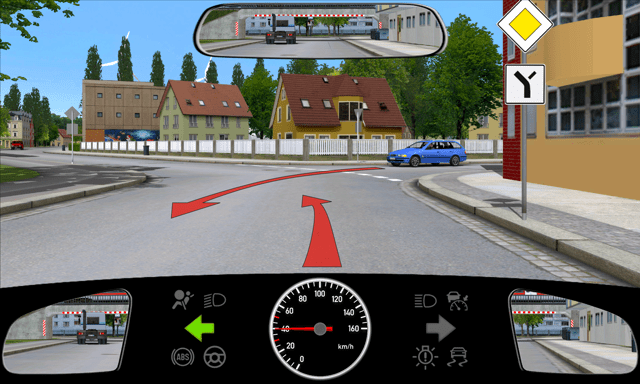
Explicação
You are on the turning priority road and follow its course. Therefore, you must drive first and the other vehicle must wait.
-
Pergunta 21 de 47
What is the right course of action here?
1.3.01-0475 Pontos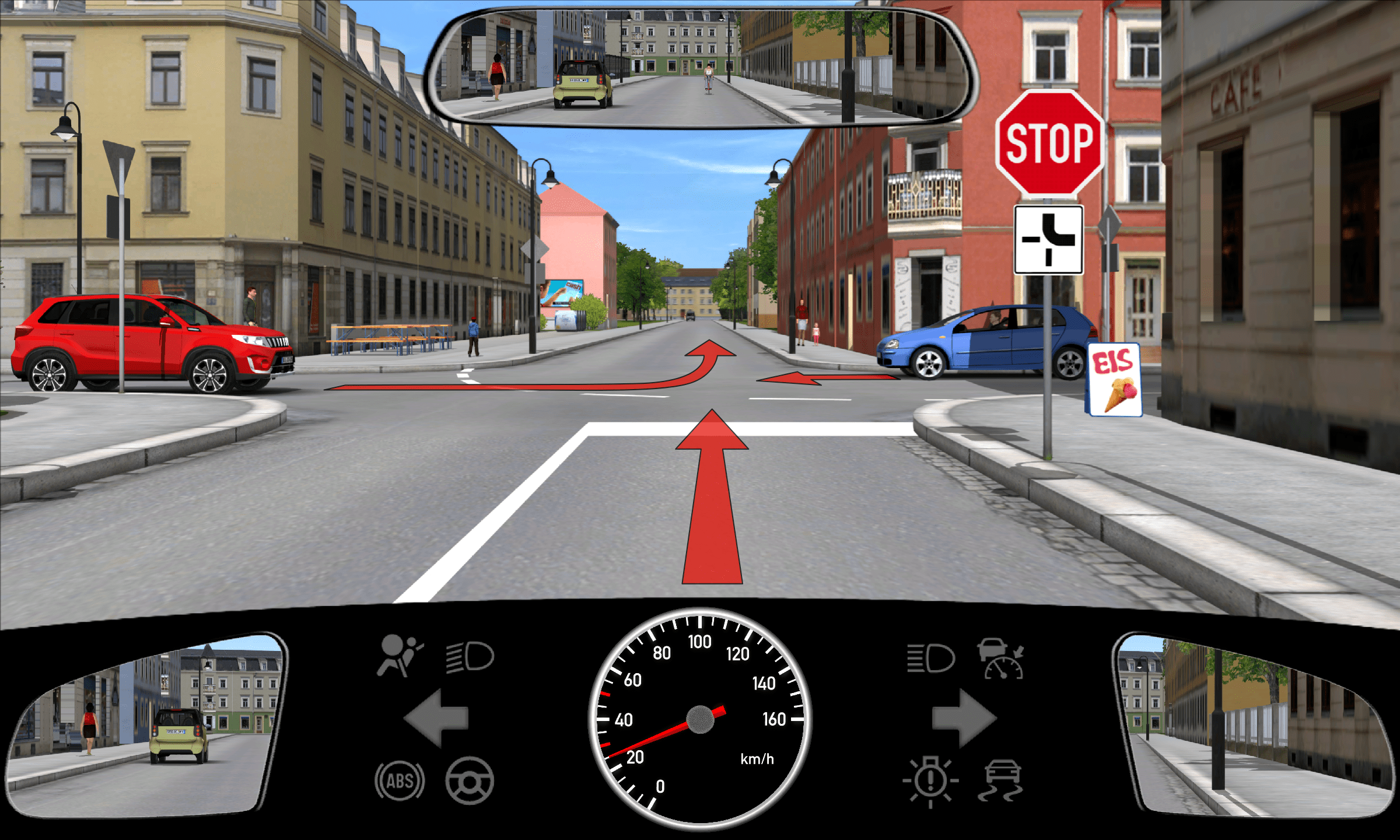
Explicação
You are approaching a priority road that is about to turn. As you are coming from a side road, you must allow the blue car leaving the priority road to pass. You must also stop at a stop sign at the stop line before you are allowed to enter the junction.
-
Pergunta 22 de 47
What is the right course of action?
1.3.01-0485 Pontos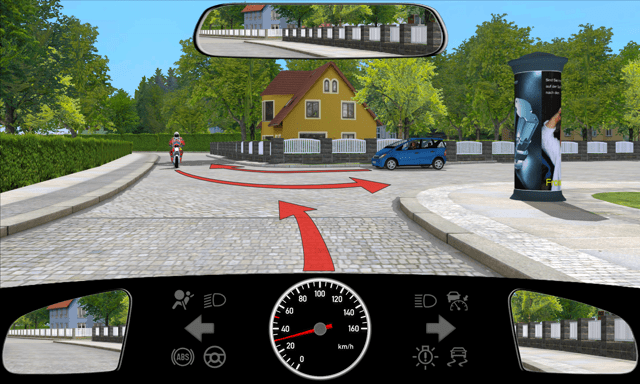
Explicação
At an intersection, which has no traffic signs, "left yields to right" applies. If a car drives from the right wants to turn right, he is allowed to drive first and you have to wait. On the other hand, if a vehicle approaching you wants to turn left, you have the right of way, because if a driver wants to turn, must always give priority to oncoming traffic.
-
Pergunta 23 de 47
What is the right course of action?
1.3.01-0495 Pontos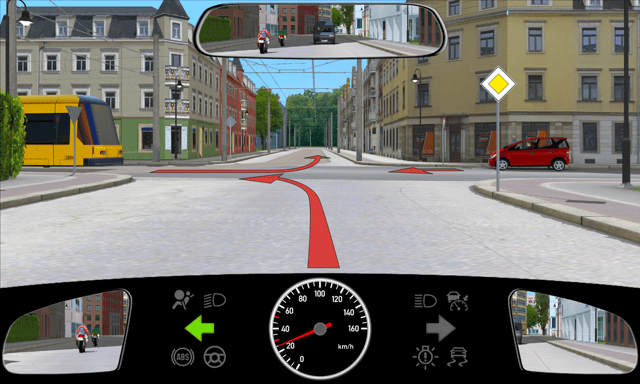
Explicação
The traffic sign indicates that you are on a priority road. The tram and the driver of the red car, on the other hand, must follow the sign "Give way" and wait. You drive first.
-
Pergunta 24 de 47
What is the right course of action?
1.3.01-0505 Pontos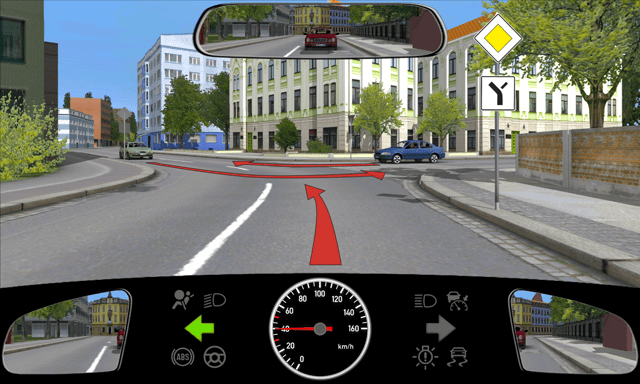
Explicação
If you are traveling on a priority road, you are always allowed to drive first. A car that meets you and wants to turn left, however, has to wait. If a car driver wants to turn into your street from the right, he/she must also give you the right of way, since you are on a priority road.
-
Pergunta 25 de 47
What is the correct conduct?
1.3.01-0515 Pontos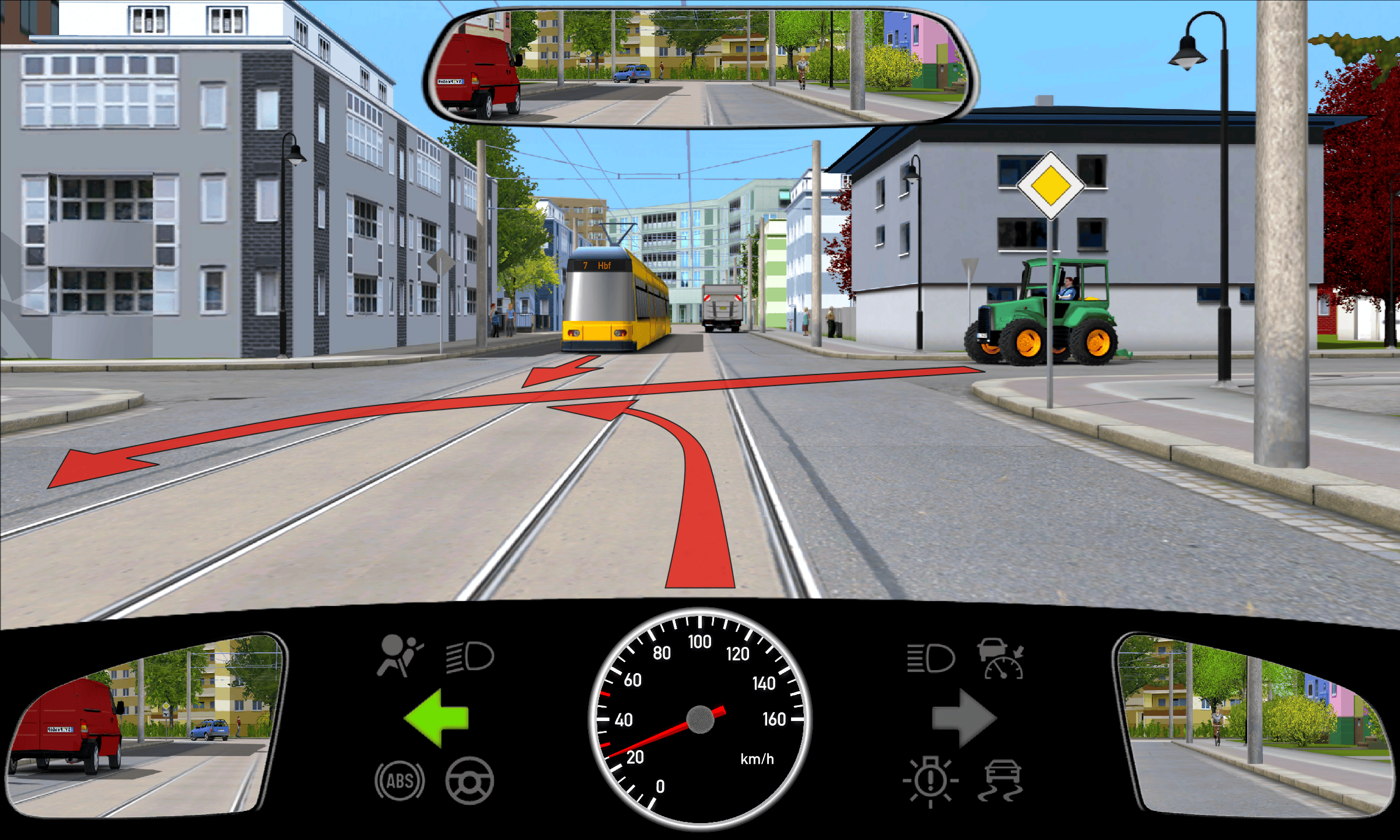
Explicação
The following hierarchy applies on a priority road: In principle, vehicles on a priority road always have priority. However, when leaving a priority road, you must give priority to oncoming vehicles. However, vehicles that want to drive onto a priority road must give priority to other road users on the priority road. This means you have to give priority to the tram because it is traveling on a priority road, does not change direction and you want to turn left.
-
Pergunta 26 de 47
What is the right course of action?
1.3.01-0525 Pontos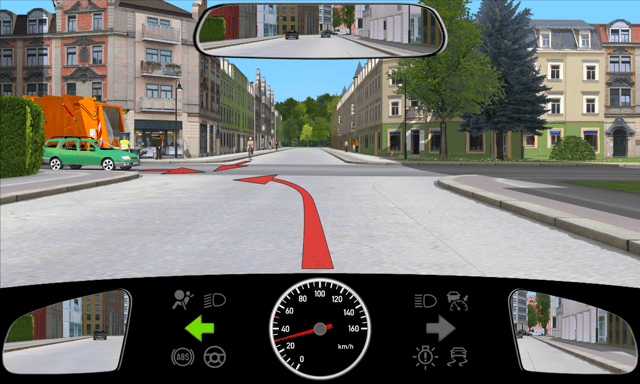
Explicação
Due to the rule "left yields to right" you would have priority over the green car. However, you must give priority to the oncoming cyclist whose lane you would be crossing. To ensure the traffic flow, it is therefore advisable to let the driver of the green car first enter the intersection.
-
Pergunta 27 de 47
You want to turn right into a priority road. What must you look out for?
1.3.01-0535 PontosExplicação
If you turn right into a priority road, you must give priority to all road users. This applies both to vehicles that come from the right and those that pass from the left. In addition, be sure to take care of cyclists and pedestrians who are to your right or behind you.
-
Pergunta 28 de 47
What is the right course of action?
1.3.01-0565 Pontos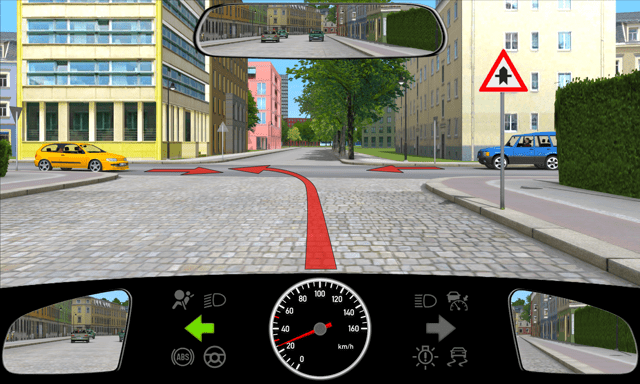
Explicação
At this intersection you have right of way. This is indicated by the traffic sign. That's why the vehicles have to wait from the right and left and let you drive first.
-
Pergunta 29 de 47
What is the right course of action?
1.3.01-0575 Pontos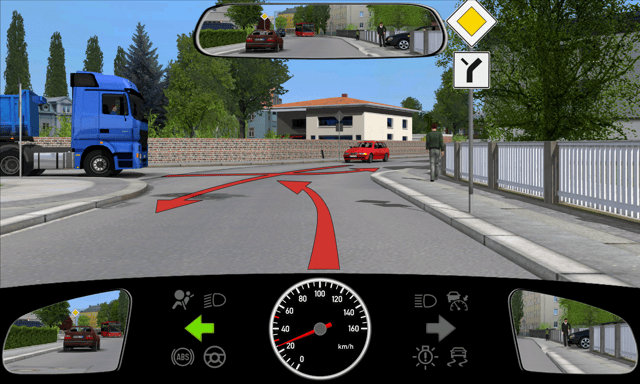
Explicação
If you want to turn left from a priority road and another car is driving next to you, which remains on the priority road, you must give priority to this car driver. A vehicle that is not on the priority road, on the other hand, has to wait.
-
Pergunta 30 de 47
What is correct in this situation?
1.3.01-0585 Pontos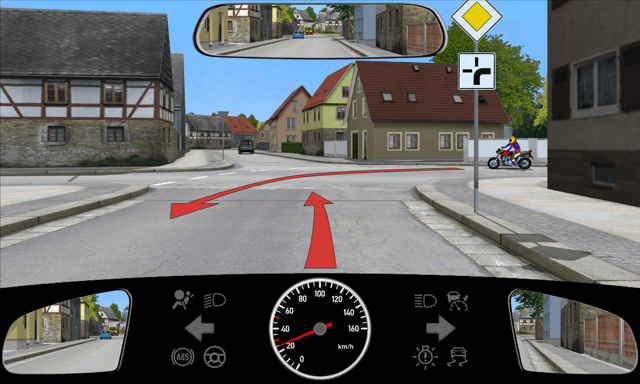
Explicação
You are on a turning priority road, but you don't want to follow it to the right and instead continue straight ahead. From the right a motorcycle follows the course of the priority road. You have to wait and give priority to this vehicle.
-
Pergunta 31 de 47
Who has priority?
1.3.01-0595 Pontos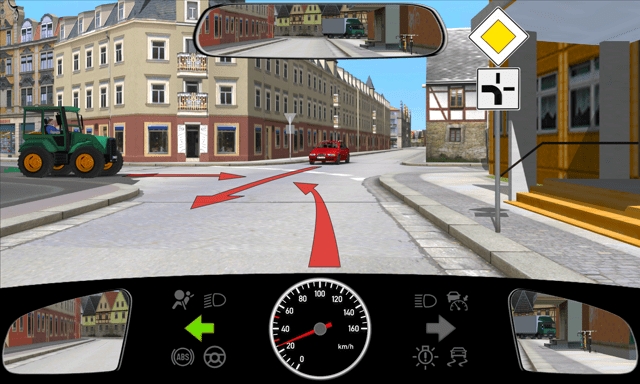
Explicação
You follow a turning priority road. Therefore, you have priority over the driver of the car driving straight ahead. The driver of the tractor also has to wait because he/she leaves the priority road and the rule left yields to right applies to you.
-
Pergunta 32 de 47
What is the right thing to do?
1.3.01-0605 Pontos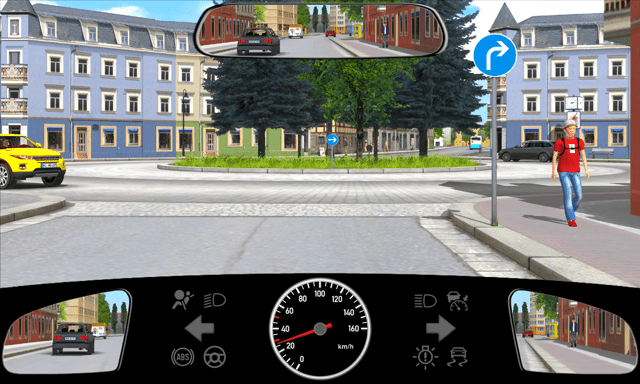
Explicação
If no traffic signs have been erected to regulate the right of way, this is so-called circular traffic. Here, the basic rule of right before left applies. As you are turning into circular traffic, you must signal.
-
Pergunta 33 de 47
What is the right course of action?
1.3.01-1035 Pontos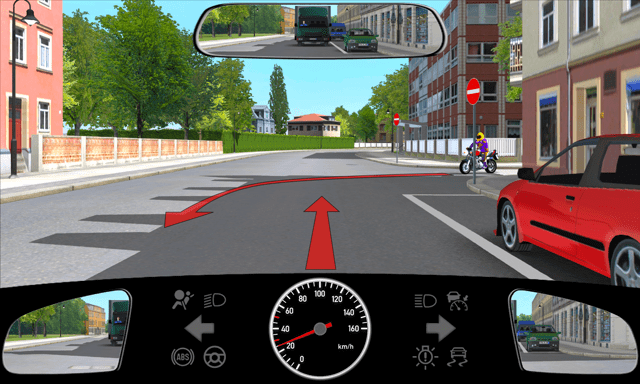
Explicação
Who comes from the right, has right of way at intersections and T-junctions. Because if there is no priority-controlling traffic sign, "left yields to right" applies. No matter the size and type of the vehicle.
-
Pergunta 34 de 47
You want to turn left. Who is required to wait?
1.3.01-1125 Pontos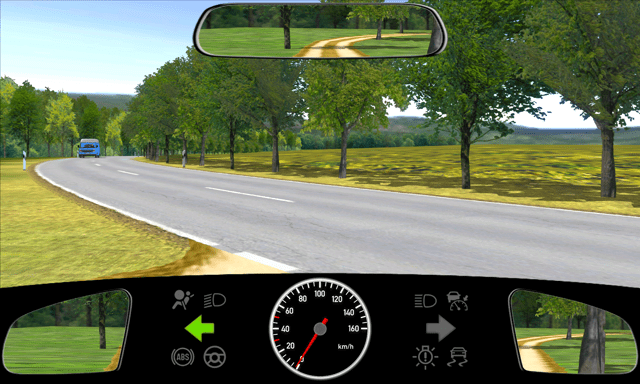
Explicação
At intersections and T-junctions without a traffic-regulating traffic sign, the rule "left yields to right" applies. Field and forest paths, however, are subordinate traffic routes. If you want to turn from a field or forest path onto a road, you have to wait.
-
Pergunta 35 de 47
What is the right course of action?
1.3.01-1135 Pontos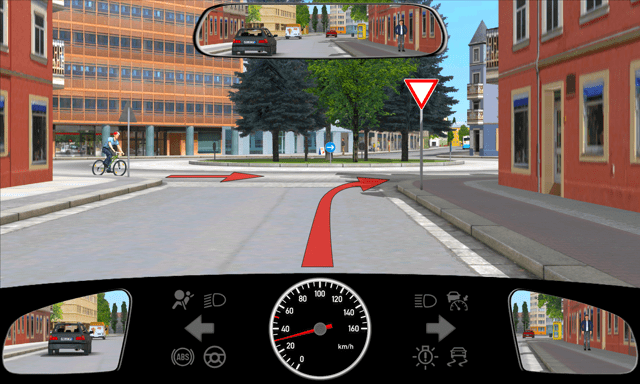
Explicação
If you want to turn into a roundabout, you will be asked to wait by the "Give way" traffic sign. The drivers driving in a circle have priority here.
-
Pergunta 36 de 47
What is the right course of action?
1.3.01-1145 Pontos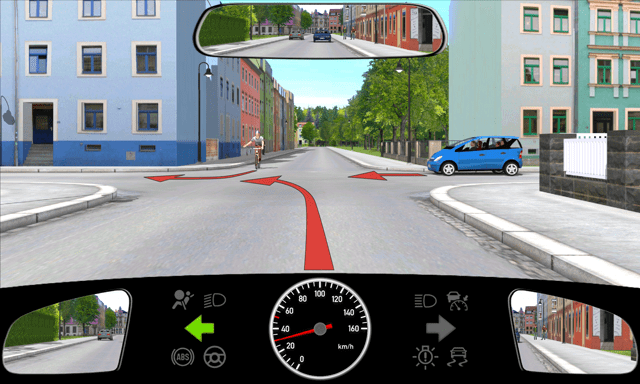
Explicação
Here, "left yields to right" applies as well as the rules for left turns. The car coming from the right may drive first. Since you want to turn left, the oncoming cyclist has right of way.
-
Pergunta 37 de 47
What is the right course of action?
1.3.01-1165 Pontos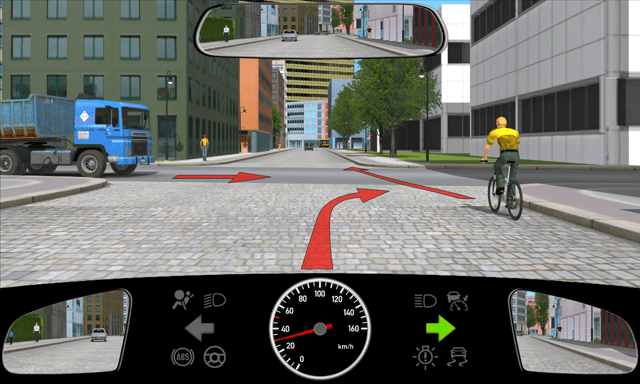
Explicação
At this spot, the right of way is not regulated by traffic signs. Therefore, at this intersection left yields to right applies. Here the straight driving cyclist has priority over you as you want to turn. The truck coming from the left may drive last.
-
Pergunta 38 de 47
What is the right course of action?
1.3.01-1175 Pontos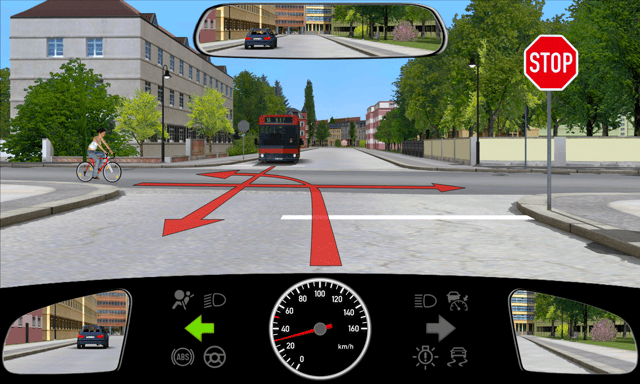
Explicação
A vehicle coming from the left is already on the priority road. Therefore, it is allowed to drive first. If you turn left, you will have to let oncoming vehicles drive past first. Due to the traffic sign, you have to stop at the stop line ("Give way") or stop completely and are not even allowed to trundle ("Stop sign").
-
Pergunta 39 de 47
What is the right course of action?
1.3.01-1185 Pontos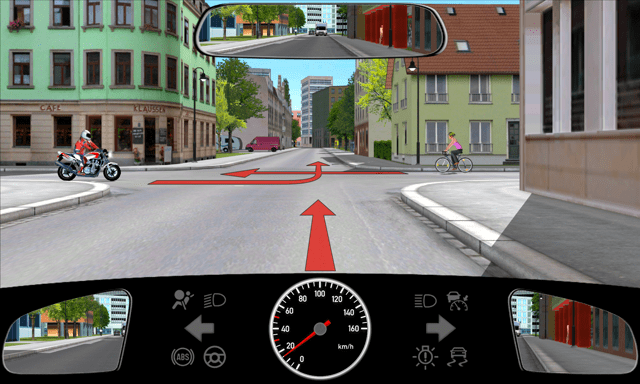
Explicação
Since the right of way here is not regulated by traffic signs, left yields to right applies. This means: you must stop and grant access to vehicles from the right. The bike coming from the left has to let you in.
-
Pergunta 40 de 47
You would like to cross over a priority road. The view to both sides is very restricted due to parked vehicles. What should you do?
1.3.01-1195 PontosExplicação
If visibility is limited you should only proceed with caution. Slowly get into the intersection until you can see the priority road. This is how you act responsibly.
-
Pergunta 41 de 47
What is the right course of action?
1.3.01-1205 Pontos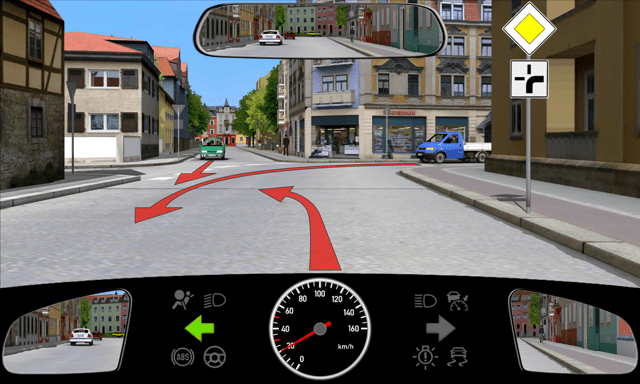
Explicação
If you are on a priority road and you want to turn left, you will have to let oncoming cars drive by. If a vehicle drives next to you, which contrary to you remains on the priority road, then this car driver has priority. However, if a vehicle from another street with the traffic sign "Give way" wishes to turn into your priority road, he/she may only drive last.
-
Pergunta 42 de 47
What is the right course of action?
1.3.01-1255 Pontos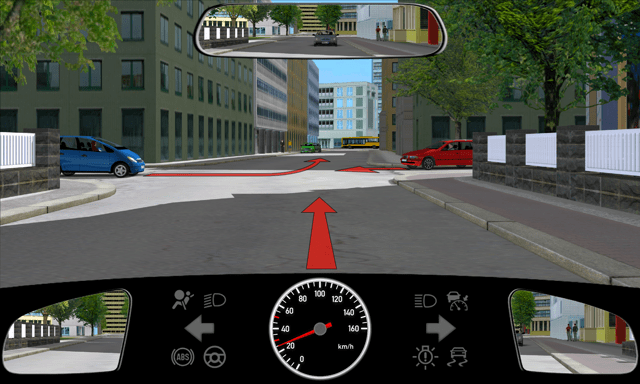
Explicação
Without additional priority-regulating traffic signs or traffic lights, the general "left yields to right" rule applies. The car coming from the right must be given priority. You have priority over the car coming from the left.
-
Pergunta 43 de 47
What is the right course of action?
1.3.01-1265 Pontos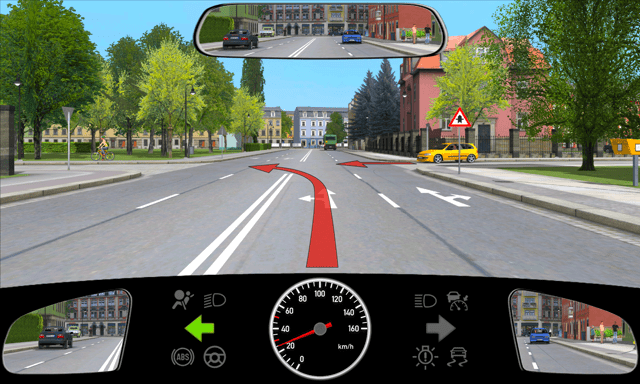
Explicação
At the traffic sign "right of way at the next intersection or T-junction", you may drive first at the next intersection. A vehicle coming from the left must wait.
-
Pergunta 44 de 47
In what sequence may each continue driving?
1.3.01-1275 Pontos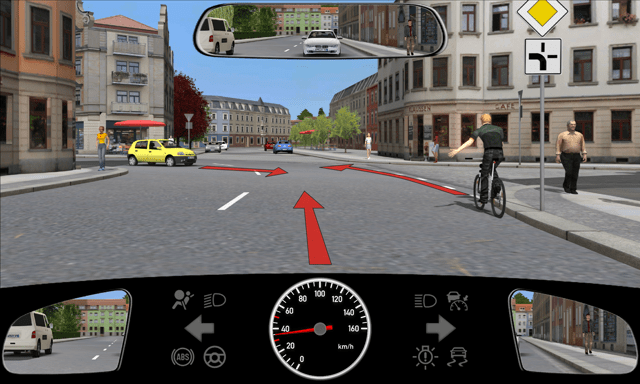
Explicação
You are on a turning priority road and you want to leave straight ahead. The cyclist follows the course of the priority road and therefore has priority over you. The car from the left must grant you right of way according to the rule "left yields to right".
-
Pergunta 45 de 47
Who can move first in this situation?
1.3.01-1285 Pontos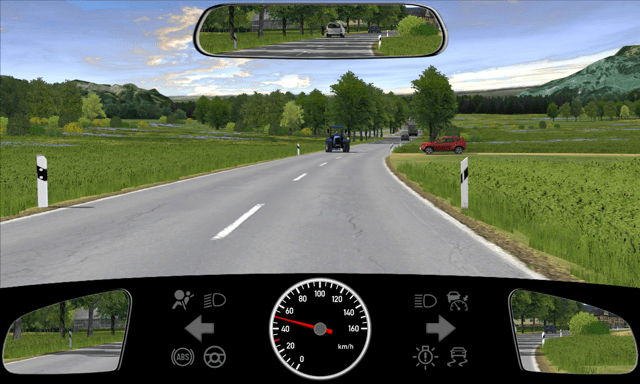
Explicação
The basic rule "right before left" does not apply to vehicles driving out of a field or forest path onto another road.
-
Pergunta 46 de 47
What is the right course of action here?
1.3.01-1295 Pontos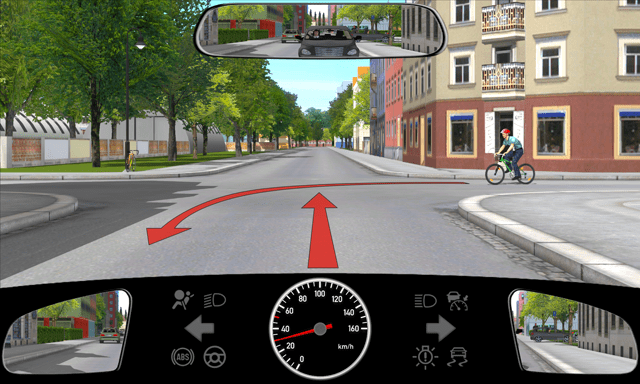
Explicação
At intersections and junctions, whoever is coming from the right has the right of way.
-
Pergunta 47 de 47
Which is correct in this situation?
1.3.01-1305 PontosExplicação
You can see from the signs that this is not a roundabout. Therefore, right before left applies.