
1.2.09 Abbiegen, Wenden und Rückwärtsfahren
1. Voreinander abbiegen
Zwei Fahrzeuge kommen sich auf einer Kreuzung entgegen und wollen beide links abbiegen. Im Regelfall biegen sie voreinander ab – also so, dass sie aneinander vorbeifahren, ohne sich zu umrunden.
2. Wer hat Vorrang?
- 🛑 Gegenverkehr: Entgegenkommende Fahrzeuge und Radfahrer haben immer Vorrang vor Linksabbiegern.
- 🛑 Fußgänger: Wer die Straße überqueren will, in die Sie einbiegen, hat Vorrang.
- 🛑 Radfahrer/E-Scooter: Fahren sie neben Ihnen geradeaus weiter, haben sie Vorrang. Schulterblick nicht vergessen!
- 🛑 Straßenbahnen: Lassen Sie die Straßenbahn beim Abbiegen immer zuerst fahren.
3. Wann blinken?
Eine Änderung der Fahrtrichtung müssen Sie immer anzeigen.
- Blinken Sie, wenn Sie dem Verlauf einer abknickenden Vorfahrtstraße folgen.
- Blinken Sie vor dem Abbiegen in eine Einmündung oder in ein Grundstück.
- Kreisverkehr: NUR beim Verlassen blinken, NIE beim Einfahren!
4. Richtig einordnen
Die Reihenfolge: 1. Nachfolgenden Verkehr beobachten (Spiegel und Schulterblick) ➔ 2. Fahrtrichtung anzeigen ➔ 3. Einordnen.
Einbahnstraßen: Zum Linksabbiegen ordnen Sie sich ganz links ein.
Mehrspuriges Abbiegen: Bleiben Sie auf Ihrem Fahrstreifen! Wechseln Sie während des Abbiegens nicht die Spur. Wollen Sie direkt danach rechts abbiegen, nehmen Sie zum Linksabbiegen den rechten der Abbiegestreifen.
⚠️ Achtung, Prüfungsfalle
Auch wenn Sie auf einer Vorfahrtstraße fahren: Beim Abbiegen müssen Sie den Verkehr durchlassen, der geradeaus weiterfährt (z. B. eine Straßenbahn) – notfalls anhalten.
Übungsfragen (34)
-
Frage 1 von 34
Sie möchten nach links abbiegen. Wann müssen Sie auf den nachfolgenden Verkehr achten?
1.2.09-0164 PunkteErklärung
When turning left, you should be aware of following traffic before turning and before merging.
-
Frage 2 von 34
Zwei Fahrzeuge kommen sich auf einer Kreuzung entgegen. Beide Fahrzeuge möchten jeweils nach links abbiegen. In welchem Ausnahmefall müssen sie hintereinander abbiegen?
1.2.09-0173 PunkteErklärung
Always turn in front of each other. If the traffic situation or the design of the intersection, e.g. lane markings, requires it, you must turn one behind the other.
-
Frage 3 von 34
Zwei Fahrzeuge kommen sich auf einer Kreuzung entgegen. Beide Fahrzeuge möchten jeweils nach links abbiegen. Wie müssen sich die beiden Fahrer im Regelfall verhalten?
1.2.09-0183 PunkteErklärung
If two left-turning vehicles come towards each other, they turn in front of each other (tangentially).
-
Frage 4 von 34
Sie möchten nach links abbiegen. Welche Fahrlinie müssen Sie einhalten?
1.2.09-0194 Punkte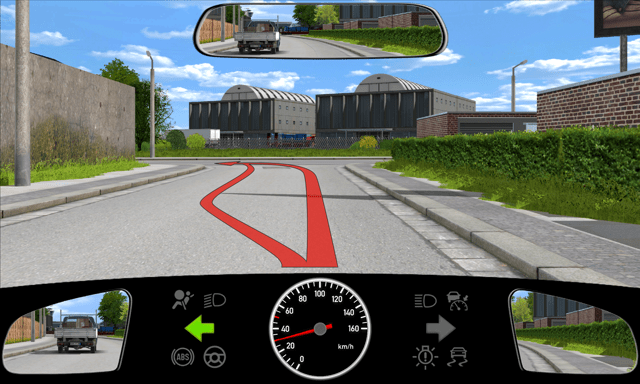
Erklärung
Use the right-hand driving line. The left-hand driving line is intended for oncoming traffic.
-
Frage 5 von 34
Welchem Verkehrsteilnehmer müssen Sie hier Vorrang gewähren?
1.2.09-0205 PunkteErklärung
When turning, you must give priority to oncoming traffic and cross traffic - in this case cyclists and pedestrians. Although your traffic lights are green, you must wait until the pedestrian has crossed the road. Pedestrians have priority over turning vehicles.
-
Frage 6 von 34
Sie möchten den Kreisverkehr an dieser Ausfahrt verlassen. Was ist richtig?
1.2.09-0214 Punkte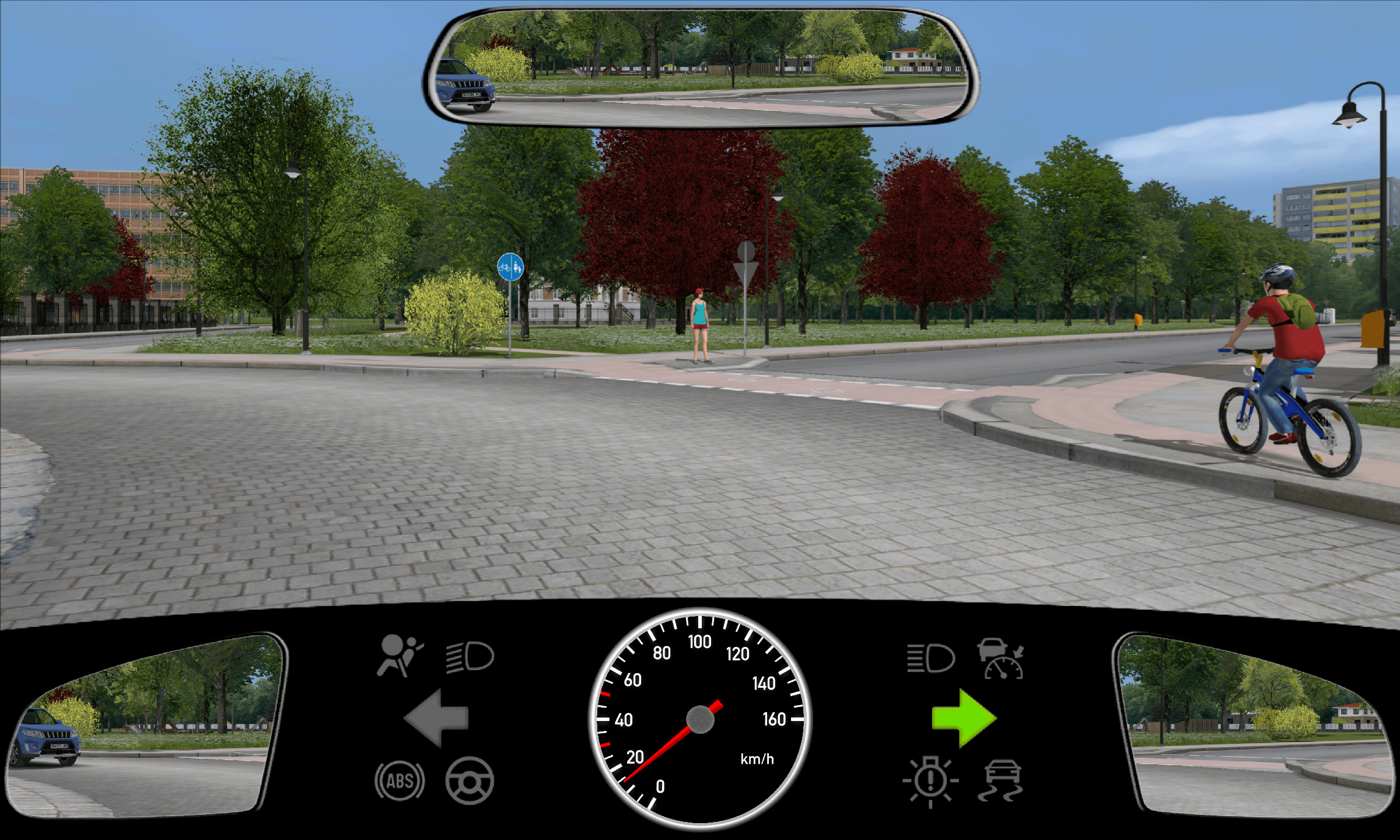
-
Frage 7 von 34
Sie möchten hier nach rechts abbiegen. Was ist richtig?
1.2.09-0224 Punkte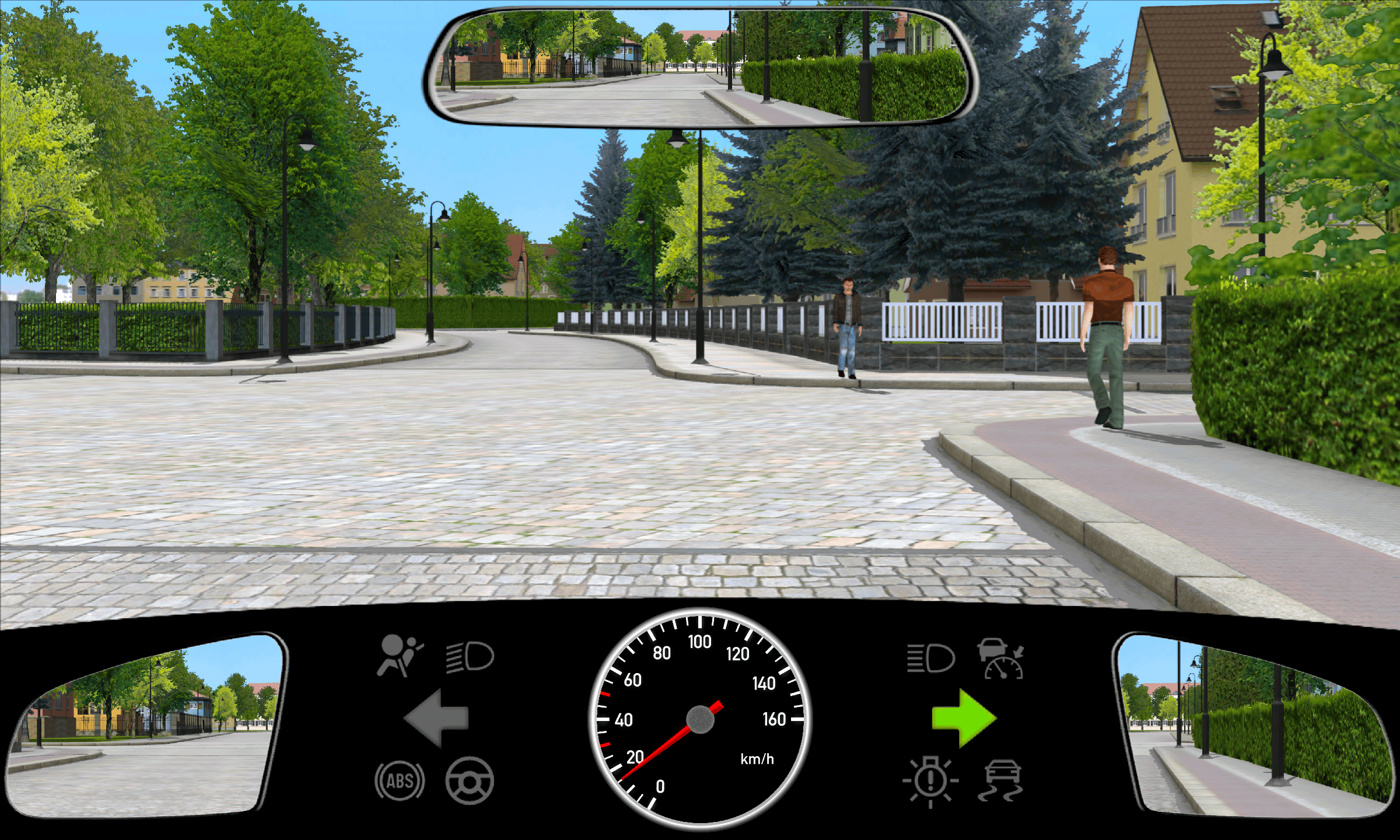
Erklärung
You must let both pedestrians cross the road. They do not change their direction of movement and therefore have priority over you.
-
Frage 8 von 34
Was kann bei mehrspurigem Abbiegen zu besonders gefährlichen Situationen führen?
1.2.09-1014 PunkteErklärung
Drive at moderate speed into multi-lane turns. At too fast a pace you could get out of your lane and get into the lane of parallel driving vehicles. Avoid a lane change within this turning situation. There is a risk that a vehicle is directly behind you in your blind spot.
-
Frage 9 von 34
Alle drei Fahrzeuge wollen links abbiegen. Wer hat sich richtig eingeordnet?
1.2.09-1033 Punkte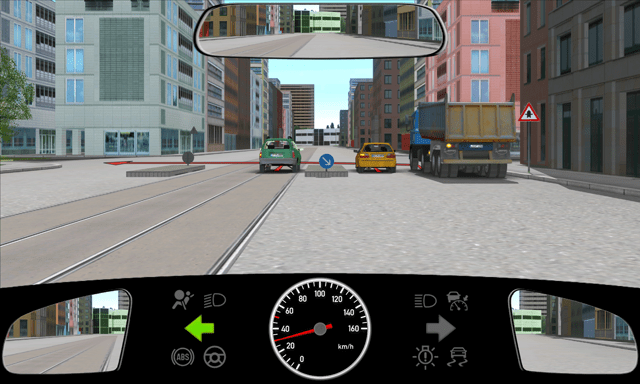
Erklärung
Only the yellow car merged into the lane correctly. He passed right, as it says on the road sign on the safety island, in order to then get in proper lane as left as possible to prepare his turn to the left. The green car is completely wrong on the rails; In this situation, the truck may only drive straight ahead or turn right.
-
Frage 10 von 34
Nach dem Linksabbiegen wollen Sie sofort rechts abbiegen. Wie ordnen Sie sich ein?
1.2.09-1043 Punkte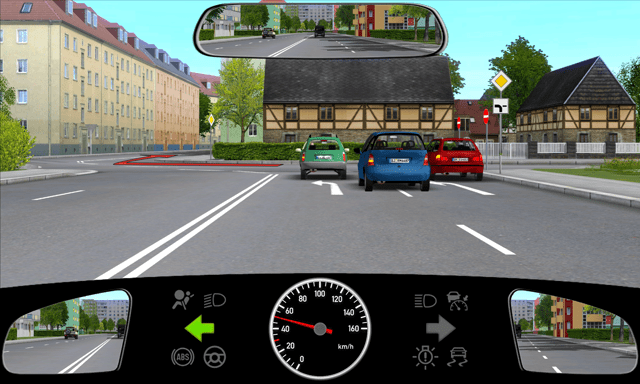
Erklärung
If you want to turn right again immediately after turning left, you get in proper lane on the right, if there are two lanes for turning left. Otherwise, keep as far to the right as possible. This is the only way you can turn right after a left turn without hindering other road users.
-
Frage 11 von 34
Wer muss die Fahrtrichtungsänderung anzeigen?
1.2.09-1073 Punkte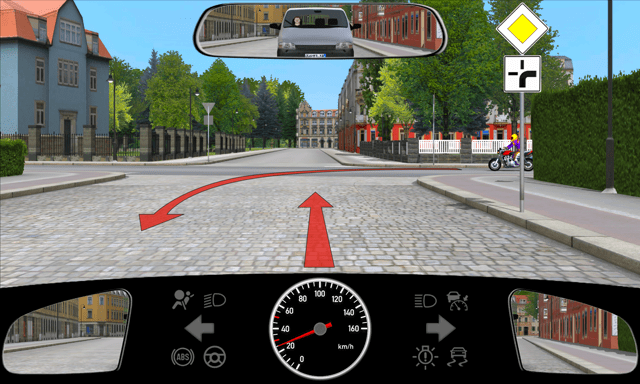
-
Frage 12 von 34
Sie befinden sich im Kreisverkehr. Was ist zu beachten?
1.2.09-1093 PunkteErklärung
In a roundabout you may only stop if this is unavoidable due to traffic, for example due to a traffic jam. Indicate when leaving the roundabout. You can only drive over paved or asphalted central islands if it is unavoidable due to the size of the vehicle. Always give priority to cyclists traveling on your right side and remaining in the roundabout.
-
Frage 13 von 34
In welcher Situation ist Wenden besonders gefährlich?
1.2.09-1114 PunkteErklärung
When turning in poor visibility (fog), dangerous situations can arise. The same applies when turning in curves and before crests.
-
Frage 14 von 34
Wer muss blinken?
1.2.09-1123 Punkte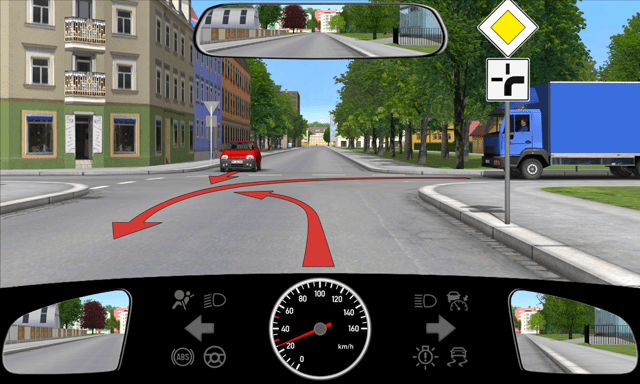
Erklärung
Changing the direction of travel must always be indicated by pressing the indicator. If you stay on a turning priority road you should also indicate that. Therefore, the blue truck must indicate. You, who's turning left, must also indicate.
-
Frage 15 von 34
Wer muss hier die Fahrtrichtungsänderung anzeigen?
1.2.09-1133 Punkte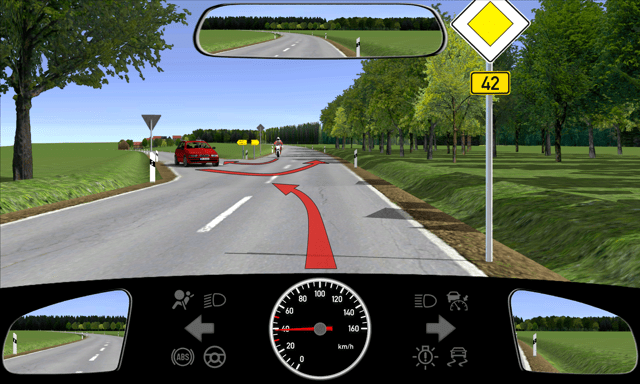
Erklärung
The change of the direction of travel must always be indicated early enough. All three drivers intend to turn. Therefore, all three vehicles must indicate.
-
Frage 16 von 34
In welchen Fällen müssen Sie eine Änderung der Fahrtrichtung anzeigen?
1.2.09-1174 PunkteErklärung
If you want to turn into a T-junction or a property, you have to indicate. The same applies if you follow a turning priority road - here, too, the change of the direction of travel must be indicated.
-
Frage 17 von 34
Warum müssen Sie jetzt warten?
1.2.09-1194 PunkteErklärung
Drivers who turn need to wait for vehicles from the opposite direction, even for cyclists. The red car has to wait until the green car and the cyclist are gone.
-
Frage 18 von 34
Sie möchten links abbiegen. In welcher Reihenfolge bereiten Sie das Abbiegen vor?
1.2.09-1204 PunkteErklärung
If you want to turn left, prepare the turn in the following order: 1. look, 2. indicate, 3. arrange. Looking means that you are observing follow-up traffic in the mirror and over your shoulder. Then press the indicator to the left side. Only if you can rule out danger for other road users, you may merge left in order to turn.
-
Frage 19 von 34
Welches Verhalten ist richtig?
1.2.09-1215 Punkte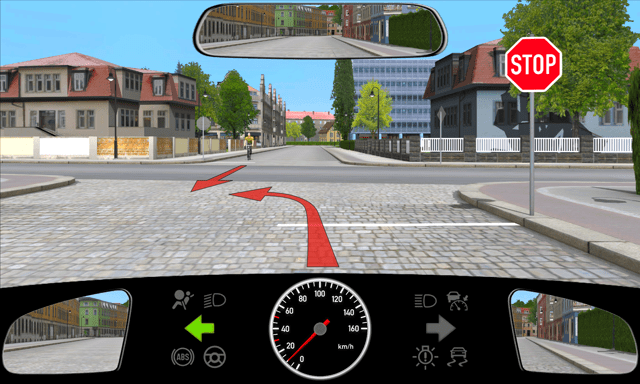
Erklärung
In front of the traffic sign "Stop! Give way!", colloquially also called stop sign, you must always stop. Mostly there is a stop line. The wheels must be stationary for at least a short amount of time. The cross traffic has right of way - then the cyclists on the opposite side. As a driver turning left, you have to grant him the right of way.
-
Frage 20 von 34
Sie möchten nach links abbiegen. Wem müssen Sie Vorrang gewähren?
1.2.09-1234 PunkteErklärung
The oncoming traffic when turning left, has always right of way. This also applies to cyclists; they are granted priority. If pedestrians cross the street you want to turn into, the pedestrians have priority too.
-
Frage 21 von 34
Sie wollen links abbiegen. Welche Schwierigkeiten können dabei auftreten?
1.2.09-1243 PunkteErklärung
When turning left, vehicles approaching each other have to turn in front of each other (tangent turning). This can lead to poor visibility of the straight-ahead traffic. Especially left-turning trucks can lead to massive obstructions and make it safer to turn in a wide arc (turning behind each other). There may be misunderstandings between drivers when one wants to turn behind and the other in front.
-
Frage 22 von 34
Warum müssen Sie jetzt anhalten?
1.2.09-1254 PunkteErklärung
You are on a priority road and therefore you're allowed to drive before the white car coming from the right. However, as a driver who wants to turn, you have a subordinate position to traffic driving straight-ahead, in this case the tram. You have to stop.
-
Frage 23 von 34
Wie verhalten Sie sich hier richtig?
1.2.09-1264 PunkteErklärung
You must not overtake the moped before the level crossing. In general, no vehicles may be overtaken at level crossings from signs 151, 156 to the rails.
-
Frage 24 von 34
Warum müssen Sie jetzt bremsen?
1.2.09-1275 PunkteErklärung
The motorcyclist comes from the left at high speed. He probably did not see you because of the oncoming vehicle. Although you have the right of way, you have to slow down, as otherwise an accident will occur.
-
Frage 25 von 34
Warum müssen Sie vor dem Rechtsabbiegen warten?
1.2.09-1285 PunkteErklärung
If you want to turn, you must give priority to road users traveling straight ahead. In this case, you have lower priority to the pedestrian and the cyclist and must allow them a safe crossing.
-
Frage 26 von 34
Was müssen Sie hier beachten?
1.2.09-1293 PunkteErklärung
Since the blue car is already in the roundabout, you have to slow down. Only when leaving the roundabout, you must indicate.
-
Frage 27 von 34
[Der Radfahrer] möchte geradeaus fahren. Wie verhalten Sie sich hier richtig?
1.2.09-1314 Punkte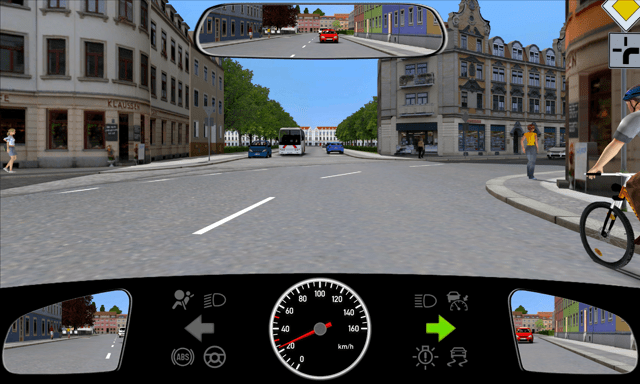
Erklärung
Vehicles that want to turn need to let bicycles pass that drive in their direction on or next to the road, before turning. It does not matter if their wheels are motorized or not.
-
Frage 28 von 34
Warum müssen Sie in dieser Situation mit dem Abbiegen warten?
1.2.09-1325 PunkteErklärung
Because of the truck and the motorcycle. Here you have to pay attention to the turning rules. Wait for the vehicles to complete the maneuver and then continue turning.
-
Frage 29 von 34
Wer muss in dieser Situation blinken?
1.2.09-1333 Punkte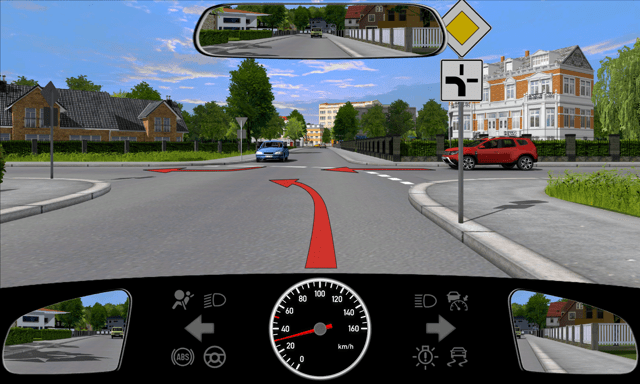
Erklärung
You and the blue car are changing direction for this reason you must indicate the change of direction.
-
Frage 30 von 34
Wie verhalten Sie sich jetzt richtig?
1.2.09-1344 PunkteErklärung
The motorbike behind you has already changed to the left lane and will overtake you on the left. In order to merge into the left-turning lane in time, you must slow down.
-
Frage 31 von 34
Warum dürfen Sie jetzt nicht abbiegen?
1.2.09-1355 PunkteErklärung
At an intersection, drivers going straight ahead have the right of way. You must wait to turn until the yellow car has crossed the intersection.
-
Frage 32 von 34
Womit müssen Sie in dieser Situation rechnen?
1.2.09-1365 PunkteErklärung
The blue car drives past the stopping bus and may want to continue straight on, even though it is in the turning lane. Since you turn left, he has right of way.
-
Frage 33 von 34
Warum müssen Sie jetzt anhalten?
1.2.09-1375 PunkteErklärung
There is an electric scooter in the blind spot, so you must stop to avoid endangering it.
-
Frage 34 von 34
Wie verhalten Sie sich jetzt richtig?
1.2.09-1384 PunkteErklärung
The straight ahead traffic always has priority, whether the cyclist is riding on the road or on a cycle path. To make sure that no other cyclist is approaching, you must look over your shoulder to the right.