
2.7.09 Receipt, transport and delivery of goods
Learn the key load dimensions, safety checks, cargo securing rules, and what to do during loading or breakdowns.
Chapter Code
2.7.09
2.55 m
Maximum width
Vehicle plus cargo, except some agricultural, forestry, and refrigerated vehicles.
4 m
Maximum height
Cargo may not exceed this height, except special agricultural or forestry cases.
30 × 30 cm
Rear protruding load mark
Use a bright red sign or bright red flag by day; orange warning sign alone is not enough.
1. Vehicle and load dimensions
Width rule
The vehicle including cargo must normally be no wider than 2.55 m.
Height rule
The cargo must normally not exceed a total height of 4 m.
Exam memory tip: Remember the two big numbers: 2.55 m wide and 4 m high.
2. Marking protruding or oversized loads
Rearward protruding load by day
Use either a bright red sign at least 30 × 30 cm, hanging crosswise to the direction of travel, or a bright red flag of at least 30 × 30 cm held apart by a crossbar.
Important: An orange warning sign alone is not sufficient.
Side protrusion more than 0.4 m beyond lights
Mark the load with white lights to the front and red lights to the rear.
3. Loading crane safety
Check the swivel area
Before operating a loading crane, make sure there are no electrical lines in the crane’s swivel range.
Use lateral supports
Extend and use the side supports so the vehicle cannot overturn during crane operation.
4. Loading at the roadside
When loading or unloading at the roadside, always check whether stopping is allowed and whether the loading operation endangers traffic.
Ask yourself:
- Am I allowed to stop here?
- Can other road users pass safely?
- Is the load operation visible and secured?
5. Securing the load correctly
Maximum mass
Do not exceed the permitted total mass.
Axle loads
Respect the permitted axle loads.
Height and width
Check the load does not exceed legal dimensions.
Position
Place the load so the vehicle remains stable.
Securing
Use suitable securing methods against slipping, falling, or shifting.
Bulk goods
Cover loose cargo so it cannot fall or be blown away.
6. Special cargo situations
Refrigerated goods
Always keep the specified temperature. If the cooling system fails, take suitable measures to preserve the cargo.
Hot transported cargo breakdown
Secure the vehicle, organize help, and make sure the required cargo temperature is maintained.
Different-sized and heavy transport units
Divide the loading area into smaller sections using separating elements, and secure units by positive placement so they cannot move.
Tree trunks on bad roads
Regularly check the load securing and adapt your speed to the road condition.
7. Damaged or dangerous cargo
When accepting damaged cargo
You must reject the cargo if you cannot prevent the danger caused by the damage.
8. Where to find the rules
Correct sources
Road Traffic Regulations and accepted engineering standards for securing loads.
Not the correct source
Registration Certificate Part II is not the source for load securing guidelines.
Fast exam checklist
- ✅ Width usually max. 2.55 m
- ✅ Height usually max. 4 m
- ✅ Rear protrusion by day: red sign or red flag, 30 × 30 cm
- ✅ Side protrusion over 0.4 m: white front lights, red rear lights
- ✅ Loading crane: no power lines, use side supports
- ✅ Roadside loading: obey stopping rules and protect traffic
- ✅ Check total mass, axle loads, size, position, and securing
- ✅ Cover bulk goods against falling or wind
- ✅ Keep refrigerated or hot cargo at required temperature
- ✅ Reject damaged cargo if danger cannot be prevented
Practice Questions (13)
-
Question 1 of 13
What is the maximum permissible width of a vehicle including load (excluding vehicles with farming or forestry products and refrigerator vehicles)?
2.7.09-2022 PointsExplanation
The width of thy vehicle (except vehicles agricultural or forestry products and refrigerated vehicles) including cargo, should be 2.55 m at most.
-
Question 2 of 13
What is the maximum permissible height of a vehicle including load (excluding vehicles with farming or forestry products)?
2.7.09-2032 Points -
Question 3 of 13
A load extending beyond the back of the vehicle must be marked. Which means are allowed during the day?
2.7.09-2042 PointsExplanation
By day following means are permitted at a rearwardly protruding charge: A minimum of 30 x 30 cm large, bright red, transversely to the direction of travel pendulum suspended shield and a bright red, at least 30 x 30 cm large flag held apart by a cross bar. Only the orange warning sign is not enough.
-
Question 4 of 13
What precautionary measures must be taken before putting a loading crane into operation?
2.7.09-2083 PointsExplanation
Before putting a loading crane you need to be sure that in the swivel range, no electrical lines are and you have to use the lateral supports the vehicle from overturning.
-
Question 5 of 13
What are the conditions on which you are allowed to carry out loading on the edge of the roadway?
2.7.09-2093 PointsExplanation
If you would like to perform at the roadside a loading operation, please pay attention to stopping restrictions and that the traffic safety is not compromised.
-
Question 6 of 13
What is the permitted height of a vehicle including load (excluding vehicles with agricultural or forestry products)?
2.7.09-2103 PointsExplanation
In the charge allowed (except vehicles agricultural or forestry products) has a height of 4 m.
-
Question 7 of 13
What measures must you take if you break down with a load which has to be transported hot (e.g. bitumen transport)?
2.7.09-2113 PointsExplanation
In a breakdown with a hot transported cargo, you should organize help ensure the necessary for the charge temperature and secure vehicle.
-
Question 8 of 13
How do you mark a load when it extends laterally by more than 0.4 m beyond the side lights of the vehicle?
2.7.09-2214 PointsExplanation
The marking on the side of more than 0.4 m above the vehicle running lights also exceptional charge, you should side forward and with white and carry the side to the rear with red lights.
-
Question 9 of 13
Where can you find guidelines concerning the transport and securing of loads on vehicles?
2.7.09-2252 PointsExplanation
The guidelines you'll find in the road traffic regulations (Highway Code) and accepted engineering standards for securing loads. The registration certificate Part II is not right.
-
Question 10 of 13
You are transporting a "groupage" cargo load containing transport units of varying sizes and weight. How should you secure this load?
2.7.09-2263 PointsExplanation
Do you drive a load handling with different sized and heavy transport units, please pay attention to the loading area dividing into small segments with separating elements and that you secure by positive placement of the transport units, the charge.
-
Question 11 of 13
You are transporting logs. The driving route means you have to drive along poor quality roads. What do you have to do?
2.7.09-2274 PointsExplanation
When tree trunks transport over bad roads, you should regularly review and adjust your driving speed to the road to the cargo securing loads.
-
Question 12 of 13
What do you have to ensure when taking receipt of a load, if it is expected that transporting this load will create a risk?
2.7.09-2283 PointsExplanation
Accepting the award of damaged cargo, you should note that the charge must reject, if you can not avert the danger.
-
Question 13 of 13
This sign on a vehicle indicates what type of transport?
2.7.09-2312 Points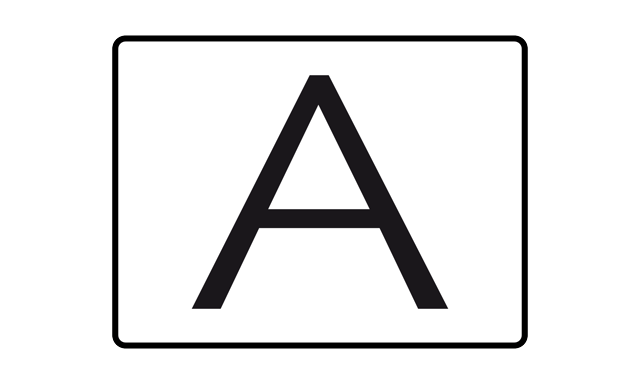
Completed