
1.2.36 Signs and instructions from police officers
👮 How police officers control traffic, what their signals mean, and why police instructions always have the highest priority? Let's learn them.
🧠 Priority Order In Traffic
1. Police Officer
Highest authority
2. Traffic Lights
Override signs
3. Traffic Signs
Override basic rules
4. Right Before Left
Basic rule
🚦 Police Officer Signals
Front Facing You
If the officer faces you with chest or back, you must stop and wait.
Sideways / Profile
If you see the officer's profile, you may continue driving carefully.
Raised Arm
Stop and prepare for new traffic instructions.
🚓 "PLEASE FOLLOW" Signal
📢 What It Means
- Police want to stop your vehicle
- You must follow the police car
- Do not overtake the police vehicle
- Stop when the police stop
⚠ Important Rule
The signal usually applies to the vehicle directly behind the police car.
⚠ Important Traffic Situations
🚗 Turning Right
If the officer stands sideways to you, you may continue and turn right carefully.
↩ Turning Left
Enter the intersection carefully and wait for the next police instruction.
🚦 Red Traffic Light?
Ignore the traffic light if the police officer gives different instructions.
👀 Stay Careful
Even when police control traffic, always watch pedestrians, cyclists, and other vehicles.
📚 Easy Memory Table
| Police Position | Meaning | Your Action |
|---|---|---|
| Facing you | Road closed | STOP |
| Sideways/profile | Road open | Drive carefully |
| Raised arm | Attention / transition | Wait for instructions |
🎯 Easy Exam Tips
- Police officer = highest authority
- Facing you = STOP
- Profile/sideways = GO
- "PLEASE FOLLOW" must be obeyed
- Following traffic lights instead of police
- Ignoring "PLEASE FOLLOW"
- Driving too fast through intersection
- Not watching pedestrians
Practice Questions (11)
-
Question 1 of 11
A police officer is regulating the traffic at a crossroads even though the traffic lights are in operation. What applies?
1.2.36-0014 Points -
Question 2 of 11
How important are instructions from police officers?
1.2.36-0034 PointsExplanation
The driver must always follow the signs and instructions of police officers. Other arrangements and rules, such as traffic lights or traffic signs, are put last. However, the road user must not neglect due diligence.
-
Question 3 of 11
What is correct?
1.2.36-0044 Points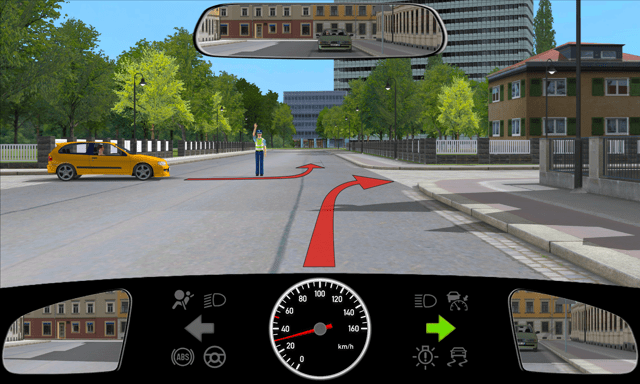
Explanation
The police officer gives the traffic instructions by his body position and with specific arm movements. A raised arm means: The drivers waiting at the intersection are not allowed to continue driving, previously locked drivers should prepare for the onward journey. For this, the policeman spreads his arms from the body or puts them on the body, depending on the instructions. If the police officer stands with his chest to the driver, the driver must stop. If the police officer stands sideways and the driver sees his profile, the driver may continue driving at a moderate speed.
-
Question 4 of 11
In your rear-view mirror, you see the words "STOP POLIZEI" (Stop Police) in red illuminated letters on the roof of a police car immediately behind your car. Who does this apply to?
1.2.36-0073 PointsExplanation
Since the request is displayed to the front and you are directly front of the police car, the request is addressed to you. You are required by law to follow the instructions from police officers.
-
Question 5 of 11
You are overtaken by a police vehicle, which pulls in immediately in front of you. The words "BITTE FOLGEN" (PLEASE FOLLOW) appear illuminated in red on the roof. What should you do?
1.2.36-0113 PointsExplanation
The signal "PLEASE FOLLOW" always applies to the driver directly behind the police car. So, you have to follow the instructions of the police, drive after the officers and stop behind the police car as soon as it stops.
-
Question 6 of 11
You are overtaken by a police vehicle, which pulls in immediately in front of you. The words "BITTE FOLGEN" (PLEASE FOLLOW) appear illuminated in red on the roof. To whom does this apply?
1.2.36-0123 PointsExplanation
The signal "PLEASE FOLLOW" on a police car applies to the vehicle immediately behind the police, in this case for you. The police may stop you for traffic control. Follow the police vehicle and stop when it stops.
-
Question 7 of 11
A police signalling disc is displayed towards you from a vehicle driving in front of you. What does this mean?
1.2.36-0133 PointsExplanation
Basically, the driver who drives directly behind the police car has to follow the signal given by the police. If this is recognizable, the police signaling disc may also apply to drivers in front. You must not overtake the police car and you have to follow it.
-
Question 8 of 11
What is the right course of action now?
1.2.36-0144 Points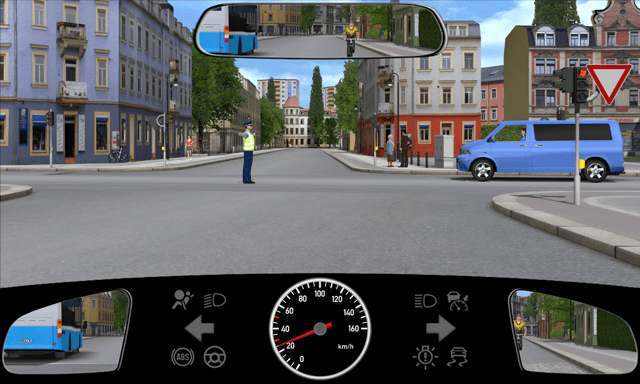
Explanation
The police officer is hierarchically first in the right-of-way. Basic rule "right before left", traffic signs and light signals have no effect at this moment. Nevertheless, be attentive because other road users could still behave incorrectly.
-
Question 9 of 11
Who has priority here?
1.2.36-0154 Points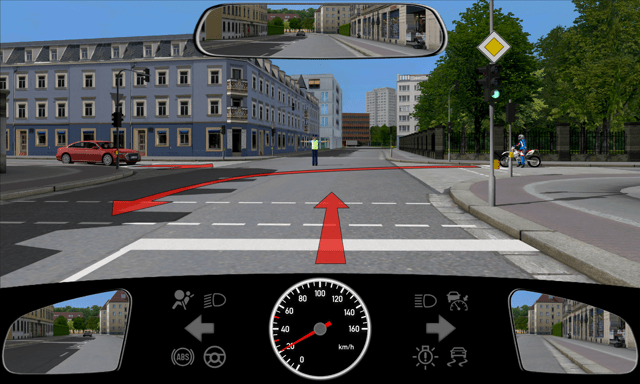
Explanation
The traffic is regulated by the police so that the red car is allowed to drive first.
-
Question 10 of 11
What is the right thing to do in this situation?
1.2.36-0164 Points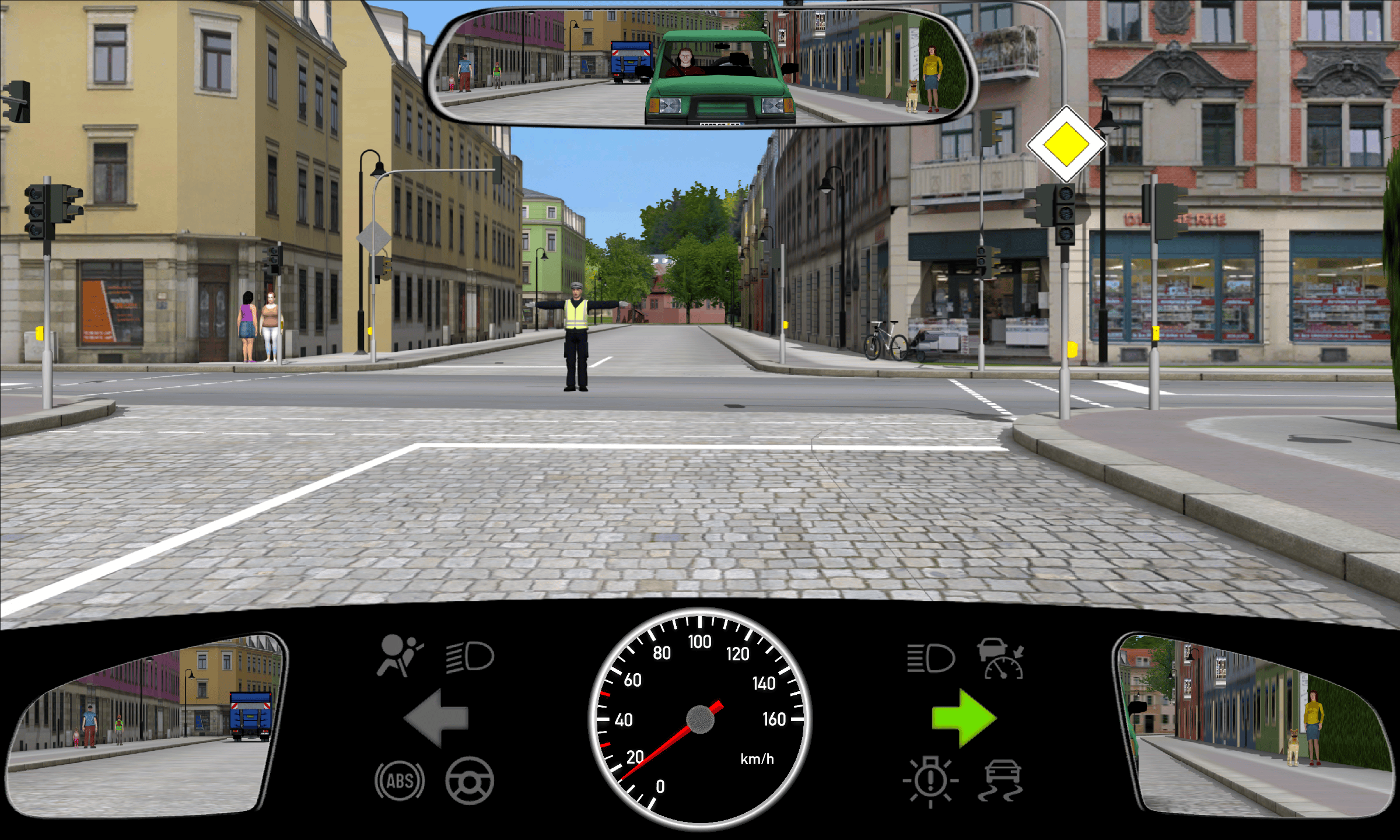
Explanation
If a traffic police officer is directing traffic, the instructions must be followed. In this situation, the traffic policeman stands in front of you, facing you and with his arms outstretched. This means that you have to wait at the intersection and vehicles from the right and left have the right of way.
-
Question 11 of 11
What applies here?
1.2.36-1014 Points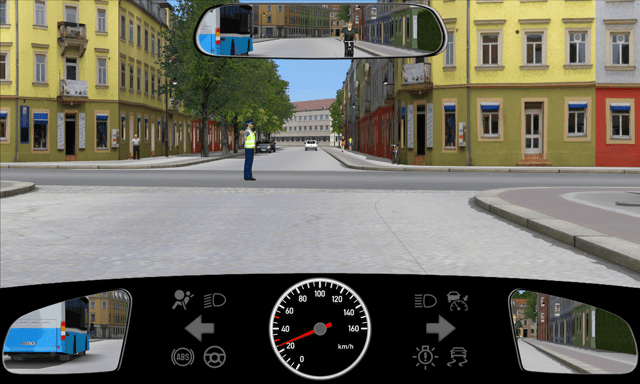
Explanation
The traffic policeman's gesture dictates the behavior in traffic. If the officer stands lengthways to your direction of travel and you can see his profile, you can continue and turn right. Right-turning drivers should cross the intersection quickly, as long as no pedestrian or cyclist approaches them. If you want to turn left, enter the intersection to ensure undisturbed traffic flow and wait for the policeman's instructions.