
1.4.41 Signe réglementaire
Un guide d'étude pratique pour l'examen de conduite allemand. Découvrez ce que les panneaux ordonnent, interdisent ou autorisent – et ce que vous devez faire dans la circulation réelle.
Cercle rouge
Signifie généralement une interdiction ou une restriction.
Cercle bleu
Signifie généralement une instruction obligatoire.
Assiettes supplémentaires
Limitez, développez ou expliquez quand une règle s’applique.
Comment apprendre ce chapitre rapidement
Identifiez le type de panneau
S'agit-il d'une interdiction, d'un commandement, d'une règle de priorité ou d'un marquage routier ?
Demandez : que dois-je faire ?
Arrêter, céder, ralentir, indiquer, attendre ou éviter l'entrée ?
Vérifier les exceptions
Recherchez des plaques supplémentaires telles que des résidents, des véhicules de livraison, une route mouillée ou des limites de temps.
Pensez à l'action d'examen
L’examen demande ce que vous faites, pas seulement comment s’appelle le signe.
Panneaux réglementaires
Panneaux de réglementation de la circulation allemande
Les panneaux réglementaires donnent aux conducteurs des instructions obligatoires, des restrictions, des priorités et des règles d'utilisation de la route.
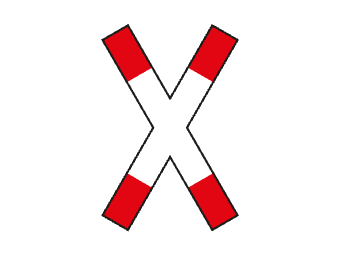
Code 201
Croix de Saint-André
Marque un passage à niveau où le trafic ferroviaire est prioritaire.
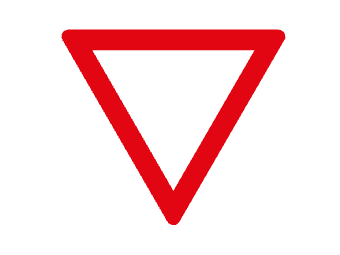
Code 205
Céder
Oblige les conducteurs à céder le passage à la circulation sur la route prioritaire.
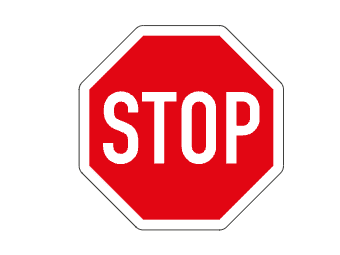
Code 206
Arrêtez-vous et cédez le passage
Nécessite un arrêt complet avant de céder au trafic prioritaire.
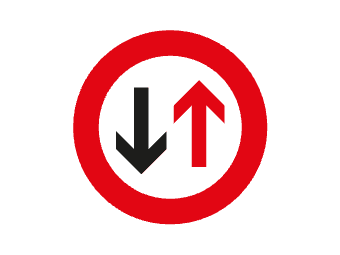
Code 208
Priorité au trafic venant en sens inverse
Oblige les conducteurs à céder le passage aux véhicules venant de la direction opposée.
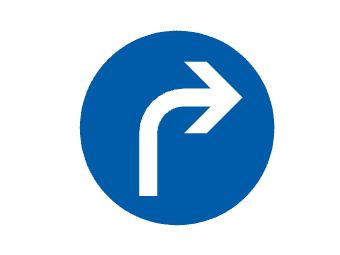
Code 209-20
Direction obligatoire à droite
Les conducteurs doivent tourner à droite dans la direction indiquée.
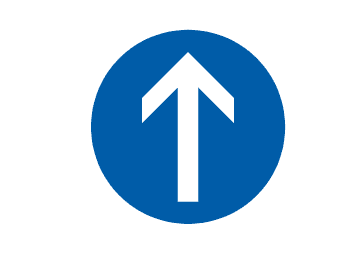
Code 209-30
Direction obligatoire tout droit
Les conducteurs doivent continuer tout droit.
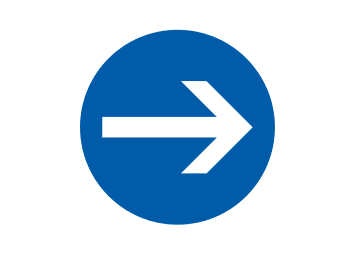
Code 211-20
Tournez à droite ici
Les conducteurs doivent tourner à droite à ce stade.
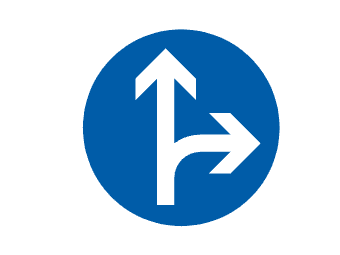
Code 214-20
Tout droit ou à droite seulement
Les conducteurs ne peuvent que continuer tout droit ou tourner à droite.
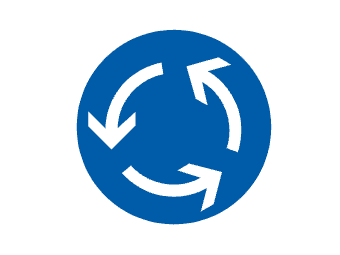
Code 215
Rond-point
Indique une circulation obligatoire autour d'un rond-point.
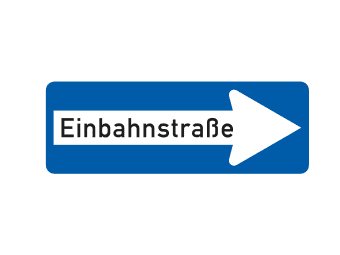
Code 220
Rue à sens unique
Indique que la circulation n'est autorisée que dans un seul sens.
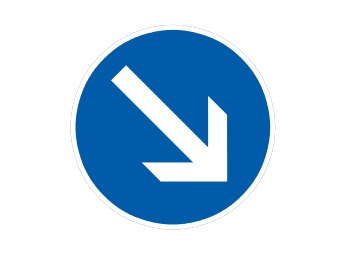
Code 222-20
Passer à droite
Les conducteurs doivent franchir l'obstacle du côté droit.
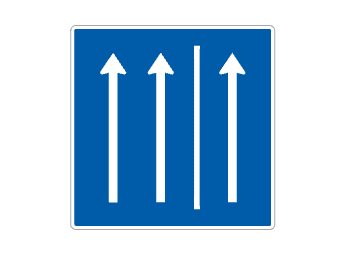
Code 223.1
Utiliser un épaulement dur
Permet ou oblige le trafic à utiliser la bande d'arrêt d'urgence.
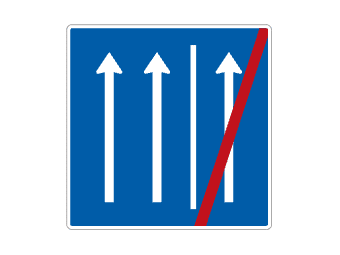
Code 223.2
Fin de l'utilisation des accotements durs
Indique que la conduite sur la bande d'arrêt d'urgence n'est plus autorisée.
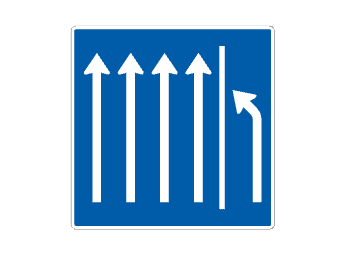
Code 223.3
Dégager l'accotement dur
Oblige les conducteurs à quitter la bande d’arrêt d’urgence.
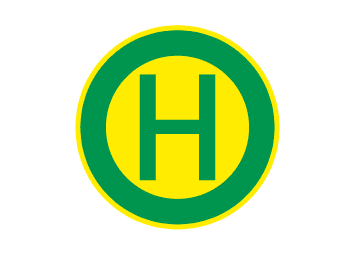
Code 224
Arrêt de bus
Marque un arrêt pour les bus réguliers et les bus scolaires.
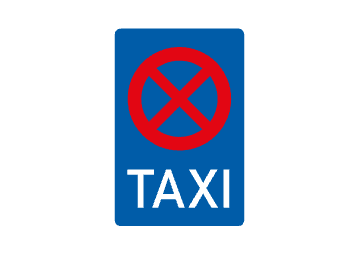
Code 229
Station de taxi
Marque une zone d'arrêt réservée aux taxis.
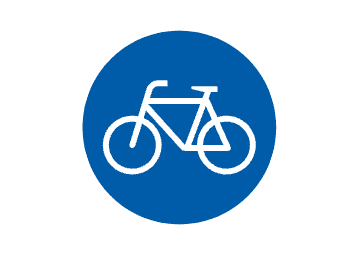
Code 237
Piste cyclable
Indique un chemin obligatoire pour les cyclistes.
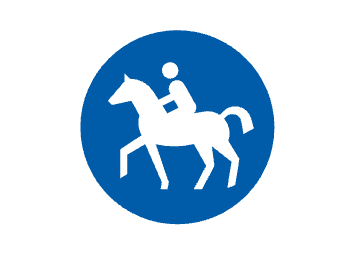
Code 238
Chemin cavalière
Indique un chemin obligatoire pour les cavaliers à cheval.
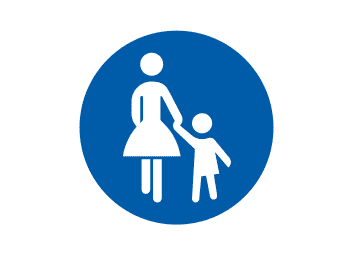
Code 239
Sentier
Indique un chemin réservé aux piétons.
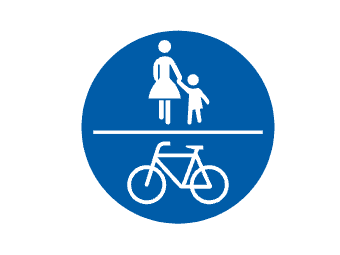
Code 240
Sentier piétonnier et piste cyclable partagés
Indique un chemin partagé pour les piétons et les cyclistes.
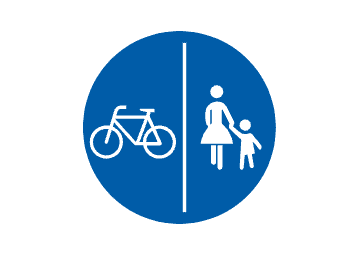
Code 241
Piste cyclable et sentier piétonnier séparés
Indique des zones séparées pour les cyclistes et les piétons.
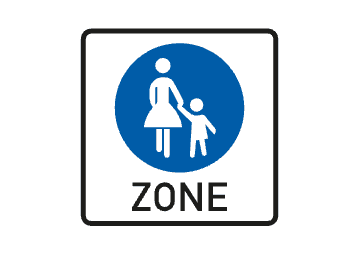
Code 242.1
Début de la zone piétonne
Marque le début d'une zone principalement réservée aux piétons.
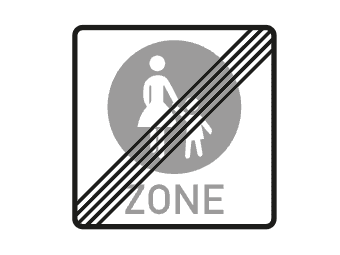
Code 242.2
Fin de la zone piétonne
Marque la fin d'une zone piétonne.
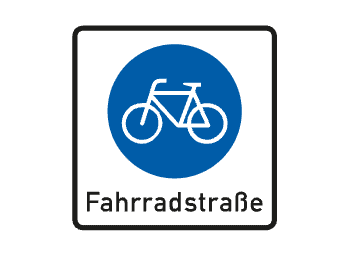
Code 244.1
Début de la rue cyclable
Marque une rue où la circulation des vélos a une priorité particulière.
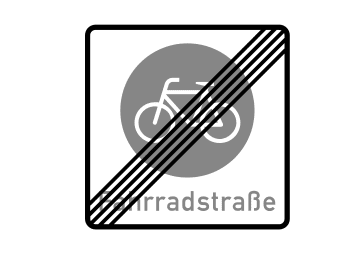
Code 244.2
Fin de la rue cyclable
Marque la fin d’une rue cyclable.
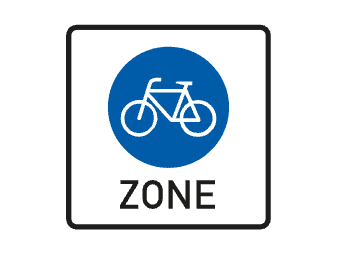
Code 244.3
Début de la Zone Vélo
Marque le début d’une zone avec des règles spéciales pour les cyclistes.
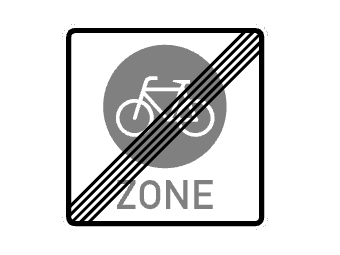
Code 244.4
Fin de la zone cyclable
Marque la fin d’une zone cyclable.
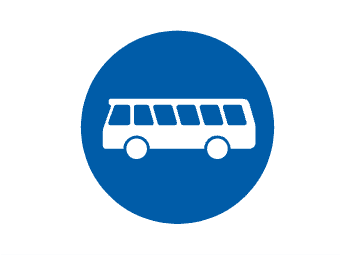
Code 245
Voie de bus
Marque une voie de circulation réservée aux bus.
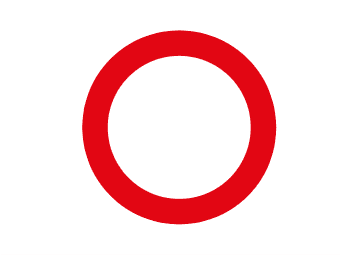
Code 250
Aucun véhicule
Interdit l'entrée à tous types de véhicules.
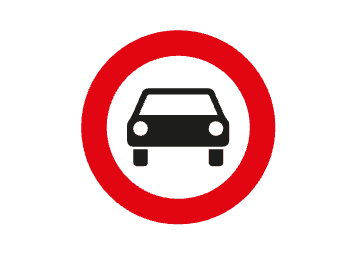
Code 251
Pas de voitures ni de véhicules à moteur multi-pistes
Interdit les voitures et autres véhicules à moteur multipistes.
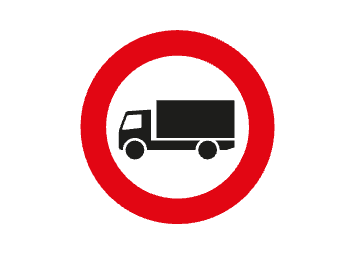
Code 253
Aucun véhicule à moteur de plus de 3,5 t
Interdit les véhicules lourds à moteur dépassant la catégorie de poids indiquée.
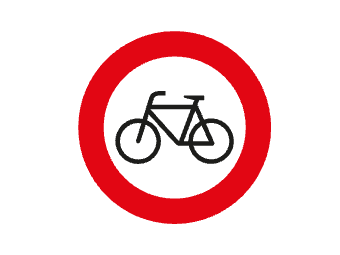
Code 254
Pas de vélo
Interdit la circulation des vélos.
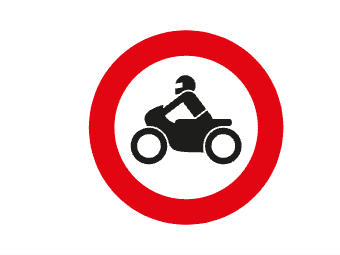
Code 255
Pas de motos, cyclomoteurs ou petites motos
Interdit les motos, cyclomoteurs et deux-roues motorisés similaires.
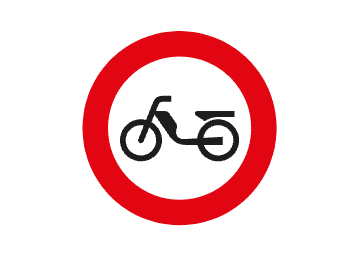
Code 257-50
Pas de cyclomoteurs
Interdit aux cyclomoteurs d'emprunter la route ou le chemin.
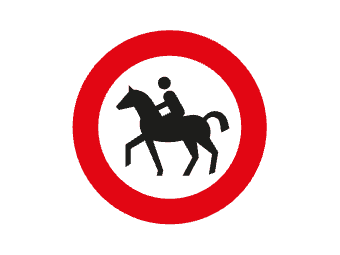
Code 257-51
Aucun cavalier
Interdit aux cavaliers d'emprunter l'itinéraire.
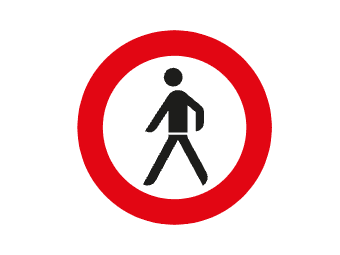
Code 259
Pas de piétons
Interdit aux piétons d'emprunter la route ou le chemin.
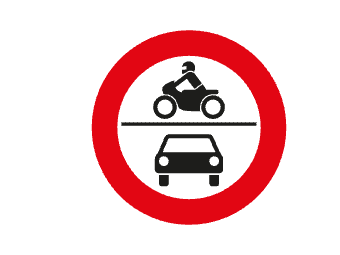
Code 260
Pas de véhicules automobiles
Interdit l'entrée des véhicules à moteur.
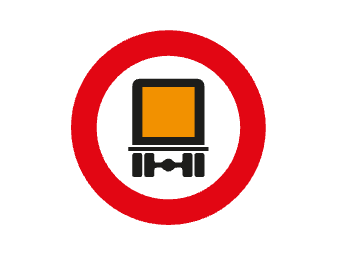
Code 261
Aucun véhicule transportant des marchandises dangereuses
Interdit les véhicules transportant des marchandises dangereuses marquées.
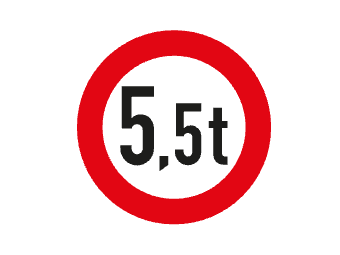
Code 262
Limite de poids réelle maximale
Interdit les véhicules dépassant le poids réel indiqué.
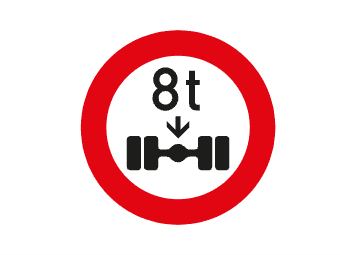
Code 263
Limite de charge maximale par essieu
Interdit les véhicules dépassant la charge par essieu indiquée.
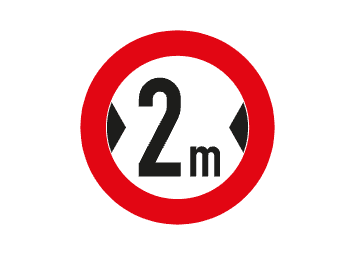
Code 264
Limite de largeur maximale
Interdit les véhicules plus larges que la largeur indiquée.
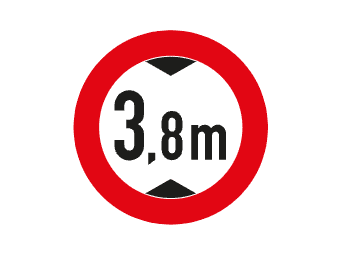
Code 265
Limite de hauteur maximale
Interdit les véhicules plus hauts que la hauteur indiquée.
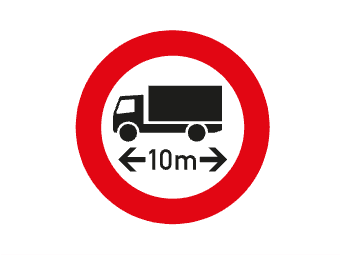
Code 266
Limite de longueur maximale
Interdit les véhicules plus longs que la longueur indiquée.
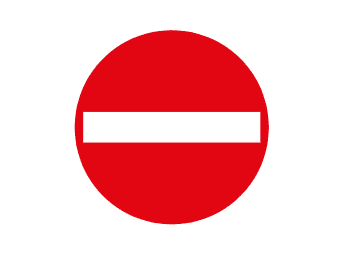
Code 267
Entrée interdite
Interdit aux véhicules d'entrer dans cette direction.
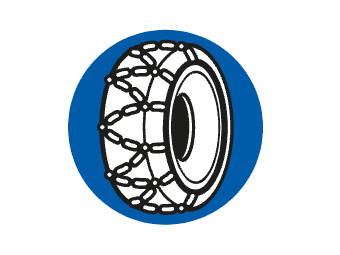
Code 268
Chaînes à neige requises
Nécessite que les véhicules utilisent des chaînes à neige.
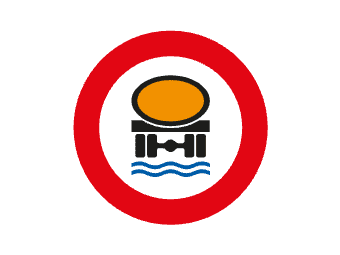
Code 269
Aucun véhicule transportant des marchandises polluant l’eau
Interdit les véhicules transportant des marchandises pouvant mettre en danger l’eau.
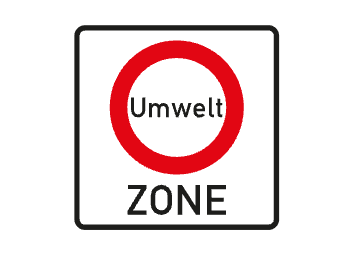
Code 270.1
Début de la zone à faibles émissions
Marque le début d’une zone limitant la circulation pour réduire la pollution de l’air.
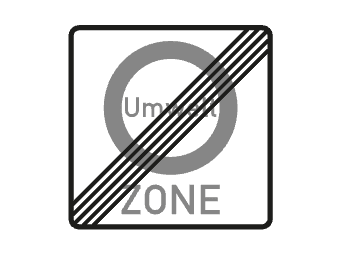
Code 270.2
Fin de la zone à faibles émissions
Marque la fin d’une zone de restriction de circulation à faibles émissions.
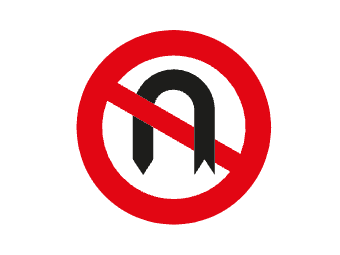
Code 272
Pas de demi-tour
Interdit de faire demi-tour au véhicule.
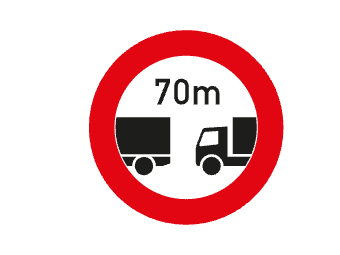
Code 273
Distance minimale requise
Oblige les conducteurs à respecter au moins la distance indiquée.
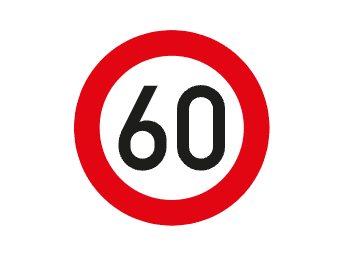
Code 274
Limite de vitesse maximale
Définit la vitesse maximale autorisée.
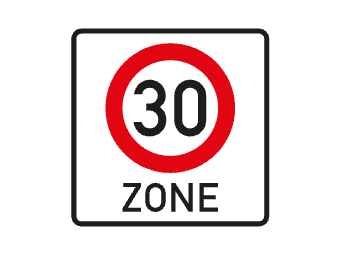
Code 274.1
Début de la zone 30 km/h
Marque le début d’une zone avec une limitation de vitesse à 30 km/h.
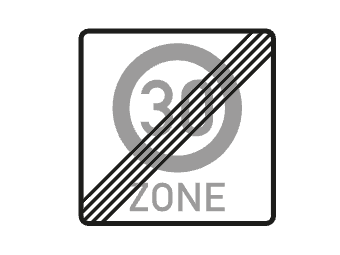
Code 274.2
Fin de la zone 30 km/h
Marque la fin d’une zone de limitation de vitesse à 30 km/h.
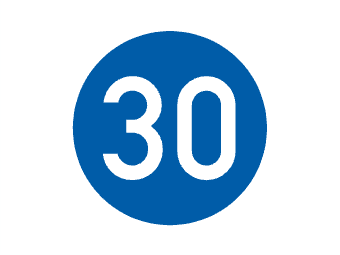
Code 275
Vitesse minimale
Oblige les véhicules à rouler au moins à la vitesse indiquée.
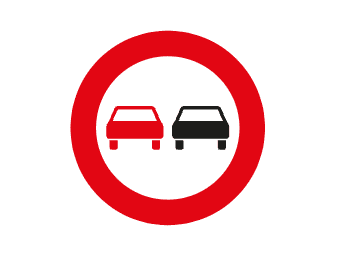
Code 276
Interdiction de dépasser
Interdit aux véhicules à moteur de dépasser d'autres véhicules à moteur.
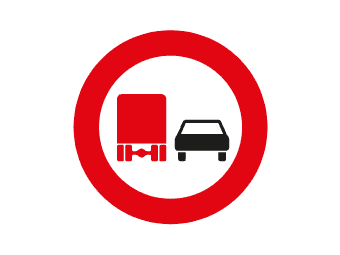
Code 277
Interdiction de dépasser pour les véhicules de plus de 3,5 t
Interdit aux poids lourds de dépasser.
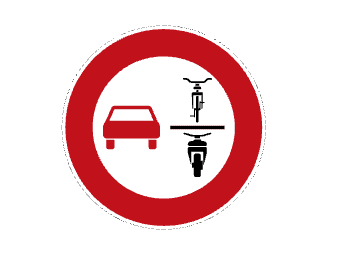
Code 277.1
Interdiction de dépasser les véhicules à voie unique
Interdit aux véhicules multipistes de dépasser les vélos et véhicules similaires.
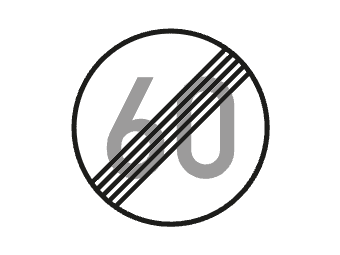
Code 278
Fin de la limite de vitesse maximale
Annule la limite de vitesse maximale indiquée précédemment.
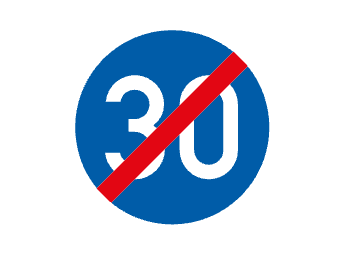
Code 279
Fin de la vitesse minimale
Annule la vitesse minimale précédemment requise.
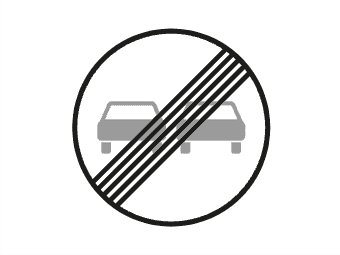
Code 280
Fin du non-dépassement
Annule l'interdiction de dépassement pour les véhicules à moteur.
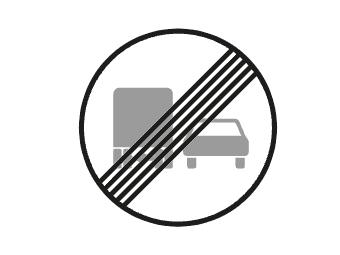
Code 281
Fin de l'interdiction de dépassement pour les véhicules de plus de 3,5 t
Annule l'interdiction de dépassement pour les poids lourds.
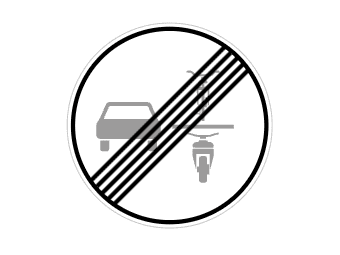
Code 281.1
Fin des véhicules à voie unique sans dépassement
Annule la restriction de dépassement des véhicules à voie unique.
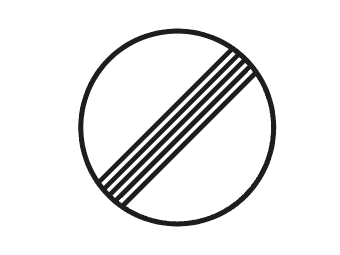
Code 282
Fin de toutes les restrictions d'itinéraire
Met fin à toutes les limitations de vitesse et interdictions de dépassement basées sur les itinéraires.
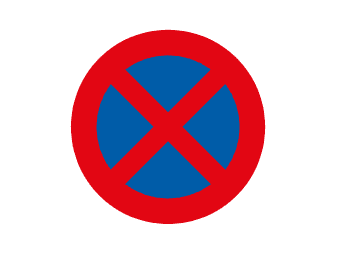
Code 283
Pas d'arrêt
Interdit l'arrêt, y compris le stationnement.
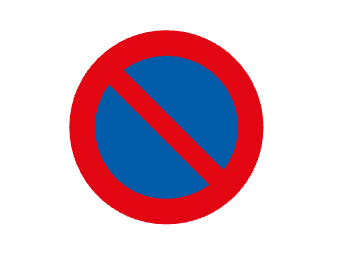
Code 286
Parking interdit
Permet un bref arrêt, mais interdit le stationnement.
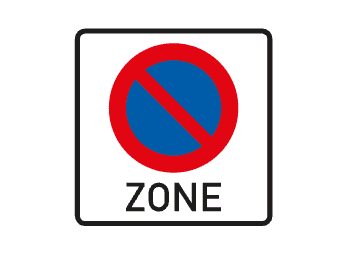
Code 290.1
Début de la zone de stationnement interdit
Marque le début d’une zone où le stationnement est restreint.
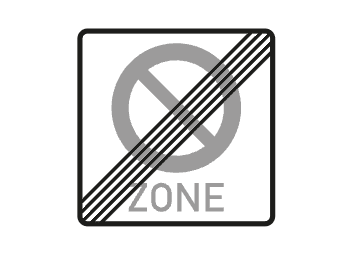
Code 290.2
Fin de la zone de stationnement interdit
Marque la fin d’une zone de stationnement interdit.
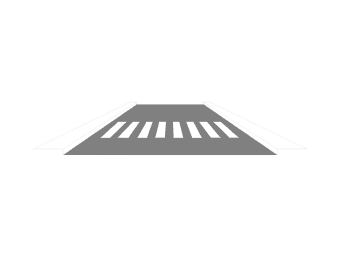
Code 293
Marquage des passages pour piétons
Marque un passage pour piétons sur la chaussée.
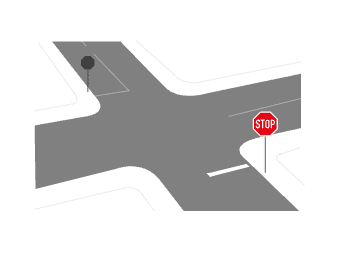
Code 294
Ligne d'arrêt
Indique où les véhicules doivent s'arrêter lorsque cela est nécessaire.
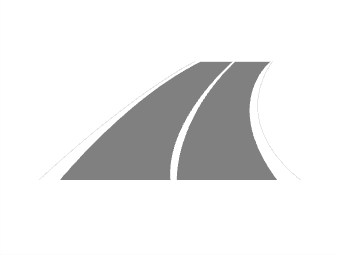
Code 295
Limite de voie et de chaussée
Marque les limites des voies ou le bord de la chaussée.
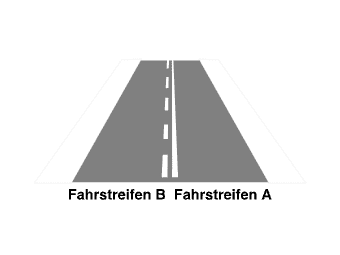
Code 296
Limite de voie unilatérale
Permet le franchissement uniquement du côté de la ligne brisée.
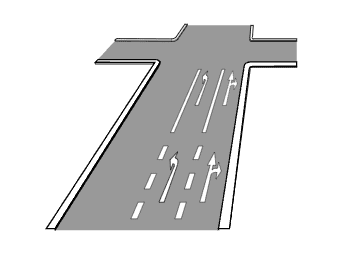
Code 297
Marquages de flèches
Indiquez les directions de conduite autorisées ou obligatoires dans une voie.
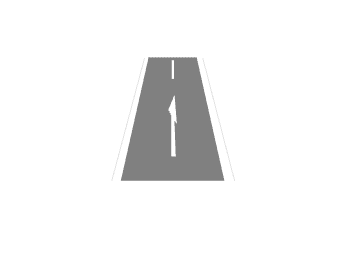
Code 297.1
Avancer la flèche de fin de voie
Avertit qu’une limite de voie ou une fin de voie approche.
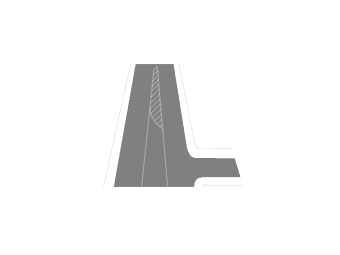
Code 298
Marquage des zones bloquées
Marque une zone de la route que les véhicules ne doivent pas utiliser.
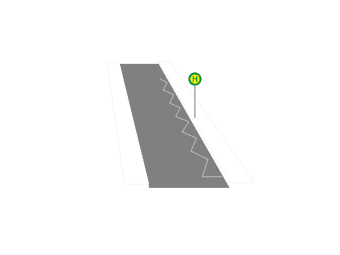
Code 299
Marquage des limites pour les restrictions d'arrêt ou de stationnement
Affiche la zone où des restrictions d'arrêt ou de stationnement s'appliquent.
Règles à retenir
- Panneau d'arrêt : Arrêtez-vous toujours complètement, même si personne ne vient.
- Céder: Ralentissez, soyez prêt à freiner et laissez passer le trafic prioritaire.
- Rond-point : Indiquez uniquement en sortant, pas en entrant.
- Pas d'arrêt : Ne vous arrêtez pas pour les passagers, le chargement ou l'attente.
- Parking interdit: Une attente allant jusqu'à 3 minutes est autorisée, sauf indication contraire de règles supplémentaires.
- Autobus scolaire : Attendez-vous à des enfants ; ne dépassez qu’au pas lorsque cela est nécessaire.
Mini-quiz
Un panneau d'arrêt est devant vous, mais il n'y a pas de circulation transversale. Faut-il arrêter ?
Oui. Vous devez vous arrêter complètement à la ligne d'arrêt ou à la ligne de mire.
Vous entrez dans un rond-point. Vous indiquez ?
Non, vous l'indiquez uniquement à la sortie du rond-point.
Un panneau interdisant le stationnement est affiché. Les gens peuvent-ils entrer ou sortir ?
Oui, les arrêts pour monter/descendre ou charger/décharger sont autorisés. Une attente allant jusqu'à 3 minutes est généralement autorisée.
Un bus scolaire est arrêté. À quoi faut-il s'attendre ?
Les enfants peuvent soudainement courir sur la route. Soyez prêt à freiner et à dépasser uniquement au pas lorsque cela est nécessaire.
Liste de contrôle pour l'examen final
Questions d’entraînement (69)
-
Question 1 sur 69
Dans quels cas les véhicules doivent-ils attendre devant ce panneau?
1.4.41-0013 points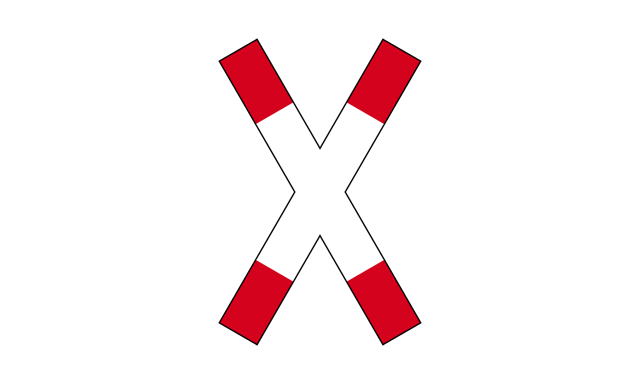
Explication
The diagonal cross in front of a railroad crossing signals the right of way for rail traffic. When a rail vehicle approaches, you have to wait in front of the sign. The same applies if railway staff waves a white-red-white flag. If you are in danger of comingThe diagonal cross in front of a railroad crossing signals the right of way for rail traffic. When a rail vehicle approaches, you have to wait in front of the sign. The same applies if railway staff waves a white-red-white flag. If you are in danger of coming to a stop on the railroad crossing due to traffic jams, you must also wait in front of the diagonal cross until you can quickly cross the railroad crossing. to a stop on the railroad crossing due to traffic jams, you must also wait in front of the diagonal cross until you can quickly cross the railroad crossing.
-
Question 2 sur 69
Comment vous comportez-vous à la vue de ce panneau?
1.4.41-0042 points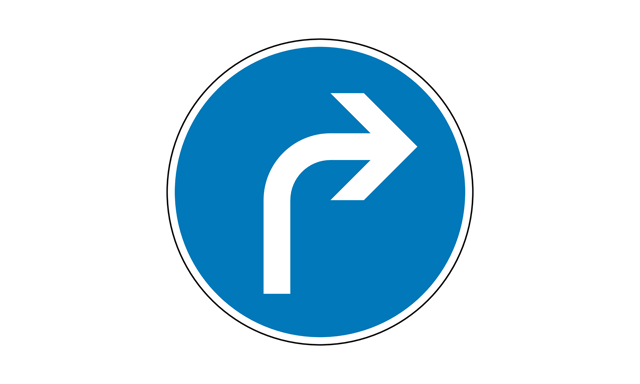
Explication
The traffic sign "Turn right here in front of the sign" only allows you to drive to the right. Even if there is only this one option, the change of the direction of travel needs to be indicated.
-
Question 3 sur 69
Dans quelles directions pouvez-vous aller à la vue de ce panneau?
1.4.41-0062 points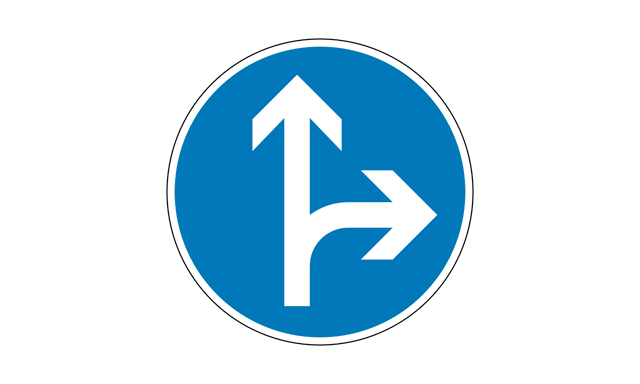
Explication
The traffic sign "You must go straight or turn right" prohibits turning to the left. Allowed are only the other directions straight ahead and right. If you turn to the right, you must indicate the change of direction.
-
Question 4 sur 69
Comment vous comportez-vous à la vue de ce panneau?
1.4.41-0072 points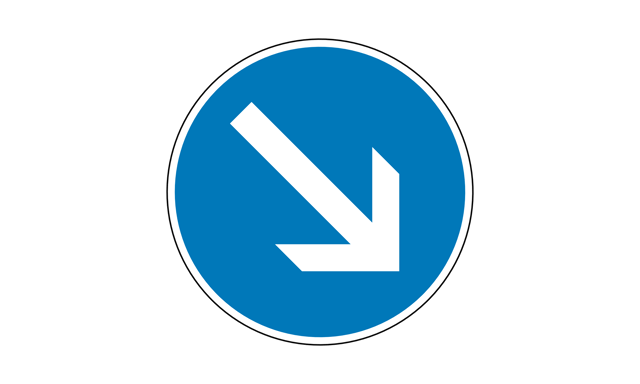
Explication
The traffic sign "Keep right of traffic" indicates that you have to drive past an obstacle on the right. These include traffic islands, construction sites or bus stops. If there is an intersection or T-junction before the marked point, you may turn right as well as left. If you swing out while driving around an obstacle, you have to indicate that.
-
Question 5 sur 69
Vous vous approchez d'un arrêt indiqué de cette façon. Comment vous comportez-vous si vous voyez des enfants?
1.4.41-0085 points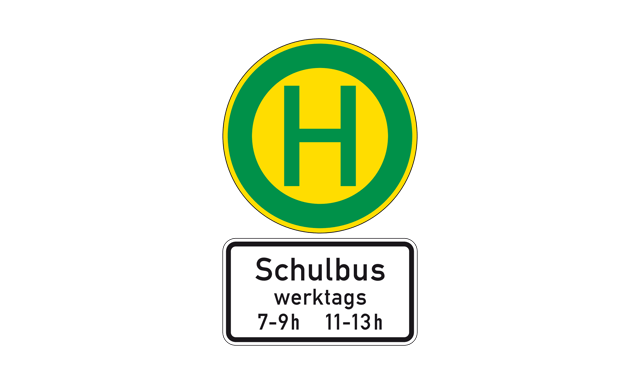
Explication
This stop is a bus stop where school buses operate at the times indicated. If you approach this stop, you will have to expect children who suddenly run onto the road; the principle of trust does not apply in this case. If a school bus is in the passenger bay or on the street, you have to be able to brake as a car driver; You may only drive past at walking speed.
-
Question 6 sur 69
A quels véhicules cette rue est-elle interdite?
1.4.41-0122 points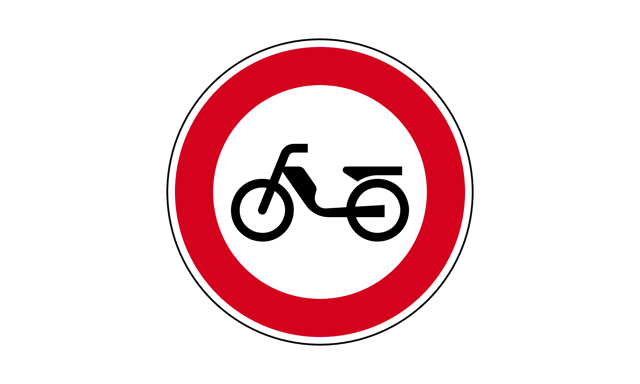
Explication
The traffic sign "No Motorbikes Permitted" only applies to mopeds. It does not apply to mopeds and light motorcycles. The low speed of motorbikes would hinder the flow of traffic on this road.
-
Question 7 sur 69
Qu'autorise ce panneau?
1.4.41-0152 points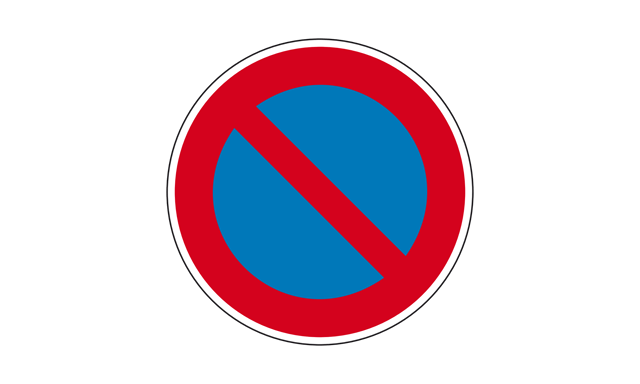
Explication
The sign "No parking. Waiting is allowed." sign allows you to wait for up to three minutes. Situations of loading and unloading or getting in and out of the car may also take longer. The car driver must be in the immediate vicinity of the vehicle.
-
Question 8 sur 69
Qu'est-ce qui s'applique si vous voyez cette combinaison de panneaux de signalisation?
1.4.41-0173 points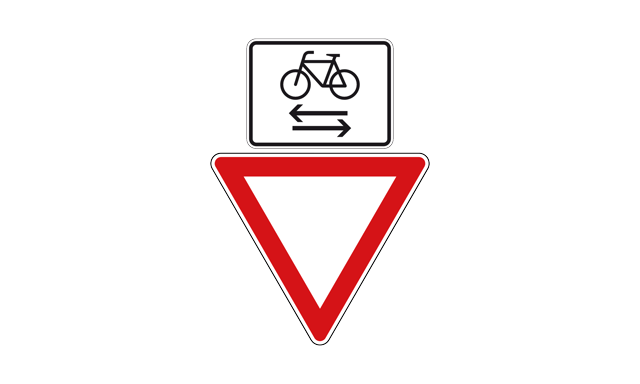
Explication
The additional sign indicates that cycle traffic could be coming from the left and right. Therefore, even if you only want to turn right, pay attention to both directions. Electric scooters are becoming more common, they ride on the cycle path, so watch out for scooter riders as well.
-
Question 9 sur 69
Quels sont les véhicules autorisés à emprunter une rue cyclable signalisée de cette manière?
1.4.41-0182 points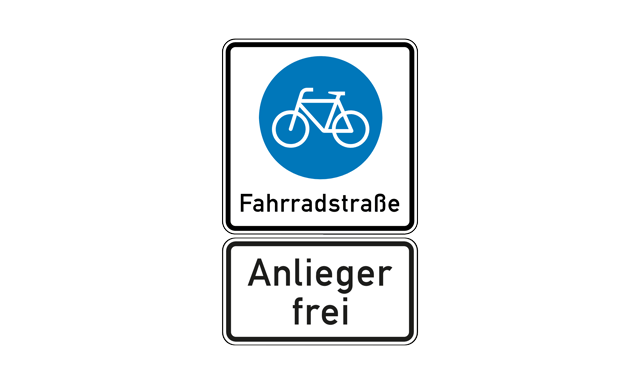
Explication
Vehicular traffic other than cyclists is not allowed to use cycle lanes unless permitted by additional signs. The additional sign allows residents to enter the cycle lane.
-
Question 10 sur 69
Qu'est-ce qui s'applique lors d'un marquage en jaune sur la voie?
1.4.41-0193 pointsExplication
Yellow lane markings are placed temporarily, e.g. to change the course of the lane due to a construction site. The white lane markings are replaced by the yellow ones.
-
Question 11 sur 69
Qu'est-ce qui s'applique dans cette situation?
1.4.41-0203 points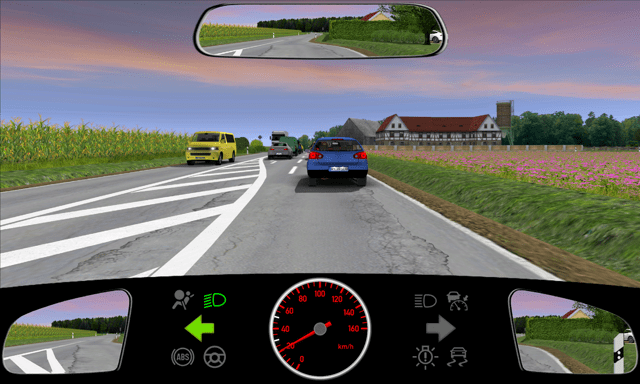
Explication
A restricted area may not be driven on as a matter of principle.
-
Question 12 sur 69
Quels véhicules peuvent emprunter une zone ainsi signalée?
1.4.41-0212 points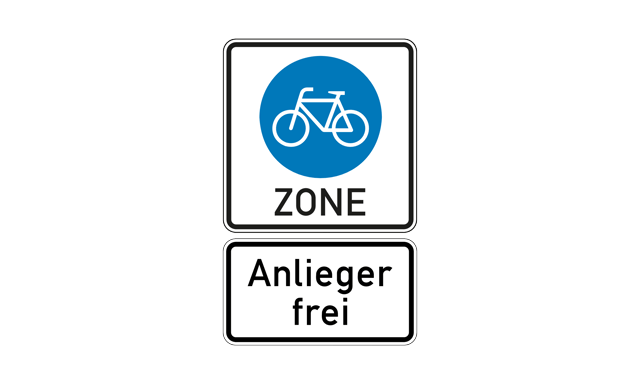
Explication
The traffic sign shows a bicycle zone with the additional sign "Anleger frei". In bicycle zones, the rule of "right before left" applies. Cyclists, very small electric vehicles and other authorised vehicles are allowed to travel at a maximum speed of 30 km/h in bicycle zones. Cyclists and very small electric vehicles may ride side by side in bicycle zones. The additional sign also allows residents to ride in the bicycle zone.
-
Question 13 sur 69
De quoi devez-vous tenir compte en agglomération lorsque vous empruntez une route avec cette combinaison de panneaux de circulation?
1.4.41-0222 points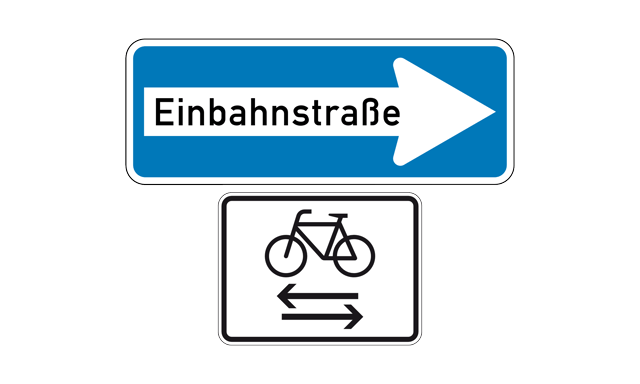
Explication
The one-way street sign also applies to cyclists, but with this traffic sign combination they are allowed to ride in both directions. Please note, however, that when overtaking cyclists in built-up areas, a minimum lateral distance of 1.5 m must always be maintained.
-
Question 14 sur 69
Ce panneau de circulation se trouve sur le côté droit de la chaussée. Quelle est sa signification?
1.4.41-0232 points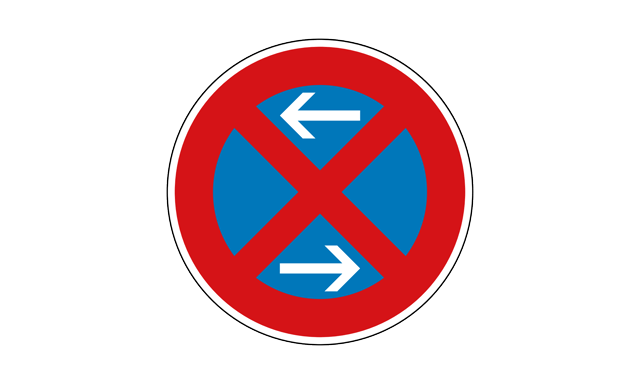
Explication
The traffic sign indicates an absolute no-stopping zone in the area in front of and behind the traffic sign. The arrow pointing to the left indicates that you are not allowed to stop after the sign, the arrow pointing to the right indicates that you are not allowed to stop in front of the sign.
-
Question 15 sur 69
Ce panneau de circulation se trouve sur le côté droit de la chaussée. Quelle est sa signification?
1.4.41-0242 points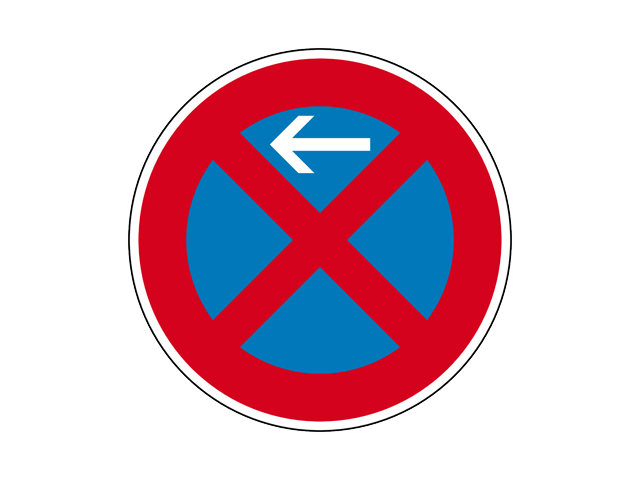
Explication
The traffic sign signals the beginning of an absolute prohibition to stop from the traffic sign. The arrow pointing to the left shows that the prohibition of stopping begins from the sign.
-
Question 16 sur 69
De quoi devez-vous tenir compte lorsque vous voyez ce panneau de signalisation?
1.4.41-0252 points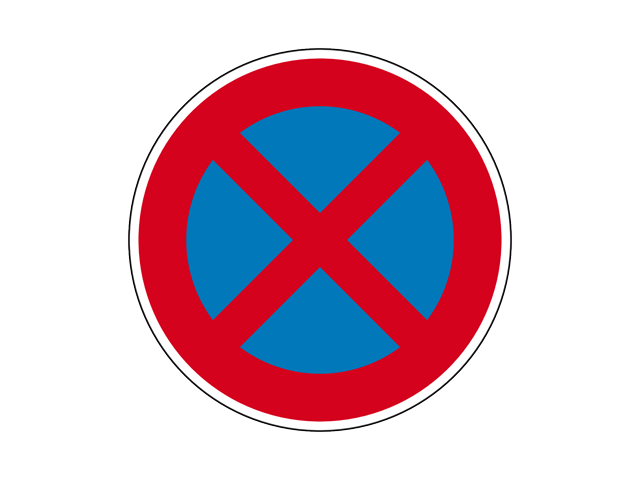
Explication
The traffic sign indicates an absolute no-stopping zone in this area. You are not allowed to stop there.
-
Question 17 sur 69
Quel est le bon comportement à adopter dans cette situation?
1.4.41-0263 points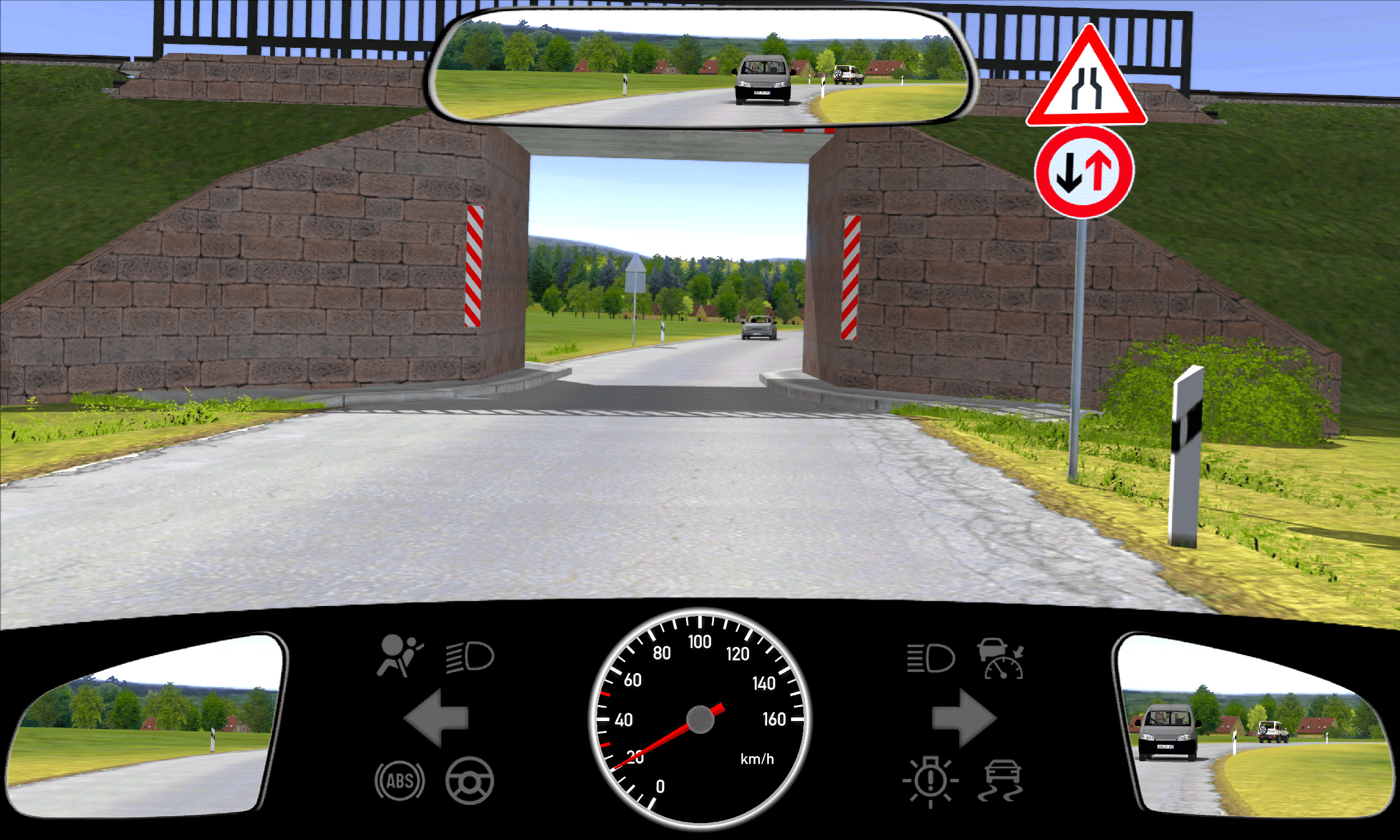
Explication
The sign indicates that you must give priority to oncoming traffic at the bottleneck. The vehicle coming towards you is already close to the bottleneck, so you must wait and may only drive after the car coming towards you.
-
Question 18 sur 69
Quand devez-vous vous arrêter ici?
1.4.41-0272 points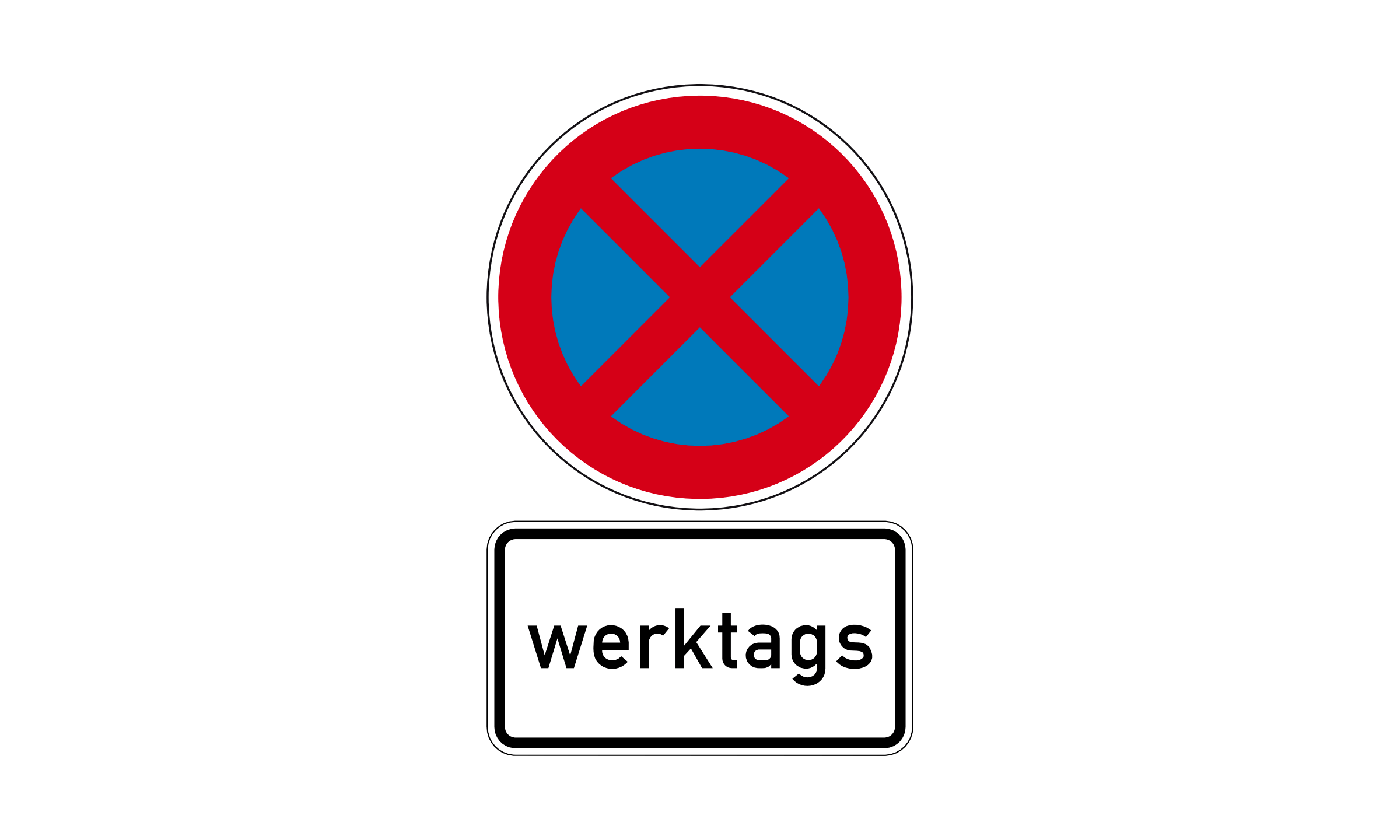
Explication
The absolute stopping ban only applies on working days. You are allowed to stop here on Sundays and public holidays.
-
Question 19 sur 69
Quelles règles s’appliquent à ce croisement?
1.4.41-0284 points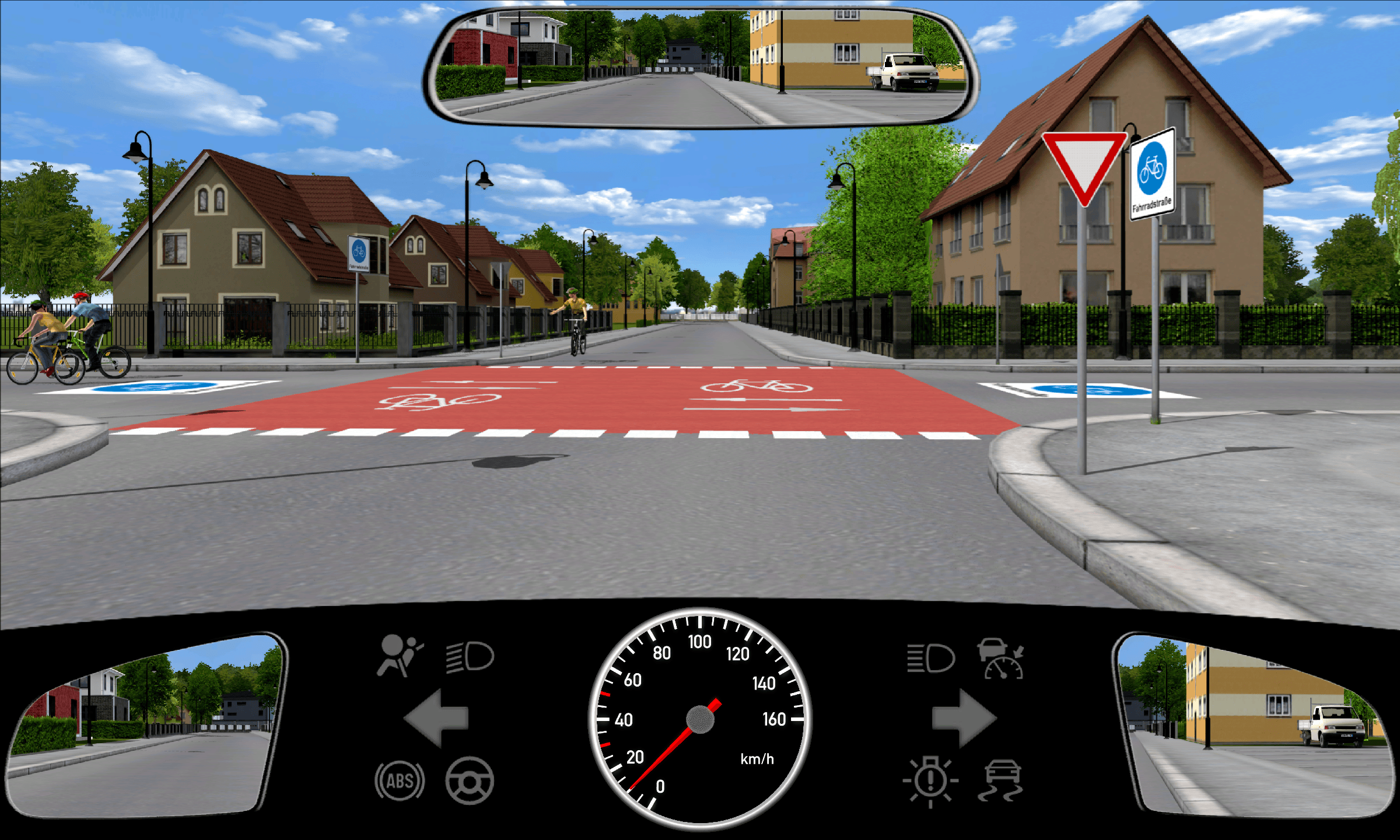
Explication
The blue traffic signs, with the white bicycle in the middle, indicate a bicycle street. This road may only be used by bicycles, unless otherwise expressly indicated by other traffic signs. In addition, the triangular traffic sign “Give way” indicates that cross traffic must be given priority. You do not necessarily have to stop at the traffic sign “Give way” and you can cross the intersection carefully as there is no traffic visible from the right or left.
-
Question 20 sur 69
Qu’indique ce panneau routier?
1.4.41-0293 points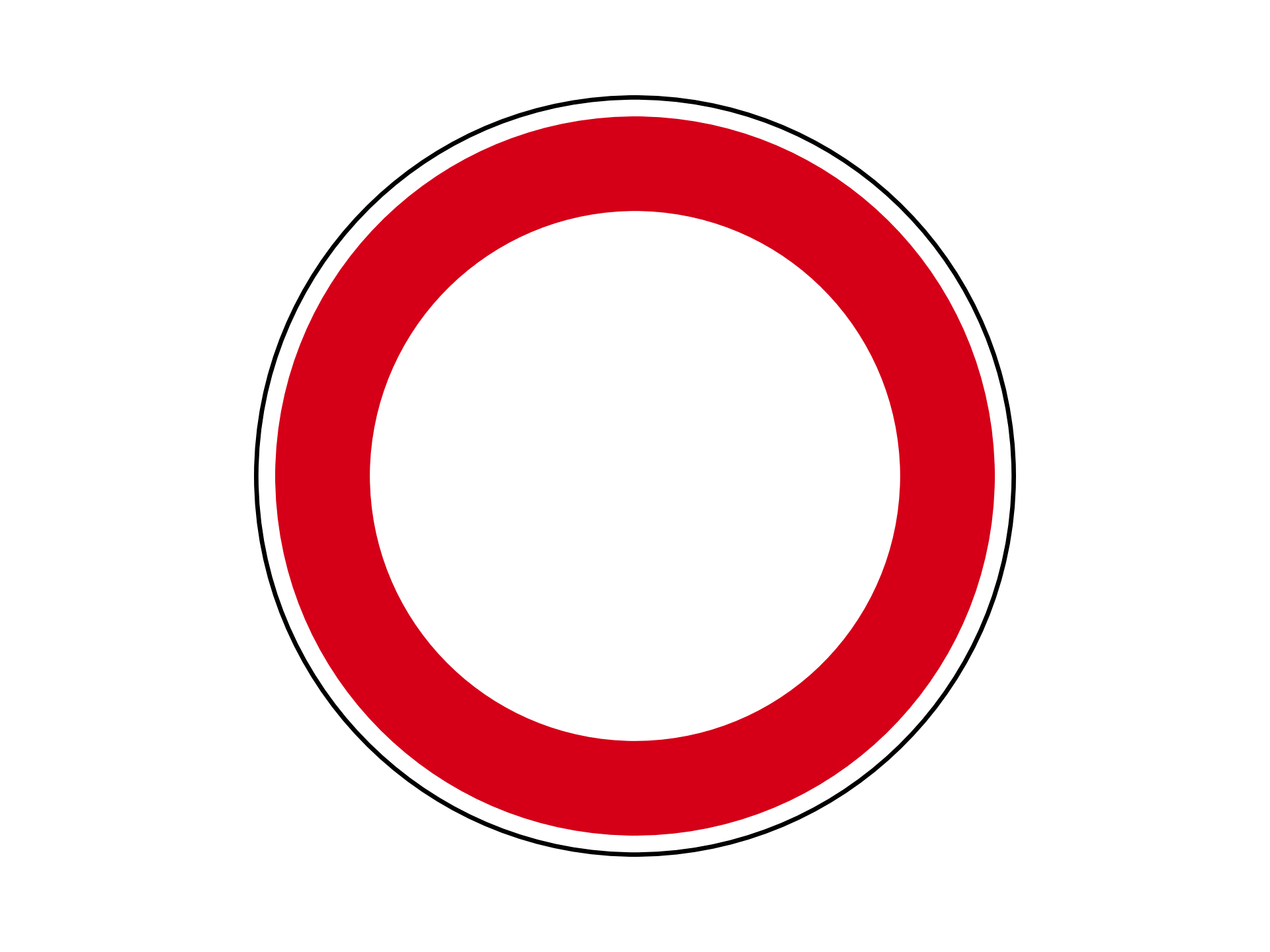
Explication
Basically, the traffic sign “Prohibited all types of vehicles” means that vehicles are not allowed to drive on the road. However, motorcycles or bicycles may be pushed.
-
Question 21 sur 69
Vous circulez sur une chaussée à sens unique signalée ainsi. Que faut-il faire?
1.4.41-0303 points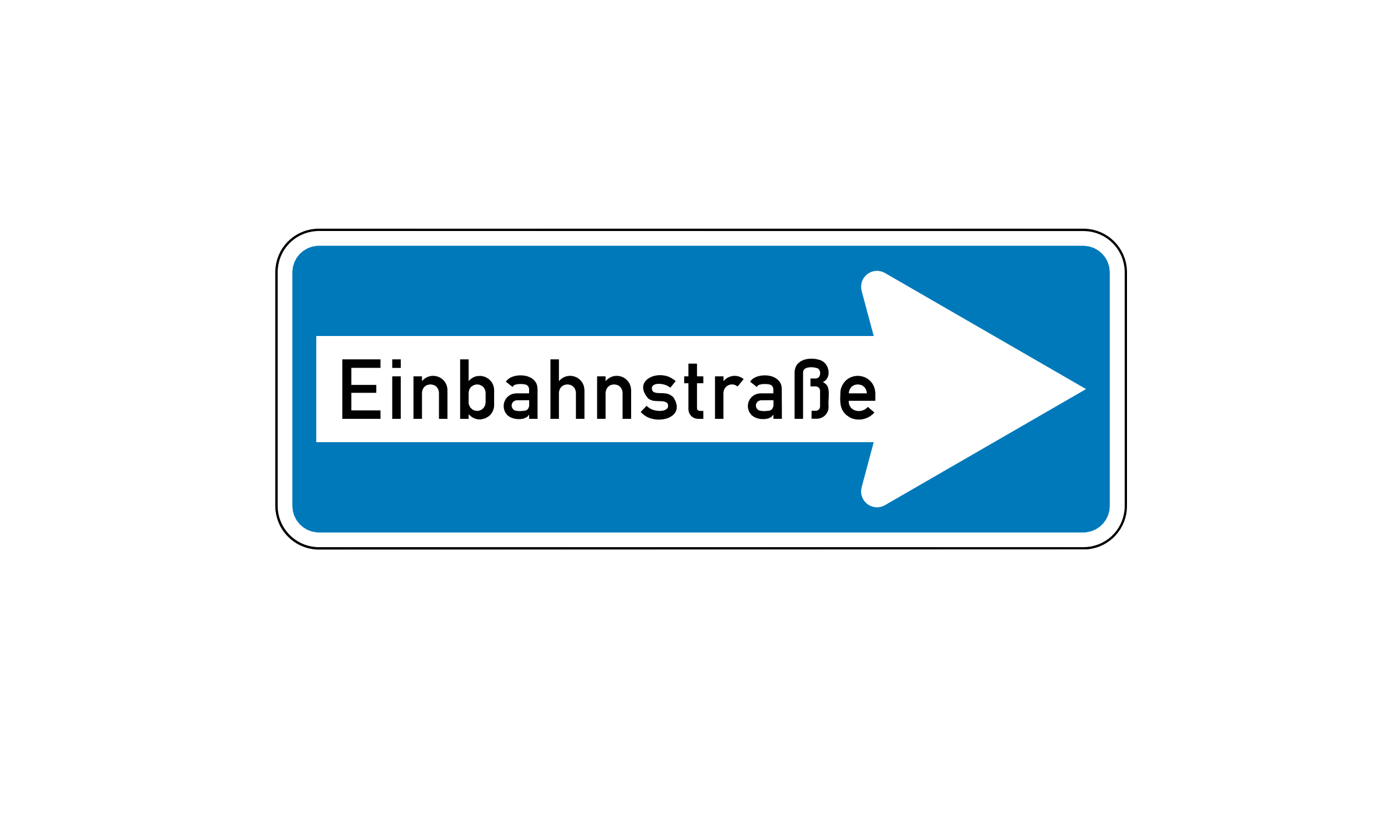
Explication
The direction of travel on a one-way street is always indicated by the white arrow on the traffic sign. If you are on your one-way street, you are allowed to park on the right or left side of the road in the direction of travel. In order not to obstruct the traffic behind you when turning left, you must move as far to the left as possible. This leaves enough space for vehicles that want to go straight or turn right.
-
Question 22 sur 69
Vous circulez sur une voie prioritaire. Quel panneau routier termine votre priorité?
1.4.41-0313 pointsExplication
The traffic sign “End of priority road” signals to you that the right of way regulation has been lifted and the priority road ends here. If you have previously been driving on a priority road, the traffic sign “Give way” tells you that this priority road now ends. You now have to give way to other road users.
-
Question 23 sur 69
Quel élément du code de la route vous oblige à vous arrêter, en principe, avant de tourner à droite?
1.4.41-0324 pointsExplication
The “stop sign” shows you that you must always stop at the stop line or line of sight. The “green arrow” next to the red traffic light signals that you can turn right despite the red traffic light. But only after you have stopped at the stop or line of sight and made sure that you are not endangering anyone.
-
Question 24 sur 69
Quel panneau routier vous interdit d’entrer dans la zone signalée?
1.4.41-0333 pointsExplication
You are not allowed to enter a street with this traffic sign because it indicates a pedestrian zone. This may only be used by pedestrians. The traffic sign means “Entry prohibited”. Driving into the signposted area is therefore prohibited.
-
Question 25 sur 69
Dans quelles directions pouvez-vous continuer?
1.4.41-1062 points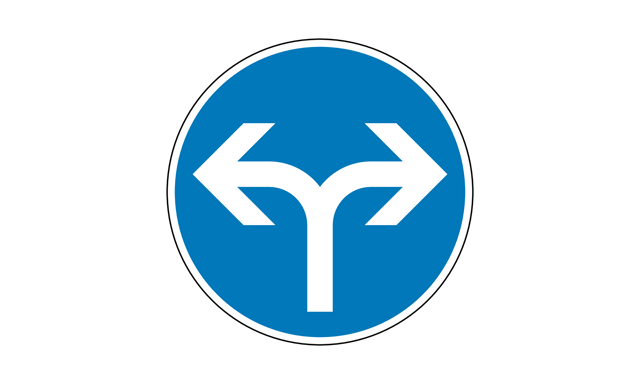
Explication
The traffic sign "You" only allows turning to the right or left" only allows you to turn left or right. The desired direction of travel needs to be indicated. You are not allowed to drive straight ahead.
-
Question 26 sur 69
A environ 80 m devant vous s'arrête un autobus scolaire sur la chaussée. Peut-il y avoir danger?
1.4.41-1095 points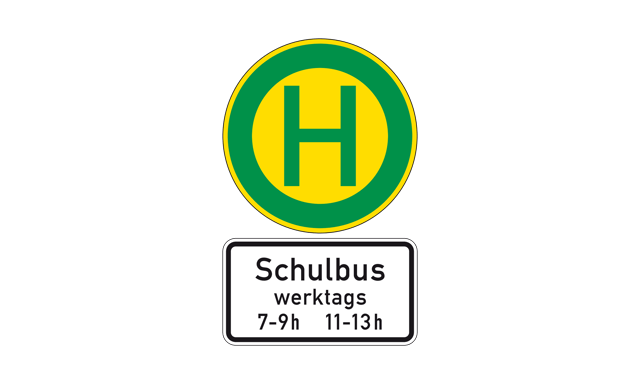
Explication
If a school bus stops in front of you on the road about 80 m away, you have to expect the following: Children could suddenly run on/off the road to reach the bus, for example, by the shortest route. This danger exists even if school crossing guards secure the traffic. You have to be ready to brake and you are only allowed to drive past the school bus at walking speed.
-
Question 27 sur 69
Qui peut rouler avec un véhicule dans cette rue?
1.4.41-1143 points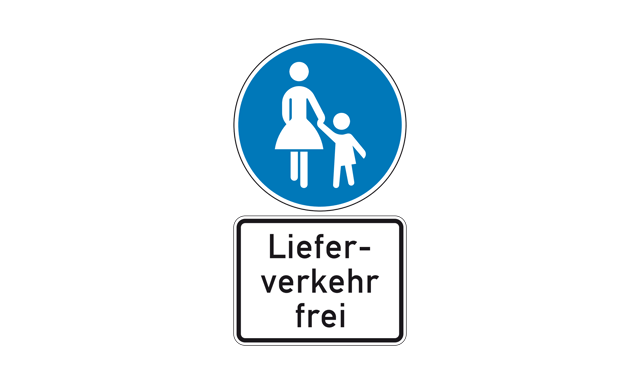
Explication
The street is a declared sidewalk, with the additional sign "delivery vehicles only". Therefore, this road may only be used by a distributor with a motor vehicle. The distributor must be able to prove that he has to deliver something in this street. He has to drive at walking speed, regardless of whether or not pedestrians pass the street. He has to take care of pedestrians.
-
Question 28 sur 69
Quels véhicules peuvent utiliser la voie spéciale ainsi marquée?
1.4.41-1152 points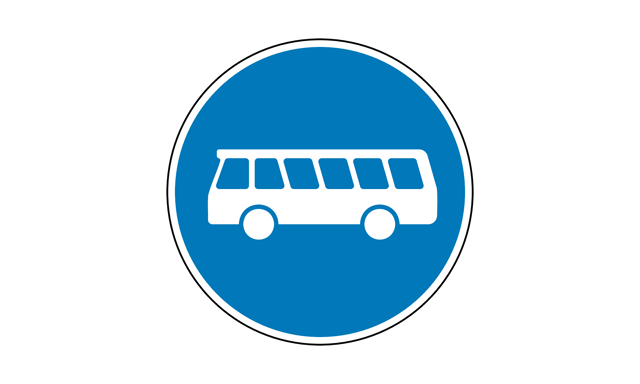
Explication
The lane shown here is intended for public buses. Only they are allowed to use this lane. For all other drivers the use of this lane is prohibited.
-
Question 29 sur 69
Qui peut s'engager dans une rue avec un tel panneau?
1.4.41-1162 points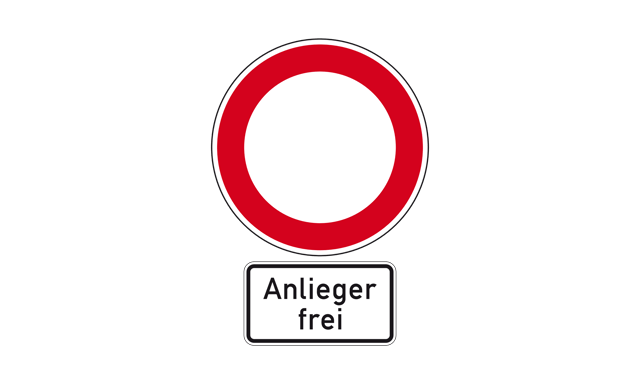
Explication
The additional sign indicates that drivers who have to go on errands in this street privately, or for business reasons may enter. Residents and visitors are customers of shops, patients of medical practices as well as people who live in this street and their visitors. Through traffic is prohibited in this street.
-
Question 30 sur 69
A quels véhicules est-il interdit de s'engager dans une rue avec un tel panneau?
1.4.41-1182 points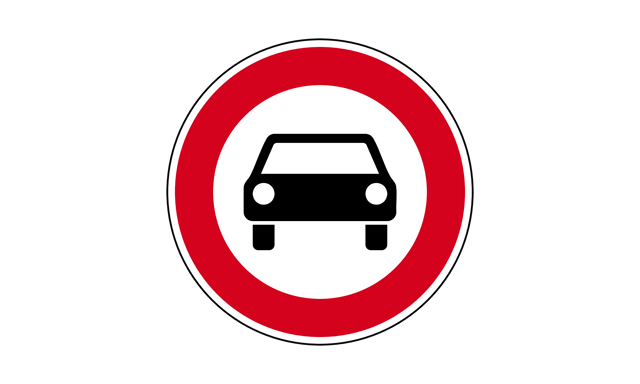
Explication
Cars, but also other multi-lane motor vehicles, may not drive on a road with this sign. These include cars, trucks and buses. The ban does not apply to motorcycles, including side cars, and non-motorized vehicles.
-
Question 31 sur 69
A quels véhicules est-il interdit de s'engager dans une rue avec un tel panneau?
1.4.41-1192 points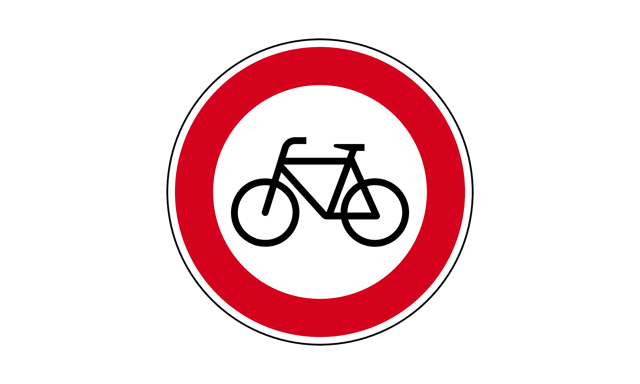
Explication
This round road sign with the red border prohibits the passage for cyclists. It usually can be found on roads where you are allowed to drive fast and where a cyclist can get into dangerous situations due to his or her low speed. Motorized vehicles such as motorcycles and cars may continue here.
-
Question 32 sur 69
A quels véhicules est-il interdit de s'engager dans une rue avec un tel panneau?
1.4.41-1202 points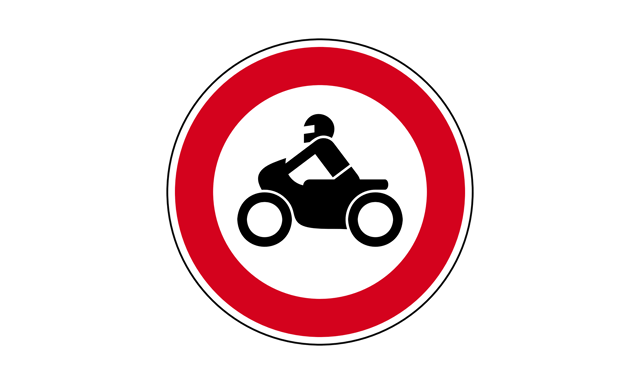
Explication
A round traffic sign with a red border indicates a general traffic ban for vehicles. If the circle contains a symbol, the types of vehicles to which the traffic ban applies are specified more precisely. Here the road may not be used by motorcyclists.
-
Question 33 sur 69
Qu'annoncent ces panneaux?
1.4.41-1212 points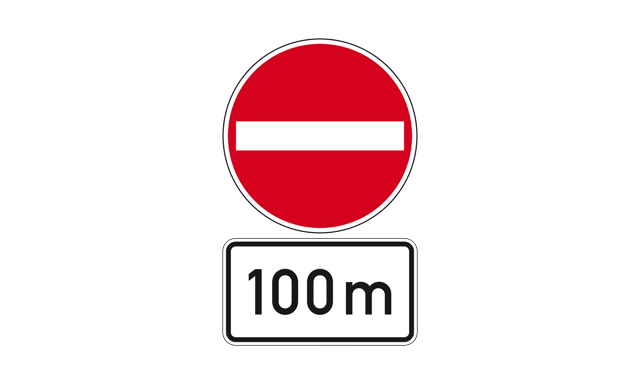
Explication
The traffic sign "Do not enter" forbids car drivers to enter this road with vehicles of all kinds. The additional sign makes it clear that this prohibition applies only in 100 meters. It does not explicitly state for how long. Always expect that vehicles can come out of this road.
-
Question 34 sur 69
Qu'annonce ce panneau?
1.4.41-1243 points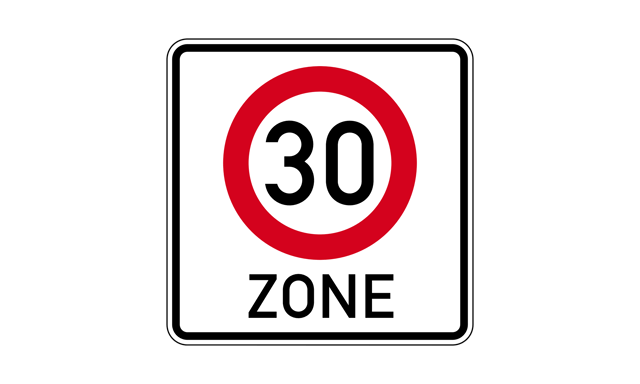
Explication
The traffic sign indicates the beginning of a zone with a maximum speed of 30 km/h. It is often set up in residential areas and only once at the beginning. You are not allowed to drive faster than 30 km / h in the entire area. This speed limit is canceled with the "End of the 30 km/h zone" sign.
-
Question 35 sur 69
Ici commence une zone commerciale à circulation ralentie. Comment vous comportez-vous?
1.4.41-1252 points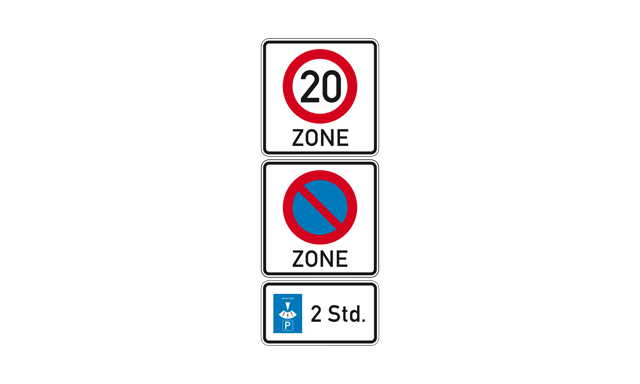
Explication
In a traffic calming zone with shops, road users are often distracted by the displays in the shop windows. You must therefore pay attention to rain and inattentive foot traffic. Your maximum speed is 20 km/h. This is a no parking, but waiting allowed zone and you're obliged to use your parking disc. To offer parking to many customers, the maximum parking time is two hours.
-
Question 36 sur 69
What does this traffic sign indicate?
1.4.41-1262 points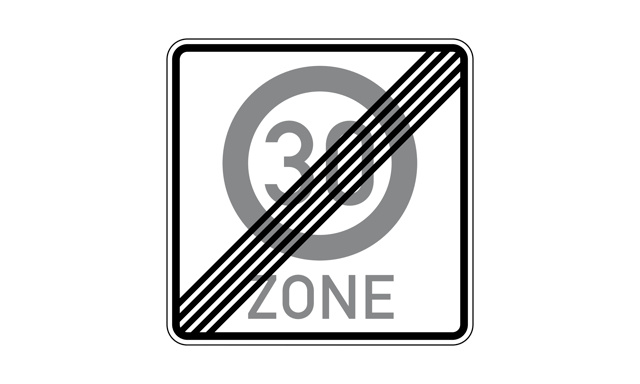
Explication
This traffic sign indicates the end of an area in which the permitted speed was set to 30 km/h and thus cancels the maximum speed of 30 km/h.
-
Question 37 sur 69
Quels véhicules pouvez-vous dépasser à la vue de ce panneau?
1.4.41-1293 points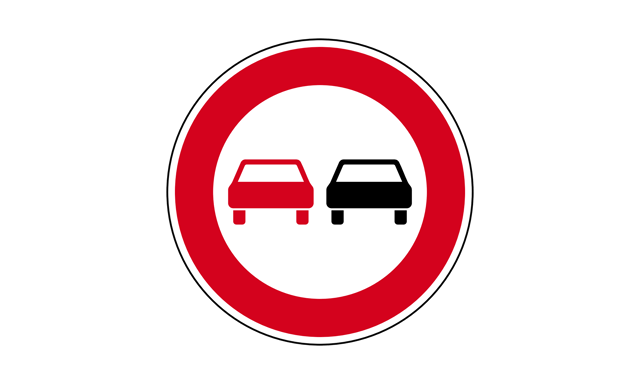
Explication
The restriction on overtaking prohibits a car driver from overtaking multi-lane vehicles such as cars, trucks or tractors and motorcycles with side cars. Motorcycles without a side car and bicycles are allowed to be overtaken, as these are single-lane vehicles.
-
Question 38 sur 69
Qu'annonce ce panneau?
1.4.41-1303 points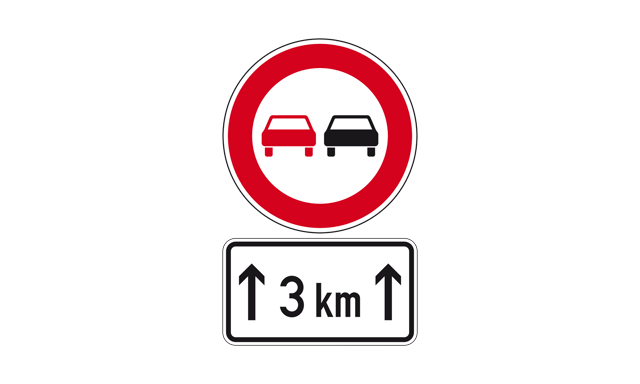
Explication
This traffic sign signals a restriction on overtaking on multi-lane motor vehicles or motorcycles with side car. The black arrows with the km indication indicate that the restriction on overtaking applies for 3 km. The restriction on overtaking comes into force starting from the traffic sign.
-
Question 39 sur 69
Qu'annonce ce panneau?
1.4.41-1313 points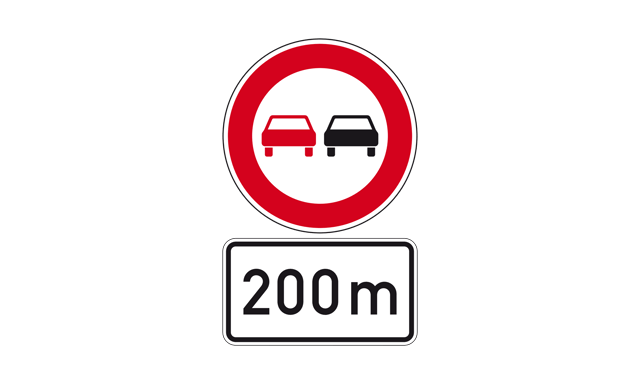
Explication
With this traffic sign the car driver is prohibited to overtake multi-lane vehicles and motorcycles with side car. The additional sign prohibits overtaking in 200 meters. Since it contains no black arrows, it does not mean that you are not allowed to overtake in the next 200 meters.
-
Question 40 sur 69
Quelles interdictions supprime ce panneau?
1.4.41-1332 points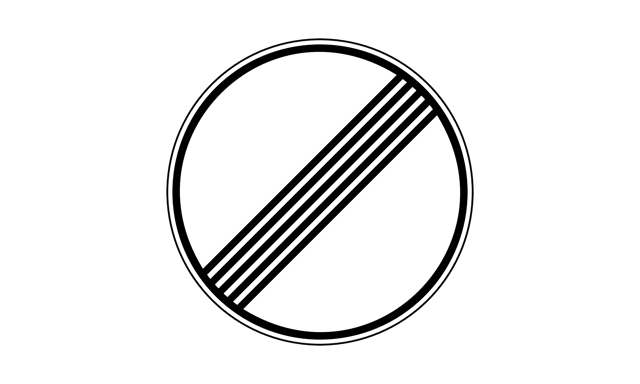
Explication
This traffic sign cancels all road restrictions. For example, road restrictions include restrictions on overtaking and speed limits. Stopping restrictions such as a parking ban are not covered by road restrictions.
-
Question 41 sur 69
Qu'annonce ce panneau?
1.4.41-1343 points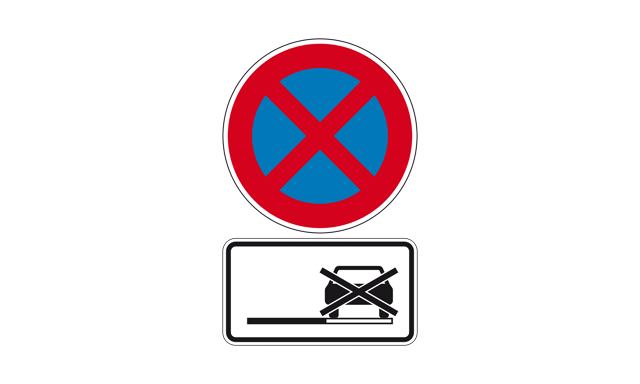
Explication
The traffic sign signals the car driver that it is forbidden to come to a stop on the road. The additional sign extends the stopping restriction and also prohibits stopping on the side strip for all vehicles, not just for trucks.
-
Question 42 sur 69
Qu'est-ce qui est permis dans la zone commençant ici?
1.4.41-1352 points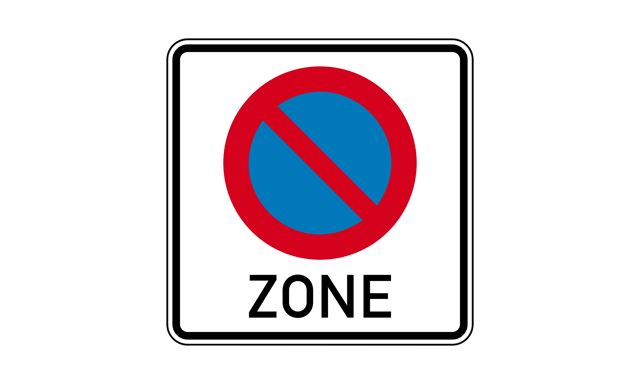
Explication
With the traffic sign "No parking. Waiting is allowed.", there is a restricted stopping ban in an entire area without stopping signs being placed here in certain streets. As a car driver, you are allowed to wait up to three minutes throughout the entire zone. Situations of loading and unloading or getting in and out of the car may also take longer.
-
Question 43 sur 69
Qu'est-ce qui finit ici?
1.4.41-1362 points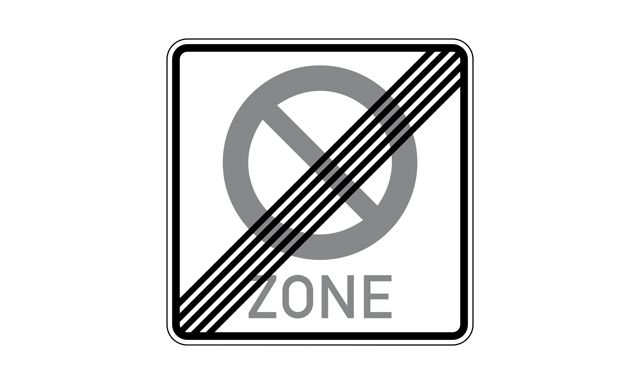
Explication
Here the no parking zone ends. Note that this traffic sign is often only on placed on the left side of the road and does not suspend the stopping restriction.
-
Question 44 sur 69
Quand devez-vous mettre le clignotant?
1.4.41-1403 points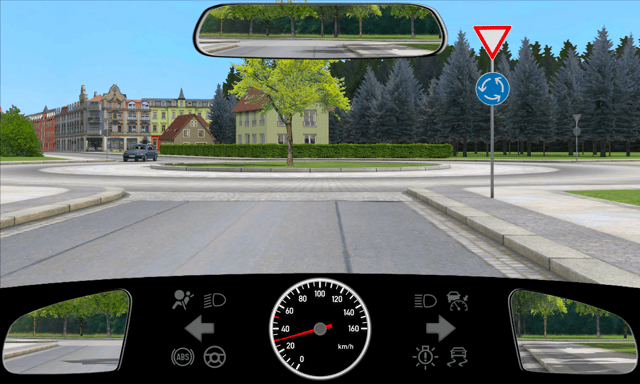
Explication
If you enter the roundabout, you do not need to indicate this because the entrance to the circle is always to the right. On the other hand, if you leave the roundabout, you will need to indicate this to make it easier for other drivers to enter the circle.
-
Question 45 sur 69
Vous vous approchez de la combinaison suivante des panneaux de signalisation. Que devez-vous observer dans cette situation?
1.4.41-1414 points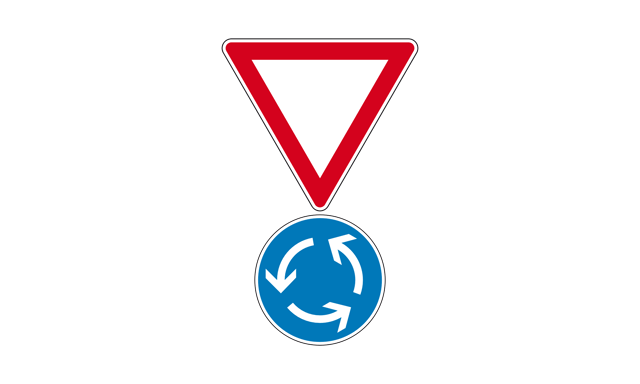
Explication
Vehicles driving in the roundabout have right of way. Indicating when entering the roundabout is not necessary, as a roundabout is always entered from the right. Therefore, the answer "Entering the roundabout must be indicated" is wrong. You only indicate when you leave a roundabout. This makes sense because this makes it easier for vehicles to enter the roundabout.
-
Question 46 sur 69
Qu'indique ce panneau de signalisation?
1.4.41-1452 points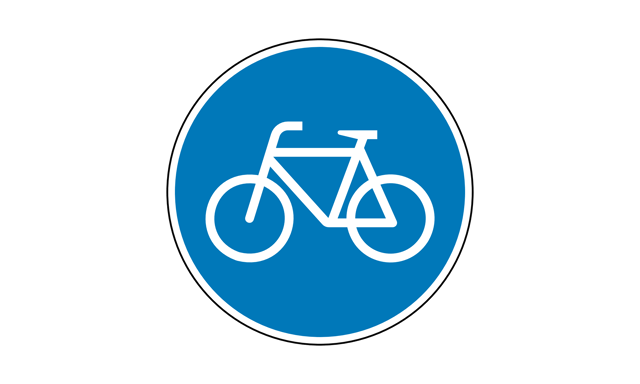
Explication
This traffic sign identifies a cycle path that cyclists must use but is prohibited for other road users. Cyclists crossing the road have their own warning sign.
-
Question 47 sur 69
Qu'est-ce qui est annoncé par cette combinaison de panneaux de signalisation?
1.4.41-1463 points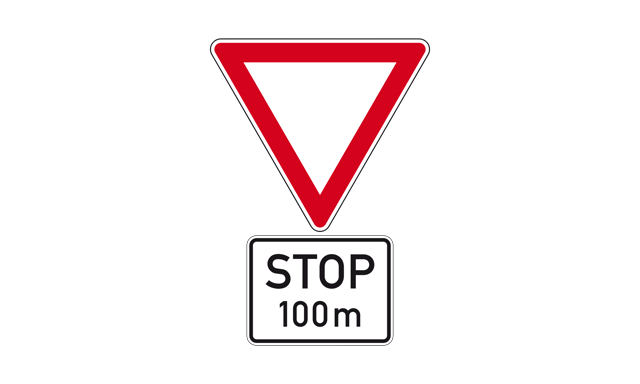
Explication
The traffic sign announces that after a hundred meters you will find a priority road where you will find the traffic sign "Give way". In any case, you must stop there at the stop line or line of sight.
-
Question 48 sur 69
Qu'indique ce panneau de signalisation?
1.4.41-1472 points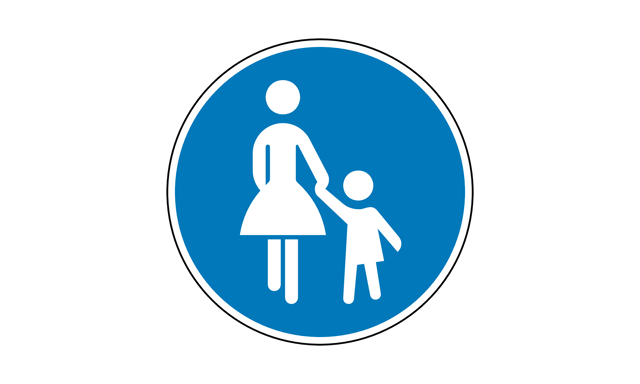
Explication
The traffic sign "Footway" marks paths which may be used exclusively by pedestrians and cyclists up to 10 years. Car drivers, cyclists and other road users may not be traveling on these routes. However, exceptions may be regulated by additional signs.
-
Question 49 sur 69
Comment devez-vous vous comporter sur cette route si vous conduisez un véhicule de livraison?
1.4.41-1493 points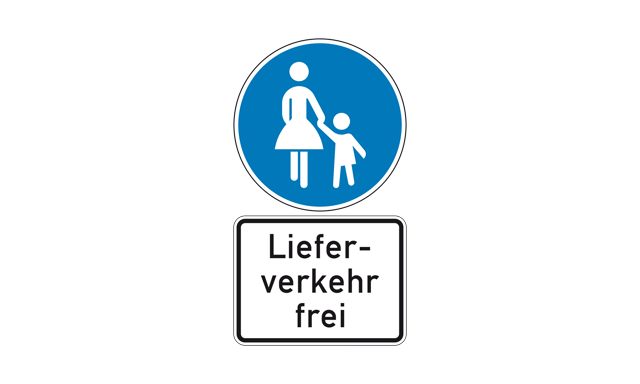
Explication
Since the traffic sign "Footway" is combined here with the additional sign "Delivery vehicles only", a distributor may drive on a road that is marked this way. You have to drive at walking speed, regardless of whether pedestrians are visible or not. Pedestrians have priority, you should be especially considerate of them.
-
Question 50 sur 69
Qu'indique ce panneau de signalisation?
1.4.41-1522 points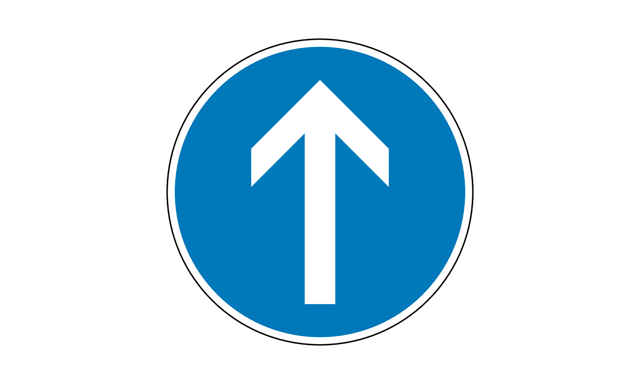
Explication
This traffic sign means "You must go straight ahead". You can only drive straight ahead and are not allowed to turn. The one-way street sign has the same colors but is rectangular.
-
Question 51 sur 69
Comment vous comportez-vous en présence de ce panneau de signalisation?
1.4.41-1534 points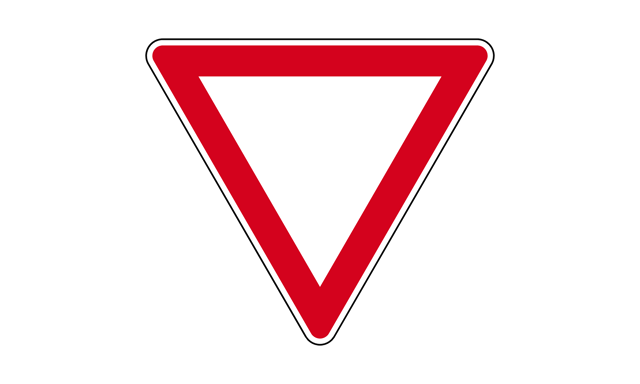
Explication
The traffic signal "Give way" signals that you are driving on a subordinate road and the cross traffic has priority. Drive slowly and stay ready to brake so that you do not miss a vehicle that is entitled to drive.
-
Question 52 sur 69
Qu'indique ce panneau de signalisation?
1.4.41-1542 points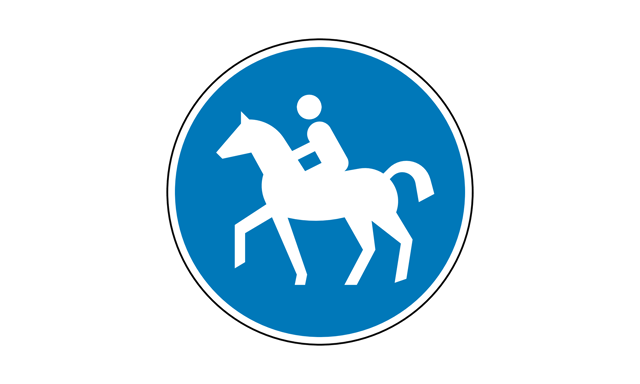
Explication
This traffic sign shows you a riding path. Here riders move with their horses. Other road users are not allowed to use this path.
-
Question 53 sur 69
Comment devez-vous vous comporter dans cette situation?
1.4.41-1564 points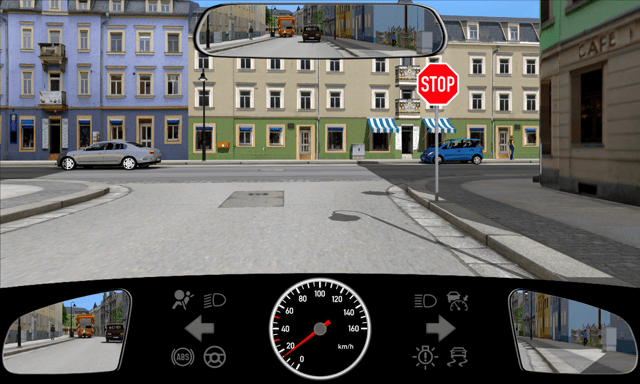
Explication
At the traffic sign "Stop! Yield to cross traffic" you have to stop and give way. You always have to stop, even if there is no cross traffic. Since there is no stop line, stop at the line of sight. From the line of sight, you can see the street you want to enter.
-
Question 54 sur 69
À quelle action vous engage ce panneau de signalisation?
1.4.41-1592 points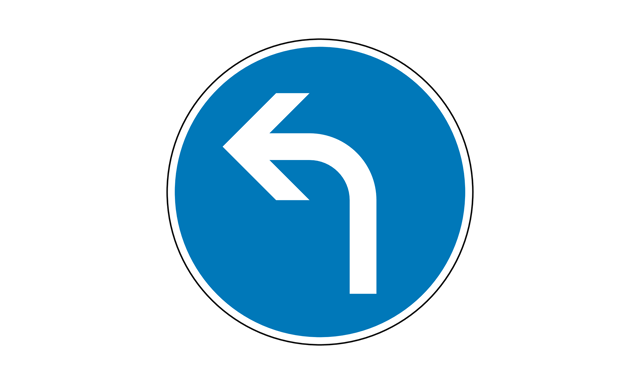
Explication
This traffic sign regulates the direction of travel. You may only turn left here. The change of the direction of travel must be indicated.
-
Question 55 sur 69
Que devez-vous faire à la vue de ce panneau de signalisation?
1.4.41-1602 points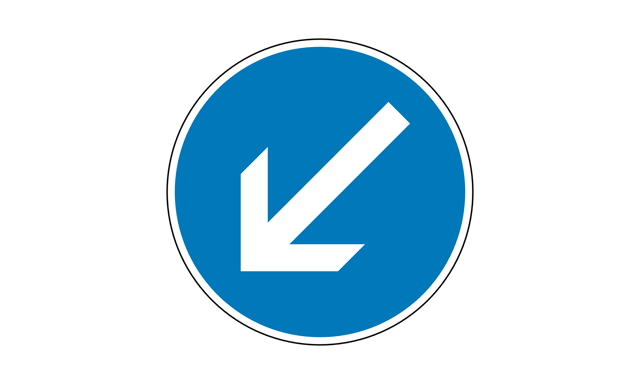
Explication
This traffic sign prescribes from which side you have to circuit the obstacle. You can find the regulation sign at central, stop islands or construction sites. If you meet the sign at an intersection or T-junction, you may turn in the appropriate direction.
-
Question 56 sur 69
Que faut-il respecter dans la zone des 15 m avant et après ce panneau de signalisation?
1.4.41-1612 points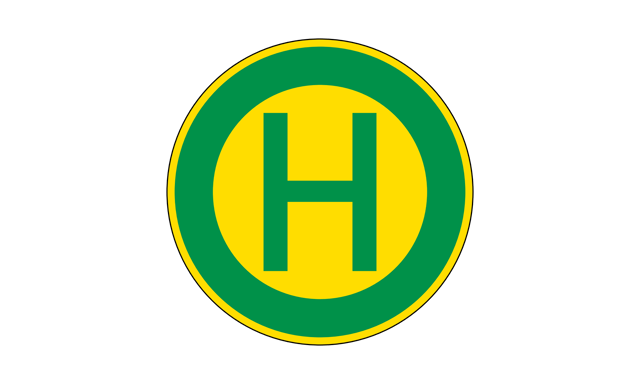
Explication
At the traffic sign you can see that there is a tram or bus stop here. 15 meters before and after the traffic sign, drivers are not allowed to park their vehicles. Unless public transport is impeded or passengers are endangered, waiting is allowed for up to three minutes.
-
Question 57 sur 69
Que devez-vous faire à la vue de ce panneau de signalisation?
1.4.41-1622 points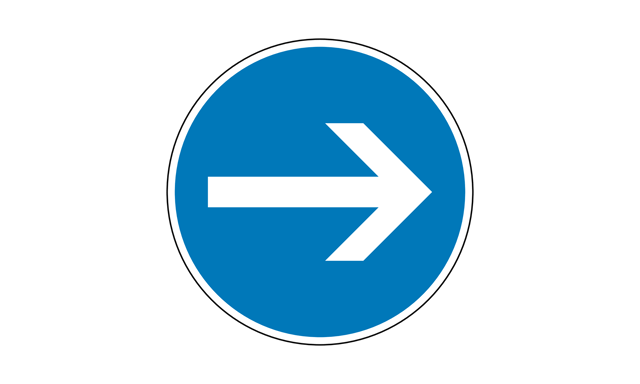
Explication
The given direction of travel is binding. The car driver must turn right before the traffic sign and indicate this process to other road users.
-
Question 58 sur 69
Que devez-vous faire à la vue de ce panneau de signalisation?
1.4.41-1632 points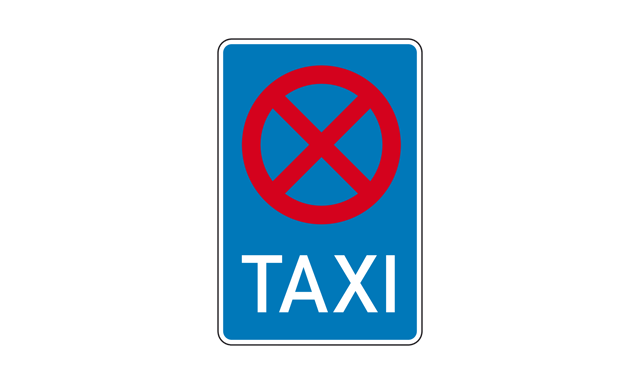
Explication
The traffic sign indicates a taxi stand. There is basically a stopping restriction for all other vehicles. The car driver must always expect departing and arriving taxis and passengers in this area.
-
Question 59 sur 69
Que signale cette combinaison de panneaux de signalisation?
1.4.41-1642 points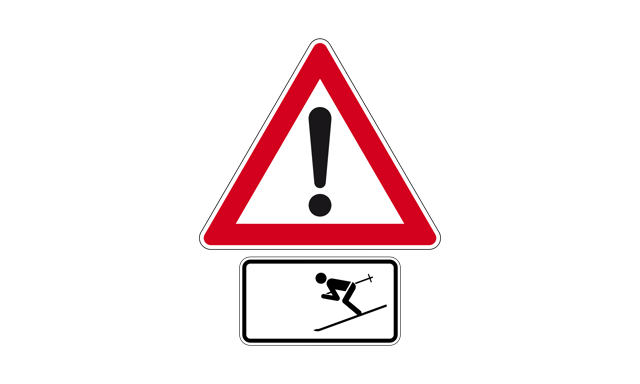
Explication
This sign means "Danger zone" and the additional sign stands for "Winter sports allowed". The combination indicates that winter sportspersons may use the road and road users must pay particular attention to it.
-
Question 60 sur 69
Que devez-vous respecter dans cette situation?
1.4.41-1654 points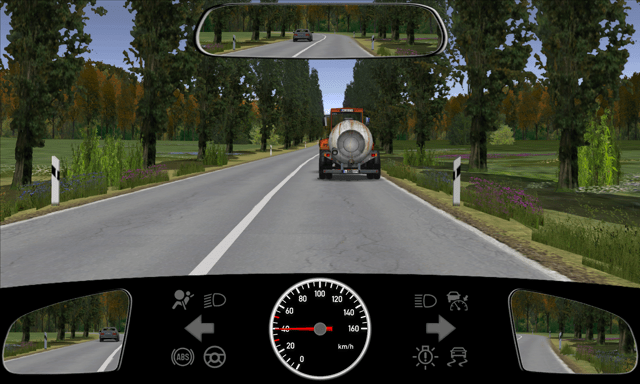
Explication
You must not drive over the lane boundary (solid line) to the left, which is located at the middle of the lane. Driving on it is also prohibited.
-
Question 61 sur 69
Vous voulez doubler. Quel est le comportement correct?
1.4.41-1673 points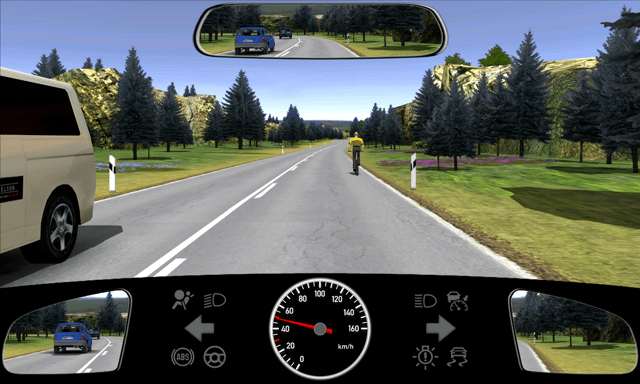
Explication
You may overtake if other road users are not endangered. The one-sided lane boundary allows you to cross the two lines from the side where the broken line is located.
-
Question 62 sur 69
En tant que riverain vous voulez emprunter une rue cyclable signalisée comme telle. De quoi devez-vous tenir compte?
1.4.41-1682 points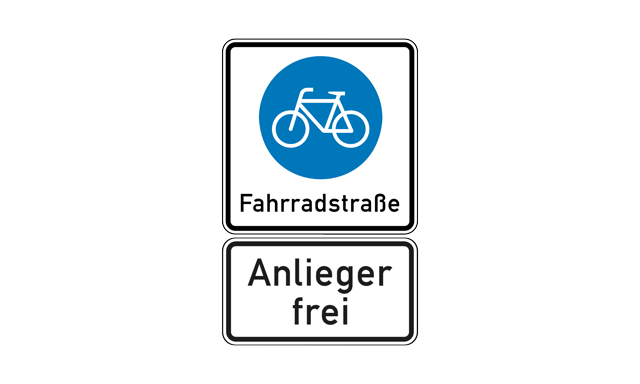
Explication
A maximum speed of 30 km/h applies to traffic. Cycling traffic must not be endangered or obstructed. If necessary, motor vehicle traffic must reduce speed further. Side-by-side cycling is permitted.
-
Question 63 sur 69
Qui est autorisé à emprunter une route signalisée comme telle?
1.4.41-1692 points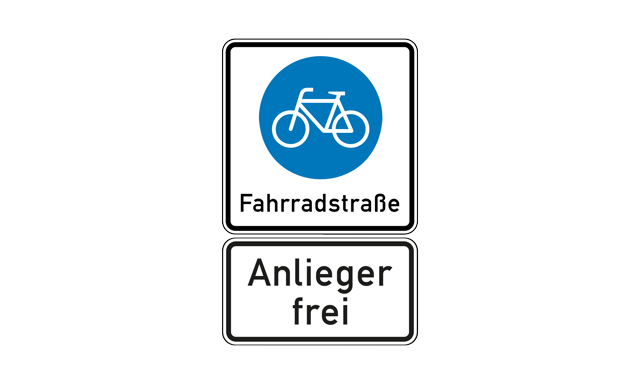
Explication
Vehicular traffic other than cyclists may not use cycle lanes unless permitted by additional sign. The additional sign allows residents to enter the bicycle lane.
-
Question 64 sur 69
Sur votre voie ce signe est marqué au sol. Que devez-vous respecter maintenant?
1.4.41-1703 points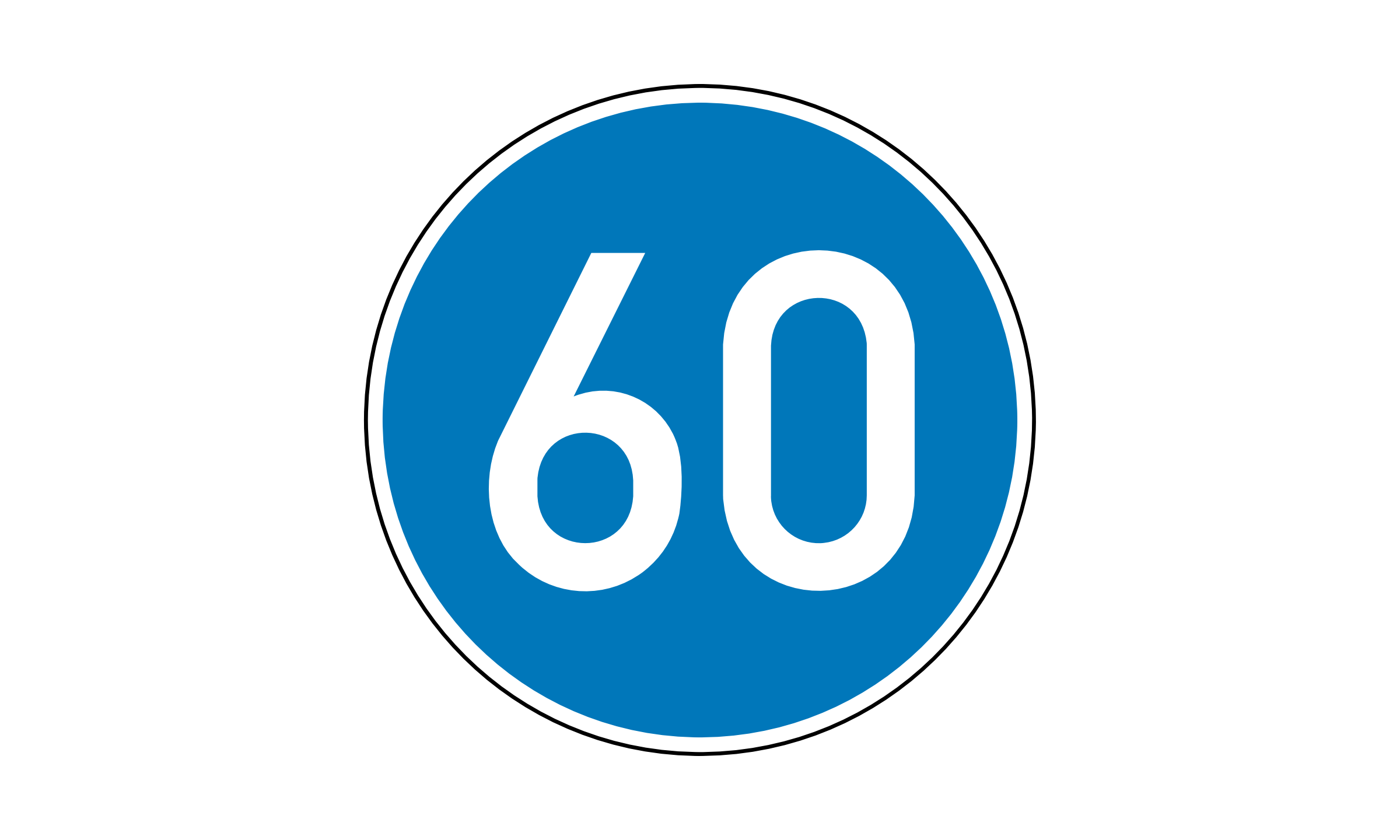
Explication
This traffic sign indicates the prescribed minimum speed. You must therefore drive at least 60 km/h, provided that the road and traffic conditions allow it.
-
Question 65 sur 69
À quelle vitesse les véhicules peuvent-ils rouler dans une zone ainsi signalée?
1.4.41-1712 pointsExplication
Cyclists, light electric vehicles and other authorized vehicles may not drive more than 30 km/h in bicycle zones.
-
Question 66 sur 69
Qu'indique ce panneau de signalisation?
1.4.41-1723 points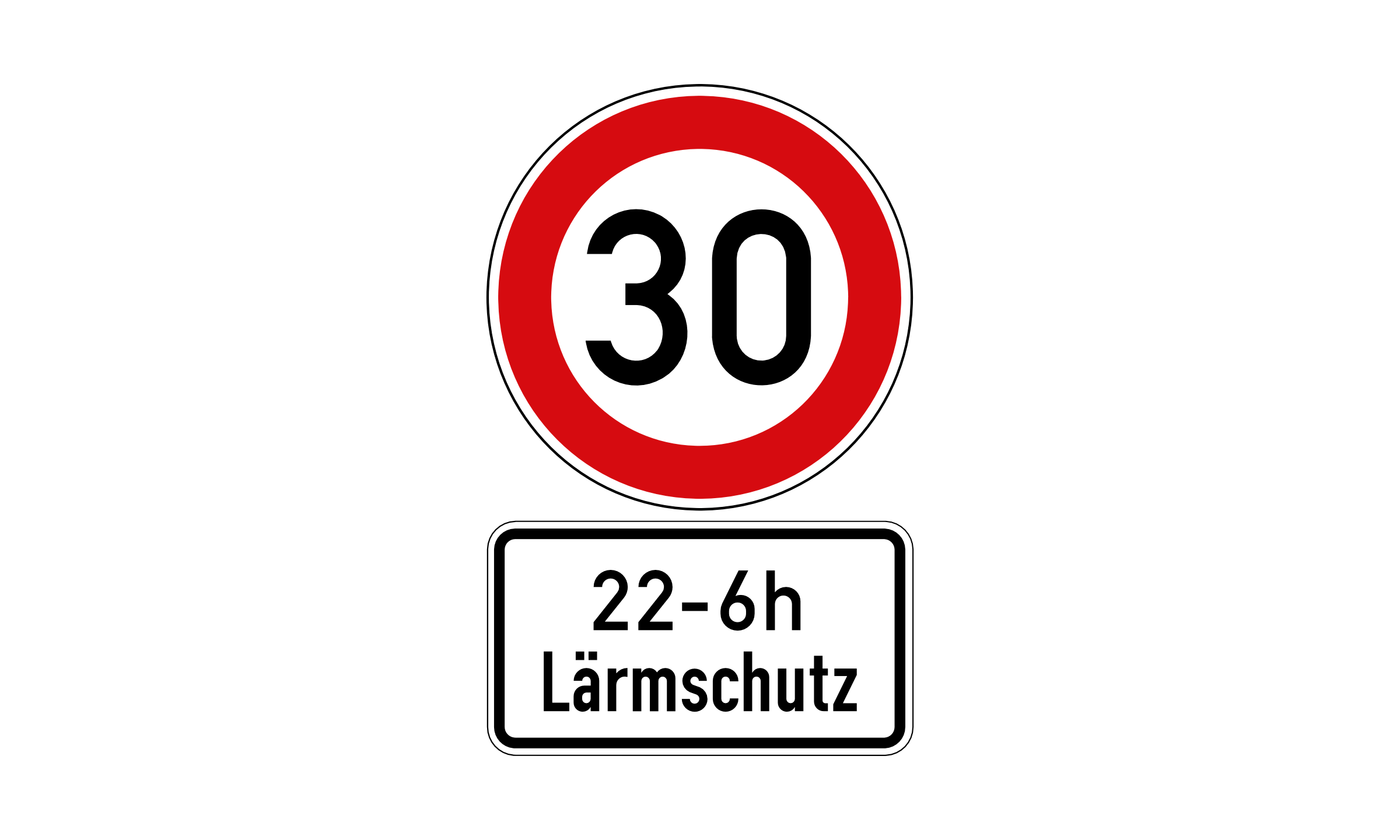
Explication
The additional sign limits the speed limit between 10 pm and 6 am.
-
Question 67 sur 69
Que dois-je faire lors ce que je vois ce panneau routier?
1.4.41-1732 points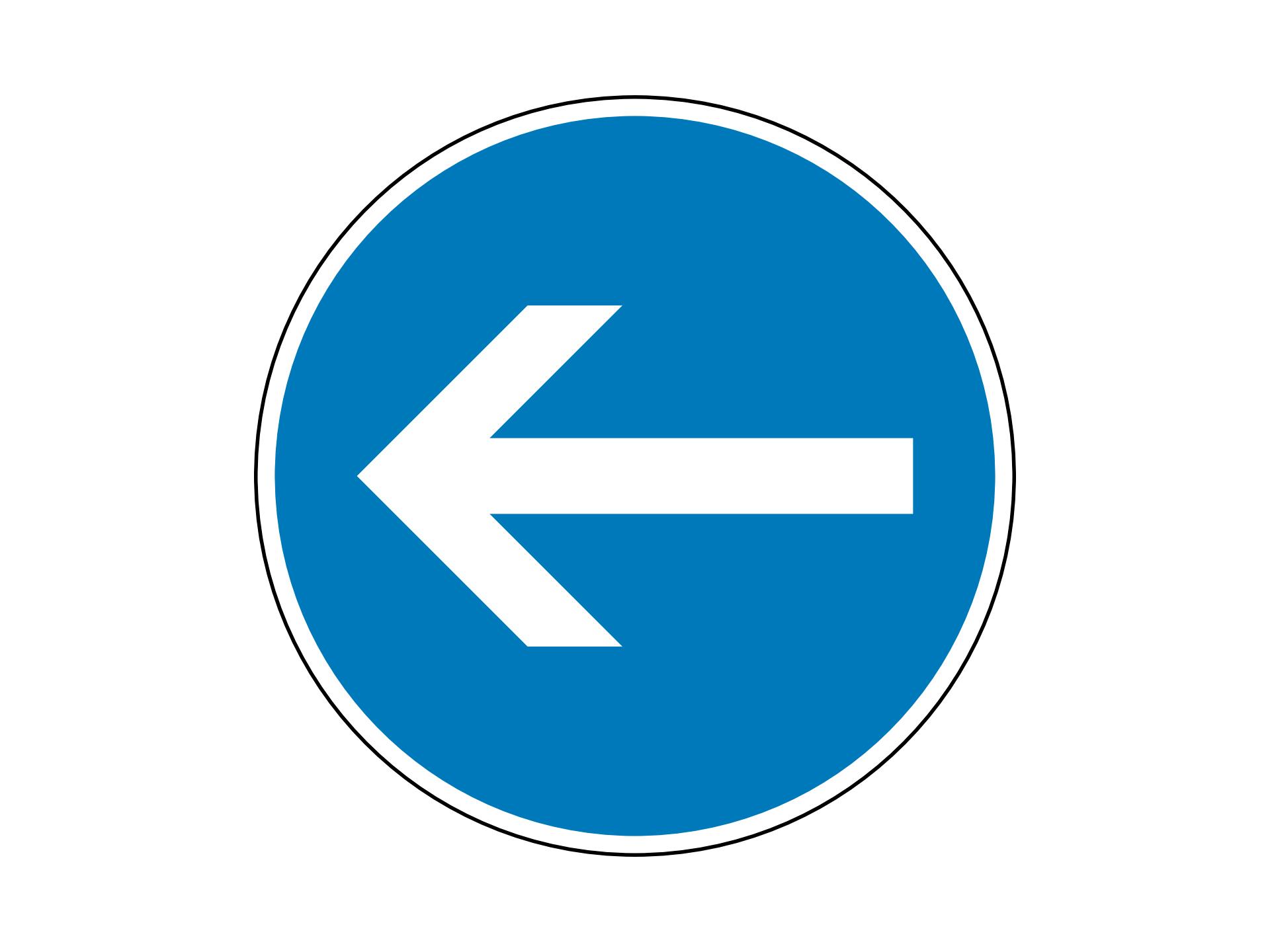
Explication
The arrow on this traffic sign always shows the direction of travel. If it is a straight arrow, you have to turn in front of the sign. If it is a curved arrow, you must turn according to the sign. You have to flash to indicate the change in driving direction.
-
Question 68 sur 69
Quel panneau routier indique qu’il est interdit de tourner?
1.4.41-1743 pointsExplication
All traffic signs show you that turning is prohibited. The traffic sign tells you that a tunnel begins here. Turning is strictly prohibited in the tunnel. The traffic sign “Turning Prohibited” shows you that turning is prohibited here. This traffic sign tells you that you are on a highway. U-turns are strictly prohibited on the highway.
-
Question 69 sur 69
À partir de quel panneau routier vous n’avez pas le droit de dépasser une vitesse maximale autorisée de 60 km/h?
1.4.41-1753 pointsExplication
Traffic signs with a red border generally indicate a ban. On a road with such a traffic sign you are not allowed to exceed the maximum permitted speed of 60 km/h.