
1.4.41 Sinal regulatório
Um guia prático de estudo para o exame de direção alemão. Aprenda o que os sinais ordenam, proíbem ou permitem – e o que você deve fazer no trânsito real.
Círculo vermelho
Geralmente significa uma proibição ou restrição.
Círculo azul
Geralmente significa uma instrução obrigatória.
Pratos extras
Limite, expanda ou explique quando uma regra se aplica.
Como aprender este capítulo rapidamente
Identifique o tipo de sinal
É uma proibição, comando, regra de prioridade ou marcação rodoviária?
Pergunte: o que devo fazer?
Parar, ceder, desacelerar, indicar, esperar ou evitar a entrada?
Verifique exceções
Procure placas extras, como residentes, veículos de entrega, estradas molhadas ou limites de tempo.
Pense na ação do exame
O exame pergunta o que você faz, não apenas como se chama o sinal.
Sinais Regulatórios
Sinais reguladores de trânsito alemães
Os sinais regulamentares dão aos condutores instruções obrigatórias, restrições, prioridades e regras de utilização das estradas.
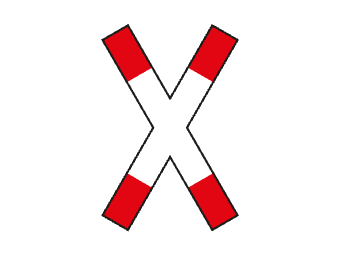
Código 201
Cruz de Santo André
Marca uma passagem ferroviária onde o tráfego ferroviário tem prioridade.
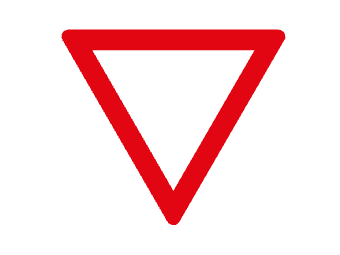
Código 205
Ceder
Exige que os motoristas cedam ao tráfego na estrada prioritária.
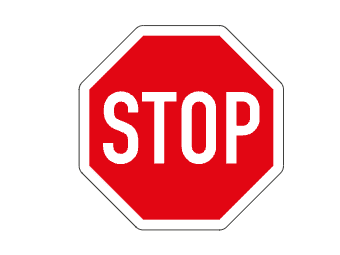
Código 206
Pare e ceda
Requer um ponto final antes de ceder ao tráfego prioritário.
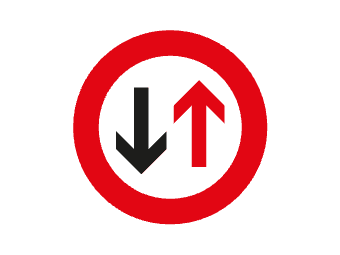
Código 208
Prioridade para tráfego que se aproxima
Exige que os motoristas cedam aos veículos vindos na direção oposta.
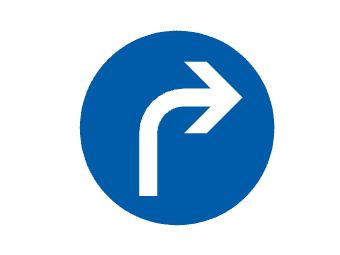
Código 209-20
Direção Obrigatória Direita
Os motoristas devem virar à direita com indicação.
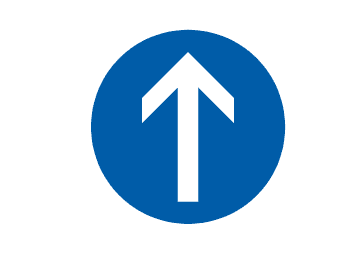
Código 209-30
Direção obrigatória em frente
Os motoristas devem seguir em frente.
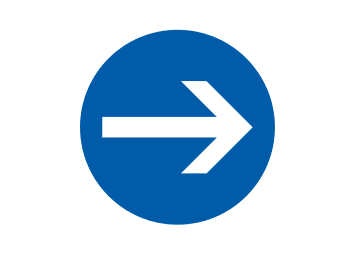
Código 211-20
Vire à direita aqui
Os motoristas devem virar à direita neste ponto.
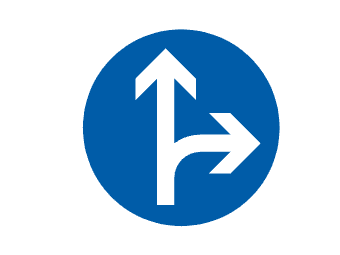
Código 214-20
Em frente ou apenas para a direita
Os motoristas só podem seguir em frente ou virar à direita.
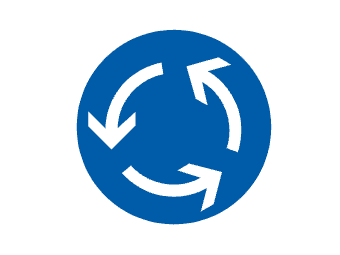
Código 215
Rotunda
Indica circulação obrigatória em rotunda.
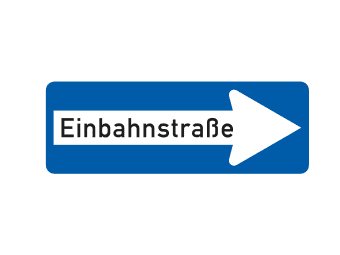
Código 220
Rua de mão única
Mostra que o tráfego é permitido apenas em uma direção.
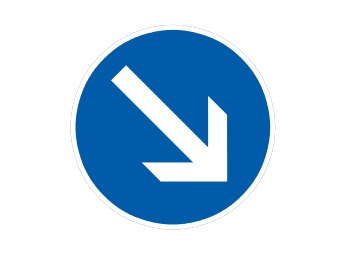
Código 222-20
Passe pela direita
Os motoristas devem ultrapassar o obstáculo pelo lado direito.
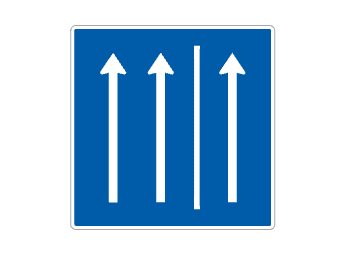
Código 223.1
Use ombro duro
Permite ou exige que o tráfego use o acostamento.
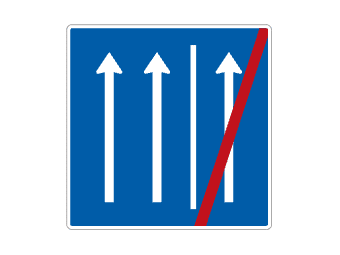
Código 223.2
Fim do uso de ombro duro
Indica que não é mais permitido dirigir em acostamentos.
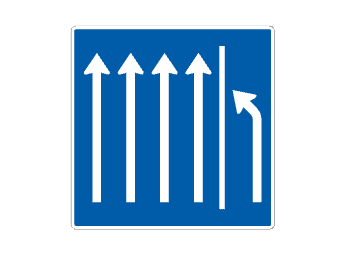
Código 223.3
Limpe o ombro duro
Exige que os motoristas saiam do acostamento.
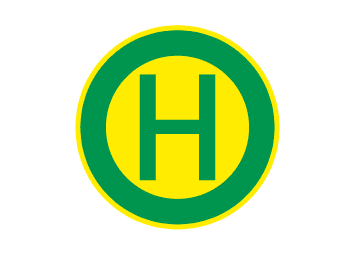
Código 224
Ponto de ônibus
Marca uma parada para ônibus regulares e ônibus escolares.
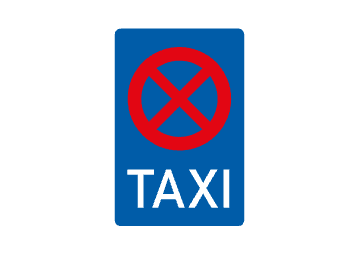
Código 229
Ponto de táxi
Marca uma área de parada reservada para táxis.
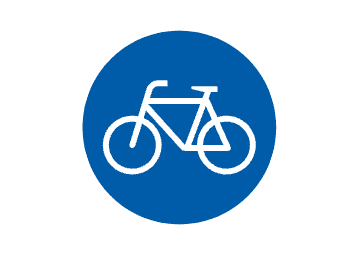
Código 237
Ciclovia
Indica um caminho obrigatório para ciclistas.
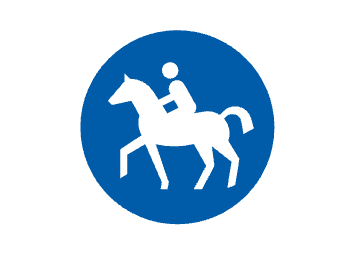
Código 238
Caminho de freio
Indica um caminho obrigatório para cavaleiros a cavalo.
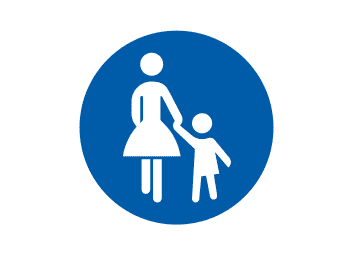
Código 239
Trilha
Indica um caminho reservado para pedestres.
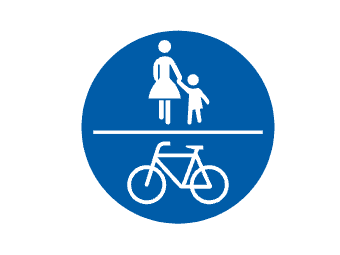
Código 240
Trilha e ciclovia compartilhadas
Indica um caminho compartilhado para pedestres e ciclistas.
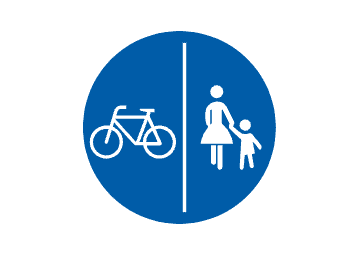
Código 241
Ciclovia e trilha separadas
Indica áreas separadas para ciclistas e pedestres.
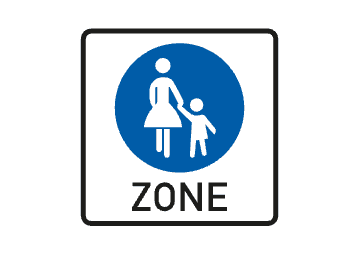
Código 242.1
Início da Zona Pedonal
Marca o início de uma área maioritariamente reservada a peões.
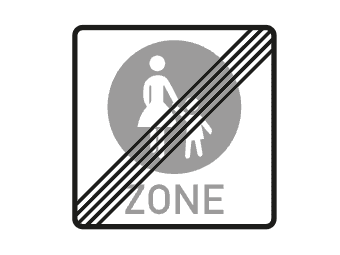
Código 242.2
Fim da Zona Pedonal
Marca o fim de uma zona pedonal.
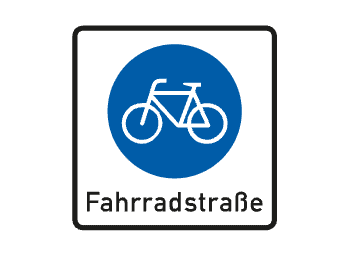
Código 244.1
Início da Rua das Bicicletas
Marca uma rua onde o tráfego de bicicletas tem prioridade especial.
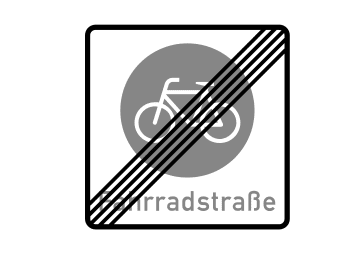
Código 244.2
Fim da Rua das Bicicletas
Marca o fim de uma rua para bicicletas.
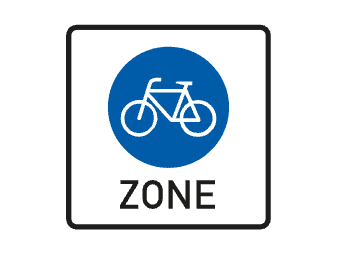
Código 244.3
Início da Zona de Bicicleta
Marca o início de uma área com regras especiais para bicicletas.
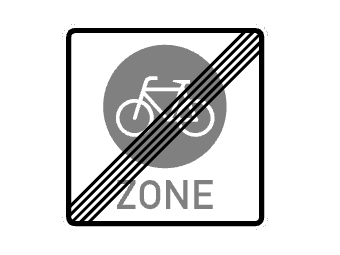
Código 244.4
Fim da zona de bicicletas
Marca o fim de uma zona para bicicletas.
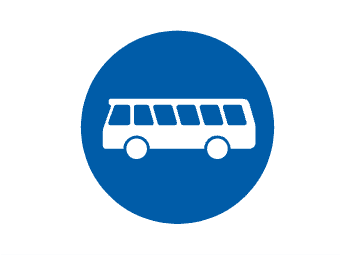
Código 245
Faixa de ônibus
Marca uma faixa de tráfego reservada para ônibus.
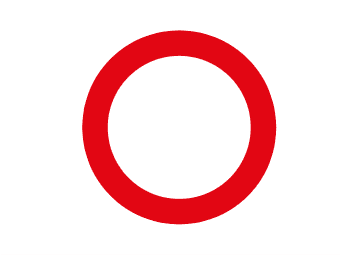
Código 250
Sem veículos
Proíbe a entrada de todos os tipos de veículos.
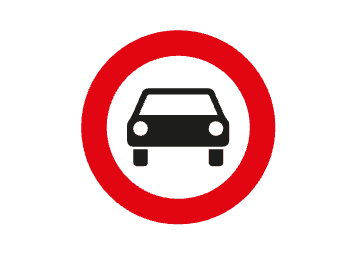
Código 251
Sem carros ou veículos motorizados com múltiplas pistas
Proíbe carros e outros veículos motorizados com múltiplas pistas.
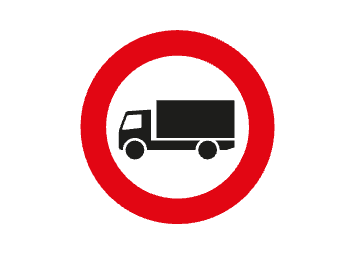
Código 253
Nenhum veículo motorizado com mais de 3,5 t
Proíbe veículos motorizados pesados acima da classe de peso declarada.
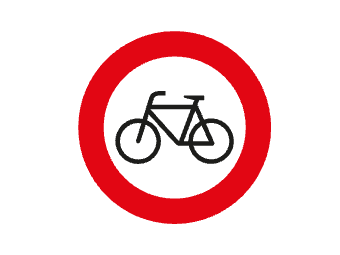
Código 254
Não andar de bicicleta
Proíbe o tráfego de bicicletas.
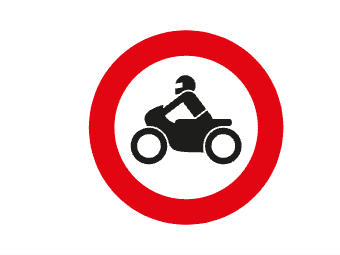
Código 255
Proibido motocicletas, ciclomotores ou motocicletas pequenas
Proíbe motocicletas, ciclomotores e veículos motorizados semelhantes de duas rodas.
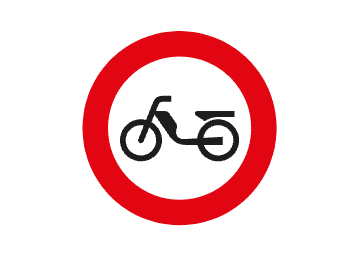
Código 257-50
Sem ciclomotores
Proíbe o uso de ciclomotores na estrada ou caminho.
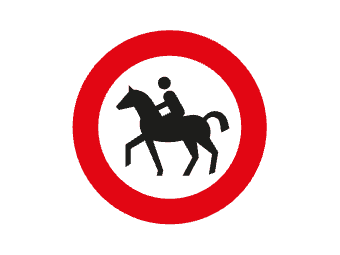
Código 257-51
Sem passageiros
Proíbe a utilização do percurso por cavaleiros.
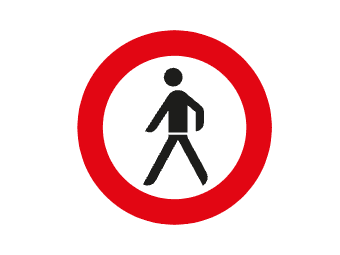
Código 259
Proibido Pedestres
Proíbe os pedestres de usar a estrada ou caminho.
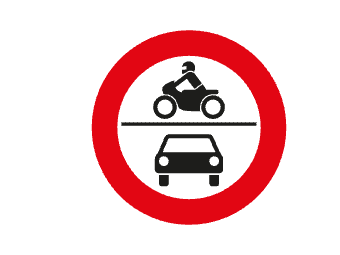
Código 260
Proibido veículos a motor
Proíbe a entrada de veículos automotores.
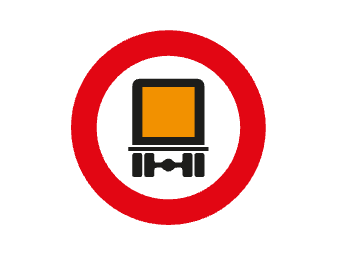
Código 261
Nenhum veículo transportando mercadorias perigosas
Proíbe veículos que transportem mercadorias perigosas marcadas.
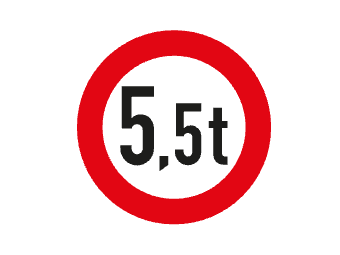
Código 262
Limite máximo de peso real
Proíbe veículos que excedam o peso real indicado.
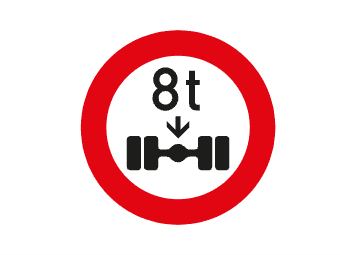
Código 263
Limite máximo de carga por eixo
Proíbe veículos que excedam a carga por eixo indicada.
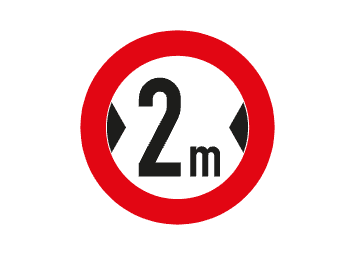
Código 264
Limite máximo de largura
Proíbe veículos mais largos que a largura indicada.
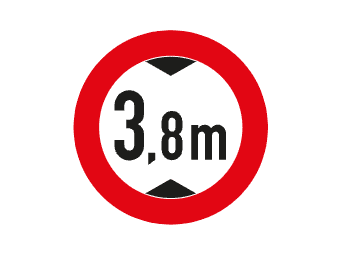
Código 265
Limite máximo de altura
Proíbe veículos com altura superior à indicada.
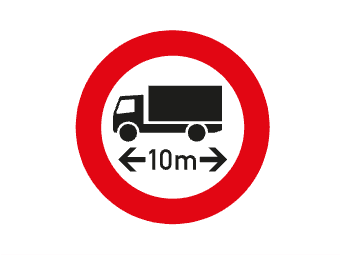
Código 266
Limite máximo de comprimento
Proíbe veículos com comprimento superior ao indicado.
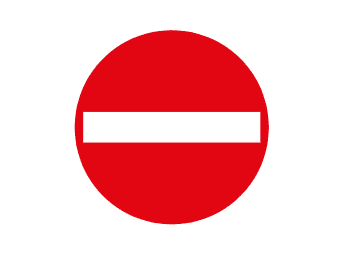
Código 267
Entrada proibida
Proíbe a entrada de veículos por esta direção.
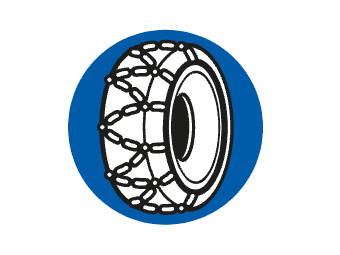
Código 268
Correntes de neve necessárias
Requer que os veículos usem correntes para neve.
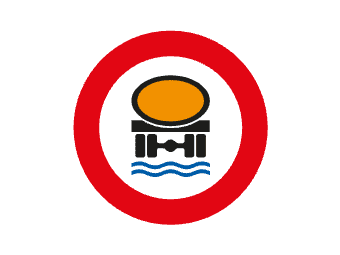
Código 269
Nenhum veículo transportando carga poluente da água
Proíbe veículos que transportem cargas que possam colocar a água em risco.
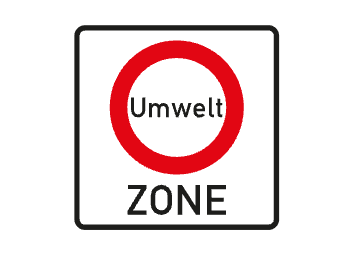
Código 270.1
Início da Zona de Baixas Emissões
Marca o início de uma zona que restringe o tráfego para reduzir a poluição do ar.
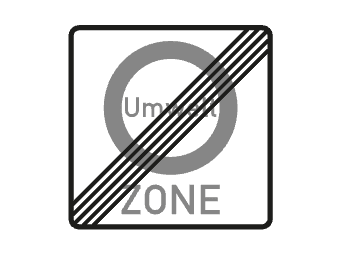
Código 270.2
Fim da zona de baixas emissões
Marca o fim de uma zona de restrição de tráfego de baixas emissões.
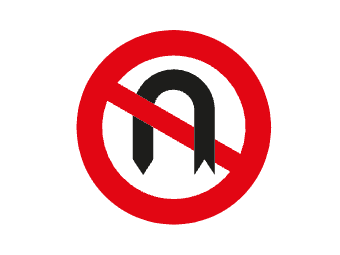
Código 272
Sem inversão de marcha
Proíbe virar o veículo.
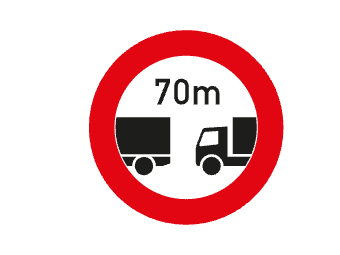
Código 273
Distância mínima necessária
Exige que os motoristas mantenham pelo menos a distância indicada.
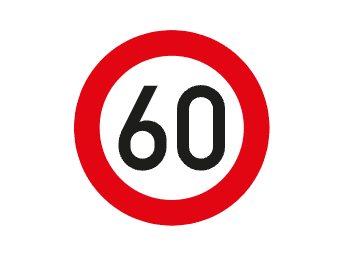
Código 274
Limite máximo de velocidade
Define a velocidade máxima permitida.
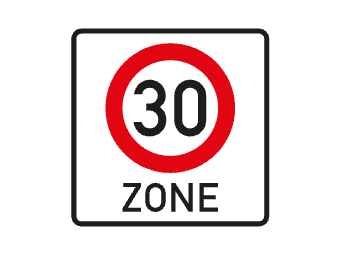
Código 274.1
Início da Zona 30 km/h
Marca o início de uma zona com limite de velocidade de 30 km/h.
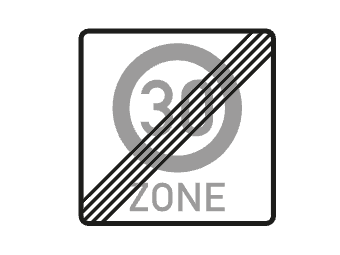
Código 274.2
Fim da zona de 30 km/h
Marca o fim de uma zona de limite de velocidade de 30 km/h.
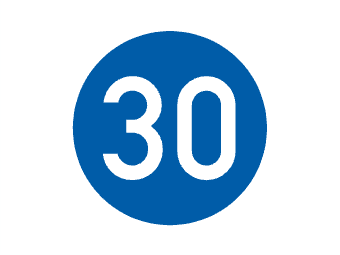
Código 275
Velocidade Mínima
Exige que os veículos viajem pelo menos na velocidade indicada.
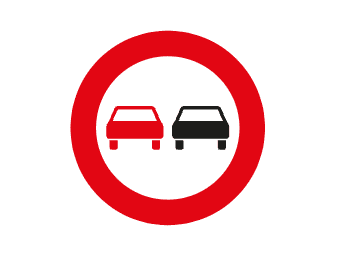
Código 276
Sem ultrapassagens
Proíbe que veículos automotores ultrapassem outros veículos automotores.
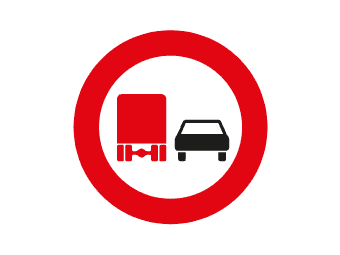
Código 277
Proibida ultrapassagem para veículos com mais de 3,5 t
Proíbe ultrapassagens de veículos pesados.
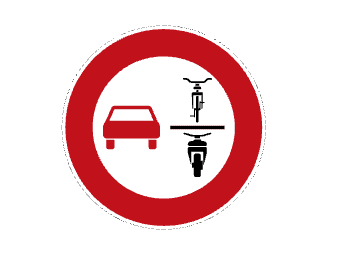
Código 277.1
Proibido ultrapassar veículos de pista única
Proíbe a ultrapassagem de veículos multipista por bicicletas e veículos similares.
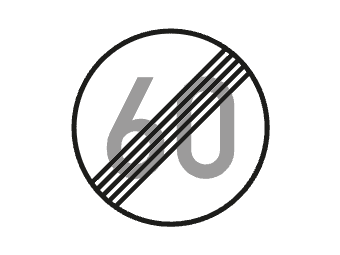
Código 278
Fim do limite máximo de velocidade
Cancela o limite máximo de velocidade indicado anteriormente.
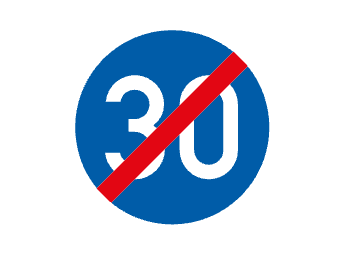
Código 279
Fim da velocidade mínima
Cancela a velocidade mínima exigida anteriormente.
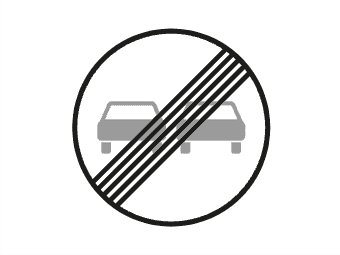
Código 280
Fim da não ultrapassagem
Cancela a restrição de ultrapassagem para veículos automotores.
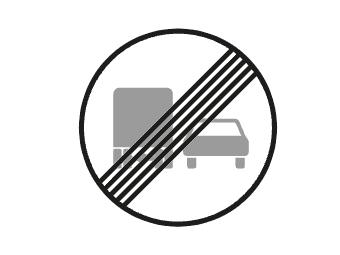
Código 281
Fim da proibição de ultrapassagem para veículos com mais de 3,5 t
Cancela a restrição de ultrapassagem para veículos pesados.
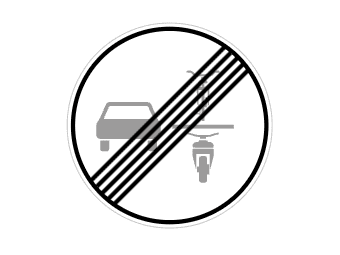
Código 281.1
Fim da proibição de ultrapassagem de veículos de pista única
Cancela a restrição de ultrapassagem de veículos de via única.
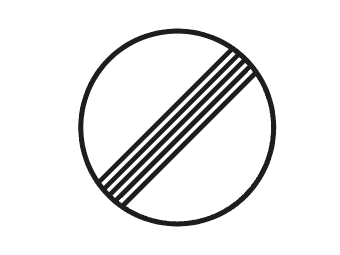
Código 282
Fim de todas as restrições de rota
Acaba com todos os limites de velocidade baseados em rotas e proibições de ultrapassagem.
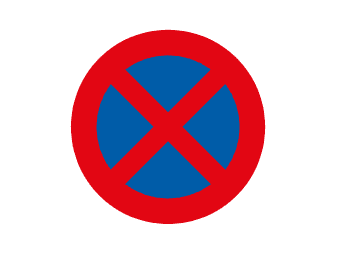
Código 283
Sem parar
Proíbe parar, inclusive estacionar.
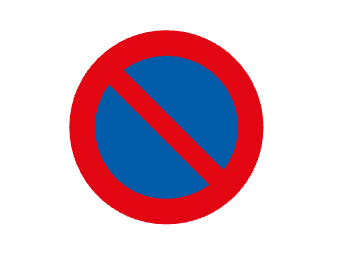
Código 286
Proibido Estacionar
Permite paradas breves, mas proíbe estacionamento.
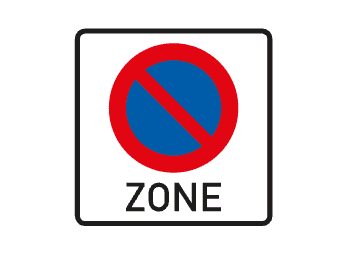
Código 290.1
Início da zona sem estacionamento
Marca o início de uma zona onde o estacionamento é restrito.
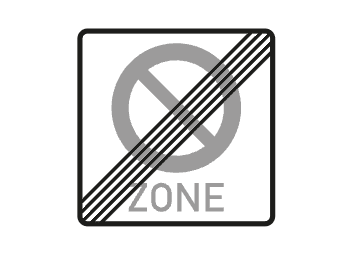
Código 290.2
Fim da zona sem estacionamento
Marca o fim de uma zona proibida de estacionar.
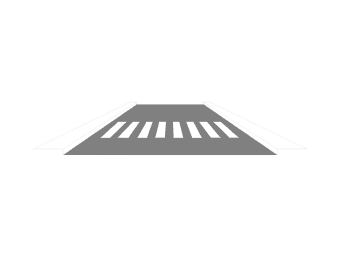
Código 293
Marcação de Passagem de Pedestres
Marca uma faixa de pedestres na superfície da estrada.
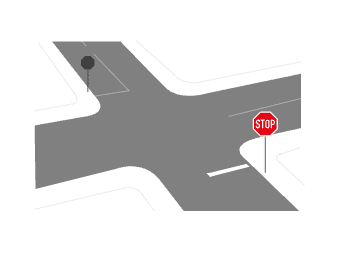
Código 294
Linha de parada
Mostra onde os veículos devem parar quando necessário.
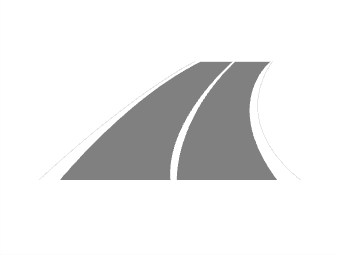
Código 295
Limite de pista e estrada
Marca os limites da pista ou a borda da estrada.
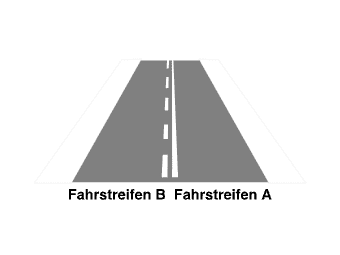
Código 296
Limite de pista unilateral
Permite cruzar apenas pelo lado da linha tracejada.
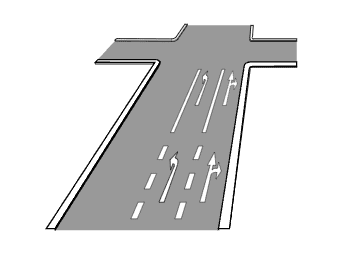
Código 297
Marcações de seta
Indique direções de condução permitidas ou obrigatórias em uma faixa.
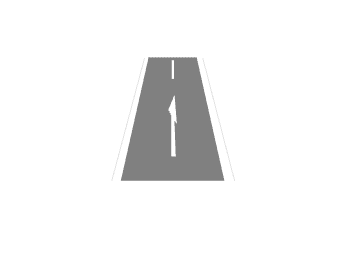
Código 297.1
Seta avançada de fim de pista
Avisa que um limite ou final de pista está se aproximando.
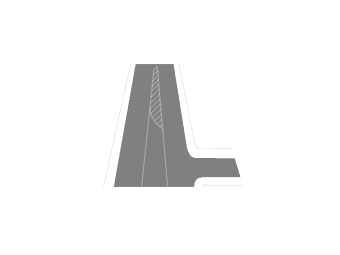
Código 298
Marcação de área bloqueada
Marca uma área da estrada que os veículos não devem utilizar.
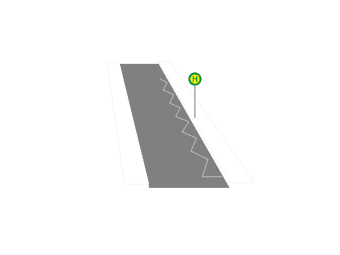
Código 299
Marcação de limite para restrições de parada ou estacionamento
Mostra a área onde se aplicam restrições de parada ou estacionamento.
Regras imperdíveis
- Sinal de parada: Sempre pare completamente – mesmo que ninguém esteja vindo.
- Ceder: Diminua a velocidade, esteja pronto para frear e deixe o tráfego prioritário passar.
- Rotunda: Indique apenas ao sair, não ao entrar.
- Sem parar: Não pare para passageiros, carregamento ou espera.
- Proibido Estacionar: É permitido esperar até 3 minutos, a menos que regras extras indiquem o contrário.
- Ônibus escolar: Espere filhos; passe apenas em velocidade de caminhada quando necessário.
Mini teste
Há uma placa de pare à frente, mas não há trânsito cruzado. Você deve parar?
Sim. Você deve parar completamente na linha de parada ou linha de visão.
Você entra em uma rotatória. Você indica?
Não. Você indica apenas ao sair da rotatória.
Uma placa de proibido estacionar é mostrada. As pessoas podem entrar ou sair?
Sim, é permitida a parada para entrada/saída ou carga/descarga. Geralmente é permitido esperar até 3 minutos.
Um ônibus escolar está parado. O que você deve esperar?
As crianças podem correr repentinamente para a estrada. Esteja pronto para frear e ultrapassar apenas em velocidade de caminhada quando necessário.
Lista de verificação do exame final
Perguntas de Prática (69)
-
Pergunta 1 de 69
When must you wait at this traffic sign?
1.4.41-0013 Pontos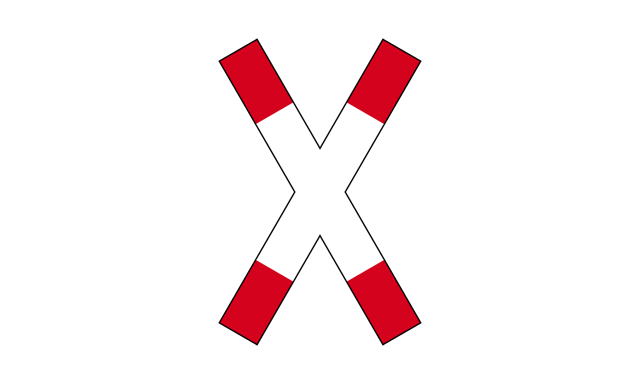
Explicação
The diagonal cross in front of a railroad crossing signals the right of way for rail traffic. When a rail vehicle approaches, you have to wait in front of the sign. The same applies if railway staff waves a white-red-white flag. If you are in danger of comingThe diagonal cross in front of a railroad crossing signals the right of way for rail traffic. When a rail vehicle approaches, you have to wait in front of the sign. The same applies if railway staff waves a white-red-white flag. If you are in danger of coming to a stop on the railroad crossing due to traffic jams, you must also wait in front of the diagonal cross until you can quickly cross the railroad crossing. to a stop on the railroad crossing due to traffic jams, you must also wait in front of the diagonal cross until you can quickly cross the railroad crossing.
-
Pergunta 2 de 69
What do you do when you see this traffic sign?
1.4.41-0042 Pontos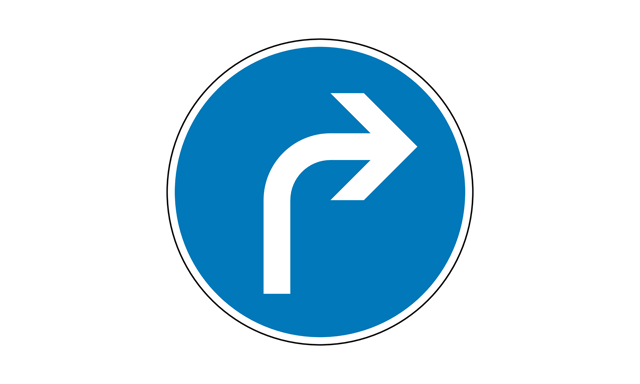
Explicação
The traffic sign "Turn right here in front of the sign" only allows you to drive to the right. Even if there is only this one option, the change of the direction of travel needs to be indicated.
-
Pergunta 3 de 69
In which directions may you proceed?
1.4.41-0062 Pontos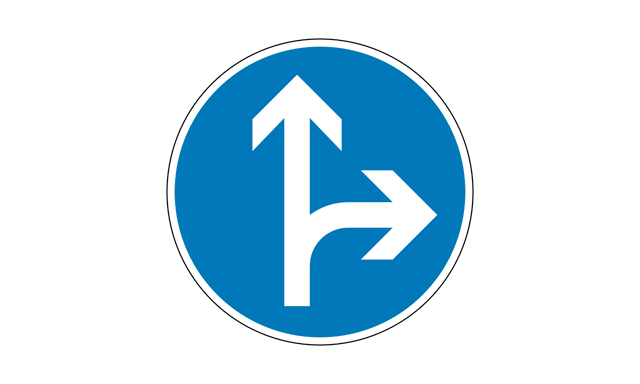
Explicação
The traffic sign "You must go straight or turn right" prohibits turning to the left. Allowed are only the other directions straight ahead and right. If you turn to the right, you must indicate the change of direction.
-
Pergunta 4 de 69
What must you do when you see this traffic sign?
1.4.41-0072 Pontos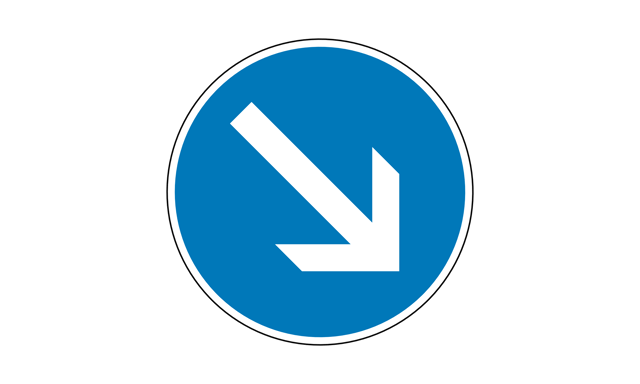
Explicação
The traffic sign "Keep right of traffic" indicates that you have to drive past an obstacle on the right. These include traffic islands, construction sites or bus stops. If there is an intersection or T-junction before the marked point, you may turn right as well as left. If you swing out while driving around an obstacle, you have to indicate that.
-
Pergunta 5 de 69
You are approaching a bus stop marked like this. What do you do if you see children there?
1.4.41-0085 Pontos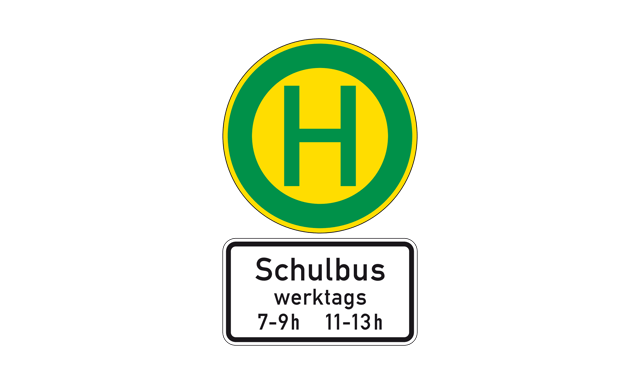
Explicação
This stop is a bus stop where school buses operate at the times indicated. If you approach this stop, you will have to expect children who suddenly run onto the road; the principle of trust does not apply in this case. If a school bus is in the passenger bay or on the street, you have to be able to brake as a car driver; You may only drive past at walking speed.
-
Pergunta 6 de 69
Which vehicles are not allowed to drive here?
1.4.41-0122 Pontos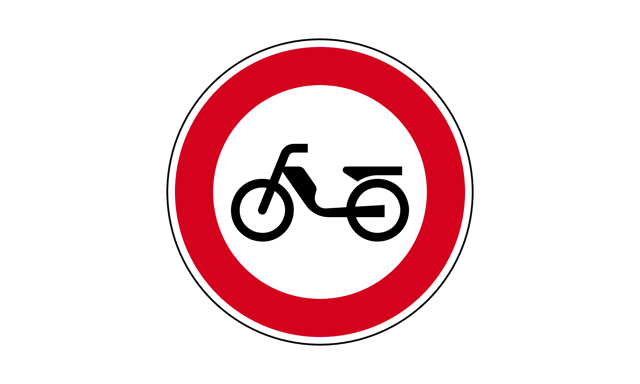
Explicação
The traffic sign "No Motorbikes Permitted" only applies to mopeds. It does not apply to mopeds and light motorcycles. The low speed of motorbikes would hinder the flow of traffic on this road.
-
Pergunta 7 de 69
What is allowed at this traffic sign?
1.4.41-0152 Pontos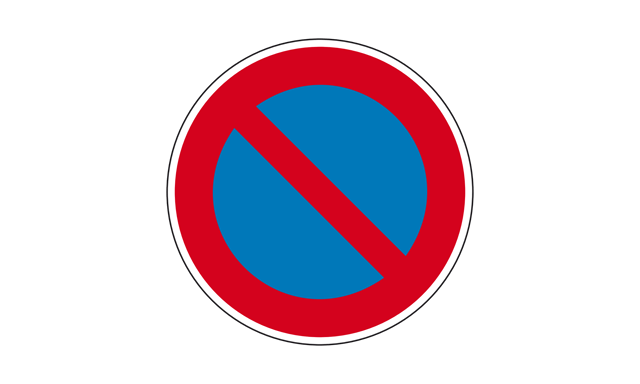
Explicação
The sign "No parking. Waiting is allowed." sign allows you to wait for up to three minutes. Situations of loading and unloading or getting in and out of the car may also take longer. The car driver must be in the immediate vicinity of the vehicle.
-
Pergunta 8 de 69
What is true in the case of this traffic sign combination?
1.4.41-0173 Pontos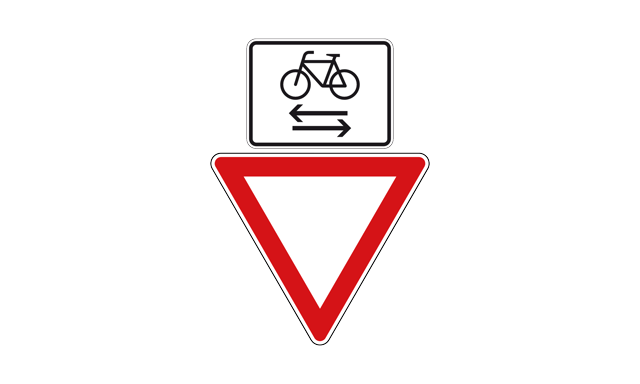
Explicação
The additional sign indicates that cycle traffic could be coming from the left and right. Therefore, even if you only want to turn right, pay attention to both directions. Electric scooters are becoming more common, they ride on the cycle path, so watch out for scooter riders as well.
-
Pergunta 9 de 69
What vehicles may enter a cycle highway that has this sign?
1.4.41-0182 Pontos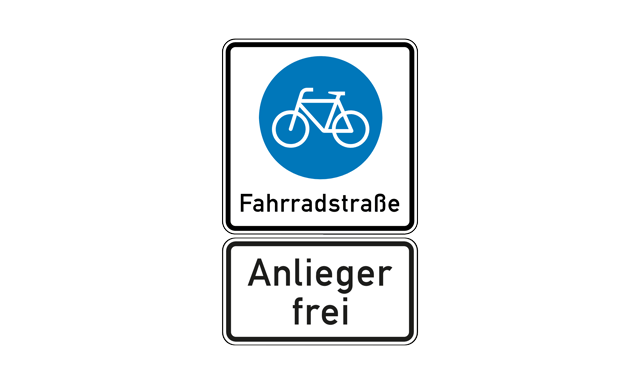
Explicação
Vehicular traffic other than cyclists is not allowed to use cycle lanes unless permitted by additional signs. The additional sign allows residents to enter the cycle lane.
-
Pergunta 10 de 69
What is true in relation to yellow road markings?
1.4.41-0193 PontosExplicação
Yellow lane markings are placed temporarily, e.g. to change the course of the lane due to a construction site. The white lane markings are replaced by the yellow ones.
-
Pergunta 11 de 69
What is true in this situation?
1.4.41-0203 Pontos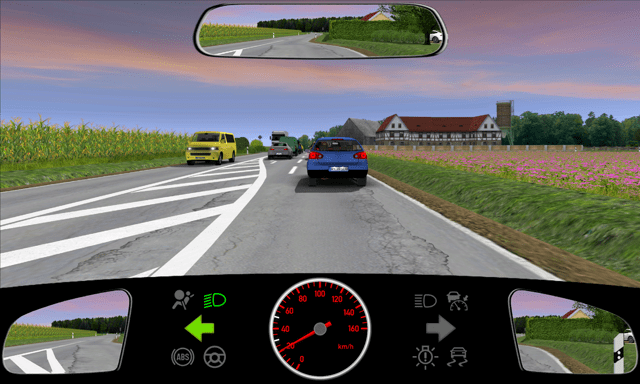
Explicação
A restricted area may not be driven on as a matter of principle.
-
Pergunta 12 de 69
What vehicles may enter a zone with this sign?
1.4.41-0212 Pontos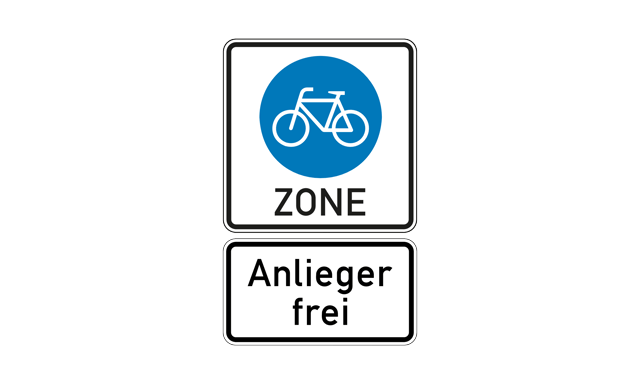
Explicação
The traffic sign shows a bicycle zone with the additional sign "Anleger frei". In bicycle zones, the rule of "right before left" applies. Cyclists, very small electric vehicles and other authorised vehicles are allowed to travel at a maximum speed of 30 km/h in bicycle zones. Cyclists and very small electric vehicles may ride side by side in bicycle zones. The additional sign also allows residents to ride in the bicycle zone.
-
Pergunta 13 de 69
Within a built-up area, what should you note when driving on a road where this traffic sign combination is displayed?
1.4.41-0222 Pontos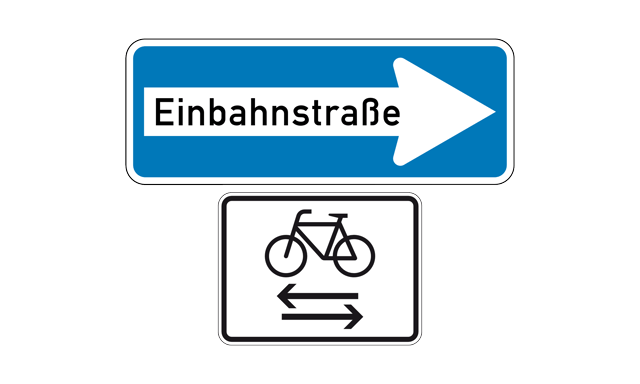
Explicação
The one-way street sign also applies to cyclists, but with this traffic sign combination they are allowed to ride in both directions. Please note, however, that when overtaking cyclists in built-up areas, a minimum lateral distance of 1.5 m must always be maintained.
-
Pergunta 14 de 69
This traffic sign is displayed on the right-hand kerbside. What does it mean?
1.4.41-0232 Pontos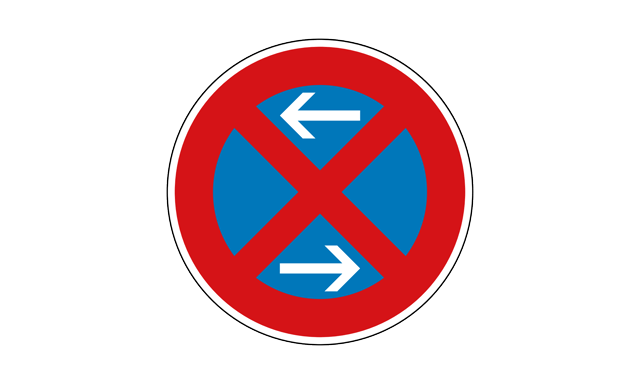
Explicação
The traffic sign indicates an absolute no-stopping zone in the area in front of and behind the traffic sign. The arrow pointing to the left indicates that you are not allowed to stop after the sign, the arrow pointing to the right indicates that you are not allowed to stop in front of the sign.
-
Pergunta 15 de 69
This traffic sign is displayed on the right-hand kerbside. What does it indicate?
1.4.41-0242 Pontos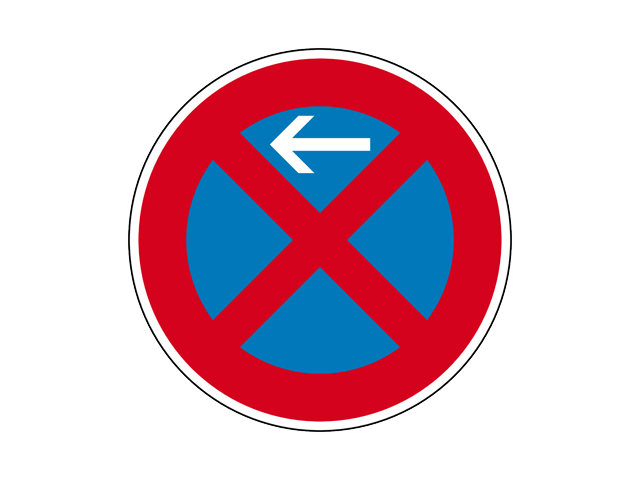
Explicação
The traffic sign signals the beginning of an absolute prohibition to stop from the traffic sign. The arrow pointing to the left shows that the prohibition of stopping begins from the sign.
-
Pergunta 16 de 69
What do you have to be aware of when you see with this traffic sign?
1.4.41-0252 Pontos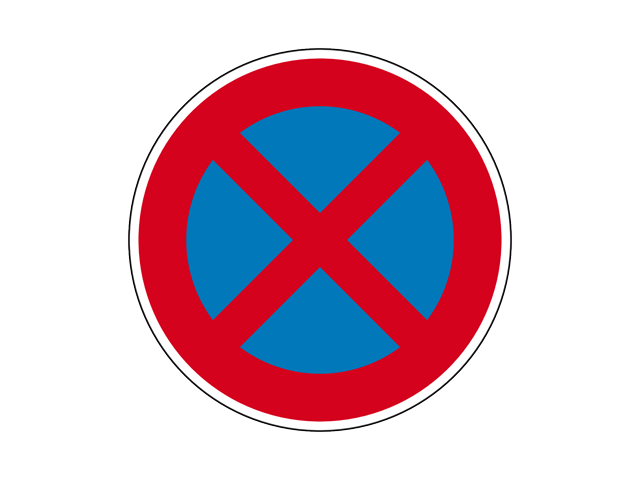
Explicação
The traffic sign indicates an absolute no-stopping zone in this area. You are not allowed to stop there.
-
Pergunta 17 de 69
What is the right thing in this situation?
1.4.41-0263 Pontos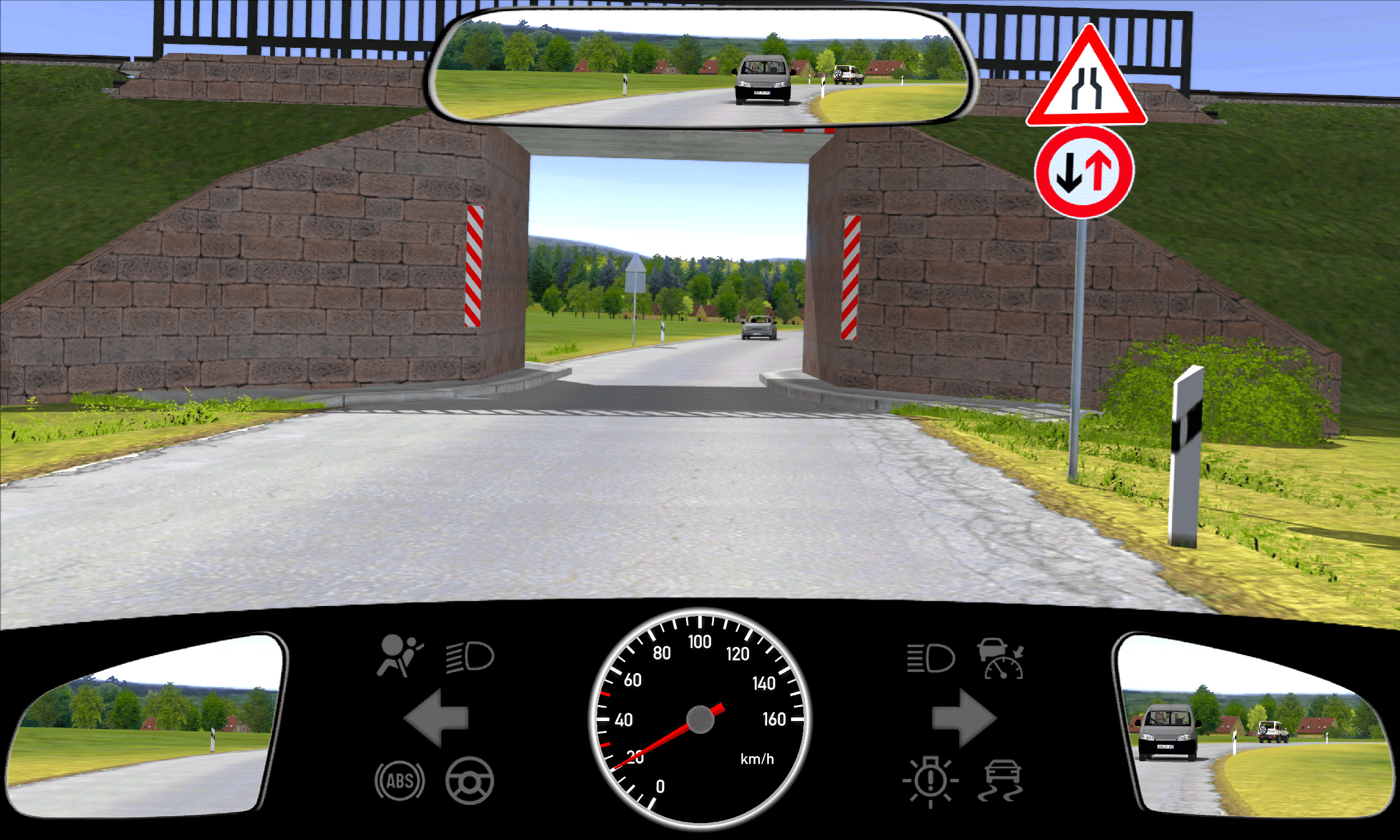
Explicação
The sign indicates that you must give priority to oncoming traffic at the bottleneck. The vehicle coming towards you is already close to the bottleneck, so you must wait and may only drive after the car coming towards you.
-
Pergunta 18 de 69
When may you stop here?
1.4.41-0272 Pontos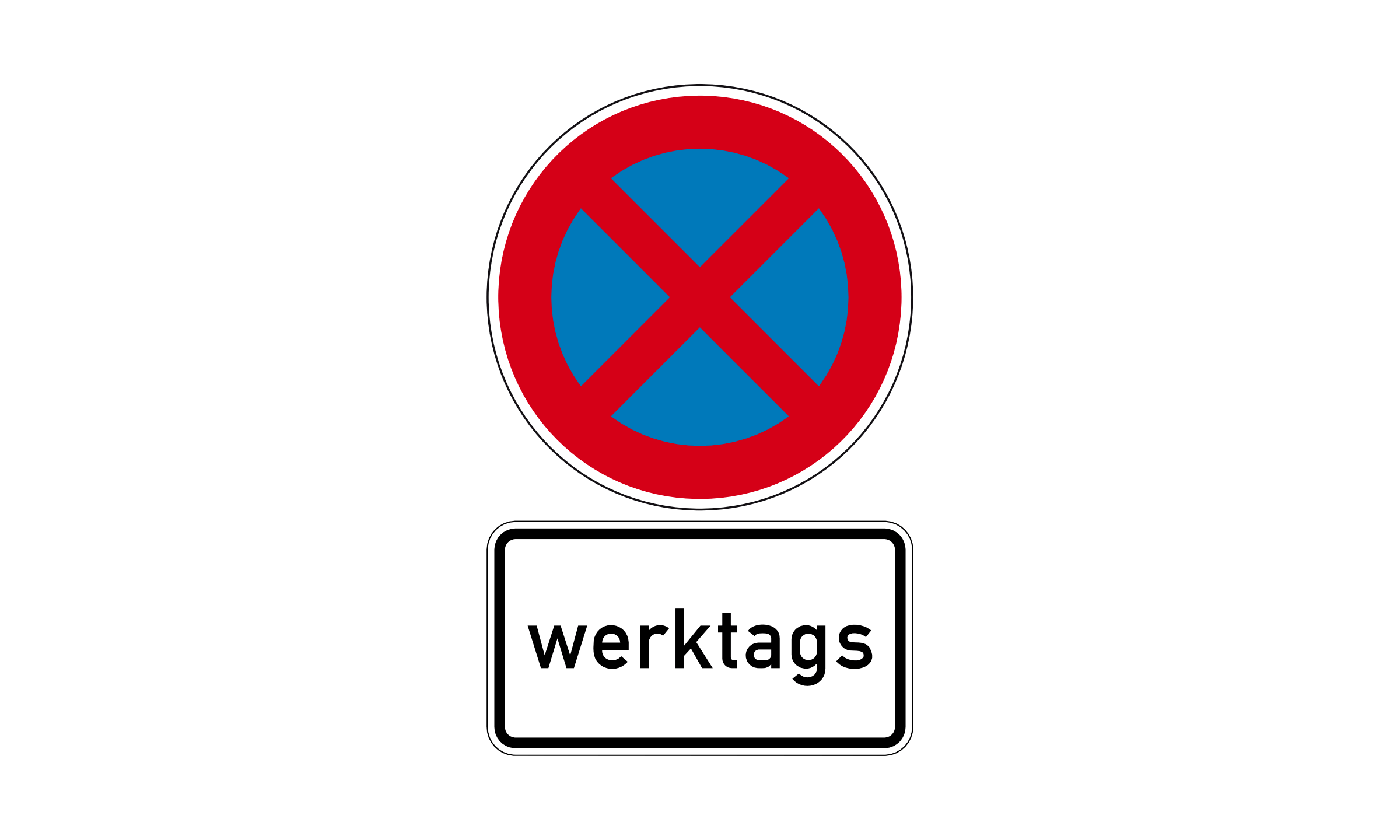
Explicação
The absolute stopping ban only applies on working days. You are allowed to stop here on Sundays and public holidays.
-
Pergunta 19 de 69
What applies at this junction?
1.4.41-0284 Pontos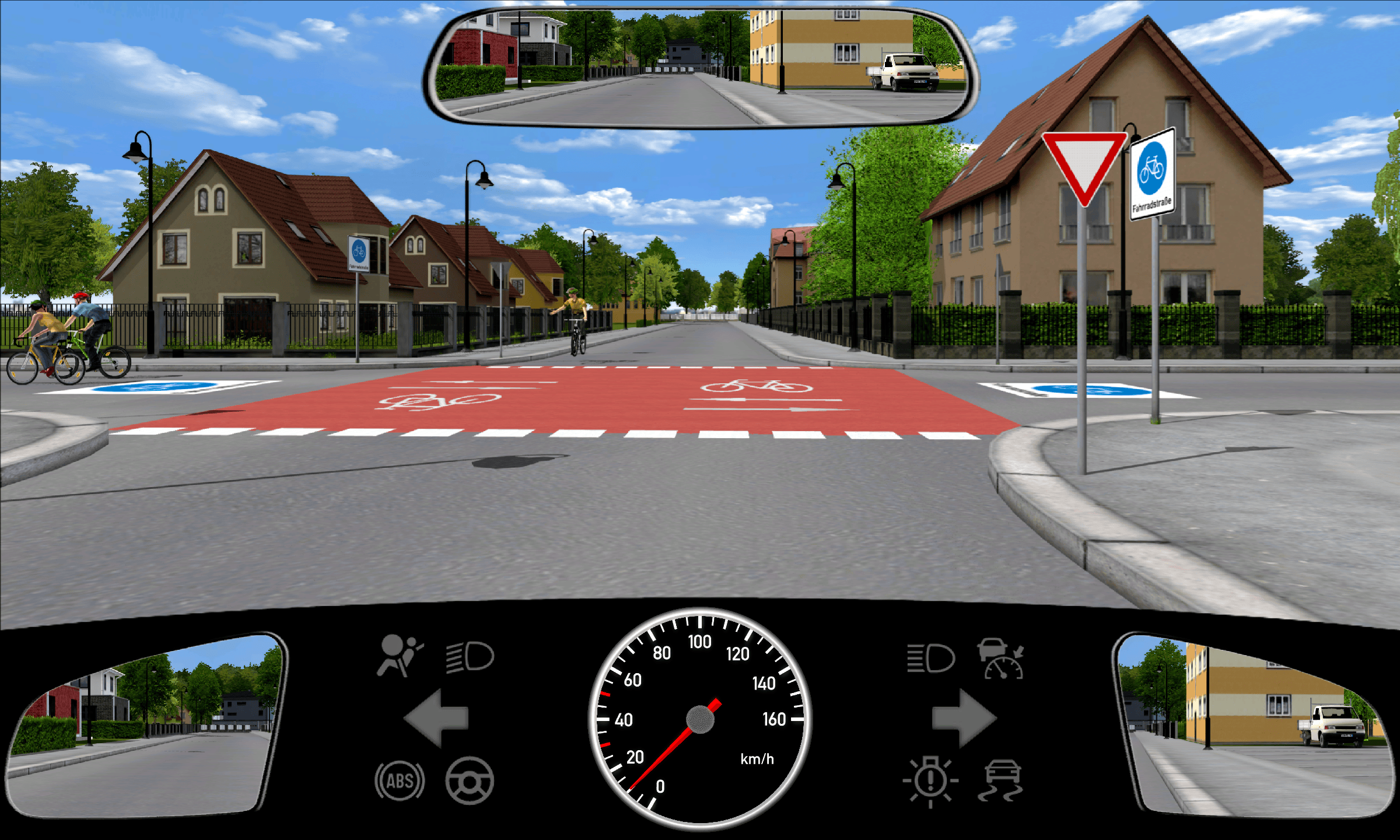
Explicação
The blue traffic signs, with the white bicycle in the middle, indicate a bicycle street. This road may only be used by bicycles, unless otherwise expressly indicated by other traffic signs. In addition, the triangular traffic sign “Give way” indicates that cross traffic must be given priority. You do not necessarily have to stop at the traffic sign “Give way” and you can cross the intersection carefully as there is no traffic visible from the right or left.
-
Pergunta 20 de 69
What does this road sign indicate?
1.4.41-0293 Pontos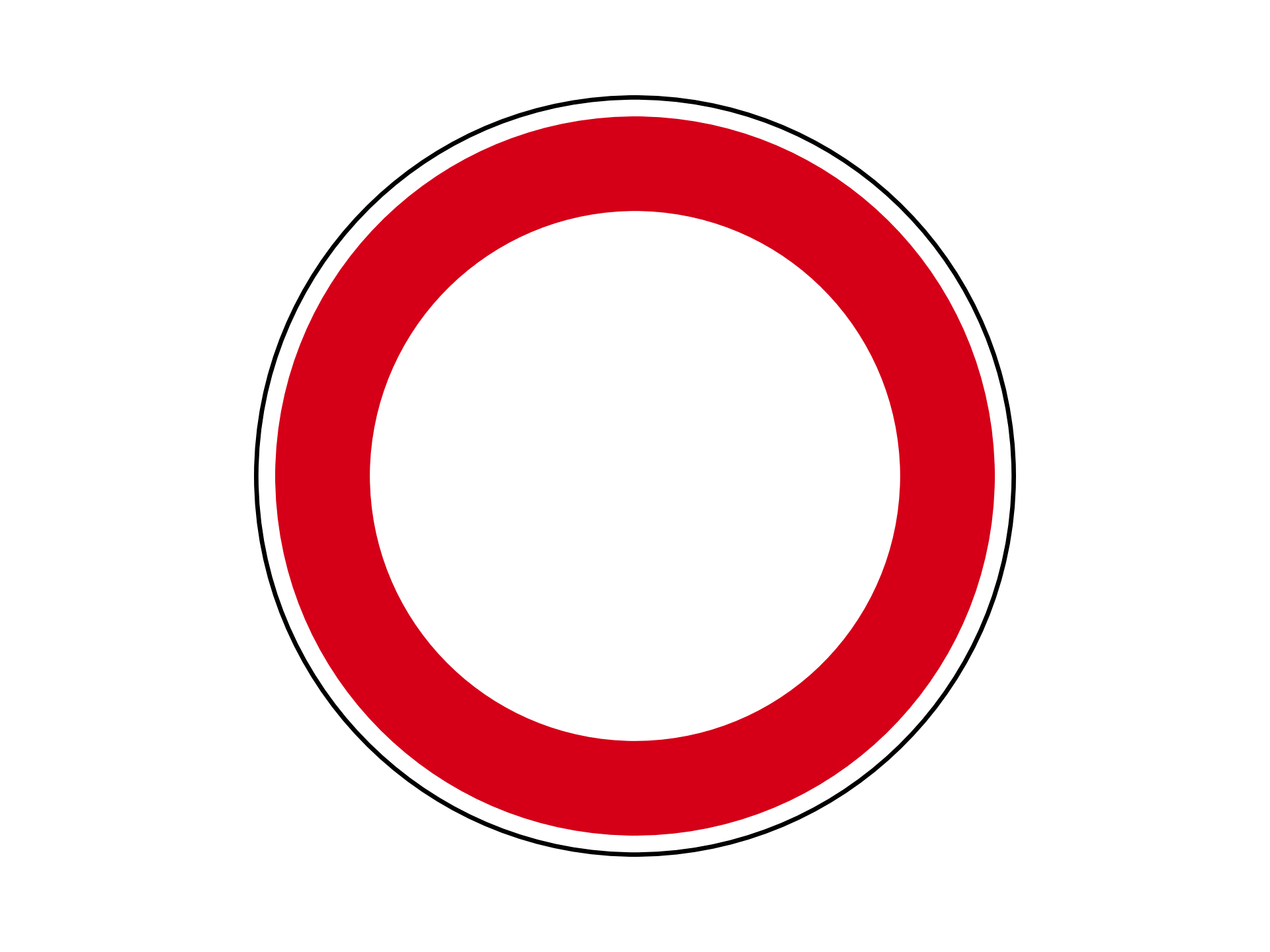
Explicação
Basically, the traffic sign “Prohibited all types of vehicles” means that vehicles are not allowed to drive on the road. However, motorcycles or bicycles may be pushed.
-
Pergunta 21 de 69
You are driving on a one-way street with signposting. What is correct?
1.4.41-0303 Pontos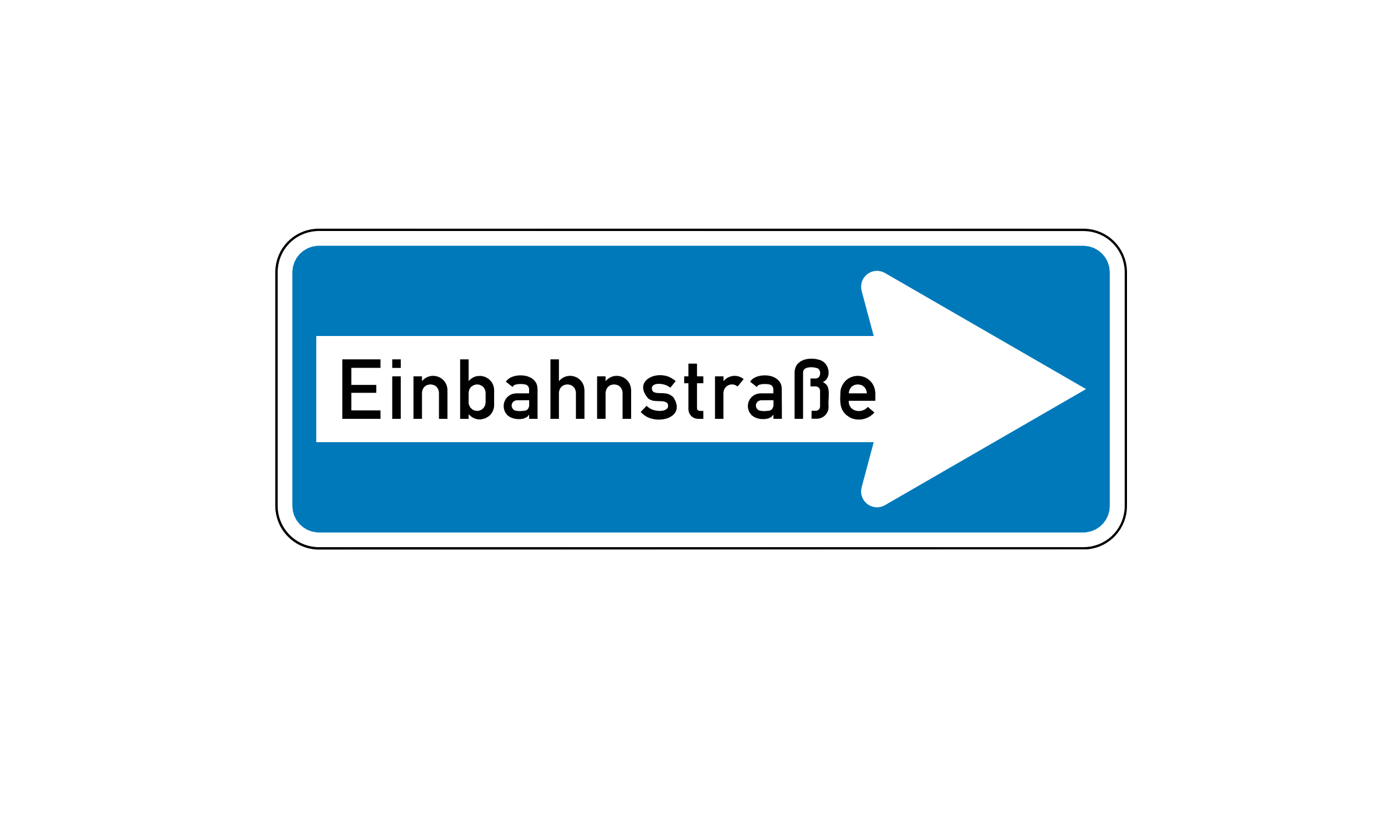
Explicação
The direction of travel on a one-way street is always indicated by the white arrow on the traffic sign. If you are on your one-way street, you are allowed to park on the right or left side of the road in the direction of travel. In order not to obstruct the traffic behind you when turning left, you must move as far to the left as possible. This leaves enough space for vehicles that want to go straight or turn right.
-
Pergunta 22 de 69
You are travelling on a main road. Which road sign ends your right of way?
1.4.41-0313 PontosExplicação
The traffic sign “End of priority road” signals to you that the right of way regulation has been lifted and the priority road ends here. If you have previously been driving on a priority road, the traffic sign “Give way” tells you that this priority road now ends. You now have to give way to other road users.
-
Pergunta 23 de 69
Which of the following rules of the road requires you to stop before turning right?
1.4.41-0324 PontosExplicação
The “stop sign” shows you that you must always stop at the stop line or line of sight. The “green arrow” next to the red traffic light signals that you can turn right despite the red traffic light. But only after you have stopped at the stop or line of sight and made sure that you are not endangering anyone.
-
Pergunta 24 de 69
Which road sign forbids you from entering the signposted area?
1.4.41-0333 PontosExplicação
You are not allowed to enter a street with this traffic sign because it indicates a pedestrian zone. This may only be used by pedestrians. The traffic sign means “Entry prohibited”. Driving into the signposted area is therefore prohibited.
-
Pergunta 25 de 69
In which directions are you allowed to continue?
1.4.41-1062 Pontos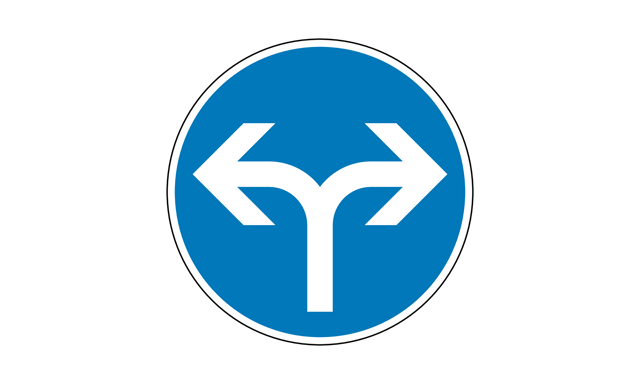
Explicação
The traffic sign "You" only allows turning to the right or left" only allows you to turn left or right. The desired direction of travel needs to be indicated. You are not allowed to drive straight ahead.
-
Pergunta 26 de 69
A school bus is stopping on the roadway approximately 80 m in front of you. Can this be dangerous?
1.4.41-1095 Pontos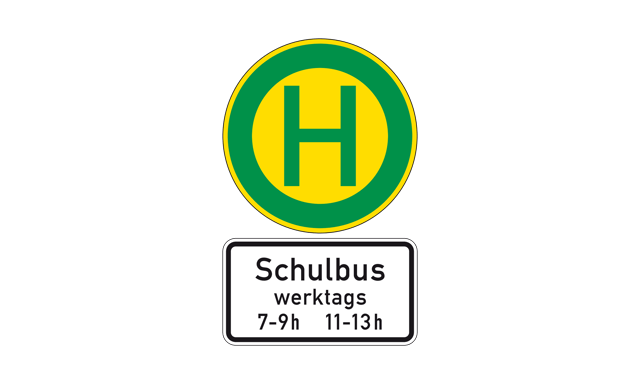
Explicação
If a school bus stops in front of you on the road about 80 m away, you have to expect the following: Children could suddenly run on/off the road to reach the bus, for example, by the shortest route. This danger exists even if school crossing guards secure the traffic. You have to be ready to brake and you are only allowed to drive past the school bus at walking speed.
-
Pergunta 27 de 69
Who is allowed to drive a motor vehicle on this road?
1.4.41-1143 Pontos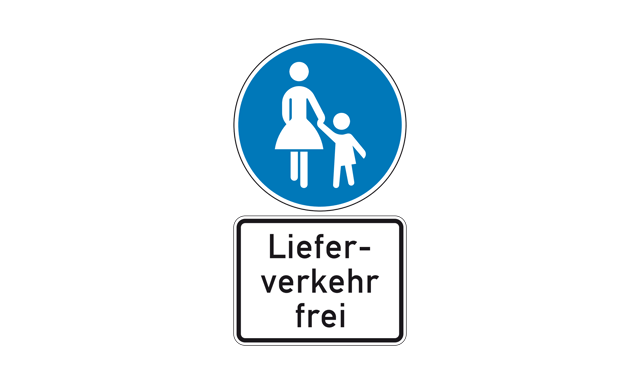
Explicação
The street is a declared sidewalk, with the additional sign "delivery vehicles only". Therefore, this road may only be used by a distributor with a motor vehicle. The distributor must be able to prove that he has to deliver something in this street. He has to drive at walking speed, regardless of whether or not pedestrians pass the street. He has to take care of pedestrians.
-
Pergunta 28 de 69
Which vehicles are allowed to use the special lane marked like this?
1.4.41-1152 Pontos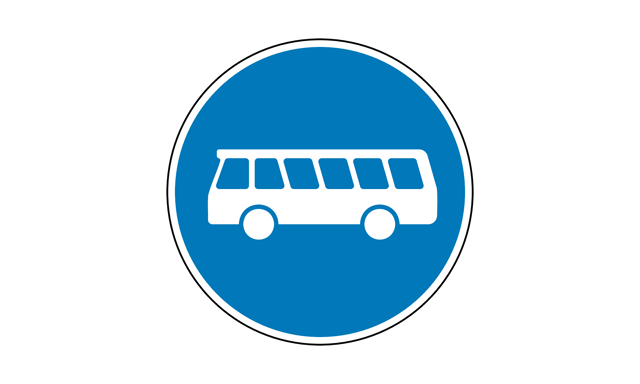
Explicação
The lane shown here is intended for public buses. Only they are allowed to use this lane. For all other drivers the use of this lane is prohibited.
-
Pergunta 29 de 69
Who is allowed to enter a street sign-posted like this?
1.4.41-1162 Pontos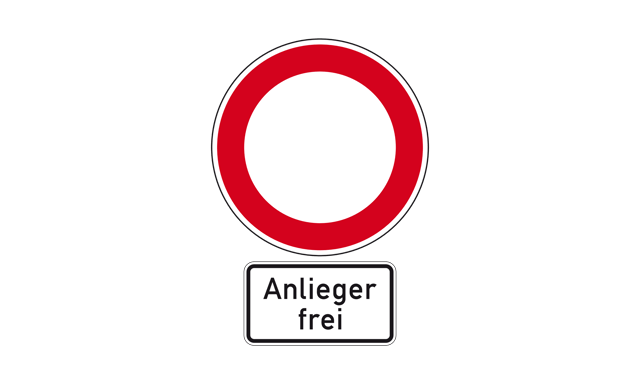
Explicação
The additional sign indicates that drivers who have to go on errands in this street privately, or for business reasons may enter. Residents and visitors are customers of shops, patients of medical practices as well as people who live in this street and their visitors. Through traffic is prohibited in this street.
-
Pergunta 30 de 69
Which vehicles are not allowed to use a road sign-posted like this?
1.4.41-1182 Pontos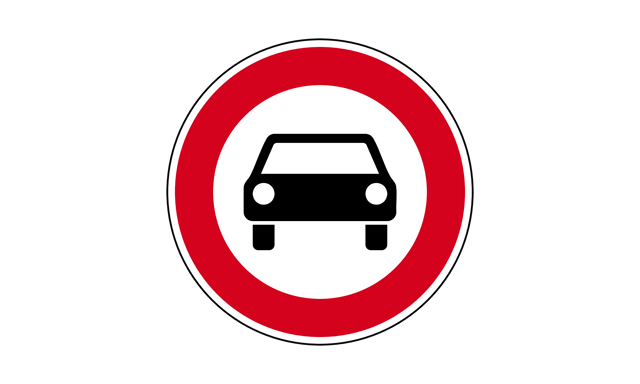
Explicação
Cars, but also other multi-lane motor vehicles, may not drive on a road with this sign. These include cars, trucks and buses. The ban does not apply to motorcycles, including side cars, and non-motorized vehicles.
-
Pergunta 31 de 69
Which vehicles are not allowed to use a road sign-posted like this?
1.4.41-1192 Pontos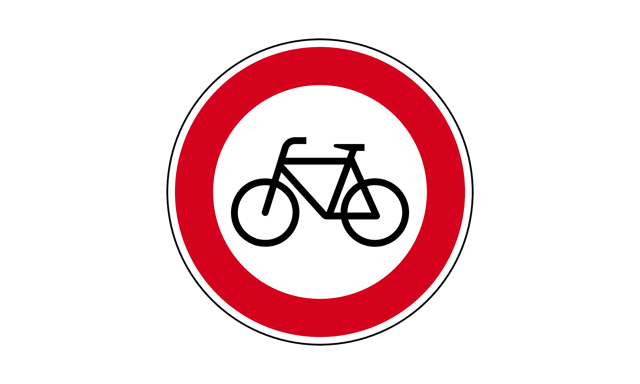
Explicação
This round road sign with the red border prohibits the passage for cyclists. It usually can be found on roads where you are allowed to drive fast and where a cyclist can get into dangerous situations due to his or her low speed. Motorized vehicles such as motorcycles and cars may continue here.
-
Pergunta 32 de 69
Which vehicles are not allowed to use a road sign-posted like this?
1.4.41-1202 Pontos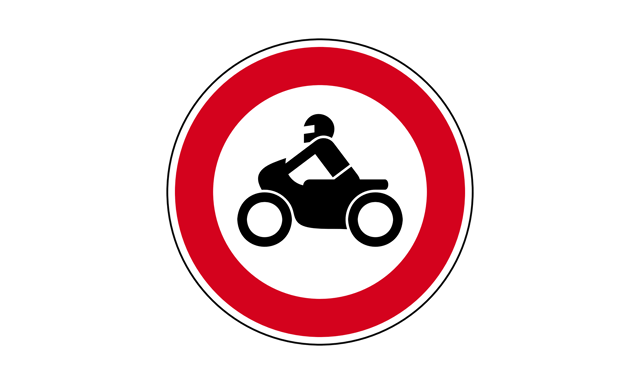
Explicação
A round traffic sign with a red border indicates a general traffic ban for vehicles. If the circle contains a symbol, the types of vehicles to which the traffic ban applies are specified more precisely. Here the road may not be used by motorcyclists.
-
Pergunta 33 de 69
What do these traffic signs indicate?
1.4.41-1212 Pontos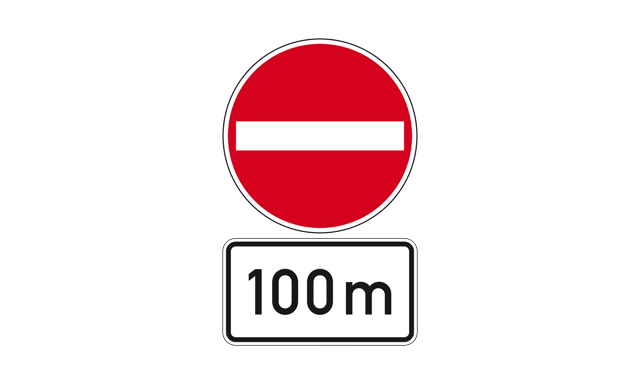
Explicação
The traffic sign "Do not enter" forbids car drivers to enter this road with vehicles of all kinds. The additional sign makes it clear that this prohibition applies only in 100 meters. It does not explicitly state for how long. Always expect that vehicles can come out of this road.
-
Pergunta 34 de 69
What does this traffic sign indicate?
1.4.41-1243 Pontos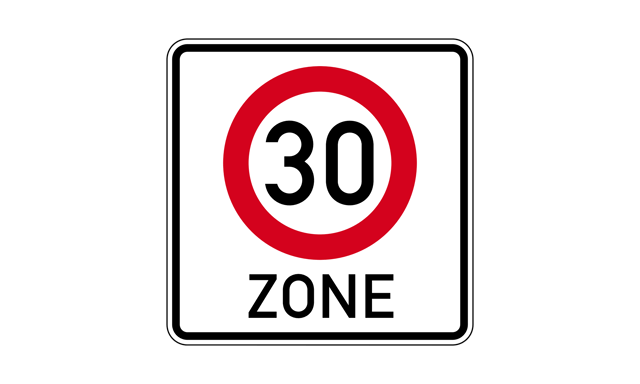
Explicação
The traffic sign indicates the beginning of a zone with a maximum speed of 30 km/h. It is often set up in residential areas and only once at the beginning. You are not allowed to drive faster than 30 km / h in the entire area. This speed limit is canceled with the "End of the 30 km/h zone" sign.
-
Pergunta 35 de 69
A traffic calmed commercial zone (verkehrsberuhigter Bereich) starts here. What must you do?
1.4.41-1252 Pontos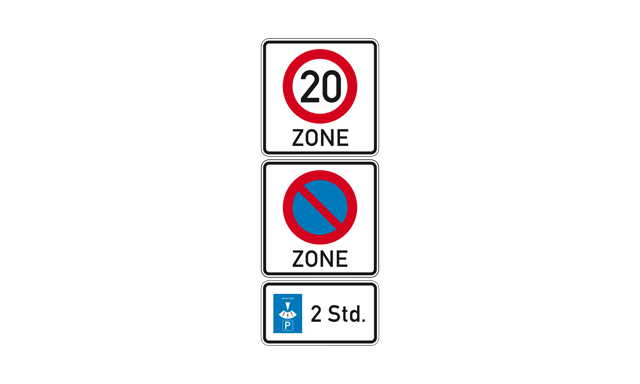
Explicação
In a traffic calming zone with shops, road users are often distracted by the displays in the shop windows. You must therefore pay attention to rain and inattentive foot traffic. Your maximum speed is 20 km/h. This is a no parking, but waiting allowed zone and you're obliged to use your parking disc. To offer parking to many customers, the maximum parking time is two hours.
-
Pergunta 36 de 69
What does this traffic sign indicate?
1.4.41-1262 Pontos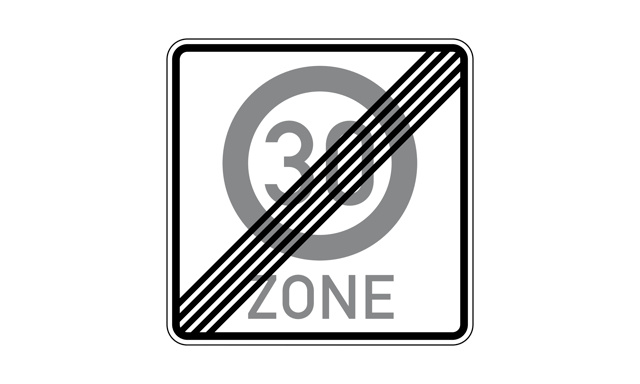
Explicação
This traffic sign indicates the end of an area in which the permitted speed was set to 30 km/h and thus cancels the maximum speed of 30 km/h.
-
Pergunta 37 de 69
Which vehicles are you allowed to overtake where you see this traffic sign?
1.4.41-1293 Pontos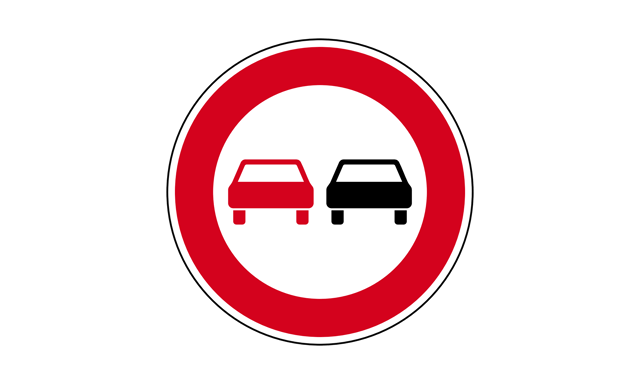
Explicação
The restriction on overtaking prohibits a car driver from overtaking multi-lane vehicles such as cars, trucks or tractors and motorcycles with side cars. Motorcycles without a side car and bicycles are allowed to be overtaken, as these are single-lane vehicles.
-
Pergunta 38 de 69
What do these traffic signs indicate?
1.4.41-1303 Pontos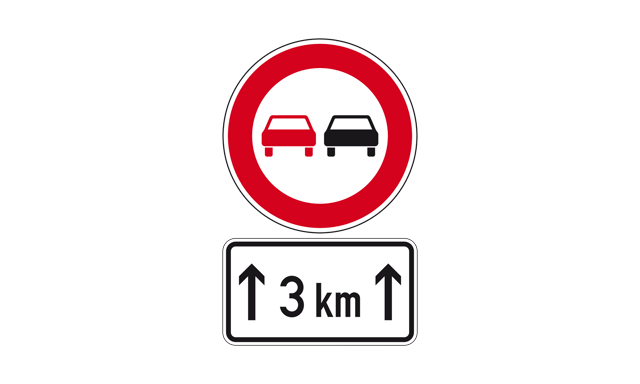
Explicação
This traffic sign signals a restriction on overtaking on multi-lane motor vehicles or motorcycles with side car. The black arrows with the km indication indicate that the restriction on overtaking applies for 3 km. The restriction on overtaking comes into force starting from the traffic sign.
-
Pergunta 39 de 69
What do these traffic signs indicate?
1.4.41-1313 Pontos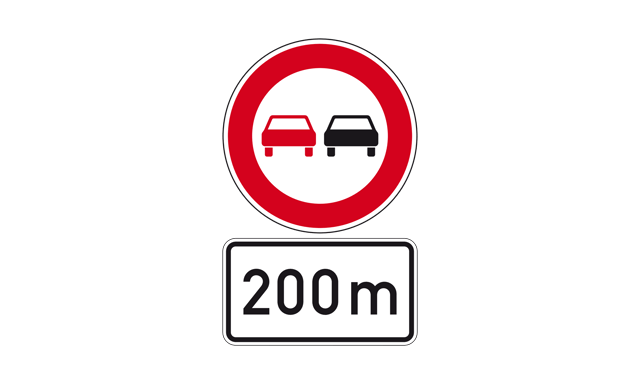
Explicação
With this traffic sign the car driver is prohibited to overtake multi-lane vehicles and motorcycles with side car. The additional sign prohibits overtaking in 200 meters. Since it contains no black arrows, it does not mean that you are not allowed to overtake in the next 200 meters.
-
Pergunta 40 de 69
Which prohibitions cease to apply when you see this sign?
1.4.41-1332 Pontos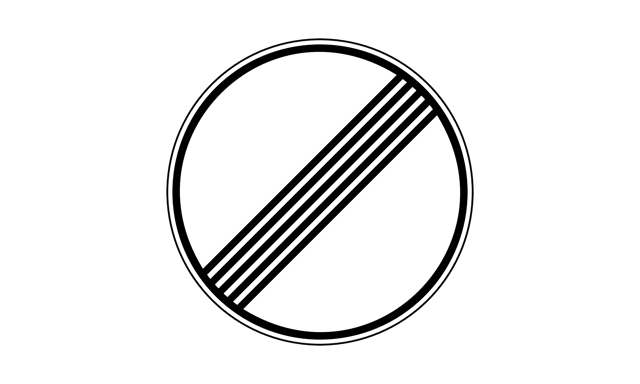
Explicação
This traffic sign cancels all road restrictions. For example, road restrictions include restrictions on overtaking and speed limits. Stopping restrictions such as a parking ban are not covered by road restrictions.
-
Pergunta 41 de 69
What do these traffic signs indicate?
1.4.41-1343 Pontos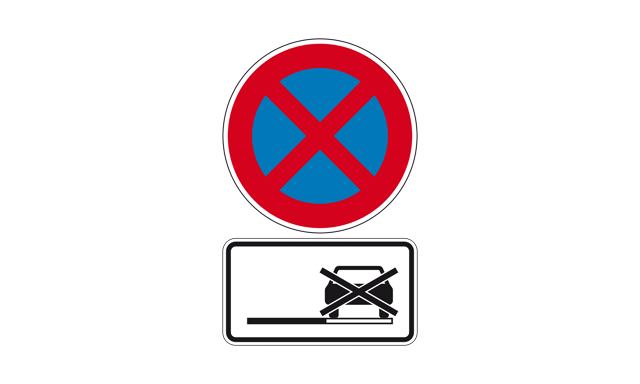
Explicação
The traffic sign signals the car driver that it is forbidden to come to a stop on the road. The additional sign extends the stopping restriction and also prohibits stopping on the side strip for all vehicles, not just for trucks.
-
Pergunta 42 de 69
What is allowed in the zone which starts here?
1.4.41-1352 Pontos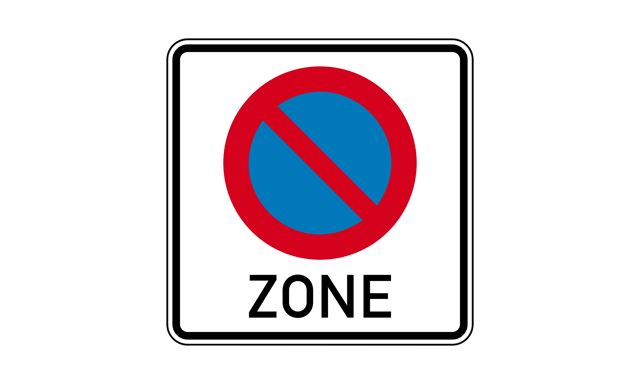
Explicação
With the traffic sign "No parking. Waiting is allowed.", there is a restricted stopping ban in an entire area without stopping signs being placed here in certain streets. As a car driver, you are allowed to wait up to three minutes throughout the entire zone. Situations of loading and unloading or getting in and out of the car may also take longer.
-
Pergunta 43 de 69
What ends here?
1.4.41-1362 Pontos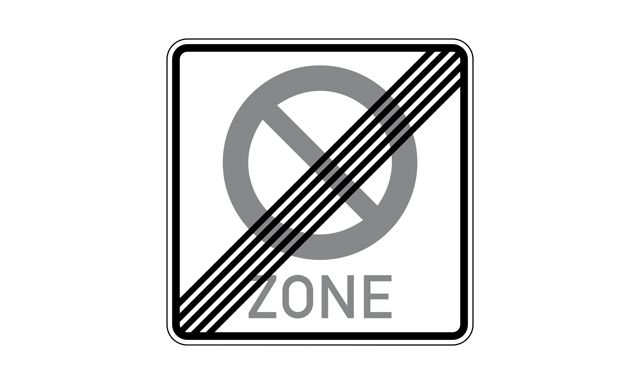
Explicação
Here the no parking zone ends. Note that this traffic sign is often only on placed on the left side of the road and does not suspend the stopping restriction.
-
Pergunta 44 de 69
When must you indicate?
1.4.41-1403 Pontos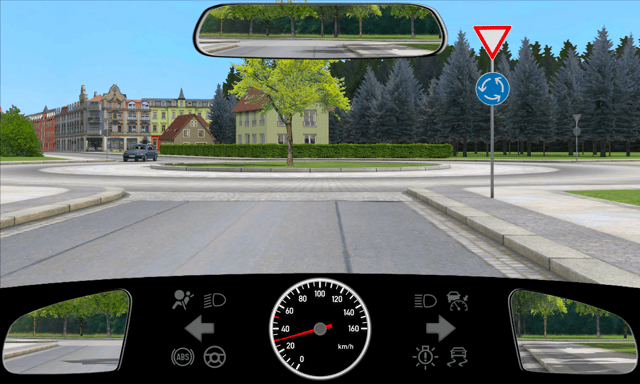
Explicação
If you enter the roundabout, you do not need to indicate this because the entrance to the circle is always to the right. On the other hand, if you leave the roundabout, you will need to indicate this to make it easier for other drivers to enter the circle.
-
Pergunta 45 de 69
You are approaching this combination of traffic signs. What must you remember?
1.4.41-1414 Pontos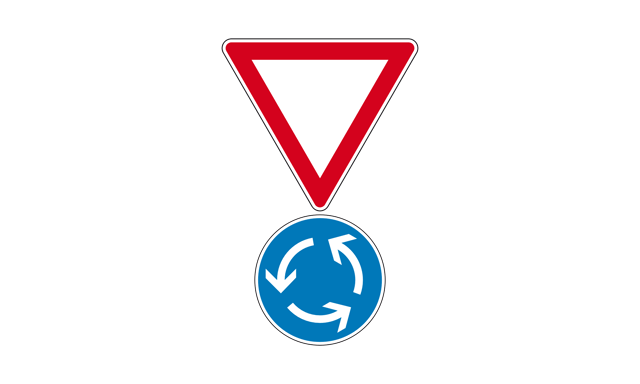
Explicação
Vehicles driving in the roundabout have right of way. Indicating when entering the roundabout is not necessary, as a roundabout is always entered from the right. Therefore, the answer "Entering the roundabout must be indicated" is wrong. You only indicate when you leave a roundabout. This makes sense because this makes it easier for vehicles to enter the roundabout.
-
Pergunta 46 de 69
What does this traffic sign indicate?
1.4.41-1452 Pontos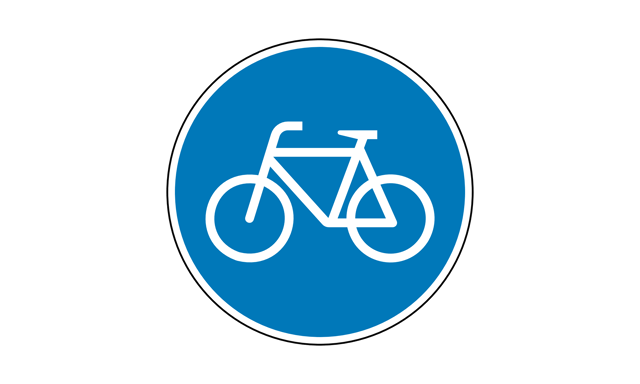
Explicação
This traffic sign identifies a cycle path that cyclists must use but is prohibited for other road users. Cyclists crossing the road have their own warning sign.
-
Pergunta 47 de 69
What does this traffic sign combination indicate?
1.4.41-1463 Pontos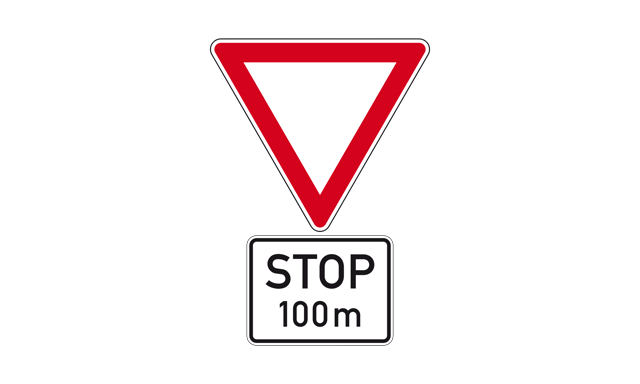
Explicação
The traffic sign announces that after a hundred meters you will find a priority road where you will find the traffic sign "Give way". In any case, you must stop there at the stop line or line of sight.
-
Pergunta 48 de 69
What does this traffic sign indicate?
1.4.41-1472 Pontos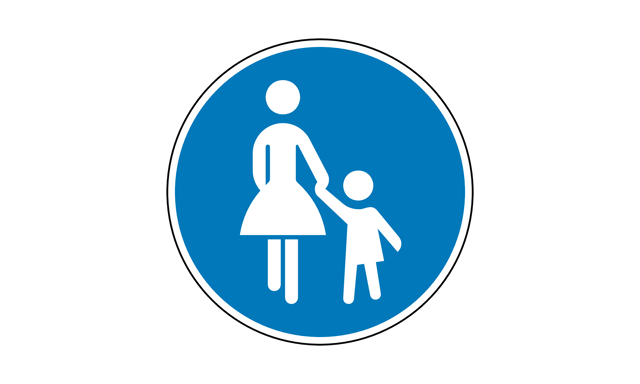
Explicação
The traffic sign "Footway" marks paths which may be used exclusively by pedestrians and cyclists up to 10 years. Car drivers, cyclists and other road users may not be traveling on these routes. However, exceptions may be regulated by additional signs.
-
Pergunta 49 de 69
How must you act when driving a vehicle during permitted delivery times?
1.4.41-1493 Pontos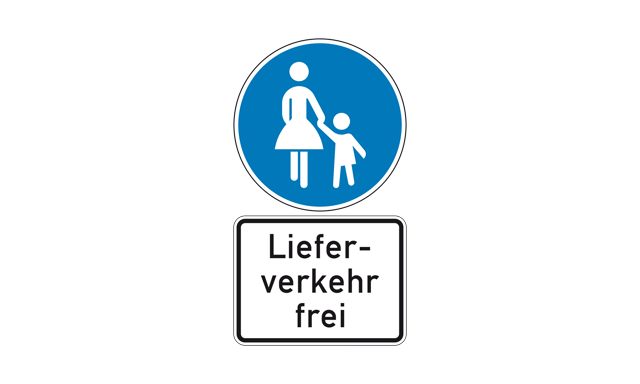
Explicação
Since the traffic sign "Footway" is combined here with the additional sign "Delivery vehicles only", a distributor may drive on a road that is marked this way. You have to drive at walking speed, regardless of whether pedestrians are visible or not. Pedestrians have priority, you should be especially considerate of them.
-
Pergunta 50 de 69
What does this traffic sign indicate?
1.4.41-1522 Pontos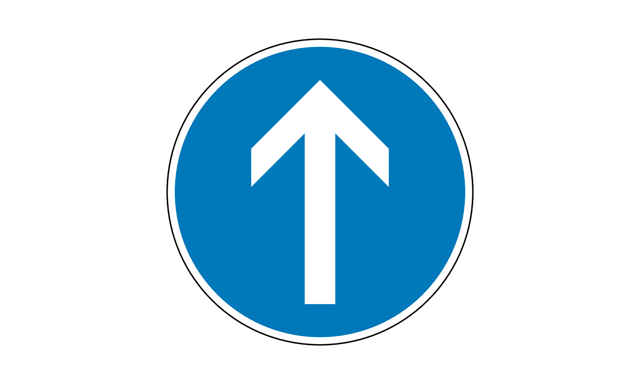
Explicação
This traffic sign means "You must go straight ahead". You can only drive straight ahead and are not allowed to turn. The one-way street sign has the same colors but is rectangular.
-
Pergunta 51 de 69
What do you do upon seeing this traffic sign?
1.4.41-1534 Pontos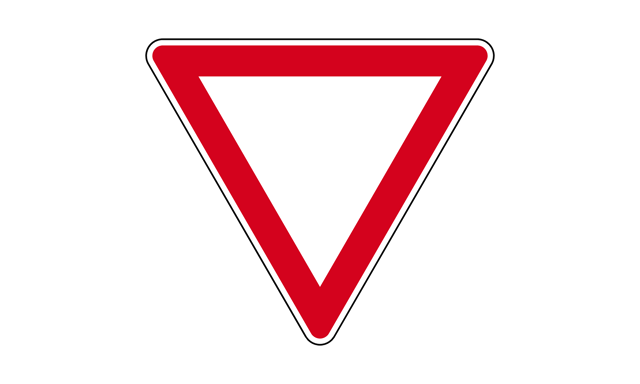
Explicação
The traffic signal "Give way" signals that you are driving on a subordinate road and the cross traffic has priority. Drive slowly and stay ready to brake so that you do not miss a vehicle that is entitled to drive.
-
Pergunta 52 de 69
What does this traffic sign indicate?
1.4.41-1542 Pontos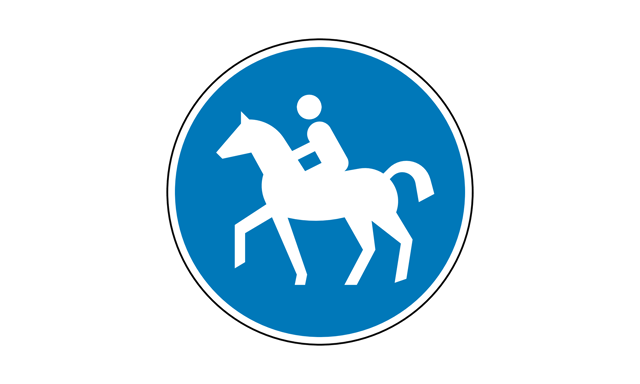
Explicação
This traffic sign shows you a riding path. Here riders move with their horses. Other road users are not allowed to use this path.
-
Pergunta 53 de 69
What do you have to do in this traffic situation?
1.4.41-1564 Pontos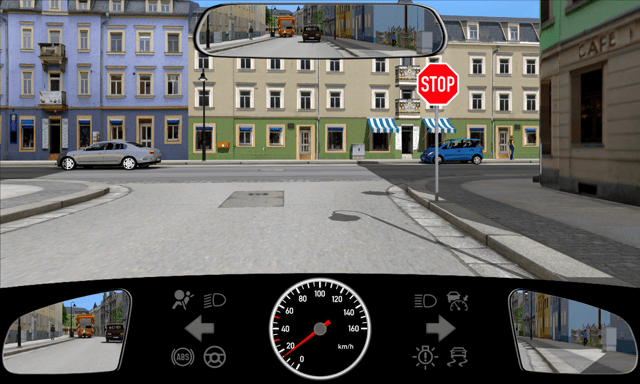
Explicação
At the traffic sign "Stop! Yield to cross traffic" you have to stop and give way. You always have to stop, even if there is no cross traffic. Since there is no stop line, stop at the line of sight. From the line of sight, you can see the street you want to enter.
-
Pergunta 54 de 69
What do you have to be aware of with this traffic sign?
1.4.41-1592 Pontos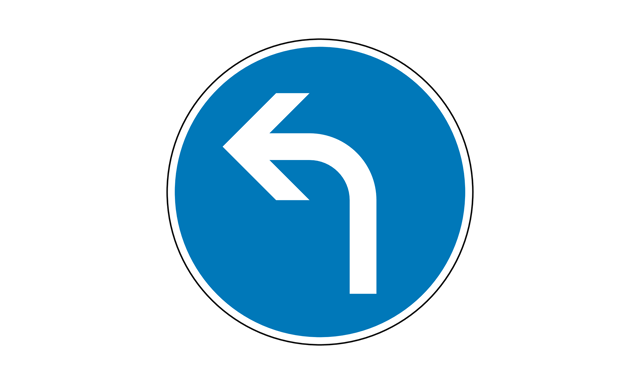
Explicação
This traffic sign regulates the direction of travel. You may only turn left here. The change of the direction of travel must be indicated.
-
Pergunta 55 de 69
What applies with this traffic sign?
1.4.41-1602 Pontos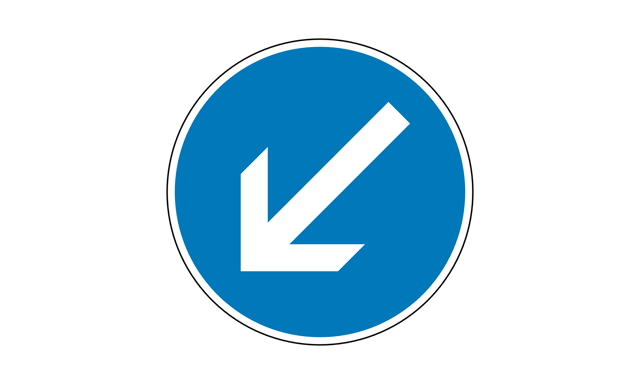
Explicação
This traffic sign prescribes from which side you have to circuit the obstacle. You can find the regulation sign at central, stop islands or construction sites. If you meet the sign at an intersection or T-junction, you may turn in the appropriate direction.
-
Pergunta 56 de 69
What applies in the area 15 m in front of and behind this traffic sign?
1.4.41-1612 Pontos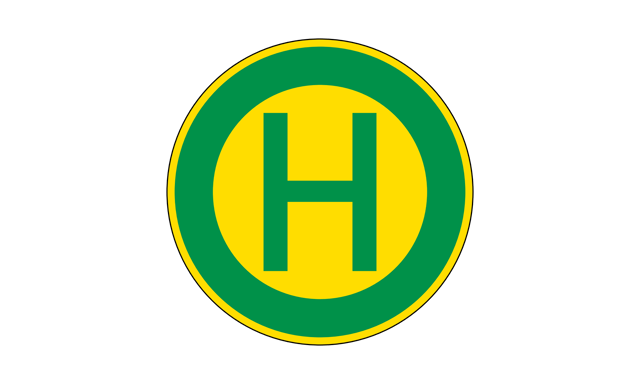
Explicação
At the traffic sign you can see that there is a tram or bus stop here. 15 meters before and after the traffic sign, drivers are not allowed to park their vehicles. Unless public transport is impeded or passengers are endangered, waiting is allowed for up to three minutes.
-
Pergunta 57 de 69
What applies with this traffic sign?
1.4.41-1622 Pontos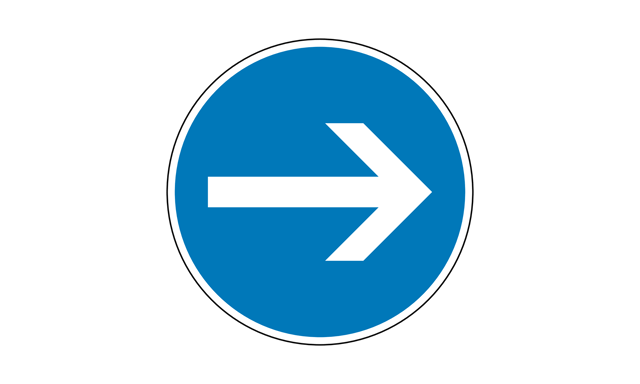
Explicação
The given direction of travel is binding. The car driver must turn right before the traffic sign and indicate this process to other road users.
-
Pergunta 58 de 69
What applies with this traffic sign?
1.4.41-1632 Pontos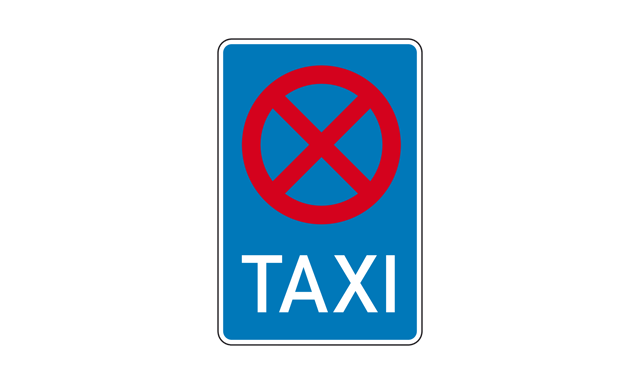
Explicação
The traffic sign indicates a taxi stand. There is basically a stopping restriction for all other vehicles. The car driver must always expect departing and arriving taxis and passengers in this area.
-
Pergunta 59 de 69
What does this traffic sign combination indicate?
1.4.41-1642 Pontos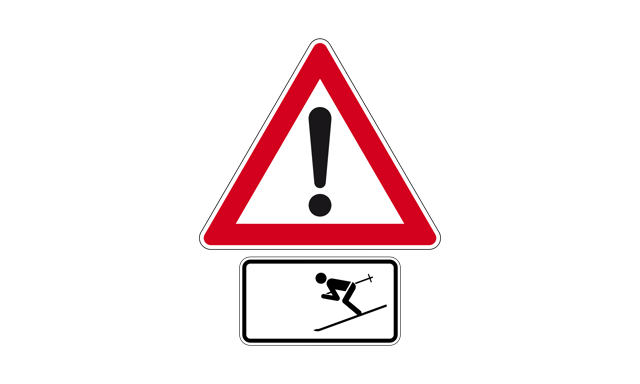
Explicação
This sign means "Danger zone" and the additional sign stands for "Winter sports allowed". The combination indicates that winter sportspersons may use the road and road users must pay particular attention to it.
-
Pergunta 60 de 69
What do you have to be aware of in this traffic situation?
1.4.41-1654 Pontos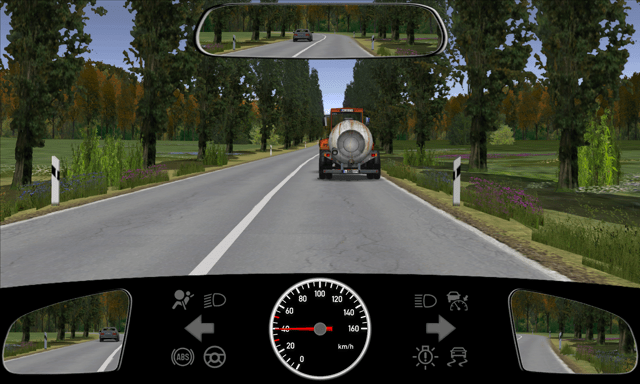
Explicação
You must not drive over the lane boundary (solid line) to the left, which is located at the middle of the lane. Driving on it is also prohibited.
-
Pergunta 61 de 69
You want to overtake. What is the right thing to do?
1.4.41-1673 Pontos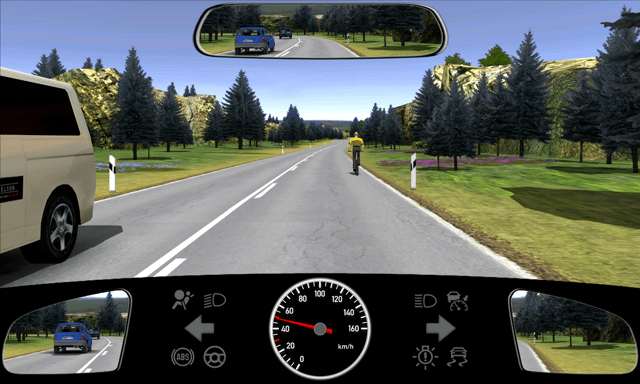
Explicação
You may overtake if other road users are not endangered. The one-sided lane boundary allows you to cross the two lines from the side where the broken line is located.
-
Pergunta 62 de 69
As a resident, you want to drive into a cycle highway that has this sign. What must you be aware of when doing so?
1.4.41-1682 Pontos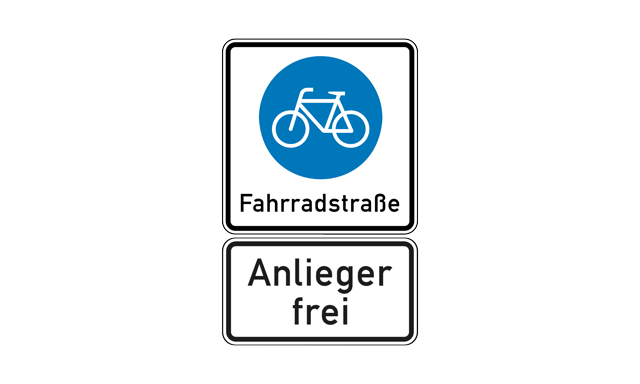
Explicação
A maximum speed of 30 km/h applies to traffic. Cycling traffic must not be endangered or obstructed. If necessary, motor vehicle traffic must reduce speed further. Side-by-side cycling is permitted.
-
Pergunta 63 de 69
Who may enter a street that has this sign?
1.4.41-1692 Pontos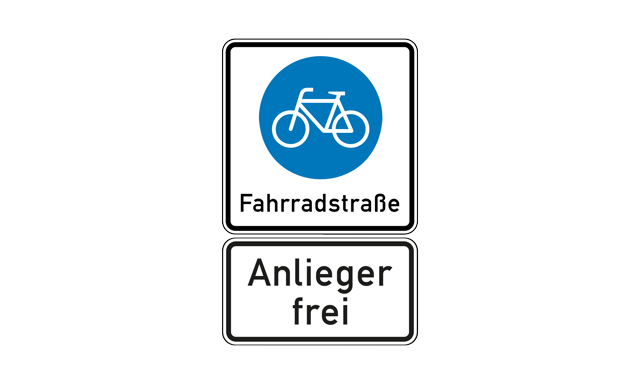
Explicação
Vehicular traffic other than cyclists may not use cycle lanes unless permitted by additional sign. The additional sign allows residents to enter the bicycle lane.
-
Pergunta 64 de 69
This road traffic sign is displayed for your lane. What must you be aware of?
1.4.41-1703 Pontos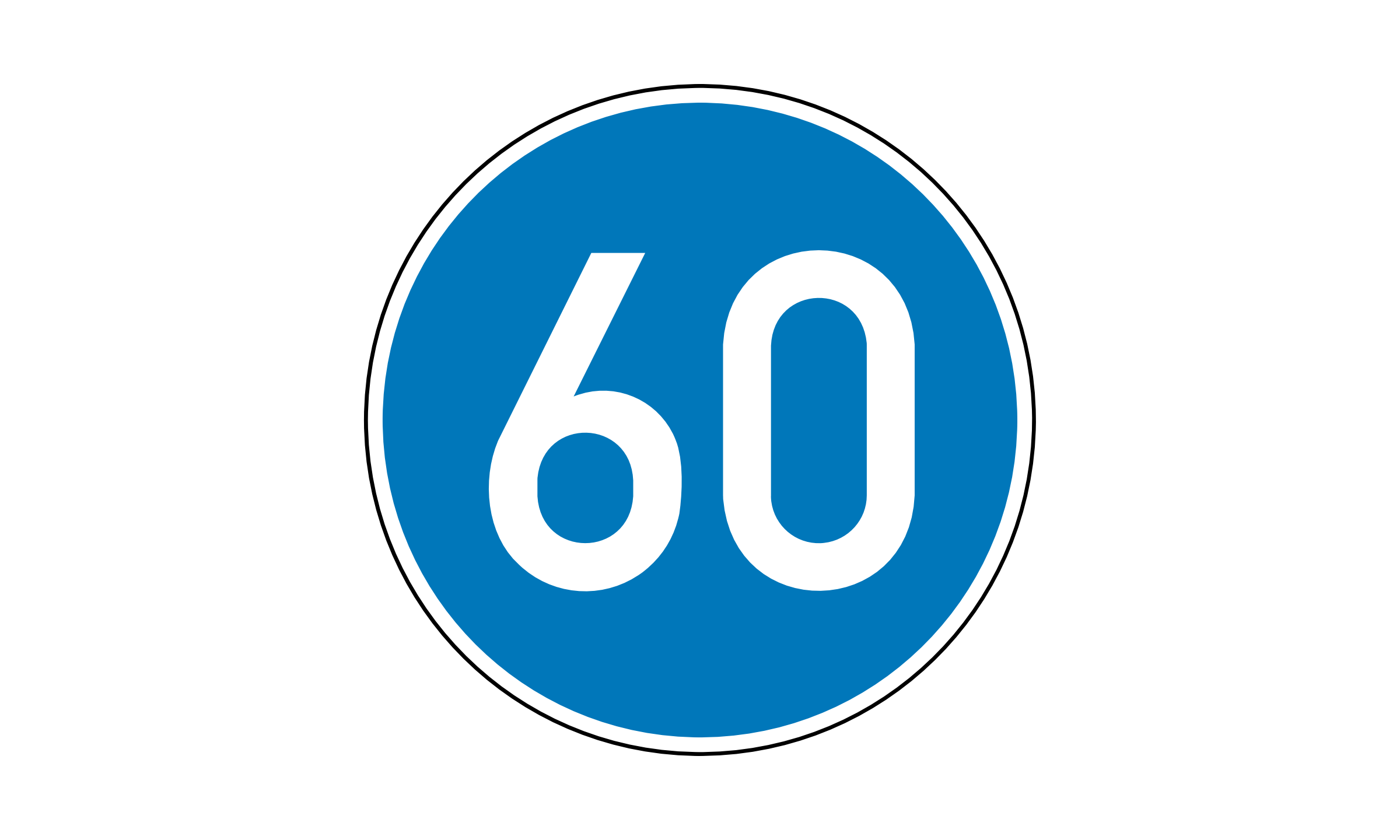
Explicação
This traffic sign indicates the prescribed minimum speed. You must therefore drive at least 60 km/h, provided that the road and traffic conditions allow it.
-
Pergunta 65 de 69
What is the maximum speed a vehicle may drive in a zone with this sign?
1.4.41-1712 PontosExplicação
Cyclists, light electric vehicles and other authorized vehicles may not drive more than 30 km/h in bicycle zones.
-
Pergunta 66 de 69
What situation applies according to this traffic sign?
1.4.41-1723 Pontos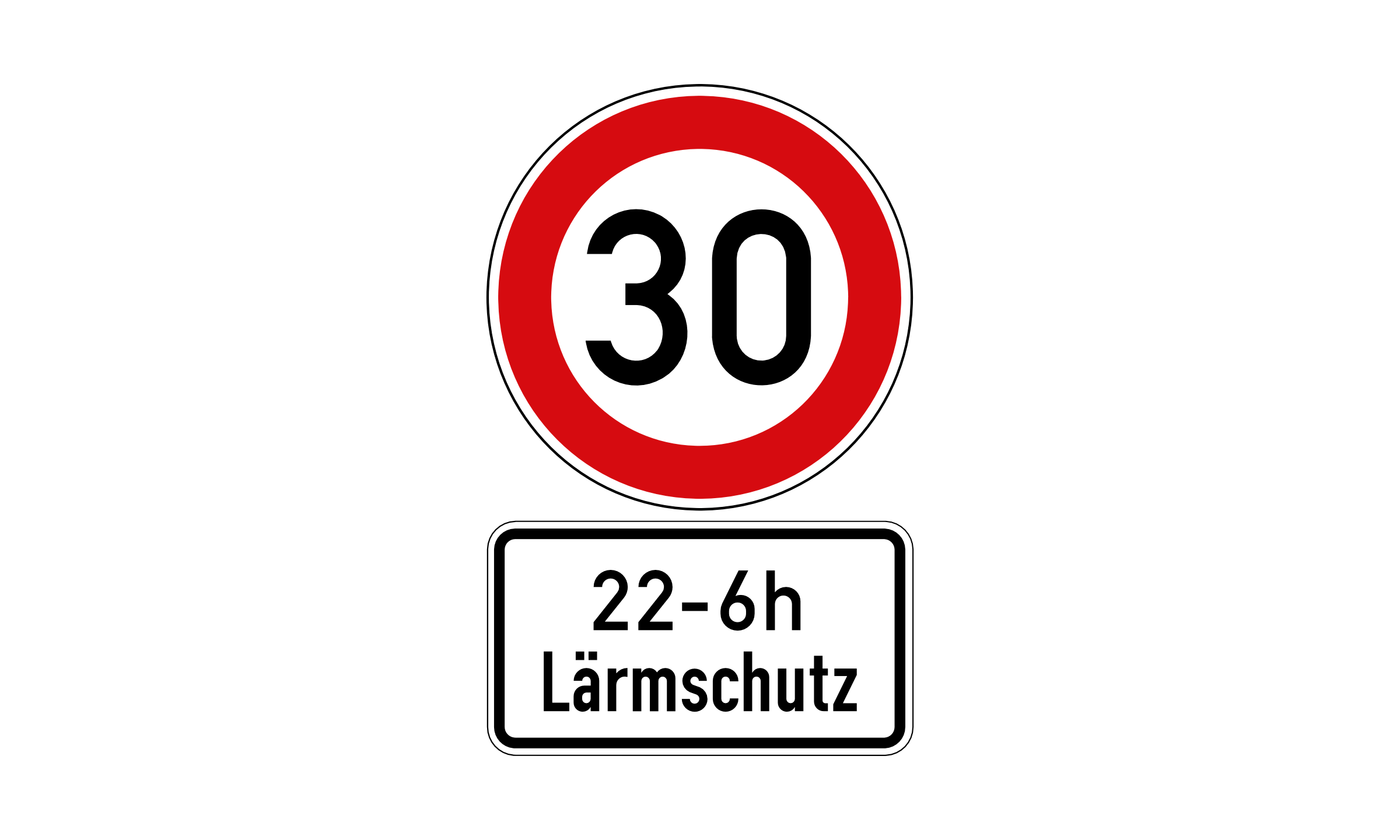
Explicação
The additional sign limits the speed limit between 10 pm and 6 am.
-
Pergunta 67 de 69
What should you do when you see this road sign?
1.4.41-1732 Pontos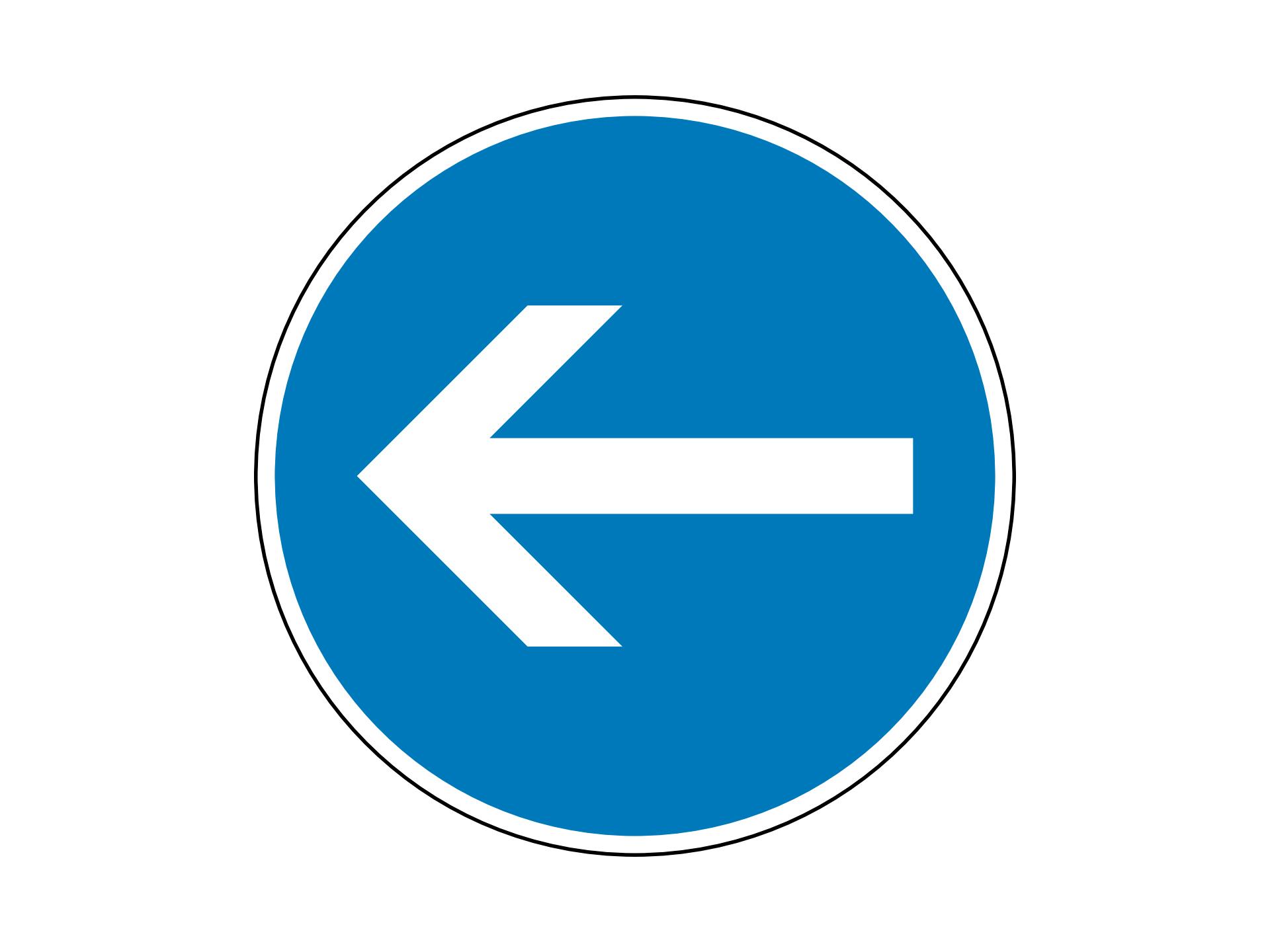
Explicação
The arrow on this traffic sign always shows the direction of travel. If it is a straight arrow, you have to turn in front of the sign. If it is a curved arrow, you must turn according to the sign. You have to flash to indicate the change in driving direction.
-
Pergunta 68 de 69
Which road sign indicates that turning around is not allowed?
1.4.41-1743 PontosExplicação
All traffic signs show you that turning is prohibited. The traffic sign tells you that a tunnel begins here. Turning is strictly prohibited in the tunnel. The traffic sign “Turning Prohibited” shows you that turning is prohibited here. This traffic sign tells you that you are on a highway. U-turns are strictly prohibited on the highway.
-
Pergunta 69 de 69
From which road sign onwards may you not exceed a permissible maximum speed of 60 km/h?
1.4.41-1753 PontosExplicação
Traffic signs with a red border generally indicate a ban. On a road with such a traffic sign you are not allowed to exceed the maximum permitted speed of 60 km/h.