
1.1.03 Cestovni i vremenski uvjeti
Ovladati pravilima vožnje u nepovoljnim vremenskim uvjetima i uvjetima na cesti. Ovaj modul pokriva kritična sigurnosna pravila koja se često testiraju na teoretskom ispitu.
warning Prljavština, blato i ulje na cesti
Površine cesta mogu postati opasno skliske čak i bez kiše. To je uobičajeno u poljoprivrednim područjima ili nakon nesreća. Opasnost je u tome što je sklizak film često nevidljiv dok ne izgubite trakciju.
Pazite na:
- agriculture Poljoprivredna vozila: Često ostavljaju velike nakupine blata na cesti, osobito tijekom sezone žetve.
- water_drop Izlijevanje nafte: Potražite sjaj duginih boja na asfaltu. Izuzetno sklizak.
- nature Mokro lišće: U jesen mokro lišće može biti sklisko poput leda (efekt crnog leda).
lightbulb Savjet za ispit
Ako vidite znak upozorenja "Prljava cesta" ili "Gradilište", točan odgovor uvijek je da odmah smanjite brzinu, a ne samo "budite spremni za kočenje".
rainy Mokre ceste i jaka kiša
Akvaplaning (hidroplaning) nastaje kada se sloj vode nakupi između kotača vozila i površine ceste, što dovodi do gubitka prianjanja. Vi u biti "plutate" na vodi.
Uzroci akvaplaninga
- Velika brzina (glavni faktor)
- Istrošene gume (mala dubina profila)
- Utori na cesti (Spurrillen)
Ispravna reakcija
- učiniti nije naglo upravljati.
- učiniti nije snažno kočiti.
- Maknite nogu s papučice gasa.
- Isključite kvačilo (ako je ručno).
- Pričekajte da gume ponovno uspostave kontakt.
ac_unit Led, mraz i zimski uvjeti
Crni led jedno je od najopasnijih stanja jer je nevidljiv. Budite posebno oprezni na mostovima iu šumskim prolazima gdje sunce ne dopire do ceste.
Učini ovo (Ispravno)
- check_small Vozite pri niskom broju okretaja u visokom stupnju prijenosa kako biste spriječili proklizavanje kotača.
- check_small Lagano testirajte reakciju kočnice pri maloj brzini kako biste provjerili prianjanje.
- check_small Dopusti 3x normalni put kočenja.
Izbjegavajte ovo (pogrešno)
- close_small Vožnja s velikim brojem okretaja (uzrokuje gubitak prianjanja kotača).
- close_small Trzavi pokreti upravljača.
- close_small Zagrijavanje motora dok miruje (ilegalno u Njemačkoj).
texture Tramvajske tračnice i kaldrma
Tramvajske staze
Metalne gusjenice pružaju gotovo nulto prianjanje, posebno kada su mokre. Vozila na dva kotača (motocikli, bicikli) ovdje su u velikoj opasnosti.
Kaldrma (Kopfsteinpflaster)
Uobičajeno u povijesnim njemačkim gradskim središtima. Bučni su i značajno produljuju put kočenja kada su mokri.
foggy Magla i vidljivost
Prilagođavanje brzine vidljivosti
Zlatno pravilo vidljivosti je: "Ako je vidljivost X metara, vaša brzina ne smije prijeći X km/h."
Pravilo stražnjeg svjetla za maglu
Stražnje svjetlo za maglu smijete uključiti SAMO ako je vidljivost loša manje od 50 metara zbog magle.
Osnovno načelo ispita
U bilo kojem pitanju koje uključuje loše vrijeme (kiša, magla, snijeg) ili loši uvjeti na cesti (blato, ulje, lišće), točan odgovor gotovo uvijek uključuje:
- arrow_downward Značajno smanjenje brzine
- space_bar Povećanje sigurnosne udaljenosti
- visibility Predviđanje iznenadnih opasnosti
- do_not_touch Izbjegavanje naglog kočenja/upravljanja
assignment Univerzalni uzorak ispita
Kada se suočite s pitanjima o uvjetima na cesti, potražite ove ključne riječi. Često označavaju točan odgovor.
Pitanja za vježbu (16)
-
Pitanje 1 od 16
Where must you particularly reckon with dirt on the roadway and therefore danger of skidding?
1.1.03-0013 BodoviObjašnjenje
At junctions of dirt roads and at construction sites, the roadway is likely to be heavily soiled with soil, clay and dirt. Vehicles coming from there bring the dirt onto the road with the tread grooves of their tyres. In wet conditions, this means an increased risk of slipping.
-
Pitanje 2 od 16
Where must you especially reckon with ice on the roadway?
1.1.03-0034 BodoviObjašnjenje
You must expect increased icing on the road in the following areas: in damp, shady and windy locations that favour the formation of ice on the road. These include, above all, forest locations and bridges. In forests, the cold lasts longer than in open fields. Because of the shade, moisture takes longer to evaporate here. On bridges, roadways store less heat than on the ground. Bridge roadways are therefore colder and ice up faster. The moisture of the surrounding water and the increased wind due to the unprotected location also promote icing.
-
Pitanje 3 od 16
There is oil on the road. What should you do now?
1.1.03-0054 Bodovi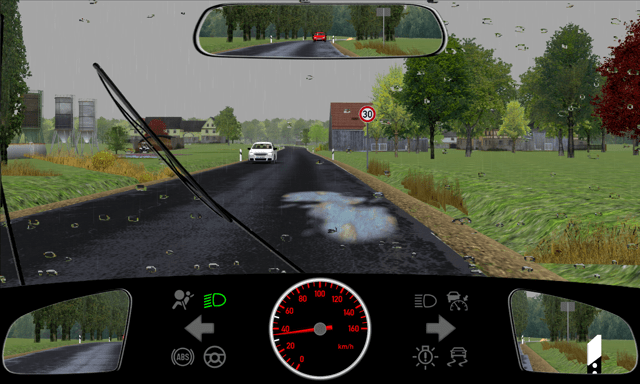
Objašnjenje
If there is oil on the road, avoid jerky steering and heavy braking; there is a risk of slipping. Provided other road users are not endangered, you can move to the left lane. Notify the fire brigade so that the oil can be bound.
-
Pitanje 4 od 16
What must you be prepared for here?
1.1.03-0063 Bodovi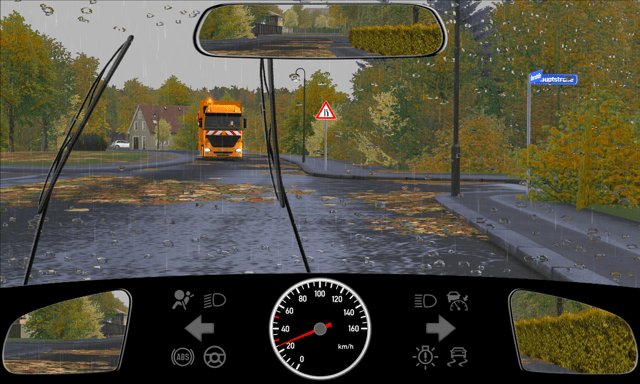
Objašnjenje
Due to the weather and the corresponding conditions on the road, you have to be prepared for an extended braking distance, for a vehicle coming from the right (right before left) and for a narrowed lane.
-
Pitanje 5 od 16
You are driving following a heavy rain shower. What should you be aware of in this situation?
1.1.03-0074 Bodovi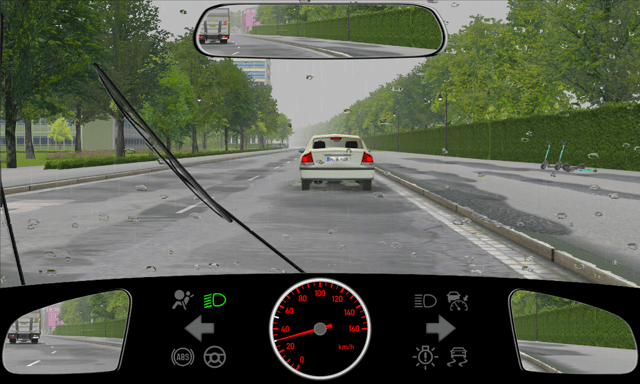
Objašnjenje
When it rains, your view worsens. Therefore, you should enlarge your safety distance to the vehicle in front, as your braking distance is extended. Spray water can be whirled up from the vehicle in front by a wet road. This means that bumps are difficult to recognize.
-
Pitanje 6 od 16
Why does driving on this stretch of road require greater alertness on the part of the motorist?
1.1.03-1024 Bodovi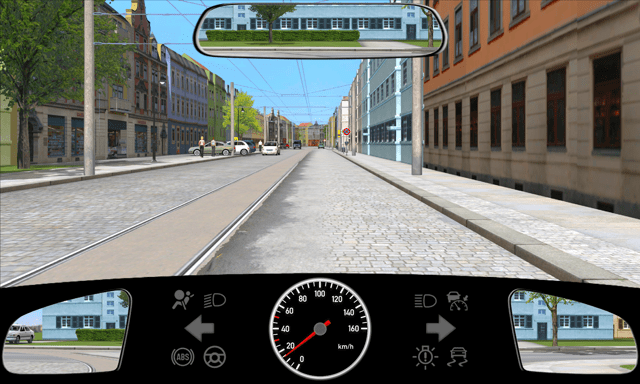
Objašnjenje
A tram may come towards you on the tracks, in which case the lane becomes much narrower for you. Tram tracks are also dangerous, especially when wet, because they become slippery. In addition, as there are also cobblestones, the road surface is uneven and has varying degrees of grip. This can increase the braking distance.
-
Pitanje 7 od 16
The road is icy for a short distance. What should you avoid here, if possible?
1.1.03-1044 BodoviObjašnjenje
On icy roads, your tyres do not grip as well as usual. Therefore, you should avoid dangerous situations, i.e. neither brake nor accelerate abruptly. You should also refrain from sudden steering movements. This could cause your vehicle to skid. Only brake and steer away from the icy surface.
-
Pitanje 8 od 16
While driving, how can you safely check whether the road is icy?
1.1.03-1054 BodoviObjašnjenje
Test the condition of the road by braking carefully at low speed. Be sure to pay attention to the traffic behind you. Avoid jerking the steering or accelerating sharply. This could cause your vehicle to swerve and become uncontrollable.
-
Pitanje 9 od 16
Why must you drive with particular caution here?
1.1.03-1083 Bodovi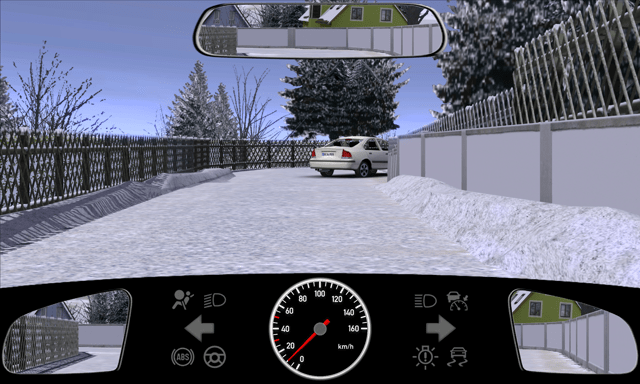
Objašnjenje
Snow makes the road slippery. There is a curve in front of you that is difficult to see and a car is parked there. You will have to pull out into the oncoming lane to drive around it. Therefore, drive extra carefully to be able to react at any time. In addition, your vehicle needs suitable tyres for good grip.
-
Pitanje 10 od 16
Where must you be prepared to encounter sudden fog?
1.1.03-1093 BodoviObjašnjenje
Humidity at low temperatures favours the formation of fog. Therefore, fog is more likely to occur around lakes, watercourses and rivers as well as moorland areas.
-
Pitanje 11 od 16
What do you do if visibility is drastically reduced by fog?
1.1.03-1104 BodoviObjašnjenje
Adjust your speed and driving style to the visibility conditions. Make sure that you can stop within sight. If necessary, increase the safety distance to the vehicle in front. Fog with a visibility of 50 metres, for example, means that you may drive at a maximum of 50 km/h.
-
Pitanje 12 od 16
What is the right course of action here?
1.1.03-1124 Bodovi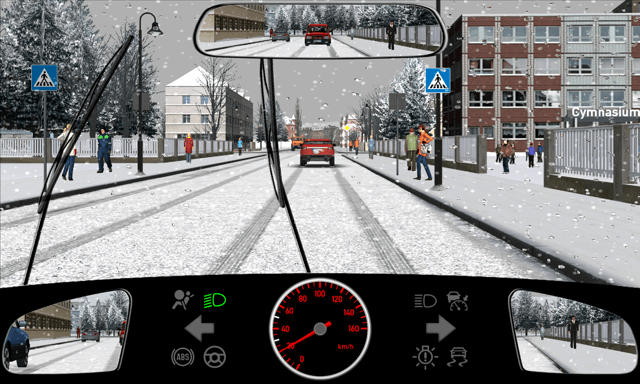
Objašnjenje
Even if the lane marking is not visible, the traffic signs show the presence of the pedestrian crossing. Brake carefully to prevent your vehicle from skidding.
-
Pitanje 13 od 16
Why do you have to pay particular attention here?
1.1.03-1144 Bodovi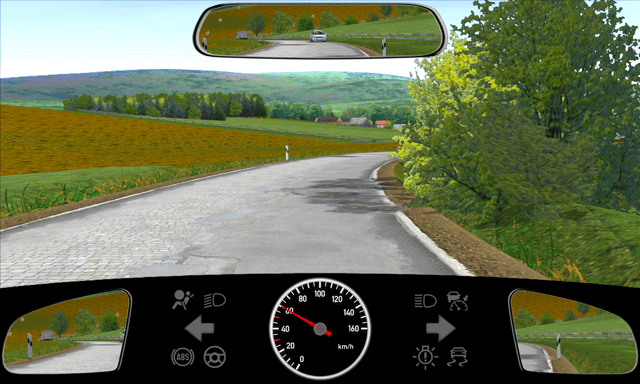
Objašnjenje
There is a long curve in front of you, the end of which you cannot see. A fast-moving vehicle could come towards you from there and cut your lane. The road surface is also uneven and does not have an even surface. So anticipate insufficient grip and drive at an adapted speed.
-
Pitanje 14 od 16
Why might taking the right turn be dangerous here?
1.1.03-1164 Bodovi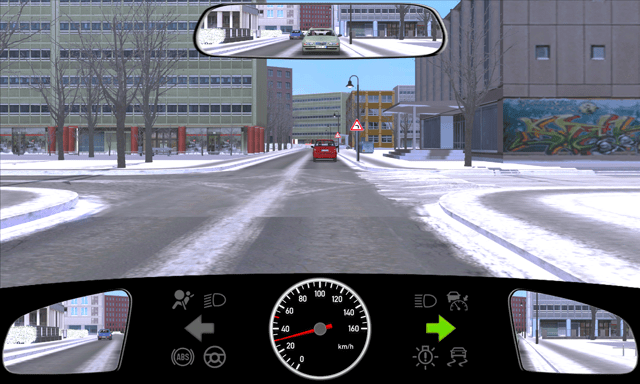
Objašnjenje
The winter weather makes the road slippery and increases the braking distance at the intersection. Your car or oncoming vehicles could skid or slide away uncontrollably. Therefore, reduce your speed in good time and do not brake abruptly. The road on the right is still full of snow and therefore even slicker. Watch out for pedestrians when turning. They always have priority when you turn.
-
Pitanje 15 od 16
What is the correct course of action in this situation?
1.1.03-1203 Bodovi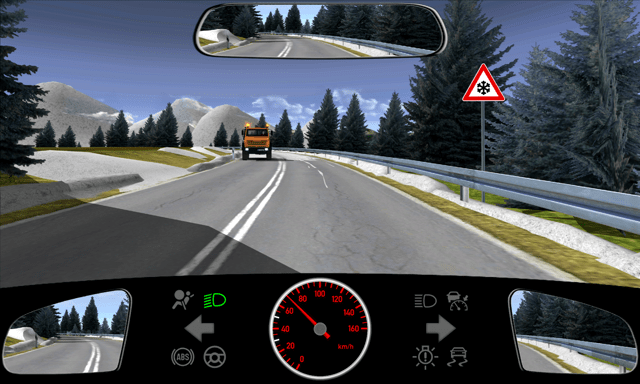
Objašnjenje
Drive carefully, slowly and avoid abrupt steering or braking, because slippery snow or ice can occur at any time.
-
Pitanje 16 od 16
While driving, it suddenly begins to rain heavily. What should you do?
1.1.03-1214 BodoviObjašnjenje
Extra care should be taken when driving in heavy rain. This includes adjusting speed, increasing the safe distance and avoiding heavy acceleration, which creates a risk of slipping.