
1.1.03 Condições de estrada e clima
Domine as regras para dirigir em condições climáticas e de estrada adversas. Este módulo aborda regras críticas de segurança frequentemente testadas no exame teórico.
warning Sujeira, lama e óleo na estrada
As superfícies das estradas podem tornar-se perigosamente escorregadias mesmo sem chuva. Isto é comum em áreas agrícolas ou após acidentes. O perigo é que a película escorregadia muitas vezes fica invisível até você perder a tração.
Cuidado com:
- agriculture Veículos Agrícolas: Muitas vezes deixam grandes torrões de lama na estrada, especialmente durante a época de colheita.
- water_drop Derramamentos de óleo: Procure brilhos das cores do arco-íris no asfalto. Extremamente escorregadio.
- nature Folhas molhadas: No outono, as folhas molhadas podem ser tão escorregadias quanto o gelo (efeito gelo preto).
lightbulb Dica de exame
Se você vir uma placa avisando “Estrada Suja” ou “Canteiro de Obras”, a resposta correta é sempre reduzir a velocidade imediatamente, e não apenas “estar pronto para frear”.
rainy Estradas molhadas e chuva forte
Aquaplanagem (Hidroplanagem) ocorre quando uma camada de água se acumula entre as rodas do veículo e a superfície da estrada, levando à perda de tração. Você está essencialmente “flutuando” na água.
Causas da aquaplanagem
- Alta velocidade (fator principal)
- Pneus gastos (baixa profundidade do piso)
- Sulcos na estrada (Spurrillen)
Reação Correta
- Fazer não dirija abruptamente.
- Fazer não frear com força.
- Tire o pé do acelerador.
- Desengate a embreagem (se manual).
- Aguarde até que os pneus recuperem o contato.
ac_unit Condições de gelo, geada e inverno
O gelo negro é uma das condições mais perigosas porque é invisível. Seja extremamente cauteloso em pontes e corredores florestais onde o sol não atinge a estrada.
Faça isso (correto)
- check_small Dirija em baixa rotação em marcha alta para evitar patinação das rodas.
- check_small Teste a resposta do freio suavemente em baixa velocidade para verificar a aderência.
- check_small Permitir 3x distância de frenagem normal.
Evite isso (errado)
- close_small Dirigir com altas rotações (faz com que as rodas percam aderência).
- close_small Movimentos bruscos de direção.
- close_small Aquecer o motor parado (ilegal na Alemanha).
texture Trilhos e paralelepípedos do bonde
Trilhos do bonde
As pistas de metal proporcionam aderência quase nula, especialmente quando molhadas. Os veículos de duas rodas (motocicletas, bicicletas) correm extremo risco aqui.
Paralelepípedos (Kopfsteinpflaster)
Comum nos centros históricos das cidades alemãs. Eles são barulhentos e aumentam significativamente a distância de frenagem quando molhados.
foggy Nevoeiro e Visibilidade
Ajustando a velocidade à visibilidade
A regra de ouro para visibilidade é: "Se a visibilidade for de X metros, sua velocidade não pode exceder X km/h."
Regra da luz de nevoeiro traseira
Você SÓ poderá ligar a luz de neblina traseira se a visibilidade for menos de 50 metros devido ao nevoeiro.
Princípio Básico do Exame
Em qualquer questão que envolva mau tempo (chuva, nevoeiro, neve) ou más condições das estradas (lama, óleo, folhas), a resposta correta quase sempre envolve:
- arrow_downward Reduzindo significativamente a velocidade
- space_bar Aumentando a distância de segurança
- visibility Antecipando perigos repentinos
- do_not_touch Evitando frenagens/direções bruscas
assignment Padrão de exame universal
Ao enfrentar dúvidas sobre as condições das estradas, procure essas palavras-chave. Freqüentemente, eles indicam a resposta correta.
Perguntas de Prática (16)
-
Pergunta 1 de 16
Where must you particularly reckon with dirt on the roadway and therefore danger of skidding?
1.1.03-0013 PontosExplicação
At junctions of dirt roads and at construction sites, the roadway is likely to be heavily soiled with soil, clay and dirt. Vehicles coming from there bring the dirt onto the road with the tread grooves of their tyres. In wet conditions, this means an increased risk of slipping.
-
Pergunta 2 de 16
Where must you especially reckon with ice on the roadway?
1.1.03-0034 PontosExplicação
You must expect increased icing on the road in the following areas: in damp, shady and windy locations that favour the formation of ice on the road. These include, above all, forest locations and bridges. In forests, the cold lasts longer than in open fields. Because of the shade, moisture takes longer to evaporate here. On bridges, roadways store less heat than on the ground. Bridge roadways are therefore colder and ice up faster. The moisture of the surrounding water and the increased wind due to the unprotected location also promote icing.
-
Pergunta 3 de 16
There is oil on the road. What should you do now?
1.1.03-0054 Pontos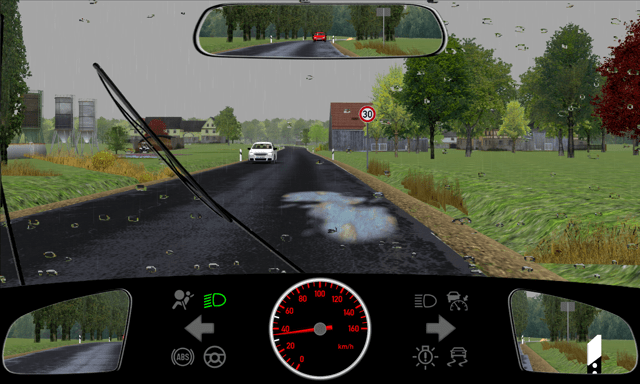
Explicação
If there is oil on the road, avoid jerky steering and heavy braking; there is a risk of slipping. Provided other road users are not endangered, you can move to the left lane. Notify the fire brigade so that the oil can be bound.
-
Pergunta 4 de 16
What must you be prepared for here?
1.1.03-0063 Pontos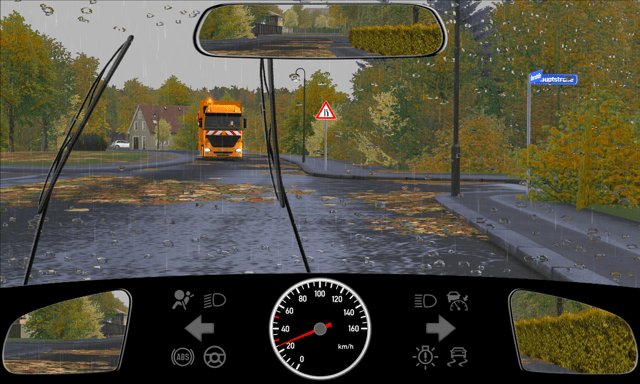
Explicação
Due to the weather and the corresponding conditions on the road, you have to be prepared for an extended braking distance, for a vehicle coming from the right (right before left) and for a narrowed lane.
-
Pergunta 5 de 16
You are driving following a heavy rain shower. What should you be aware of in this situation?
1.1.03-0074 Pontos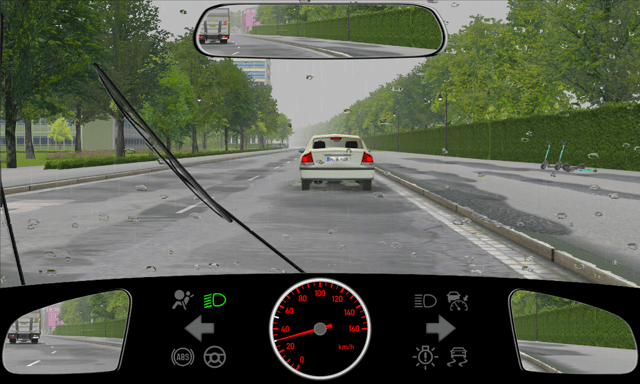
Explicação
When it rains, your view worsens. Therefore, you should enlarge your safety distance to the vehicle in front, as your braking distance is extended. Spray water can be whirled up from the vehicle in front by a wet road. This means that bumps are difficult to recognize.
-
Pergunta 6 de 16
Why does driving on this stretch of road require greater alertness on the part of the motorist?
1.1.03-1024 Pontos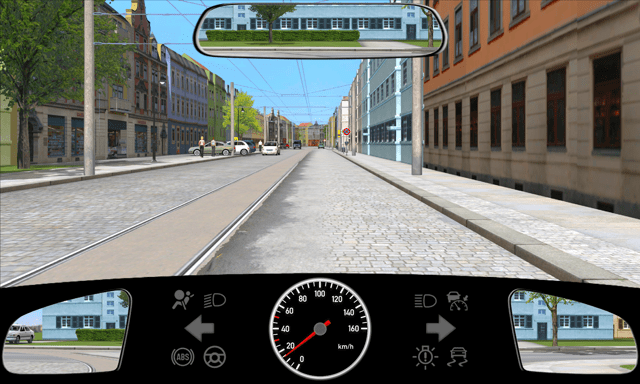
Explicação
A tram may come towards you on the tracks, in which case the lane becomes much narrower for you. Tram tracks are also dangerous, especially when wet, because they become slippery. In addition, as there are also cobblestones, the road surface is uneven and has varying degrees of grip. This can increase the braking distance.
-
Pergunta 7 de 16
The road is icy for a short distance. What should you avoid here, if possible?
1.1.03-1044 PontosExplicação
On icy roads, your tyres do not grip as well as usual. Therefore, you should avoid dangerous situations, i.e. neither brake nor accelerate abruptly. You should also refrain from sudden steering movements. This could cause your vehicle to skid. Only brake and steer away from the icy surface.
-
Pergunta 8 de 16
While driving, how can you safely check whether the road is icy?
1.1.03-1054 PontosExplicação
Test the condition of the road by braking carefully at low speed. Be sure to pay attention to the traffic behind you. Avoid jerking the steering or accelerating sharply. This could cause your vehicle to swerve and become uncontrollable.
-
Pergunta 9 de 16
Why must you drive with particular caution here?
1.1.03-1083 Pontos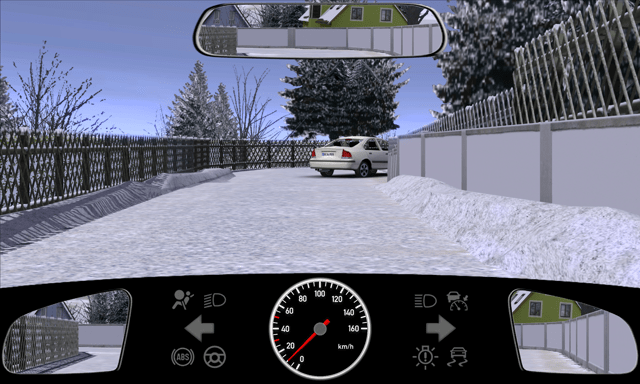
Explicação
Snow makes the road slippery. There is a curve in front of you that is difficult to see and a car is parked there. You will have to pull out into the oncoming lane to drive around it. Therefore, drive extra carefully to be able to react at any time. In addition, your vehicle needs suitable tyres for good grip.
-
Pergunta 10 de 16
Where must you be prepared to encounter sudden fog?
1.1.03-1093 PontosExplicação
Humidity at low temperatures favours the formation of fog. Therefore, fog is more likely to occur around lakes, watercourses and rivers as well as moorland areas.
-
Pergunta 11 de 16
What do you do if visibility is drastically reduced by fog?
1.1.03-1104 PontosExplicação
Adjust your speed and driving style to the visibility conditions. Make sure that you can stop within sight. If necessary, increase the safety distance to the vehicle in front. Fog with a visibility of 50 metres, for example, means that you may drive at a maximum of 50 km/h.
-
Pergunta 12 de 16
What is the right course of action here?
1.1.03-1124 Pontos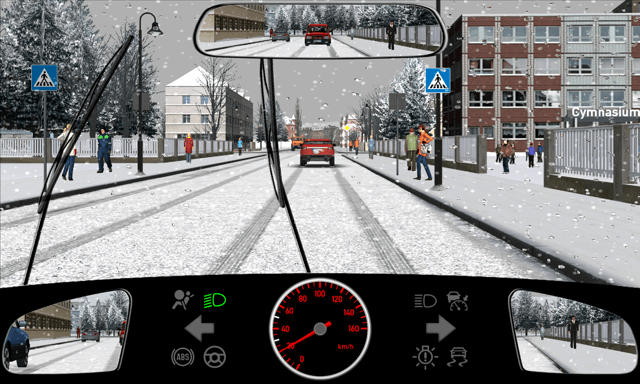
Explicação
Even if the lane marking is not visible, the traffic signs show the presence of the pedestrian crossing. Brake carefully to prevent your vehicle from skidding.
-
Pergunta 13 de 16
Why do you have to pay particular attention here?
1.1.03-1144 Pontos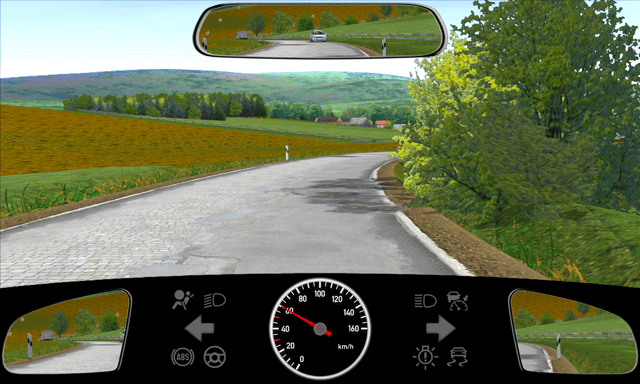
Explicação
There is a long curve in front of you, the end of which you cannot see. A fast-moving vehicle could come towards you from there and cut your lane. The road surface is also uneven and does not have an even surface. So anticipate insufficient grip and drive at an adapted speed.
-
Pergunta 14 de 16
Why might taking the right turn be dangerous here?
1.1.03-1164 Pontos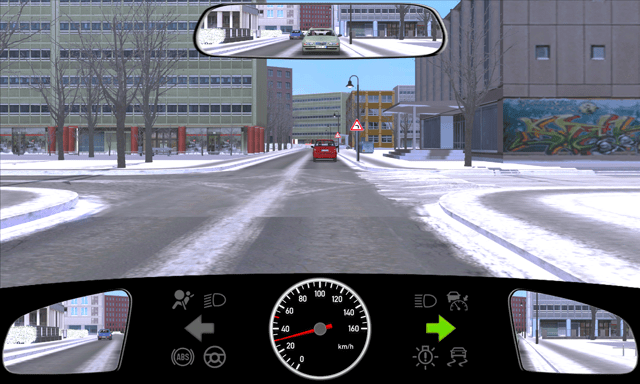
Explicação
The winter weather makes the road slippery and increases the braking distance at the intersection. Your car or oncoming vehicles could skid or slide away uncontrollably. Therefore, reduce your speed in good time and do not brake abruptly. The road on the right is still full of snow and therefore even slicker. Watch out for pedestrians when turning. They always have priority when you turn.
-
Pergunta 15 de 16
What is the correct course of action in this situation?
1.1.03-1203 Pontos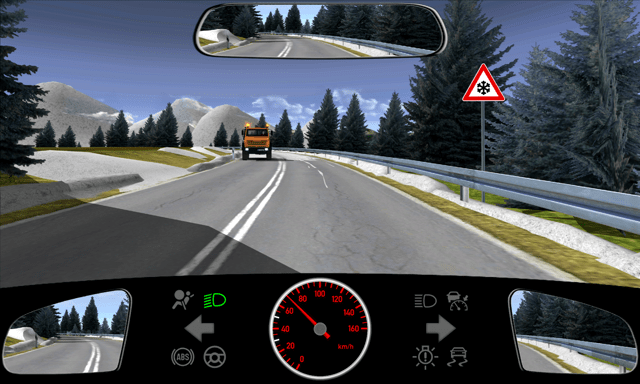
Explicação
Drive carefully, slowly and avoid abrupt steering or braking, because slippery snow or ice can occur at any time.
-
Pergunta 16 de 16
While driving, it suddenly begins to rain heavily. What should you do?
1.1.03-1214 PontosExplicação
Extra care should be taken when driving in heavy rain. This includes adjusting speed, increasing the safe distance and avoiding heavy acceleration, which creates a risk of slipping.