
1.1.03 Condizioni di strada e meteorologiche
Padroneggiare le regole per la guida in condizioni meteorologiche e stradali avverse. Questo modulo copre le regole di sicurezza critiche frequentemente testate nell'esame di teoria.
warning Sporco, fango e olio sulla strada
Il manto stradale può diventare pericolosamente scivoloso anche senza pioggia. Questo è comune nelle zone agricole o dopo incidenti. Il pericolo è che la pellicola scivolosa sia spesso invisibile finché non si perde aderenza.
Attenzione a:
- agriculture Veicoli agricoli: Spesso lasciano grossi grumi di fango sulla strada, soprattutto durante la stagione del raccolto.
- water_drop Fuoriuscite di petrolio: Cerca i riflessi color arcobaleno sull'asfalto. Estremamente scivoloso.
- nature Foglie bagnate: In autunno le foglie bagnate possono essere scivolose come il ghiaccio (effetto ghiaccio nero).
lightbulb Suggerimento per l'esame
Se vedi un cartello che avverte di "Strada sterrata" o "Cantiere", la risposta corretta è sempre quella di ridurre immediatamente la velocità, non semplicemente "essere pronti a frenare".
rainy Strade bagnate e pioggia battente
Aquaplaning (Idroplaning) si verifica quando tra le ruote del veicolo e il manto stradale si forma uno strato d'acqua che provoca una perdita di trazione. Stai essenzialmente "galleggiando" sull'acqua.
Cause dell'aquaplaning
- Alta velocità (fattore principale)
- Pneumatici usurati (profondità del battistrada ridotta)
- Solchi nella strada (Spurrillen)
Reazione corretta
- Fare non sterzare bruscamente.
- Fare non frena forte.
- Togli il piede dall'acceleratore.
- Disinnestare la frizione (se manuale).
- Attendere che le gomme riprendano il contatto.
ac_unit Ghiaccio, gelo e condizioni invernali
Il ghiaccio nero è una delle condizioni più pericolose perché è invisibile. Sii particolarmente cauto sui ponti e nei passaggi nei boschi dove il sole non raggiunge la strada.
Fai questo (corretto)
- check_small Guidare a basso numero di giri con una marcia alta per evitare lo slittamento delle ruote.
- check_small Testare delicatamente la risposta dei freni a bassa velocità per verificare l'aderenza.
- check_small Permettere 3 volte lo spazio di frenata normale.
Evita questo (sbagliato)
- close_small Guidare a un numero di giri elevato (fa perdere aderenza alle ruote).
- close_small Movimenti a scatti dello sterzo.
- close_small Riscaldamento del motore a veicolo fermo (illegale in Germania).
texture Binari del tram e ciottoli
Binari del tram
I cingoli metallici offrono un'aderenza quasi pari a zero, soprattutto se bagnati. Qui i veicoli a due ruote (motociclette, biciclette) sono estremamente a rischio.
Ciottolato (Kopfsteinpflaster)
Comune nei centri storici tedeschi. Sono rumorosi e allungano significativamente lo spazio di frenata quando sono bagnati.
foggy Nebbia e visibilità
Regolazione della velocità in base alla visibilità
La regola d’oro per la visibilità è: "Se la visibilità è di X metri, la tua velocità non può superare X km/h."
Regola dei fendinebbia posteriori
È possibile accendere il fendinebbia posteriore SOLO se la visibilità è buona meno di 50 metri a causa della nebbia.
Principio dell'esame fondamentale
In qualsiasi questione che coinvolga maltempo (pioggia, nebbia, neve) o cattive condizioni stradali (fango, olio, foglie), la risposta corretta prevede quasi sempre:
- arrow_downward Ridurre significativamente la velocità
- space_bar Aumentare la distanza di sicurezza
- visibility Anticipare i pericoli improvvisi
- do_not_touch Evitare frenate/sterzate brusche
assignment Modello di esame universale
Quando affronti domande sulle condizioni stradali, cerca queste parole chiave. Spesso indicano la risposta corretta.
Domande di Pratica (16)
-
Domanda 1 di 16
In quali punti bisogna prestare particolare attenzione allo sporco sulla carreggiata e quindi al pericolo di slittamento?
1.1.03-0013 PuntiSpiegazione
At junctions of dirt roads and at construction sites, the roadway is likely to be heavily soiled with soil, clay and dirt. Vehicles coming from there bring the dirt onto the road with the tread grooves of their tyres. In wet conditions, this means an increased risk of slipping.
-
Domanda 2 di 16
In quali punti bisogna prestare particolare attenzione al ghiaccio sulla carreggiata?
1.1.03-0034 PuntiSpiegazione
You must expect increased icing on the road in the following areas: in damp, shady and windy locations that favour the formation of ice on the road. These include, above all, forest locations and bridges. In forests, the cold lasts longer than in open fields. Because of the shade, moisture takes longer to evaporate here. On bridges, roadways store less heat than on the ground. Bridge roadways are therefore colder and ice up faster. The moisture of the surrounding water and the increased wind due to the unprotected location also promote icing.
-
Domanda 3 di 16
C'è del petrolio sulla strada. Cosa dovresti fare ora?
1.1.03-0054 Punti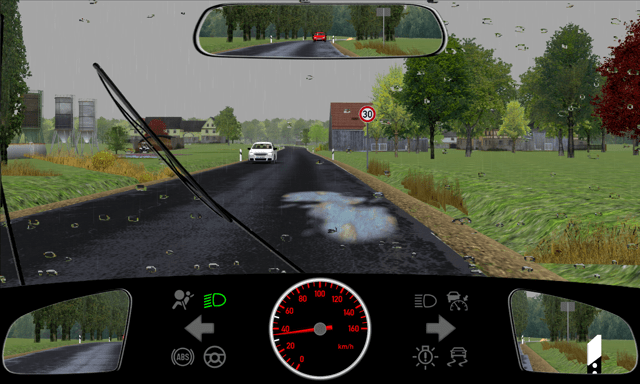
Spiegazione
If there is oil on the road, avoid jerky steering and heavy braking; there is a risk of slipping. Provided other road users are not endangered, you can move to the left lane. Notify the fire brigade so that the oil can be bound.
-
Domanda 4 di 16
A cosa devi prepararti qui?
1.1.03-0063 Punti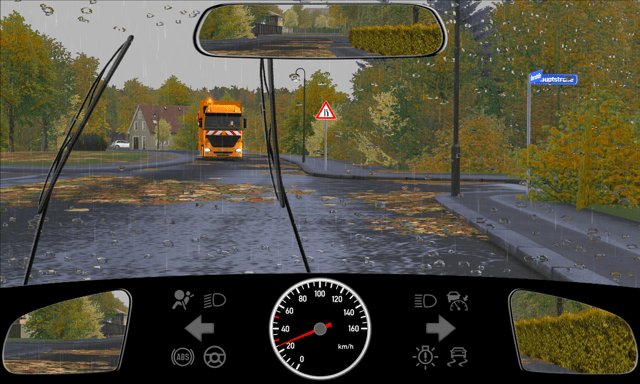
Spiegazione
Due to the weather and the corresponding conditions on the road, you have to be prepared for an extended braking distance, for a vehicle coming from the right (right before left) and for a narrowed lane.
-
Domanda 5 di 16
Stai guidando dopo un forte acquazzone. Di cosa dovresti essere consapevole in questa situazione?
1.1.03-0074 Punti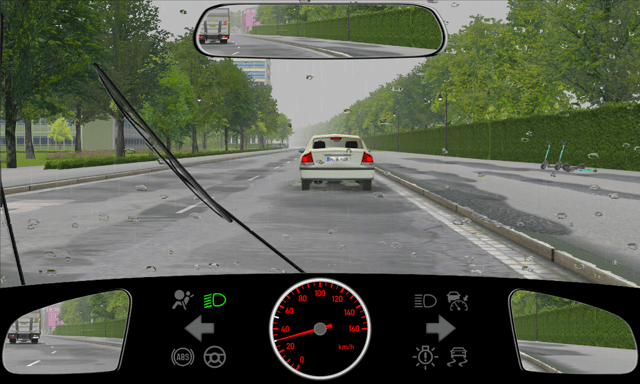
Spiegazione
When it rains, your view worsens. Therefore, you should enlarge your safety distance to the vehicle in front, as your braking distance is extended. Spray water can be whirled up from the vehicle in front by a wet road. This means that bumps are difficult to recognize.
-
Domanda 6 di 16
Perché guidare su questo tratto di strada richiede maggiore attenzione da parte dell'automobilista?
1.1.03-1024 Punti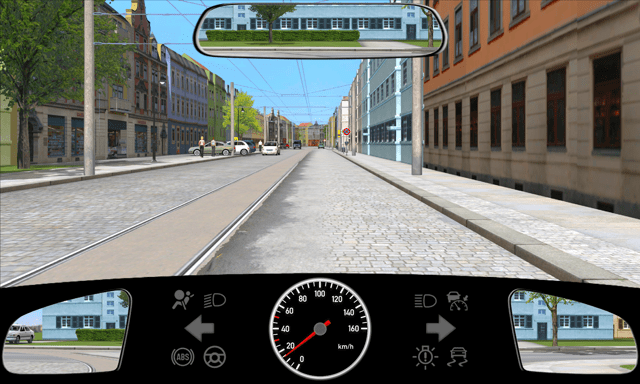
Spiegazione
A tram may come towards you on the tracks, in which case the lane becomes much narrower for you. Tram tracks are also dangerous, especially when wet, because they become slippery. In addition, as there are also cobblestones, the road surface is uneven and has varying degrees of grip. This can increase the braking distance.
-
Domanda 7 di 16
La strada è ghiacciata per un breve tratto. Cosa è meglio evitare in questo punto, se possibile?
1.1.03-1044 PuntiSpiegazione
On icy roads, your tyres do not grip as well as usual. Therefore, you should avoid dangerous situations, i.e. neither brake nor accelerate abruptly. You should also refrain from sudden steering movements. This could cause your vehicle to skid. Only brake and steer away from the icy surface.
-
Domanda 8 di 16
Come si può verificare in sicurezza se la strada è ghiacciata mentre si guida?
1.1.03-1054 PuntiSpiegazione
Test the condition of the road by braking carefully at low speed. Be sure to pay attention to the traffic behind you. Avoid jerking the steering or accelerating sharply. This could cause your vehicle to swerve and become uncontrollable.
-
Domanda 9 di 16
Perché qui è necessario guidare con particolare prudenza?
1.1.03-1083 Punti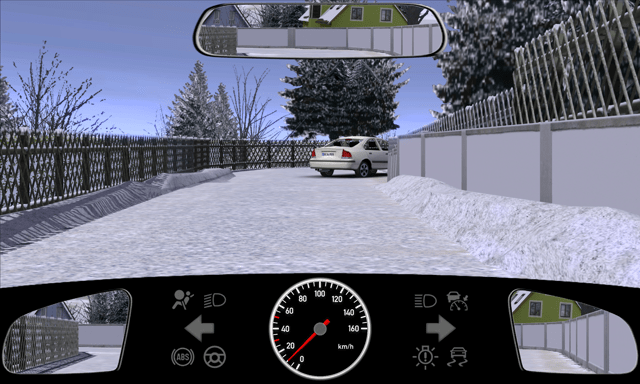
Spiegazione
Snow makes the road slippery. There is a curve in front of you that is difficult to see and a car is parked there. You will have to pull out into the oncoming lane to drive around it. Therefore, drive extra carefully to be able to react at any time. In addition, your vehicle needs suitable tyres for good grip.
-
Domanda 10 di 16
In quali situazioni è necessario essere preparati ad affrontare improvvise nebbie?
1.1.03-1093 PuntiSpiegazione
Humidity at low temperatures favours the formation of fog. Therefore, fog is more likely to occur around lakes, watercourses and rivers as well as moorland areas.
-
Domanda 11 di 16
Cosa fare se la visibilità si riduce drasticamente a causa della nebbia?
1.1.03-1104 PuntiSpiegazione
Adjust your speed and driving style to the visibility conditions. Make sure that you can stop within sight. If necessary, increase the safety distance to the vehicle in front. Fog with a visibility of 50 metres, for example, means that you may drive at a maximum of 50 km/h.
-
Domanda 12 di 16
Qual è la giusta linea d'azione in questo caso?
1.1.03-1124 Punti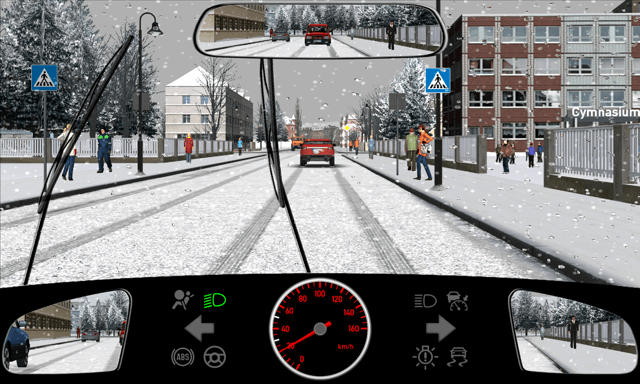
Spiegazione
Even if the lane marking is not visible, the traffic signs show the presence of the pedestrian crossing. Brake carefully to prevent your vehicle from skidding.
-
Domanda 13 di 16
Perché è necessario prestare particolare attenzione qui?
1.1.03-1144 Punti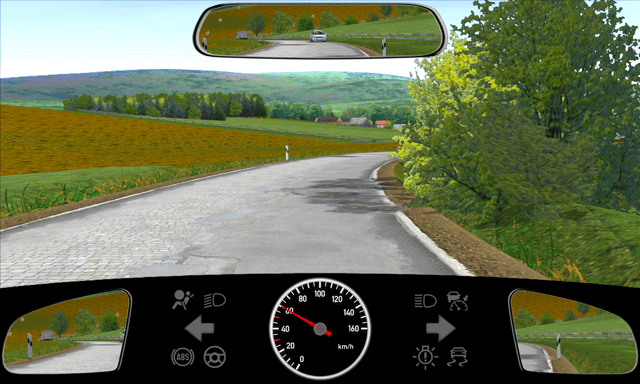
Spiegazione
There is a long curve in front of you, the end of which you cannot see. A fast-moving vehicle could come towards you from there and cut your lane. The road surface is also uneven and does not have an even surface. So anticipate insufficient grip and drive at an adapted speed.
-
Domanda 14 di 16
Perché svoltare a destra qui potrebbe essere pericoloso?
1.1.03-1164 Punti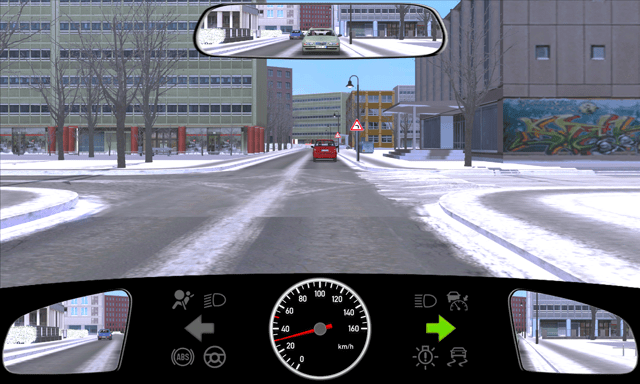
Spiegazione
The winter weather makes the road slippery and increases the braking distance at the intersection. Your car or oncoming vehicles could skid or slide away uncontrollably. Therefore, reduce your speed in good time and do not brake abruptly. The road on the right is still full of snow and therefore even slicker. Watch out for pedestrians when turning. They always have priority when you turn.
-
Domanda 15 di 16
Qual è la procedura corretta da seguire in questa situazione?
1.1.03-1203 Punti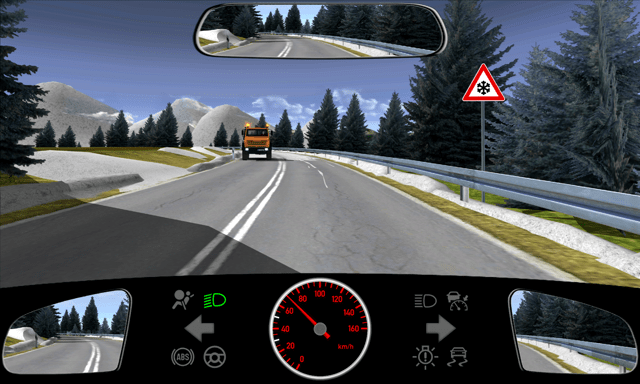
Spiegazione
Drive carefully, slowly and avoid abrupt steering or braking, because slippery snow or ice can occur at any time.
-
Domanda 16 di 16
Mentre guidi, improvvisamente inizia a piovere forte. Cosa dovresti fare?
1.1.03-1214 PuntiSpiegazione
Extra care should be taken when driving in heavy rain. This includes adjusting speed, increasing the safe distance and avoiding heavy acceleration, which creates a risk of slipping.