
2.1.03 Condizioni di strada e meteorologiche
Regola d'oro ⭐
Maltempo = Meno aderenza + Spazio di frenata più lungo + Scarsa visibilità.
👉 Ridurre sempre la velocità, aumentare la distanza ed evitare sterzate o frenate improvvise.
🌧️ Pioggia e strade bagnate
- La prima pioggia dopo la siccità crea una pellicola d'olio scivolosa.
- Lo spazio di frenata diventa più lungo.
- La visibilità peggiora a causa degli spruzzi d'acqua e della visiera appannata.
- Evitare frenate o accelerazioni improvvise.
- Aumentare subito la distanza di sicurezza.
- La segnaletica stradale diventa molto scivolosa quando è bagnata.
La “prima pioggia dopo la siccità” è particolarmente pericolosa.
💧Aquaplaning
- Si verifica ad alta velocità su strade bagnate.
- I pneumatici perdono il contatto con la strada.
- Non è possibile sterzare o frenare correttamente.
- Il rischio è maggiore in presenza di solchi di ruote e acqua stagnante.
- Togli lentamente il piede dall'acceleratore.
- Mantenere il volante dritto.
- NON frenare improvvisamente.
🌬️Venti trasversali
- Il pericolo aumenta vicino a ponti, tunnel e camion.
- Le motociclette possono sterzare improvvisamente lateralmente.
- La scia del camion cambia improvvisamente la pressione del vento.
- L’alta velocità rende i venti trasversali più pericolosi.
Ridurre la velocità e controsterzare con cautela.
⚠️ Superfici scivolose
- Segnaletica stradale
- Macchie d'olio
- Ciottoli
- Foglie e sabbia
- Tombino e rotaie del tram
- Strade bagnate e ghiaia
Aumento del rischio di scivolamento e caduta.
🌫️ Nebbia e scarsa visibilità
- Utilizzare i fari anabbaglianti.
- Fendinebbia posteriore solo al di sotto di 50 m di visibilità.
- Velocità massima con retronebbia = 50 km/h.
- Non guidare sulla linea centrale.
- Orientarsi sul lato destro della strada.
In caso di nebbia NON sono ammesse le sole luci di parcheggio.
❄️ Neve e ghiaccio
- La strada diventa estremamente scivolosa.
- I cumuli di neve riducono la visibilità.
- Lo spazio di frenata aumenta notevolmente.
- Evitare i sorpassi nel fango.
- Guidare dolcemente senza sterzare a scatti.
Frenare presto e guidare in modo prevedibile.
🏍️Rischi Speciali Moto
- I venti trasversali possono spingere la motocicletta lateralmente.
- La segnaletica orizzontale delle corsie bagnate è molto scivolosa.
- I binari del tram devono essere attraversati il più perpendicolarmente possibile.
- I ciottoli riducono fortemente la presa.
- Foglie, sabbia e olio aumentano il rischio di caduta in curva.
- Mantenere una distanza sufficiente durante la guida in gruppo.
- Evitare frenate brusche in piega.
- La ruota posteriore potrebbe bloccarsi più facilmente su strade bagnate.
🧠 Formula per la memoria rapida
🌧️ Pioggia = Scivoloso + Scarsa visibilità
💧 Aquaplaning = Senza sterzata + Senza frenata
🌬️ Vento al traverso = Controsterzare con attenzione
❄️ Neve/ghiaccio = Frena presto + Guida lentamente
⚠️ Superfici scivolose = Evitare movimenti bruschi
Domande di Pratica (21)
-
Domanda 1 di 21
Cosa bisogna ricordare quando nella propria corsia sono presenti i binari del tram?
2.1.03-0114 PuntiSpiegazione
Tramlines are made of metal which is slippery. A motorcycle therefore has a higher risk of sliding and falling on them. When crossing you should try to be as perpendicular to them as possible to avoid slipping
-
Domanda 2 di 21
Quali sono le cause dell'aquaplaning (slittamento su strade bagnate) su superfici stradali bagnate?
2.1.03-0155 PuntiSpiegazione
Aquaplaning - also known as hydroplaning - occurs when the tread depth of the tires is too low to displace the accumulated amount of water or when the amount of water to be discharged is too large due to a high speed (from 60 km/h). In addition, wheel ruts in the road, in which water accumulates, favor this effect.
-
Domanda 3 di 21
Quali possono essere le cause di un improvviso peggioramento del manto stradale?
2.1.03-0253 PuntiSpiegazione
As the road surface deteriorates, it always results in a change and deterioration of traction. As the wheels lose stiction, the vehicle is slipping and skidding faster. The tire noise also depends on the condition of the road surface and changes when, for example, the road turns from a paved road to a cobblestone track.
-
Domanda 4 di 21
Qual è la linea d'azione corretta?
2.1.03-0285 PuntiSpiegazione
While overtaking a cyclist, the oncoming truck also partly gets on your lane. Brake and drive as far to the right as possible.
-
Domanda 5 di 21
Cosa dovresti preparare qui?
2.1.03-0313 Punti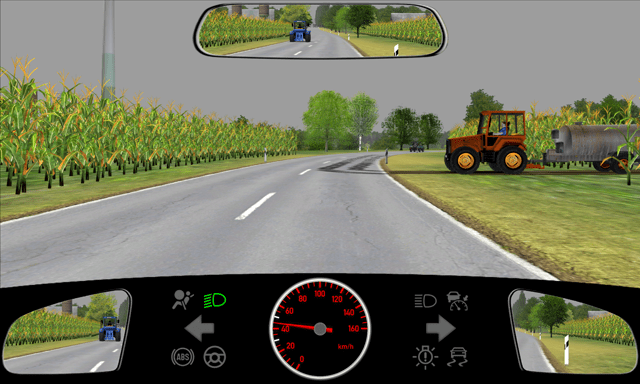
Spiegazione
Dirt on the road can increase (not decrease) the braking distance and could make the road more slippery thus affecting the stability of your vehicles
-
Domanda 6 di 21
Mentre guidi, ti imbatti inaspettatamente in un tratto rettilineo di strada con ghiaia sciolta. Qual è la procedura corretta da seguire?
2.1.03-0324 PuntiSpiegazione
On the straight unexpected section with rolling gravel you should carefully reduce your speed for safety reasons and maintain your driving line as much as possible.
-
Domanda 7 di 21
Qual è la giusta linea d'azione ora?
2.1.03-0334 PuntiSpiegazione
Due to the bad weather conditions, you should reduce your speed and avoid jerky steering movements (see danger sign) as you could otherwise skid.
-
Domanda 8 di 21
Quali possono essere gli effetti dell'aquaplaning?
2.1.03-0344 PuntiSpiegazione
In the event of aquaplaning, your vehicle has no direct contact with the road surface, so the steering command and the braking command cannot be implemented.
-
Domanda 9 di 21
Soffia un forte vento laterale. Quando sussiste il rischio che la motocicletta si sposti lateralmente ad alta velocità?
2.1.03-0353 PuntiSpiegazione
Wind conditions change when overtaking a truck, when driving up a bridge and when leaving a tunnel. Be prepared for crosswinds.
-
Domanda 10 di 21
Qual è la procedura corretta da seguire in questa situazione?
2.1.03-0363 Punti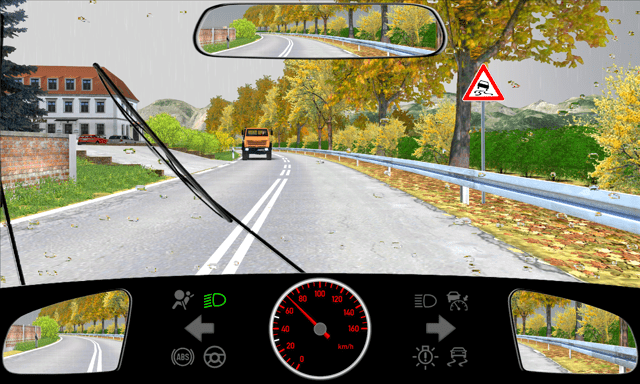
Spiegazione
The traffic sign indicates a risk of skidding and sliding. To avoid skidding, you should reduce your speed, especially when it is raining and leaves are falling on the road, as is the case here. Braking hard, accelerating hard or steering jerkily can cause the tyres to lose their grip and you could skid or slide.
-
Domanda 11 di 21
A cosa devi prepararti qui?
2.1.03-0374 Punti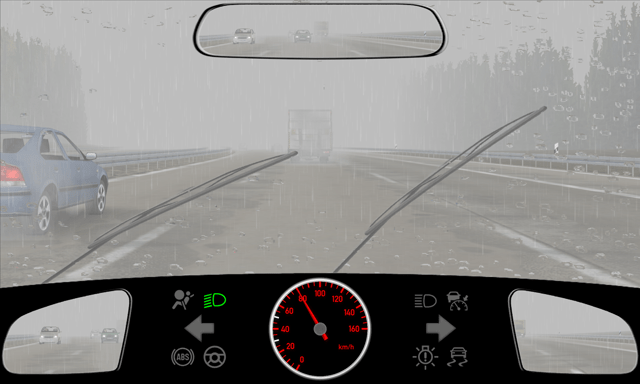
Spiegazione
Because of the rain, you should be prepared for the fact that other vehicles will not be able to see your vehicle and that your braking distance will be longer due to the reduced grip.
-
Domanda 12 di 21
In quali punti di sorpasso si corre un rischio particolare?
2.1.03-0384 Punti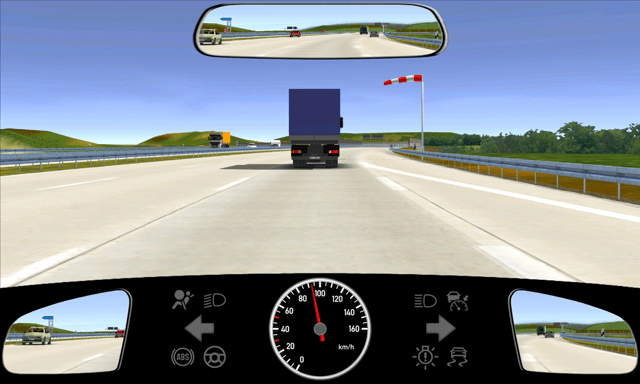
Spiegazione
If there is a strong side wind from the right, you as a motorist are particularly at risk if, when driving off-road, you overtake in the slipstream of a truck. This hazard arises from the fact that strong cross winds from the right push your vehicle to the left, whereupon you automatically countersteer. As you overtake a truck, you slipstream into it; the crosswind is gone instantly and you have to adjust the steering. As soon as you pull out of the slipstream, the pressure starts up again with the crosswind; You have to countersteer again.
-
Domanda 13 di 21
Cosa potrebbe succedere se si affronta una curva in prossimità della segnaletica orizzontale?
2.1.03-0394 Punti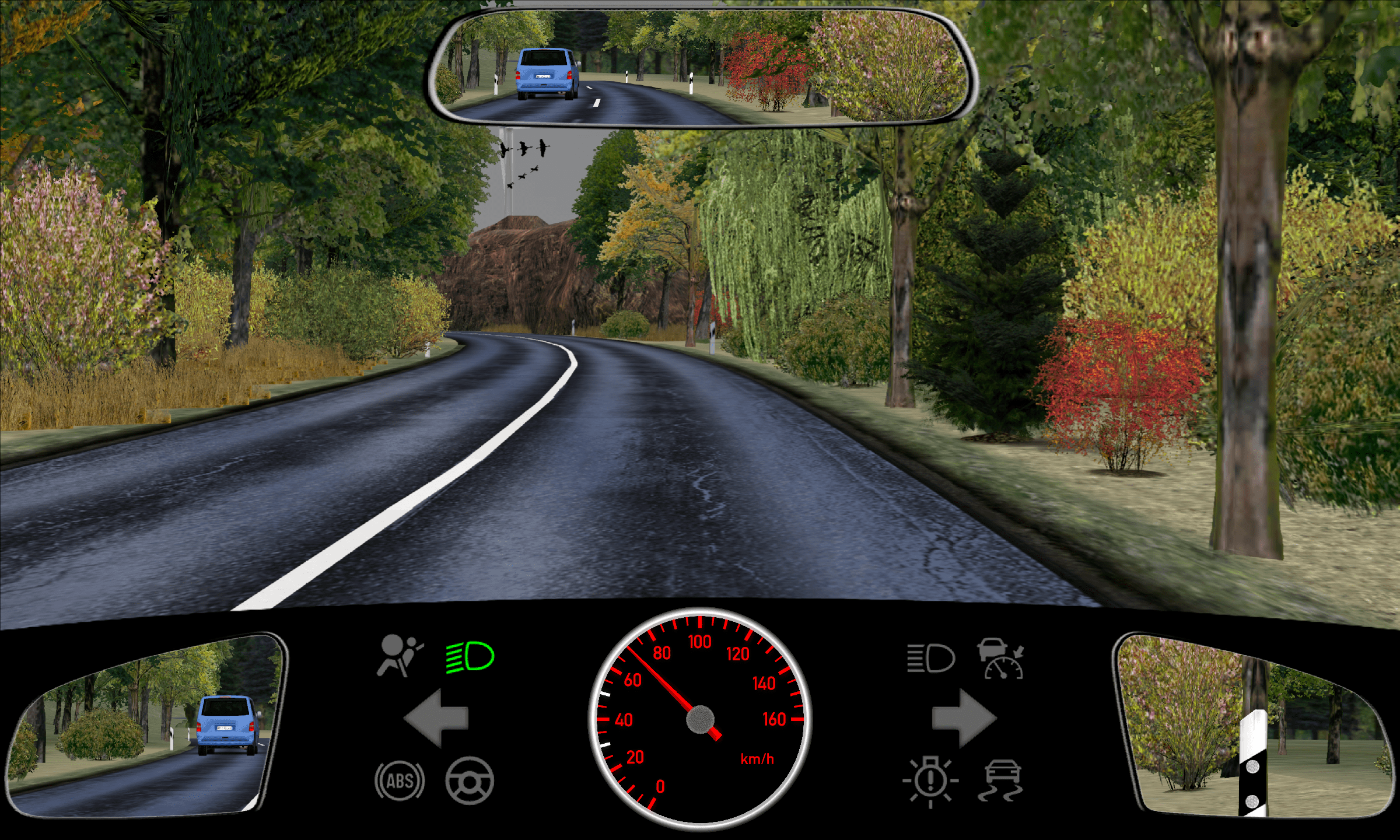
-
Domanda 14 di 21
Quali fattori possono aumentare il rischio di caduta in moto durante la percorrenza di una curva?
2.1.03-0403 PuntiSpiegazione
Oil on the road increases the risk of falling when cornering, as the tyres' grip is significantly reduced due to the slippery surface. Unevenness in the road surface, such as bumps, reduces the grip of the tyres and therefore increases the risk of falling.
-
Domanda 15 di 21
Come si può ridurre il rischio di cadute in presenza di segnaletica stradale bagnata?
2.1.03-0413 PuntiSpiegazione
As the road markings are slippery, especially when wet, you should avoid driving over them if possible. If it is not possible to drive around them, you should take the shortest route across them to minimise the risk of falling. Due to the wetness, you should avoid accelerating or braking here to minimise the risk of falling.
-
Domanda 16 di 21
Cosa bisogna aspettarsi quando si guida su strade acciottolate bagnate?
2.1.03-0423 PuntiSpiegazione
An uneven and wet road surface and therefore less grip increases the risk of the rear wheel spinning or slipping when accelerating. When braking on wet cobblestones, the tendency to lock up is increased, which can cause the rear wheel to slip sideways more quickly. Locking tendency means that the front wheel is loaded more and the rear wheel is unloaded when braking.
-
Domanda 17 di 21
Cosa bisogna tenere in considerazione quando si guida una motocicletta a basse temperature?
2.1.03-0433 Punti -
Domanda 18 di 21
Cosa devi prevedere in questa situazione?
2.1.03-0444 Punti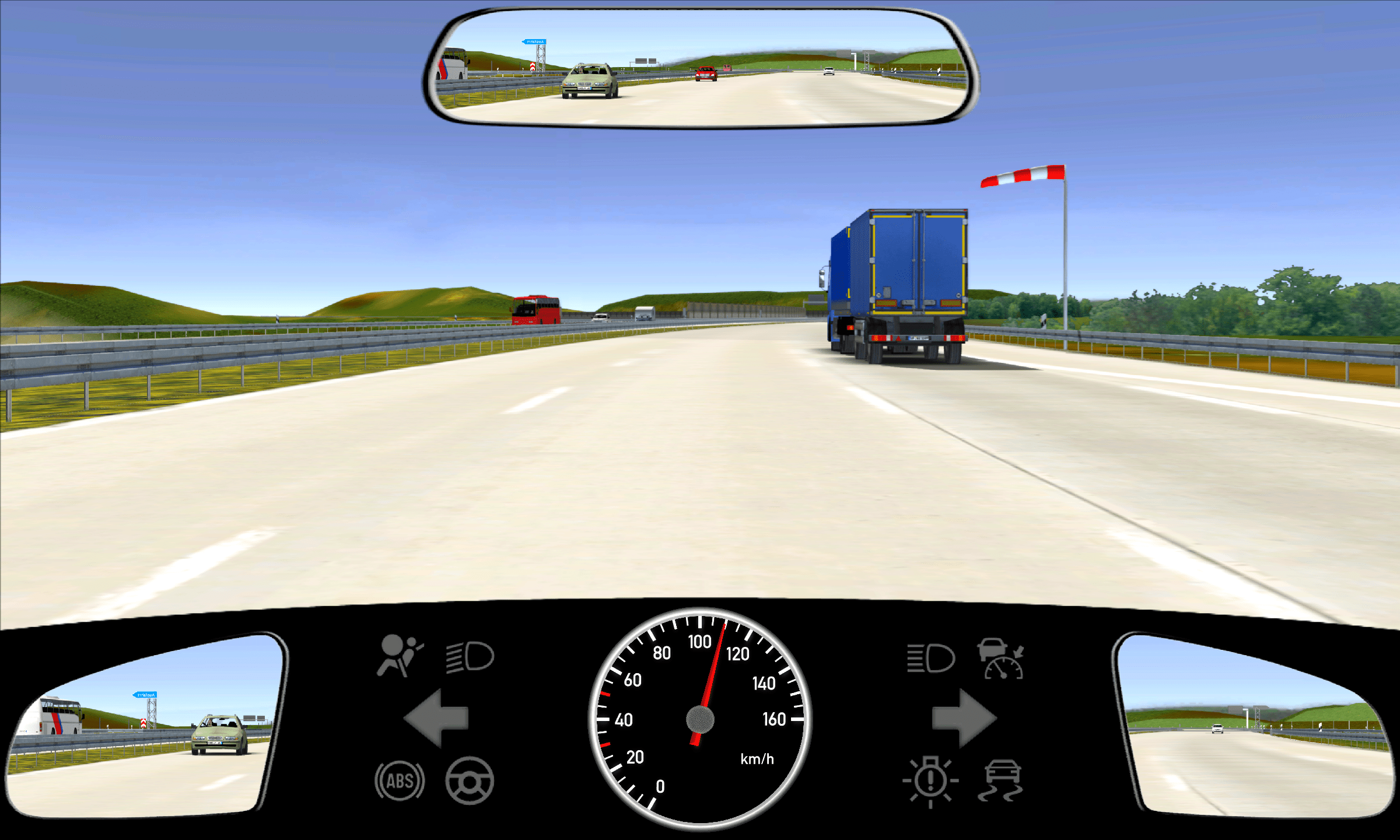
Spiegazione
You can see from the windsock that a strong wind is blowing from the right. The strong wind could move your vehicle to the left. Be prepared to steer to the right. In addition, when entering the slipstream of the truck, you must be prepared for your vehicle to be moved to the right because its large surface area will keep out the crosswind. Be prepared to steer to the left to avoid colliding with the truck.
-
Domanda 19 di 21
Le forti piogge hanno provocato la formazione di grandi pozzanghere sulla carreggiata. Qual è la procedura corretta da seguire ora?
2.1.03-0453 Punti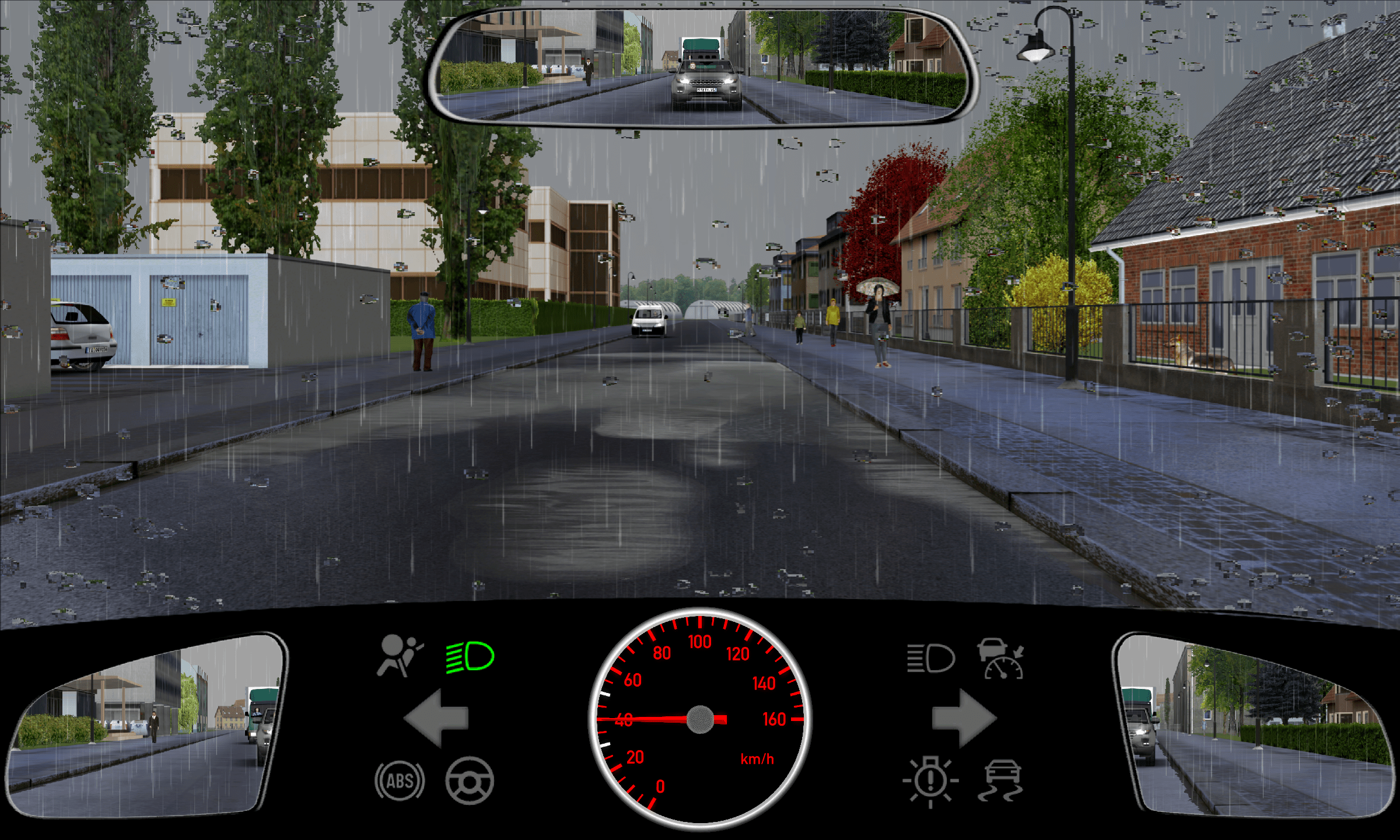
-
Domanda 20 di 21
Cosa bisogna aspettarsi alla guida quando, dopo un lungo periodo di siccità, inizia a piovere?
2.1.03-0463 PuntiSpiegazione
Basically, you must always expect visibility through your helmet visor to be poorer in the rain and, if it is dry for a long time, a layer of dirt will remain on the road which can form a slippery film on the road surface when it rains, so you must expect the road to be particularly slippery.
-
Domanda 21 di 21
Quando si sorpassano diversi camion, ci si trova in questa situazione. Cosa fare?
2.1.03-1114 Punti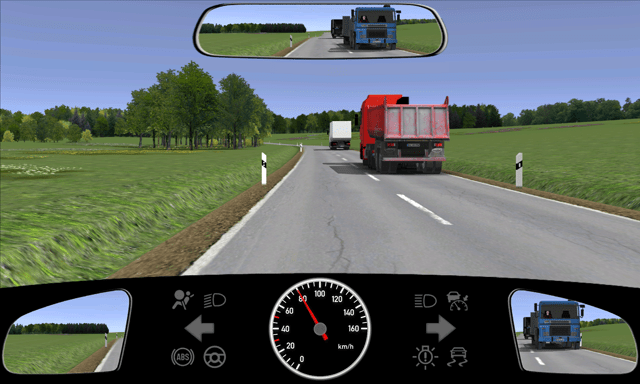
Spiegazione
The visibility is very poor due to the weather and the road is not sufficiently visible. In order not to endanger anyone, you should stop the overtaking process as quickly as possible and ensure that you are at a safe distance from the vehicle in front of you when you go back into lane.