
2.1.03 Condiții rutiere și meteorologice
Regula de aur ⭐
Vreme rea = aderență mai mică + distanță de frânare mai mare + vizibilitate slabă.
👉 Reduceți întotdeauna viteza, măriți distanța și evitați direcția sau frânarea bruscă.
🌧️ Ploaie și drumuri umede
- Prima ploaie după vreme uscată creează o peliculă de ulei alunecoasă.
- Distanța de frânare devine mai mare.
- Vizibilitatea se înrăutățește din cauza stropirii cu apă și a vizierei aburite.
- Evitați frânarea sau accelerația bruscă.
- Măriți imediat distanța de siguranță.
- Marcajele rutiere devin foarte alunecoase când sunt ude.
„Prima ploaie după secetă” este deosebit de periculoasă.
💧 Acvaplanare
- Apare cu viteză mare pe drumuri ude.
- Anvelopele pierd contactul cu drumul.
- Nu puteți vira sau frâna corect.
- Riscul este mai mare în șanțurile roților și în apa stătătoare.
- Luați piciorul de pe gaz încet.
- Păstrați volanul drept.
- NU frânați brusc.
🌬️ Vânturi transversale
- Pericolul crește în apropierea podurilor, tunelurilor și camioanelor.
- Motocicletele pot vira brusc în lateral.
- Slipstream camionului modifică brusc presiunea vântului.
- Viteza mare face vânturile transversale mai periculoase.
Reduceți viteza și contravirați cu atenție.
⚠️ Suprafețe alunecoase
- Marcaje ale benzilor
- Petice de ulei
- Pietrele pietruite
- Frunze și nisip
- Cămine și șine de tramvai
- Drumuri umede și pietriș
Risc crescut de derapare și cădere.
🌫️ Ceață și vizibilitate slabă
- Folosiți faruri cu faza scurtă.
- Lumina de ceață spate doar sub 50 m vizibilitate.
- Viteza maxima cu far de ceata spate = 50 km/h.
- Nu conduceți pe linia centrală.
- Orientați-vă pe partea dreaptă a drumului.
Numai luminile de parcare NU sunt permise în ceață.
❄️ Zăpadă și gheață
- Drumul devine extrem de alunecos.
- Momentele de zăpadă reduc vizibilitatea.
- Distanța de frânare crește foarte mult.
- Evitați depășirea în nămol.
- Conduceți fără probleme, fără direcție sacadată.
Frânează devreme și conduce previzibil.
🏍️ Riscuri speciale pentru motociclete
- Vânturile transversale pot împinge motocicleta în lateral.
- Marcajele benzii umede sunt foarte alunecoase.
- Șinele tramvaiului trebuie traversate cât mai perpendicular posibil.
- Pietrul pietruit reduce puternic aderența.
- Frunzele, nisipul și uleiul cresc riscul de cădere în curbe.
- Păstrați o distanță suficientă în timpul călătoriei în grup.
- Evitați frânarea bruscă în timp ce vă înclinați.
- Roata din spate se poate bloca mai ușor pe drumuri ude.
🧠 Formula rapidă pentru memorie
🌧️ Ploaie = Alunecos + Vizibilitate slabă
💧 Aquaplaning = Fără direcție + Frânare
🌬️ Vânt transversal = Contravirați cu atenție
❄️ Zăpadă/Gheață = Frânare devreme + Conduceți încet
⚠️ Suprafețe alunecoase = Evitați mișcările bruște
Întrebări Practice (21)
-
Întrebarea 1 din 21
La ce trebuie să daţi atenţie dacă pe banda dv. de circulaţie se află şine de tramvai?
2.1.03-0114 PuncteExplicație
Tramlines are made of metal which is slippery. A motorcycle therefore has a higher risk of sliding and falling on them. When crossing you should try to be as perpendicular to them as possible to avoid slipping
-
Întrebarea 2 din 21
Ce poate duce, pe pavaj ud, la acuaplaning (alunecuş pe apă)?
2.1.03-0155 PuncteExplicație
Aquaplaning - also known as hydroplaning - occurs when the tread depth of the tires is too low to displace the accumulated amount of water or when the amount of water to be discharged is too large due to a high speed (from 60 km/h). In addition, wheel ruts in the road, in which water accumulates, favor this effect.
-
Întrebarea 3 din 21
La ce poate duce înrăutăţirea bruscă a stării carosabilului?
2.1.03-0253 PuncteExplicație
As the road surface deteriorates, it always results in a change and deterioration of traction. As the wheels lose stiction, the vehicle is slipping and skidding faster. The tire noise also depends on the condition of the road surface and changes when, for example, the road turns from a paved road to a cobblestone track.
-
Întrebarea 4 din 21
Care va fi comportamentul dumneavoastră corect?
2.1.03-0285 PuncteExplicație
While overtaking a cyclist, the oncoming truck also partly gets on your lane. Brake and drive as far to the right as possible.
-
Întrebarea 5 din 21
La ce trebuie să vă așteptați în această situație?
2.1.03-0313 Puncte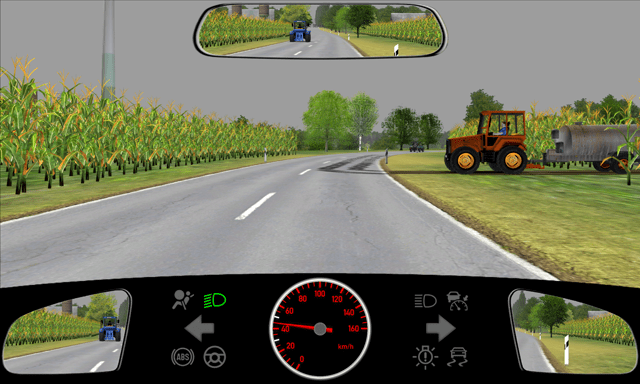
Explicație
Dirt on the road can increase (not decrease) the braking distance and could make the road more slippery thus affecting the stability of your vehicles
-
Întrebarea 6 din 21
Circulați în mod neașteptat pe o secțiune de drum dreaptă, acoperită cu criblură. Cum procedați corect?
2.1.03-0324 PuncteExplicație
On the straight unexpected section with rolling gravel you should carefully reduce your speed for safety reasons and maintain your driving line as much as possible.
-
Întrebarea 7 din 21
Cum procedați corect în această situație?
2.1.03-0334 PuncteExplicație
Due to the bad weather conditions, you should reduce your speed and avoid jerky steering movements (see danger sign) as you could otherwise skid.
-
Întrebarea 8 din 21
Care poate fi o consecință a acvaplanării?
2.1.03-0344 PuncteExplicație
In the event of aquaplaning, your vehicle has no direct contact with the road surface, so the steering command and the braking command cannot be implemented.
-
Întrebarea 9 din 21
Bate un vânt puternic din lateral. Când există pericolul ca motocicleta dumneavoastră să fie deplasată lateral, în condiții de viteză mare?
2.1.03-0353 PuncteExplicație
Wind conditions change when overtaking a truck, when driving up a bridge and when leaving a tunnel. Be prepared for crosswinds.
-
Întrebarea 10 din 21
Cum procedați corect în această situație?
2.1.03-0363 Puncte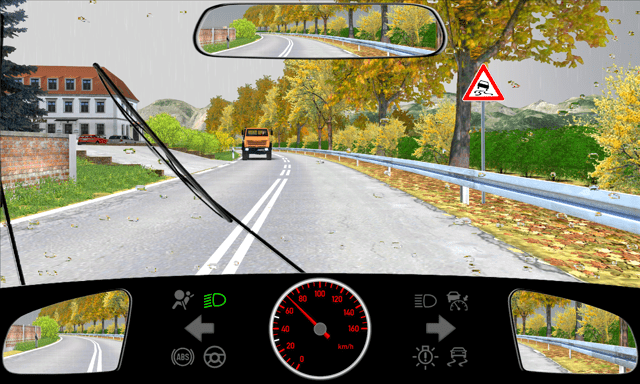
Explicație
The traffic sign indicates a risk of skidding and sliding. To avoid skidding, you should reduce your speed, especially when it is raining and leaves are falling on the road, as is the case here. Braking hard, accelerating hard or steering jerkily can cause the tyres to lose their grip and you could skid or slide.
-
Întrebarea 11 din 21
La ce trebuie să vă așteptați în această situație?
2.1.03-0374 Puncte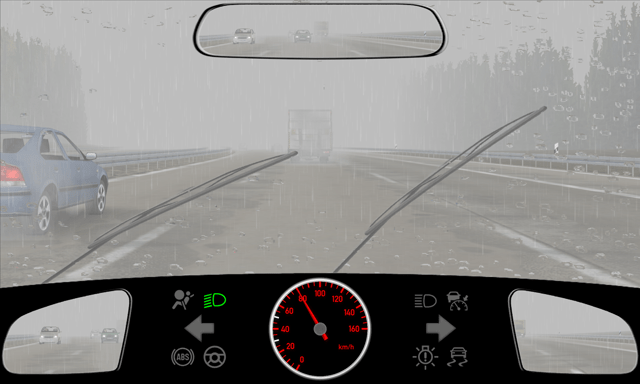
Explicație
Because of the rain, you should be prepared for the fact that other vehicles will not be able to see your vehicle and that your braking distance will be longer due to the reduced grip.
-
Întrebarea 12 din 21
În această situație, când sunteți expus unui pericol deosebit în timpul manevrei de depășire?
2.1.03-0384 Puncte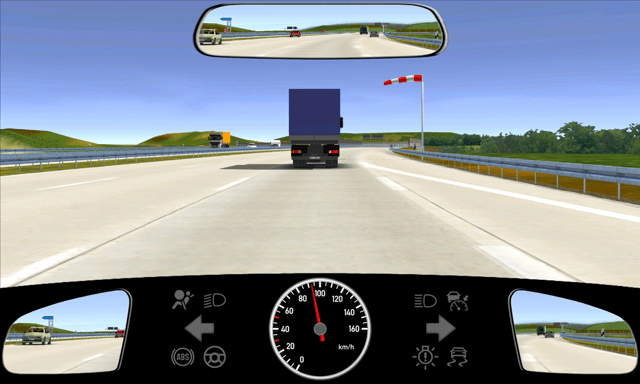
Explicație
If there is a strong side wind from the right, you as a motorist are particularly at risk if, when driving off-road, you overtake in the slipstream of a truck. This hazard arises from the fact that strong cross winds from the right push your vehicle to the left, whereupon you automatically countersteer. As you overtake a truck, you slipstream into it; the crosswind is gone instantly and you have to adjust the steering. As soon as you pull out of the slipstream, the pressure starts up again with the crosswind; You have to countersteer again.
-
Întrebarea 13 din 21
Care poate fi urmarea, dacă luați curba prea aproape de linia de marcaj de pe carosabil?
2.1.03-0394 Puncte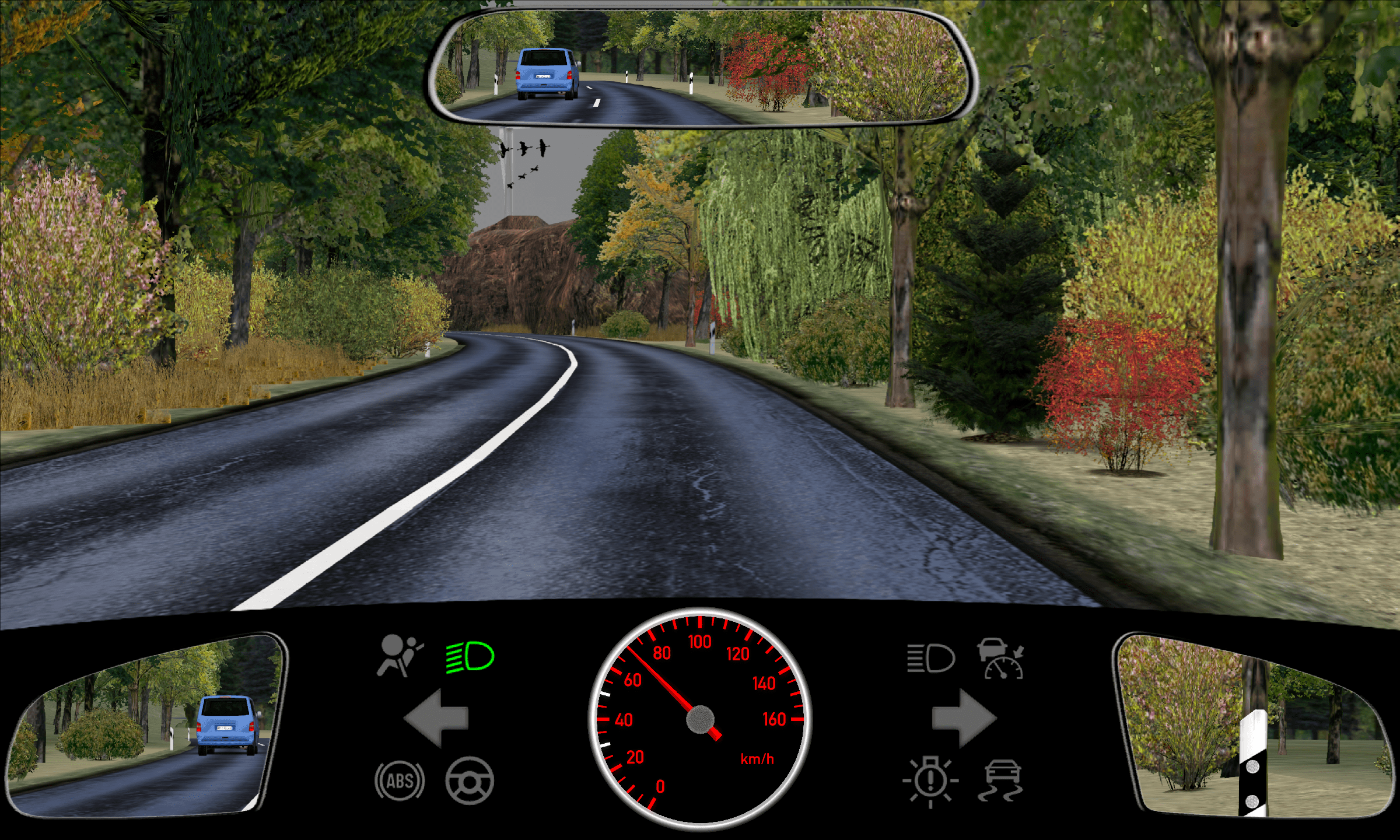
-
Întrebarea 14 din 21
Ce poate mări pericolul de răsturnare în curbe?
2.1.03-0403 PuncteExplicație
Oil on the road increases the risk of falling when cornering, as the tyres' grip is significantly reduced due to the slippery surface. Unevenness in the road surface, such as bumps, reduces the grip of the tyres and therefore increases the risk of falling.
-
Întrebarea 15 din 21
Cum reduceți pericolul de răsturnare când marcajele de pe carosabil sunt ude?
2.1.03-0413 PuncteExplicație
As the road markings are slippery, especially when wet, you should avoid driving over them if possible. If it is not possible to drive around them, you should take the shortest route across them to minimise the risk of falling. Due to the wetness, you should avoid accelerating or braking here to minimise the risk of falling.
-
Întrebarea 16 din 21
La ce trebuie să vă așteptați în caz de carosabil pavat cu piatră cubică udă?
2.1.03-0423 PuncteExplicație
An uneven and wet road surface and therefore less grip increases the risk of the rear wheel spinning or slipping when accelerating. When braking on wet cobblestones, the tendency to lock up is increased, which can cause the rear wheel to slip sideways more quickly. Locking tendency means that the front wheel is loaded more and the rear wheel is unloaded when braking.
-
Întrebarea 17 din 21
De ce trebuie să țineți cont când circulați cu un vehicul pe două roți la temperaturi exterioare joase?
2.1.03-0433 Puncte -
Întrebarea 18 din 21
La ce trebuie să vă așteptați în această situație?
2.1.03-0444 Puncte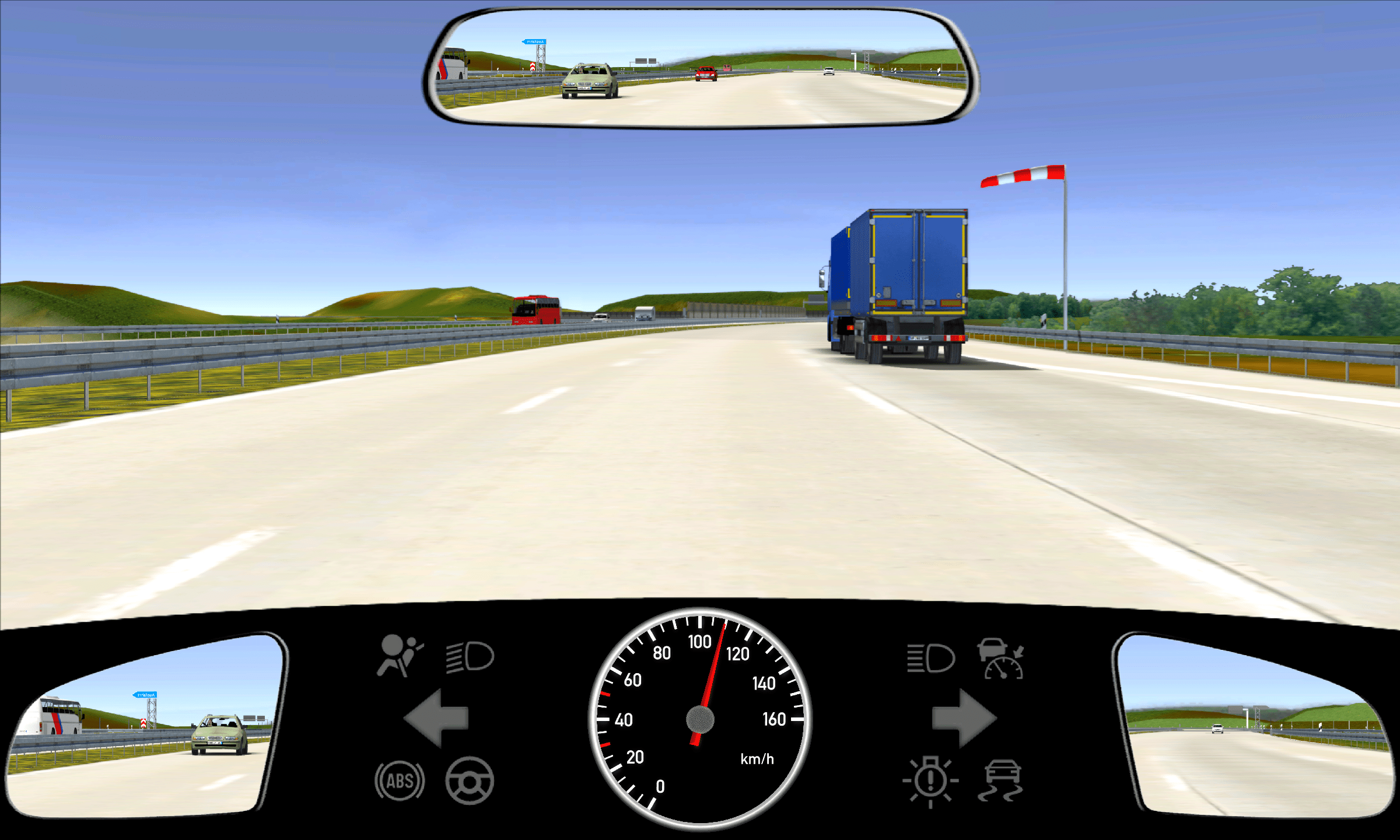
Explicație
You can see from the windsock that a strong wind is blowing from the right. The strong wind could move your vehicle to the left. Be prepared to steer to the right. In addition, when entering the slipstream of the truck, you must be prepared for your vehicle to be moved to the right because its large surface area will keep out the crosswind. Be prepared to steer to the left to avoid colliding with the truck.
-
Întrebarea 19 din 21
Din cauza ploii puternice s-au format băltoace mari pe carosabil. Cum vă comportați corect?
2.1.03-0453 Puncte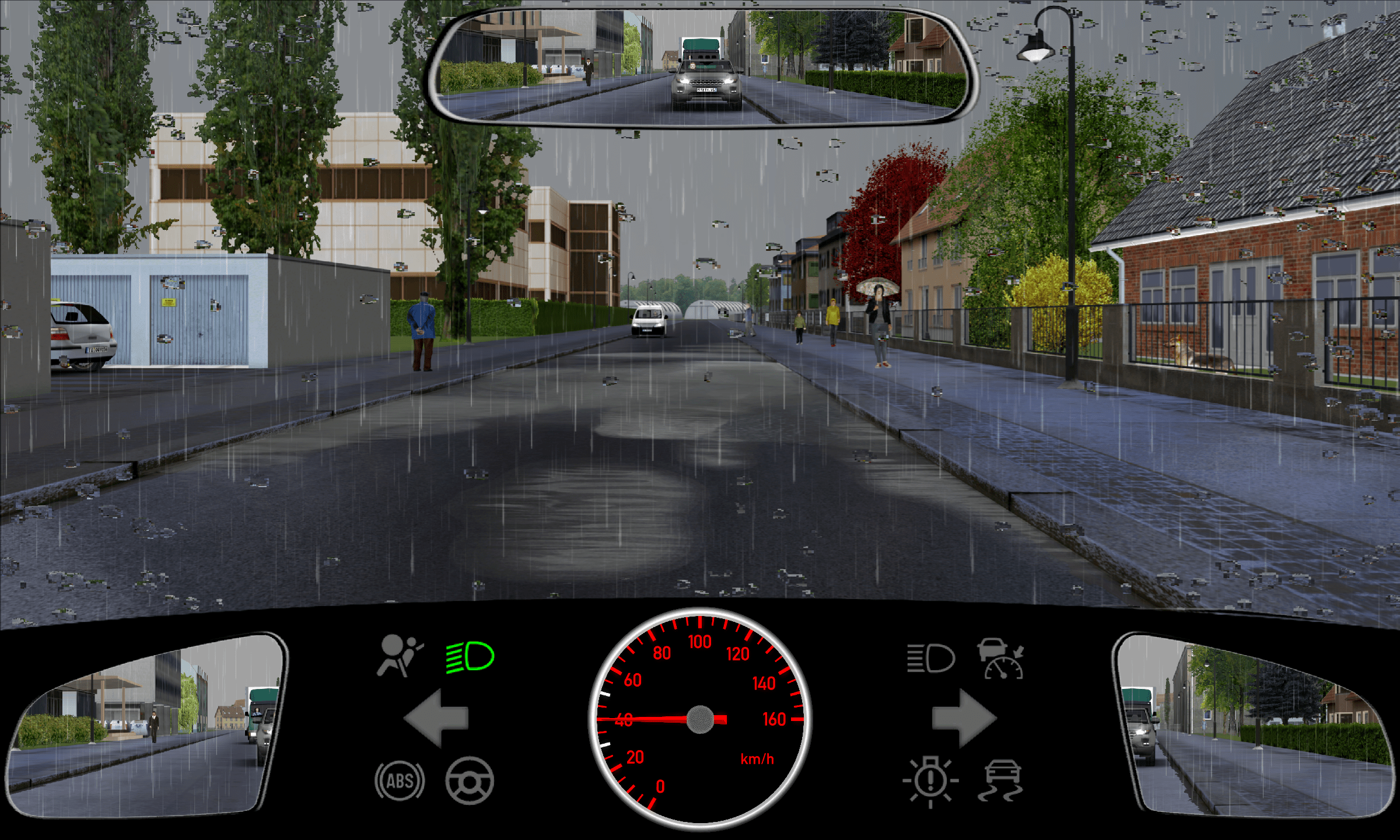
-
Întrebarea 20 din 21
La ce trebuie să vă așteptați în timpul mersului, dacă începe să plouă după o perioadă uscată mai lungă?
2.1.03-0463 PuncteExplicație
Basically, you must always expect visibility through your helmet visor to be poorer in the rain and, if it is dry for a long time, a layer of dirt will remain on the road which can form a slippery film on the road surface when it rains, so you must expect the road to be particularly slippery.
-
Întrebarea 21 din 21
La depăşirea mai multor autocamioane aţi ajuns în această situaţie. Care va fi comportamentul dumneavoastră acum?
2.1.03-1114 Puncte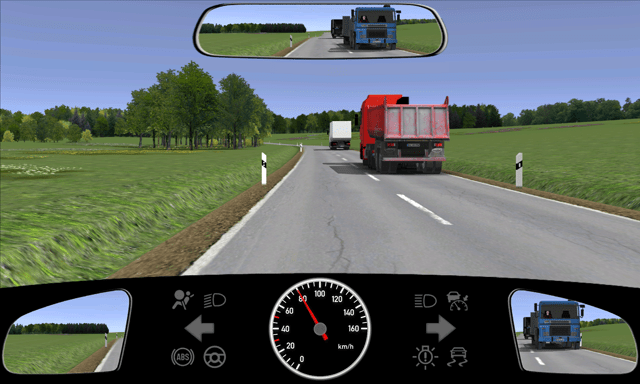
Explicație
The visibility is very poor due to the weather and the road is not sufficiently visible. In order not to endanger anyone, you should stop the overtaking process as quickly as possible and ensure that you are at a safe distance from the vehicle in front of you when you go back into lane.