
2.1.03 Condiciones de carretera y clima
Regla de oro ⭐
Mal tiempo = Menos agarre + Mayor distancia de frenado + Mala visibilidad.
👉 Reduzca siempre la velocidad, aumente la distancia y evite girar o frenar bruscamente.
🌧️ Lluvia y caminos mojados
- La primera lluvia después del tiempo seco crea una película de aceite resbaladiza.
- La distancia de frenado se hace más larga.
- La visibilidad empeora debido a las salpicaduras de agua y al visor empañado.
- Evite frenar o acelerar bruscamente.
- Incrementar la distancia de seguridad inmediatamente.
- Las marcas viales se vuelven muy resbaladizas cuando están mojadas.
La “primera lluvia después de la sequía” es especialmente peligrosa.
💧 aquaplaning
- Ocurre a alta velocidad en carreteras mojadas.
- Los neumáticos pierden contacto con la carretera.
- No puede girar ni frenar correctamente.
- El riesgo es mayor en los surcos de las ruedas y en el agua estancada.
- Quita el pie del acelerador lentamente.
- Mantenga el volante recto.
- NO frene repentinamente.
🌬️ Vientos cruzados
- El peligro aumenta cerca de puentes, túneles y camiones.
- Las motocicletas pueden virar repentinamente hacia los lados.
- La estela del camión cambia repentinamente la presión del viento.
- La alta velocidad hace que los vientos cruzados sean más peligrosos.
Reduzca la velocidad y contravire con cuidado.
⚠️ Superficies resbaladizas
- Marcas de carril
- parches de aceite
- Adoquines
- hojas y arena
- Alcantarillas y raíles de tranvía
- Carreteras mojadas y grava
Mayor riesgo de patinar y caer.
🌫️ Niebla y mala visibilidad
- Utilice luces bajas.
- Luz antiniebla trasera solo por debajo de 50 m de visibilidad.
- Velocidad máxima con luz antiniebla trasera = 50 km/h.
- No conduzca por la línea central.
- Oriéntate por el lado derecho de la carretera.
NO se permiten luces de estacionamiento solas en condiciones de niebla.
❄️ Nieve y hielo
- El camino se vuelve extremadamente resbaladizo.
- Los montones de nieve reducen la visibilidad.
- La distancia de frenado aumenta considerablemente.
- Evite adelantar en aguanieve.
- Conduzca suavemente y sin tirones.
Frene temprano y conduzca de manera predecible.
🏍️ Riesgos especiales de motocicletas
- El viento cruzado puede empujar la motocicleta hacia los lados.
- Las marcas de los carriles mojados son muy resbaladizas.
- Los raíles del tranvía deben cruzarse lo más perpendicularmente posible.
- Los adoquines reducen considerablemente el agarre.
- Las hojas, la arena y el aceite aumentan el riesgo de caídas en las curvas.
- Mantenga suficiente distancia al montar en grupo.
- Evite frenar bruscamente mientras está inclinado.
- La rueda trasera puede bloquearse más fácilmente en carreteras mojadas.
🧠 Fórmula de memoria rápida
🌧️ Lluvia = Resbaladizo + Mala visibilidad
💧 Aquaplaning = Sin dirección + Sin frenado
🌬️ Viento cruzado = contraviraje con cuidado
❄️ Nieve/Hielo = Frenar temprano + Conducir despacio
⚠️ Superficies resbaladizas = Evite movimientos bruscos
Preguntas de práctica (21)
-
Pregunta 1 de 21
¿Qué debe tener Ud. en cuenta si en su carril hay raíles de tranvía?
2.1.03-0114 puntosExplicación
Tramlines are made of metal which is slippery. A motorcycle therefore has a higher risk of sliding and falling on them. When crossing you should try to be as perpendicular to them as possible to avoid slipping
-
Pregunta 2 de 21
¿Qué puede provocar aquaplaning (deslizamiento incontrolado por presencia de agua) en una calzada mojada?
2.1.03-0155 puntosExplicación
Aquaplaning - also known as hydroplaning - occurs when the tread depth of the tires is too low to displace the accumulated amount of water or when the amount of water to be discharged is too large due to a high speed (from 60 km/h). In addition, wheel ruts in the road, in which water accumulates, favor this effect.
-
Pregunta 3 de 21
¿Qué puede significar un repentino empeoramiento del estado de la calzada?
2.1.03-0253 puntosExplicación
As the road surface deteriorates, it always results in a change and deterioration of traction. As the wheels lose stiction, the vehicle is slipping and skidding faster. The tire noise also depends on the condition of the road surface and changes when, for example, the road turns from a paved road to a cobblestone track.
-
Pregunta 4 de 21
¿Qué es lo correcto?
2.1.03-0285 puntosExplicación
While overtaking a cyclist, the oncoming truck also partly gets on your lane. Brake and drive as far to the right as possible.
-
Pregunta 5 de 21
¿Para qué debe estar preparado en esta situación?
2.1.03-0313 puntos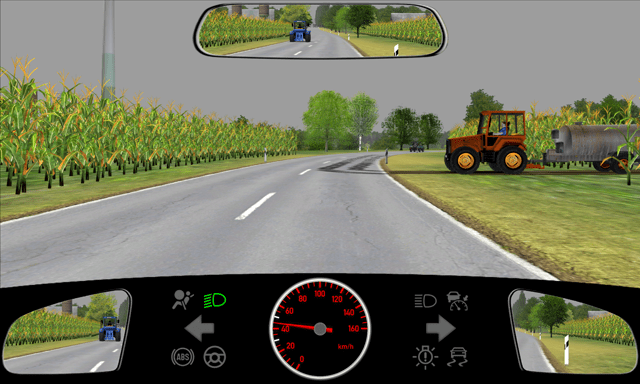
Explicación
Dirt on the road can increase (not decrease) the braking distance and could make the road more slippery thus affecting the stability of your vehicles
-
Pregunta 6 de 21
De improviso, se encuentra circulando por un tramo de vía recto con gravilla. ¿Qué es correcto hacer?
2.1.03-0324 puntosExplicación
On the straight unexpected section with rolling gravel you should carefully reduce your speed for safety reasons and maintain your driving line as much as possible.
-
Pregunta 7 de 21
¿Qué es correcto hacer en este momento?
2.1.03-0334 puntosExplicación
Due to the bad weather conditions, you should reduce your speed and avoid jerky steering movements (see danger sign) as you could otherwise skid.
-
Pregunta 8 de 21
¿A qué puede dar lugar el aquaplaning?
2.1.03-0344 puntosExplicación
In the event of aquaplaning, your vehicle has no direct contact with the road surface, so the steering command and the braking command cannot be implemented.
-
Pregunta 9 de 21
Sopla un fuerte viento transversal. ¿Cuándo existe riesgo, circulando a gran velocidad, de que su motocicleta sea desplazada lateralmente?
2.1.03-0353 puntosExplicación
Wind conditions change when overtaking a truck, when driving up a bridge and when leaving a tunnel. Be prepared for crosswinds.
-
Pregunta 10 de 21
¿Qué es correcto hacer en esta situación?
2.1.03-0363 puntos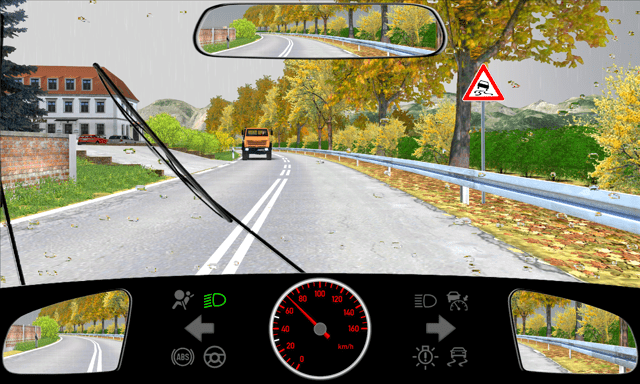
Explicación
The traffic sign indicates a risk of skidding and sliding. To avoid skidding, you should reduce your speed, especially when it is raining and leaves are falling on the road, as is the case here. Braking hard, accelerating hard or steering jerkily can cause the tyres to lose their grip and you could skid or slide.
-
Pregunta 11 de 21
¿Qué debería esperar que ocurra en esta situación?
2.1.03-0374 puntos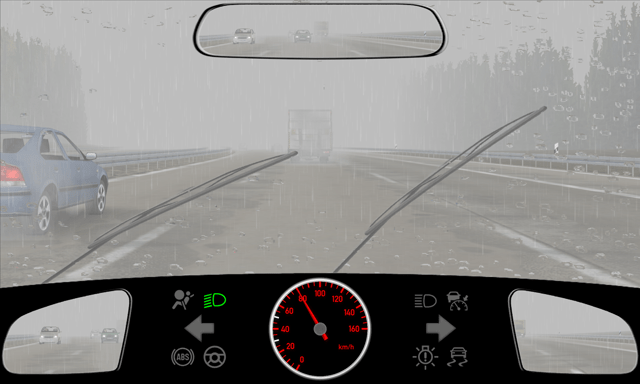
Explicación
Because of the rain, you should be prepared for the fact that other vehicles will not be able to see your vehicle and that your braking distance will be longer due to the reduced grip.
-
Pregunta 12 de 21
En esta situación, ¿qué momento de la maniobra de adelantamiento resulta especialmente peligroso?
2.1.03-0384 puntos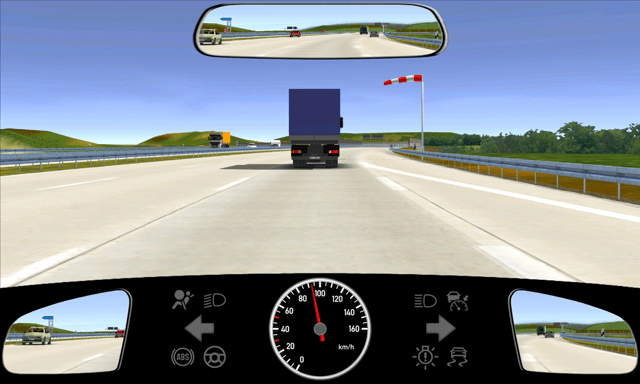
Explicación
If there is a strong side wind from the right, you as a motorist are particularly at risk if, when driving off-road, you overtake in the slipstream of a truck. This hazard arises from the fact that strong cross winds from the right push your vehicle to the left, whereupon you automatically countersteer. As you overtake a truck, you slipstream into it; the crosswind is gone instantly and you have to adjust the steering. As soon as you pull out of the slipstream, the pressure starts up again with the crosswind; You have to countersteer again.
-
Pregunta 13 de 21
¿Qué puede ocurrir como consecuencia de tomar la curva cerca de la marca vial?
2.1.03-0394 puntos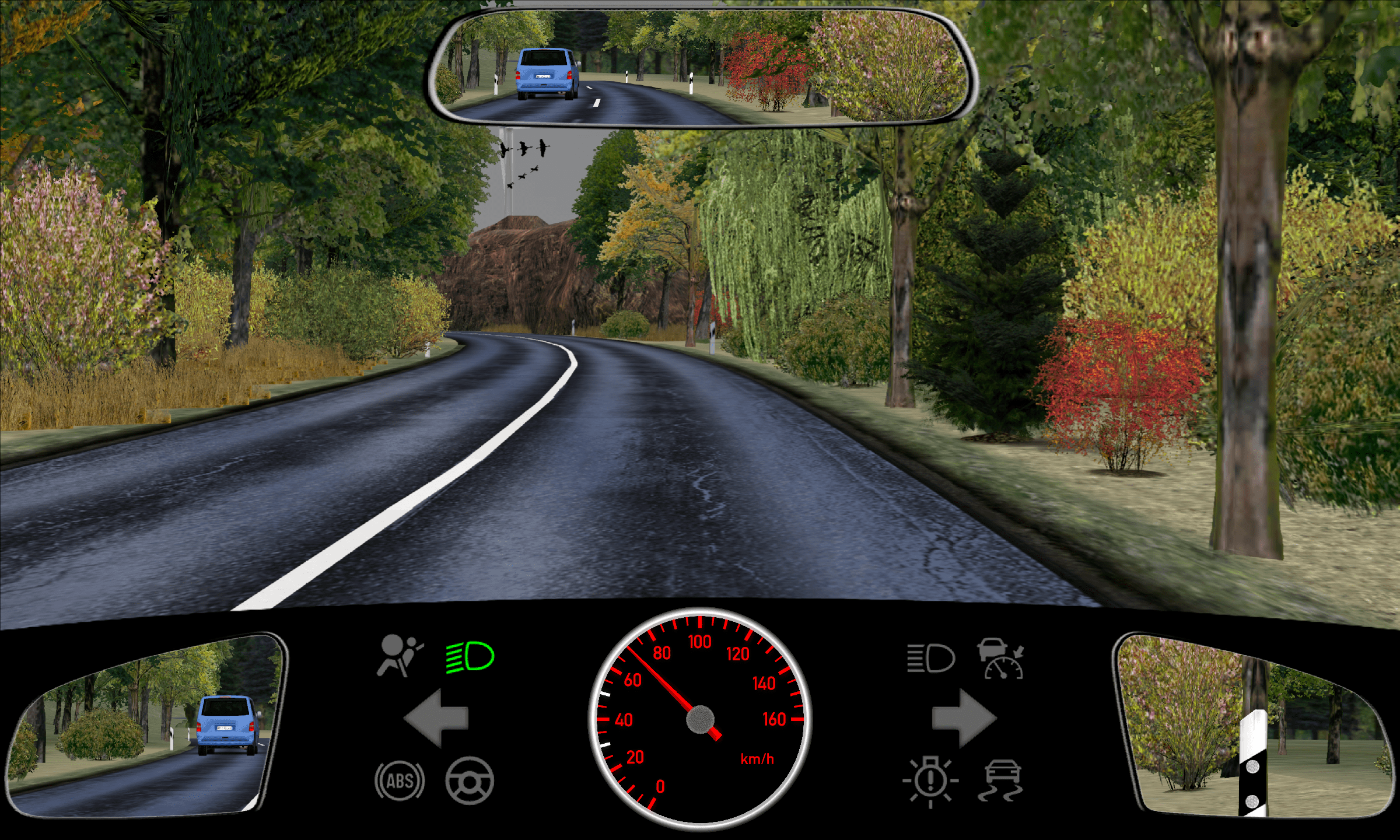
-
Pregunta 14 de 21
En las curvas, ¿qué puede aumentar el riesgo de caída?
2.1.03-0403 puntosExplicación
Oil on the road increases the risk of falling when cornering, as the tyres' grip is significantly reduced due to the slippery surface. Unevenness in the road surface, such as bumps, reduces the grip of the tyres and therefore increases the risk of falling.
-
Pregunta 15 de 21
En caso de que las marcas viales estén mojadas, ¿qué puede hacer para reducir el riesgo de caída?
2.1.03-0413 puntosExplicación
As the road markings are slippery, especially when wet, you should avoid driving over them if possible. If it is not possible to drive around them, you should take the shortest route across them to minimise the risk of falling. Due to the wetness, you should avoid accelerating or braking here to minimise the risk of falling.
-
Pregunta 16 de 21
¿Con qué tiene que contar al ir circulando por adoquinado mojado?
2.1.03-0423 puntosExplicación
An uneven and wet road surface and therefore less grip increases the risk of the rear wheel spinning or slipping when accelerating. When braking on wet cobblestones, the tendency to lock up is increased, which can cause the rear wheel to slip sideways more quickly. Locking tendency means that the front wheel is loaded more and the rear wheel is unloaded when braking.
-
Pregunta 17 de 21
¿Qué debería tener en cuenta al circular en un vehículo de dos ruedas a una temperatura exterior baja?
2.1.03-0433 puntos -
Pregunta 18 de 21
¿Con qué tiene que contar en esta situación?
2.1.03-0444 puntos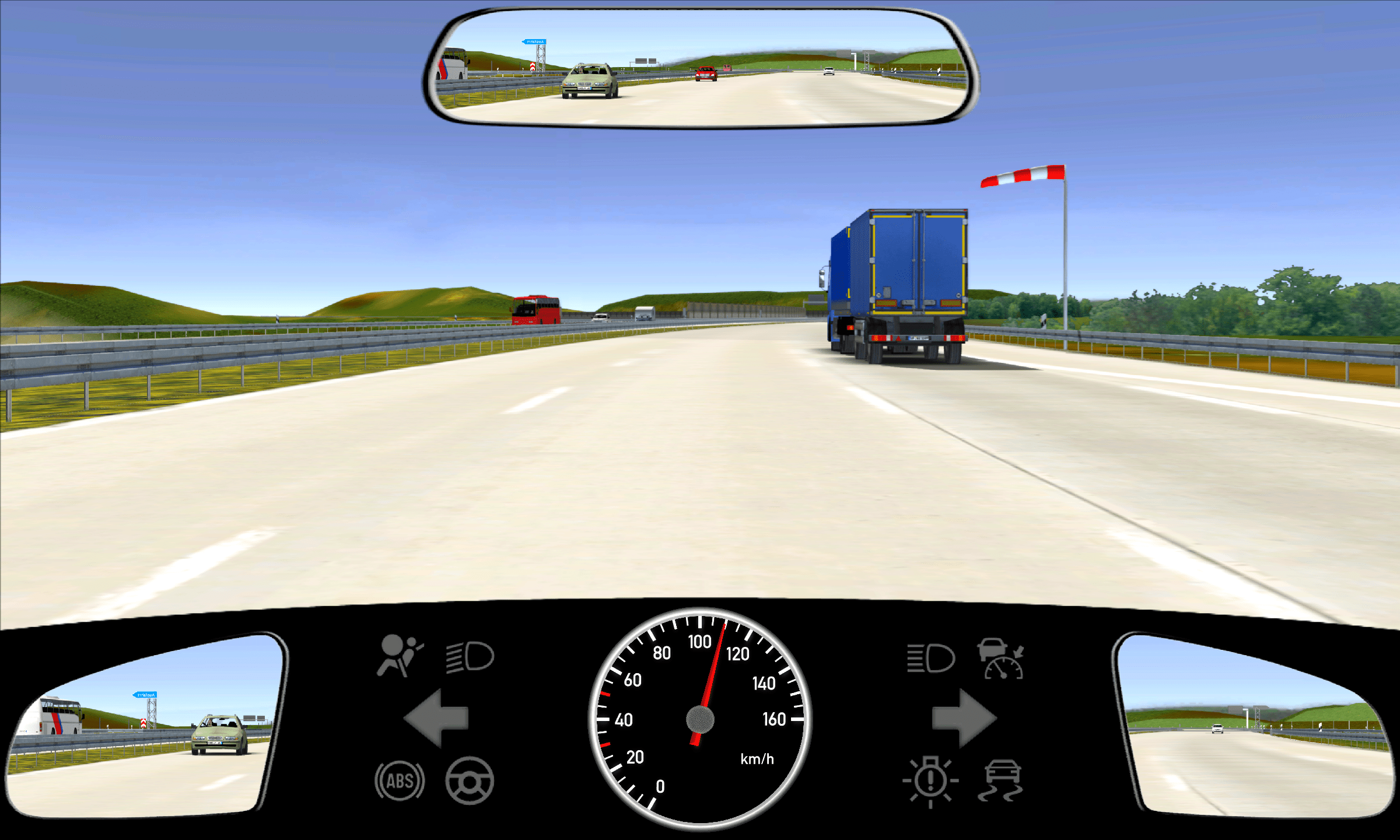
Explicación
You can see from the windsock that a strong wind is blowing from the right. The strong wind could move your vehicle to the left. Be prepared to steer to the right. In addition, when entering the slipstream of the truck, you must be prepared for your vehicle to be moved to the right because its large surface area will keep out the crosswind. Be prepared to steer to the left to avoid colliding with the truck.
-
Pregunta 19 de 21
Ha llovido con intensidad y se han formado grandes charcos en la calzada. ¿Qué es correcto hacer en esta situación?
2.1.03-0453 puntos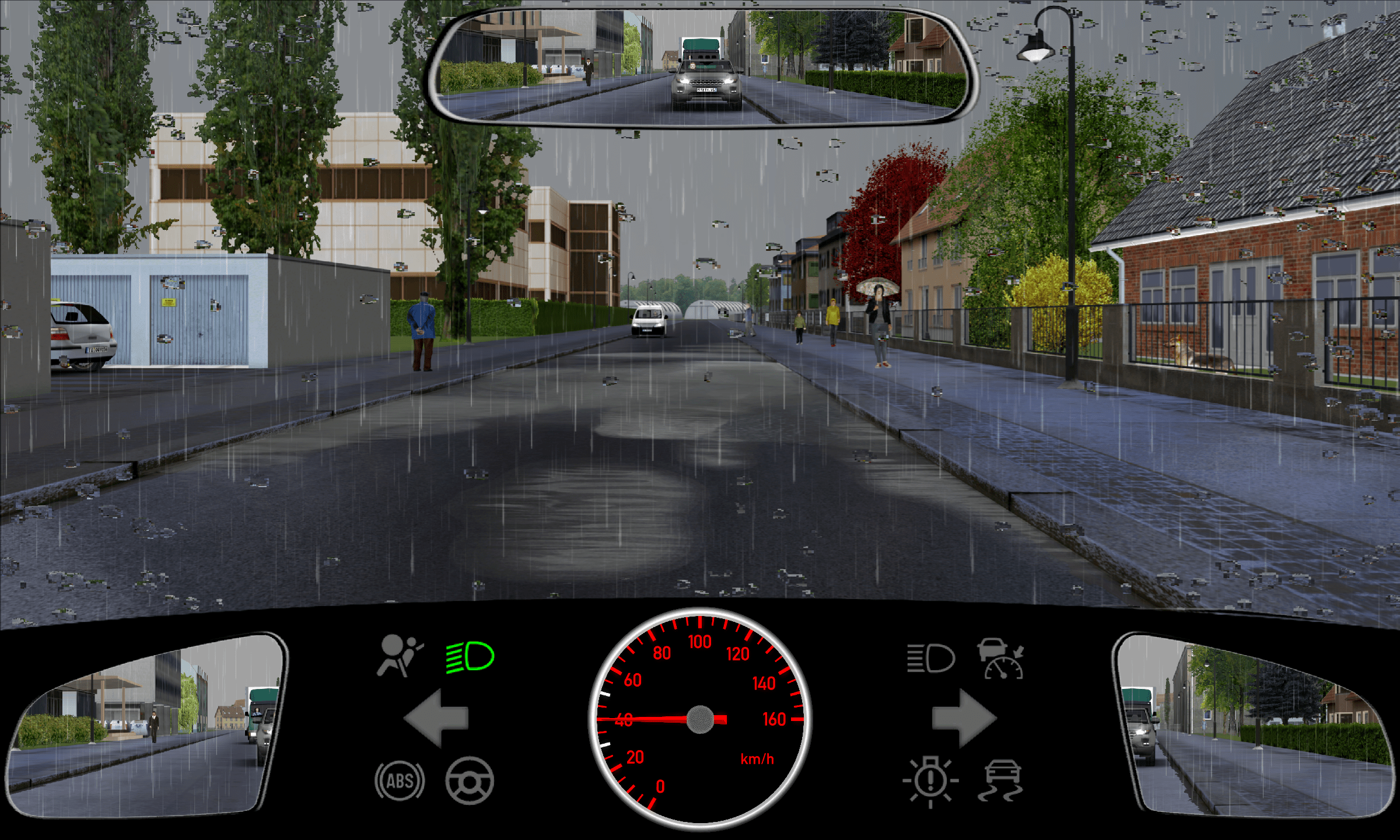
-
Pregunta 20 de 21
¿Qué ha de esperar que ocurra mientras va conduciendo si después de mucho tiempo sin precipitaciones comienza a llover?
2.1.03-0463 puntosExplicación
Basically, you must always expect visibility through your helmet visor to be poorer in the rain and, if it is dry for a long time, a layer of dirt will remain on the road which can form a slippery film on the road surface when it rains, so you must expect the road to be particularly slippery.
-
Pregunta 21 de 21
Al adelantar a varios camiones, se ve en esta situación. ¿Qué haría?
2.1.03-1114 puntos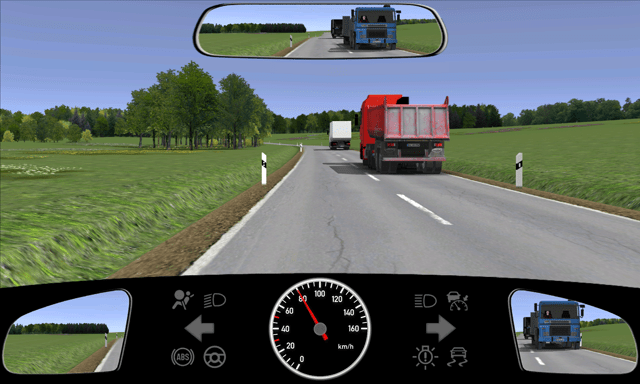
Explicación
The visibility is very poor due to the weather and the road is not sufficiently visible. In order not to endanger anyone, you should stop the overtaking process as quickly as possible and ensure that you are at a safe distance from the vehicle in front of you when you go back into lane.