
1.3.01 Prioridad
Aprenda fácilmente las reglas de prioridad alemanas más importantes: Justo antes de izquierda, carreteras prioritarias, reglas de giro, rotondasy mucho más.
REGLA MÁS IMPORTANTE
Si NO hay señales, NO hay semáforos y NO hay policía:
➡️ LA IZQUIERDA CEDE A LA DERECHA
Los vehículos que vienen por la DERECHA tienen prioridad.
🏆 Jerarquía de prioridades
1. policía
Las instrucciones policiales siempre son lo primero.
2. Semáforos
Los semáforos anulan las señales de tráfico.
3. Señales de tráfico
Ceda el paso, pare, camino prioritario, etc.
4. Justo antes de izquierda
Regla básica si nada más regula el tráfico.
➡️ Justo antes de Izquierda (Rechts vor Links)
✅ Aplica Aquí
- Intersecciones sin señales
- Cruces en T sin regulación de tráfico
- Calles residenciales
- Pequeño cruce urbano
❌ NO Aplica
- Carreteras prioritarias
- Rotondas con señales
- Caminos de campo y bosques.
- Calzadas y bordillos caídos
⚠️ Excepciones importantes
Senderos de campo y bosques
Los vehículos que abandonen caminos de campo o forestales deberán ceder siempre el paso.
Dejando la propiedad
Al salir de una propiedad o camino de entrada, todos los demás tienen prioridad.
Rotonda
Los vehículos que ya se encuentran dentro de la rotonda suelen tener prioridad.
🔄 Reglas de giro
↩️ Girando a la izquierda
- Ceder el paso al tráfico que viene en sentido contrario
- Ceder el paso a los ciclistas que van recto
- Ceder el paso a los tranvías que van rectos
- Espere hasta que el carril esté despejado.
↪️ Girando a la derecha
- Esté atento a los ciclistas de la derecha.
- Vigilar a los peatones cruzar
- Revisa los espejos con cuidado
- Respetar las vías prioritarias
🛣 Reglas de tránsito prioritario
Mantenerse en la vía prioritaria
Los vehículos que permanecen en la vía prioritaria circulan primero.
Salir de la vía prioritaria
Al salir de él, es posible que deba ceder el paso al tráfico que viene en sentido contrario.
Entrar en la carretera prioritaria
Los conductores que ingresan siempre deben esperar.
⭕ Reglas de rotonda
✅ Correcto
- Ceder antes de entrar
- Los vehículos en el interior tienen prioridad.
- Señal al salir
❌ Incorrecto
- Entrando demasiado rápido
- Olvidar la señal de giro
- ignorando a los ciclistas
🧠 Trucos fáciles de memoria
Lado derecho = prioridad
Los que giran a la izquierda esperan
La carretera prioritaria supera a las secundarias
Si no está seguro: reduzca la velocidad y comuníquese
📚 Tabla de prioridades rápida
| Situación | ¿Quién tiene prioridad? |
|---|---|
| No hay señales en la intersección | Vehículo desde la derecha |
| Girando a la izquierda | Tráfico que viene en sentido contrario |
| Entrando a la rotonda | Vehículos ya dentro. |
| saliendo del camino de entrada | Todos los demás usuarios de la vía |
| Carretera prioritaria | Vehículos en vía prioritaria. |
🎯 Consejos para el examen
✅ Recuerda
- Derecha antes que izquierda es la regla básica.
- Los que giran a la izquierda suelen esperar
- Las carreteras prioritarias son muy importantes.
- Vigile atentamente a los ciclistas y tranvías.
❌ Errores comunes
- Ignorar a los ciclistas de la derecha
- Olvidar las reglas de prioridad de giro
- Confundir caminos secundarios con caminos iguales
- Conducir demasiado rápido en intersecciones poco claras
Preguntas de práctica (47)
-
Pregunta 1 de 47
¿En qué lugares sin señalización vale la regla 'la derecha tiene prioridad'?
1.3.01-0015 puntosExplicación
At intersections and T-junctions without a traffic-regulating traffic sign "left yields to right" applies. If a vehicle leaves a property or a restricted traffic area, all other road users, including pedestrians and children on the sidewalk, have priority.
-
Pregunta 2 de 47
¿En qué lugares sin señalización vale la regla 'la derecha tiene prioridad'?
1.3.01-0025 puntosExplicación
At intersections and T-junctions without priority signs, the vehicles coming from the right have priority. The same applies to roads that are equally ranked according to their signage. Lanes with drop kerb, drives as well as field and forest trails are an exception. If you are on one of these roads, you must give priority to other road users.
-
Pregunta 3 de 47
¿Qué debe hacer Ud. cuando llega a una intersección en la que al principio no se da cuenta de la situación de prioridad?
1.3.01-0035 puntosExplicación
There are situations that are difficult to understand in terms of the right of way. If this happens to you wait and watch other car drivers. If the situation remains difficult, you can communicate with each other by clear hand signals. To simply continue straight ahead or act according to the rule "left yields to right" would be too risky and accident-prone.
-
Pregunta 4 de 47
¿Qué comportamiento es correcto?
1.3.01-0075 puntos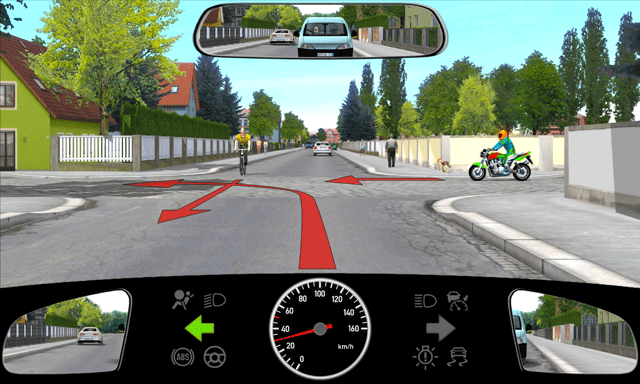
Explicación
It is necessary to comply to the left yields to right rule. Grant the motorcyclist from the right the right of way before entering the intersection. Next, you as a left-turning driver, have to give priority to the oncoming cyclist. For the motorcyclist the cyclist comes from the right and thus has priority.
-
Pregunta 5 de 47
¿Qué comportamiento es correcto?
1.3.01-0135 puntos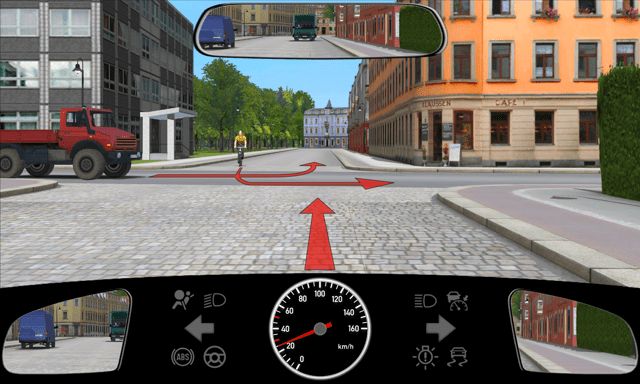
Explicación
Left yields to right applies in intersections and T-junctions without a traffic sign. Since no vehicle comes from the right, you may first cross the intersection. After that the truck drives and finally the cyclist.
-
Pregunta 6 de 47
¿Cuál es el comportamiento correcto?
1.3.01-0165 puntos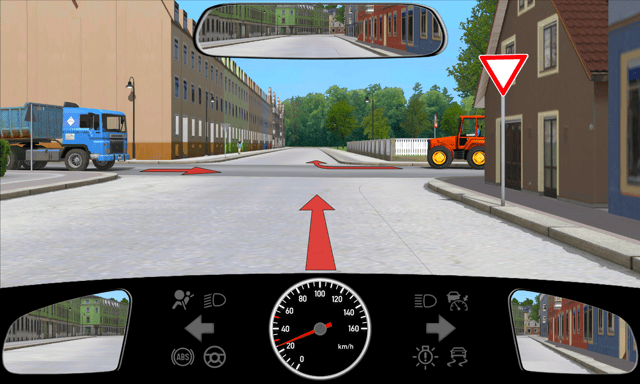
Explicación
The traffic sign "Give way" regulates the right of way here. That means you have to wait and let both, the right and left vehicle, pass.
-
Pregunta 7 de 47
¿Qué comportamiento es correcto?
1.3.01-0175 puntos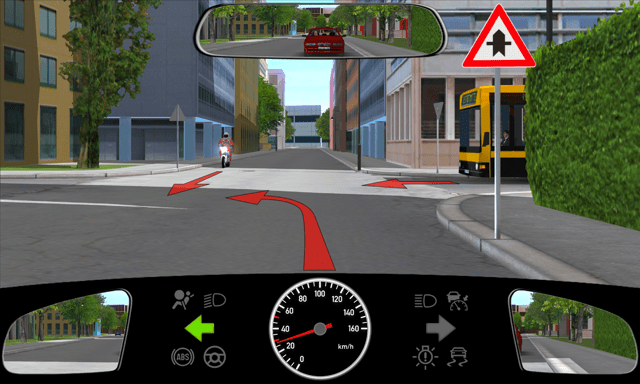
Explicación
Here the traffic sign "right of way at the next intersection or T-junction" applies. Since you want to turn left you will have to let the oncoming vehicle pass. You may then turn in front of the vehicle coming from the right.
-
Pregunta 8 de 47
¿Qué comportamiento es correcto?
1.3.01-0185 puntos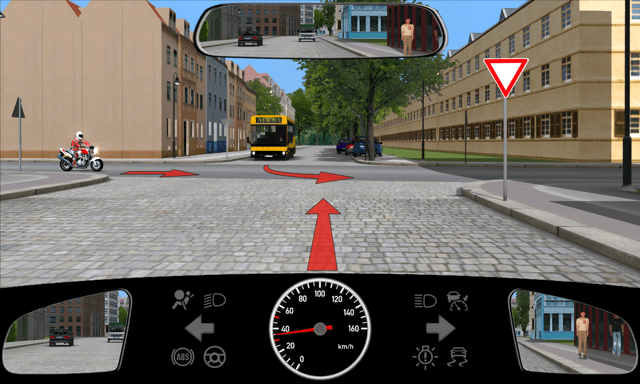
Explicación
The traffic sign "Give way" suspends the left yields to right regulation. Thus, the motorcycle coming from the left has priority. You have to wait. Then the left-turning driver of the oncoming traffic must first let you cross the intersection before he can turn.
-
Pregunta 9 de 47
¿Qué comportamiento es correcto?
1.3.01-0215 puntos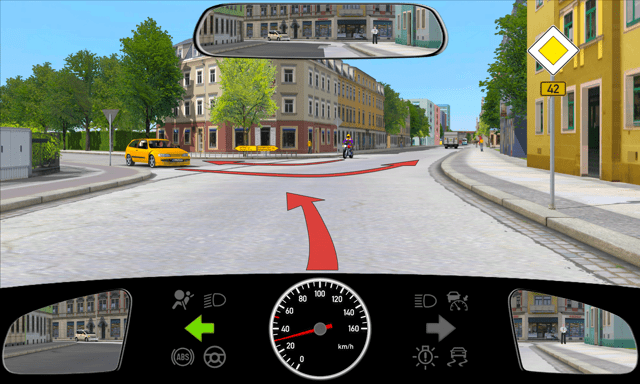
Explicación
The traffic sign stands for a "priority road". You may therefore turn in front of the vehicle coming from the left. First, however, you must let the oncoming vehicle turn, because you have to wait as a left-turning driver.
-
Pregunta 10 de 47
¿Qué es correcto hacer en esta situación?
1.3.01-0345 puntos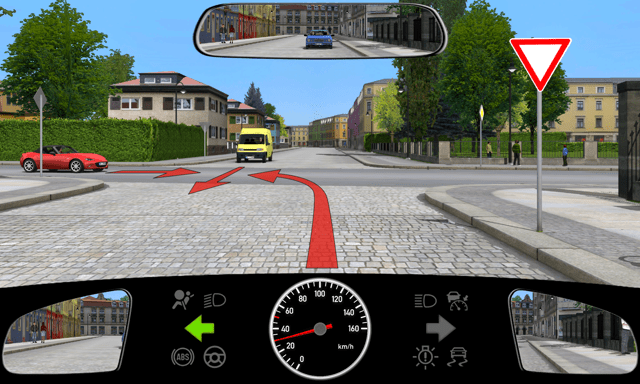
Explicación
The right-of-way rule says that you have to let the yellow vehicle drive through.
-
Pregunta 11 de 47
¿Qué comportamiento es correcto?
1.3.01-0355 puntos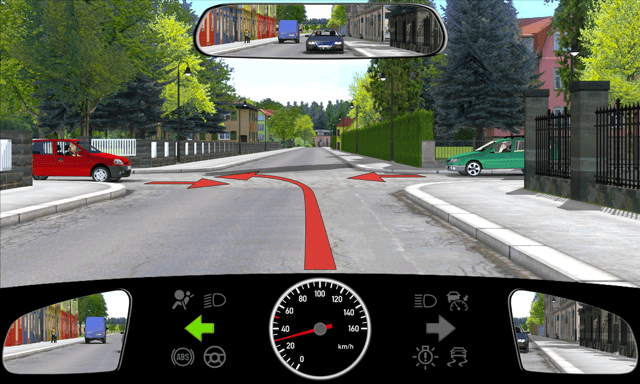
Explicación
Since there are no signs at this intersection, which determine the priority of the drivers, the right of way "left yields to right" applies. For this reason, you need to let the car on your right pass first. Afterwards, the driver on the left has to give you the right of way.
-
Pregunta 12 de 47
¿Qué comportamiento es correcto?
1.3.01-0385 puntos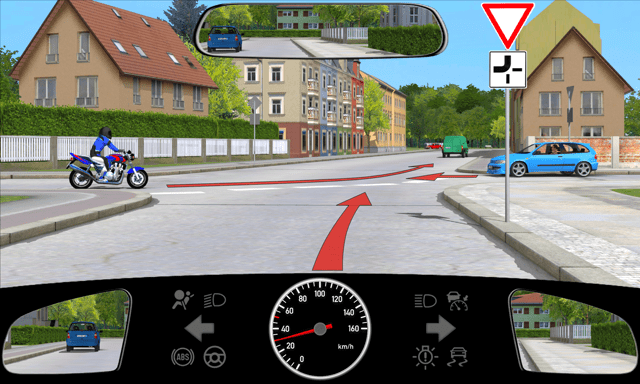
Explicación
According to the signage, the motorcyclist is on the priority road and is therefore allowed to drive first. Both the driver of the blue car and you are on a lane with the "Give way" sign. As this does not clear up the situation, "left yields to right" applies. For this reason, you have to let the other vehicle drive through.
-
Pregunta 13 de 47
En esta situación, ¿quién puede pasar primero?
1.3.01-0395 puntos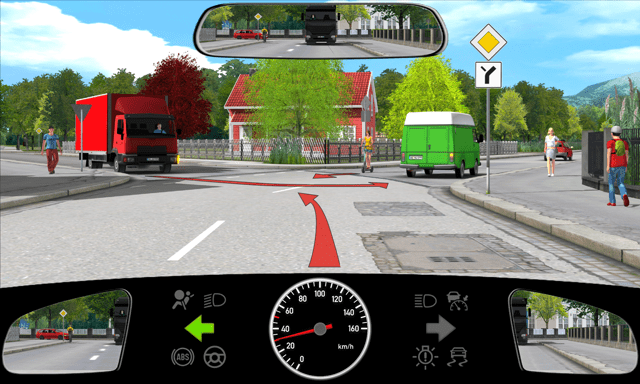
Explicación
The electric scooter follows the priority road and therefore has the right of way.
-
Pregunta 14 de 47
¿Qué comportamiento es correcto en esta situación?
1.3.01-0405 puntos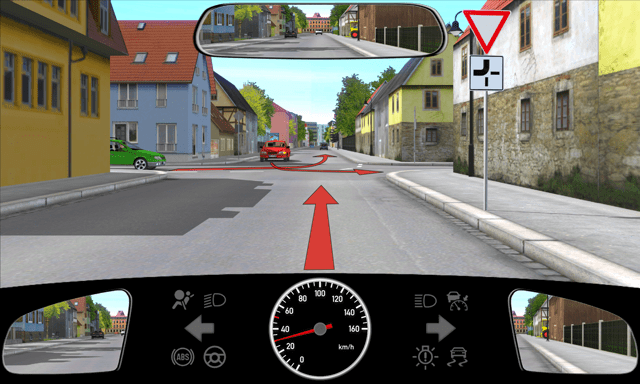
Explicación
The green and red cars are on a turning main road. You are on the secondary road. The green car remains on the main road, which means that the green car is allowed to drive first, then the red car and you are allowed to drive last.
-
Pregunta 15 de 47
¿Qué comportamiento es correcto en esta situación?
1.3.01-0415 puntos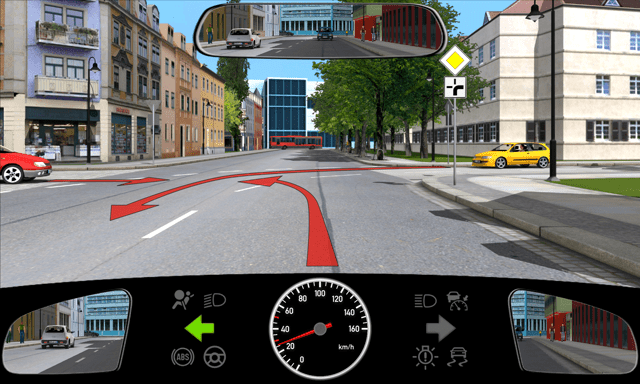
Explicación
You and the yellow car are on a turning main road. The red car is on a secondary road. Because the yellow car remains on the main road, it is allowed to drive first. You may drive second and the red car can drive last.
-
Pregunta 16 de 47
¿Qué comportamiento es correcto?
1.3.01-0425 puntos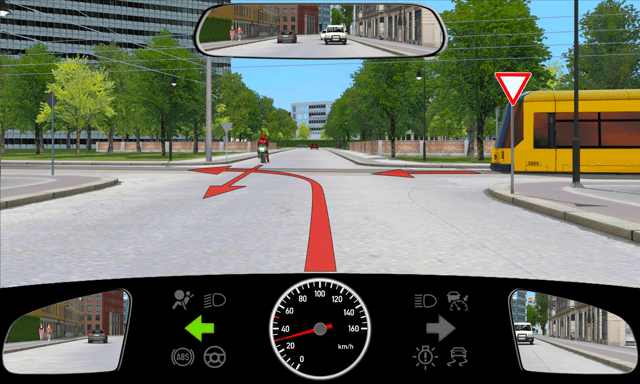
Explicación
The sign at the intersection indicates that you must give way. Since you want to turn left, you must let the tram as well as the oncoming motorbike pass and enter the intersection last.
-
Pregunta 17 de 47
¿Qué comportamiento es correcto en esta situación?
1.3.01-0435 puntos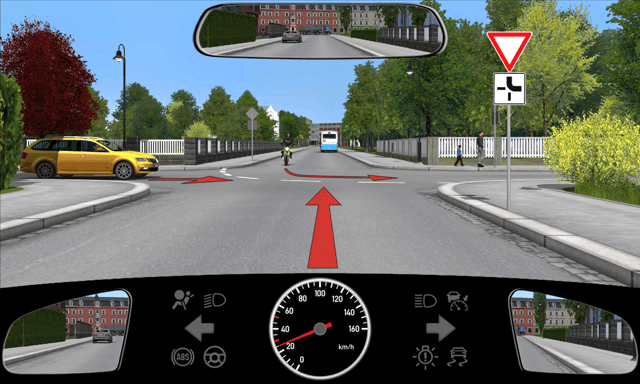
Explicación
The motorbike is on a turning main road and is allowed to turn in front of the yellow car and you. According to the "right before left" rule at crossroads, you may drive in front of the yellow car.
-
Pregunta 18 de 47
¿Qué comportamiento es correcto en esta situación?
1.3.01-0445 puntos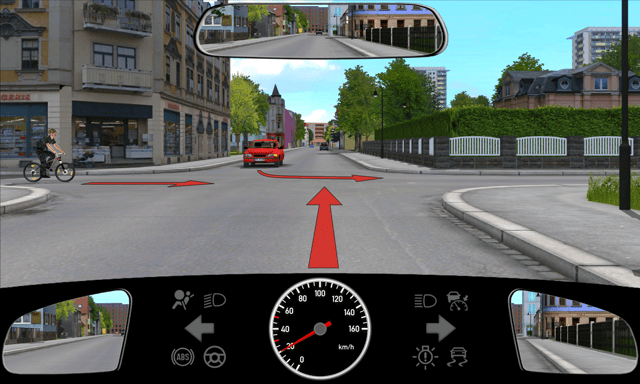
Explicación
At this intersection applies to the right before left. So you can drive first. "Right before left" applies to intersections where the right of way is not regulated by signs, traffic lights or traffic police officers.
-
Pregunta 19 de 47
¿Qué comportamiento es correcto en esta situación?
1.3.01-0455 puntos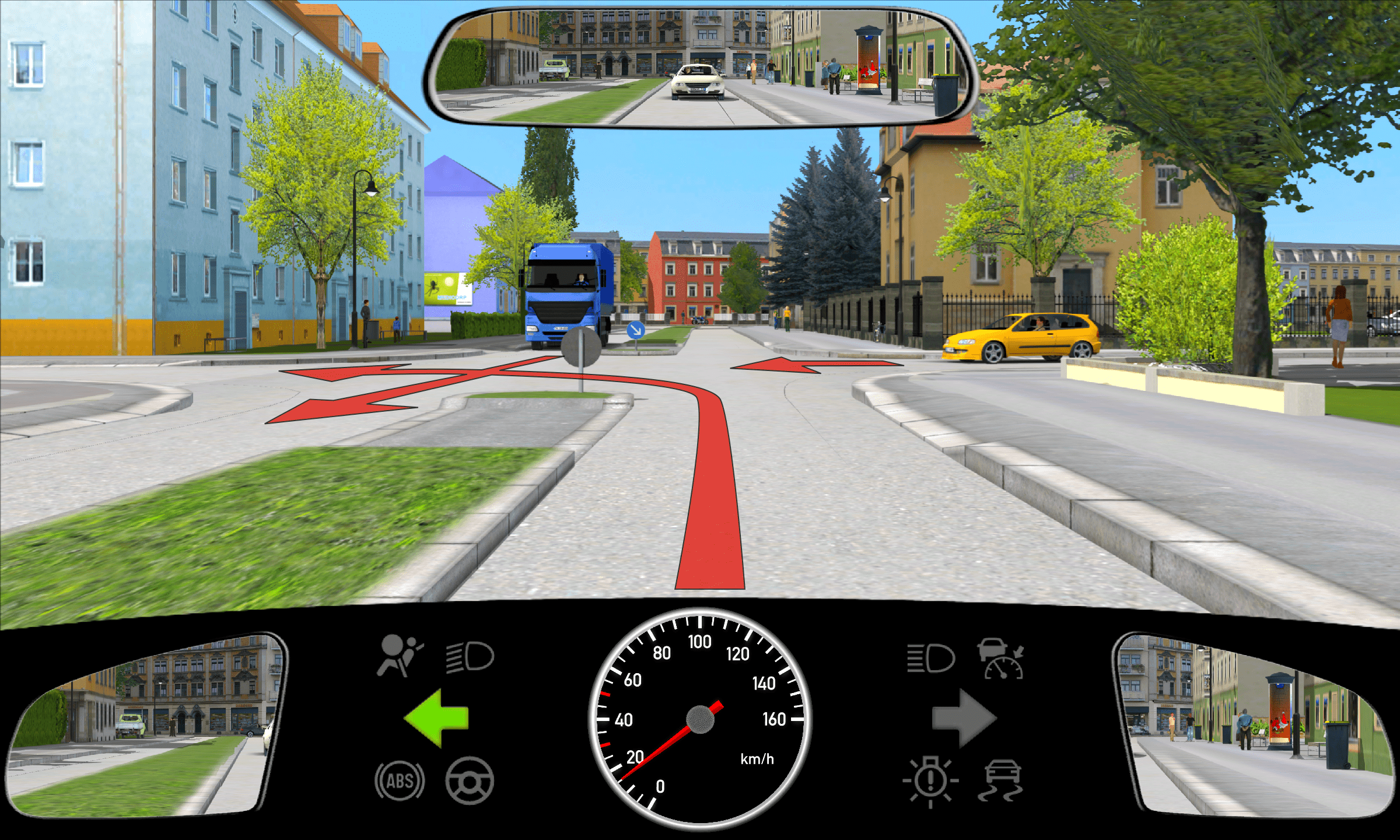
Explicación
At this junction, the right before left rule applies, which means that you must let the yellow vehicle pass. You must also let the lorry through, as you want to turn left and the lorry wants to continue straight ahead in its lane.
-
Pregunta 20 de 47
¿Qué comportamiento es correcto?
1.3.01-0465 puntos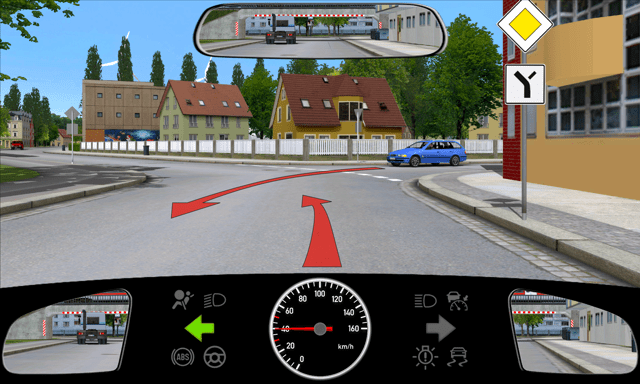
Explicación
You are on the turning priority road and follow its course. Therefore, you must drive first and the other vehicle must wait.
-
Pregunta 21 de 47
¿Qué comportamiento es correcto en esta situación?
1.3.01-0475 puntos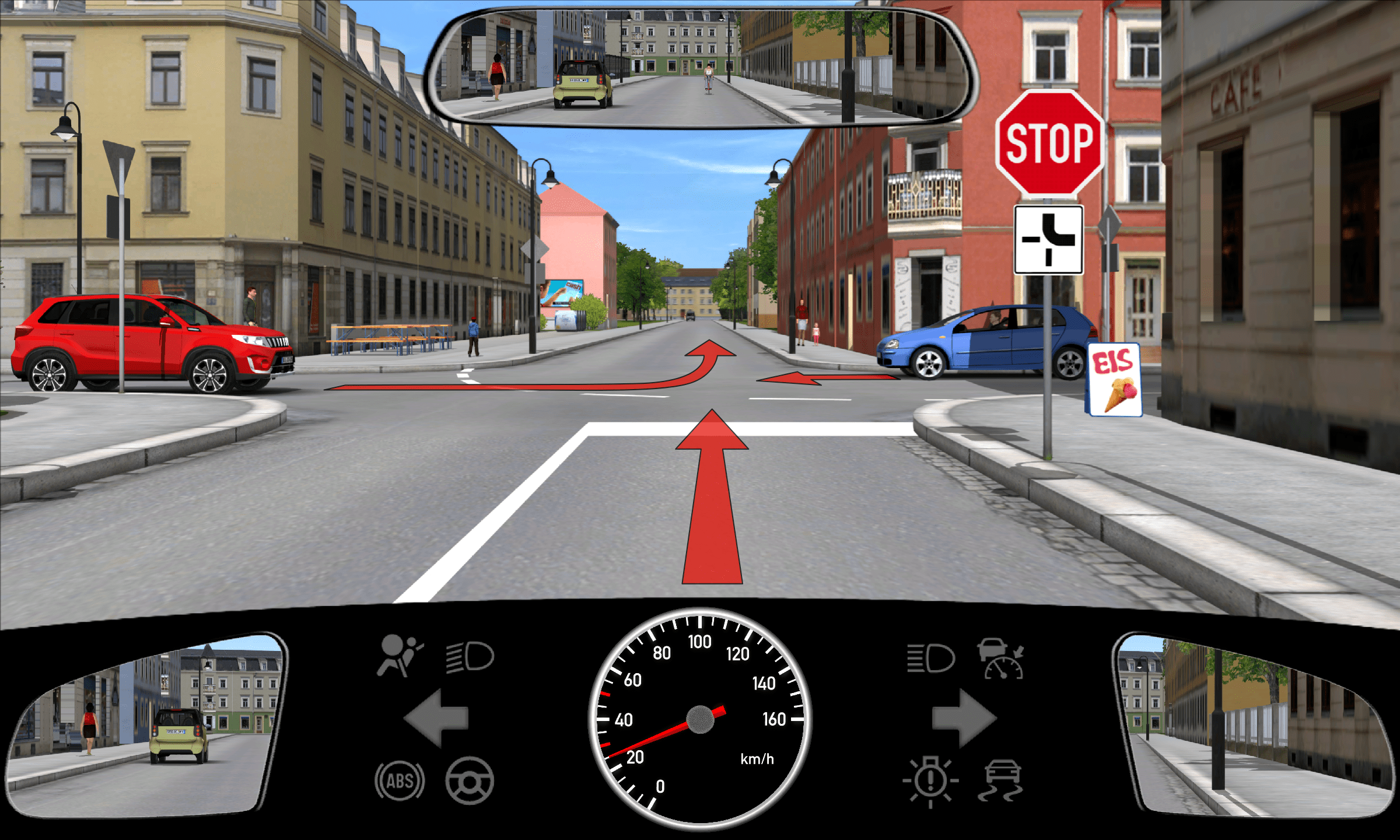
Explicación
You are approaching a priority road that is about to turn. As you are coming from a side road, you must allow the blue car leaving the priority road to pass. You must also stop at a stop sign at the stop line before you are allowed to enter the junction.
-
Pregunta 22 de 47
¿Qué comportamiento es correcto?
1.3.01-0485 puntos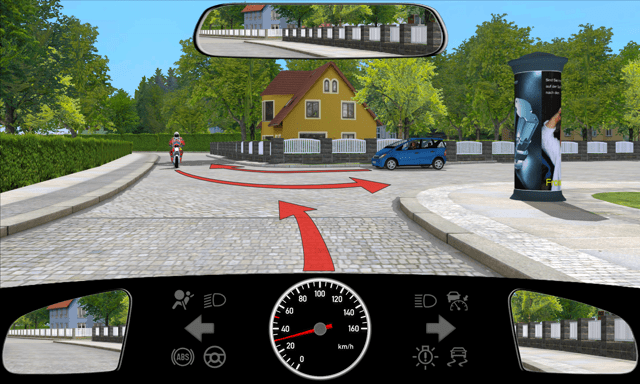
Explicación
At an intersection, which has no traffic signs, "left yields to right" applies. If a car drives from the right wants to turn right, he is allowed to drive first and you have to wait. On the other hand, if a vehicle approaching you wants to turn left, you have the right of way, because if a driver wants to turn, must always give priority to oncoming traffic.
-
Pregunta 23 de 47
¿Qué comportamiento es correcto?
1.3.01-0495 puntos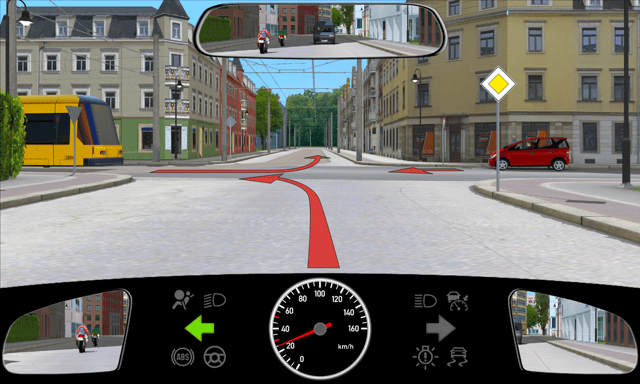
Explicación
The traffic sign indicates that you are on a priority road. The tram and the driver of the red car, on the other hand, must follow the sign "Give way" and wait. You drive first.
-
Pregunta 24 de 47
¿Qué comportamiento es correcto?
1.3.01-0505 puntos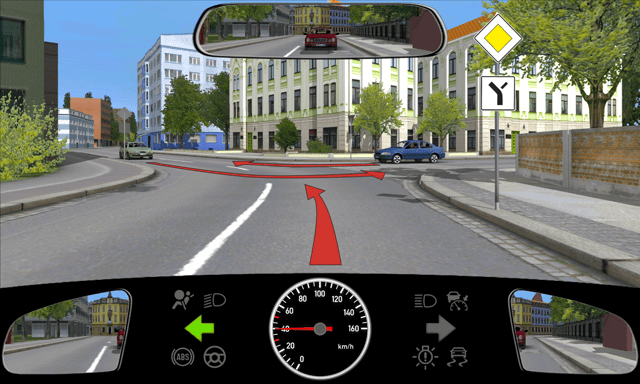
Explicación
If you are traveling on a priority road, you are always allowed to drive first. A car that meets you and wants to turn left, however, has to wait. If a car driver wants to turn into your street from the right, he/she must also give you the right of way, since you are on a priority road.
-
Pregunta 25 de 47
¿Qué comportamiento es el correcto?
1.3.01-0515 puntos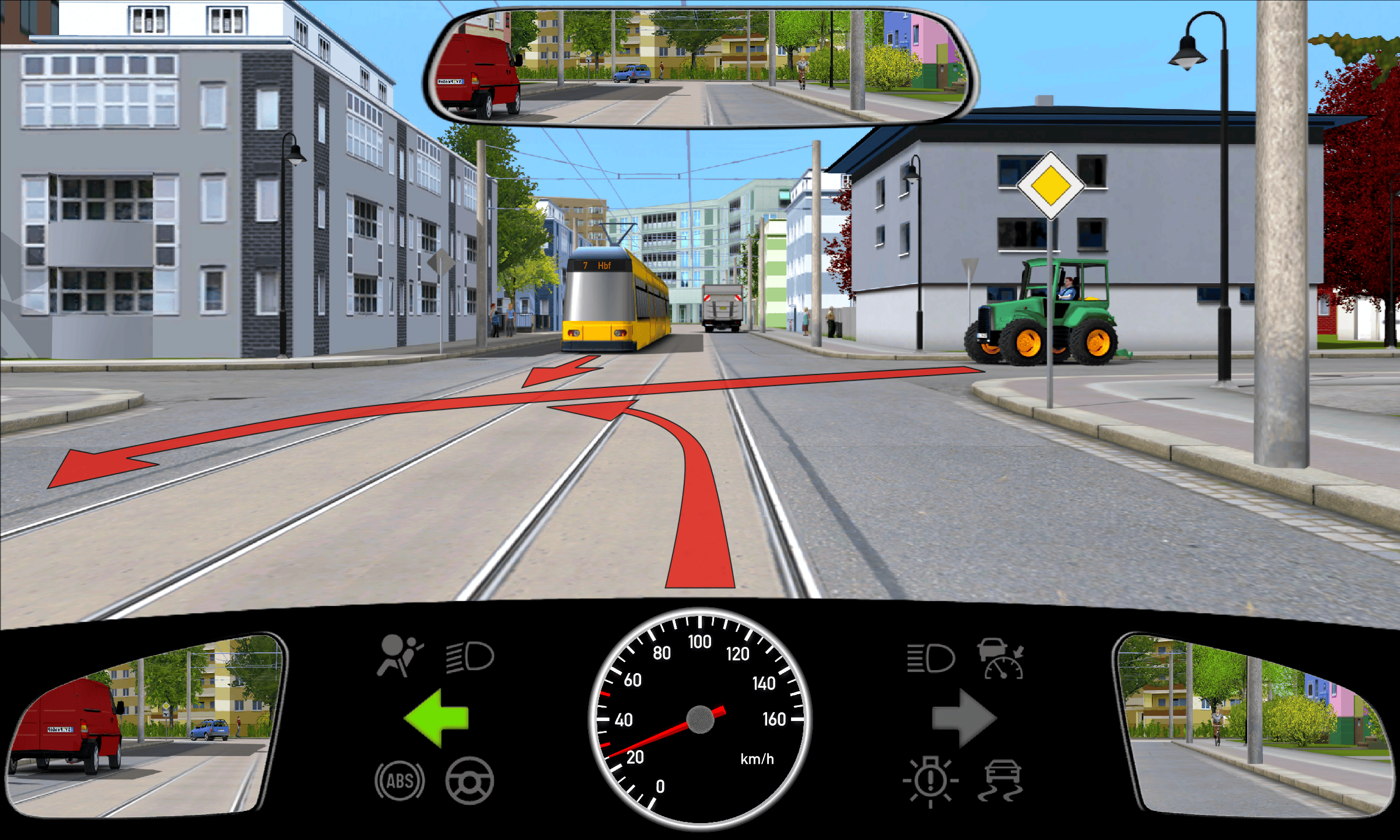
Explicación
The following hierarchy applies on a priority road: In principle, vehicles on a priority road always have priority. However, when leaving a priority road, you must give priority to oncoming vehicles. However, vehicles that want to drive onto a priority road must give priority to other road users on the priority road. This means you have to give priority to the tram because it is traveling on a priority road, does not change direction and you want to turn left.
-
Pregunta 26 de 47
¿Qué comportamiento es correcto?
1.3.01-0525 puntos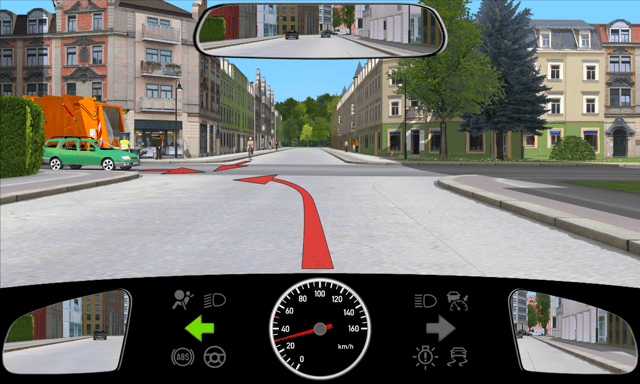
Explicación
Due to the rule "left yields to right" you would have priority over the green car. However, you must give priority to the oncoming cyclist whose lane you would be crossing. To ensure the traffic flow, it is therefore advisable to let the driver of the green car first enter the intersection.
-
Pregunta 27 de 47
Quiere incorporarse a una calzada con prioridad girando a la derecha. ¿A qué tiene que prestar atención?
1.3.01-0535 puntosExplicación
If you turn right into a priority road, you must give priority to all road users. This applies both to vehicles that come from the right and those that pass from the left. In addition, be sure to take care of cyclists and pedestrians who are to your right or behind you.
-
Pregunta 28 de 47
¿Qué es lo correcto en esta situación?
1.3.01-0565 puntos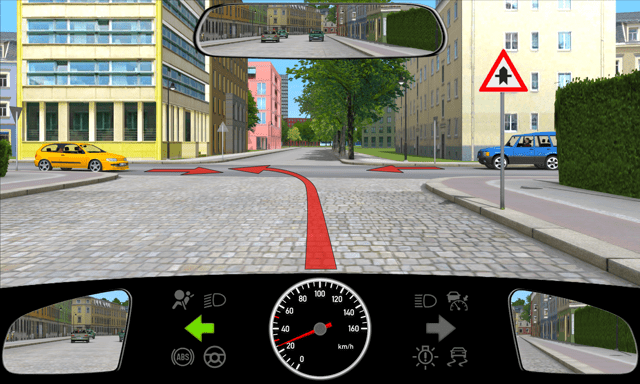
Explicación
At this intersection you have right of way. This is indicated by the traffic sign. That's why the vehicles have to wait from the right and left and let you drive first.
-
Pregunta 29 de 47
¿Qué es lo correcto?
1.3.01-0575 puntos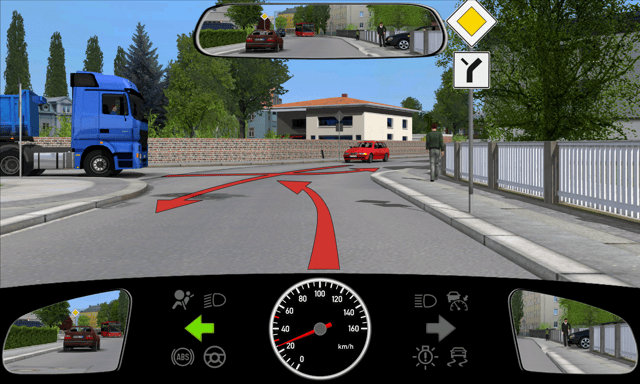
Explicación
If you want to turn left from a priority road and another car is driving next to you, which remains on the priority road, you must give priority to this car driver. A vehicle that is not on the priority road, on the other hand, has to wait.
-
Pregunta 30 de 47
¿Qué corresponde hacer en esta situación?
1.3.01-0585 puntos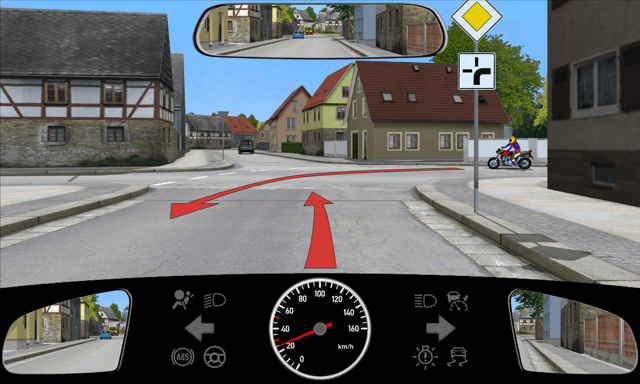
Explicación
You are on a turning priority road, but you don't want to follow it to the right and instead continue straight ahead. From the right a motorcycle follows the course of the priority road. You have to wait and give priority to this vehicle.
-
Pregunta 31 de 47
¿Quién tiene prioridad de circulación?
1.3.01-0595 puntos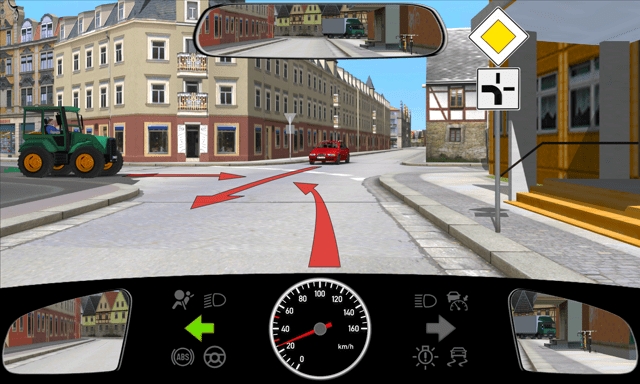
Explicación
You follow a turning priority road. Therefore, you have priority over the driver of the car driving straight ahead. The driver of the tractor also has to wait because he/she leaves the priority road and the rule left yields to right applies to you.
-
Pregunta 32 de 47
¿Qué comportamiento es correcto?
1.3.01-0605 puntos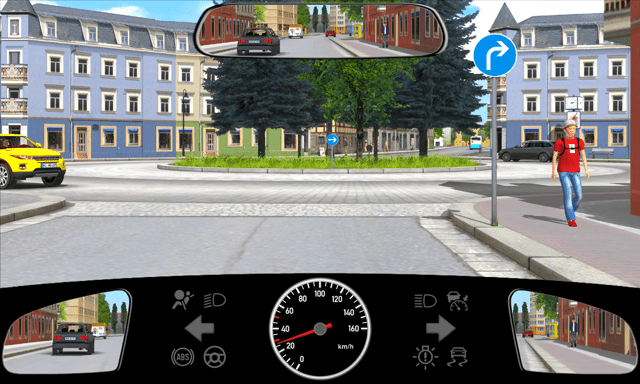
Explicación
If no traffic signs have been erected to regulate the right of way, this is so-called circular traffic. Here, the basic rule of right before left applies. As you are turning into circular traffic, you must signal.
-
Pregunta 33 de 47
¿Qué comportamiento es correcto?
1.3.01-1035 puntos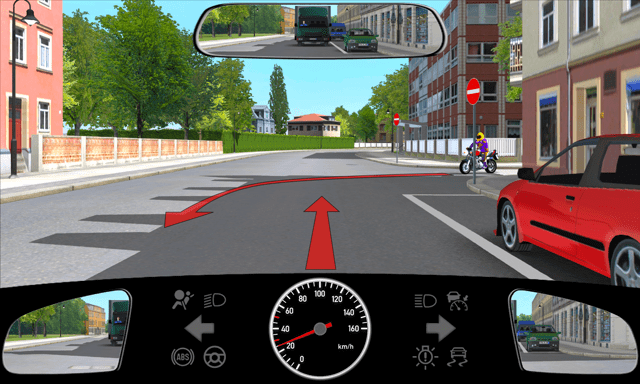
Explicación
Who comes from the right, has right of way at intersections and T-junctions. Because if there is no priority-controlling traffic sign, "left yields to right" applies. No matter the size and type of the vehicle.
-
Pregunta 34 de 47
Quiere girar a la izquierda. ¿Quién tiene que esperar?
1.3.01-1125 puntos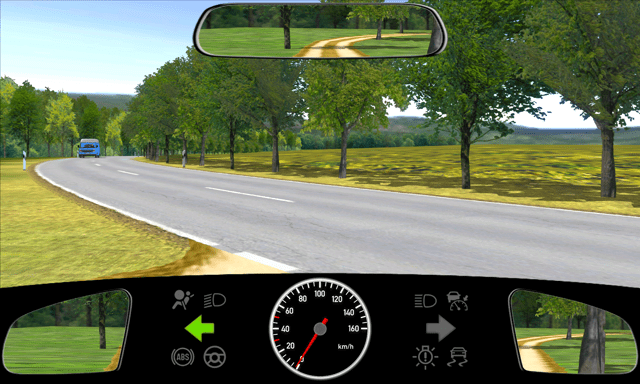
Explicación
At intersections and T-junctions without a traffic-regulating traffic sign, the rule "left yields to right" applies. Field and forest paths, however, are subordinate traffic routes. If you want to turn from a field or forest path onto a road, you have to wait.
-
Pregunta 35 de 47
¿Qué comportamiento es correcto?
1.3.01-1135 puntos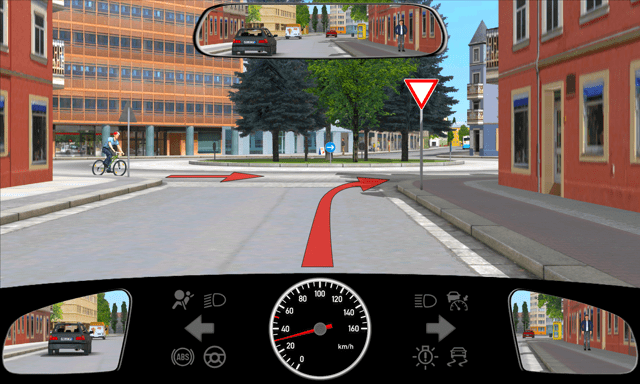
Explicación
If you want to turn into a roundabout, you will be asked to wait by the "Give way" traffic sign. The drivers driving in a circle have priority here.
-
Pregunta 36 de 47
¿Qué comportamiento es correcto?
1.3.01-1145 puntos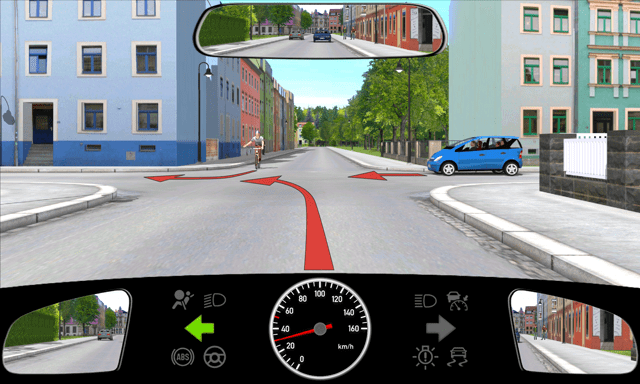
Explicación
Here, "left yields to right" applies as well as the rules for left turns. The car coming from the right may drive first. Since you want to turn left, the oncoming cyclist has right of way.
-
Pregunta 37 de 47
¿Qué comportamiento es correcto?
1.3.01-1165 puntos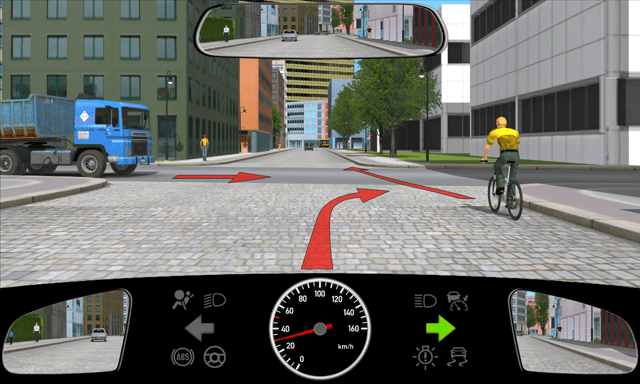
Explicación
At this spot, the right of way is not regulated by traffic signs. Therefore, at this intersection left yields to right applies. Here the straight driving cyclist has priority over you as you want to turn. The truck coming from the left may drive last.
-
Pregunta 38 de 47
¿Qué comportamiento es correcto?
1.3.01-1175 puntos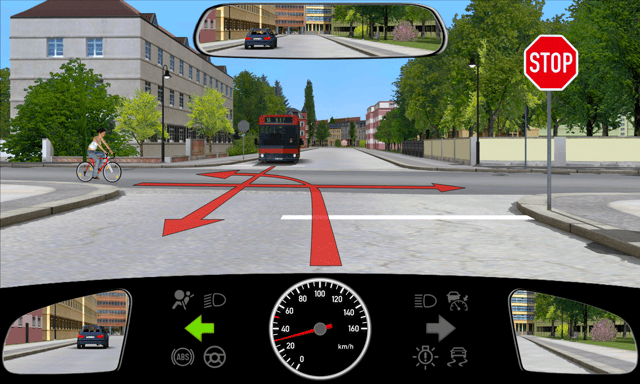
Explicación
A vehicle coming from the left is already on the priority road. Therefore, it is allowed to drive first. If you turn left, you will have to let oncoming vehicles drive past first. Due to the traffic sign, you have to stop at the stop line ("Give way") or stop completely and are not even allowed to trundle ("Stop sign").
-
Pregunta 39 de 47
¿Qué comportamiento es correcto?
1.3.01-1185 puntos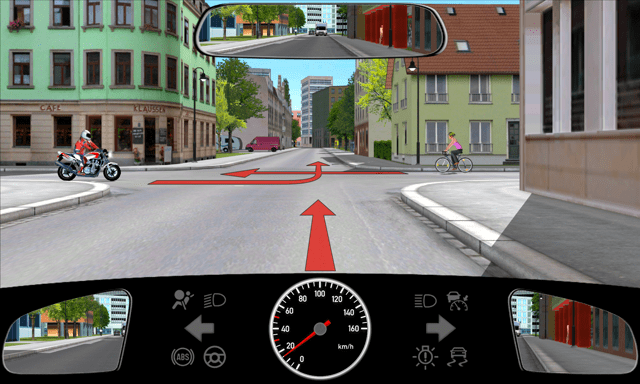
Explicación
Since the right of way here is not regulated by traffic signs, left yields to right applies. This means: you must stop and grant access to vehicles from the right. The bike coming from the left has to let you in.
-
Pregunta 40 de 47
Quiere cruzar una calzada con prioridad. La visibilidad es muy reducida a ambos lados debido a la presencia de vehículos estacionados. ¿Qué hace?
1.3.01-1195 puntosExplicación
If visibility is limited you should only proceed with caution. Slowly get into the intersection until you can see the priority road. This is how you act responsibly.
-
Pregunta 41 de 47
¿Qué comportamiento es correcto?
1.3.01-1205 puntos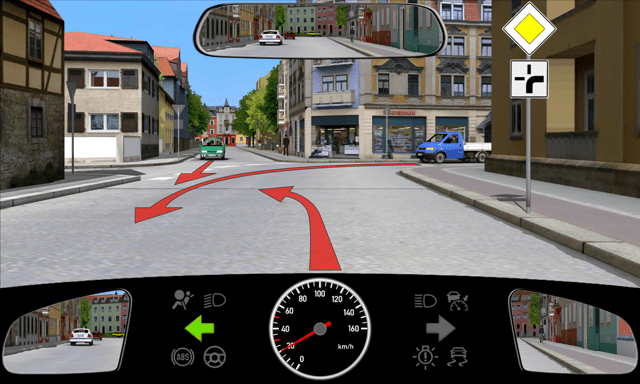
Explicación
If you are on a priority road and you want to turn left, you will have to let oncoming cars drive by. If a vehicle drives next to you, which contrary to you remains on the priority road, then this car driver has priority. However, if a vehicle from another street with the traffic sign "Give way" wishes to turn into your priority road, he/she may only drive last.
-
Pregunta 42 de 47
¿Qué comportamiento es correcto?
1.3.01-1255 puntos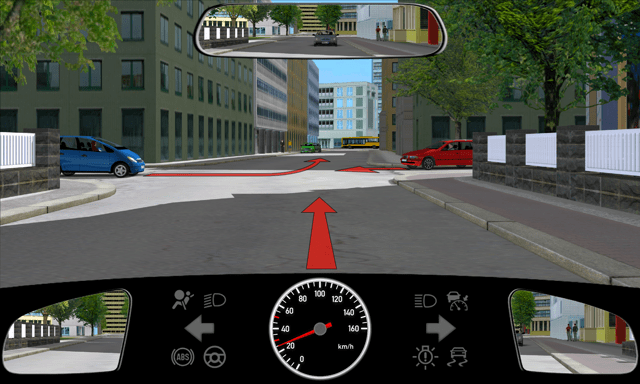
Explicación
Without additional priority-regulating traffic signs or traffic lights, the general "left yields to right" rule applies. The car coming from the right must be given priority. You have priority over the car coming from the left.
-
Pregunta 43 de 47
¿Qué comportamiento es correcto?
1.3.01-1265 puntos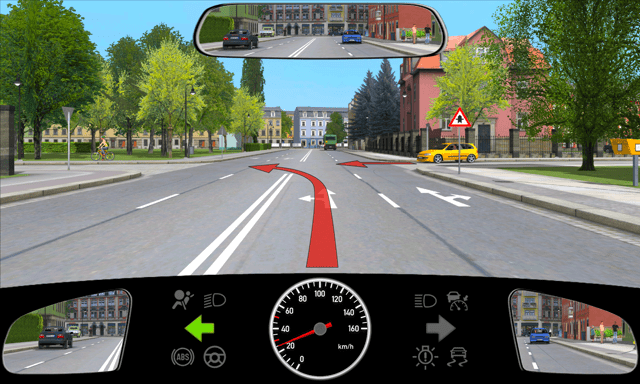
Explicación
At the traffic sign "right of way at the next intersection or T-junction", you may drive first at the next intersection. A vehicle coming from the left must wait.
-
Pregunta 44 de 47
¿En qué orden deben continuar los vehículos en este caso?
1.3.01-1275 puntos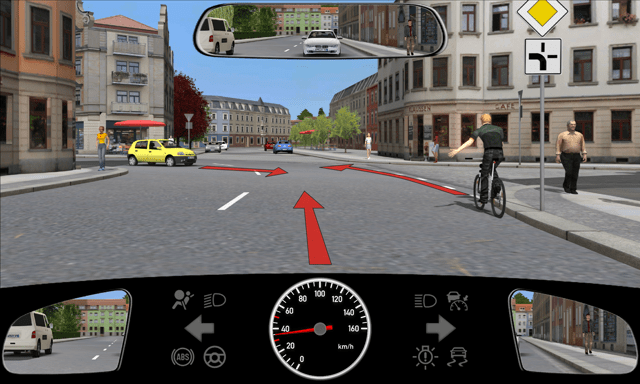
Explicación
You are on a turning priority road and you want to leave straight ahead. The cyclist follows the course of the priority road and therefore has priority over you. The car from the left must grant you right of way according to the rule "left yields to right".
-
Pregunta 45 de 47
En esta situación, ¿quién puede pasar primero?
1.3.01-1285 puntos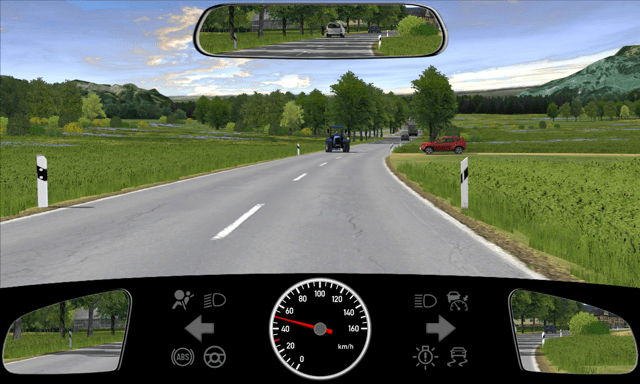
Explicación
The basic rule "right before left" does not apply to vehicles driving out of a field or forest path onto another road.
-
Pregunta 46 de 47
¿Qué es correcto hacer en esta situación?
1.3.01-1295 puntos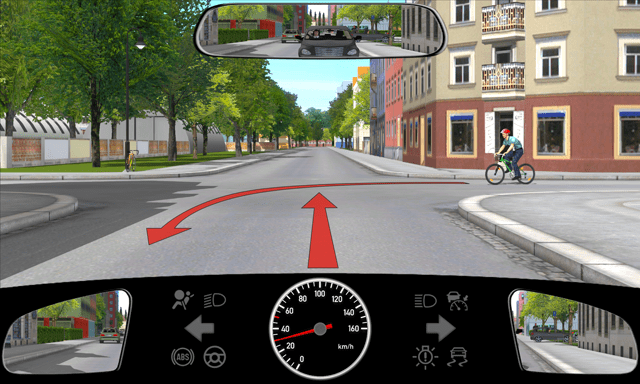
Explicación
At intersections and junctions, whoever is coming from the right has the right of way.
-
Pregunta 47 de 47
En esta situación, ¿qué es lo correcto?
1.3.01-1305 puntosExplicación
You can see from the signs that this is not a roundabout. Therefore, right before left applies.