
2.1.03 Yol ve Hava Koşulları
Altın Kural ⭐
Kötü hava = Daha az kavrama + Daha uzun fren mesafesi + Zayıf görüş.
👉 Daima hızı azaltın, mesafeyi artırın ve ani direksiyon veya frenlemeden kaçının.
🌧️ Yağmur ve Islak Yollar
- Kuru havanın ardından yağan ilk yağmur, kaygan bir yağ filmi oluşturur.
- Fren mesafesi uzar.
- Su spreyi ve buğulanan vizör nedeniyle görüş mesafesi kötüleşiyor.
- Ani frenleme veya hızlanmalardan kaçının.
- Güvenlik mesafesini derhal artırın.
- Yol işaretleri ıslandığında çok kayganlaşır.
“Kuraklıktan sonraki ilk yağmur” özellikle tehlikelidir.
💧 Suda kızaklama
- Islak yollarda yüksek hızda meydana gelir.
- Lastikler yolla teması kaybeder.
- Düzgün bir şekilde yön veremez veya frenleyemezsiniz.
- Tekerlek izleri ve durgun sularda risk daha yüksektir.
- Ayağınızı gazdan yavaşça çekin.
- Direksiyonu düz tutun.
- Ani fren yapmayın.
🌬️ Yan rüzgarlar
- Köprülerin, tünellerin ve kamyonların yakınında tehlike artıyor.
- Motosikletler aniden yana doğru yön değiştirebilir.
- Kamyonun hava akımı rüzgar basıncını aniden değiştiriyor.
- Yüksek hız, yan rüzgarları daha tehlikeli hale getirir.
Hızınızı azaltın ve dikkatlice karşı yöne dönün.
⚠️ Kaygan Yüzeyler
- Şerit işaretleri
- Yağ yamaları
- Arnavut kaldırımı
- Yapraklar ve kum
- Menholler ve tramvay rayları
- Islak yollar ve çakıl
Kayma ve düşme riski artar.
🌫️ Sis ve Zayıf Görüş
- Kısa huzmeli farlar kullanın.
- Arka sis lambası yalnızca 50 metre görüş mesafesinin altında.
- Arka sis lambasıyla maksimum hız = 50 km/saat.
- Orta çizgide sürüş yapmayın.
- Kendinizi yolun sağ tarafına yönlendirin.
Sisli havalarda tek başına park lambalarına izin VERİLMEZ.
❄️Kar ve Buz
- Yol aşırı derecede kayganlaşıyor.
- Kar yığınları görüş mesafesini azaltıyor.
- Fren mesafesi büyük ölçüde artar.
- Sulu karda sollamaktan kaçının.
- Sarsıntılı direksiyon olmadan sorunsuz sürüş yapın.
Erken fren yapın ve öngörülebilir şekilde sürün.
🏍️ Motosiklete Özel Riskler
- Yan rüzgarlar motosikleti yana doğru itebilir.
- Islak şerit işaretleri çok kaygandır.
- Tramvay rayları mümkün olduğunca dik olarak geçilmelidir.
- Parke taşları tutuşu güçlü bir şekilde azaltır.
- Yapraklar, kum ve yağ virajlarda düşme riskini artırır.
- Grup sürüşünde yeterli mesafeyi koruyun.
- Eğilirken ani fren yapmaktan kaçının.
- Islak yollarda arka tekerlek daha kolay kilitlenebilir.
🧠 Hızlı Hafıza Formülü
🌧️ Yağmur = Kaygan + Kötü görüş
💧 Suda kızaklama = Direksiyon yok + Fren yok
🌬️ Yan Rüzgar = Dikkatli bir şekilde karşı yön verin
❄️ Kar/Buz = Erken fren yapın + Yavaş sürün
⚠️ Kaygan yüzeyler = Ani hareketlerden kaçının
Alıştırma soruları (21)
-
Soru 1 / 21
Kendi yol şeridinizde tramvay rayları döşeli olduğu zaman, neleri dikkate almak zorundasınız?
2.1.03-0114 puanAçıklama
Tramlines are made of metal which is slippery. A motorcycle therefore has a higher risk of sliding and falling on them. When crossing you should try to be as perpendicular to them as possible to avoid slipping
-
Soru 2 / 21
Islak yollarda aquaplaning (su kayganlığı) olayına yol açabilecek faktörler nelerdir?
2.1.03-0155 puanAçıklama
Aquaplaning - also known as hydroplaning - occurs when the tread depth of the tires is too low to displace the accumulated amount of water or when the amount of water to be discharged is too large due to a high speed (from 60 km/h). In addition, wheel ruts in the road, in which water accumulates, favor this effect.
-
Soru 3 / 21
Araç yolunun aniden kötüleşmesi, hangi sonuçlara yol açabilir?
2.1.03-0253 puanAçıklama
As the road surface deteriorates, it always results in a change and deterioration of traction. As the wheels lose stiction, the vehicle is slipping and skidding faster. The tire noise also depends on the condition of the road surface and changes when, for example, the road turns from a paved road to a cobblestone track.
-
Soru 4 / 21
Doğru davranış nedir?
2.1.03-0285 puanAçıklama
While overtaking a cyclist, the oncoming truck also partly gets on your lane. Brake and drive as far to the right as possible.
-
Soru 5 / 21
Burada kendinizi neye göre ayarlamanız gerekir?
2.1.03-0313 puan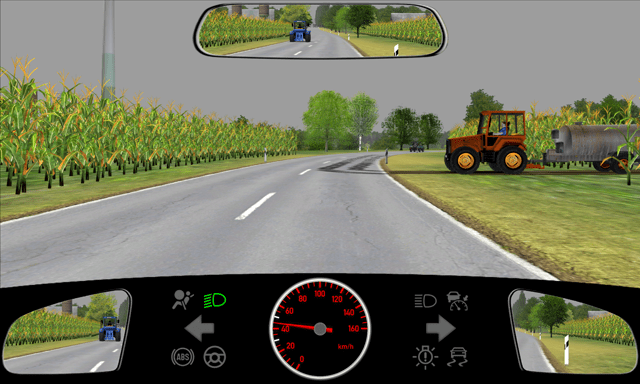
Açıklama
Dirt on the road can increase (not decrease) the braking distance and could make the road more slippery thus affecting the stability of your vehicles
-
Soru 6 / 21
Beklenmedik bir şekilde, bölünmüş olan düz bir yolun çakıllı kısmına giriyorsunuz. Hangi şekilde doğru davranırsınız?
2.1.03-0324 puanAçıklama
On the straight unexpected section with rolling gravel you should carefully reduce your speed for safety reasons and maintain your driving line as much as possible.
-
Soru 7 / 21
Şimdi hangi şekilde doğru davranırsınız?
2.1.03-0334 puanAçıklama
Due to the bad weather conditions, you should reduce your speed and avoid jerky steering movements (see danger sign) as you could otherwise skid.
-
Soru 8 / 21
Aquaplaning (su kayganlığı) neticesinde ne oluşabilir?
2.1.03-0344 puanAçıklama
In the event of aquaplaning, your vehicle has no direct contact with the road surface, so the steering command and the braking command cannot be implemented.
-
Soru 9 / 21
Güçlü bir çapraz rüzgar var. Motosikletinizin yüksek hızda ne zaman yana kayma riski vardır?
2.1.03-0353 puanAçıklama
Wind conditions change when overtaking a truck, when driving up a bridge and when leaving a tunnel. Be prepared for crosswinds.
-
Soru 10 / 21
Bu durumda nasıl doğru davranırsınız?
2.1.03-0363 puan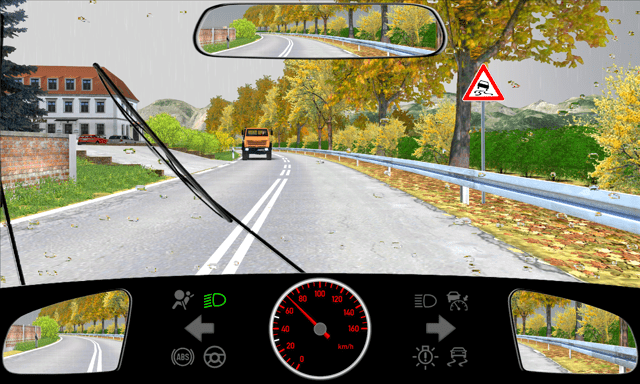
Açıklama
The traffic sign indicates a risk of skidding and sliding. To avoid skidding, you should reduce your speed, especially when it is raining and leaves are falling on the road, as is the case here. Braking hard, accelerating hard or steering jerkily can cause the tyres to lose their grip and you could skid or slide.
-
Soru 11 / 21
Burada neye hazırlıklı olmalısınız?
2.1.03-0374 puan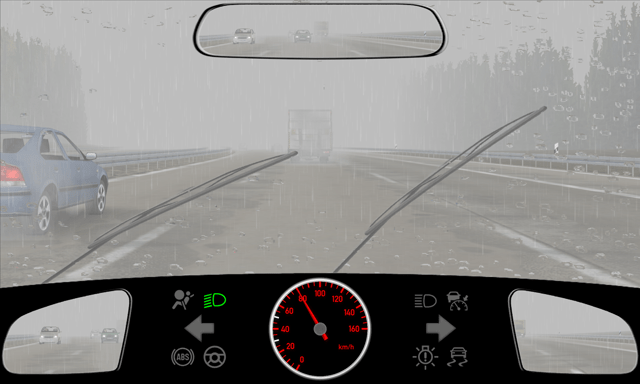
Açıklama
Because of the rain, you should be prepared for the fact that other vehicles will not be able to see your vehicle and that your braking distance will be longer due to the reduced grip.
-
Soru 12 / 21
Burada sollama yaparken özellikle ne zaman tehlike altındasınız?
2.1.03-0384 puan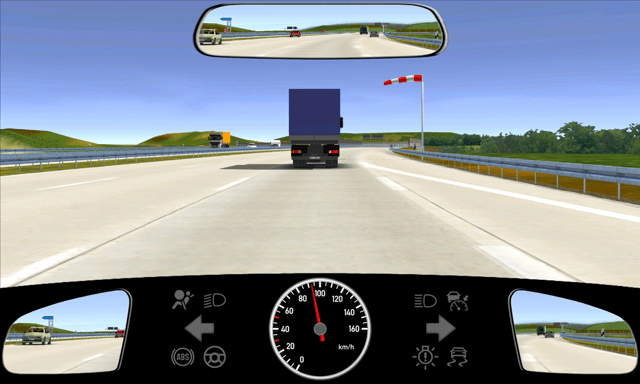
Açıklama
If there is a strong side wind from the right, you as a motorist are particularly at risk if, when driving off-road, you overtake in the slipstream of a truck. This hazard arises from the fact that strong cross winds from the right push your vehicle to the left, whereupon you automatically countersteer. As you overtake a truck, you slipstream into it; the crosswind is gone instantly and you have to adjust the steering. As soon as you pull out of the slipstream, the pressure starts up again with the crosswind; You have to countersteer again.
-
Soru 13 / 21
Virajı yol çizgisine yakın alırsanız bunun sonucu ne olabilir?
2.1.03-0394 puan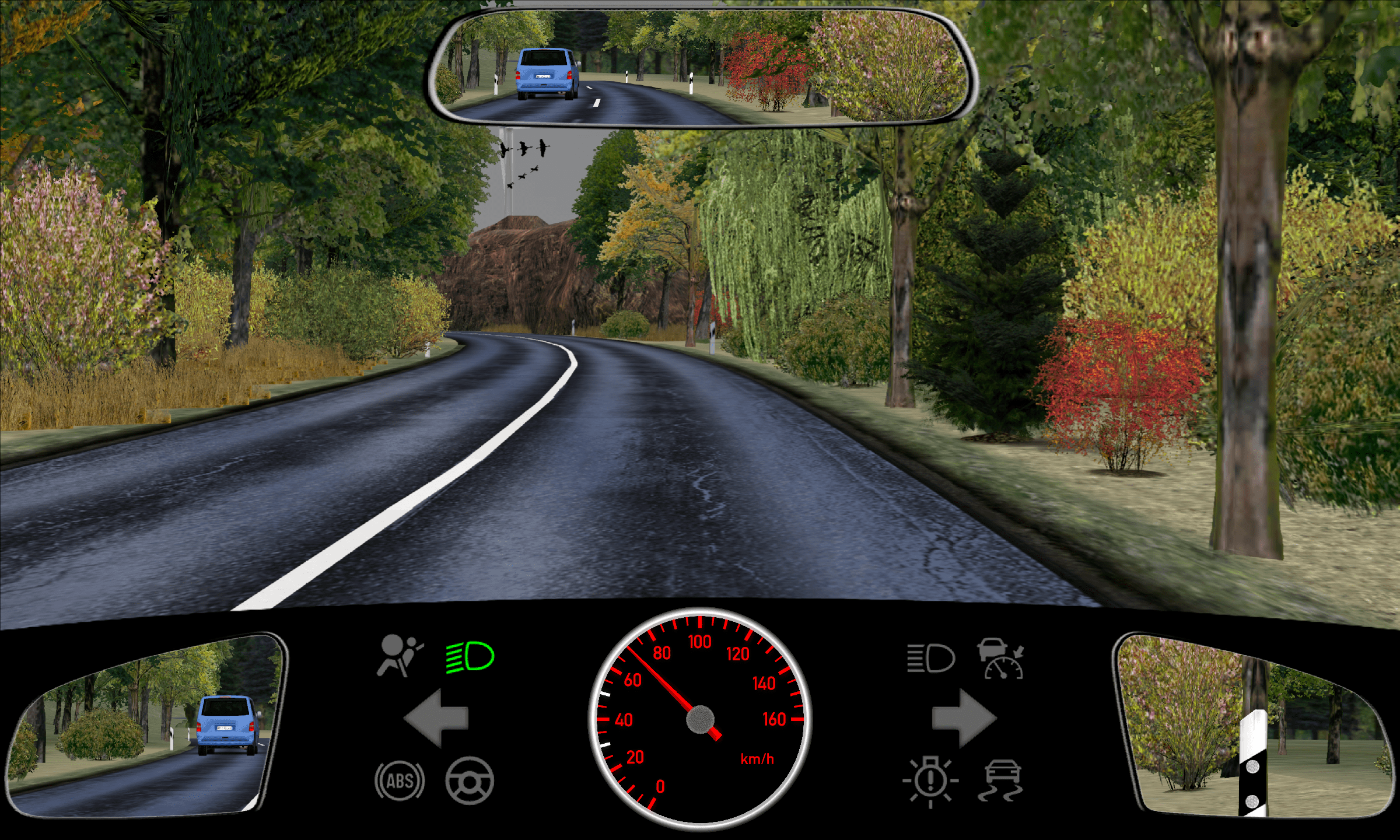
-
Soru 14 / 21
Virajlarda düşme riskini neler artırabilir?
2.1.03-0403 puanAçıklama
Oil on the road increases the risk of falling when cornering, as the tyres' grip is significantly reduced due to the slippery surface. Unevenness in the road surface, such as bumps, reduces the grip of the tyres and therefore increases the risk of falling.
-
Soru 15 / 21
Islak yol çizgileri ıslak olduğunda düşme riskini nasıl azaltırsınız?
2.1.03-0413 puanAçıklama
As the road markings are slippery, especially when wet, you should avoid driving over them if possible. If it is not possible to drive around them, you should take the shortest route across them to minimise the risk of falling. Due to the wetness, you should avoid accelerating or braking here to minimise the risk of falling.
-
Soru 16 / 21
Islak parke taşları üzerinde sürüş yaparken neleri hesaba katmalısınız?
2.1.03-0423 puanAçıklama
An uneven and wet road surface and therefore less grip increases the risk of the rear wheel spinning or slipping when accelerating. When braking on wet cobblestones, the tendency to lock up is increased, which can cause the rear wheel to slip sideways more quickly. Locking tendency means that the front wheel is loaded more and the rear wheel is unloaded when braking.
-
Soru 17 / 21
Düşük dış sıcaklıklarda iki tekerlekli araç kullanırken nelere dikkat etmelisiniz?
2.1.03-0433 puan -
Soru 18 / 21
Bu durumda neleri göz önünde bulundurmalısınız?
2.1.03-0444 puan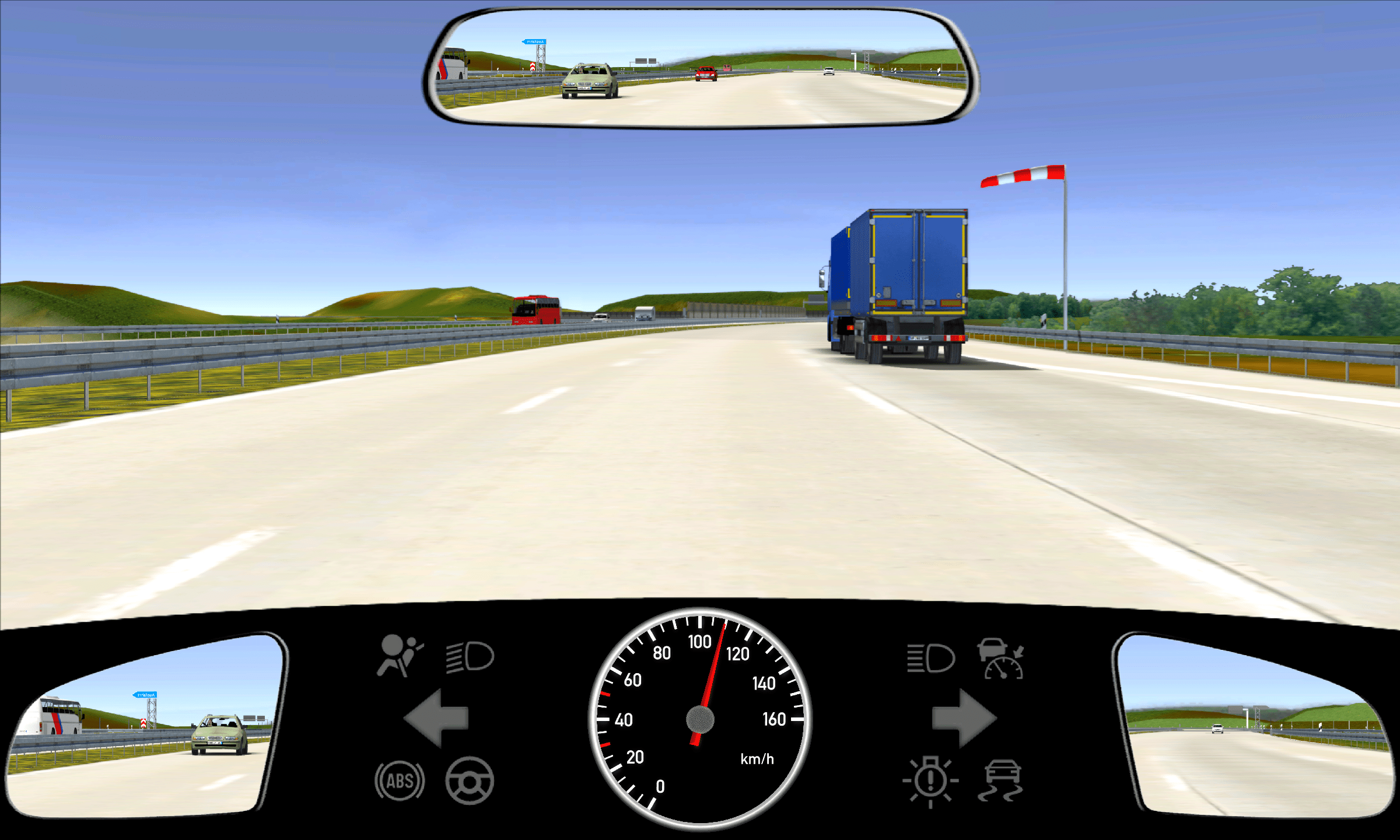
Açıklama
You can see from the windsock that a strong wind is blowing from the right. The strong wind could move your vehicle to the left. Be prepared to steer to the right. In addition, when entering the slipstream of the truck, you must be prepared for your vehicle to be moved to the right because its large surface area will keep out the crosswind. Be prepared to steer to the left to avoid colliding with the truck.
-
Soru 19 / 21
Şiddetli yağmur yolda büyük su birikintilerinin oluşmasına neden oldu. Şimdi doğru davranış nedir?
2.1.03-0453 puan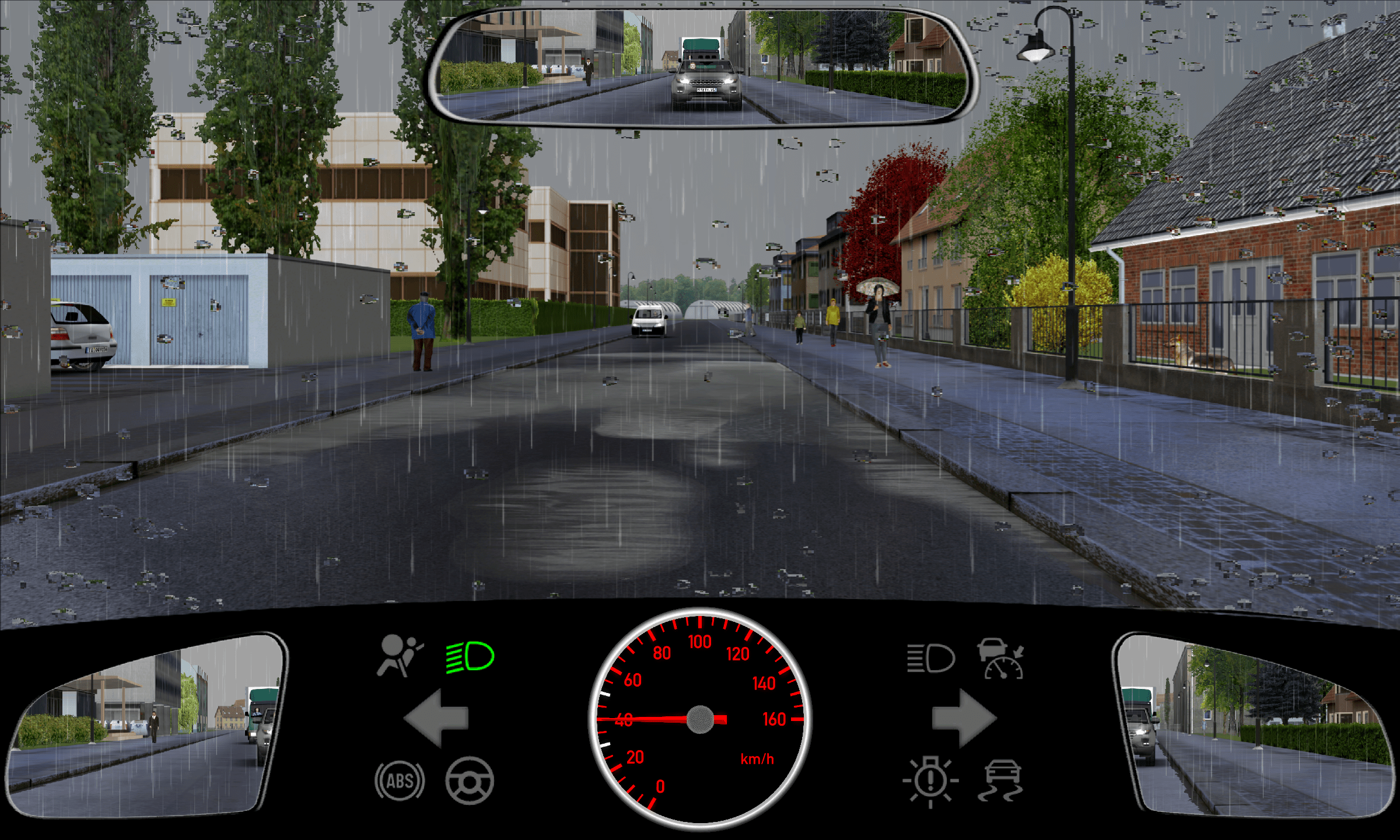
-
Soru 20 / 21
Uzun bir kuruluk sonrasında yağmur yağmaya başladığında araç kullanırken nelere hazırlıklı olmalısınız?
2.1.03-0463 puanAçıklama
Basically, you must always expect visibility through your helmet visor to be poorer in the rain and, if it is dry for a long time, a layer of dirt will remain on the road which can form a slippery film on the road surface when it rains, so you must expect the road to be particularly slippery.
-
Soru 21 / 21
Çok sayıda kamyonu sollarkan bu duruma düştünüz. Şimdi nasıl davranırsınız?
2.1.03-1114 puan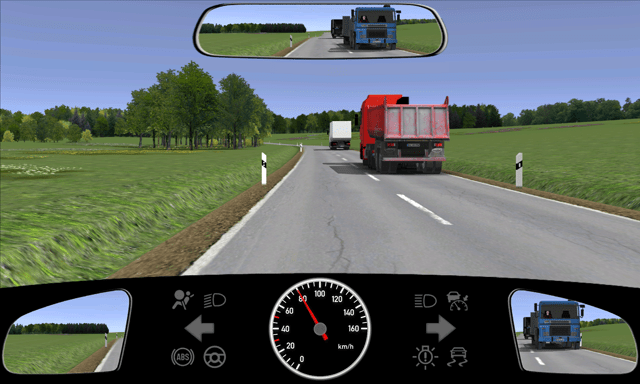
Açıklama
The visibility is very poor due to the weather and the road is not sufficiently visible. In order not to endanger anyone, you should stop the overtaking process as quickly as possible and ensure that you are at a safe distance from the vehicle in front of you when you go back into lane.