
2.1.03 Warunki drogi i pogody
Złota zasada ⭐
Zła pogoda = mniejsza przyczepność + dłuższa droga hamowania + słaba widoczność.
👉Zawsze zmniejszaj prędkość, zwiększaj dystans i unikaj gwałtownego skręcania lub hamowania.
🌧️ Deszcz i mokre drogi
- Pierwszy deszcz po suchej pogodzie tworzy śliską warstwę oleju.
- Droga hamowania wydłuża się.
- Widoczność pogarsza się z powodu rozprysków wody i zaparowanego wizjera.
- Unikaj nagłego hamowania i przyspieszania.
- Natychmiast zwiększ bezpieczną odległość.
- Oznakowanie drogowe staje się bardzo śliskie, gdy jest mokre.
Szczególnie niebezpieczny jest „pierwszy deszcz po suszy”.
💧 Aquaplaning
- Występuje przy dużej prędkości na mokrej nawierzchni.
- Opony tracą kontakt z drogą.
- Nie możesz prawidłowo kierować ani hamować.
- Ryzyko jest większe w przypadku kolein pod kołami i stojącej wody.
- Powoli zdejmij nogę z gazu.
- Trzymaj kierownicę prosto.
- NIE hamuj nagle.
🌬️Boczny wiatr
- Zagrożenie wzrasta w pobliżu mostów, tuneli i ciężarówek.
- Motocykle mogą nagle skręcić w bok.
- Strumień powietrza w ciężarówce nagle zmienia ciśnienie wiatru.
- Duża prędkość sprawia, że boczny wiatr jest bardziej niebezpieczny.
Zmniejsz prędkość i ostrożnie kontruj.
⚠️ Śliskie nawierzchnie
- Oznaczenia pasów
- Plastry olejowe
- Kostka brukowa
- Liście i piasek
- Włazy i szyny tramwajowe
- Mokre drogi i żwir
Zwiększone ryzyko poślizgu i upadku.
🌫️ Mgła i słaba widoczność
- Używaj świateł mijania.
- Tylne światło przeciwmgielne tylko przy widoczności poniżej 50 m.
- Maksymalna prędkość z tylnym światłem przeciwmgłowym = 50 km/h.
- Nie jedź wzdłuż linii środkowej.
- Skieruj się na prawą stronę drogi.
Same światła postojowe NIE są dozwolone we mgle.
❄️Śnieg i lód
- Droga staje się wyjątkowo śliska.
- Zaspy śniegu ograniczają widoczność.
- Droga hamowania znacznie się wydłuża.
- Unikaj wyprzedzania na błocie pośniegowym.
- Jedź płynnie, bez szarpnięć kierownicą.
Hamuj wcześnie i jedź przewidywalnie.
🏍️ Specjalne ryzyko motocykla
- Boczny wiatr może zepchnąć motocykl na bok.
- Oznaczenia pasów na mokrej nawierzchni są bardzo śliskie.
- Szyny tramwajowe należy krzyżować możliwie prostopadle.
- Kostka brukowa mocno zmniejsza przyczepność.
- Liście, piasek i olej zwiększają ryzyko upadku na zakrętach.
- Zachowaj odpowiednią odległość podczas jazdy w grupie.
- Unikaj gwałtownego hamowania podczas pochylania się.
- Tylne koło może łatwiej blokować się na mokrych drogach.
🧠 Formuła szybkiej pamięci
🌧️ Deszcz = ślisko + słaba widoczność
💧 Aquaplaning = brak kierowania + brak hamowania
🌬️ Boczny wiatr = Ostrożnie kontratakuj
❄️ Śnieg/lód = Hamuj wcześniej + Jedź powoli
⚠️ Śliskie powierzchnie = Unikaj gwałtownych ruchów
Practice Questions (21)
-
Question 1 of 21
Na co należy zwracać uwagę, jeżeli na pasie ruchu, po którym Pani/Pan jedzie, znajdują się szyny tramwajowe?
2.1.03-0114 PunktówWyjaśnienie
Tramlines are made of metal which is slippery. A motorcycle therefore has a higher risk of sliding and falling on them. When crossing you should try to be as perpendicular to them as possible to avoid slipping
-
Question 2 of 21
Co może powodować aquaplaning (utratę przyczepności na skutek działania klinów wodnych) na mokrej jezdni?
2.1.03-0155 PunktówWyjaśnienie
Aquaplaning - also known as hydroplaning - occurs when the tread depth of the tires is too low to displace the accumulated amount of water or when the amount of water to be discharged is too large due to a high speed (from 60 km/h). In addition, wheel ruts in the road, in which water accumulates, favor this effect.
-
Question 3 of 21
Do czego może prowadzić nagłe pogorszenie się stanu nawierzchni?
2.1.03-0253 PunktówWyjaśnienie
As the road surface deteriorates, it always results in a change and deterioration of traction. As the wheels lose stiction, the vehicle is slipping and skidding faster. The tire noise also depends on the condition of the road surface and changes when, for example, the road turns from a paved road to a cobblestone track.
-
Question 4 of 21
Jak należy zachować się prawidłowo?
2.1.03-0285 PunktówWyjaśnienie
While overtaking a cyclist, the oncoming truck also partly gets on your lane. Brake and drive as far to the right as possible.
-
Question 5 of 21
Na co powinni się Państwo tutaj nastawić?
2.1.03-0313 Punktów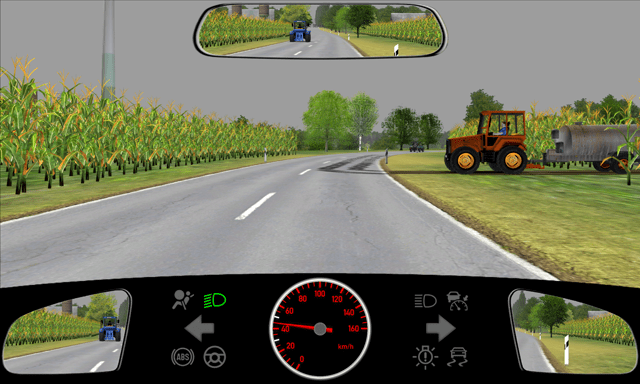
Wyjaśnienie
Dirt on the road can increase (not decrease) the braking distance and could make the road more slippery thus affecting the stability of your vehicles
-
Question 6 of 21
Nieoczekiwanie jadą Państwo prostym odcinkiem drogi pokrytym żwirem. Jak zachowają się Państwo właściwie?
2.1.03-0324 PunktówWyjaśnienie
On the straight unexpected section with rolling gravel you should carefully reduce your speed for safety reasons and maintain your driving line as much as possible.
-
Question 7 of 21
Jak zachowają się Państwo teraz właściwie?
2.1.03-0334 PunktówWyjaśnienie
Due to the bad weather conditions, you should reduce your speed and avoid jerky steering movements (see danger sign) as you could otherwise skid.
-
Question 8 of 21
Do czego może prowadzić aquaplaning (akwaplanacja)?
2.1.03-0344 PunktówWyjaśnienie
In the event of aquaplaning, your vehicle has no direct contact with the road surface, so the steering command and the braking command cannot be implemented.
-
Question 9 of 21
Wieje silny boczny wiatr. Kiedy istnieje niebezpieczeństwo, że Państwa motocykl przy dużej prędkości zostanie przesunięty w bok?
2.1.03-0353 PunktówWyjaśnienie
Wind conditions change when overtaking a truck, when driving up a bridge and when leaving a tunnel. Be prepared for crosswinds.
-
Question 10 of 21
Jakie zachowanie będzie właściwe w tej sytuacji?
2.1.03-0363 Punktów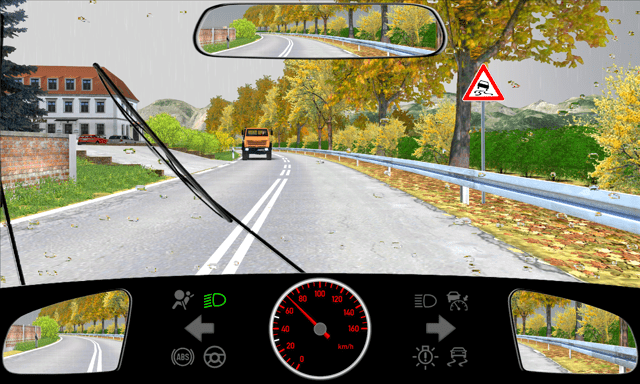
Wyjaśnienie
The traffic sign indicates a risk of skidding and sliding. To avoid skidding, you should reduce your speed, especially when it is raining and leaves are falling on the road, as is the case here. Braking hard, accelerating hard or steering jerkily can cause the tyres to lose their grip and you could skid or slide.
-
Question 11 of 21
Na co muszą się Państwo nastawić w tym przypadku?
2.1.03-0374 Punktów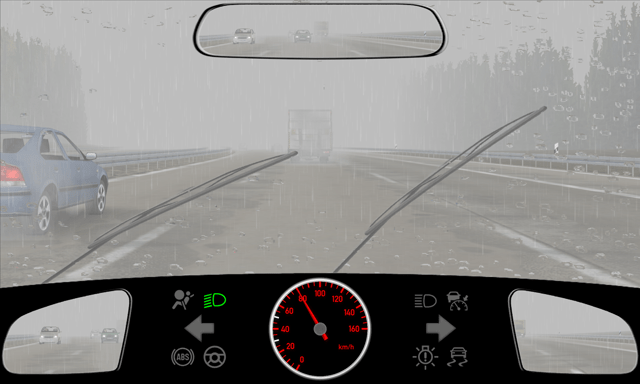
Wyjaśnienie
Because of the rain, you should be prepared for the fact that other vehicles will not be able to see your vehicle and that your braking distance will be longer due to the reduced grip.
-
Question 12 of 21
Kiedy są tu Państwo szczególnie zagrożony podczas wyprzedzania?
2.1.03-0384 Punktów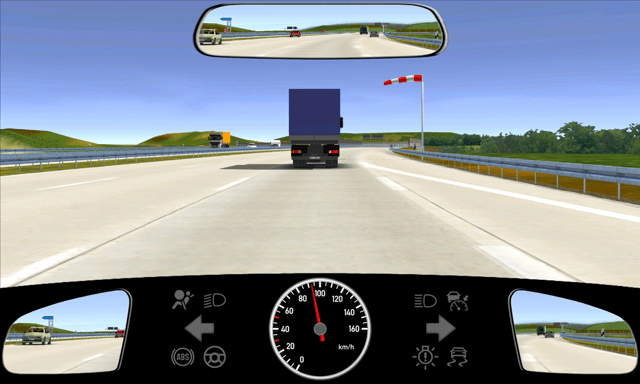
Wyjaśnienie
If there is a strong side wind from the right, you as a motorist are particularly at risk if, when driving off-road, you overtake in the slipstream of a truck. This hazard arises from the fact that strong cross winds from the right push your vehicle to the left, whereupon you automatically countersteer. As you overtake a truck, you slipstream into it; the crosswind is gone instantly and you have to adjust the steering. As soon as you pull out of the slipstream, the pressure starts up again with the crosswind; You have to countersteer again.
-
Question 13 of 21
Czym może skutkować to, jeśli przejadą Państwo przez zakręt blisko znaków poziomych?
2.1.03-0394 Punktów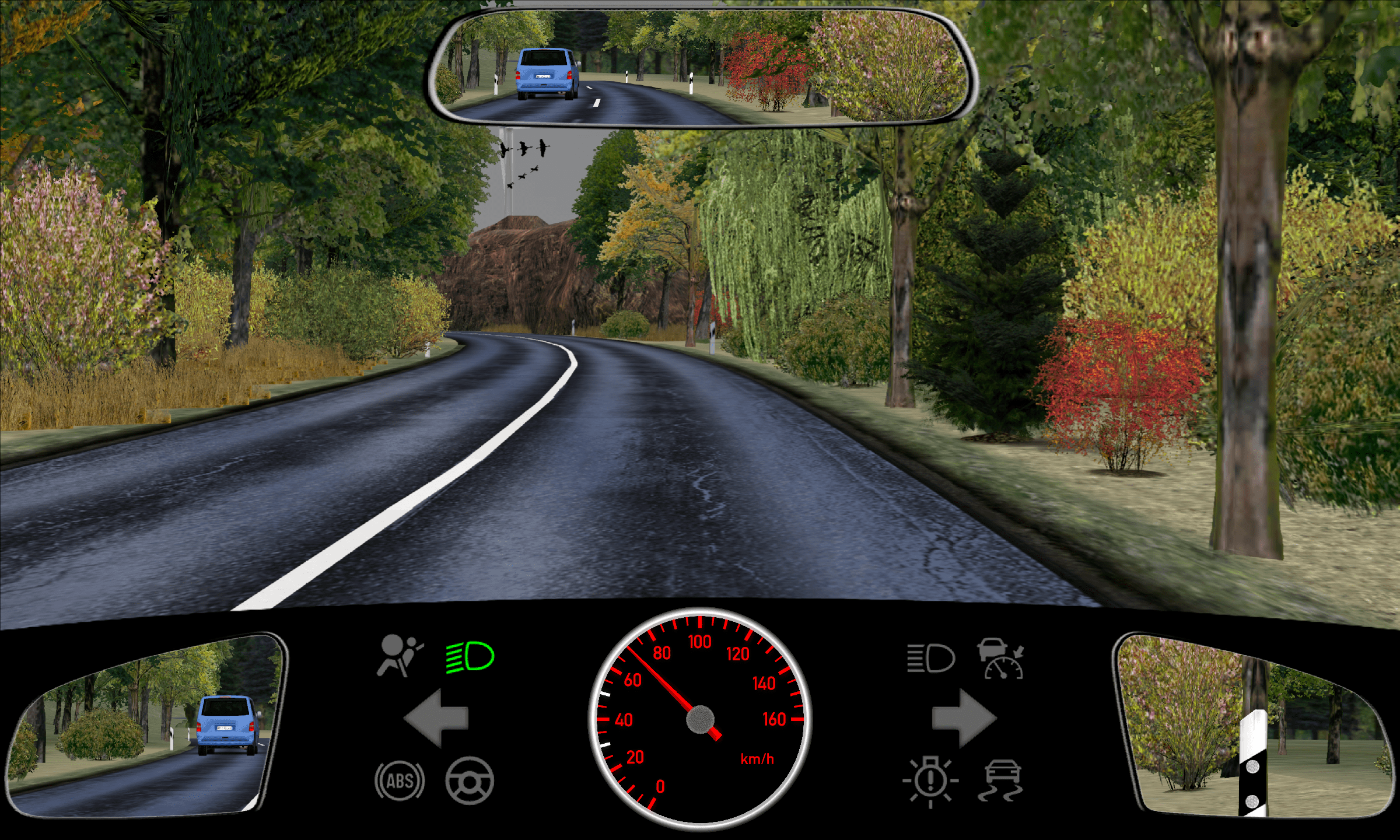
-
Question 14 of 21
Co może zwiększyć ryzyko upadku na zakrętach?
2.1.03-0403 PunktówWyjaśnienie
Oil on the road increases the risk of falling when cornering, as the tyres' grip is significantly reduced due to the slippery surface. Unevenness in the road surface, such as bumps, reduces the grip of the tyres and therefore increases the risk of falling.
-
Question 15 of 21
Jak zredukują Państwo niebezpieczeństwo upadku w przypadku wilgotnych znaków poziomych?
2.1.03-0413 PunktówWyjaśnienie
As the road markings are slippery, especially when wet, you should avoid driving over them if possible. If it is not possible to drive around them, you should take the shortest route across them to minimise the risk of falling. Due to the wetness, you should avoid accelerating or braking here to minimise the risk of falling.
-
Question 16 of 21
Z czym muszą się Państwo liczyć podczas jazdy po wilgotnej kostce brukowej?
2.1.03-0423 PunktówWyjaśnienie
An uneven and wet road surface and therefore less grip increases the risk of the rear wheel spinning or slipping when accelerating. When braking on wet cobblestones, the tendency to lock up is increased, which can cause the rear wheel to slip sideways more quickly. Locking tendency means that the front wheel is loaded more and the rear wheel is unloaded when braking.
-
Question 17 of 21
Co powinni Państwo uwzględnić, gdy jadą Państwo pojazdem jednośladowym przy niskich temperaturach na zewnątrz?
2.1.03-0433 Punktów -
Question 18 of 21
Z czym trzeba się liczyć w tej sytuacji?
2.1.03-0444 Punktów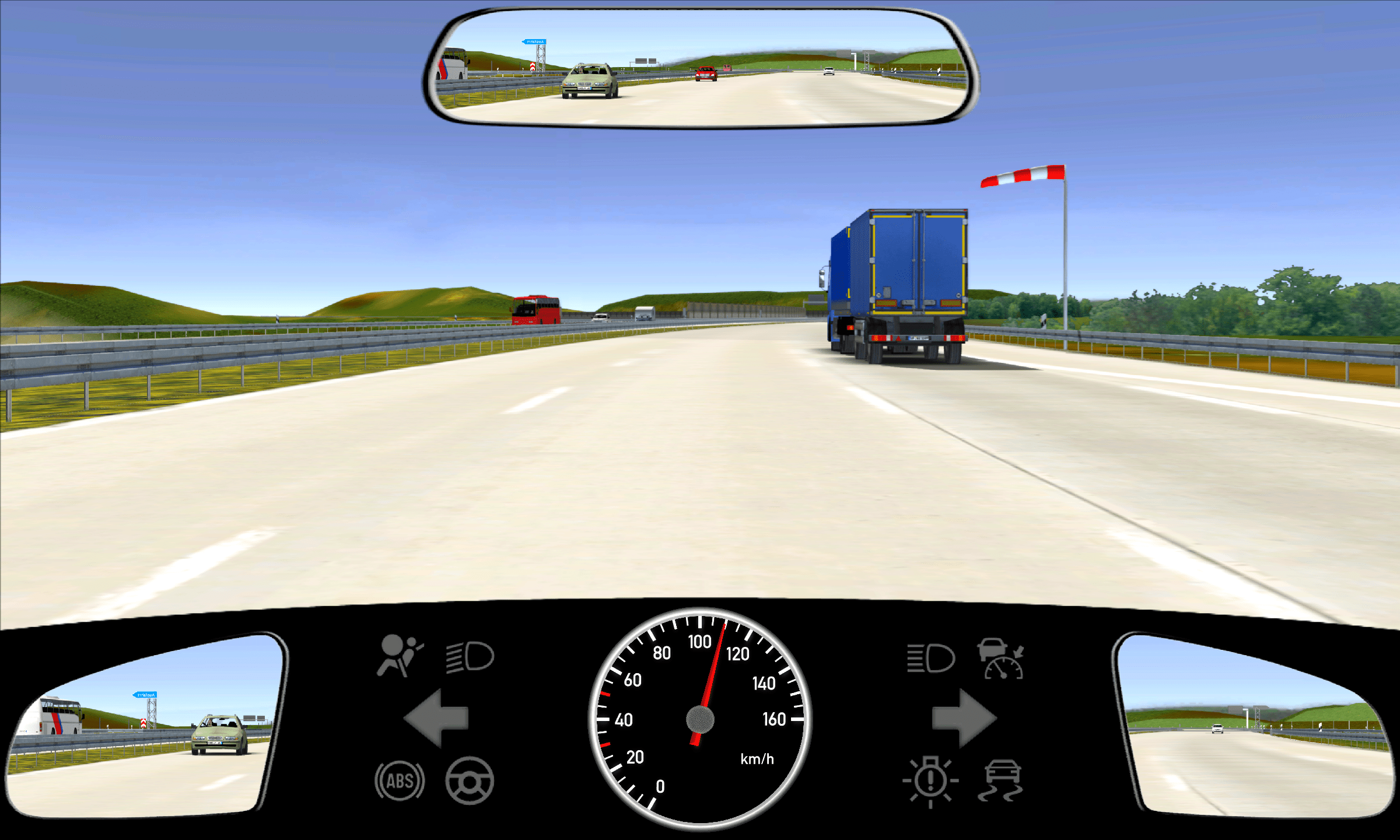
Wyjaśnienie
You can see from the windsock that a strong wind is blowing from the right. The strong wind could move your vehicle to the left. Be prepared to steer to the right. In addition, when entering the slipstream of the truck, you must be prepared for your vehicle to be moved to the right because its large surface area will keep out the crosswind. Be prepared to steer to the left to avoid colliding with the truck.
-
Question 19 of 21
Ulewny deszcz spowodował utworzenie się dużych kałuż na jezdni. Jaki jest właściwy sposób zachowania się Państwa w tym momencie?
2.1.03-0453 Punktów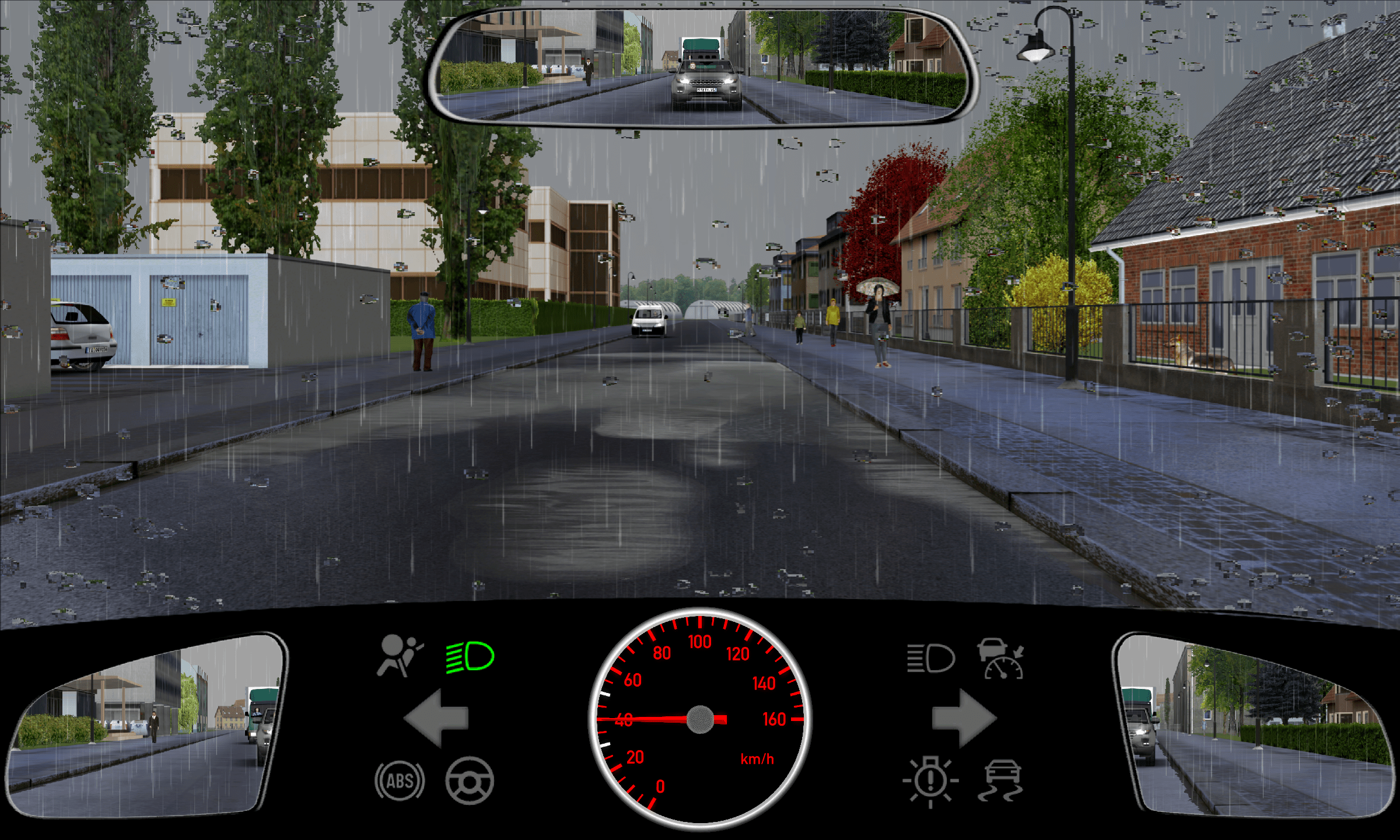
-
Question 20 of 21
Na co trzeba być przygotowanym podczas jazdy, gdy po długiej suszy zaczyna padać deszcz?
2.1.03-0463 PunktówWyjaśnienie
Basically, you must always expect visibility through your helmet visor to be poorer in the rain and, if it is dry for a long time, a layer of dirt will remain on the road which can form a slippery film on the road surface when it rains, so you must expect the road to be particularly slippery.
-
Question 21 of 21
Podczas wyprzedzania kilku samochodów ciężarowych znalazłeś się w takiej sytuacji. Jak się zachowasz?
2.1.03-1114 Punktów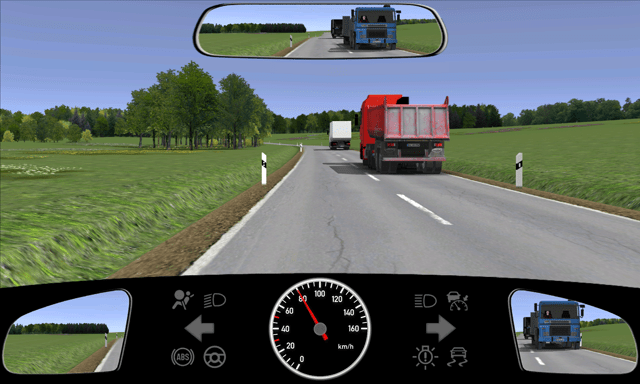
Wyjaśnienie
The visibility is very poor due to the weather and the road is not sufficiently visible. In order not to endanger anyone, you should stop the overtaking process as quickly as possible and ensure that you are at a safe distance from the vehicle in front of you when you go back into lane.