
1.2.09 Obracanie, obracanie i odwracanie
1. Toczenie styczne
Gdy oba nadjeżdżające pojazdy chcą skręcić w lewo, należy skręcić przed sobą (stycznie).
2. Ustąpienie miejsca (Pierwoństwo przejazdu)
- 🛑 Nadjeżdżający ruch: Zawsze ma pierwszeństwo przed skręcającymi w lewo.
- 🛑 Piesi: Miej pierwszeństwo, gdy skręcasz w ich ulicę.
- 🛑 Rowerzyści/skuterzy: Miej pierwszeństwo, jeśli jadą prosto obok Ciebie.
- 🛑 Tramwaje: Podczas skręcania zawsze ustępuj pierwszeństwa tramwajom.
3. Wskazywanie zasad
Musisz zawsze sygnalizować zmianę kierunku.
- Wskazuje, kiedy jedziesz drogą z priorytetem skrętu.
- Wskaż, kiedy skręcasz w posesję/skrzyżowanie T.
- Ronda: Wskazuj TYLKO przy wyjściu, NIGDY przy wejściu!
4. Pozycjonowanie
Rutyna: 1. Spójrz (lustro i ramię) ➔ 2. Wskaż ➔ 3. Ustaw pojazd.
Ulice jednokierunkowe: Przejdź na skrajny lewy pas, aby skręcić w lewo.
Zakręty wielopasmowe: Pozostań na swoim pasie! Nie zjeżdżaj na równoległe pasy. Jeśli zaraz potem skręcasz w prawo, skorzystaj z prawego pasa do skrętu w lewo.
⚠️ Ostrzeżenie o pułapce egzaminacyjnej
Nawet jeśli jedziesz drogą z priorytetem, jeśli skręcasz w poprzek ruchu jadącego na wprost (jak tramwaj), musisz się zatrzymać i ustąpić pierwszeństwa.
Practice Questions (40)
-
Question 1 of 40
Chcieliby Państwo skręcić w lewo. Kiedy muszą Państwo zwrócić uwagę na następujący ruch?
1.2.09-0164 PunktówWyjaśnienie
When turning left, you should be aware of following traffic before turning and before merging.
-
Question 2 of 40
Dwa pojazdy jadą z naprzeciwka na skrzyżowaniu. Oba chciałyby skręcić w lewo. W jakim wyjątkowym przypadku muszą skręcać bezpośrednio po sobie?
1.2.09-0173 PunktówWyjaśnienie
Always turn in front of each other. If the traffic situation or the design of the intersection, e.g. lane markings, requires it, you must turn one behind the other.
-
Question 3 of 40
Dwa pojazdy jadą z naprzeciwka na skrzyżowaniu. Oba chciałyby skręcić w lewo. Jak muszą się z reguły zachować obaj kierowcy?
1.2.09-0183 PunktówWyjaśnienie
If two left-turning vehicles come towards each other, they turn in front of each other (tangentially).
-
Question 4 of 40
Chcieliby Państwo skręcić w lewo. Jakiej linii trzba się trzymać?
1.2.09-0194 Punktów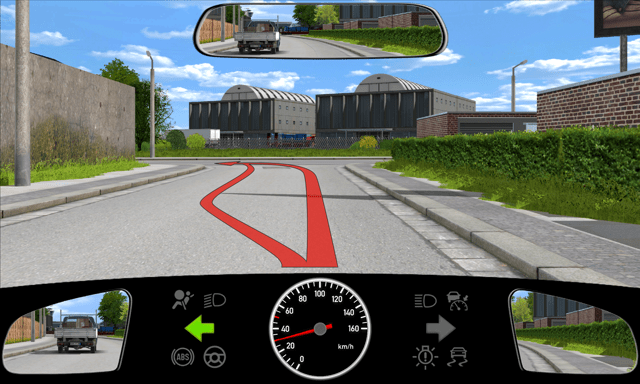
Wyjaśnienie
Use the right-hand driving line. The left-hand driving line is intended for oncoming traffic.
-
Question 5 of 40
Któremu uczestnikowi ruchu muszą Państwo tutaj udzielić pierwszeństwa?
1.2.09-0205 PunktówWyjaśnienie
When turning, you must give priority to oncoming traffic and cross traffic - in this case cyclists and pedestrians. Although your traffic lights are green, you must wait until the pedestrian has crossed the road. Pedestrians have priority over turning vehicles.
-
Question 6 of 40
Chcą Państwo opuścić rondo tym zjazdem. Co jest właściwe?
1.2.09-0214 Punktów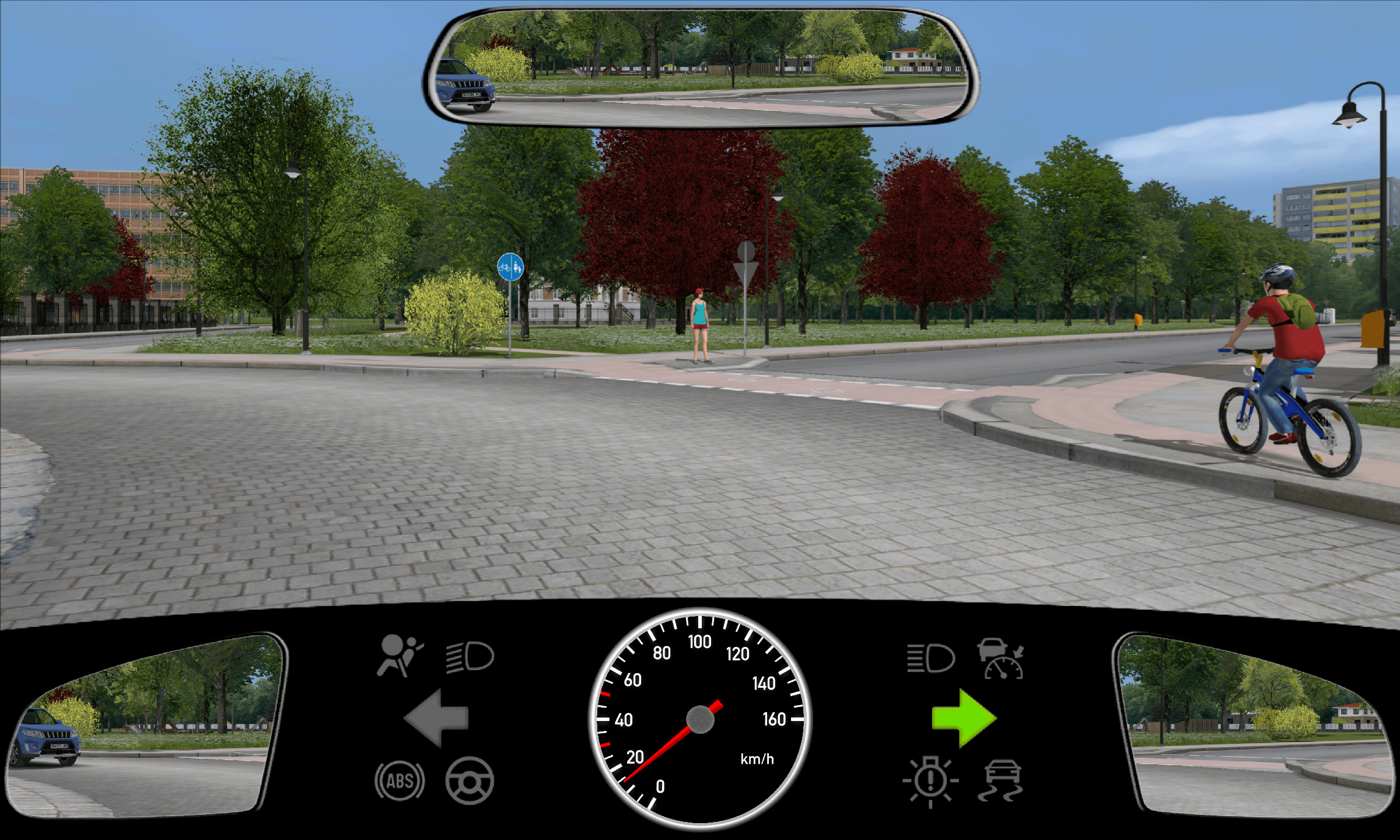
-
Question 7 of 40
Chcesz skręcić tutaj w prawo. Co musisz zrobić?
1.2.09-0224 Punktów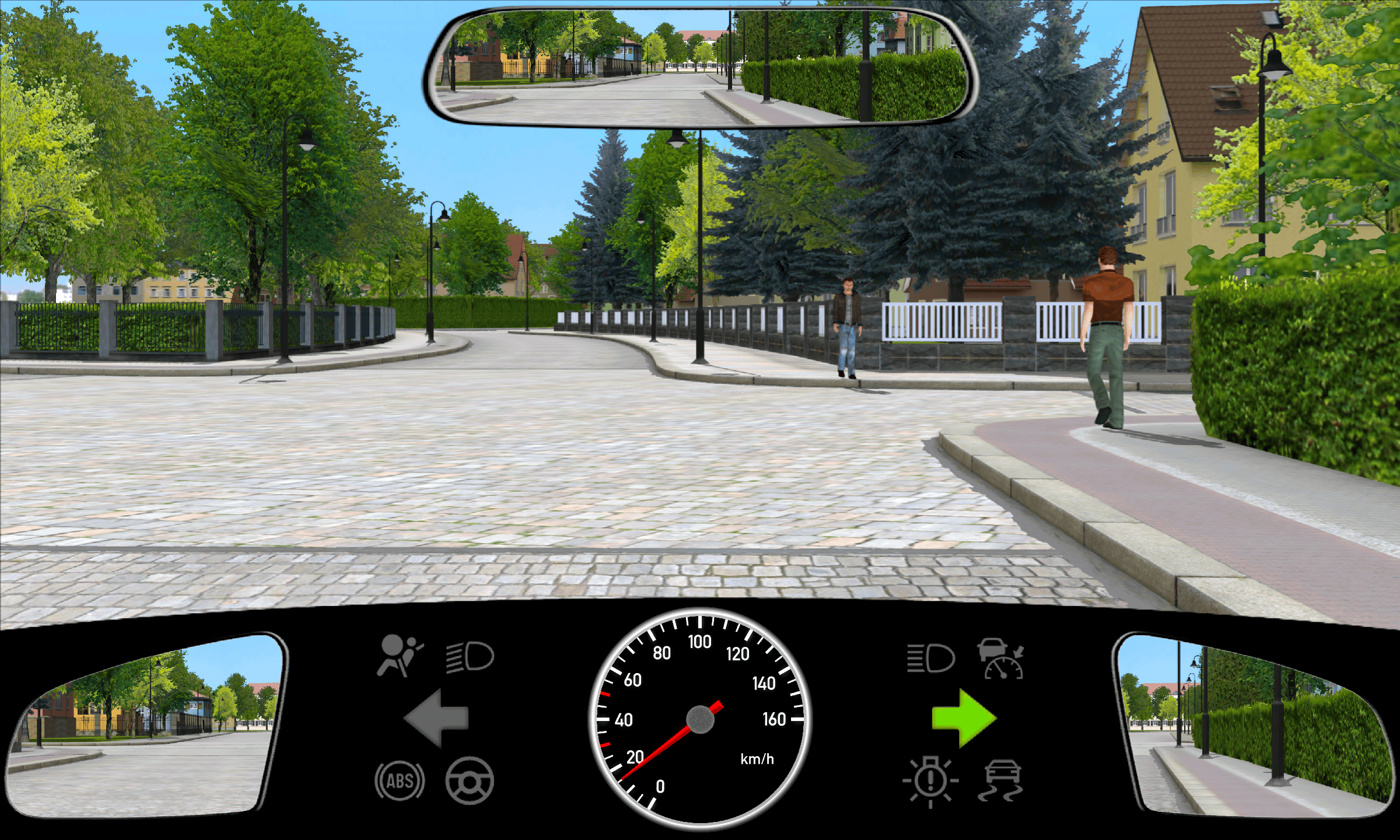
Wyjaśnienie
You must let both pedestrians cross the road. They do not change their direction of movement and therefore have priority over you.
-
Question 8 of 40
Co może prowadzić do szczególnie niebezpiecznych sytuacji przy wielopasmowym skręcaniu?
1.2.09-1014 PunktówWyjaśnienie
Drive at moderate speed into multi-lane turns. At too fast a pace you could get out of your lane and get into the lane of parallel driving vehicles. Avoid a lane change within this turning situation. There is a risk that a vehicle is directly behind you in your blind spot.
-
Question 9 of 40
Wszystkie trzy pojazdy chcą skręcić w lewo. Kto ustawił się we właściwy sposób?
1.2.09-1033 Punktów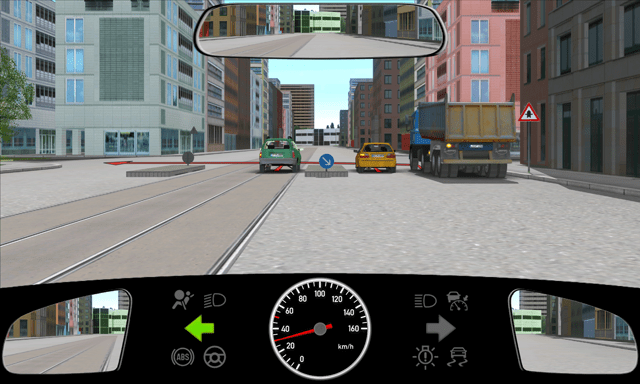
Wyjaśnienie
Only the yellow car merged into the lane correctly. He passed right, as it says on the road sign on the safety island, in order to then get in proper lane as left as possible to prepare his turn to the left. The green car is completely wrong on the rails; In this situation, the truck may only drive straight ahead or turn right.
-
Question 10 of 40
Po skręceniu w lewo chce Pani/Pan natychmiast skręcić w prawo. Jak się Pani/Pan ustawi nas pasach ruchu?
1.2.09-1043 Punktów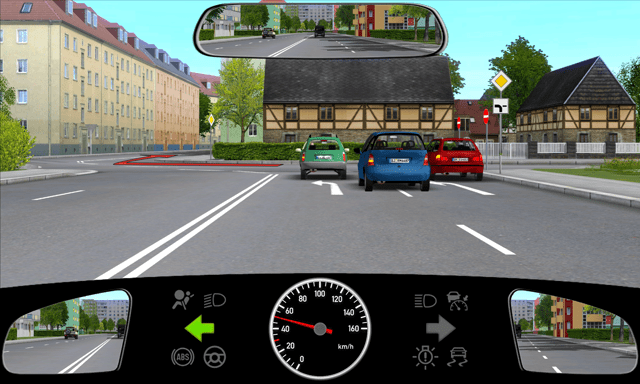
Wyjaśnienie
If you want to turn right again immediately after turning left, you get in proper lane on the right, if there are two lanes for turning left. Otherwise, keep as far to the right as possible. This is the only way you can turn right after a left turn without hindering other road users.
-
Question 11 of 40
Kto musi tutaj sygnalizować zmianę kierunku jazdy?
1.2.09-1073 Punktów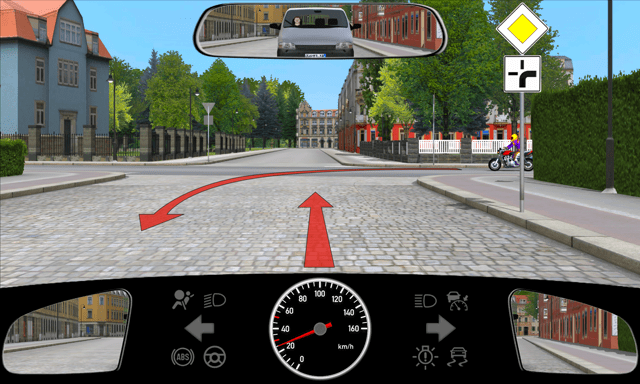
-
Question 12 of 40
Porusza się Pani/Pan po rondzie. O czym należy pamiętać?
1.2.09-1093 PunktówWyjaśnienie
In a roundabout you may only stop if this is unavoidable due to traffic, for example due to a traffic jam. Indicate when leaving the roundabout. You can only drive over paved or asphalted central islands if it is unavoidable due to the size of the vehicle. Always give priority to cyclists traveling on your right side and remaining in the roundabout.
-
Question 13 of 40
W jakiej sytuacji nawracanie jest szczególnie niebezpieczne?
1.2.09-1114 PunktówWyjaśnienie
When turning in poor visibility (fog), dangerous situations can arise. The same applies when turning in curves and before crests.
-
Question 14 of 40
Kto powinien włączyć kierunkowskaz?
1.2.09-1123 Punktów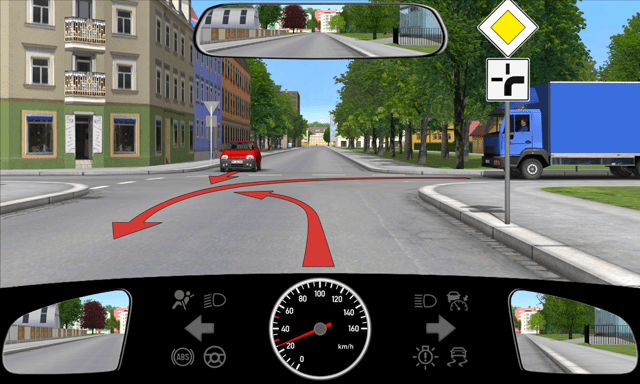
Wyjaśnienie
Changing the direction of travel must always be indicated by pressing the indicator. If you stay on a turning priority road you should also indicate that. Therefore, the blue truck must indicate. You, who's turning left, must also indicate.
-
Question 15 of 40
Kto musi tutaj zasygnalizować zmianę kierunku jazdy?
1.2.09-1133 Punktów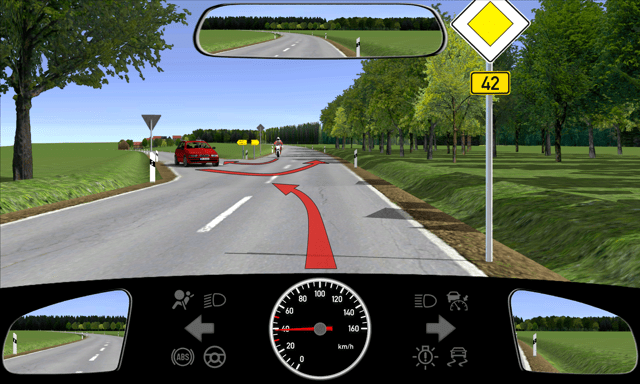
Wyjaśnienie
The change of the direction of travel must always be indicated early enough. All three drivers intend to turn. Therefore, all three vehicles must indicate.
-
Question 16 of 40
W jakich pyrzypadkach musisz zasygnalizować zmianę kierunku jazdy?
1.2.09-1174 PunktówWyjaśnienie
If you want to turn into a T-junction or a property, you have to indicate. The same applies if you follow a turning priority road - here, too, the change of the direction of travel must be indicated.
-
Question 17 of 40
Dlaczego musisz teraz czekać?
1.2.09-1194 PunktówWyjaśnienie
Drivers who turn need to wait for vehicles from the opposite direction, even for cyclists. The red car has to wait until the green car and the cyclist are gone.
-
Question 18 of 40
Chcesz skręcić w lewo. W jakiej kolejności przygotowujesz się do skrętu?
1.2.09-1204 PunktówWyjaśnienie
If you want to turn left, prepare the turn in the following order: 1. look, 2. indicate, 3. arrange. Looking means that you are observing follow-up traffic in the mirror and over your shoulder. Then press the indicator to the left side. Only if you can rule out danger for other road users, you may merge left in order to turn.
-
Question 19 of 40
Które zachowanie jest prawidłowe?
1.2.09-1215 Punktów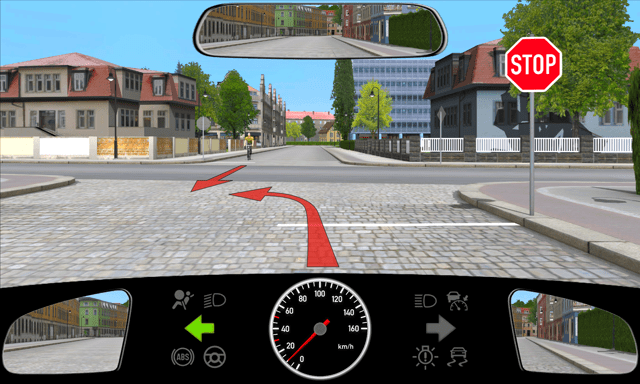
Wyjaśnienie
In front of the traffic sign "Stop! Give way!", colloquially also called stop sign, you must always stop. Mostly there is a stop line. The wheels must be stationary for at least a short amount of time. The cross traffic has right of way - then the cyclists on the opposite side. As a driver turning left, you have to grant him the right of way.
-
Question 20 of 40
Chcesz skręcić w lewo. Komu musisz ustąpić pierwszeństwa?
1.2.09-1234 PunktówWyjaśnienie
The oncoming traffic when turning left, has always right of way. This also applies to cyclists; they are granted priority. If pedestrians cross the street you want to turn into, the pedestrians have priority too.
-
Question 21 of 40
Chcesz skręcić w lewo. Jakie trudności możesz przy tym napotkać?
1.2.09-1243 PunktówWyjaśnienie
When turning left, vehicles approaching each other have to turn in front of each other (tangent turning). This can lead to poor visibility of the straight-ahead traffic. Especially left-turning trucks can lead to massive obstructions and make it safer to turn in a wide arc (turning behind each other). There may be misunderstandings between drivers when one wants to turn behind and the other in front.
-
Question 22 of 40
Dlaczego muszą się Państwo teraz zatrzymać?
1.2.09-1254 PunktówWyjaśnienie
You are on a priority road and therefore you're allowed to drive before the white car coming from the right. However, as a driver who wants to turn, you have a subordinate position to traffic driving straight-ahead, in this case the tram. You have to stop.
-
Question 23 of 40
Jak należy zachować się tu prawidłowo?
1.2.09-1264 PunktówWyjaśnienie
You must not overtake the moped before the level crossing. In general, no vehicles may be overtaken at level crossings from signs 151, 156 to the rails.
-
Question 24 of 40
Dlaczego teraz muszą Państwo hamować?
1.2.09-1275 PunktówWyjaśnienie
The motorcyclist comes from the left at high speed. He probably did not see you because of the oncoming vehicle. Although you have the right of way, you have to slow down, as otherwise an accident will occur.
-
Question 25 of 40
Dlaczego muszą Państwo czekać przed wykonaniem skrętu w prawo?
1.2.09-1285 PunktówWyjaśnienie
If you want to turn, you must give priority to road users traveling straight ahead. In this case, you have lower priority to the pedestrian and the cyclist and must allow them a safe crossing.
-
Question 26 of 40
Na co musicie Państwo tu zwrócić uwagę?
1.2.09-1293 PunktówWyjaśnienie
Since the blue car is already in the roundabout, you have to slow down. Only when leaving the roundabout, you must indicate.
-
Question 27 of 40
[Rowerzysta] chce jechać prosto. Jak powinni się Państwo właściwie zachować w takiej sytuacji?
1.2.09-1314 Punktów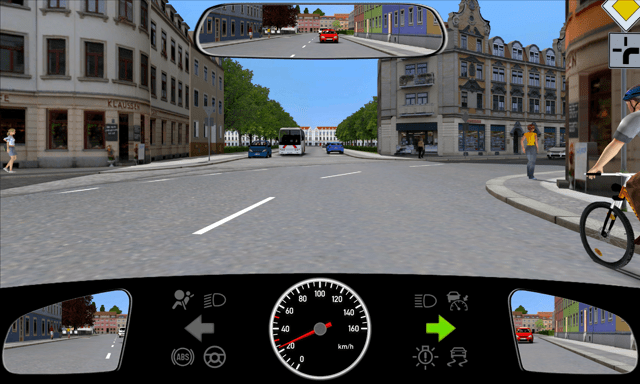
Wyjaśnienie
Vehicles that want to turn need to let bicycles pass that drive in their direction on or next to the road, before turning. It does not matter if their wheels are motorized or not.
-
Question 28 of 40
Dlaczego muszą Państwo w tej sytuacji zaczekać ze skręcaniem?
1.2.09-1325 PunktówWyjaśnienie
Because of the truck and the motorcycle. Here you have to pay attention to the turning rules. Wait for the vehicles to complete the maneuver and then continue turning.
-
Question 29 of 40
Kto w tej sytuacji musi włączyć kierunkowskaz?
1.2.09-1333 Punktów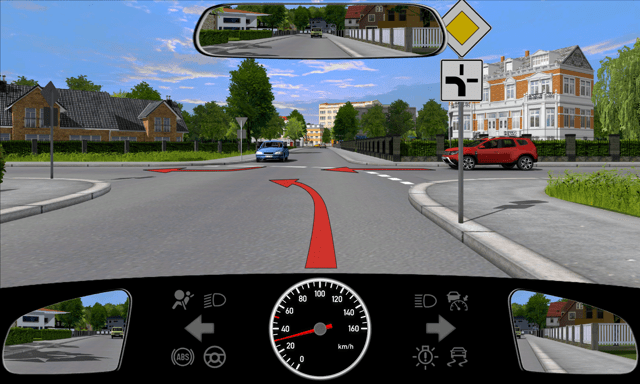
Wyjaśnienie
You and the blue car are changing direction for this reason you must indicate the change of direction.
-
Question 30 of 40
Jakie zachowanie będzie teraz właściwe?
1.2.09-1344 PunktówWyjaśnienie
The motorbike behind you has already changed to the left lane and will overtake you on the left. In order to merge into the left-turning lane in time, you must slow down.
-
Question 31 of 40
Dlaczego teraz nie mogą Państwo skręcić?
1.2.09-1355 PunktówWyjaśnienie
At an intersection, drivers going straight ahead have the right of way. You must wait to turn until the yellow car has crossed the intersection.
-
Question 32 of 40
Z czym muszą się Państwo liczyć w tej sytuacji?
1.2.09-1365 PunktówWyjaśnienie
The blue car drives past the stopping bus and may want to continue straight on, even though it is in the turning lane. Since you turn left, he has right of way.
-
Question 33 of 40
Dlaczego muszą się Państwo teraz zatrzymać?
1.2.09-1375 PunktówWyjaśnienie
There is an electric scooter in the blind spot, so you must stop to avoid endangering it.
-
Question 34 of 40
Jak zachować się teraz właściwie?
1.2.09-1384 PunktówWyjaśnienie
The straight ahead traffic always has priority, whether the cyclist is riding on the road or on a cycle path. To make sure that no other cyclist is approaching, you must look over your shoulder to the right.
-
Question 35 of 40
Dlaczego muszą Państwo teraz czekać?
1.2.09-2014 PunktówWyjaśnienie
Because you want to turn left, you should wait for the tram before turning.
-
Question 36 of 40
Dlaczego muszą Państwo w tej sytuacji czekać ze skręcaniem w prawo?
1.2.09-2025 PunktówWyjaśnienie
When turning, you must give priority to longitudinal traffic, for this reason you must wait for pedestrians and cyclists to pass.
-
Question 37 of 40
Dlaczego nie mogą Państwo teraz skręcić?
1.2.09-2034 Punktów -
Question 38 of 40
Dlaczego muszą Państwo w tej sytuacji czekać przed skrętem w lewo?
1.2.09-2045 PunktówWyjaśnienie
You are changing the direction of travel, so you must give the tram priority.
-
Question 39 of 40
Dlaczego muszą Państwo w tej sytuacji czekać przed skrętem w lewo?
1.2.09-2054 PunktówWyjaśnienie
A motorbike is driving behind a red car; due to your change of direction, you must give the motorcyclist priority.
-
Question 40 of 40
Dlaczego teraz muszą Państwo czekać?
1.2.09-2065 PunktówWyjaśnienie
The blue car and the cyclist are both going straight ahead, so they have the right of way, even if the cyclist is riding on the pavement.