
1.1.02 Comportament față de pietoni
Pietonii sunt cei mai vulnerabili participanți la traficul rutier. În calitate de șofer, trebuie să le anticipați întotdeauna comportamentul, în special copiii și persoanele în vârstă care s-ar putea să nu respecte cu strictețe regulile. Conducerea defensivă și comportamentul de tip partener sunt cheia.
verified Principiile de bază ale examenului
Conducerea defensivă
Conduceți întotdeauna cu așteptarea că pietonii ar putea face greșeli. Reduceți viteza în zonele cu trafic pietonal intens sau cu vizibilitate limitată.
Comportament asemănător unui partener
Nu insistați asupra dreptului de trecere dacă un pieton este deja pe drum sau este în mod clar confuz. Prioritați siguranța față de respectarea strictă a regulilor.
child_care Copii în trafic
Risc ridicatComportamentul corect
- check Reduceți viteza semnificativ când vedeți copii jucându-se lângă drum.
- check Fiți gata să frânați imediat; distanța de reacție contează.
- check Păstrați o distanță laterală de siguranță atunci când treceți.
Idei gresite
- close Presupunând că copiii se vor opri la bordură și vor privi în ambele părți.
- close Claxonați pentru a-i avertiza pe copii (acest lucru îi poate surprinde să alerge pe drum).
- close Accelerând pentru a le trece rapid.
Nota de examen
La întrebările de la examen, dacă vezi o minge rostogolindu-se pe stradă, presupun ÎNTOTDEAUNA că un copil va alerga imediat după ea fără să se uite. Răspunsul corect este întotdeauna să frânezi.
horizontal_rule Treceri cu zebră (treceri de pietoni)

Apropiindu-se de o trecere cu zebră
Regula cheie: Viteză moderată și disponibilitate pentru frânare.
Apropiindu-se
Apropiați-vă cu viteză moderată. Dacă un pieton așteaptă sau pășește pe trecere, trebuie să vă opriți.
Nici o depășire
Depășirea pe o trecere cu pietoni este strict interzis pentru a asigura vizibilitatea pietonilor.
Oprire
Nu opriți sau parcați direct pe trecere sau cu până la 5 metri înaintea acesteia.
Blocajele în trafic
Păstrați trecerea liberă dacă traficul este retras. Nu blocați poteca pietonilor.
directions_bus Autobuze, tramvaie și stații
1
Autobuz se apropie de o oprire cu luminile de avarie aprinse
expand_more
NU trebuie să depășiți autobuzul în timp ce acesta este în mișcare. Rămâi în urmă până când se oprește. Acest lucru indică o situație periculoasă în care copiii ar putea traversa.
2
Autobuzul staționează la oprire cu luminile de avarie aprinse
expand_more
Puteți trece autobuzul la ritmul de mers (4-7 km/h). Acest lucru se aplică traficului în AMBELE directii (cu excepția cazului în care există o barieră fizică ca o mediană). Trebuie să vă puteți opri imediat dacă un pasager pășește pe șosea.
3
Tramvaiele care trec
expand_more
În mod normal, treceți tramvaiele pe dreapta. Dacă pasagerii urcă sau coboară și nu există o insulă de siguranță, trebuie să vă opriți și să așteptați până când drumul este liber. Conduceți cu atenție pe lângă tramvaiele oprite.
warning Capcane tipice pentru examen
Capcana „Wind”.
Scenariu: Un pieton așteaptă să traverseze, dar ezită. Te oprești.
Răspuns capcană: „Îmi fac semn cu mâna pentru a face semn pietonului să treacă”.
Incorect! Nu flutura. Le puteți semnala în pericol (de exemplu, o mașină care vă depășește). Doar așteptați cu răbdare.
Vehicule parcate și vizibilitate limitată
Scenariu: Conducerea pe o stradă îngustă cu mașini parcate pe ambele părți.
Focalizarea examenului: Trebuie să anticipați pietonii care ies din spatele vehiculelor. Comportamentul corect este întotdeauna să reduce viteza și păstrați a distanta laterala mare dacă este posibil.
Întrebări Practice (33)
-
Întrebarea 1 din 33
Cu ce comportament al copiilor trebuie să scontaţi la treceri pentru pietoni?
1.1.02-0055 PuncteExplicație
Children generally do not have the necessary training to always behave according to the rules in road traffic. Therefore, it is quite conceivable that they do not know the meaning of a zebra crossing and enter the road despite approaching vehicles or suddenly run back after crossing.
-
Întrebarea 2 din 33
Cu ce trebuie scontat la vederea copiilor care aşteaptă la un stop?
1.1.02-0224 PuncteExplicație
Due to a lack of life experience as well as insufficient education, children do not always behave according to the rules in road traffic and, for example, get into the lane during a scuffle. Furthermore, you must expect children to suddenly run across the road, even if the traffic lights are still red or the lights of the cross-traffic are just changing.
-
Întrebarea 3 din 33
La ce trebuie să vă aşteptaţi atunci când persoane în vârstă traversează partea carosabilă cu ajutorul cadrelor de mers?
1.1.02-0274 PuncteExplicație
When elderly people with walking aids cross the road, you have a higher duty of care. The principle of trust is suspended. You must expect these people to stop suddenly or turn around unexpectedly. Older people also take a comparatively long time to cross the road.
-
Întrebarea 4 din 33
Deşi există un trotuar pe partea dreaptă a străzii, o persoană se deplasează pe carosabil într-un cărucior pentru handicapaţi. Cum reacţionaţi?
1.1.02-0284 PuncteExplicație
Disabled and elderly people sometimes do not behave in a roadworthy manner due to physical limitations. Therefore, please be especially careful and be sure to show consideration. Expect the wheelchair user to suddenly and unexpectedly swerve and drive even further into the lane. In such situations, it is not permitted to use the horn or drive around the person at high speed.
-
Întrebarea 5 din 33
O persoană într-un cărucior pentru handicapaţi nu reuşeşte să treacă de bordură pentru a ajunge pe trotuar, după ce a traversat strada. Cum procedaţi?
1.1.02-0294 PuncteExplicație
You should help the person. To do this, you may stop and switch on the hazard warning lights to warn other road users of possible dangers. It is not permitted to honk your horn and drive around the person in this situation. This would frighten and unsettle the wheelchair user.
-
Întrebarea 6 din 33
În cazul cărei persoane trebuie să luaţi în calcul dizabilitatea vizuală gravă?
1.1.02-0324 Puncte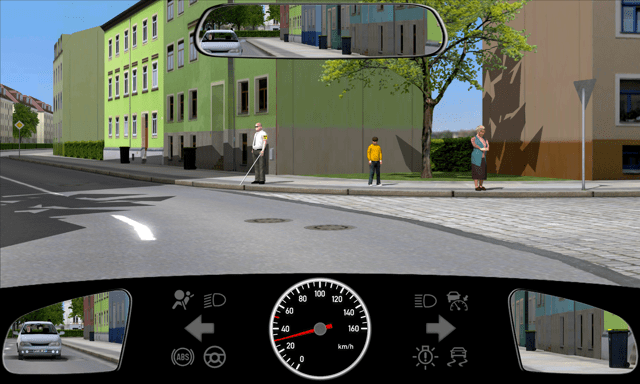
Explicație
You must expect a severe visual impairment in the case of persons with the following markings: If a person is wearing a yellow armband with three black dots and/or a white blind person's cane extended diagonally.
-
Întrebarea 7 din 33
Care va fi comportamentul dumneavoastră?
1.1.02-0394 Puncte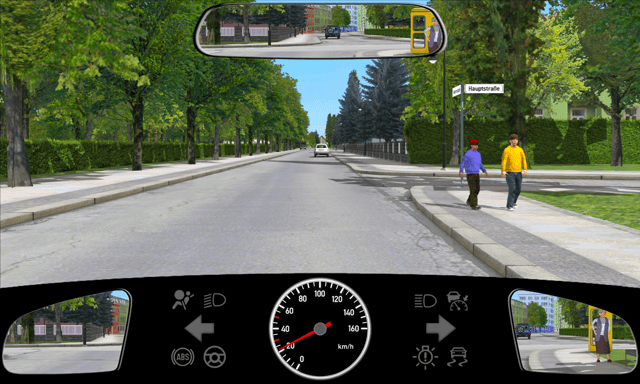
Explicație
Reduce speed and watch the two children very closely. Be careful and ready to brake. Stop if the children's behaviour makes this necessary.
-
Întrebarea 8 din 33
Care sunt pericolele pe care trebuie să le aveţi în vedere?
1.1.02-0415 Puncte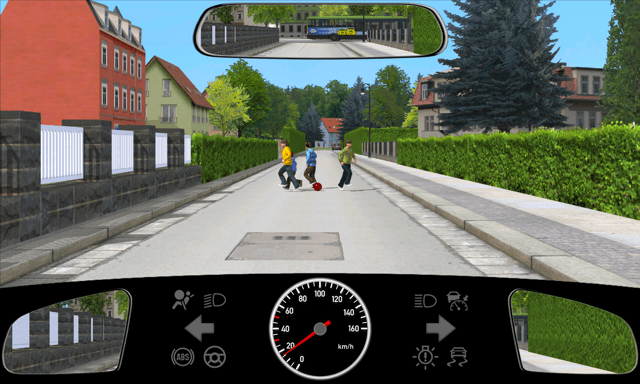
Explicație
If a ball is lying on the road, it can be assumed that a child will come and fetch it. For you as a driver, this means: stop immediately so that the child can fetch the ball safely. With children, you have to expect that they will behave in a way that is contrary to traffic regulations and that they will not be able to assess dangers correctly.
-
Întrebarea 9 din 33
Care ar trebui să fie comportamentul dumneavoastră?
1.1.02-0425 Puncte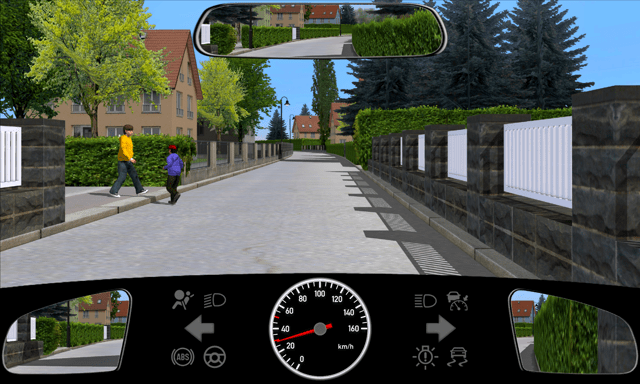
Explicație
The rule here is: reduce speed immediately, be ready to brake and drive slowly past the situation. It can be assumed that children who are playing are not paying attention to the traffic and are not behaving in a way that is appropriate for the traffic.
-
Întrebarea 10 din 33
Care trebuie să fie comportamentul dumneavoastră?
1.1.02-0435 Puncte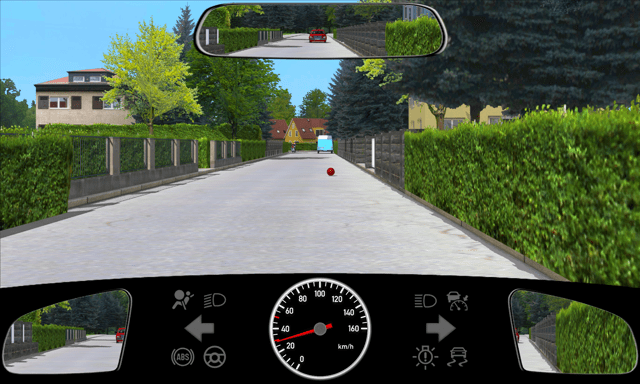
Explicație
Most likely, a child will come running into the road after the ball without paying attention to the traffic. Immediately slow your vehicle down to walking speed. Be especially alert and ready to brake!
-
Întrebarea 11 din 33
Cum ar trebui să procedați în această situație?
1.1.02-0485 Puncte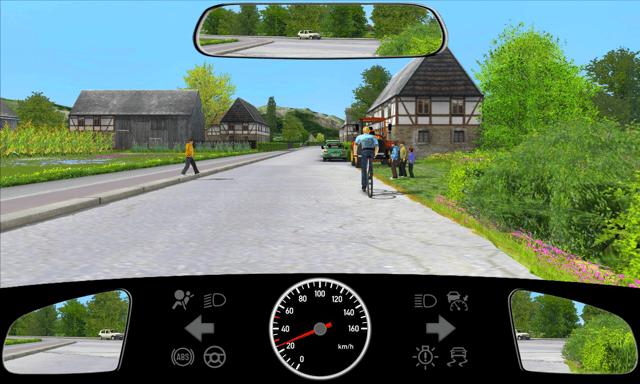
Explicație
Since there are children both on the left and right on the street, you should brake to walking pace and remain ready to brake.
-
Întrebarea 12 din 33
De ce trebuie să circulați aici încet și pregătit pentru a frâna?
1.1.02-0505 PuncteExplicație
The child behind the van on the left runs towards the roadway. You cannot see whether it will stop. Therefore, be especially attentive and careful in this unclear traffic situation. Drive slowly and be ready to brake.
-
Întrebarea 13 din 33
Cum procedați corect în această situație?
1.1.02-0514 Puncte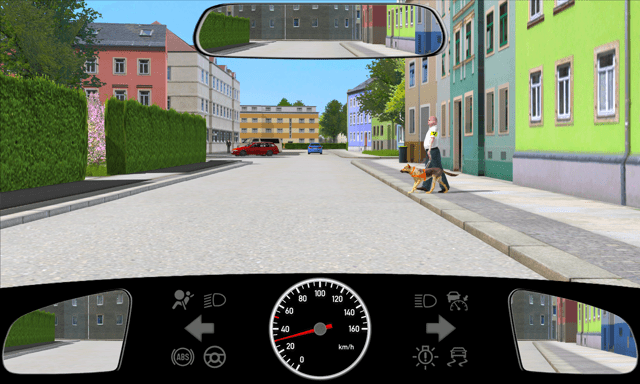
Explicație
The man is wearing a yellow armband and has a guide dog with him. He is blind or visually impaired and cannot see the traffic situation. Special care must be taken for blind people. Therefore, you must let him cross the road in front of you.
-
Întrebarea 14 din 33
De ce trebuie să vă așteptați că copiii au un comportament imprevizibil în circulația rutieră?
1.1.02-0524 PuncteExplicație
Children often behave unpredictably, which is why other road users always have to count on the unexpected. Due to external stimuli in the environment, small children are constantly distracted from the road and traffic. They continuously let their eyes hike in the area and get stuck with interesting events or objects. The noise perception also only develops in the course of life and is only available to a limited extent in children. That is why children can usually not assign the many noises in road traffic to a certain direction and it is more difficult for them to assess them purely acoustically from which direction a vehicle approaches. In addition to the perception of the direction, the perception of distances, speeds and braking distance in childhood is not yet fully pronounced. Therefore, children can often only overlook the traffic situation incompletely.
-
Întrebarea 15 din 33
La ce trebuie să daţi atenţie în această situaţie?
1.1.02-1084 Puncte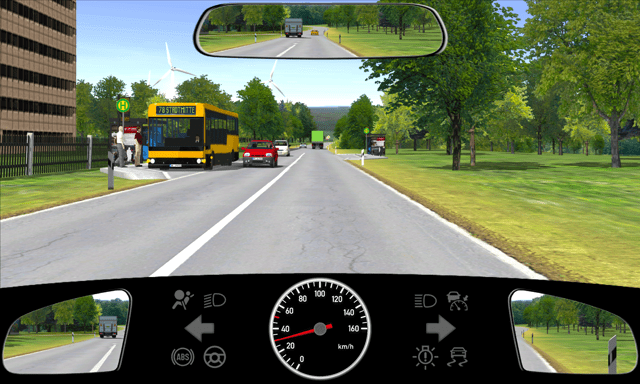
Explicație
When public transport and school buses are at a stop and their hazard warning lights are switched on, the following applies: Vehicles may only pass them at walking speed and at a sufficient distance. This applies to oncoming traffic as well as to vehicles travelling in the same direction as the bus. Any danger to passengers must be ruled out by you as the driver of the vehicle.
-
Întrebarea 16 din 33
Tramvaiul tocmai s-a oprit într-o staţie. Care este comportamentul corect?
1.1.02-1164 Puncte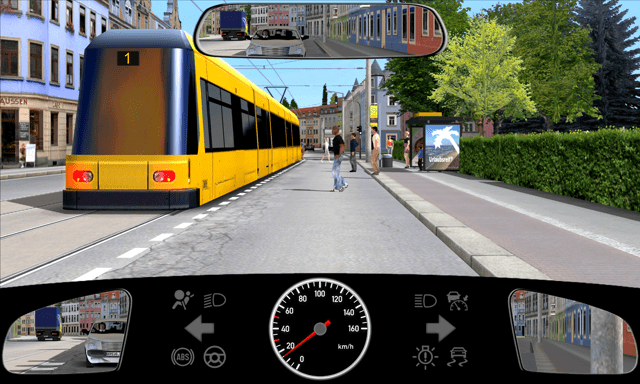
Explicație
You may carefully pass a stopping tram at walking speed - but only if this does not endanger or obstruct any passengers.
-
Întrebarea 17 din 33
Care ar trebui să fie comportamentul dumneavoastră?
1.1.02-1195 Puncte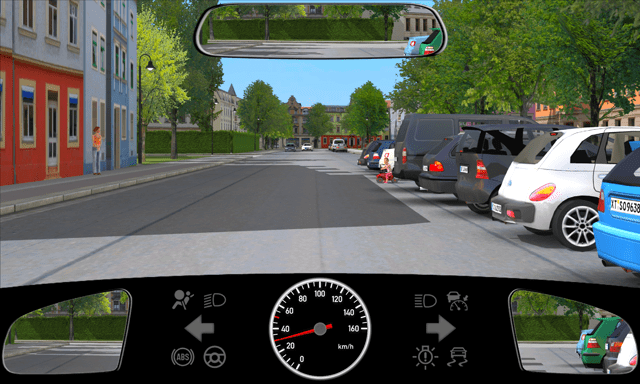
Explicație
Special caution is always required towards children in road traffic. In this situation, you must expect that the small child will continue to drive onto the road behind the van. Slow down to walking speed and remain alert and ready to brake at all times. Stop if necessary if you are not sure how the child will behave. It would be grossly negligent to just honk your horn and drive on.
-
Întrebarea 18 din 33
Care trebuie să fie comportamentul dumneavoastră?
1.1.02-1214 Puncte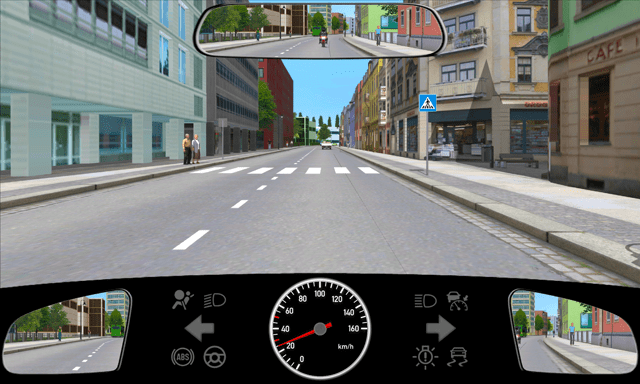
Explicație
When pedestrians wait at a zebra crossing to cross the road, they have priority. This also applies if they are on the left-hand side of the road. You should therefore brake in good time. Pedestrians must be able to see that you are complying with your obligation to stop. Even if the pedestrians stop first and wait, you must give them the right of way in a clearly visible manner.
-
Întrebarea 19 din 33
Care este comportamentul la care trebuie să vă aşteptaţi în astfel de staţii?
1.1.02-1224 Puncte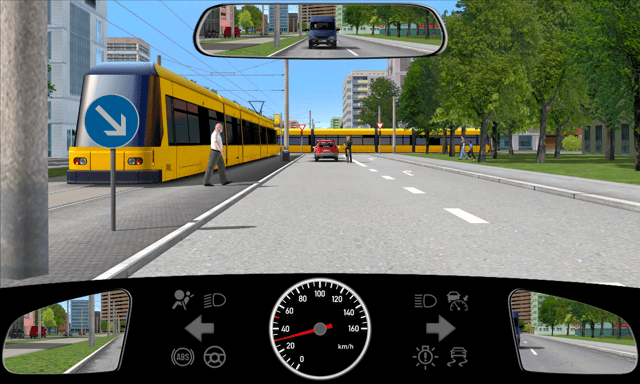
Explicație
Pedestrians are required to wait at such traffic islands. You are therefore allowed to pass the tram even if the tram doors are still open. But because people often behave carelessly when getting on and off the tram, dangerous situations arise time and again. For example, without paying attention to the traffic, passengers simply run across the carriageway to reach the tram.
-
Întrebarea 20 din 33
Doriţi să viraţi la dreapta. Pentru ce situaţie trebuie să vă pregătiţi?
1.1.02-1234 Puncte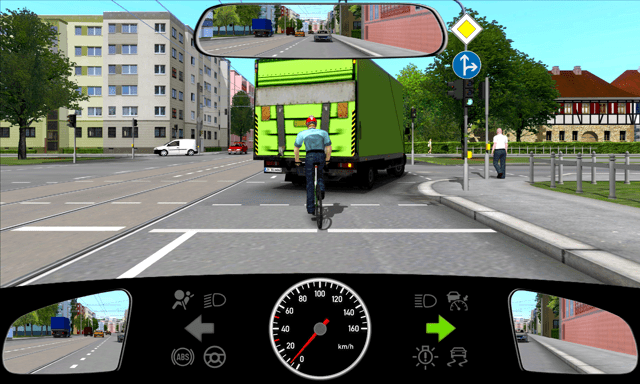
Explicație
If you want to turn right, road users travelling in a straight line here have priority. These may be pedestrians or cyclists who want to cross the road. If a truck turns right in front of you, it is also possible that a pedestrian will let it pass. In that case, the lorry would block your view of the other side of the road and thus of the road users travelling from there.
-
Întrebarea 21 din 33
Pentru ce situaţie trebuie să vă pregătiţi?
1.1.02-1244 Puncte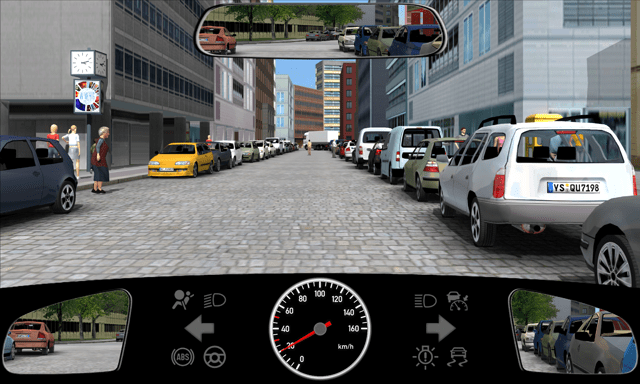
Explicație
Where there are many parked cars, you should always drive carefully and considerately. On the one hand, your view is obstructed by the parked vehicles. Secondly, you must always be aware that car doors may be carelessly opened. Other road users may also want to cross the lane between the parked cars.
-
Întrebarea 22 din 33
Ce ar trebui să aveţi în vedere?
1.1.02-1254 Puncte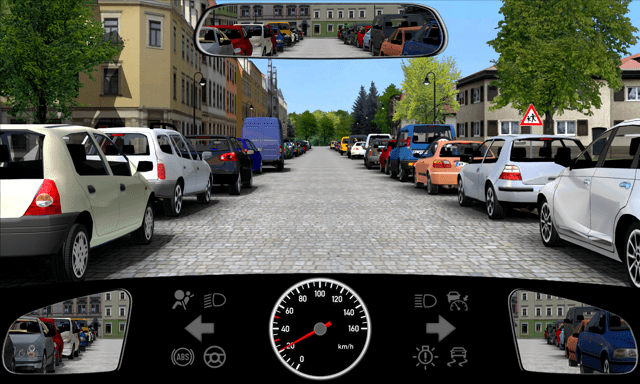
Explicație
The "Children" danger sign on the right makes it clear that increased attention and a special degree of caution are necessary at this point. In addition to children, adults can of course also suddenly step onto the roadway between parked vehicles here, requiring heavy braking.
-
Întrebarea 23 din 33
De ce pietonii mai vârstnici sunt mai periclitaţi în trafic decât cei tineri?
1.1.02-1264 PuncteExplicație
Older road users see less well, hear less well, react more slowly and misjudge the speed of vehicles. Be prepared for these people to recognise dangers too late and react too late or not at all.
-
Întrebarea 24 din 33
La ce comportament trebuie să vă aşteptaţi în cazul persoanelor aflate în zona trecerii de pietoni?
1.1.02-1284 PuncteExplicație
Zebra crossings have a protective function for pedestrians. They give them priority over other road users. Some pedestrians thoughtlessly trust this protection and cross the roadway without paying attention to the traffic. At zebra crossings, be aware that pedestrians and especially elderly or vulnerable people may enter the roadway without looking left and right. It is also possible that pedestrians will turn halfway around when the traffic lights turn red.
-
Întrebarea 25 din 33
Un pieton cu un baston alb doreşte să traverseze carosabilul în faţa dumneavoastră. Care trebuie să fie comportamentul dumneavoastră?
1.1.02-1294 PuncteExplicație
The white cane shows you that this road user is blind or at least severely visually impaired. The stick is also the sign that the person is allowed to participate in road traffic without an escort. You must always treat blind and visually impaired people with increased consideration. Reduce your speed and stop if necessary. Do not honk: you would frighten and unsettle the person.
-
Întrebarea 26 din 33
La ce trebuie să vă aşteptaţi?
1.1.02-1304 Puncte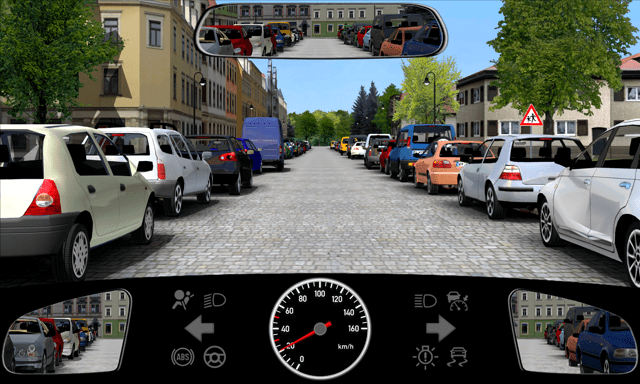
Explicație
The "Children" danger sign on the right warns you to take extra care. With many parked vehicles, however, you must always assume that people will step onto the carriageway unexpectedly. Of course, in addition to children, adults can also fail to behave in a roadworthy manner and suddenly appear between the vehicles.
-
Întrebarea 27 din 33
La ce trebuie să vă aşteptaţi?
1.1.02-1313 Puncte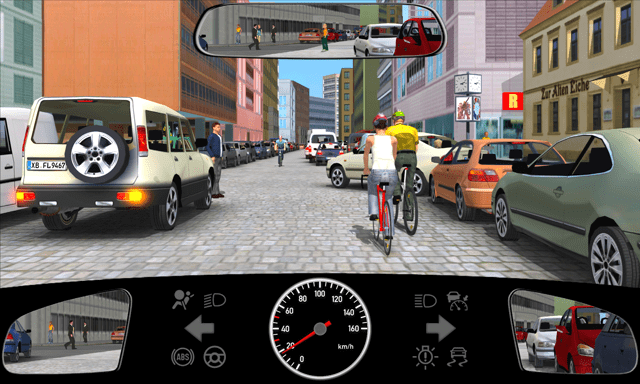
Explicație
In a traffic situation with several parked vehicles and different road users, the parked vehicles impair your visibility. Pedestrians can be expected to emerge between cars to cross the road. It is also possible for people to get out of vehicles or for vehicles to drive off without paying attention to the current traffic situation.
-
Întrebarea 28 din 33
Cum evaluaţi situaţia?
1.1.02-1324 Puncte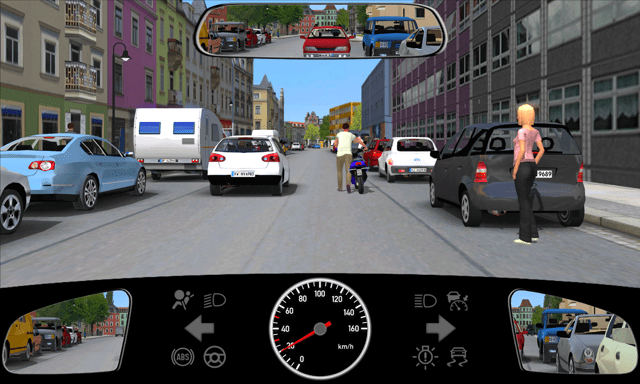
Explicație
You should only pass the waiting pedestrian at the side of the road with an appropriate safe distance and very carefully. The same applies to a moped rider who is properly pushing his moped on the right-hand side of the road. If necessary, you can also change to the left lane.
-
Întrebarea 29 din 33
O persoană aflată la marginea drumului poartă o banderolă galbenă cu trei puncte negre. Ce indică această banderolă?
1.1.02-1334 PuncteExplicație
If you see a person at the side of the road wearing a yellow armband with three black dots, this means for you: the principle of trust has been suspended. You now have an increased duty of care. This is because the armband indicates a physical limitation in the form of a severe visual impairment. If visually impaired persons wear this armband and/or a white stick, they are allowed to move in traffic without an escort.
-
Întrebarea 30 din 33
La ce trebuie să vă aşteptaţi când pietonii traversează carosabilul?
1.1.02-1354 PuncteExplicație
When a pedestrian crosses the roadway, it is not certain that he will continue this action to the opposite side of the road. It is also quite possible that he will stop, turn around or continue with a delay.
-
Întrebarea 31 din 33
De ce trebuie acum să circulați încet și pregătit pentru frânare?
1.1.02-1365 PuncteExplicație
You must drive slowly and be ready to brake because passengers can cross the road in front of the bus.
-
Întrebarea 32 din 33
De ce trebuie să frânați în această situație?
1.1.02-1375 PuncteExplicație
A child is behind the parked vehicle and will probably cross the road in the next moment.
-
Întrebarea 33 din 33
Cum procedați corect în această situație?
1.1.02-1384 PuncteExplicație
Since the dog, most likely, will run onto the street from the left, you have to reduce your speed and prepare for a braking for danger.