
1.1.02 Yayalara karşı davranış
Yayalar karayolu trafiğinde en savunmasız katılımcılardır. Bir sürücü olarak, özellikle kurallara sıkı sıkıya uymayan çocukların ve yaşlıların davranışlarını her zaman öngörmelisiniz. Defansif sürüş ve partner benzeri davranışlar çok önemlidir.
verified Temel Sınav İlkeleri
Defansif Sürüş
Her zaman yayaların hata yapabileceği beklentisiyle araç kullanın. Yaya trafiğinin yoğun olduğu veya görüş mesafesinin sınırlı olduğu alanlarda hızınızı azaltın.
Ortak benzeri davranış
Bir yaya zaten yoldaysa veya açıkça kafası karışmışsa, geçiş hakkınızda ısrar etmeyin. Kurallara sıkı bağlılık yerine güvenliğe öncelik verin.
child_care Trafikteki Çocuklar
Yüksek RiskDoğru Davranış
- check Yolun yakınında oynayan çocukları gördüğünüzde hızınızı önemli ölçüde azaltın.
- check Derhal fren yapmaya hazır olun; Tepki mesafesi önemlidir.
- check Geçerken güvenli bir yan mesafeyi koruyun.
Yanlış Fikirler
- close Çocukların kaldırımda durup her iki yöne bakacaklarını varsayarsak.
- close Çocukları uyarmak için korna çalmak (bu onları irkilterek yola koşmalarına neden olabilir).
- close Onları hızlı bir şekilde geçmek için hızlanıyor.
Sınav Notu
Sınav sorularında, eğer sokağa doğru yuvarlanan bir top görürseniz, HER ZAMAN bir çocuğun ona bakmadan hemen peşinden koşacağını varsayın. Doğru cevap her zaman fren yapmaktır.
horizontal_rule Zebra Geçitleri (Yaya Geçitleri)

Zebra Geçidi'ne Yaklaşmak
Temel Kural: Orta hız ve frene hazır olma.
Yaklaşıyor
Orta hızda yaklaşın. Bir yaya bekliyorsa veya yaya geçidine basıyorsa durmalısınız.
Sollamak yasak
Bir yaya geçidinde sollamak kesinlikle yasaktır Yayaların görünürlüğünü sağlamak için.
Durdurmak
Doğrudan geçidin üzerinde veya 5 metre öncesine kadar durmayın veya park etmeyin.
Trafik Sıkışıklıkları
Trafik yedekleniyorsa geçidi açık tutun. Yayaların yolunu kapatmayın.
directions_bus Otobüsler, Tramvaylar ve Duraklar
1
Otobüs, tehlike ışıkları AÇIK halde durağa yaklaşıyor
expand_more
Hareket halindeyken otobüsü sollamamalısınız. Durana kadar geride kalın. Bu, çocukların karşıdan karşıya geçebileceği tehlikeli bir duruma işaret eder.
2
Otobüs durakta duruyor ve tehlike ışıkları AÇIK
expand_more
Otobüsü şu saatte geçebilirsiniz: yürüme hızı (4-7 km/saat). Bu trafik için geçerlidir HER İKİ yön (Orta refüj gibi fiziksel bir engel olmadığı sürece). Bir yolcu yola çıkarsa hemen durabilmelisiniz.
3
Geçen Tramvaylar
expand_more
Normalde tramvaylar sağdan geçer. Yolcular uçağa biniyor veya iniyorsa ve güvenlik adası yoksa durup yol açılana kadar beklemelisiniz. Durmuş tramvayların yanından dikkatlice geçin.
warning Tipik Sınav Tuzakları
"Dalgalanan" Tuzak
Senaryo: Bir yaya karşıdan karşıya geçmeyi bekliyor ama tereddüt ediyor. Sen dur.
Tuzak Cevap: "Yayaya geçmesini işaret etmek için elimi sallıyorum."
Yanlış! El sallamayın. Onlara tehlikeye işaret verebilirsiniz (örneğin, bir arabanın sizi geçmesi). Sadece sabırla bekleyin.
Park Etmiş Araçlar ve Sınırlı Görüş
Senaryo: Her iki tarafta park edilmiş arabaların olduğu dar bir caddede ilerliyoruz.
Sınavın Odak Noktası: Araçların arkasından çıkacak yayaları öngörmelisiniz. Doğru davranış her zaman hızı azalt ve bir tane tut büyük yanal mesafe mümkünse.
Alıştırma soruları (33)
-
Soru 1 / 33
Zebra çizgili yaya geçitlerinde, çocukların nasıl davranacaklarını düşünmek zorundasınız?
1.1.02-0055 puanAçıklama
Children generally do not have the necessary training to always behave according to the rules in road traffic. Therefore, it is quite conceivable that they do not know the meaning of a zebra crossing and enter the road despite approaching vehicles or suddenly run back after crossing.
-
Soru 2 / 33
Çocukların lambada beklemeleri halinde, neleri hesaba katmakı gerekir?
1.1.02-0224 puanAçıklama
Due to a lack of life experience as well as insufficient education, children do not always behave according to the rules in road traffic and, for example, get into the lane during a scuffle. Furthermore, you must expect children to suddenly run across the road, even if the traffic lights are still red or the lights of the cross-traffic are just changing.
-
Soru 3 / 33
Baston vs. gibi yürüme aracı kullanan yaşlı insanlar araç yolundan karşıya geçmek istediklerinde, neleri hesaba katmak zorundasınız?
1.1.02-0274 puanAçıklama
When elderly people with walking aids cross the road, you have a higher duty of care. The principle of trust is suspended. You must expect these people to stop suddenly or turn around unexpectedly. Older people also take a comparatively long time to cross the road.
-
Soru 4 / 33
Tekerlekli sandalyede oturan bir insanın yolun sağ tarafında yaya kaldırımı bulunmasına rağmen araç yolunda gittigini düşünün. Bu durumda nasıl davranırsınız?
1.1.02-0284 puanAçıklama
Disabled and elderly people sometimes do not behave in a roadworthy manner due to physical limitations. Therefore, please be especially careful and be sure to show consideration. Expect the wheelchair user to suddenly and unexpectedly swerve and drive even further into the lane. In such situations, it is not permitted to use the horn or drive around the person at high speed.
-
Soru 5 / 33
Tekerlekli sandalyede oturan bir insanın araç yolundan karşıya geçtikten sonra yaya yoluna çıkmaya uğraştığını, ancak tekerlekli sandalyesiyle kaldırımdan yukarı çıkamadığını düşünün. Bu durumda nasıl davranırsınız?
1.1.02-0294 puanAçıklama
You should help the person. To do this, you may stop and switch on the hazard warning lights to warn other road users of possible dangers. It is not permitted to honk your horn and drive around the person in this situation. This would frighten and unsettle the wheelchair user.
-
Soru 6 / 33
Resimdeki hangi şahsın ağır görme engelli olduğunu hesaba katmalısınız?
1.1.02-0324 puan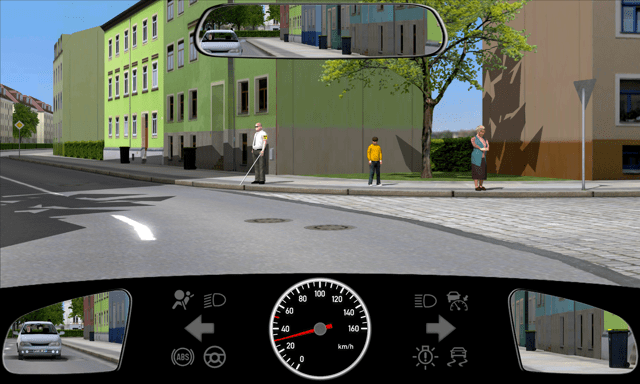
Açıklama
You must expect a severe visual impairment in the case of persons with the following markings: If a person is wearing a yellow armband with three black dots and/or a white blind person's cane extended diagonally.
-
Soru 7 / 33
Nasıl davranırsınız?
1.1.02-0394 puan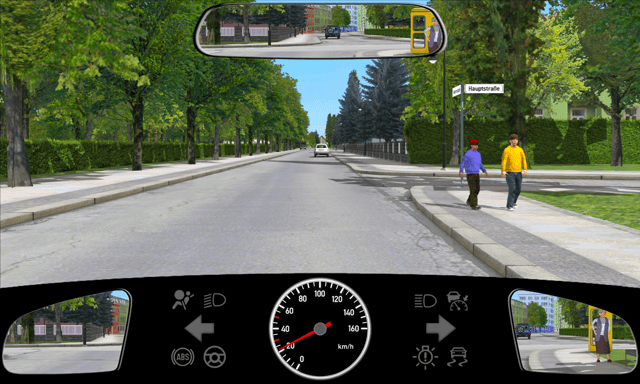
Açıklama
Reduce speed and watch the two children very closely. Be careful and ready to brake. Stop if the children's behaviour makes this necessary.
-
Soru 8 / 33
Hangi tehlikelerle karşılaşabilirsiniz?
1.1.02-0415 puan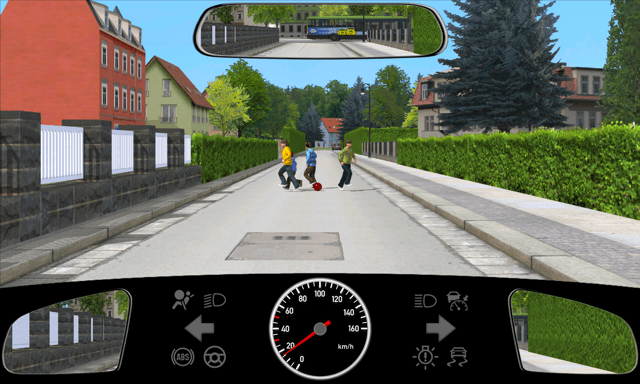
Açıklama
If a ball is lying on the road, it can be assumed that a child will come and fetch it. For you as a driver, this means: stop immediately so that the child can fetch the ball safely. With children, you have to expect that they will behave in a way that is contrary to traffic regulations and that they will not be able to assess dangers correctly.
-
Soru 9 / 33
Nasıl davranırsınız?
1.1.02-0425 puan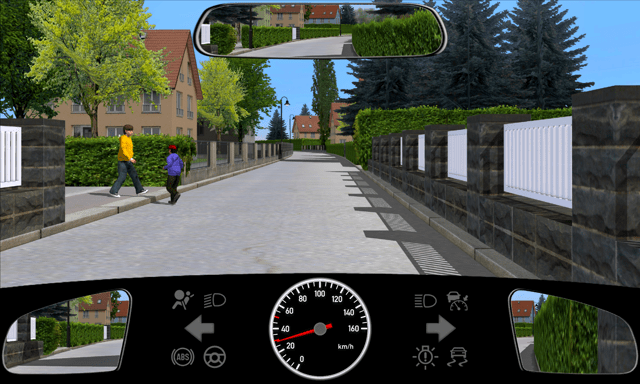
Açıklama
The rule here is: reduce speed immediately, be ready to brake and drive slowly past the situation. It can be assumed that children who are playing are not paying attention to the traffic and are not behaving in a way that is appropriate for the traffic.
-
Soru 10 / 33
Nasıl davranmanız gerekiyor?
1.1.02-0435 puan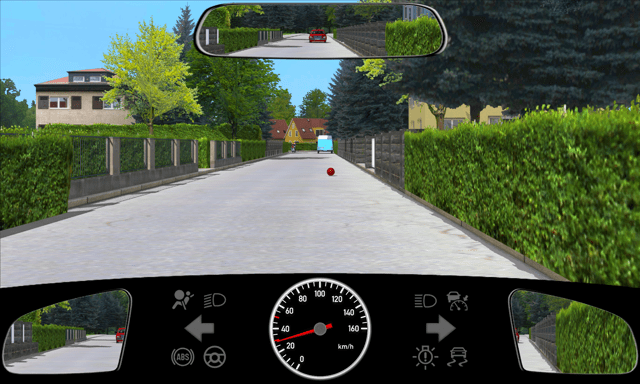
Açıklama
Most likely, a child will come running into the road after the ball without paying attention to the traffic. Immediately slow your vehicle down to walking speed. Be especially alert and ready to brake!
-
Soru 11 / 33
Burada nasıl davranmalısınız?
1.1.02-0485 puan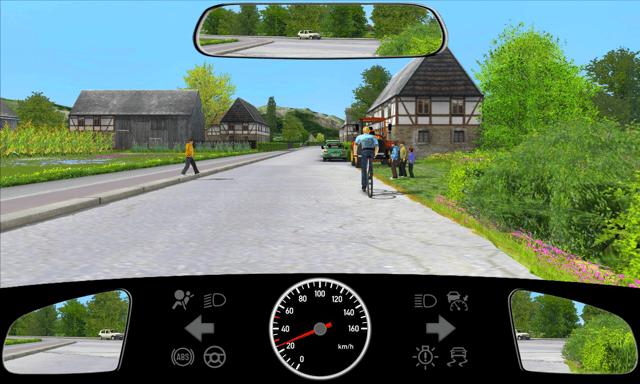
Açıklama
Since there are children both on the left and right on the street, you should brake to walking pace and remain ready to brake.
-
Soru 12 / 33
Burada neden yavaş ve fren yapmaya hazır halde sürmek zorundasınız?
1.1.02-0505 puanAçıklama
The child behind the van on the left runs towards the roadway. You cannot see whether it will stop. Therefore, be especially attentive and careful in this unclear traffic situation. Drive slowly and be ready to brake.
-
Soru 13 / 33
Bu durumda nasıl doğru hareket edersiniz?
1.1.02-0514 puan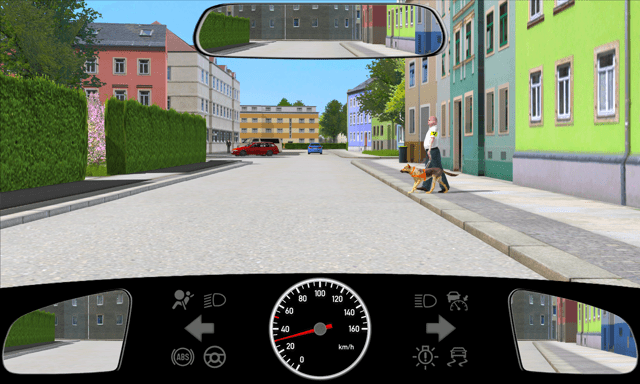
Açıklama
The man is wearing a yellow armband and has a guide dog with him. He is blind or visually impaired and cannot see the traffic situation. Special care must be taken for blind people. Therefore, you must let him cross the road in front of you.
-
Soru 14 / 33
Çocukların trafikte öngörülemeyen davranışlar sergilemesini neden beklemelisiniz?
1.1.02-0524 puanAçıklama
Children often behave unpredictably, which is why other road users always have to count on the unexpected. Due to external stimuli in the environment, small children are constantly distracted from the road and traffic. They continuously let their eyes hike in the area and get stuck with interesting events or objects. The noise perception also only develops in the course of life and is only available to a limited extent in children. That is why children can usually not assign the many noises in road traffic to a certain direction and it is more difficult for them to assess them purely acoustically from which direction a vehicle approaches. In addition to the perception of the direction, the perception of distances, speeds and braking distance in childhood is not yet fully pronounced. Therefore, children can often only overlook the traffic situation incompletely.
-
Soru 15 / 33
Bu durumda neleri dikkate almak zorundasınız?
1.1.02-1084 puan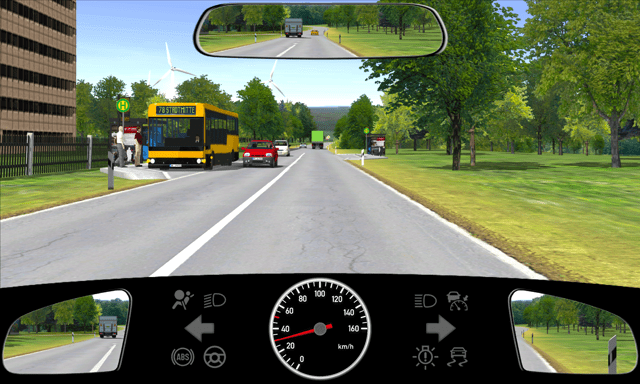
Açıklama
When public transport and school buses are at a stop and their hazard warning lights are switched on, the following applies: Vehicles may only pass them at walking speed and at a sufficient distance. This applies to oncoming traffic as well as to vehicles travelling in the same direction as the bus. Any danger to passengers must be ruled out by you as the driver of the vehicle.
-
Soru 16 / 33
Tramvay durakta durmak üzere. Hangi davranış doğrudur?
1.1.02-1164 puan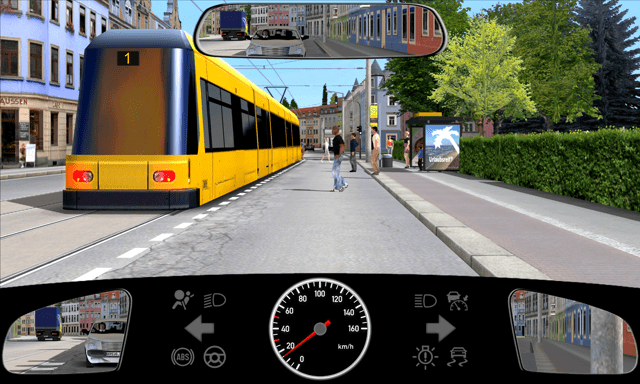
Açıklama
You may carefully pass a stopping tram at walking speed - but only if this does not endanger or obstruct any passengers.
-
Soru 17 / 33
Nasıl davranmanız gerekiyor?
1.1.02-1195 puan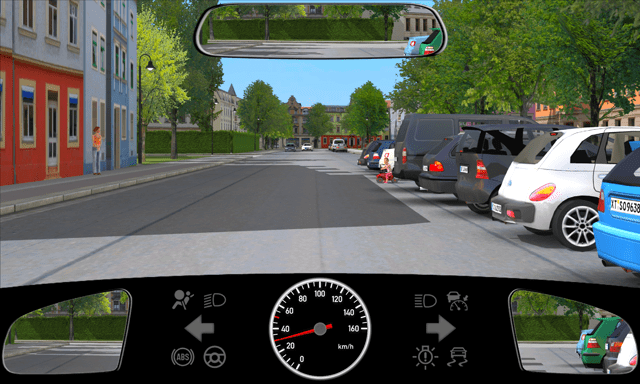
Açıklama
Special caution is always required towards children in road traffic. In this situation, you must expect that the small child will continue to drive onto the road behind the van. Slow down to walking speed and remain alert and ready to brake at all times. Stop if necessary if you are not sure how the child will behave. It would be grossly negligent to just honk your horn and drive on.
-
Soru 18 / 33
Burada ne yapmak zorundasınız?
1.1.02-1214 puan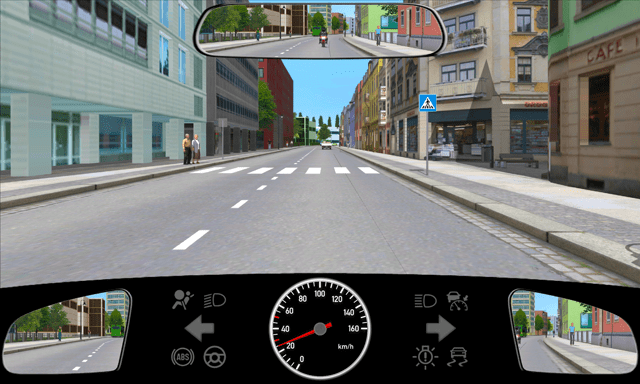
Açıklama
When pedestrians wait at a zebra crossing to cross the road, they have priority. This also applies if they are on the left-hand side of the road. You should therefore brake in good time. Pedestrians must be able to see that you are complying with your obligation to stop. Even if the pedestrians stop first and wait, you must give them the right of way in a clearly visible manner.
-
Soru 19 / 33
Böylesi duraklarda ne gibi bir davranış beklemek zorundasınız?
1.1.02-1224 puan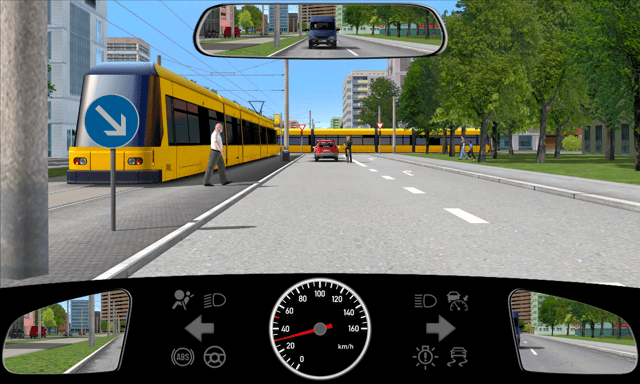
Açıklama
Pedestrians are required to wait at such traffic islands. You are therefore allowed to pass the tram even if the tram doors are still open. But because people often behave carelessly when getting on and off the tram, dangerous situations arise time and again. For example, without paying attention to the traffic, passengers simply run across the carriageway to reach the tram.
-
Soru 20 / 33
Sağa sapmak istiyorsunuz. Kendinizi neye göre ayarlamalısınız?
1.1.02-1234 puan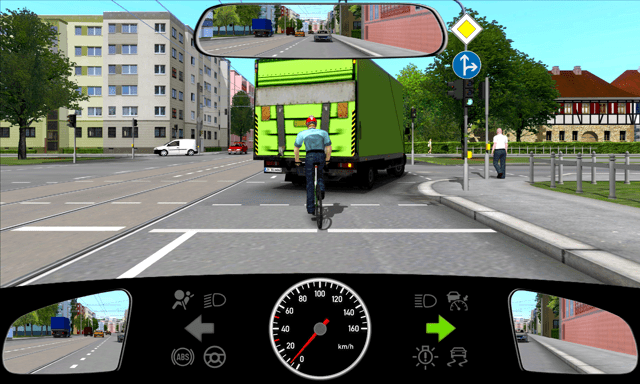
Açıklama
If you want to turn right, road users travelling in a straight line here have priority. These may be pedestrians or cyclists who want to cross the road. If a truck turns right in front of you, it is also possible that a pedestrian will let it pass. In that case, the lorry would block your view of the other side of the road and thus of the road users travelling from there.
-
Soru 21 / 33
Kendinizi neye göre ayarlamalısınız?
1.1.02-1244 puan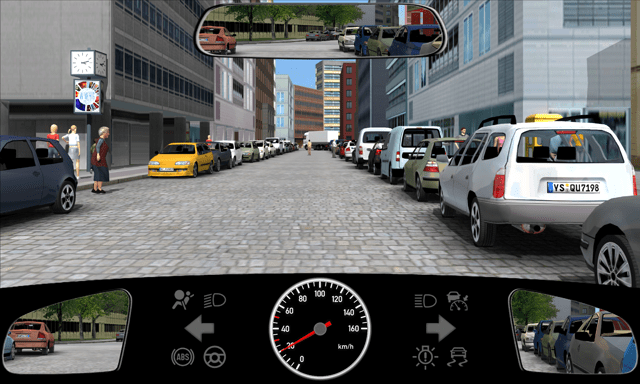
Açıklama
Where there are many parked cars, you should always drive carefully and considerately. On the one hand, your view is obstructed by the parked vehicles. Secondly, you must always be aware that car doors may be carelessly opened. Other road users may also want to cross the lane between the parked cars.
-
Soru 22 / 33
Neye hazır olmalısınız?
1.1.02-1254 puan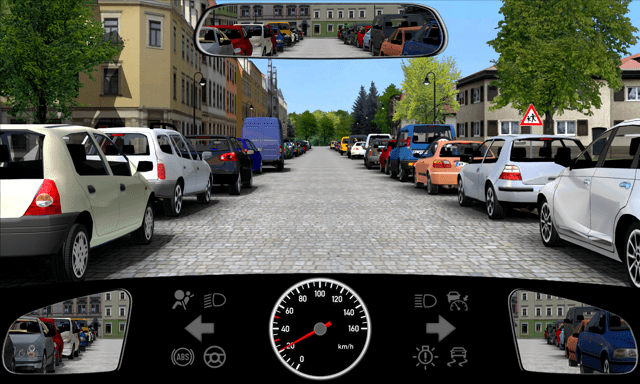
Açıklama
The "Children" danger sign on the right makes it clear that increased attention and a special degree of caution are necessary at this point. In addition to children, adults can of course also suddenly step onto the roadway between parked vehicles here, requiring heavy braking.
-
Soru 23 / 33
Yaşça büyük yayalar trafikte gençlere oranla neden daha fazla tehlike altındadırlar?
1.1.02-1264 puanAçıklama
Older road users see less well, hear less well, react more slowly and misjudge the speed of vehicles. Be prepared for these people to recognise dangers too late and react too late or not at all.
-
Soru 24 / 33
Yaya geçitlerindeki yayaların nasıl davranmasına hazırlıklı olunmalıdır?
1.1.02-1284 puanAçıklama
Zebra crossings have a protective function for pedestrians. They give them priority over other road users. Some pedestrians thoughtlessly trust this protection and cross the roadway without paying attention to the traffic. At zebra crossings, be aware that pedestrians and especially elderly or vulnerable people may enter the roadway without looking left and right. It is also possible that pedestrians will turn halfway around when the traffic lights turn red.
-
Soru 25 / 33
Elinde beyaz bir değnek olan bir yaya önünüzde karşıdan karşıya geçmek istiyor. Burada ne yapmak zorundasınız?
1.1.02-1294 puanAçıklama
The white cane shows you that this road user is blind or at least severely visually impaired. The stick is also the sign that the person is allowed to participate in road traffic without an escort. You must always treat blind and visually impaired people with increased consideration. Reduce your speed and stop if necessary. Do not honk: you would frighten and unsettle the person.
-
Soru 26 / 33
Kendinizi neye hazırlamalısınız?
1.1.02-1304 puan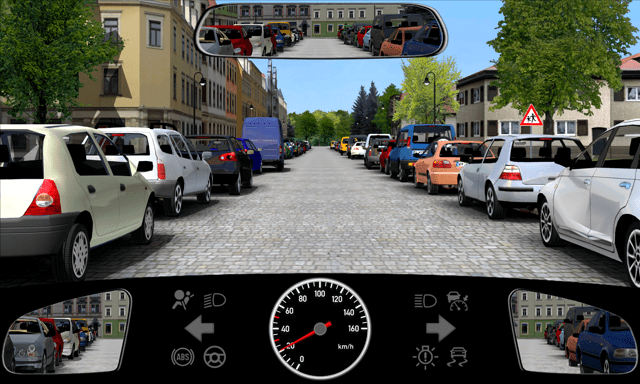
Açıklama
The "Children" danger sign on the right warns you to take extra care. With many parked vehicles, however, you must always assume that people will step onto the carriageway unexpectedly. Of course, in addition to children, adults can also fail to behave in a roadworthy manner and suddenly appear between the vehicles.
-
Soru 27 / 33
Kendinizi neye hazırlamalısınız?
1.1.02-1313 puan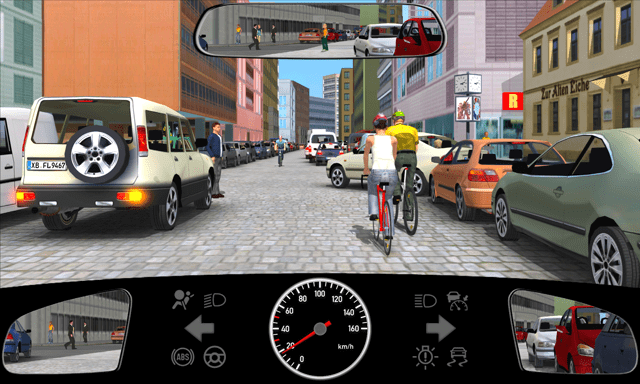
Açıklama
In a traffic situation with several parked vehicles and different road users, the parked vehicles impair your visibility. Pedestrians can be expected to emerge between cars to cross the road. It is also possible for people to get out of vehicles or for vehicles to drive off without paying attention to the current traffic situation.
-
Soru 28 / 33
Buradaki durumu nasıl değerlendiriyorsunuz?
1.1.02-1324 puan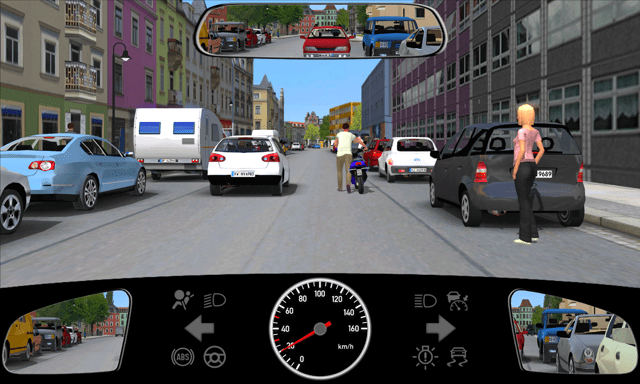
Açıklama
You should only pass the waiting pedestrian at the side of the road with an appropriate safe distance and very carefully. The same applies to a moped rider who is properly pushing his moped on the right-hand side of the road. If necessary, you can also change to the left lane.
-
Soru 29 / 33
Yol kenarındaki bir kişi, üzerinde üç siyah nokta bulunan sarı bir kolluk taşıyor. Bu kolluk ne anlam ifade ediyor?
1.1.02-1334 puanAçıklama
If you see a person at the side of the road wearing a yellow armband with three black dots, this means for you: the principle of trust has been suspended. You now have an increased duty of care. This is because the armband indicates a physical limitation in the form of a severe visual impairment. If visually impaired persons wear this armband and/or a white stick, they are allowed to move in traffic without an escort.
-
Soru 30 / 33
Yayalar yola indiklerinde sizi ne bekliyor olabilir?
1.1.02-1354 puanAçıklama
When a pedestrian crosses the roadway, it is not certain that he will continue this action to the opposite side of the road. It is also quite possible that he will stop, turn around or continue with a delay.
-
Soru 31 / 33
Şimdi neden yavaş ve fren yapmaya hazır bir şekilde ilerlemeniz gerekiyor?
1.1.02-1365 puanAçıklama
You must drive slowly and be ready to brake because passengers can cross the road in front of the bus.
-
Soru 32 / 33
Burada neden fren yapmak zorundasınız?
1.1.02-1375 puanAçıklama
A child is behind the parked vehicle and will probably cross the road in the next moment.
-
Soru 33 / 33
Şimdi nasıl doğru davranacaksınız?
1.1.02-1384 puanAçıklama
Since the dog, most likely, will run onto the street from the left, you have to reduce your speed and prepare for a braking for danger.