
1.1.02 Comportamento nei confronti dei pedoni
I pedoni sono i soggetti più vulnerabili nel traffico stradale. Come conducente, devi sempre anticipare il loro comportamento, soprattutto i bambini e gli anziani che potrebbero non seguire rigorosamente le regole. La guida difensiva e il comportamento da partner sono fondamentali.
verified Principi fondamentali dell'esame
Guida difensiva
Guidare sempre con l'aspettativa che i pedoni possano commettere errori. Ridurre la velocità nelle aree con traffico pedonale intenso o visibilità limitata.
Comportamento da partner
Non insistere sulla precedenza se un pedone è già sulla strada o chiaramente confuso. Dare priorità alla sicurezza rispetto al rigoroso rispetto delle regole.
child_care Bambini nel traffico
Alto rischioComportamento corretto
- check Ridurre notevolmente la velocità quando si vedono bambini che giocano vicino alla strada.
- check Sii pronto a frenare immediatamente; la distanza di reazione è importante.
- check Mantenere una distanza laterale di sicurezza durante il sorpasso.
Idee sbagliate
- close Supponendo che i bambini si fermino sul marciapiede e guardino in entrambe le direzioni.
- close Suonare il clacson per avvisare i bambini (questo potrebbe spaventarli e spingerli a correre sulla strada).
- close Accelerare per superarli rapidamente.
Nota sull'esame
Nelle domande d'esame, se vedi una palla che rotola per strada, presumi SEMPRE che un bambino le correrà dietro immediatamente senza guardare. La risposta corretta è sempre frenare.
horizontal_rule Strisce pedonali (attraversamenti pedonali)

Avvicinamento alle strisce pedonali
Regola fondamentale: velocità moderata e prontezza a frenare.
Avvicinamento
Avvicinarsi a velocità moderata. Se un pedone sta aspettando o sta attraversando l'incrocio, è necessario fermarsi.
Divieto di sorpasso
Il sorpasso sulle strisce pedonali lo è severamente proibito per garantire la visibilità dei pedoni.
Fermarsi
Non fermarsi o parcheggiare direttamente sull'incrocio o fino a 5 metri prima dello stesso.
Ingorghi stradali
Mantenere l'incrocio libero in caso di rallentamenti del traffico. Non bloccare il percorso ai pedoni.
directions_bus Autobus, tram e fermate
1
Autobus in avvicinamento a una fermata con luci di emergenza accese
expand_more
NON bisogna sorpassare l'autobus mentre è in movimento. Rimani indietro finché non si ferma. Ciò indica una situazione pericolosa in cui i bambini potrebbero attraversare.
2
Autobus fermo alla fermata con luci di emergenza accese
expand_more
Puoi passare l'autobus a passo d'uomo (4-7 km/h). Questo vale per il traffico in entrata ENTRAMBE le direzioni (a meno che non ci sia una barriera fisica come una mediana). Devi essere in grado di fermarti immediatamente se un passeggero mette piede sulla strada.
3
Passaggio dei tram
expand_more
Normalmente, passa i tram sulla destra. Se i passeggeri salgono o scendono e non è presente un'isola di sicurezza, è necessario fermarsi e attendere che la strada sia libera. Guidare con attenzione superando i tram fermi.
warning Trappole tipiche dell'esame
La trappola "agitante".
Scenario: Un pedone aspetta di attraversare ma esita. Ti fermi.
Risposta alla trappola: "Agito la mano per segnalare al pedone di attraversare."
Errato! Non salutare. Potresti segnalargli un pericolo (ad esempio, un'auto che ti sorpassa). Aspetta pazientemente.
Veicoli parcheggiati e visibilità limitata
Scenario: Guidando lungo una strada stretta con le auto parcheggiate su entrambi i lati.
Focus dell'esame: È necessario anticipare i pedoni che escono da dietro i veicoli. Il comportamento corretto è sempre quello ridurre la velocità e mantieni un grande distanza laterale se possibile.
Domande di Pratica (33)
-
Domanda 1 di 33
Che tipo di comportamento ci si può aspettare dai bambini sugli attraversamenti pedonali?
1.1.02-0055 PuntiSpiegazione
Children generally do not have the necessary training to always behave according to the rules in road traffic. Therefore, it is quite conceivable that they do not know the meaning of a zebra crossing and enter the road despite approaching vehicles or suddenly run back after crossing.
-
Domanda 2 di 33
Cosa bisogna considerare quando i bambini aspettano al semaforo?
1.1.02-0224 PuntiSpiegazione
Due to a lack of life experience as well as insufficient education, children do not always behave according to the rules in road traffic and, for example, get into the lane during a scuffle. Furthermore, you must expect children to suddenly run across the road, even if the traffic lights are still red or the lights of the cross-traffic are just changing.
-
Domanda 3 di 33
Cosa bisogna considerare quando le persone anziane che usano il deambulatore attraversano la strada?
1.1.02-0274 PuntiSpiegazione
When elderly people with walking aids cross the road, you have a higher duty of care. The principle of trust is suspended. You must expect these people to stop suddenly or turn around unexpectedly. Older people also take a comparatively long time to cross the road.
-
Domanda 4 di 33
Una persona in sedia a rotelle sta percorrendo la strada nonostante ci sia un marciapiede sulla destra. Cosa fai?
1.1.02-0284 PuntiSpiegazione
Disabled and elderly people sometimes do not behave in a roadworthy manner due to physical limitations. Therefore, please be especially careful and be sure to show consideration. Expect the wheelchair user to suddenly and unexpectedly swerve and drive even further into the lane. In such situations, it is not permitted to use the horn or drive around the person at high speed.
-
Domanda 5 di 33
Dopo aver attraversato la strada, una persona in sedia a rotelle non riesce a salire sul marciapiede. Cosa fare?
1.1.02-0294 PuntiSpiegazione
You should help the person. To do this, you may stop and switch on the hazard warning lights to warn other road users of possible dangers. It is not permitted to honk your horn and drive around the person in this situation. This would frighten and unsettle the wheelchair user.
-
Domanda 6 di 33
Chi ha una grave disabilità visiva?
1.1.02-0324 Punti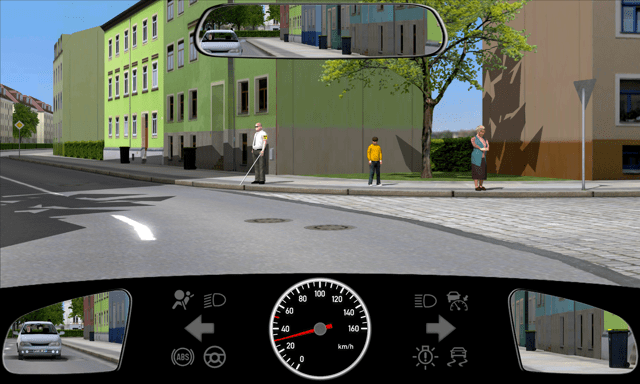
Spiegazione
You must expect a severe visual impairment in the case of persons with the following markings: If a person is wearing a yellow armband with three black dots and/or a white blind person's cane extended diagonally.
-
Domanda 7 di 33
Come ti comporti?
1.1.02-0394 Punti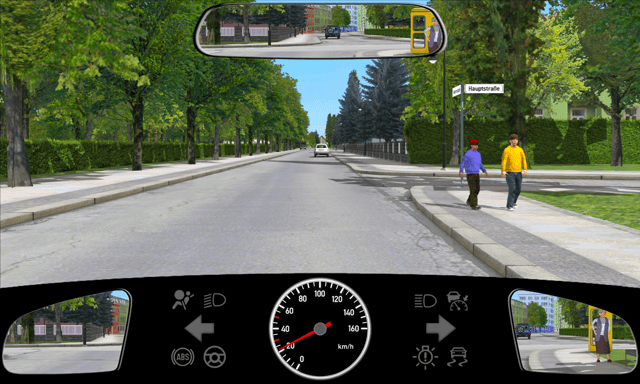
Spiegazione
Reduce speed and watch the two children very closely. Be careful and ready to brake. Stop if the children's behaviour makes this necessary.
-
Domanda 8 di 33
Di quali rischi devi essere consapevole?
1.1.02-0415 Punti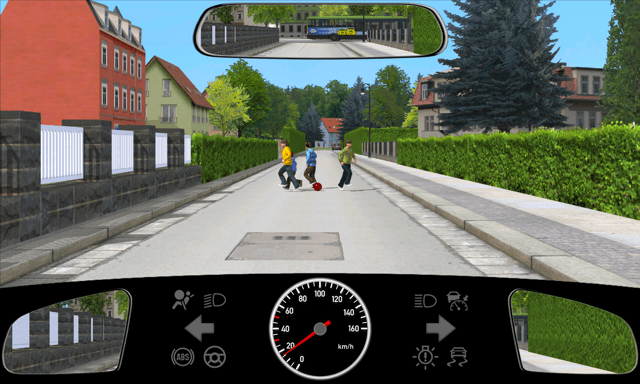
Spiegazione
If a ball is lying on the road, it can be assumed that a child will come and fetch it. For you as a driver, this means: stop immediately so that the child can fetch the ball safely. With children, you have to expect that they will behave in a way that is contrary to traffic regulations and that they will not be able to assess dangers correctly.
-
Domanda 9 di 33
Come dovresti comportarti?
1.1.02-0425 Punti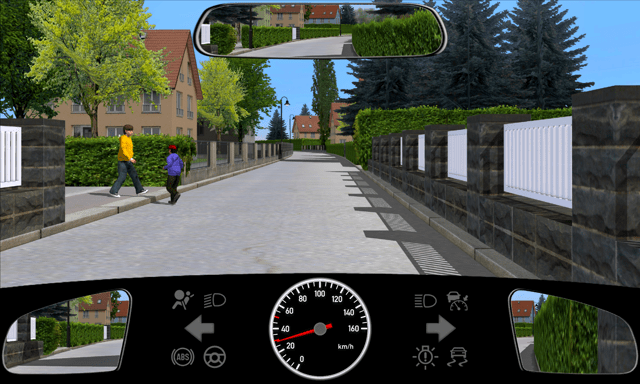
Spiegazione
The rule here is: reduce speed immediately, be ready to brake and drive slowly past the situation. It can be assumed that children who are playing are not paying attention to the traffic and are not behaving in a way that is appropriate for the traffic.
-
Domanda 10 di 33
Come devi comportarti?
1.1.02-0435 Punti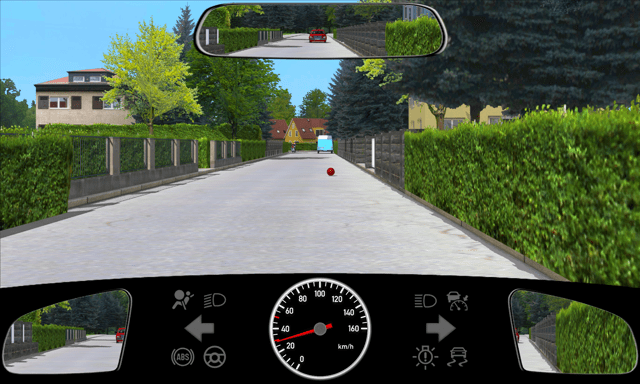
Spiegazione
Most likely, a child will come running into the road after the ball without paying attention to the traffic. Immediately slow your vehicle down to walking speed. Be especially alert and ready to brake!
-
Domanda 11 di 33
Cosa dovresti fare ora?
1.1.02-0485 Punti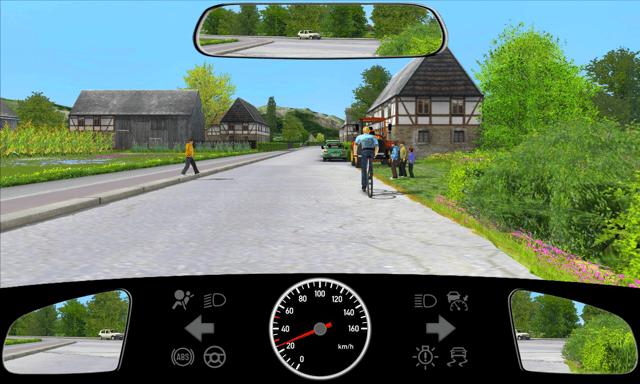
Spiegazione
Since there are children both on the left and right on the street, you should brake to walking pace and remain ready to brake.
-
Domanda 12 di 33
Perché qui bisogna guidare piano ed essere pronti a frenare?
1.1.02-0505 PuntiSpiegazione
The child behind the van on the left runs towards the roadway. You cannot see whether it will stop. Therefore, be especially attentive and careful in this unclear traffic situation. Drive slowly and be ready to brake.
-
Domanda 13 di 33
Qual è la procedura corretta da seguire in questa situazione?
1.1.02-0514 Punti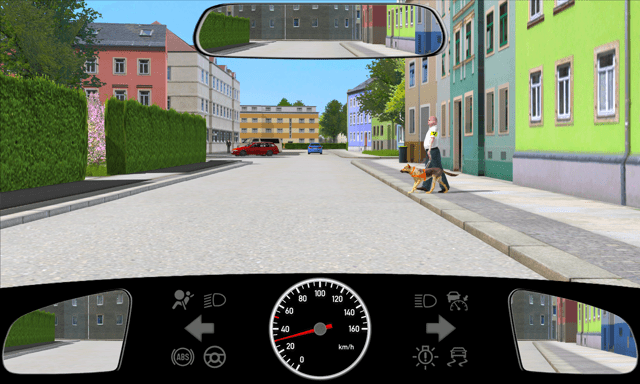
Spiegazione
The man is wearing a yellow armband and has a guide dog with him. He is blind or visually impaired and cannot see the traffic situation. Special care must be taken for blind people. Therefore, you must let him cross the road in front of you.
-
Domanda 14 di 33
Perché bisogna prevedere che i bambini possano comportarsi in modo imprevedibile in situazioni di traffico stradale?
1.1.02-0524 PuntiSpiegazione
Children often behave unpredictably, which is why other road users always have to count on the unexpected. Due to external stimuli in the environment, small children are constantly distracted from the road and traffic. They continuously let their eyes hike in the area and get stuck with interesting events or objects. The noise perception also only develops in the course of life and is only available to a limited extent in children. That is why children can usually not assign the many noises in road traffic to a certain direction and it is more difficult for them to assess them purely acoustically from which direction a vehicle approaches. In addition to the perception of the direction, the perception of distances, speeds and braking distance in childhood is not yet fully pronounced. Therefore, children can often only overlook the traffic situation incompletely.
-
Domanda 15 di 33
A cosa bisogna prestare attenzione in questa situazione?
1.1.02-1084 Punti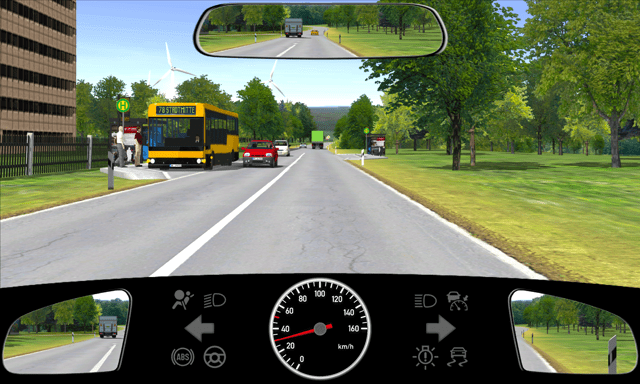
Spiegazione
When public transport and school buses are at a stop and their hazard warning lights are switched on, the following applies: Vehicles may only pass them at walking speed and at a sufficient distance. This applies to oncoming traffic as well as to vehicles travelling in the same direction as the bus. Any danger to passengers must be ruled out by you as the driver of the vehicle.
-
Domanda 16 di 33
Il tram si è appena fermato alla fermata. Qual è la procedura corretta da seguire?
1.1.02-1164 Punti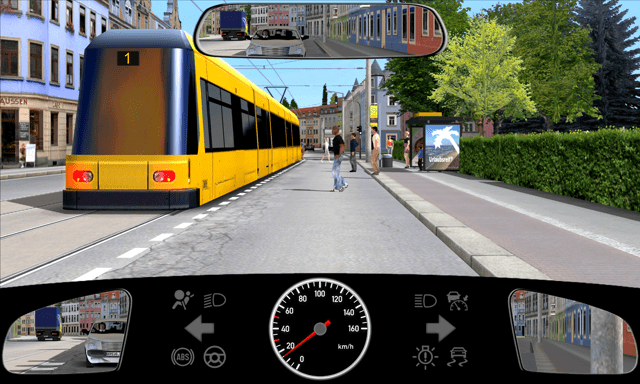
Spiegazione
You may carefully pass a stopping tram at walking speed - but only if this does not endanger or obstruct any passengers.
-
Domanda 17 di 33
Cosa dovresti fare?
1.1.02-1195 Punti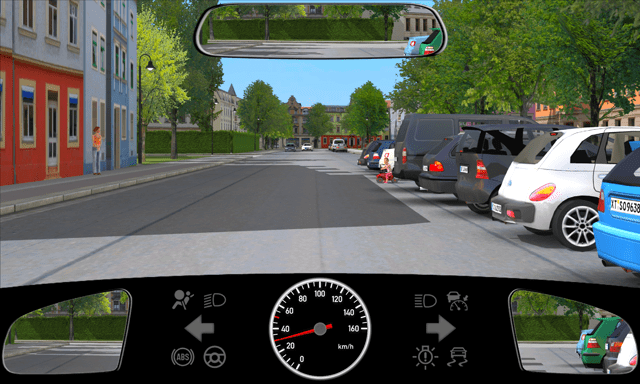
Spiegazione
Special caution is always required towards children in road traffic. In this situation, you must expect that the small child will continue to drive onto the road behind the van. Slow down to walking speed and remain alert and ready to brake at all times. Stop if necessary if you are not sure how the child will behave. It would be grossly negligent to just honk your horn and drive on.
-
Domanda 18 di 33
Cosa dovresti fare?
1.1.02-1214 Punti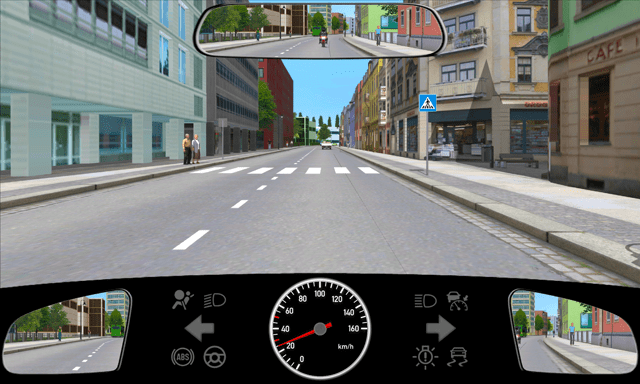
Spiegazione
When pedestrians wait at a zebra crossing to cross the road, they have priority. This also applies if they are on the left-hand side of the road. You should therefore brake in good time. Pedestrians must be able to see that you are complying with your obligation to stop. Even if the pedestrians stop first and wait, you must give them the right of way in a clearly visible manner.
-
Domanda 19 di 33
Quali azioni dovresti prevedere in queste soste?
1.1.02-1224 Punti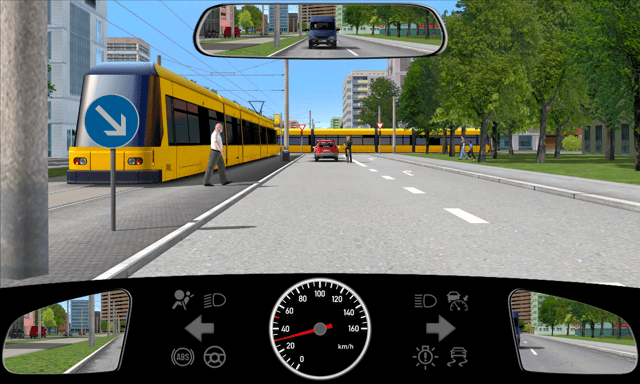
Spiegazione
Pedestrians are required to wait at such traffic islands. You are therefore allowed to pass the tram even if the tram doors are still open. But because people often behave carelessly when getting on and off the tram, dangerous situations arise time and again. For example, without paying attention to the traffic, passengers simply run across the carriageway to reach the tram.
-
Domanda 20 di 33
Vuoi svoltare a destra. A cosa devi prepararti?
1.1.02-1234 Punti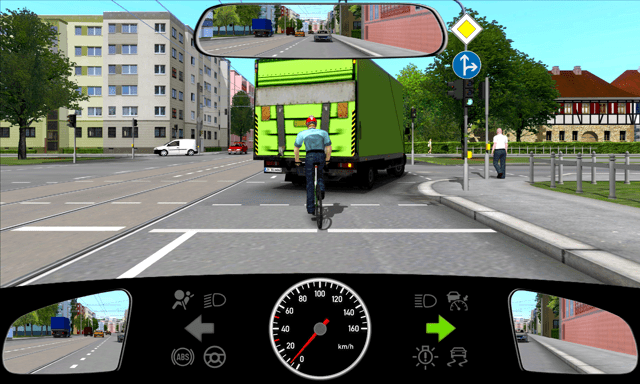
Spiegazione
If you want to turn right, road users travelling in a straight line here have priority. These may be pedestrians or cyclists who want to cross the road. If a truck turns right in front of you, it is also possible that a pedestrian will let it pass. In that case, the lorry would block your view of the other side of the road and thus of the road users travelling from there.
-
Domanda 21 di 33
A cosa devi prepararti?
1.1.02-1244 Punti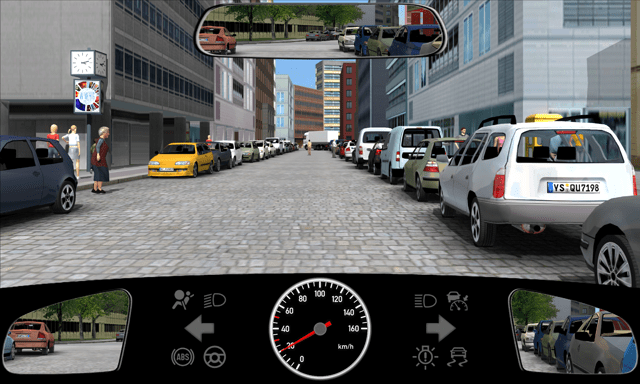
Spiegazione
Where there are many parked cars, you should always drive carefully and considerately. On the one hand, your view is obstructed by the parked vehicles. Secondly, you must always be aware that car doors may be carelessly opened. Other road users may also want to cross the lane between the parked cars.
-
Domanda 22 di 33
Cosa ci si deve aspettare?
1.1.02-1254 Punti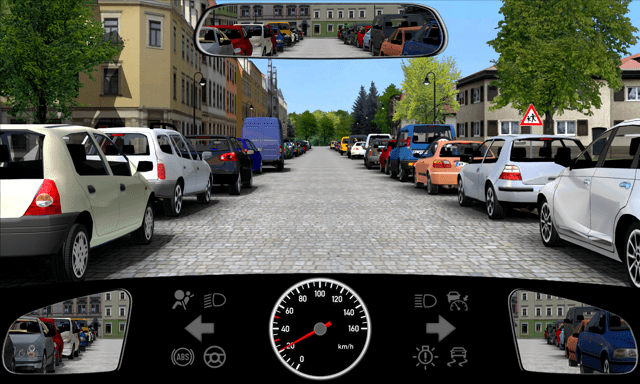
Spiegazione
The "Children" danger sign on the right makes it clear that increased attention and a special degree of caution are necessary at this point. In addition to children, adults can of course also suddenly step onto the roadway between parked vehicles here, requiring heavy braking.
-
Domanda 23 di 33
Perché i pedoni anziani corrono un rischio maggiore rispetto a quelli giovani a causa del traffico stradale?
1.1.02-1264 PuntiSpiegazione
Older road users see less well, hear less well, react more slowly and misjudge the speed of vehicles. Be prepared for these people to recognise dangers too late and react too late or not at all.
-
Domanda 24 di 33
Quali comportamenti ci si può aspettare dalle persone all'attraversamento pedonale?
1.1.02-1284 PuntiSpiegazione
Zebra crossings have a protective function for pedestrians. They give them priority over other road users. Some pedestrians thoughtlessly trust this protection and cross the roadway without paying attention to the traffic. At zebra crossings, be aware that pedestrians and especially elderly or vulnerable people may enter the roadway without looking left and right. It is also possible that pedestrians will turn halfway around when the traffic lights turn red.
-
Domanda 25 di 33
Un pedone con un bastone bianco vuole attraversare la strada davanti a te. Cosa dovresti fare?
1.1.02-1294 PuntiSpiegazione
The white cane shows you that this road user is blind or at least severely visually impaired. The stick is also the sign that the person is allowed to participate in road traffic without an escort. You must always treat blind and visually impaired people with increased consideration. Reduce your speed and stop if necessary. Do not honk: you would frighten and unsettle the person.
-
Domanda 26 di 33
Cosa ci si deve aspettare?
1.1.02-1304 Punti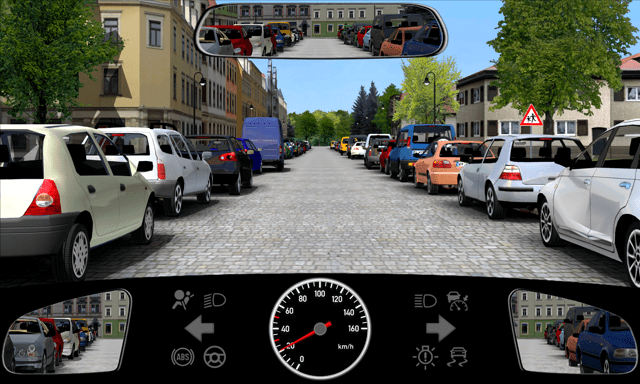
Spiegazione
The "Children" danger sign on the right warns you to take extra care. With many parked vehicles, however, you must always assume that people will step onto the carriageway unexpectedly. Of course, in addition to children, adults can also fail to behave in a roadworthy manner and suddenly appear between the vehicles.
-
Domanda 27 di 33
Cosa ci si deve aspettare?
1.1.02-1313 Punti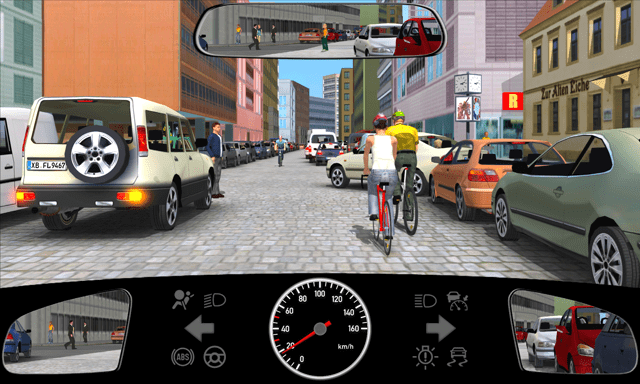
Spiegazione
In a traffic situation with several parked vehicles and different road users, the parked vehicles impair your visibility. Pedestrians can be expected to emerge between cars to cross the road. It is also possible for people to get out of vehicles or for vehicles to drive off without paying attention to the current traffic situation.
-
Domanda 28 di 33
Qual è la tua valutazione di questa situazione?
1.1.02-1324 Punti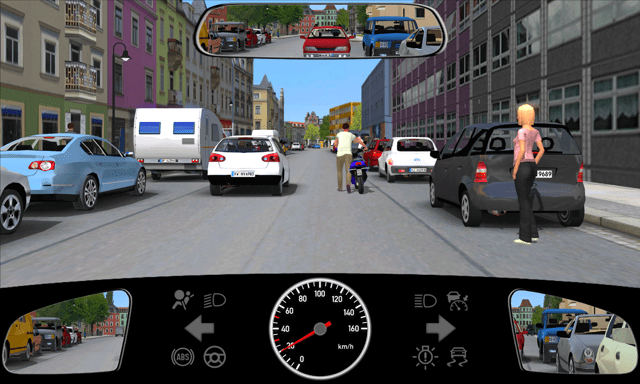
Spiegazione
You should only pass the waiting pedestrian at the side of the road with an appropriate safe distance and very carefully. The same applies to a moped rider who is properly pushing his moped on the right-hand side of the road. If necessary, you can also change to the left lane.
-
Domanda 29 di 33
Una persona a bordo strada indossa una fascia gialla al braccio con tre punti neri. Cosa indica questa fascia?
1.1.02-1334 PuntiSpiegazione
If you see a person at the side of the road wearing a yellow armband with three black dots, this means for you: the principle of trust has been suspended. You now have an increased duty of care. This is because the armband indicates a physical limitation in the form of a severe visual impairment. If visually impaired persons wear this armband and/or a white stick, they are allowed to move in traffic without an escort.
-
Domanda 30 di 33
Cosa bisogna aspettarsi quando i pedoni attraversano la strada?
1.1.02-1354 PuntiSpiegazione
When a pedestrian crosses the roadway, it is not certain that he will continue this action to the opposite side of the road. It is also quite possible that he will stop, turn around or continue with a delay.
-
Domanda 31 di 33
Perché devi guidare piano adesso ed essere pronto a frenare?
1.1.02-1365 PuntiSpiegazione
You must drive slowly and be ready to brake because passengers can cross the road in front of the bus.
-
Domanda 32 di 33
Perché è obbligatorio frenare qui?
1.1.02-1375 PuntiSpiegazione
A child is behind the parked vehicle and will probably cross the road in the next moment.
-
Domanda 33 di 33
Qual è la giusta linea d'azione ora?
1.1.02-1384 PuntiSpiegazione
Since the dog, most likely, will run onto the street from the left, you have to reduce your speed and prepare for a braking for danger.