
1.2.19 Attraversamenti di livello
Ecco le regole più importanti su passaggi a livello, barriere ferroviarie, lampeggianti, croci di Sant'Andrea e priorità dei treni in modo semplice e memorabile.
🧠 Regole di memoria rapida
🚦 Luce rossa lampeggiante
Fermati immediatamente prima del Croce di Sant'Andrea.
🚧 Abbassamento della Barriera
Non attraversare mai quando le barriere iniziano ad abbassarsi.
🚂 Priorità treno
Veicoli ferroviari hanno sempre la priorità.
⚠ Pericolo di ingorgo stradale
Non entrare mai nell'incrocio se potresti fermarti sui binari.
🛑Quando DEVI fermarti
🚫 Fermati subito
- Appaiono luci rosse lampeggianti
- Le barriere iniziano ad abbassarsi
- Le barriere sono chiuse
- L'impiegato delle ferrovie sventola una bandiera
- L'impiegato delle ferrovie mostra la luce rossa
⚠ Perché questo è importante
- I treni viaggiano molto velocemente
- I treni necessitano di lunghi spazi di frenata
- Le barriere si chiudono rapidamente
- I veicoli potrebbero rimanere intrappolati
✖ Regole della Croce di Sant'Andrea
| Segno/Situazione | Senso | Cosa devi fare |
|---|---|---|
| Croce di Sant'Andrea | Il treno ha la priorità | Aspetta se il treno si avvicina |
| Luce rossa lampeggiante | Passaggio bloccato | Smetti immediatamente |
| Freccia lampeggiante | Si applica al traffico in svolta | I veicoli in svolta devono fermarsi |
| Simbolo del fulmine | Linea aerea elettrica | Importante per i veicoli alti |
✅ Come attraversare in sicurezza
🚗 Comportamento di guida sicuro
- Ridurre la velocità prima di attraversare
- Guarda attentamente in entrambe le direzioni
- Ascolta i treni in avvicinamento
- Attraversa velocemente e in sicurezza
- Stai attento anche con le barriere aperte
❌ Comportamento pericoloso
- Guidare intorno alle barriere
- Fermarsi sui binari
- Seguendo ciecamente le altre auto
- Ignorare le luci lampeggianti
- Attraversamento durante gli ingorghi
⭐ Situazioni speciali
🚛 Autocarri superiori a 7,5 t
Al di fuori dei centri abitati, i mezzi pesanti e quelli con rimorchio devono spesso attendere dietro il segnavia degli 80 metri.
🏭 Aree industriali e forestali
Aspettatevi passaggi ferroviari non protetti, senza barriere o luci lampeggianti.
🚨Sistema di barriere rotte
Non attraversare mai se il sistema di barriera sembra difettoso. Informare immediatamente la polizia.
🚩Segnalazioni del Personale Ferroviario
🚩Bandiera Bianco-Rossa-Bianco
Il passaggio è bloccato. È necessario fermarsi e attendere a distanza di sicurezza.
🔴 Semaforo rosso da parte del personale delle Ferrovie
I binari sono inaccessibili e i treni hanno la priorità. Non attraversare.
🎯 Suggerimenti facili per l'esame
- Il treno ha sempre la priorità
- Fermarsi al semaforo rosso lampeggiante
- Non fermarsi mai sui binari
- La barriera aperta NON significa automaticamente sicuro
- Attraversamento durante gli ingorghi
- Guidare intorno alle barriere
- Ignorando il personale ferroviario
- Seguire altri veicoli troppo presto
Domande di Pratica (19)
-
Domanda 1 di 19
Quando è obbligatorio attendere a un passaggio a livello?
1.2.19-0023 PuntiSpiegazione
All road users are required to stop and wait immediately before a level crossing in the following situations: when the signal system's red flashing light comes on, when the barriers start to lower, when the barriers are closed, when a staff member waves a white-red-white flag , You must wait until the blockage is released again.
-
Domanda 2 di 19
Un ferroviere sta agitando una lampada rossa a un passaggio a livello. Cosa significa?
1.2.19-0043 PuntiSpiegazione
All car drivers and other road users must wait at a safe distance before the crossing if a member of the railway staff secures a low-traffic level crossing with a red light. Waving the red light means that the tracks are inaccessible and trains have priority.
-
Domanda 3 di 19
All'ingresso di una zona industriale si trova una croce di Sant'Andrea con il cartello aggiuntivo "Zona industriale, i veicoli ferroviari hanno la precedenza". Cosa bisogna ricordare?
1.2.19-0083 PuntiSpiegazione
Even if there are no barriers and no diagonal crosses at the level crossings in the entire industrial area, motor vehicle drivers must give priority to all rail vehicles. Always expect a train to come, observe the railway lines accurately and approach the tracks only with moderate speed.
-
Domanda 4 di 19
Queste barriere ai passaggi a livello sono ferme da tempo. Qual è la soluzione migliore?
1.2.19-0094 Punti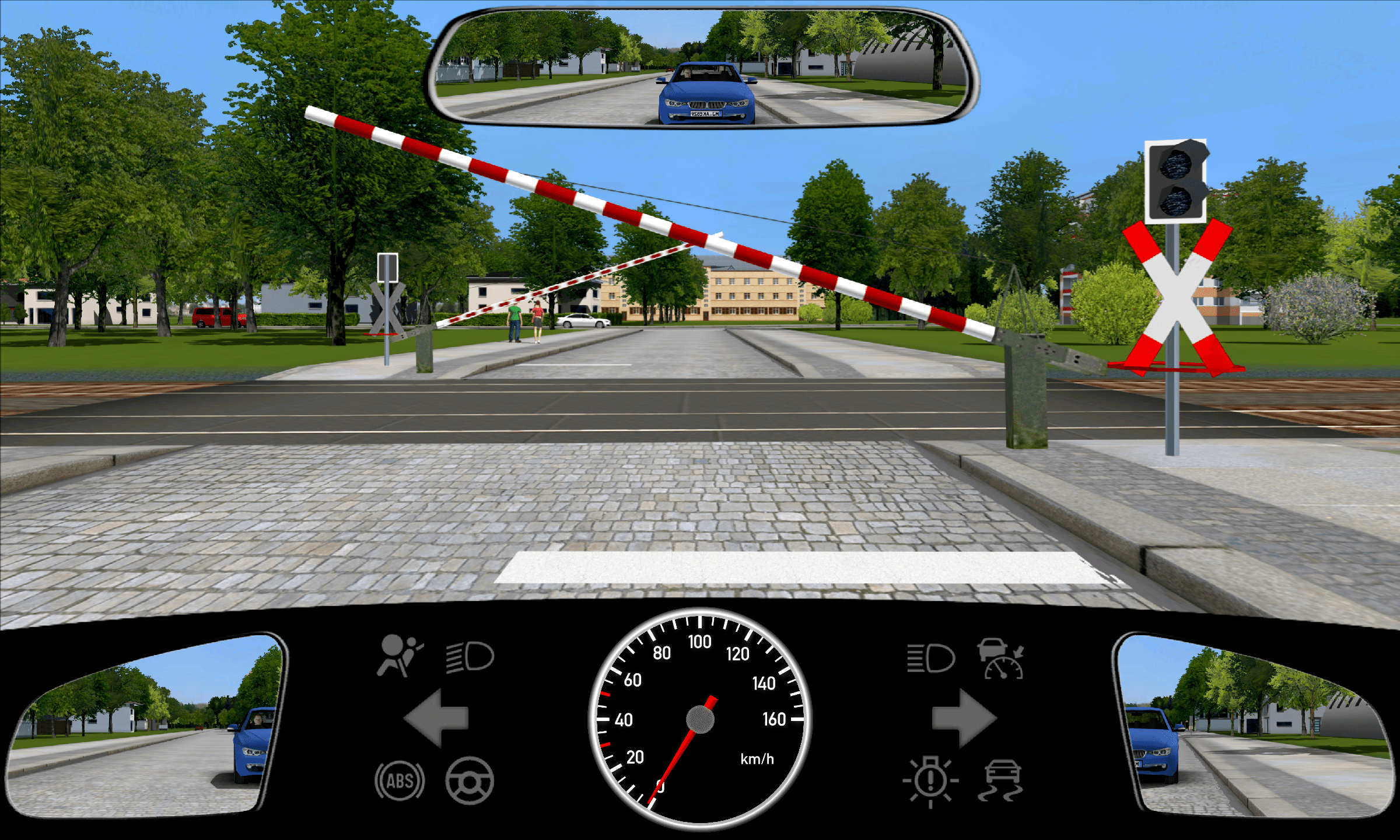
Spiegazione
Apparently there is a fault with the railway barrier. It is therefore not safe to use the railway crossing. Do not cross the railway crossing under any circumstances; if a train is approaching, there is an acute danger to your life and there is also a risk that you will not be able to get through under the barriers and get stuck. Inform the police about the fault at the railway crossing so that the problem can be fixed.
-
Domanda 5 di 19
State percorrendo una strada forestale e vi avvicinate a un passaggio a livello senza la croce di Sant'Andrea. Cosa fate?
1.2.19-1013 PuntiSpiegazione
Even without the diagonal cross, a car driver must always give priority to a rail vehicle on field and forest paths. Approach the railroad crossing at moderate speed and listen for a train approaching. Observe the track and stop, if necessary, to let the rail vehicle pass.
-
Domanda 6 di 19
Cosa si fa a un passaggio a livello quando le barriere sono abbassate?
1.2.19-1023 PuntiSpiegazione
At a level crossing with closed gates, all car drivers have to wait in front of the diagonal cross. If there is no traffic sign, a safe distance to the rails must be observed. Be careful not to block intersections or T-junctions when waiting. In the dark, lighting must be switched on, parking light is sufficient.
-
Domanda 7 di 19
Quando è consentito attraversare un passaggio a livello con luci lampeggianti ma senza barriere dopo il passaggio di un treno?
1.2.19-1043 PuntiSpiegazione
You may only cross the level crossing after the red flashing light turns off, as another train could follow. Do not be fooled by oncoming traffic to drive on if the car driver waiting on the opposite site already starts driving too early after the train has passed through.
-
Domanda 8 di 19
Ti stai avvicinando a un passaggio a livello con barriere. Dove devi attendere se, in caso di congestione del traffico, dovessi fermarti sui binari?
1.2.19-1053 PuntiSpiegazione
If you are unable to pass the railroad crossing quickly due to slow traffic, then stop in front of the diagonal cross. Waiting directly in front of the rails or at the level of the barriers is prohibited, because at these positions you may be hit by the dynamic pressure of the train, by the train itself or trapped by the barriers.
-
Domanda 9 di 19
La barriera di un passaggio a livello in un'area urbana è abbassata. Dove bisogna attendere?
1.2.19-1073 PuntiSpiegazione
Trucks and vehicles with trailers (vehicles over 7.5 t permissible total mass) are only required to wait outside of built-up areas behind the level crossing (80 m) ahead marker. Inside a built-up area they have to wait in front of the diagonal crosses.
-
Domanda 10 di 19
Che significato ha questo segnale stradale?
1.2.19-1093 Punti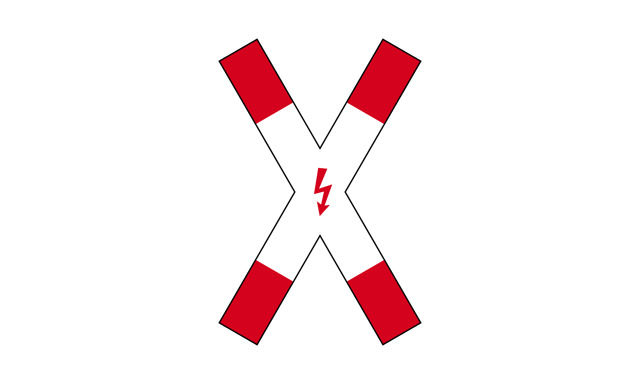
Spiegazione
The diagonal crosses indicate that rail transport has priority here. As a car driver you need to wait when a rail vehicle is approaching. A lightning bolt in the diagonal cross is an indication of an electrical overhead line, which is important for special transports with a big height.
-
Domanda 11 di 19
Un semaforo senza segnale di passaggio a livello è posizionato prima di un passaggio a livello, di fronte a un incrocio con una strada sulla destra. La luce è rossa. Dove bisogna attendere?
1.2.19-1103 Punti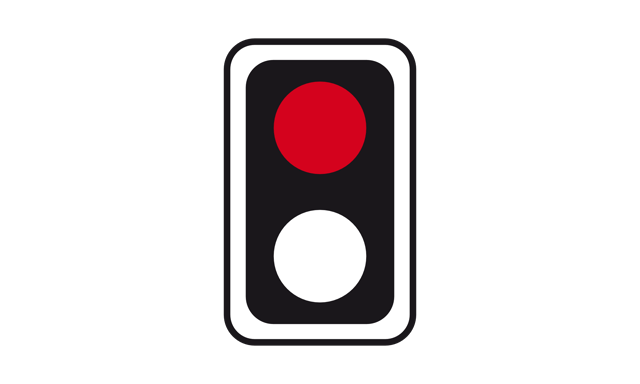
Spiegazione
In the event of a red light, the car driver must stop in any case. In order not to block the traffic from the road going to the right, the red light is located several meters from the actual railroad crossing. Wait at the stop line or at the light sign if no line is available.
-
Domanda 12 di 19
Cosa bisogna fare in questa situazione?
1.2.19-1113 Punti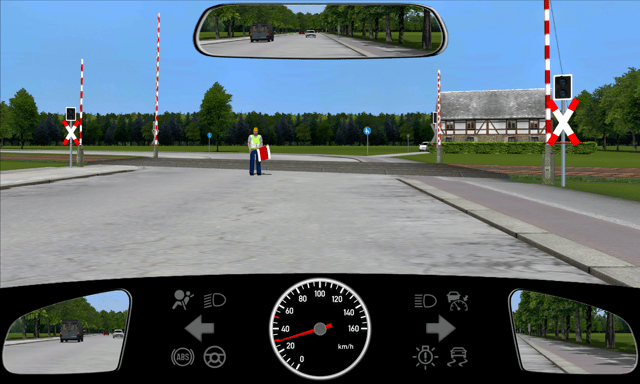
Spiegazione
The railway employee secures the level crossing and therefore you should stop before the St. Andrew's cross.
-
Domanda 13 di 19
Chi è tenuto a fermarsi a un passaggio a livello con semaforo rosso lampeggiante a forma di freccia che punta a destra?
1.2.19-1123 PuntiSpiegazione
A diagonal cross with a red flashing light in the form of an arrow to the right can be found behind an intersection or T-junction after a railroad crossing. The right arrow indicates that the car drivers who turn right must wait.
-
Domanda 14 di 19
Cosa indica questa combinazione di segnali stradali?
1.2.19-1134 Punti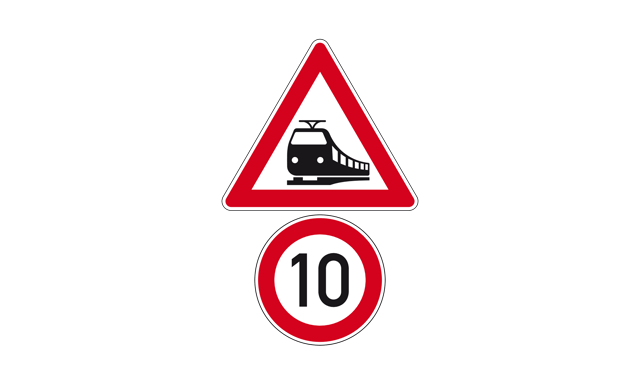
Spiegazione
The traffic sign combination shows you a level crossing. The car driver may approach the level crossing only at 10 km/h and cross it at that speed.
-
Domanda 15 di 19
Qual è la giusta linea d'azione ora?
1.2.19-1144 PuntiSpiegazione
If there is a risk that you might come to a stop on the rails due to a traffic jam situation or stagnant traffic, stop in front of the diagonal cross and wait until you can safely and quickly cross the level crossing. Fatal accidents occur when a car standing on the rails cannot avoid the approaching train.
-
Domanda 16 di 19
Ti stai avvicinando a un passaggio a livello. La barriera inizia ad abbassarsi. Cosa devi fare?
1.2.19-1153 PuntiSpiegazione
When a driver approaches a gate that lowers, he/she must wait in front of the level crossing. This also applies if no rail vehicle is yet to be seen. Switching on the hazard light is not required.
-
Domanda 17 di 19
In quali punti è possibile imbattersi in passaggi a livello privi di dispositivi di sicurezza tecnici?
1.2.19-1163 PuntiSpiegazione
In industrial and port areas, on field and forest paths, as well as on roads with little traffic, you should expect a railway crossing without a barrier or traffic light (technically unprotected).
-
Domanda 18 di 19
Vuoi attraversare un passaggio a livello con le barriere aperte. Qual è la procedura corretta?
1.2.19-1173 PuntiSpiegazione
Even when the barriers are open, you must always approach level crossings with caution and at a moderate speed. This gives you enough time to react to possible bumps and dangerous situations. Moderate speed in this context does not mean walking speed, because you can also drive faster than walking speed. In this way you can prevent possible dangerous situations with approaching trains or lowering barriers.
-
Domanda 19 di 19
Cosa dovresti fare ora?
1.2.19-1183 PuntiSpiegazione
Level crossings may not be crossed when the flashing lights above the St. Andrew's Cross are on or the barriers are lowered.