
1.2.19 Cruces de nivel
Aquí encontrará las reglas más importantes sobre pasos a nivel, barreras ferroviarias, luces intermitentes, cruces de San Andrés y prioridad de trenes de una manera fácil y memorable.
🧠 Reglas de memoria rápida
🚦 Luz roja intermitente
Deténgase inmediatamente antes del Cruz de San Andrés.
🚧 Bajar la barrera
Nunca conduzca cuando las barreras comiencen a bajar.
🚂 Prioridad del tren
Vehículos ferroviarios siempre tienes prioridad.
⚠ Peligro de atasco de tráfico
Nunca ingrese al cruce si puede detenerse en los rieles.
🛑 Cuando DEBES parar
🚫 Deténgase inmediatamente
- Aparecen luces rojas intermitentes
- Las barreras empiezan a bajar
- Las barreras están cerradas
- Empleado ferroviario ondea una bandera
- Empleado ferroviario muestra luz roja
⚠ Por qué esto es importante
- Los trenes viajan muy rápido.
- Los trenes necesitan una mayor distancia de frenado
- Las barreras se cierran rápidamente
- Los vehículos pueden quedar atrapados
✖ Reglas de la Cruz de San Andrés
| Signo / Situación | Significado | Lo que debes hacer |
|---|---|---|
| Cruz de San Andrés | El tren tiene prioridad. | Espere si se acerca el tren. |
| Luz roja intermitente | Cruce bloqueado | Detenerse inmediatamente |
| Luz intermitente de flecha | Se aplica al tráfico que gira | Los vehículos que giran deben detenerse |
| Símbolo del rayo | Línea aérea eléctrica | Importante para vehículos altos |
✅ Cómo cruzar con seguridad
🚗 Comportamiento de conducción seguro
- Reducir la velocidad antes de cruzar.
- Mire atentamente en ambos sentidos
- Escuche los trenes que se aproximan
- Cruza de forma rápida y segura
- Manténgase alerta incluso con barreras abiertas
❌ Comportamiento peligroso
- Conducir alrededor de barreras
- Parando sobre rieles
- Seguir a otros coches a ciegas
- Ignorar las luces intermitentes
- Cruzar durante los atascos
⭐ Situaciones especiales
🚛 Camiones de más de 7,5 t
Fuera de las zonas urbanizadas, los vehículos pesados y los vehículos con remolques suelen tener que esperar detrás de la marca de los 80 metros.
🏭 Áreas industriales y forestales
Espere cruces ferroviarios desprotegidos, sin barreras ni luces intermitentes.
🚨 Sistema de barrera rota
Nunca cruce si el sistema de barrera parece defectuoso. Informe a la policía inmediatamente.
🚩 Señales del personal ferroviario
🚩 Bandera Blanca-Roja-Blanca
El cruce está bloqueado. Debes detenerte y esperar a una distancia segura.
🔴 Luz roja por personal ferroviario
Las vías son inaccesibles y los trenes tienen prioridad. No cruces.
🎯 Consejos sencillos para el examen
- El tren siempre tiene prioridad.
- Deténgase en las luces rojas intermitentes
- Nunca te detengas sobre rieles
- Una barrera abierta NO significa automáticamente segura
- Cruzar durante los atascos
- Conducir alrededor de barreras
- Ignorar al personal ferroviario
- Seguir a otros vehículos demasiado pronto
Preguntas de práctica (19)
-
Pregunta 1 de 19
¿Cuándo hay que esperar ante un paso a nivel?
1.2.19-0023 puntosExplicación
All road users are required to stop and wait immediately before a level crossing in the following situations: when the signal system's red flashing light comes on, when the barriers start to lower, when the barriers are closed, when a staff member waves a white-red-white flag , You must wait until the blockage is released again.
-
Pregunta 2 de 19
Un empleado ferroviario agita una lámpara roja en un paso a nivel. ¿Qué significa?
1.2.19-0043 puntosExplicación
All car drivers and other road users must wait at a safe distance before the crossing if a member of the railway staff secures a low-traffic level crossing with a red light. Waving the red light means that the tracks are inaccessible and trains have priority.
-
Pregunta 3 de 19
En la entrada de una zona industrial hay una cruz de San Andrés con el rótulo suplementario 'Zona industrial, el ferrocarril tiene prioridad'. ¿Qué hay que tener en cuenta?
1.2.19-0083 puntosExplicación
Even if there are no barriers and no diagonal crosses at the level crossings in the entire industrial area, motor vehicle drivers must give priority to all rail vehicles. Always expect a train to come, observe the railway lines accurately and approach the tracks only with moderate speed.
-
Pregunta 4 de 19
Hace tiempo que las barreras de este paso a nivel no cambian de posición. ¿Qué es correcto hacer?
1.2.19-0094 puntos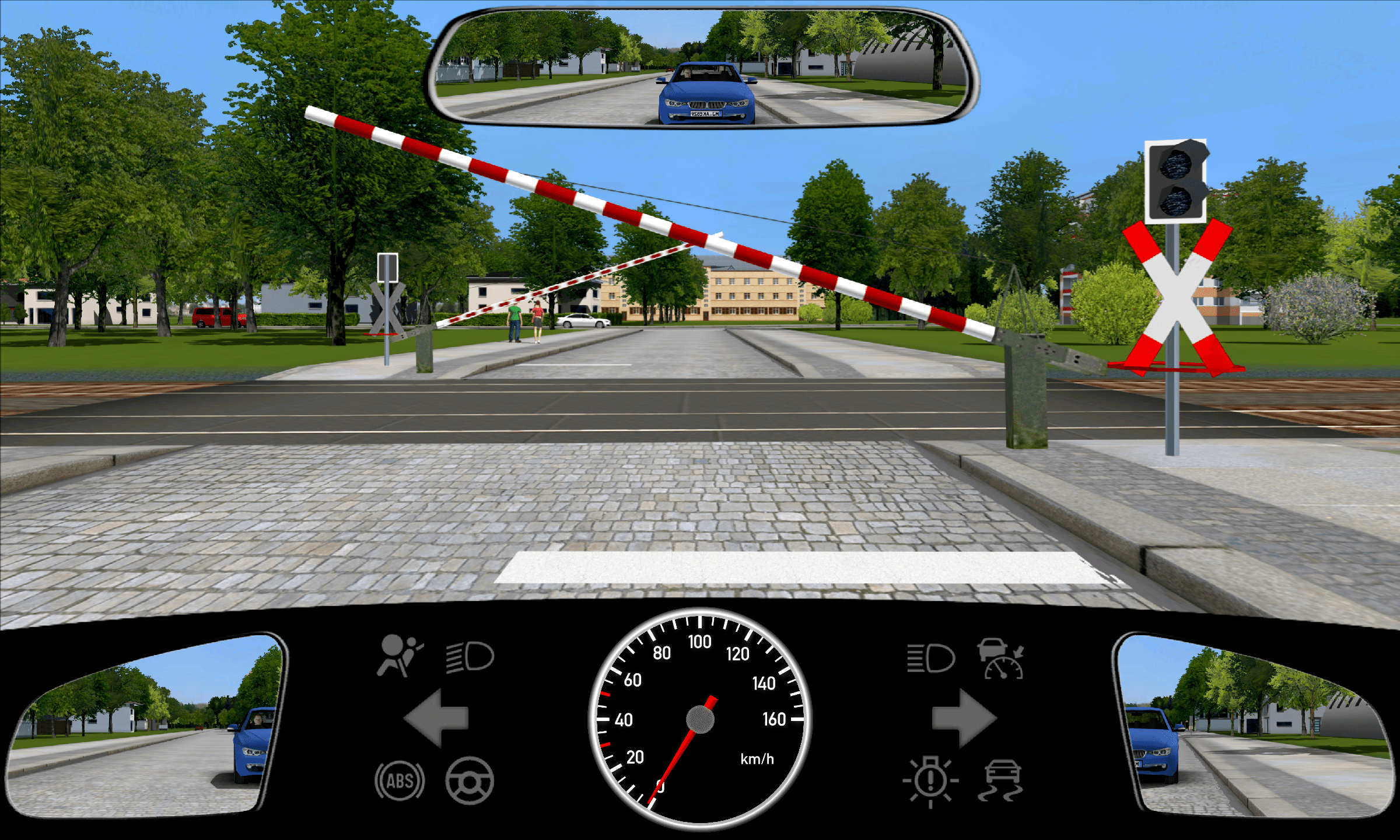
Explicación
Apparently there is a fault with the railway barrier. It is therefore not safe to use the railway crossing. Do not cross the railway crossing under any circumstances; if a train is approaching, there is an acute danger to your life and there is also a risk that you will not be able to get through under the barriers and get stuck. Inform the police about the fault at the railway crossing so that the problem can be fixed.
-
Pregunta 5 de 19
Ud. circula por un camino forestal y se acerca a un paso a nivel sin cruz de San Andrés. ¿Cómo debe comportarse?
1.2.19-1013 puntosExplicación
Even without the diagonal cross, a car driver must always give priority to a rail vehicle on field and forest paths. Approach the railroad crossing at moderate speed and listen for a train approaching. Observe the track and stop, if necessary, to let the rail vehicle pass.
-
Pregunta 6 de 19
¿Cuál debe ser su comportamiento en un paso a nivel con barreras bajadas?
1.2.19-1023 puntosExplicación
At a level crossing with closed gates, all car drivers have to wait in front of the diagonal cross. If there is no traffic sign, a safe distance to the rails must be observed. Be careful not to block intersections or T-junctions when waiting. In the dark, lighting must be switched on, parking light is sufficient.
-
Pregunta 7 de 19
¿Cuándo puede cruzarse un paso a nivel con instalación de luz intermitente, una vez que haya pasado el tren?
1.2.19-1043 puntosExplicación
You may only cross the level crossing after the red flashing light turns off, as another train could follow. Do not be fooled by oncoming traffic to drive on if the car driver waiting on the opposite site already starts driving too early after the train has passed through.
-
Pregunta 8 de 19
Ud. se acerca a un paso a nivel con barreras. ¿Dónde tiene que esperar si hay atasco y se quedaría parado sobre el paso a nivel?
1.2.19-1053 puntosExplicación
If you are unable to pass the railroad crossing quickly due to slow traffic, then stop in front of the diagonal cross. Waiting directly in front of the rails or at the level of the barriers is prohibited, because at these positions you may be hit by the dynamic pressure of the train, by the train itself or trapped by the barriers.
-
Pregunta 9 de 19
En un paso a nivel - dentro de poblado - la barrera está bajada. ¿Dónde tiene que esperar Ud.?
1.2.19-1073 puntosExplicación
Trucks and vehicles with trailers (vehicles over 7.5 t permissible total mass) are only required to wait outside of built-up areas behind the level crossing (80 m) ahead marker. Inside a built-up area they have to wait in front of the diagonal crosses.
-
Pregunta 10 de 19
¿Qué significa esta señal?
1.2.19-1093 puntos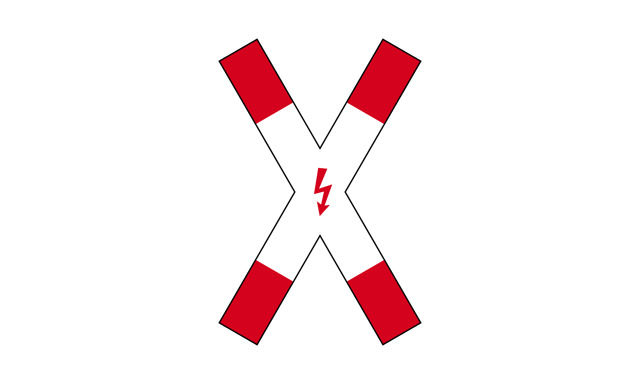
Explicación
The diagonal crosses indicate that rail transport has priority here. As a car driver you need to wait when a rail vehicle is approaching. A lightning bolt in the diagonal cross is an indication of an electrical overhead line, which is important for special transports with a big height.
-
Pregunta 11 de 19
En un paso a nivel, delante de una calle que desemboca desde la derecha hay una señal luminosa roja sin cruz de San Andrés. ¿Dónde deberá esperar?
1.2.19-1103 puntos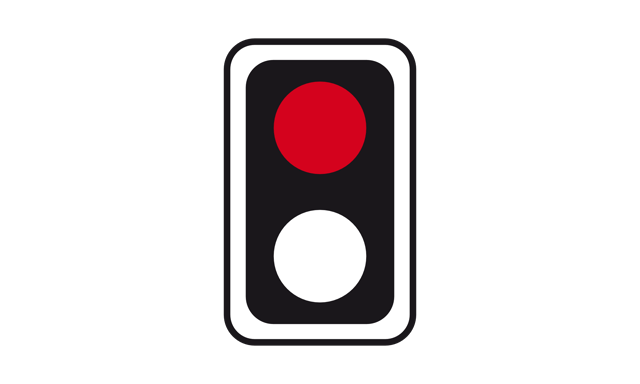
Explicación
In the event of a red light, the car driver must stop in any case. In order not to block the traffic from the road going to the right, the red light is located several meters from the actual railroad crossing. Wait at the stop line or at the light sign if no line is available.
-
Pregunta 12 de 19
¿Qué tiene que hacer en esta situación?
1.2.19-1113 puntos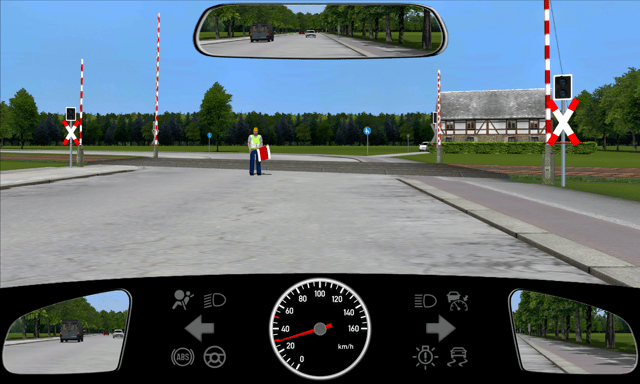
Explicación
The railway employee secures the level crossing and therefore you should stop before the St. Andrew's cross.
-
Pregunta 13 de 19
Ante una cruz de San Andrés con una luz roja intermitente en forma de flecha hacia la derecha, ¿quiénes tienen que esperar?
1.2.19-1123 puntosExplicación
A diagonal cross with a red flashing light in the form of an arrow to the right can be found behind an intersection or T-junction after a railroad crossing. The right arrow indicates that the car drivers who turn right must wait.
-
Pregunta 14 de 19
¿Qué indica esta combinación de señales de tráfico?
1.2.19-1134 puntos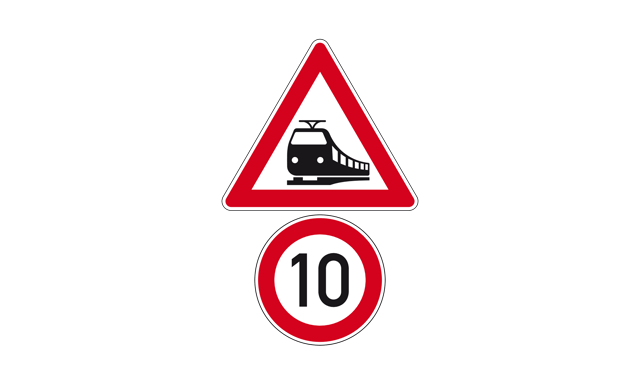
Explicación
The traffic sign combination shows you a level crossing. The car driver may approach the level crossing only at 10 km/h and cross it at that speed.
-
Pregunta 15 de 19
¿Qué es lo correcto en este momento?
1.2.19-1144 puntosExplicación
If there is a risk that you might come to a stop on the rails due to a traffic jam situation or stagnant traffic, stop in front of the diagonal cross and wait until you can safely and quickly cross the level crossing. Fatal accidents occur when a car standing on the rails cannot avoid the approaching train.
-
Pregunta 16 de 19
Usted se está acercando a un cruce ferroviario. La barrera comienza a descender. ¿Cómo debe comportarse?
1.2.19-1153 puntosExplicación
When a driver approaches a gate that lowers, he/she must wait in front of the level crossing. This also applies if no rail vehicle is yet to be seen. Switching on the hazard light is not required.
-
Pregunta 17 de 19
¿Dónde ha de contar con pasos a nivel que no dispongan de sistemas técnicos de seguridad?
1.2.19-1163 puntosExplicación
In industrial and port areas, on field and forest paths, as well as on roads with little traffic, you should expect a railway crossing without a barrier or traffic light (technically unprotected).
-
Pregunta 18 de 19
Quiere cruzar un paso a nivel con las barreras abiertas. ¿Qué es lo correcto?
1.2.19-1173 puntosExplicación
Even when the barriers are open, you must always approach level crossings with caution and at a moderate speed. This gives you enough time to react to possible bumps and dangerous situations. Moderate speed in this context does not mean walking speed, because you can also drive faster than walking speed. In this way you can prevent possible dangerous situations with approaching trains or lowering barriers.
-
Pregunta 19 de 19
¿Cómo debe proceder ahora?
1.2.19-1183 puntosExplicación
Level crossings may not be crossed when the flashing lights above the St. Andrew's Cross are on or the barriers are lowered.