
2.1.11 Comportamiento afectivo-emocional en el tráfico
Mantenga la calma, conduzca a la defensiva, evite la agresión y priorice siempre la seguridad sobre las emociones o la presión del tiempo.
😌 Mantenga la calma y evite la agresión
✔ Buen comportamiento
- Mantenga una distancia segura.
- Espere pacientemente para adelantar con seguridad.
- Deje pasar a los conductores agresivos.
- Conduce con calma incluso cuando estés molesto.
- Espere errores de los demás.
❌ Comportamiento peligroso
- Seguir de cerca
- Usar luces de flash agresivamente
- Tocando la bocina con ira
- carreras de carretera
- Adelantamiento arriesgado
🧠 Las emociones afectan la conducción
Ira, estrés, miedo, tristeza o excitación. puede distraerlo y conducir a una conducción riesgosa.
Si está emocionalmente alterado, deténgase en un lugar seguro, cálmese y continúe más tarde.
Nunca conduzca inmediatamente después de una discusión o situación emocional.
😴 Fatiga y microsueño
Signos de fatiga
- Bostezando a menudo
- ojos pesados
- Desvío de carril
Riesgos
Los conductores cansados reaccionan más lentamente y cometen más errores.
Qué hacer
Deténgase, descanse, camine un poco y continúe sólo cuando esté renovado.
🚗 Adelantamiento seguro
Nunca adelantar cuando la visibilidad sea limitada (curvas, carril contrario poco claro).
Sólo adelanta cuando sea completamente seguro y puedas ver claramente la carretera.
No presione a los vehículos más lentos con las luces delanteras o siguiéndolos muy de cerca.
🧑 Conductores jóvenes y riesgos
Problemas comunes
- mostrando
- Conducir demasiado rápido
- Sobreestimar habilidades
- Accidentes de conducción nocturna
La mejor solución
Conduce a la defensiva y evita riesgos innecesarios.
🚘 Manejo de los que siguen detrás
Mantén la calma y mantén tu velocidad de forma segura.
Muévase al carril derecho cuando sea posible y deje pasar al conductor agresivo.
NO frene repentinamente, no toque la bocina agresivamente ni intente “darles una lección”.
⚡ Velocidad y presión de tiempo
La presión del tiempo aumenta la asunción de riesgos y provoca exceso de velocidad.
Respete siempre los límites de velocidad y conduzca con anticipación.
↔ Cambios de carril
Los cambios frecuentes de carril aumentan las posibilidades de cometer errores y accidentes.
Cambiar de carril normalmente ahorra muy poco tiempo.
📝 Reglas fáciles de memoria
Preguntas de práctica (25)
-
Pregunta 1 de 25
Después de tener que circular bastante tiempo por una carretera secundaria detrás de un turismo lento, por fin puede adelantarlo. ¿Qué hace?
2.1.11-0084 puntosExplicación
You should stay calm in this situation and overtake with a sufficient safety distance without endangering other road users. Harassing others by tightly cutting them should be avoided. Otherwise an accident could occur.
-
Pregunta 2 de 25
El que circula delante le impide adelantarse desde hace algún tiempo. ¿Cómo se comporta usted correctamente?
2.1.11-0094 puntos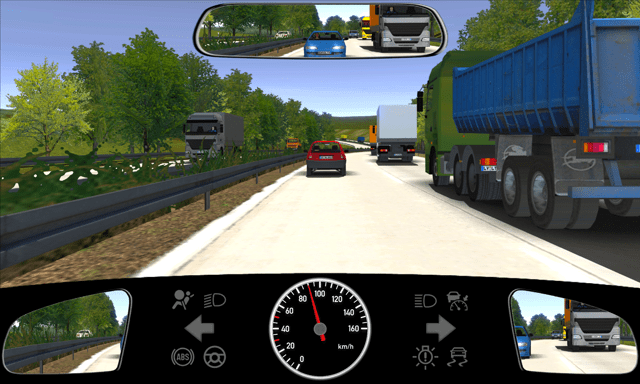
Explicación
The car driver has to wait until overtaking is possible without danger and always maintain the necessary safety distance to the vehicle in front. Stay calm, because tailgating, turning the headlights on full beam for a long time or honking is considered coercion and will be punished with fines or even a withdrawal of your driving license.
-
Pregunta 3 de 25
¿Qué debe tener en cuenta, si después de una larga jornada de trabajo además debe conducir un vehículo?
2.1.11-0123 puntosExplicación
After a long day at work, you are usually not fully productive and get tired faster. That's why mistakes while driving can increase and your concentration decreases.
-
Pregunta 4 de 25
¿Qué caracteriza a un buen conductor?
2.1.11-0134 puntosExplicación
A good driver always takes care to act in partnership and also knows that people can make mistakes.
-
Pregunta 5 de 25
El turismo [rojo] que va delante de Ud. lleva un buen rato circulando despacio. ¿Qué es correcto hacer en esta situación?
2.1.11-0144 puntosExplicación
You maintain your speed so as not to tailgate and keep the required safe distance. It is forbidden to tailgate, tailgate too closely or honk your horn in traffic. The road is clear, but you can only see as far as the next bend. The visible distance is too short for an overtaking manoeuvre.
-
Pregunta 6 de 25
En el caso de los conductores jóvenes, ¿a qué suelen deberse los accidentes que se producen los días que salen de fiesta?
2.1.11-0154 puntosExplicación
Young drivers in particular have less driving experience and a higher willingness to take risks through showing off. Dangerous situations are assessed more poorly and accidents occur more frequently. A defensive driving style can prevent accidents.
-
Pregunta 7 de 25
¿Por qué puede resultar peligroso circular con prisas?
2.1.11-0164 puntosExplicación
When you are under time pressure, you may underestimate dangers because your willingness to take risks increases and people often drive too fast. You should still drive defensively and stick to the speed limits to avoid endangering yourself and others.
-
Pregunta 8 de 25
Va por una vía fuera de poblado y, delante de su vehículo, circula un turismo a una velocidad muy por debajo de la permitida y de aquella a la que podría circular. ¿Qué es correcto hacer?
2.1.11-0174 puntosExplicación
Even if you don't like it, you must adapt your speed to that of the car and not get too close to it. Only overtake at a suitable place and not in front of it. Do not endanger yourself or others.
-
Pregunta 9 de 25
¿Por qué no es buena idea cambiar muchas veces de carril?
2.1.11-0183 puntosExplicación
Every lane change requires certain activities: observing traffic, flashing, changing the lane yourself. In this case, other road users can be overlooked and endangered. Changing lanes often doesn't save you much time, but the more often you change lanes, the more likely you are to make mistakes.
-
Pregunta 10 de 25
Gracias a un frenado de emergencia, ha evitado por poco un accidente de tráfico. Le tiemblan las manos y las rodillas. ¿Qué es correcto hacer?
2.1.11-0193 puntosExplicación
Stop at the next opportunity and take a break until you have calmed down. Maybe you can get out, walk a few metres and take a deep breath. You should also go through the situation again in your head later, as you may realise what didn't go perfectly. That way you can adjust your driving behaviour in the future.
-
Pregunta 11 de 25
Va conduciendo y se enfada mucho por el comportamiento de otro usuario de la vía pública. ¿Qué es correcto hacer en esa situación?
2.1.11-0203 puntosExplicación
It is important that you are not distracted by the traffic if you are annoyed by the behaviour of other drivers, because road safety is paramount. Concentrate on the traffic and continue driving calmly; if you are emotionally agitated while driving, you could overlook dangers. If necessary, take a break and only continue driving when you have calmed down.
-
Pregunta 12 de 25
Tras realizar un adelantamiento, un turismo se incorpora delante de Ud. sin guardar la distancia suficiente. ¿Qué hace?
2.1.11-1184 puntosExplicación
The car driver in the overtaking vehicle shows a misconduct that should not disturb you. Stay calm, do not honk and do not turn on the flash light. Decelerate slightly and restore the required safety distance between the vehicles.
-
Pregunta 13 de 25
El riesgo de causar un accidente al conducir un vehículo a motor es mucho mayor en las personas de entre 18 y 24 años. ¿Cuáles suelen ser los motivos relevantes para ello?
2.1.11-1194 puntosExplicación
Young car drivers often have too little experience to be able to correctly assess road traffic risks. They often drive carelessly and riskily, overestimate their abilities and rely on the safety of the vehicles they control. By testing their car and their own driving skills, they sometimes get into unmanageable situations.
-
Pregunta 14 de 25
Mientras está en un atasco, ve por el retrovisor cómo un motorista se va "colando" entre los vehículos que están esperando en caravana. ¿Qué hace?
2.1.11-1204 puntosExplicación
Under no circumstances should you act illegally just because another road user violates applicable rules. It is forbidden for you as a car driver to honk in this situation, to stop the motorcyclist or to let him pass.
-
Pregunta 15 de 25
Va circulando por una carretera secundaria y, detrás, viene un turismo demasiado pegado a su vehículo. ¿Cómo debería reaccionar?
2.1.11-1214 puntosExplicación
When driving on a highway and being harassed by the car behind you, you should keep calm and control your speed at an appropriate pace. You should avoid slow driving so as not to hinder the flow of traffic. However, you should also not be tempted to drive faster. It's best to let the pushy driver pass at the next opportunity.
-
Pregunta 16 de 25
Cinco jóvenes, todos amigos, van en coche a un evento en su tiempo libre. El ambiente es distendido. ¿Qué peligros pueden derivarse de ello?
2.1.11-1234 puntosExplicación
For the car driver, there is a risk of getting carried away by the mood. He/She can be distracted by the others and overlook traffic hazards and make driving mistakes. It is recommended to set up rules of conduct for the passengers before starting the journey. So, the car driver is not a spoilsport or tempted in any way.
-
Pregunta 17 de 25
Quiere adelantar. ¿Qué le impide hacerlo?
2.1.11-1254 puntosExplicación
A car driver may only overtake if he/she can see that the opposite lane is free. In this situation, the oncoming traffic cannot be seen, so you must not overtake.
-
Pregunta 18 de 25
Antes de emprender la marcha se ha enfadado. ¿Qué consecuencias debería evitar mientras vaya conduciendo?
2.1.11-1264 puntosExplicación
Anything that could negatively affect your safe driving should be avoided. Besides distractions, this also includes aggressiveness. If you're upset, do not get behind the wheel immediately afterwards.
-
Pregunta 19 de 25
¿Por qué se caracteriza un conductor responsable?
2.1.11-1273 puntosExplicación
A responsible car driver expects mistakes from other road users and does not sit behind the wheel while he/she is very tired or cannot control his/her feelings. Furthermore, he/she does not always insist on his right and cannot be distracted.
-
Pregunta 20 de 25
¿Qué sentimientos pueden influir en el comportamiento del conductor?
2.1.11-1284 puntosExplicación
Strong emotions such as anger, fear and sadness as well as joy and exuberance usually influence the driving behavior. They distract the car driver from the road and often lead to risky, aggressive or over-cautious driving. Only when you're calm and balanced you should participate in traffic.
-
Pregunta 21 de 25
De las siguientes cosas, ¿cuáles son un indicio de que debería interrumpir la conducción?
2.1.11-1294 puntosExplicación
Brief microsleep often causes devastating accidents. If you have to yawn frequently, can barely keep your eyes open, or have trouble keeping your lane, you should stop your journey and take a rest.
-
Pregunta 22 de 25
Mientras va circulando, su acompañante quiere discutir un tema con usted. ¿Qué debería hacer?
2.1.11-1304 puntos -
Pregunta 23 de 25
Mientras va circulando, su acompañante le indica que, en varias ocasiones, no ha respetado la distancia de seguridad. ¿Qué debería hacer?
2.1.11-1314 puntosExplicación
You should take the safety advice of passengers seriously. Keep a larger distance. Within built-up areas, the distance to the vehicle in front should be at least three car lengths or approx. 15 m. Outside built-up areas, you should follow the "two-second rule of thumb".
-
Pregunta 24 de 25
En un semáforo en rojo en la ciudad, otro conductor obviamente quiere provocarle a una carrera en carretera. ¿Cómo debería comportarse?
2.1.11-1324 puntosExplicación
Don't be provoked and stay calm. Since road races are strictly prohibited, you should not pay attention to this behavior.
-
Pregunta 25 de 25
En el caso de los conductores jóvenes, ¿a qué suelen deberse los accidentes que se producen los días que salen de fiesta?
2.1.11-1334 puntosExplicación
Young drivers in particular have less experience driving at night with crowded vehicles. In addition, the risk of accidents increases due to distracting passengers.