
2.1.11 Zachowanie afektywno-emocjonalne w ruchu drogowym
Zachowaj spokój, jedź defensywnie, unikaj agresji i zawsze przedkładaj bezpieczeństwo nad emocje i presję czasu.
😌 Zachowaj spokój i unikaj agresji
✔ Dobre zachowanie
- Zachowaj bezpieczną odległość.
- Poczekaj cierpliwie na bezpieczne wyprzedzanie.
- Przepuść agresywnych kierowców.
- Jedź spokojnie, nawet jeśli jesteś zirytowany.
- Spodziewaj się błędów od innych.
❌Niebezpieczne zachowanie
- Ogon
- Agresywne używanie świateł błyskowych
- Trąbienie ze złości
- Wyścigi drogowe
- Ryzykowne wyprzedzanie
🧠 Emocje wpływają na jazdę
Złość, stres, strach, smutek lub podekscytowanie może odwrócić Twoją uwagę i prowadzić do ryzykownej jazdy.
Jeśli jesteś zdenerwowany emocjonalnie, zatrzymaj się w bezpiecznym miejscu, uspokój się i kontynuuj później.
Nigdy nie jedź natychmiast po kłótni lub sytuacji emocjonalnej.
😴 Zmęczenie i mikrosen
Oznaki zmęczenia
- Często ziewam
- Ciężkie oczy
- Dryfowanie pasa
Ryzyko
Zmęczeni kierowcy reagują wolniej i popełniają więcej błędów.
Co robić
Zatrzymaj się, odpocznij, przejdź się trochę i kontynuuj dopiero po odświeżeniu.
🚗Bezpieczne wyprzedzanie
Nigdy nie wyprzedzaj, gdy widoczność jest ograniczona (zakręty, niejasny przeciwny pas).
Wyprzedzaj tylko wtedy, gdy jest całkowicie bezpiecznie i wyraźnie widzisz drogę przed sobą.
Nie naciskaj na wolniejsze pojazdy reflektorami lub klapą tylną.
🧑 Młodzi kierowcy i ryzyko
Typowe problemy
- Popisywać się
- Jazda zbyt szybko
- Przecenianie umiejętności
- Wypadki podczas jazdy nocą
Najlepsze rozwiązanie
Jedź defensywnie i unikaj niepotrzebnego ryzyka.
🚘 Obsługa tylnych klap
Zachowaj spokój i bezpiecznie utrzymuj prędkość.
Jeśli to możliwe, zjedź na prawy pas i przepuść agresywnego kierowcę.
NIE hamuj gwałtownie, nie trąbij agresywnie ani nie próbuj „dać im lekcji”.
⚡ Presja prędkości i czasu
Presja czasu zwiększa podejmowanie ryzyka i powoduje przekroczenie prędkości.
Zawsze przestrzegaj ograniczeń prędkości i jedź przewidywalnie.
↔ Zmiany pasa
Częsta zmiana pasa ruchu zwiększa ryzyko błędów i wypadków.
Zmiana pasa zwykle oszczędza bardzo mało czasu.
📝 Łatwe zasady dotyczące pamięci
Practice Questions (25)
-
Question 1 of 25
Po tym jak przez dłuższy czas na drodze krajowej musiałeś jechać za wolno jadącym samochodem osobowym, możesz wreszcie wyprzedzić. Jak powinieneś się zachować?
2.1.11-0084 PunktówWyjaśnienie
You should stay calm in this situation and overtake with a sufficient safety distance without endangering other road users. Harassing others by tightly cutting them should be avoided. Otherwise an accident could occur.
-
Question 2 of 25
Kierowca jadący z przodu utrudnia Państwu od dłuższego czasu manewr wyprzedzania. Jak należy się właściwie zachować?
2.1.11-0094 Punktów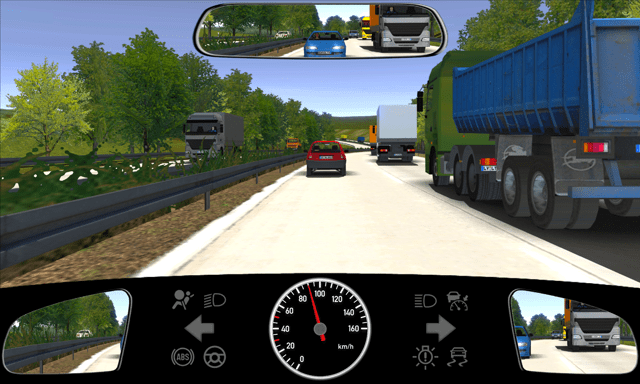
Wyjaśnienie
The car driver has to wait until overtaking is possible without danger and always maintain the necessary safety distance to the vehicle in front. Stay calm, because tailgating, turning the headlights on full beam for a long time or honking is considered coercion and will be punished with fines or even a withdrawal of your driving license.
-
Question 3 of 25
Co należy wziąć pod uwagę, jeśli prowadzi się pojazd po długim dniu pracy?
2.1.11-0123 PunktówWyjaśnienie
After a long day at work, you are usually not fully productive and get tired faster. That's why mistakes while driving can increase and your concentration decreases.
-
Question 4 of 25
Po czym można rozpoznać dobrego kierowcę?
2.1.11-0134 PunktówWyjaśnienie
A good driver always takes care to act in partnership and also knows that people can make mistakes.
-
Question 5 of 25
[Czerwony] samochód osobowy przed Państwem jedzie wolno od dłuższego czasu. Jakie zachowanie będzie w tej sytuacji właściwe?
2.1.11-0144 PunktówWyjaśnienie
You maintain your speed so as not to tailgate and keep the required safe distance. It is forbidden to tailgate, tailgate too closely or honk your horn in traffic. The road is clear, but you can only see as far as the next bend. The visible distance is too short for an overtaking manoeuvre.
-
Question 6 of 25
Co jest często przyczyną tzw. wypadków po dyskotekach u młodych kierowców?
2.1.11-0154 PunktówWyjaśnienie
Young drivers in particular have less driving experience and a higher willingness to take risks through showing off. Dangerous situations are assessed more poorly and accidents occur more frequently. A defensive driving style can prevent accidents.
-
Question 7 of 25
Dlaczego jazda pod presją czasu może być niebezpieczna?
2.1.11-0164 PunktówWyjaśnienie
When you are under time pressure, you may underestimate dangers because your willingness to take risks increases and people often drive too fast. You should still drive defensively and stick to the speed limits to avoid endangering yourself and others.
-
Question 8 of 25
Na drodze poza miastem samochód osobowy jedzie przed Państwem wyraźnie wolniej niż jest to dowolone oraz niż byłoby to dla niego możliwe. Jakie zachowanie będzie właściwe?
2.1.11-0174 PunktówWyjaśnienie
Even if you don't like it, you must adapt your speed to that of the car and not get too close to it. Only overtake at a suitable place and not in front of it. Do not endanger yourself or others.
-
Question 9 of 25
Dlaczego częste zmienianie pasa ruchu nie ma sensu?
2.1.11-0183 PunktówWyjaśnienie
Every lane change requires certain activities: observing traffic, flashing, changing the lane yourself. In this case, other road users can be overlooked and endangered. Changing lanes often doesn't save you much time, but the more often you change lanes, the more likely you are to make mistakes.
-
Question 10 of 25
Tylko dzięki hamowaniu awaryjnemu o mały włos uniknęli Państwo wypadku. Państwa dłonie i kolana drżą. Jakie zachowanie będzie właściwe?
2.1.11-0193 PunktówWyjaśnienie
Stop at the next opportunity and take a break until you have calmed down. Maybe you can get out, walk a few metres and take a deep breath. You should also go through the situation again in your head later, as you may realise what didn't go perfectly. That way you can adjust your driving behaviour in the future.
-
Question 11 of 25
Podczas jazdy denerwują się Państwo zachowaniem innego użytkownika drogi. Jaki jest właściwy sposób zachowania się Państwa w tym momencie?
2.1.11-0203 PunktówWyjaśnienie
It is important that you are not distracted by the traffic if you are annoyed by the behaviour of other drivers, because road safety is paramount. Concentrate on the traffic and continue driving calmly; if you are emotionally agitated while driving, you could overlook dangers. If necessary, take a break and only continue driving when you have calmed down.
-
Question 12 of 25
Samochód osobowy po wyprzedzeniu ścina przed tobą bez zachowania odpowiedniej odległości. Jak się zachowasz?
2.1.11-1184 PunktówWyjaśnienie
The car driver in the overtaking vehicle shows a misconduct that should not disturb you. Stay calm, do not honk and do not turn on the flash light. Decelerate slightly and restore the required safety distance between the vehicles.
-
Question 13 of 25
Ryzyko spowodowania wypadku podczas jazdy samochodem jest pomiędzy 18 a 24 rokiem życia znacznie podwyższone. Jaka przyczyna ma w tym przypadku największe znaczenie?
2.1.11-1194 PunktówWyjaśnienie
Young car drivers often have too little experience to be able to correctly assess road traffic risks. They often drive carelessly and riskily, overestimate their abilities and rely on the safety of the vehicles they control. By testing their car and their own driving skills, they sometimes get into unmanageable situations.
-
Question 14 of 25
Podczas gdy stoisz w korku ulicznym, widzisz w lusterku wstecznym, jak motocyklista "przeciska się" pomiędzy stojącymi w kolejce pojazdami. Jak się zachowasz?
2.1.11-1204 PunktówWyjaśnienie
Under no circumstances should you act illegally just because another road user violates applicable rules. It is forbidden for you as a car driver to honk in this situation, to stop the motorcyclist or to let him pass.
-
Question 15 of 25
Jedziesz drogą krajową i jesteś naciskany przez jadący za tobą samochód osobowy. Jak powinieneś zareagować?
2.1.11-1214 PunktówWyjaśnienie
When driving on a highway and being harassed by the car behind you, you should keep calm and control your speed at an appropriate pace. You should avoid slow driving so as not to hinder the flow of traffic. However, you should also not be tempted to drive faster. It's best to let the pushy driver pass at the next opportunity.
-
Question 16 of 25
Pięć młodych przyjaciół jedzie samochodem na imprezę. Atmosfera jest rozluźniona. Jakie zagrożenia mogą z tego wynikać?
2.1.11-1234 PunktówWyjaśnienie
For the car driver, there is a risk of getting carried away by the mood. He/She can be distracted by the others and overlook traffic hazards and make driving mistakes. It is recommended to set up rules of conduct for the passengers before starting the journey. So, the car driver is not a spoilsport or tempted in any way.
-
Question 17 of 25
Chcą Państwo wyprzedzać. Dlaczego nie jest to możliwe?
2.1.11-1254 PunktówWyjaśnienie
A car driver may only overtake if he/she can see that the opposite lane is free. In this situation, the oncoming traffic cannot be seen, so you must not overtake.
-
Question 18 of 25
Przed rozpoczęciem jazdy zdenerwowali się Państwo. Jakich skutków należy unikać podczas jazdy?
2.1.11-1264 PunktówWyjaśnienie
Anything that could negatively affect your safe driving should be avoided. Besides distractions, this also includes aggressiveness. If you're upset, do not get behind the wheel immediately afterwards.
-
Question 19 of 25
Co wyróżnia odpowiedzialnego kierowcę pojazdu?
2.1.11-1273 PunktówWyjaśnienie
A responsible car driver expects mistakes from other road users and does not sit behind the wheel while he/she is very tired or cannot control his/her feelings. Furthermore, he/she does not always insist on his right and cannot be distracted.
-
Question 20 of 25
Jakie uczucia mogą mieć wpływ na zachowanie podczas jazdy?
2.1.11-1284 PunktówWyjaśnienie
Strong emotions such as anger, fear and sadness as well as joy and exuberance usually influence the driving behavior. They distract the car driver from the road and often lead to risky, aggressive or over-cautious driving. Only when you're calm and balanced you should participate in traffic.
-
Question 21 of 25
Jakie są sygnały świadczące o tym, że należy przerwać jazdę?
2.1.11-1294 PunktówWyjaśnienie
Brief microsleep often causes devastating accidents. If you have to yawn frequently, can barely keep your eyes open, or have trouble keeping your lane, you should stop your journey and take a rest.
-
Question 22 of 25
Państwa pasażer chce dyskutować podczas jazdy. Jak powinni się Państwo zachować w tej sytuacji?
2.1.11-1304 Punktów -
Question 23 of 25
Państwa pasażer wskazuje podczas jazdy na to, że wielokrotnie podjeżdżacie zbyt blisko. Jak powinni się Państwo zachować?
2.1.11-1314 PunktówWyjaśnienie
You should take the safety advice of passengers seriously. Keep a larger distance. Within built-up areas, the distance to the vehicle in front should be at least three car lengths or approx. 15 m. Outside built-up areas, you should follow the "two-second rule of thumb".
-
Question 24 of 25
Przy czerwonym świetle w mieście, inny kierowca prowokuje do wyścigu drogowego. Jak należy się zachować?
2.1.11-1324 PunktówWyjaśnienie
Don't be provoked and stay calm. Since road races are strictly prohibited, you should not pay attention to this behavior.
-
Question 25 of 25
Co jest często przyczyną tzw. wypadków po dyskotekach u młodych kierowców?
2.1.11-1334 PunktówWyjaśnienie
Young drivers in particular have less experience driving at night with crowded vehicles. In addition, the risk of accidents increases due to distracting passengers.