
2.2.17 Oświetlenie
Poznaj w prosty i wizualny sposób najważniejsze zasady oświetlenia do niemieckiego egzaminu na prawo jazdy. Skoncentruj się na widoczności, bezpieczeństwie i prawidłowym używaniu świateł w różnych sytuacjach pogodowych i drogowych.
🔵 Światła drogowe (Fernlicht)
Ważne fakty
- Niebieskie światło deski rozdzielczej = włączone światła drogowe
- Używaj świateł drogowych tylko na ciemnych drogach
- Wyłącz go dla nadjeżdżających pojazdów
- Nie oślepiaj innych kierowców
- Nie używać na dobrze oświetlonych drogach
Kiedy wyłączyć
- Zbliżające się pojazdy
- Na przejazdach kolejowych
- Podczas jazdy za innym pojazdem
- Gdy nie działa asystent świateł drogowych
💡 Światła mijania (Abblendlicht)
Użyj świateł mijania:
- O zmierzchu
- W nocy
- W tunelach
- W deszczu
- W śniegu
- We mgle
Dlaczego to ma znaczenie
- Możesz widzieć lepiej
- Inni widzą Cię lepiej
- Poprawia bezpieczeństwo na drodze
Pamiętać
- Światła postojowe NIE wystarczą
- Automatyczne światła mogą nie działać we mgle
- W razie potrzeby włącz ręcznie
🌫️ Światła przeciwmgielne i tylne światła przeciwmgielne
Światła przeciwmgielne
- Można go używać podczas ulewnego deszczu, mgły lub śniegu
- Dozwolone w ciągu dnia przy słabej widoczności
- Pomaga innym zobaczyć Twój pojazd
Tylne lampy przeciwmgielne
- Tylko wtedy, gdy widoczność jest poniżej 50 metrów
- Używaj tylko w gęstej mgle
- Żółta lampka ostrzegawcza na desce rozdzielczej wskazuje aktywację
- Może oślepiać kierowców jadących za tobą
🚗 Zasady dotyczące parkowania i oświetlenia pojazdów
- Samochody mogą parkować z włączonymi światłami postojowymi wyłącznie w obszarach zabudowanych
- Poza obszarami zabudowanymi nie jest to dozwolone
- Samochody ciężarowe/przyczepy o masie powyżej 3,5 t mogą wymagać tablic ostrzegawczych lub świateł parkingowych
- Osprzęt wystający daleko poza pojazd wymaga dodatkowego oświetlenia i reflektorów
- Długie osprzęty rolnicze wymagają żółtych reflektorów
⚙️ Prawidłowa regulacja reflektorów
Za wysoko
Nadjeżdżający pojazd będzie oślepiony i niebezpieczny.
Za niski
Droga jest słabo oświetlona, a widoczność staje się niebezpieczna.
🧠 Wskazówki dotyczące szybkiej pamięci egzaminacyjnej
Niebieskie światło = Włączone światła drogowe
Żółte światło = WŁĄCZONE tylne światło przeciwmgłowe
Nigdy nie jedź wyłącznie na światłach postojowych
Używaj świateł mijania we mgle, śniegu, deszczu, tunelach, o zmierzchu i w ciemności
Practice Questions (18)
-
Question 1 of 18
Po czym można poznać, że załączone jest tylne światło przeciwmgielne?
2.2.17-0012 PunktówWyjaśnienie
A look at the dashboard is enough and the car driver immediately recognizes from the yellow warning light that the rear fog-lamp is in operation. According to the highway traffic act, the warning light must be in direct field of vision.
-
Question 2 of 18
Panuje bardzo zła widoczność. Kiedy można zapalić światła przeciwmgielne?
2.2.17-0053 PunktówWyjaśnienie
If the visibility during the day is badly affected by fog, snowfall or rain, then you, as a car driver, have to switch on to low beam. Only in weather conditions with strong visual impairment you may also turn on the fog lights.
-
Question 3 of 18
Jedzie Pani/Pan nocą po nieoświetlonej drodze. W niewielkiej odległości z przodu jedzie inny pojazd. Jakie światła musi Pani/Pan wtedy załączyć?
2.2.17-0084 PunktówWyjaśnienie
The car driver must turn on the low beam on his own vehicle in order not to blind vehicles driving in front of you nor oncoming traffic. Using high beam is out of the question, as it would dazzle the other driver.
-
Question 4 of 18
Tylne oświetlenie twojego pojazdu jest zakryte. Co powinieneś zrobić?
2.2.17-0102 PunktówWyjaśnienie
You must always attach a light carrier with all the rear lights to your vehicle. Keep in mind that you as a car driver are responsible for the effectiveness of the lighting equipment. A kilometer limit does not exist in this situation.
-
Question 5 of 18
Jakie urządzenie oświetleniowe muszą Państwo zasadniczo włączyć jadąc swoim pojazdem w ciemności?
2.2.17-0123 PunktówWyjaśnienie
In Germany it is compulsory to switch on the dipped headlights in the dark. When the low beam is switched on, you see more and you are also seen better.
-
Question 6 of 18
Kiedy można załączyć światła przeciwmgielne w ciągu dnia?
2.2.17-1013 PunktówWyjaśnienie
In the event of heavy weather-related visibility restriction due to fog, snow or rain, fog lights may be switched on during the day. These strong weather-related restrictions of visibility usually only occur in autumn and winter months. You are generally not allowed to drive with ice on the windscreen. You need to remove it before starting your journey.
-
Question 7 of 18
Kiedy można załączyć tylne światła przeciwmgielne?
2.2.17-1023 PunktówWyjaśnienie
The rear fog-lamps of your vehicle may only be used if the visibility is less than 50 m in heavy fog. Due to the high risk of glare, the lights can otherwise become a security risk for subsequent traffic.
-
Question 8 of 18
Gdzie wystarczają światła postojowe samochodu osobowego przy jego zaparkowaniu na nie oświetlonych drogach?
2.2.17-1033 PunktówWyjaśnienie
Cars may only be parked on unlit roads with parking lights switched on within built-up areas. Because within built-up areas, people drive at lower speeds, so that the parked car can be detected in time. Outside built-up areas this is not permitted.
-
Question 9 of 18
Kiedy należy jeździć na światłach mijania również w ciągu dnia?
2.2.17-1094 PunktówWyjaśnienie
If visibility is severely limited due to weather conditions - rain, fog, snowfall - you must use the prescribed lighting equipment, usually low beam, even during the daytime driving. This is necessary to be seen better by other road users and to help you see the others better.
-
Question 10 of 18
W jakich przypadkach należy załączyć o zmierzchu lub w ciemności tylko światła obrysowe (światła postojowe)?
2.2.17-1113 PunktówWyjaśnienie
At dusk and in the dark always drive with low beam. So, you are clearly visible and you can see well yourself. Vehicles are not allowed to only drive with parking light, because the luminosity of these lights, which are also known as the sidelights, is not sufficient.
-
Question 11 of 18
Kiedy muszą Państwo włączyć światła mijania?
2.2.17-1144 PunktówWyjaśnienie
In poor visibility you must always turn on the low beam. This is always the case during dusk, in darkness or in weather-related poor visibility conditions such as rain, fog or snow. Even if you drive through a tunnel, you must always turn on the low beam.
-
Question 12 of 18
Czym może skutkować niewłaściwe ręczne ustawienie świateł przednich?
2.2.17-1153 PunktówWyjaśnienie
If the headlights are set too high, you will dazzle oncoming traffic. If the headlights are set too low, they will barely illuminate the road and you will not have sufficient visibility ahead. If the headlights are set incorrectly, the lights may not turn off completely.
-
Question 13 of 18
Jaką funkcję powinien pełnić asystent świateł drogowych w ciemności?
2.2.17-1163 PunktówWyjaśnienie
The assistant switches the high beam on and off automatically so that other road users are not dazzled. The high beam is only switched on automatically if the road is not sufficiently lit.
-
Question 14 of 18
W jakiej sytuacji asystent świateł drogowych Państwa pojazdu prawdopodonie nie włączy się w odpowiednim czasie na ulicy o ruchu dwukierunkowym?
2.2.17-1173 PunktówWyjaśnienie
When crossing a crest and driving through a bend, the high beam assist camera may not be able to recognise oncoming traffic in time. Switch off the high beam manually when you notice it so as not to dazzle oncoming traffic and endanger yourself.
-
Question 15 of 18
W samochodzie aktywowany jest system automatycznego włączania świateł. Czego należy się spodziewać w przedstawionych warunkach oświetleniowych?
2.2.17-1183 Punktów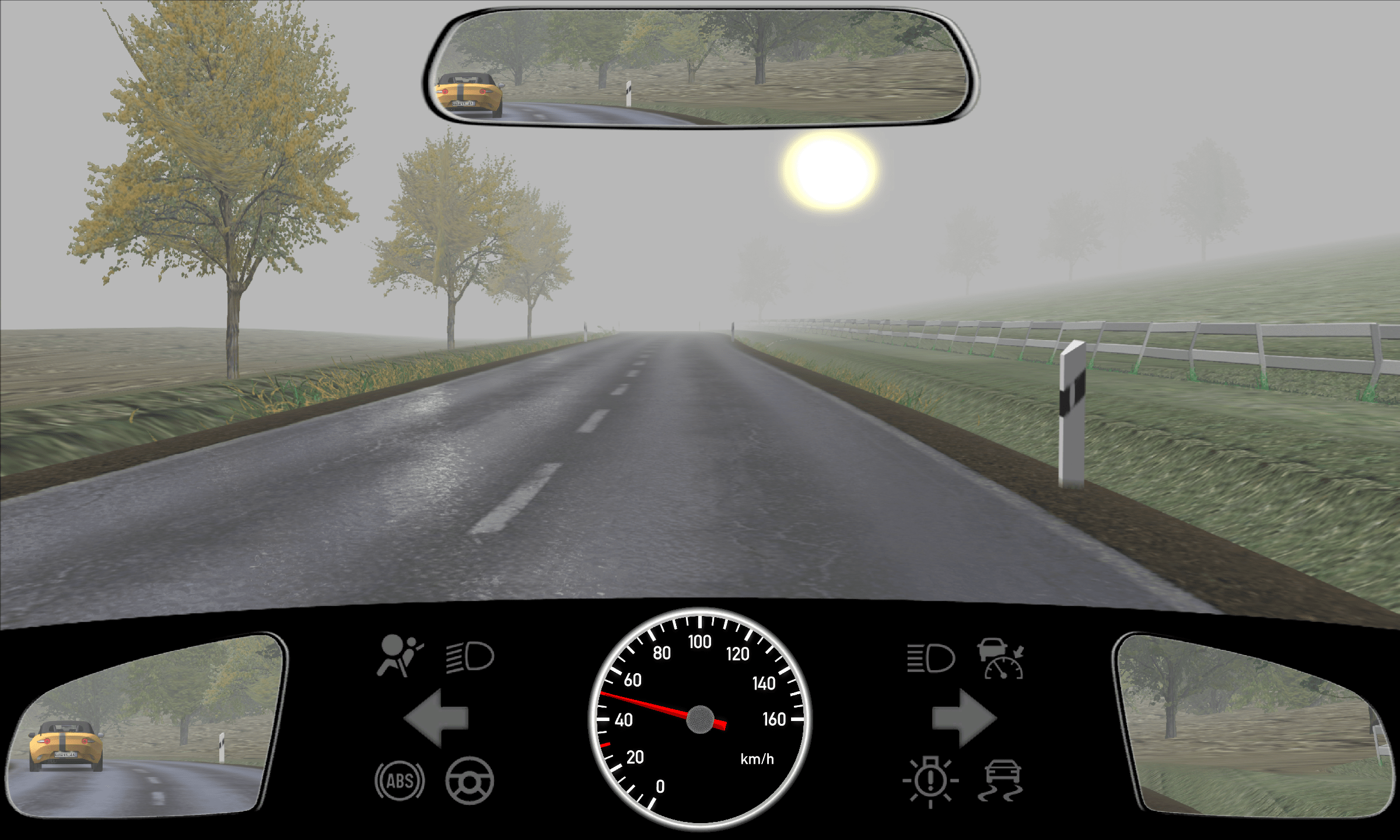
Wyjaśnienie
The light and visibility conditions are poor due to the low sun and foggy air. However, the automatic light system does not recognise poor light conditions. Switch on the low beam manually so that following road users can see you better.
-
Question 16 of 18
Jedziesz w ciemności na światłach drogowych. Kiedy musisz przygasić światła?
2.2.17-4024 PunktówWyjaśnienie
You must not dazzle the oncoming traffic with high beam. So, turn it off immediately if you realize that other vehicles are driving towards you. Pedestrians will not be dazzled by your high beam if they travel in the same direction as you.
-
Question 17 of 18
Jedziesz w ciemności na światłach drogowych. Kiedy musisz zmienić je na światła mijania?
2.2.17-4033 PunktówWyjaśnienie
When driving in the dark with high beam, you need to turn it off when approaching oncoming traffic. You are not allowed to drive with high beam on roads that have sufficient lighting throughout. The head lamps of waiting vehicles should not blind others. That's why you have to dip your lights at railroad crossings. If pedestrians precede in the same direction, they are not dazzled by the high beam.
-
Question 18 of 18
Dlaczego również w dzień musisz jeździć na światłach drogowych, kiedy widoczność jest ograniczona przez mgłę, deszcz lub opady śniegu?
2.2.17-4044 PunktówWyjaśnienie
If visibility is poor during the day, due to weather conditions such as rain, fog or snow, you as the driver must switch on the low beam. The primary concern here is that your vehicle is better seen by other road users. The traffic signs are not better seen from a greater distance.