
1.4.41 Znak regulacyjny
Praktyczny przewodnik po niemieckim egzaminie na prawo jazdy. Dowiedz się, co nakazują, zabraniają lub zezwalają znaki drogowe – i co należy robić w prawdziwym ruchu ulicznym.
Czerwone kółko
Zwykle oznacza zakaz lub ograniczenie.
Niebieskie kółko
Zwykle oznacza obowiązkową instrukcję.
Dodatkowe talerze
Ogranicz, rozwiń lub wyjaśnij, kiedy zasada ma zastosowanie.
Jak szybko nauczyć się tego rozdziału
Określ typ znaku
Czy jest to zakaz, polecenie, zasada pierwszeństwa, czy może oznakowanie drogowe?
Zapytaj: co mam zrobić?
Zatrzymać się, ustąpić miejsca, zwolnić, wskazać, poczekać czy uniknąć wjazdu?
Sprawdź wyjątki
Poszukaj dodatkowych tablic, takich jak mieszkańcy, pojazdy dostawcze, mokra droga lub limity czasowe.
Pomyśl o działaniu egzaminacyjnym
Egzamin pyta, co robisz, a nie tylko jak nazywa się znak.
Znaki regulacyjne
Niemieckie znaki drogowe
Znaki nakazowe podają kierowcom obowiązkowe instrukcje, ograniczenia, priorytety i zasady korzystania z dróg.
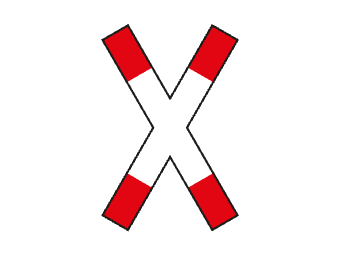
Kod 201
Krzyż św. Andrzeja
Oznacza przejazd kolejowy, na którym ruch kolejowy ma pierwszeństwo.
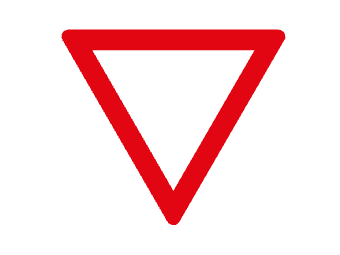
Kod 205
Uciekać
Nakazuje kierowcom ustąpienie pierwszeństwa pojazdom poruszającym się po drodze priorytetowej.
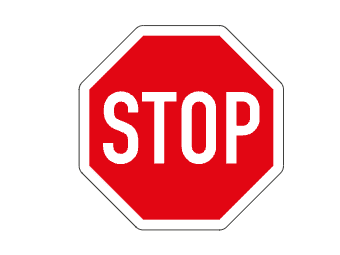
Kod 206
Zatrzymaj się i ustąp
Wymaga całkowitego zatrzymania się przed ustąpieniem pierwszeństwa pojazdom.
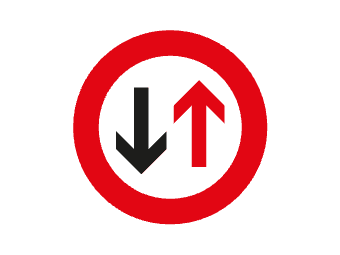
Kod 208
Pierwszeństwo dla nadjeżdżających pojazdów
Nakazuje kierowcom ustąpić pierwszeństwa pojazdom nadjeżdżającym z naprzeciwka.
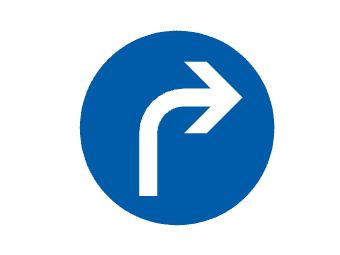
Kod 209-20
Obowiązkowy kierunek w prawo
Kierowcy muszą skręcić w prawo ze wskazaniem.
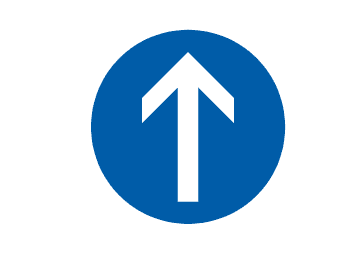
Kod 209-30
Obowiązkowy kierunek prosto
Kierowcy muszą jechać prosto.
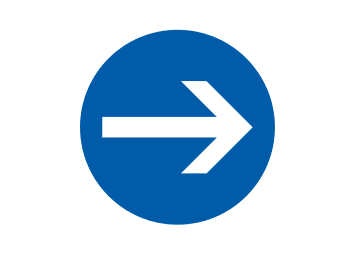
Kod 211-20
Skręć w prawo tutaj
Kierowcy muszą w tym miejscu skręcić w prawo.
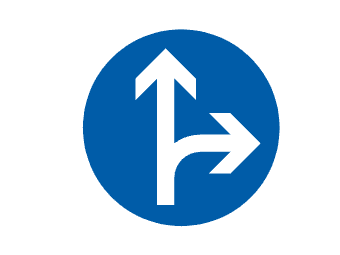
Kod 214-20
Na wprost lub tylko w prawo
Kierowcy mogą jechać tylko prosto lub skręcić w prawo.
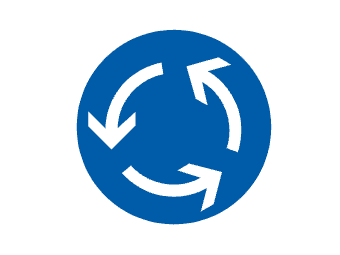
Kod 215
Rondo
Wskazuje obowiązkowy ruch wokół ronda.
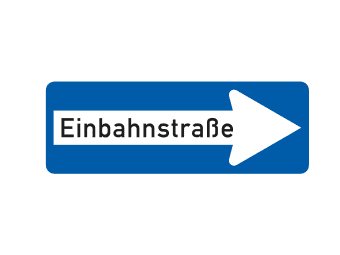
Kod 220
Ulica Jednokierunkowa
Wskazuje, że ruch jest dozwolony tylko w jednym kierunku.
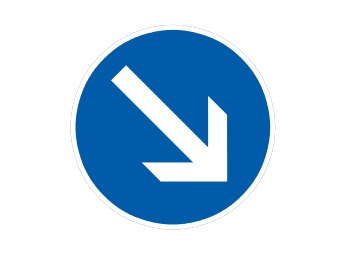
Kod 222-20
Przejdź w prawo
Kierowcy muszą minąć przeszkodę po prawej stronie.
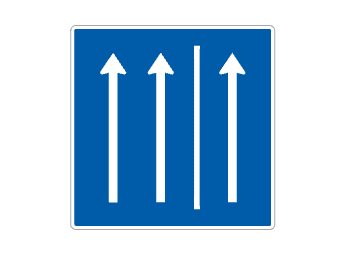
Kod 223.1
Użyj twardego ramienia
Zezwala lub wymaga, aby ruch korzystał z pobocza.
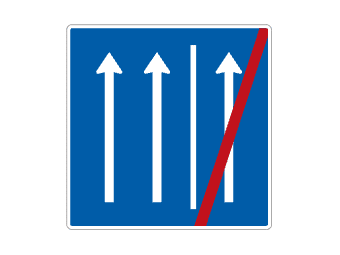
Kod 223.2
Koniec używania twardych barków
Wskazuje, że jazda po poboczu nie jest już dozwolona.
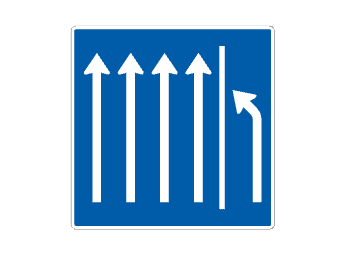
Kod 223.3
Oczyść twarde ramię
Wymaga od kierowców opuszczenia pobocza.
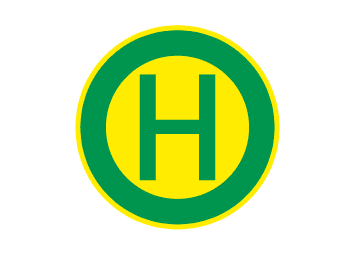
Kod 224
Przystanek autobusowy
Oznacza przystanek autobusów komunikacji miejskiej i szkolnej.
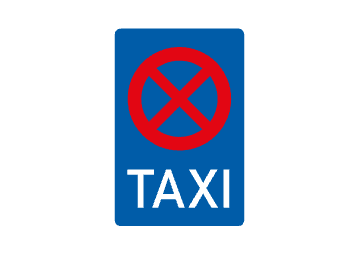
Kod 229
Postój taksówek
Oznacza zarezerwowane miejsce postoju dla taksówek.
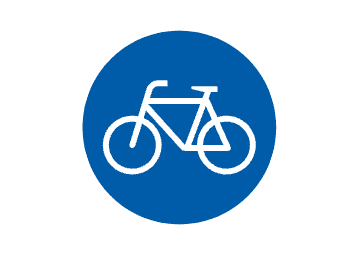
Kod 237
Ścieżka rowerowa
Wskazuje obowiązkową ścieżkę dla rowerzystów.
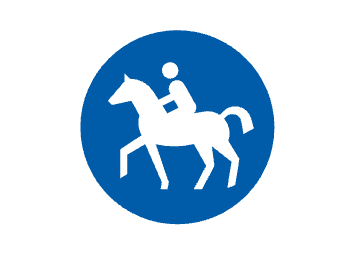
Kod 238
Ścieżka konna
Wskazuje obowiązkową ścieżkę dla jeźdźców konnych.
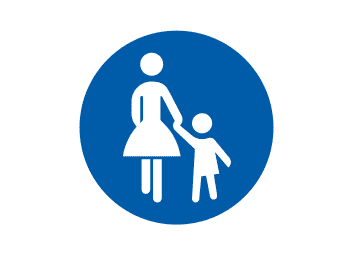
Kod 239
Chodnik
Wskazuje ścieżkę zarezerwowaną dla pieszych.
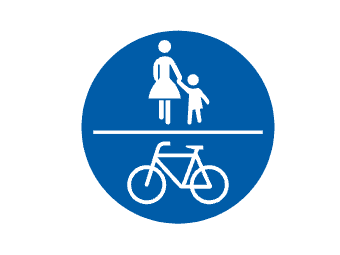
Kod 240
Wspólny chodnik i ścieżka rowerowa
Wskazuje wspólną ścieżkę dla pieszych i rowerzystów.
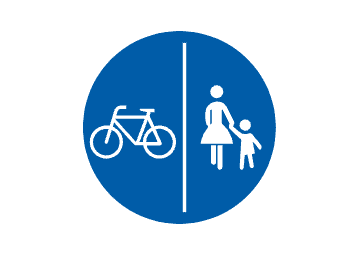
Kod 241
Wydzielona ścieżka rowerowa i chodnik
Wskazuje oddzielne obszary dla rowerzystów i pieszych.
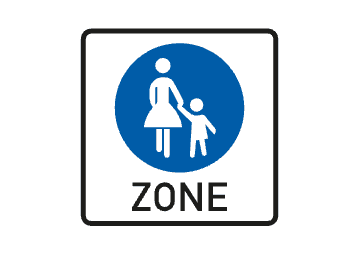
Kod 242.1
Początek strefy dla pieszych
Oznacza początek obszaru przeznaczonego głównie dla pieszych.
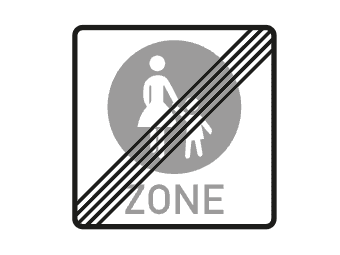
Kod 242.2
Koniec strefy dla pieszych
Oznacza koniec strefy dla pieszych.
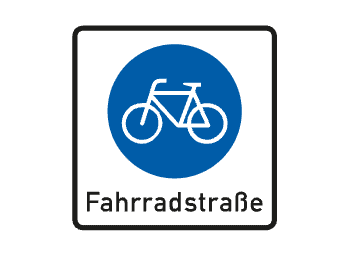
Kod 244.1
Początek ulicy Rowerowej
Oznacza ulicę, na której ruch rowerowy ma szczególny priorytet.
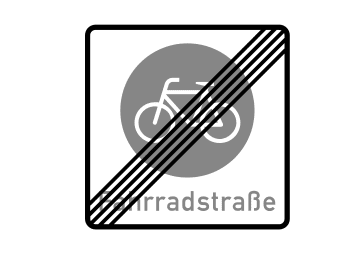
Kod 244.2
Koniec ulicy Rowerowej
Oznacza koniec ulicy rowerowej.
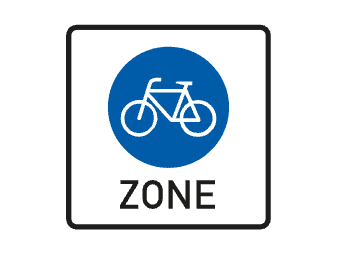
Kod 244.3
Początek Strefy Rowerowej
Oznacza początek obszaru, na którym obowiązują specjalne zasady dotyczące rowerów.
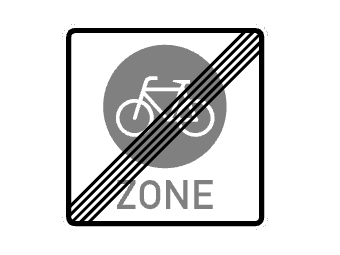
Kod 244.4
Koniec Strefy Rowerowej
Oznacza koniec strefy rowerowej.
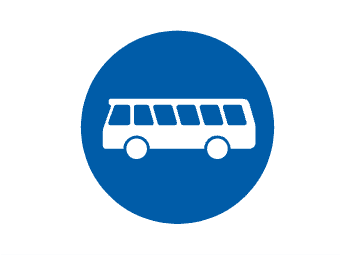
Kod 245
Pas autobusowy
Oznacza pas ruchu zarezerwowany dla autobusów.
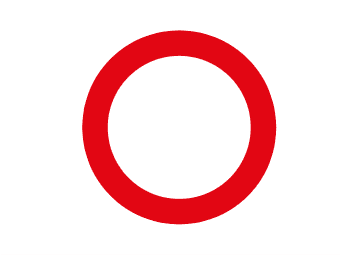
Kod 250
Brak pojazdów
Zabrania wjazdu wszystkim typom pojazdów.
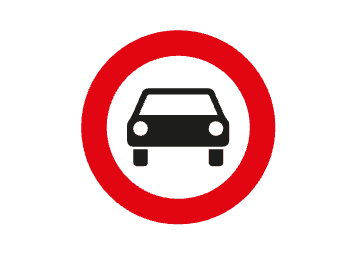
Kod 251
Żadnych samochodów i wielośladowych pojazdów silnikowych
Zabrania samochodów i innych wielośladowych pojazdów silnikowych.
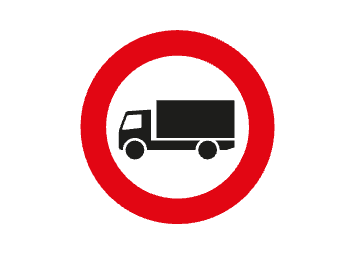
Kod 253
Zakaz pojazdów mechanicznych powyżej 3,5 t
Zabrania pojazdów ciężkich powyżej podanej klasy wagowej.
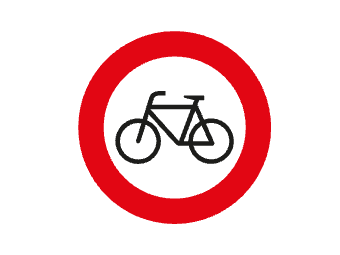
Kod 254
Żadnej jazdy na rowerze
Zabrania ruchu rowerowego.
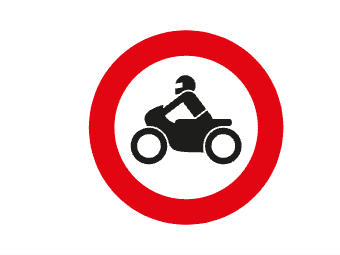
Kod 255
Zakaz motocykli, motorowerów i małych motocykli
Zabrania motocykli, motorowerów i podobnych dwukołowych pojazdów silnikowych.
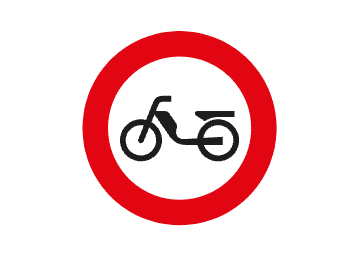
Kod 257-50
Żadnych motorowerów
Zabrania motorowerom korzystania z drogi lub ścieżki.
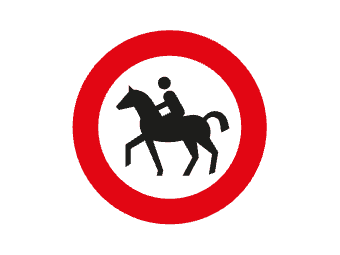
Kod 257-51
Żadnych jeźdźców
Zabrania jeźdźcom konnym korzystania z trasy.
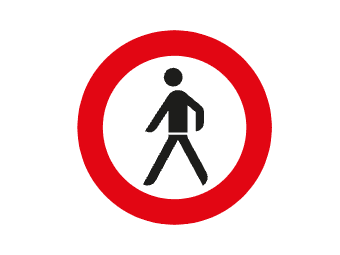
Kod 259
Żadnych pieszych
Zabrania pieszym korzystania z drogi lub ścieżki.
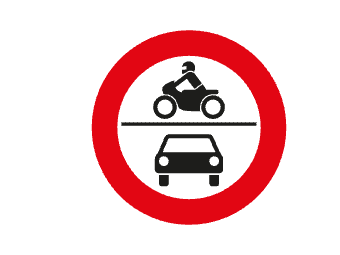
Kod 260
Żadnych pojazdów silnikowych
Zabrania wjazdu pojazdom silnikowym.
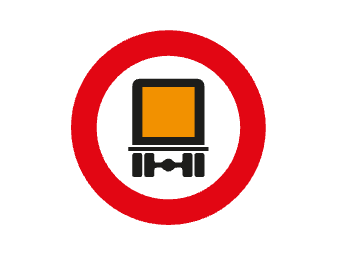
Kod 261
Zakaz pojazdów przewożących towary niebezpieczne
Zabrania pojazdom przewożącym oznakowane towary niebezpieczne.
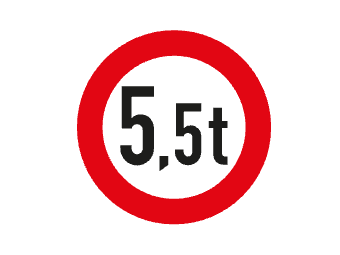
Kod 262
Maksymalny rzeczywisty limit wagi
Zabrania pojazdów przekraczających podaną masę rzeczywistą.
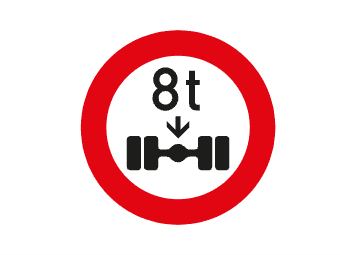
Kod 263
Maksymalne obciążenie osi
Zabrania pojazdom przekraczającym wskazany nacisk na oś.
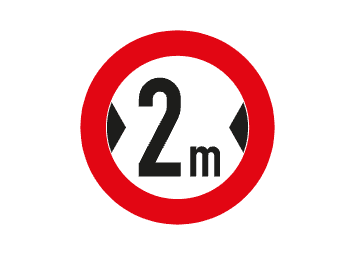
Kod 264
Maksymalny limit szerokości
Zabrania pojazdów szerszych niż wskazana szerokość.
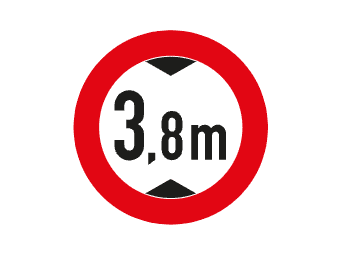
Kod 265
Maksymalny limit wysokości
Zabrania pojazdów wyższych niż podana wysokość.
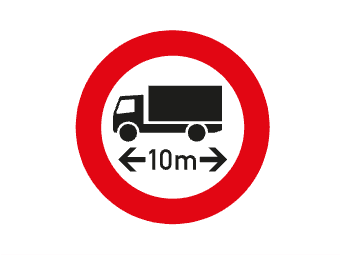
Kod 266
Maksymalny limit długości
Zabrania pojazdów dłuższych niż podana długość.
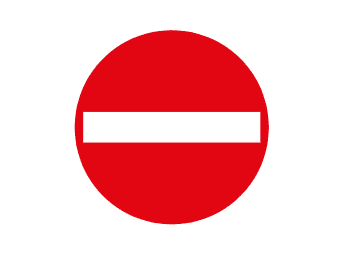
Kod 267
Zakaz wjazdu
Zabrania wjazdu pojazdom z tego kierunku.
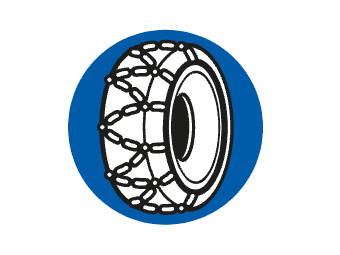
Kod 268
Wymagane łańcuchy śniegowe
Wymaga, aby pojazdy używały łańcuchów śniegowych.
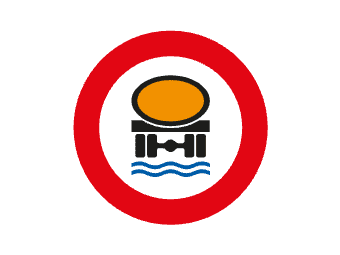
Kod 269
Zakaz pojazdów przewożących ładunki zanieczyszczające wodę
Zabrania pojazdom przewożącym ładunki, które mogą stanowić zagrożenie dla wody.
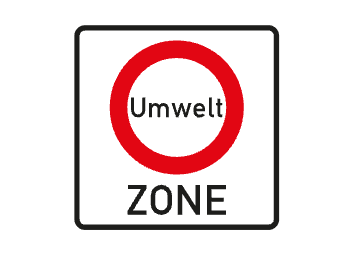
Kod 270.1
Początek Strefy Niskiej Emisji
Oznacza początek strefy ograniczającej ruch w celu ograniczenia zanieczyszczenia powietrza.
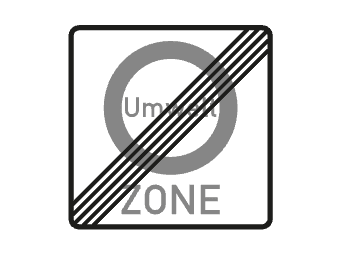
Kod 270.2
Koniec strefy niskiej emisji
Oznacza koniec strefy ograniczeń ruchu niskoemisyjnego.
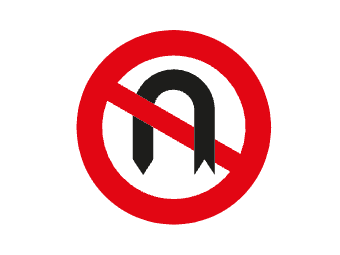
Kod 272
Żadnego zawracania
Zabrania zawracania pojazdu.
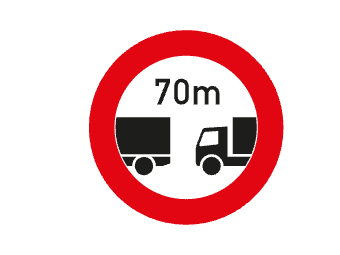
Kod 273
Wymagana minimalna odległość
Wymaga od kierowców zachowania co najmniej wskazanej odległości.
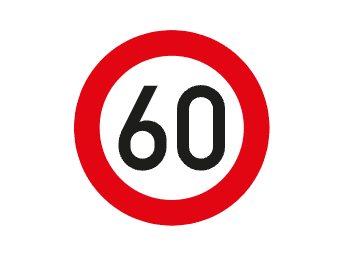
Kod 274
Maksymalne ograniczenie prędkości
Ustawia maksymalną dozwoloną prędkość.
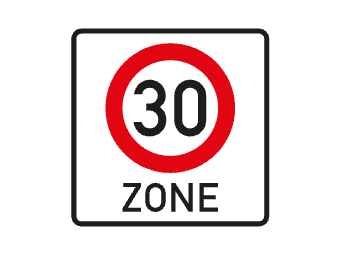
Kod 274.1
Początek Strefy 30 km/h
Oznacza początek strefy, w której obowiązuje ograniczenie prędkości do 30 km/h.
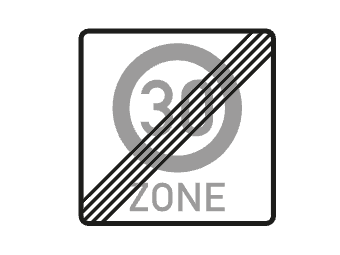
Kod 274.2
Koniec strefy 30 km/h
Oznacza koniec strefy ograniczenia prędkości do 30 km/h.
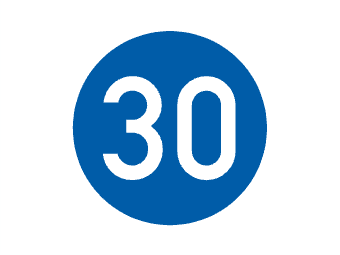
Kod 275
Minimalna prędkość
Wymaga, aby pojazdy poruszały się co najmniej ze wskazaną prędkością.
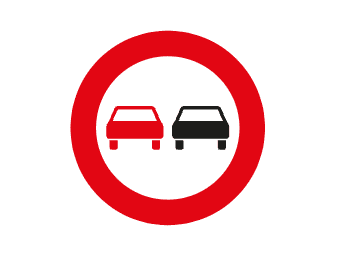
Kod 276
Żadnego wyprzedzania
Zabrania pojazdom silnikowym wyprzedzania innych pojazdów mechanicznych.
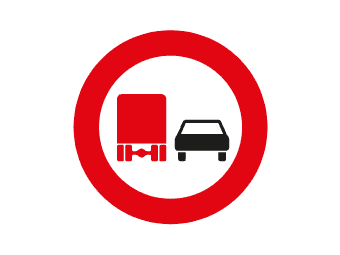
Kod 277
Zakaz wyprzedzania dla pojazdów powyżej 3,5 t
Zabrania wyprzedzania ciężkim pojazdom.
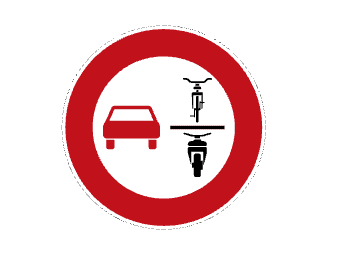
Kod 277.1
Zakaz wyprzedzania pojazdów jednośladowych
Zabrania pojazdom wielośladowym wyprzedzania rowerów i podobnych pojazdów.
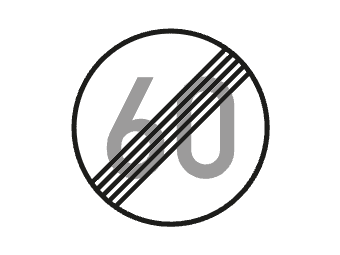
Kod 278
Koniec maksymalnego ograniczenia prędkości
Anuluje wcześniej wskazane ograniczenie prędkości maksymalnej.
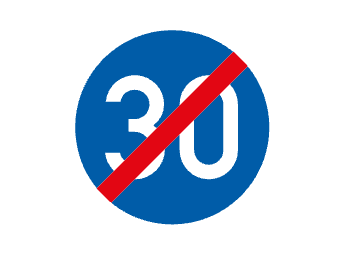
Kod 279
Koniec prędkości minimalnej
Anuluje poprzednio wymaganą prędkość minimalną.
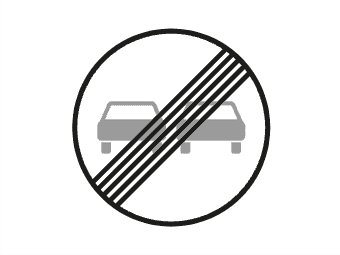
Kod 280
Koniec zakazu wyprzedzania
Anuluje zakaz wyprzedzania dla pojazdów silnikowych.
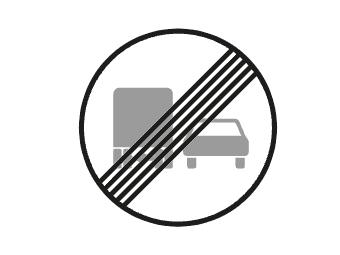
Kod 281
Koniec z zakazem wyprzedzania dla pojazdów powyżej 3,5 t
Anuluje zakaz wyprzedzania dla pojazdów ciężkich.
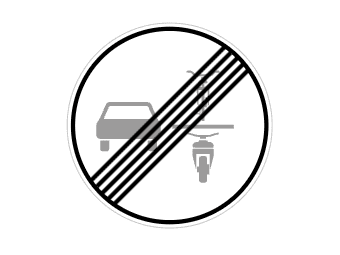
Kod 281.1
Koniec z zakazem wyprzedzania pojazdów jednośladowych
Znosi ograniczenie wyprzedzania pojazdów jednośladowych.
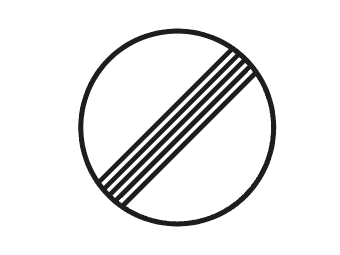
Kod 282
Koniec wszystkich ograniczeń tras
Kończy wszystkie ograniczenia prędkości i zakazy wyprzedzania oparte na trasie.
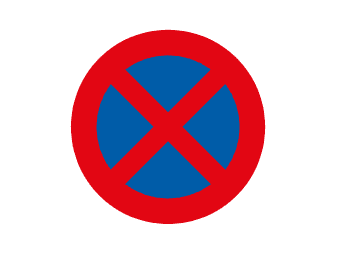
Kod 283
Żadnego zatrzymywania
Zabrania zatrzymywania się, w tym parkowania.
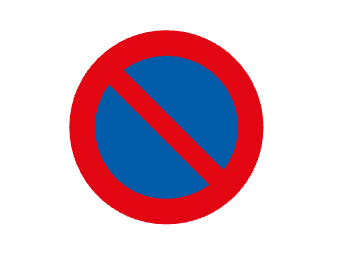
Kod 286
Nie parkować
Umożliwia krótkie zatrzymanie, ale zabrania parkowania.
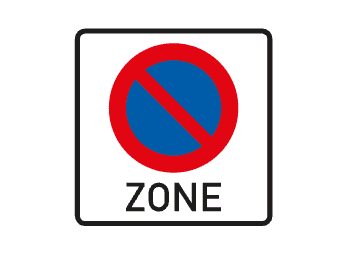
Kod 290.1
Początek strefy zakazu parkowania
Oznacza początek strefy, w której parkowanie jest ograniczone.
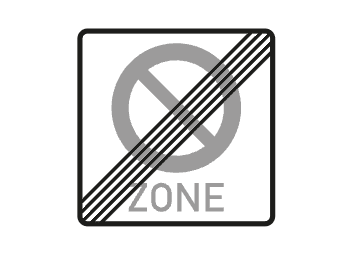
Kod 290.2
Koniec strefy zakazu parkowania
Oznacza koniec strefy zakazu parkowania.
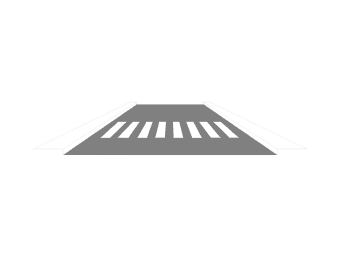
Kod 293
Oznakowanie przejścia dla pieszych
Oznacza przejście dla pieszych na nawierzchni drogi.
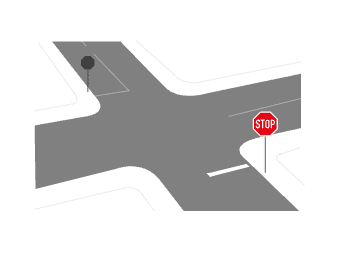
Kod 294
Linia zatrzymania
Pokazuje, gdzie pojazdy muszą się zatrzymać, gdy jest to wymagane.
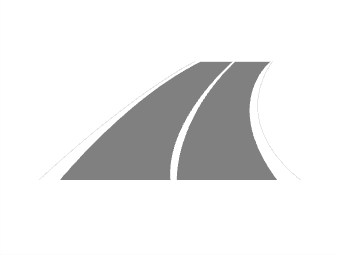
Kod 295
Granica pasa ruchu i jezdni
Oznacza granice pasa ruchu lub krawędź jezdni.
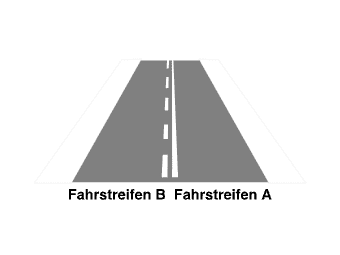
Kod 296
Jednostronna granica pasa ruchu
Umożliwia przejście tylko od strony linii łamanej.
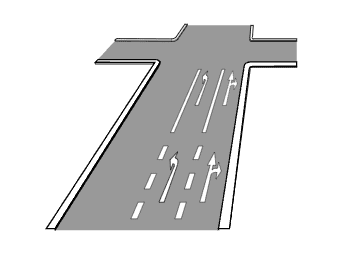
Kod 297
Oznaczenia strzałek
Wskaż dozwolone lub wymagane wskazówki dotyczące jazdy na pasie.
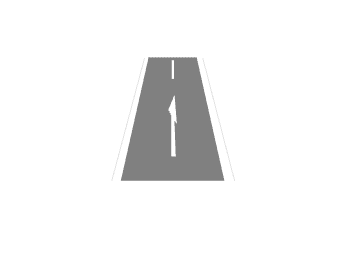
Kod 297.1
Strzałka kończąca pas ruchu
Ostrzega o zbliżaniu się do granicy pasa lub jego końca.
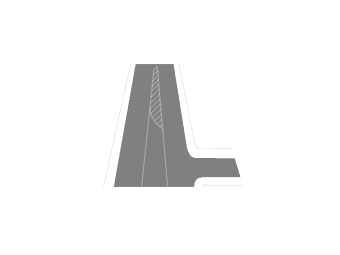
Kod 298
Oznaczenie obszaru zablokowanego
Oznacza obszar drogi, po którym pojazdy nie mogą poruszać się.
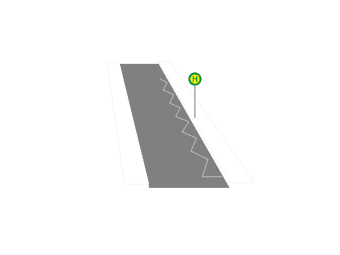
Kod 299
Oznaczenie granicy w przypadku ograniczeń dotyczących zatrzymywania się lub parkowania
Pokazuje obszar, na którym obowiązują ograniczenia dotyczące zatrzymywania się i parkowania.
Zasady, o których trzeba pamiętać
- Znak stopu: Zawsze zatrzymuj się całkowicie – nawet jeśli nikt nie nadchodzi.
- Uciekać: Zwolnij, bądź gotowy do hamowania i przepuść ruch priorytetowy.
- Rondo: Wskazuj tylko przy wyjściu, a nie przy wejściu.
- Bez zatrzymywania: Nie zatrzymuj się dla pasażerów, załadunku lub oczekiwania.
- Nie parkować: Dopuszczalne jest oczekiwanie do 3 minut, chyba że dodatkowe zasady stanowią inaczej.
- Autobus szkolny: Spodziewaj się dzieci; w razie potrzeby przechodź wyłącznie z prędkością pieszego.
Miniquiz
Przed tobą znak stopu, ale nie ma ruchu poprzecznego. Musisz przestać?
Tak. Musisz całkowicie zatrzymać się na linii zatrzymania lub w polu widzenia.
Wjeżdżasz na rondo. Czy wskazujesz?
Nie. Wskazujesz dopiero przy zjeździe z ronda.
Wyświetlany jest znak zakazu parkowania. Czy ludzie mogą wejść i wyjść?
Tak, zatrzymanie się w celu wjazdu/wyjazdu lub załadunku/rozładunku jest dozwolone. Zwykle dozwolone jest oczekiwanie do 3 minut.
Zatrzymuje się autobus szkolny. Czego powinieneś się spodziewać?
Dzieci mogą nagle wybiec na drogę. W razie potrzeby bądź gotowy do hamowania i wyprzedzania tylko z prędkością pieszego.
Lista kontrolna egzaminu końcowego
Practice Questions (69)
-
Question 1 of 69
W jakim przypadku musi Pani/Pan czekać przed tym znakiem drogowym?
1.4.41-0013 Punktów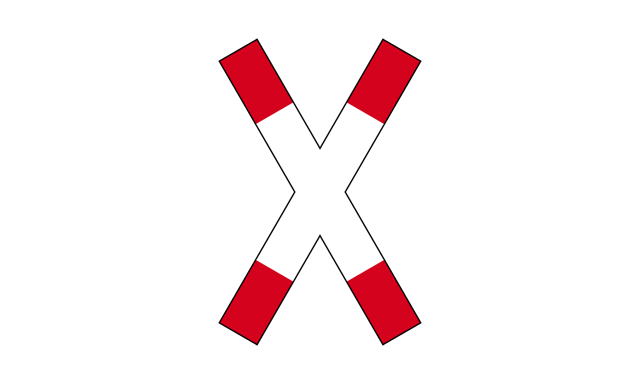
Wyjaśnienie
The diagonal cross in front of a railroad crossing signals the right of way for rail traffic. When a rail vehicle approaches, you have to wait in front of the sign. The same applies if railway staff waves a white-red-white flag. If you are in danger of comingThe diagonal cross in front of a railroad crossing signals the right of way for rail traffic. When a rail vehicle approaches, you have to wait in front of the sign. The same applies if railway staff waves a white-red-white flag. If you are in danger of coming to a stop on the railroad crossing due to traffic jams, you must also wait in front of the diagonal cross until you can quickly cross the railroad crossing. to a stop on the railroad crossing due to traffic jams, you must also wait in front of the diagonal cross until you can quickly cross the railroad crossing.
-
Question 2 of 69
Jak należy zachować się przy tym znaku drogowym?
1.4.41-0042 Punktów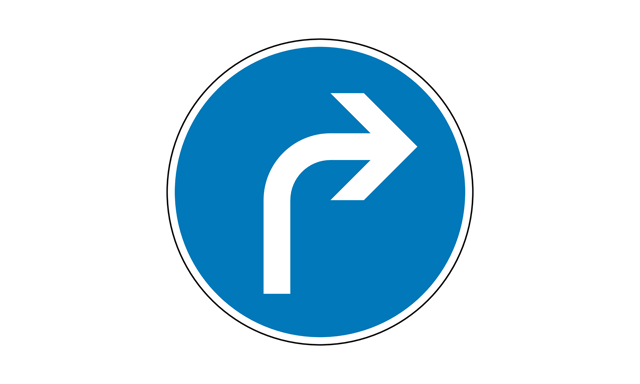
Wyjaśnienie
The traffic sign "Turn right here in front of the sign" only allows you to drive to the right. Even if there is only this one option, the change of the direction of travel needs to be indicated.
-
Question 3 of 69
W którym kierunku może Pani/Pan dalej jechać?
1.4.41-0062 Punktów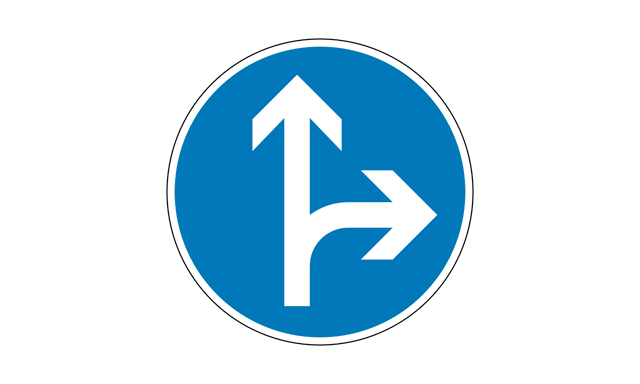
Wyjaśnienie
The traffic sign "You must go straight or turn right" prohibits turning to the left. Allowed are only the other directions straight ahead and right. If you turn to the right, you must indicate the change of direction.
-
Question 4 of 69
Jak należy zachować się przy tym znaku drogowym?
1.4.41-0072 Punktów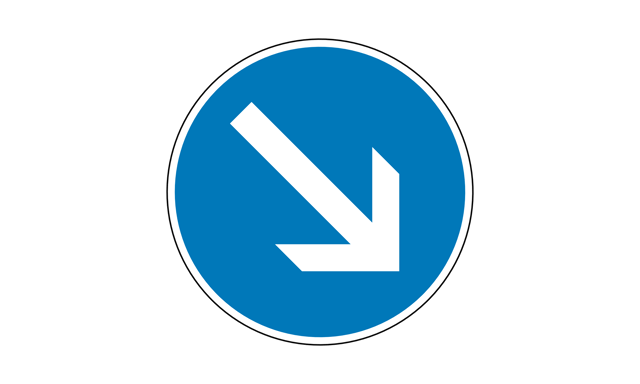
Wyjaśnienie
The traffic sign "Keep right of traffic" indicates that you have to drive past an obstacle on the right. These include traffic islands, construction sites or bus stops. If there is an intersection or T-junction before the marked point, you may turn right as well as left. If you swing out while driving around an obstacle, you have to indicate that.
-
Question 5 of 69
Zbliża się Pani/Pan do tak oznakowanego przystanku. Jak się Pani/Pan zachowa widząc tam dzieci?
1.4.41-0085 Punktów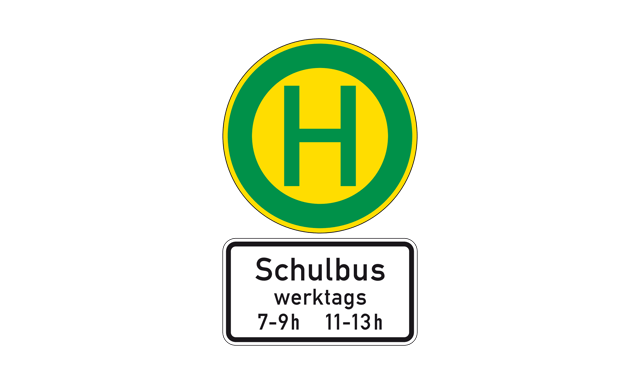
Wyjaśnienie
This stop is a bus stop where school buses operate at the times indicated. If you approach this stop, you will have to expect children who suddenly run onto the road; the principle of trust does not apply in this case. If a school bus is in the passenger bay or on the street, you have to be able to brake as a car driver; You may only drive past at walking speed.
-
Question 6 of 69
Czym nie można tutaj jeździć?
1.4.41-0122 Punktów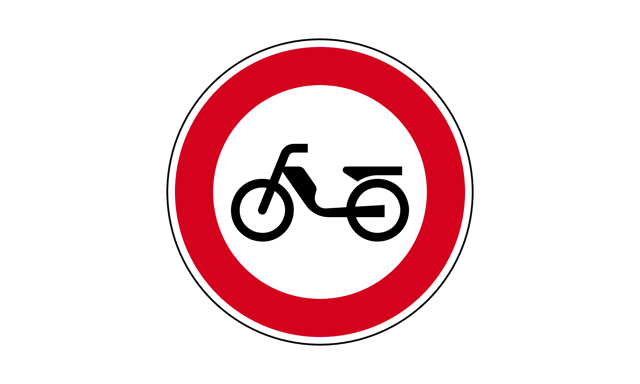
Wyjaśnienie
The traffic sign "No Motorbikes Permitted" only applies to mopeds. It does not apply to mopeds and light motorcycles. The low speed of motorbikes would hinder the flow of traffic on this road.
-
Question 7 of 69
Co jest dozwolone przy tym znaku drogowym?
1.4.41-0152 Punktów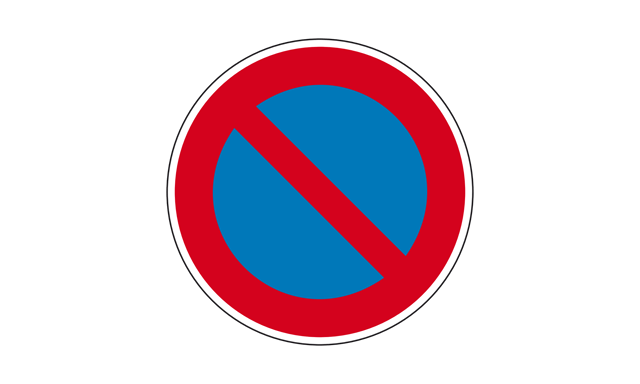
Wyjaśnienie
The sign "No parking. Waiting is allowed." sign allows you to wait for up to three minutes. Situations of loading and unloading or getting in and out of the car may also take longer. The car driver must be in the immediate vicinity of the vehicle.
-
Question 8 of 69
Co obowiązuje przy takiej kombinacji znaków drogowych?
1.4.41-0173 Punktów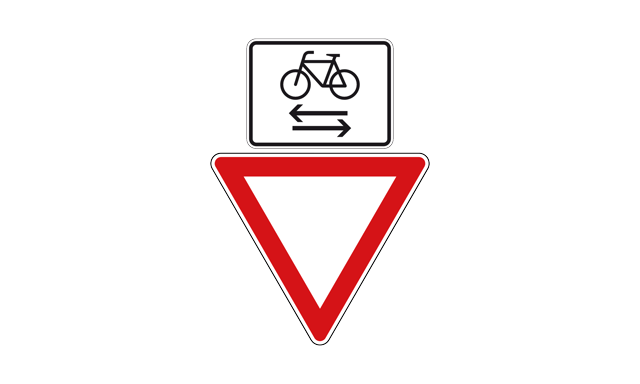
Wyjaśnienie
The additional sign indicates that cycle traffic could be coming from the left and right. Therefore, even if you only want to turn right, pay attention to both directions. Electric scooters are becoming more common, they ride on the cycle path, so watch out for scooter riders as well.
-
Question 9 of 69
Jakie pojazdy mogą wjechać na tak oznakowaną drogę dla rowerów?
1.4.41-0182 Punktów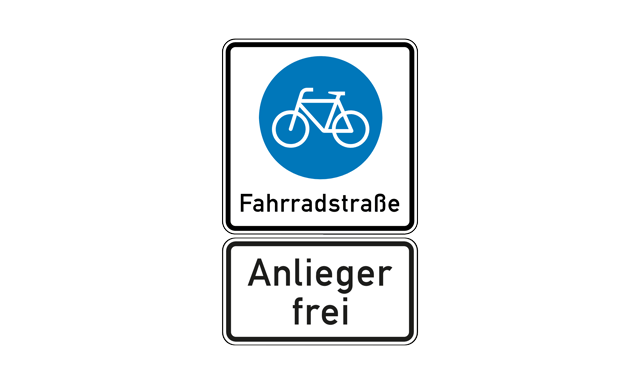
Wyjaśnienie
Vehicular traffic other than cyclists is not allowed to use cycle lanes unless permitted by additional signs. The additional sign allows residents to enter the cycle lane.
-
Question 10 of 69
Co obowiązuje w odniesieniu do żółtych oznaczeń jezdni?
1.4.41-0193 PunktówWyjaśnienie
Yellow lane markings are placed temporarily, e.g. to change the course of the lane due to a construction site. The white lane markings are replaced by the yellow ones.
-
Question 11 of 69
Co obowiązuje w tej sytuacji?
1.4.41-0203 Punktów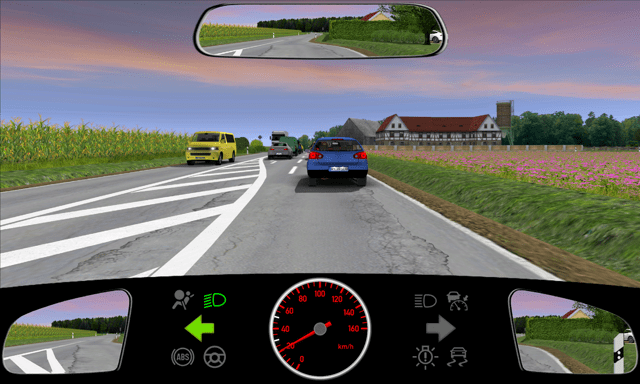
Wyjaśnienie
A restricted area may not be driven on as a matter of principle.
-
Question 12 of 69
Jakie pojazdy mogą wjechać do tak oznakowanej strefy?
1.4.41-0212 Punktów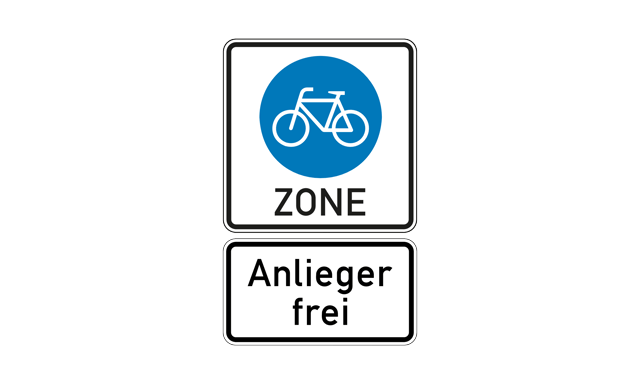
Wyjaśnienie
The traffic sign shows a bicycle zone with the additional sign "Anleger frei". In bicycle zones, the rule of "right before left" applies. Cyclists, very small electric vehicles and other authorised vehicles are allowed to travel at a maximum speed of 30 km/h in bicycle zones. Cyclists and very small electric vehicles may ride side by side in bicycle zones. The additional sign also allows residents to ride in the bicycle zone.
-
Question 13 of 69
O czym muszą Państwo pamiętać, jadąc w obrębie miasta przez ulicę z taką kombinacją znaków drogowych?
1.4.41-0222 Punktów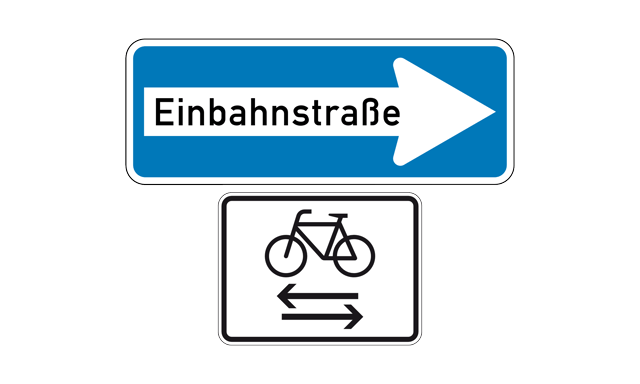
Wyjaśnienie
The one-way street sign also applies to cyclists, but with this traffic sign combination they are allowed to ride in both directions. Please note, however, that when overtaking cyclists in built-up areas, a minimum lateral distance of 1.5 m must always be maintained.
-
Question 14 of 69
Ten znak drogowy stoi na prawym poboczu. Co on oznacza?
1.4.41-0232 Punktów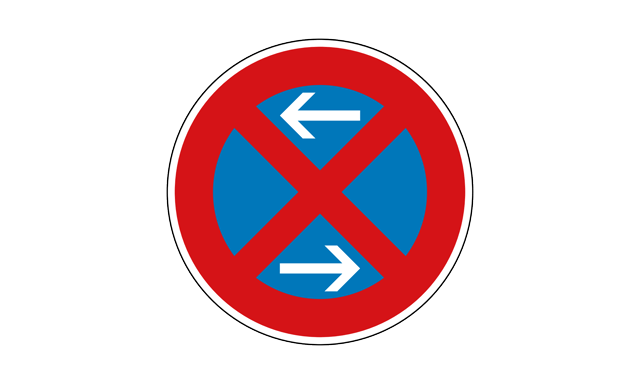
Wyjaśnienie
The traffic sign indicates an absolute no-stopping zone in the area in front of and behind the traffic sign. The arrow pointing to the left indicates that you are not allowed to stop after the sign, the arrow pointing to the right indicates that you are not allowed to stop in front of the sign.
-
Question 15 of 69
Ten znak drogowy stoi na prawym poboczu. Co on oznacza?
1.4.41-0242 Punktów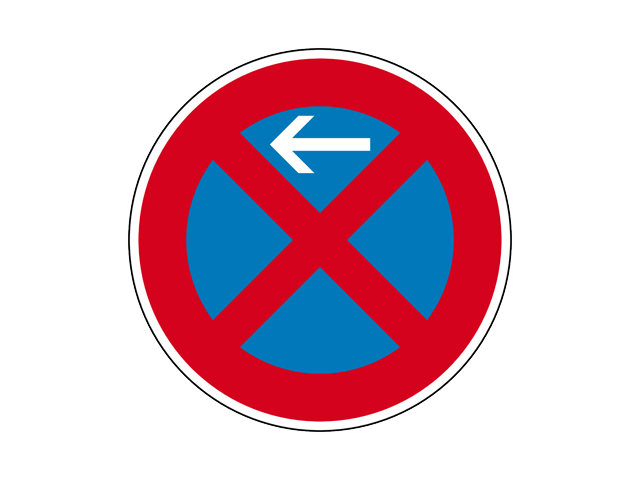
Wyjaśnienie
The traffic sign signals the beginning of an absolute prohibition to stop from the traffic sign. The arrow pointing to the left shows that the prohibition of stopping begins from the sign.
-
Question 16 of 69
O czym muszą Państwo pamiętać w przypadku tego znaku drogowego?
1.4.41-0252 Punktów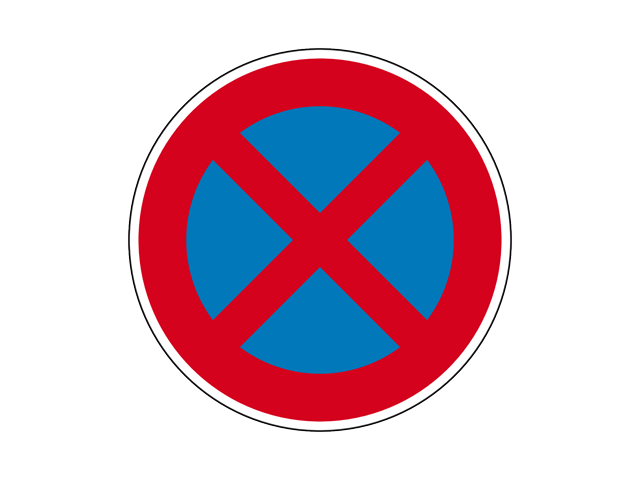
Wyjaśnienie
The traffic sign indicates an absolute no-stopping zone in this area. You are not allowed to stop there.
-
Question 17 of 69
Co należy zrobić w tej sytuacji?
1.4.41-0263 Punktów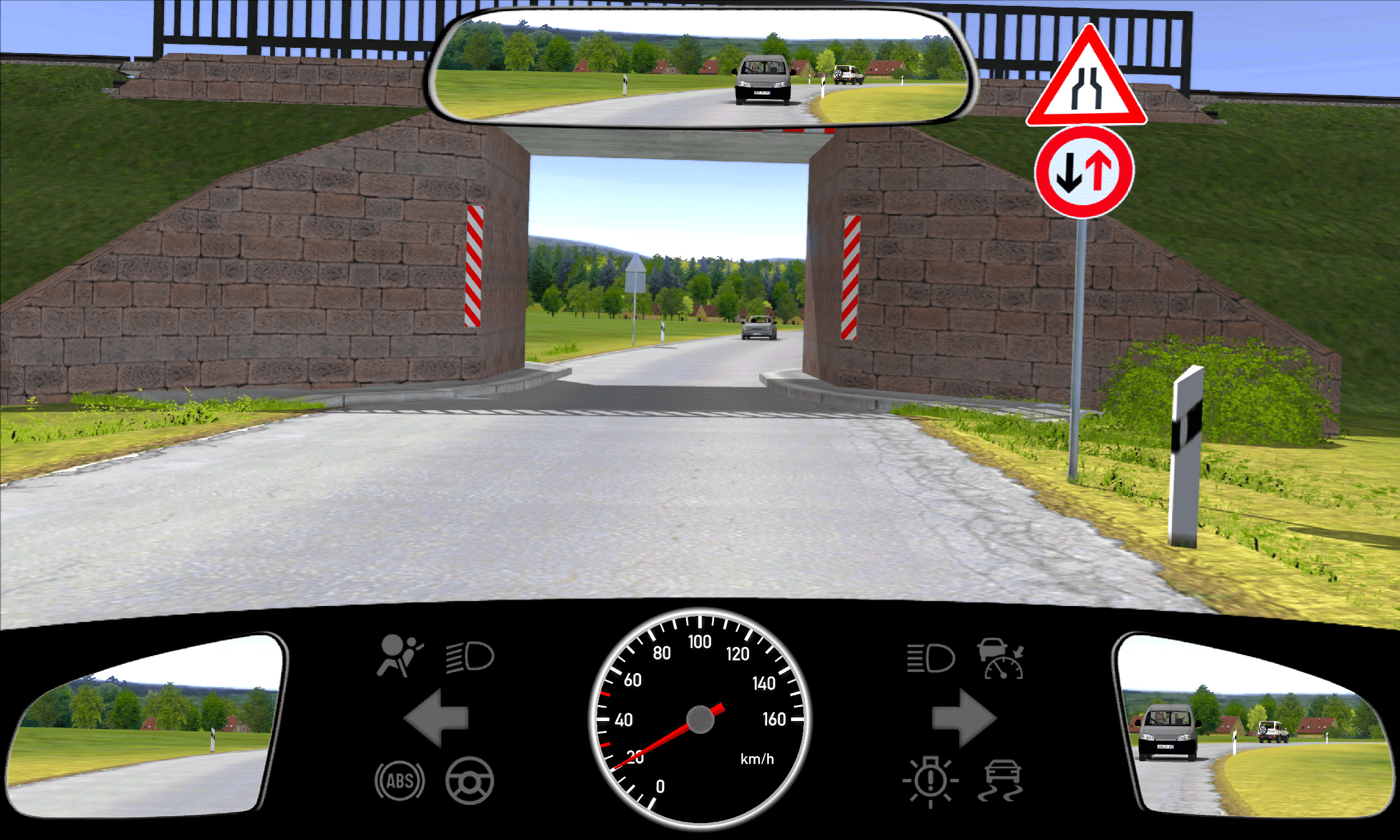
Wyjaśnienie
The sign indicates that you must give priority to oncoming traffic at the bottleneck. The vehicle coming towards you is already close to the bottleneck, so you must wait and may only drive after the car coming towards you.
-
Question 18 of 69
Kiedy można się tu zatrzymać?
1.4.41-0272 Punktów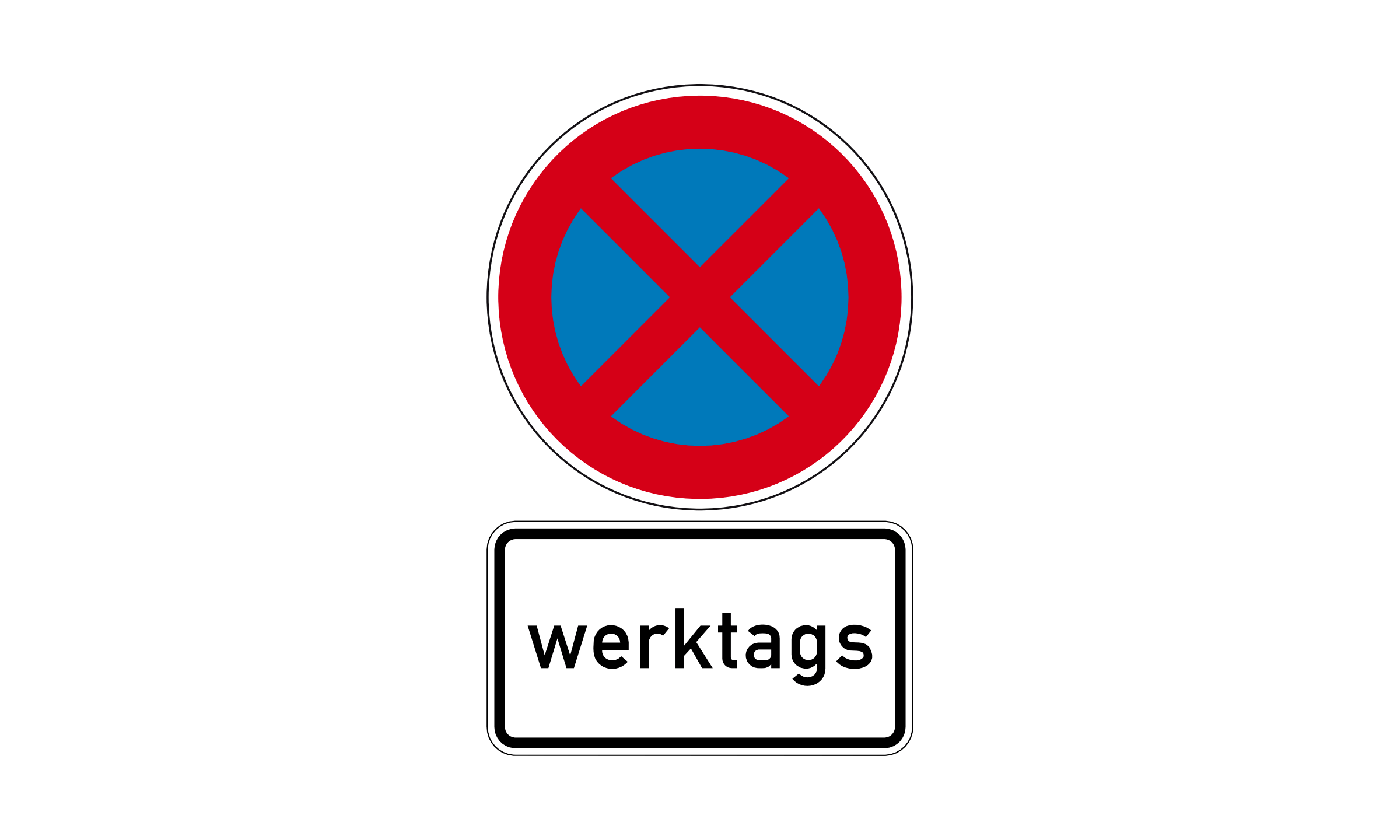
Wyjaśnienie
The absolute stopping ban only applies on working days. You are allowed to stop here on Sundays and public holidays.
-
Question 19 of 69
Jakie zasady obowiązują na tym skrzyżowaniu?
1.4.41-0284 Punktów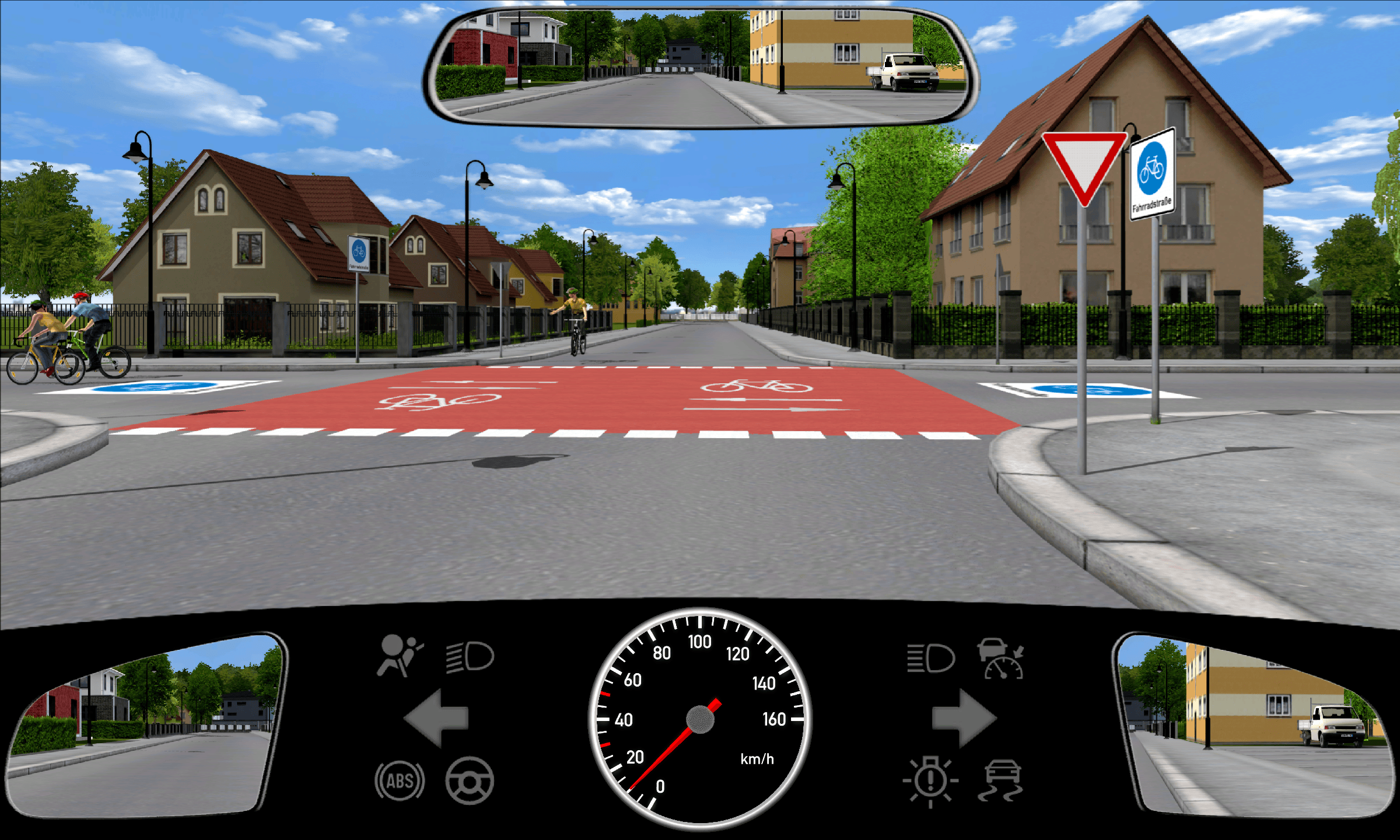
Wyjaśnienie
The blue traffic signs, with the white bicycle in the middle, indicate a bicycle street. This road may only be used by bicycles, unless otherwise expressly indicated by other traffic signs. In addition, the triangular traffic sign “Give way” indicates that cross traffic must be given priority. You do not necessarily have to stop at the traffic sign “Give way” and you can cross the intersection carefully as there is no traffic visible from the right or left.
-
Question 20 of 69
O czym informuje ten znak drogowy?
1.4.41-0293 Punktów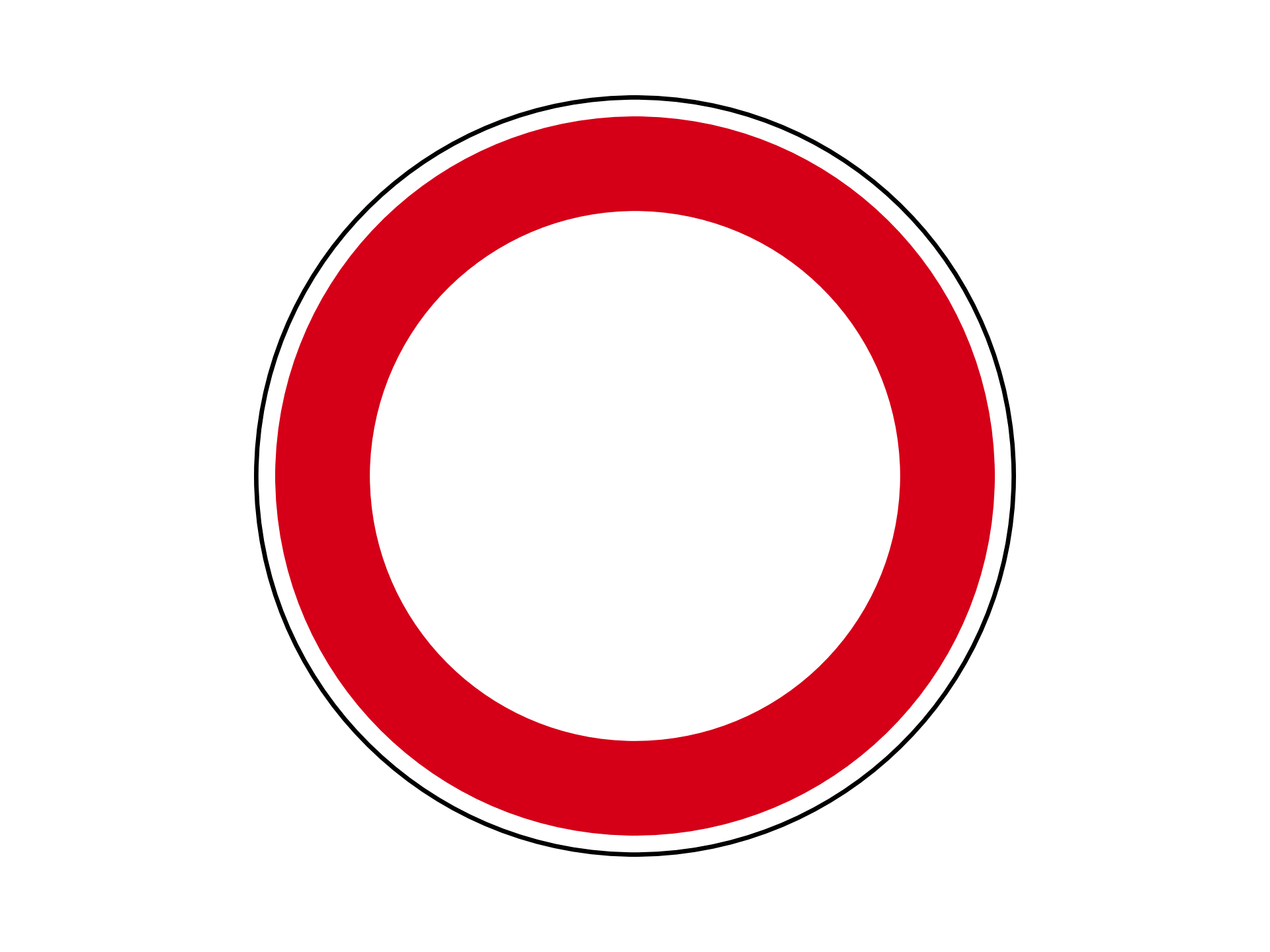
Wyjaśnienie
Basically, the traffic sign “Prohibited all types of vehicles” means that vehicles are not allowed to drive on the road. However, motorcycles or bicycles may be pushed.
-
Question 21 of 69
Jedziesz tak oznakowaną ulicą jednokierunkową. Co musisz zrobić?
1.4.41-0303 Punktów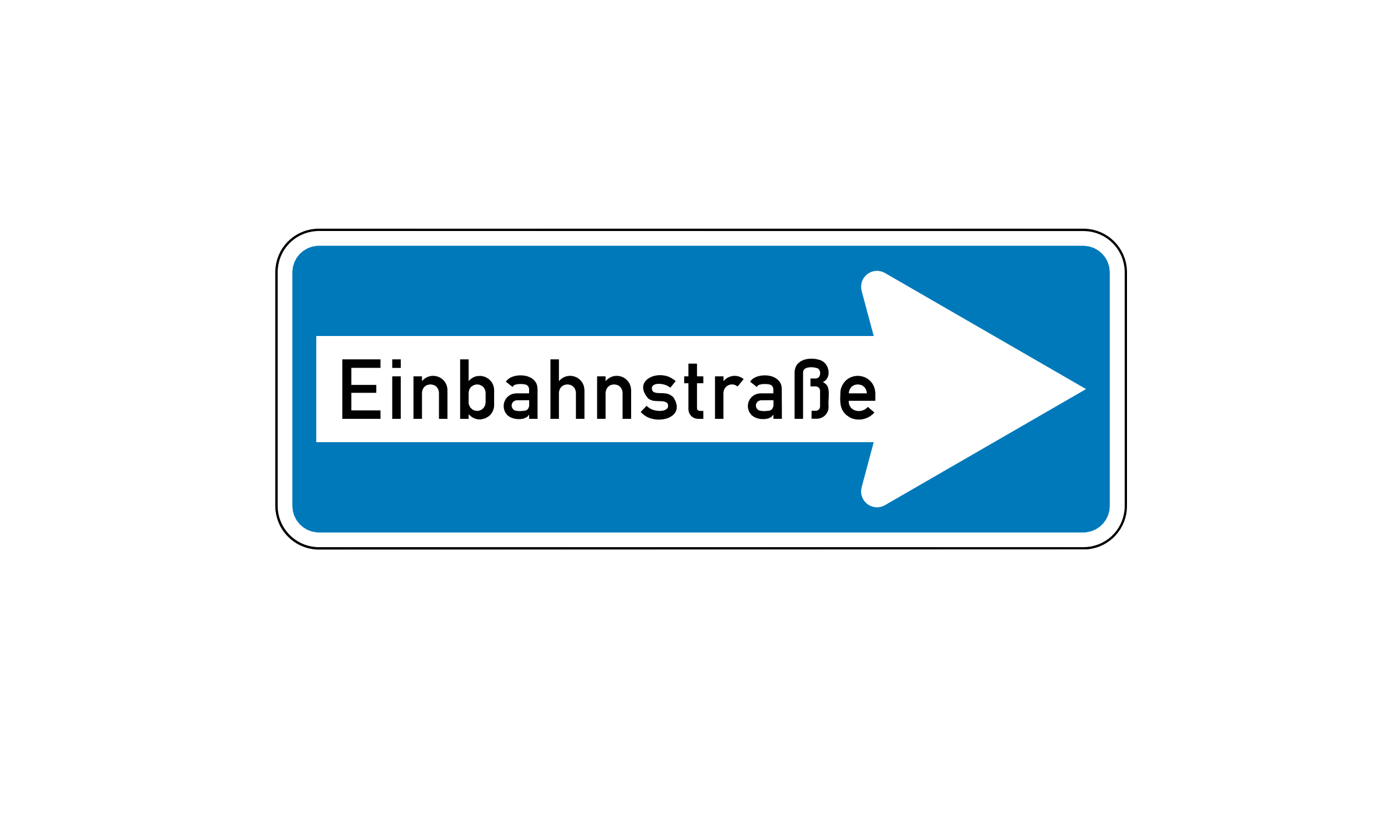
Wyjaśnienie
The direction of travel on a one-way street is always indicated by the white arrow on the traffic sign. If you are on your one-way street, you are allowed to park on the right or left side of the road in the direction of travel. In order not to obstruct the traffic behind you when turning left, you must move as far to the left as possible. This leaves enough space for vehicles that want to go straight or turn right.
-
Question 22 of 69
Jedziesz drogą z pierwszeństwem przejazdu. Który znak drogowy kończy pierwszeństwo przejazdu?
1.4.41-0313 PunktówWyjaśnienie
The traffic sign “End of priority road” signals to you that the right of way regulation has been lifted and the priority road ends here. If you have previously been driving on a priority road, the traffic sign “Give way” tells you that this priority road now ends. You now have to give way to other road users.
-
Question 23 of 69
Przy którym znaku drogowym musisz zatrzymać się, zanim skręcisz w prawo?
1.4.41-0324 PunktówWyjaśnienie
The “stop sign” shows you that you must always stop at the stop line or line of sight. The “green arrow” next to the red traffic light signals that you can turn right despite the red traffic light. But only after you have stopped at the stop or line of sight and made sure that you are not endangering anyone.
-
Question 24 of 69
Który znak drogowy zabrania wjazdu do oznakowanego obszaru?
1.4.41-0333 PunktówWyjaśnienie
You are not allowed to enter a street with this traffic sign because it indicates a pedestrian zone. This may only be used by pedestrians. The traffic sign means “Entry prohibited”. Driving into the signposted area is therefore prohibited.
-
Question 25 of 69
W jakim kierunku może Pani/Pan jechać dalej?
1.4.41-1062 Punktów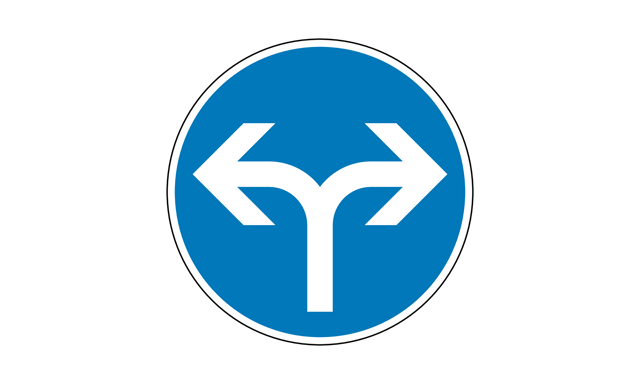
Wyjaśnienie
The traffic sign "You" only allows turning to the right or left" only allows you to turn left or right. The desired direction of travel needs to be indicated. You are not allowed to drive straight ahead.
-
Question 26 of 69
W odległości około 80 m przed Panią/Panem na jezdni zatrzymuje się autobus szkolny. Czy z tego powodu mogą wystąpić zagrożenia?
1.4.41-1095 Punktów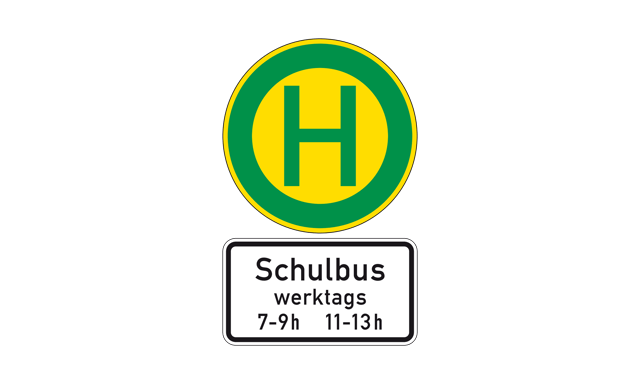
Wyjaśnienie
If a school bus stops in front of you on the road about 80 m away, you have to expect the following: Children could suddenly run on/off the road to reach the bus, for example, by the shortest route. This danger exists even if school crossing guards secure the traffic. You have to be ready to brake and you are only allowed to drive past the school bus at walking speed.
-
Question 27 of 69
Kto może jeździć pojazdem mechanicznym po tej drodze?
1.4.41-1143 Punktów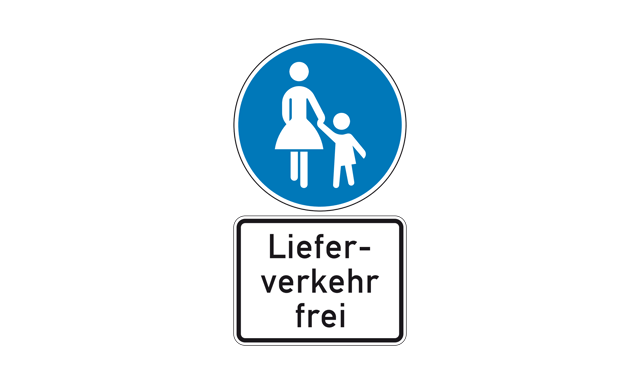
Wyjaśnienie
The street is a declared sidewalk, with the additional sign "delivery vehicles only". Therefore, this road may only be used by a distributor with a motor vehicle. The distributor must be able to prove that he has to deliver something in this street. He has to drive at walking speed, regardless of whether or not pedestrians pass the street. He has to take care of pedestrians.
-
Question 28 of 69
Jakie pojazdy mogą używać tak oznakowanego specjalnego pasa ruchu?
1.4.41-1152 Punktów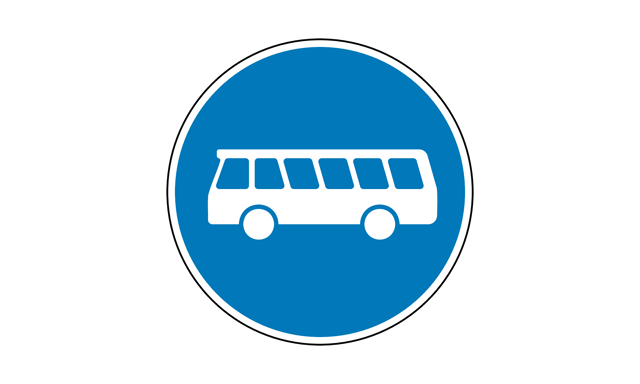
Wyjaśnienie
The lane shown here is intended for public buses. Only they are allowed to use this lane. For all other drivers the use of this lane is prohibited.
-
Question 29 of 69
Kto może wjeżdżać na tak oznakowaną drogę?
1.4.41-1162 Punktów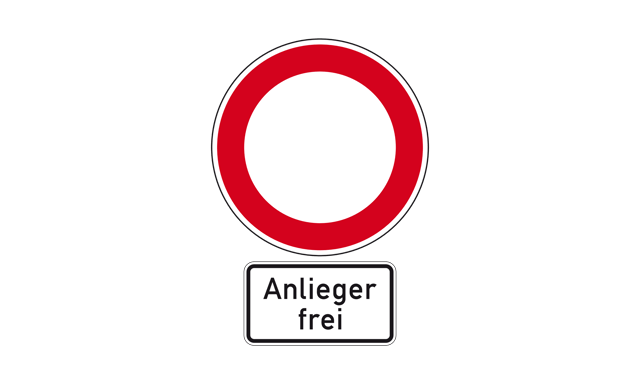
Wyjaśnienie
The additional sign indicates that drivers who have to go on errands in this street privately, or for business reasons may enter. Residents and visitors are customers of shops, patients of medical practices as well as people who live in this street and their visitors. Through traffic is prohibited in this street.
-
Question 30 of 69
Jakie pojazdy nie mogą wjeżdżać na tak oznakowaną drogę?
1.4.41-1182 Punktów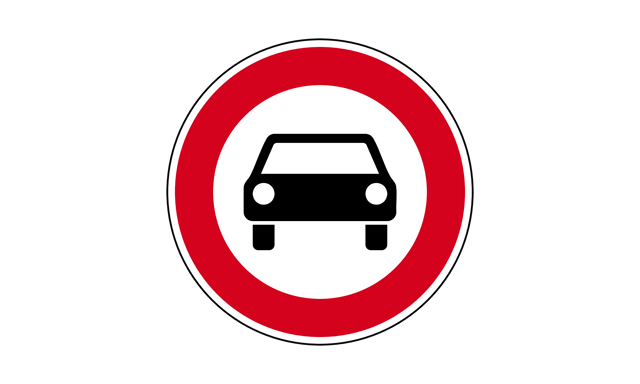
Wyjaśnienie
Cars, but also other multi-lane motor vehicles, may not drive on a road with this sign. These include cars, trucks and buses. The ban does not apply to motorcycles, including side cars, and non-motorized vehicles.
-
Question 31 of 69
Jakie pojazdy nie mogą wjeżdżać na tak oznakowaną drogę?
1.4.41-1192 Punktów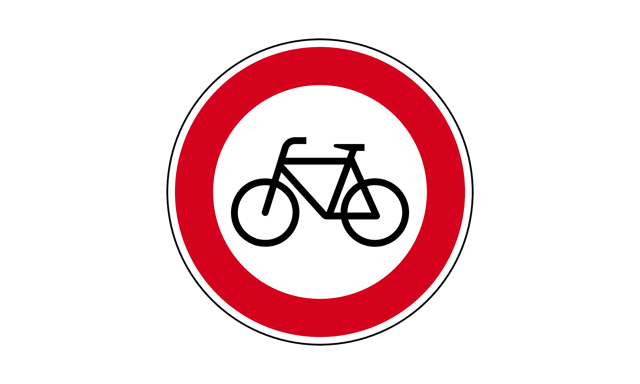
Wyjaśnienie
This round road sign with the red border prohibits the passage for cyclists. It usually can be found on roads where you are allowed to drive fast and where a cyclist can get into dangerous situations due to his or her low speed. Motorized vehicles such as motorcycles and cars may continue here.
-
Question 32 of 69
Jakie pojazdy nie mogą wjeżdżać na tak oznakowaną drogę?
1.4.41-1202 Punktów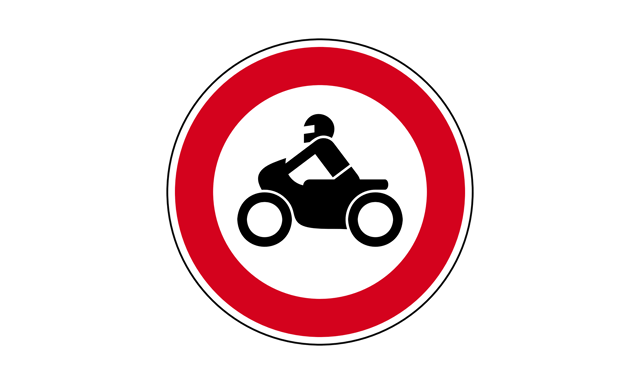
Wyjaśnienie
A round traffic sign with a red border indicates a general traffic ban for vehicles. If the circle contains a symbol, the types of vehicles to which the traffic ban applies are specified more precisely. Here the road may not be used by motorcyclists.
-
Question 33 of 69
O czym informują te znaki drogowe?
1.4.41-1212 Punktów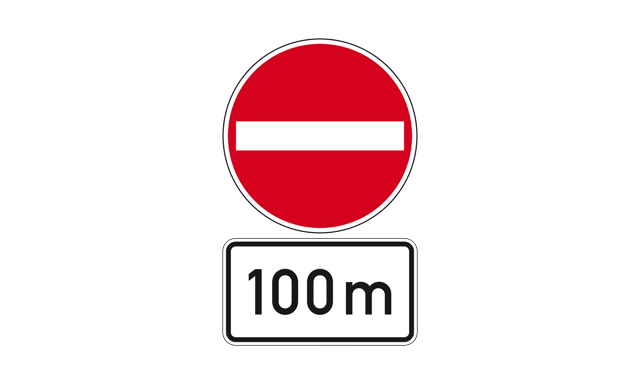
Wyjaśnienie
The traffic sign "Do not enter" forbids car drivers to enter this road with vehicles of all kinds. The additional sign makes it clear that this prohibition applies only in 100 meters. It does not explicitly state for how long. Always expect that vehicles can come out of this road.
-
Question 34 of 69
O czym informuje ten znak drogowy?
1.4.41-1243 Punktów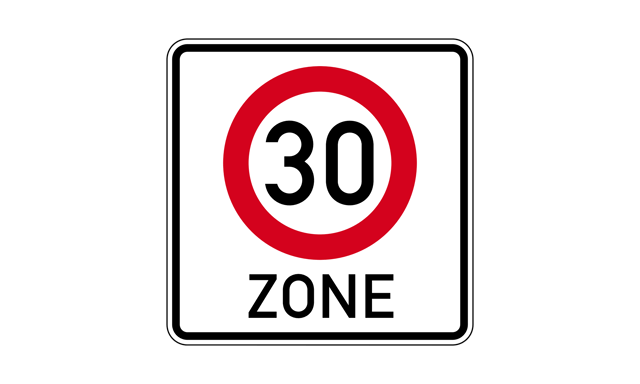
Wyjaśnienie
The traffic sign indicates the beginning of a zone with a maximum speed of 30 km/h. It is often set up in residential areas and only once at the beginning. You are not allowed to drive faster than 30 km / h in the entire area. This speed limit is canceled with the "End of the 30 km/h zone" sign.
-
Question 35 of 69
Tutaj zaczyna się strefa uspokojonego ruchu drogowego ze sklepami. Jak należy się zachowywać?
1.4.41-1252 Punktów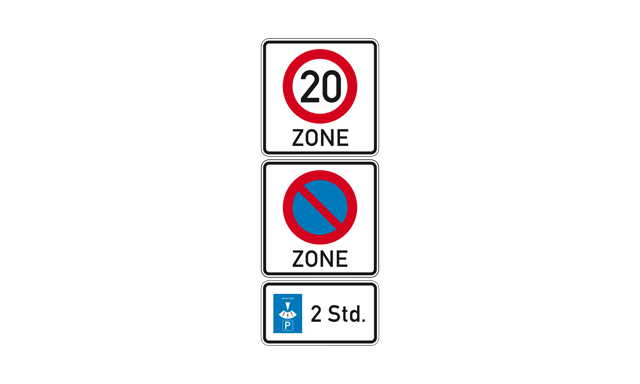
Wyjaśnienie
In a traffic calming zone with shops, road users are often distracted by the displays in the shop windows. You must therefore pay attention to rain and inattentive foot traffic. Your maximum speed is 20 km/h. This is a no parking, but waiting allowed zone and you're obliged to use your parking disc. To offer parking to many customers, the maximum parking time is two hours.
-
Question 36 of 69
O czym informuje ten znak drogowy?
1.4.41-1262 Punktów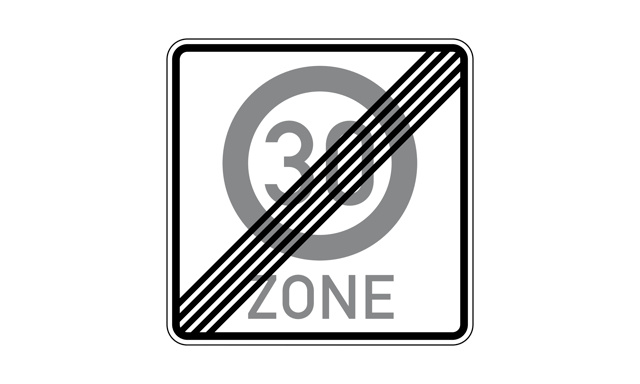
Wyjaśnienie
This traffic sign indicates the end of an area in which the permitted speed was set to 30 km/h and thus cancels the maximum speed of 30 km/h.
-
Question 37 of 69
Jakie pojazdy wolno wyprzedzać przy tym znaku drogowym?
1.4.41-1293 Punktów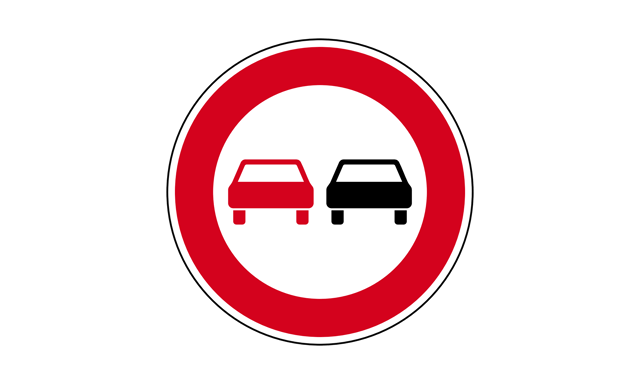
Wyjaśnienie
The restriction on overtaking prohibits a car driver from overtaking multi-lane vehicles such as cars, trucks or tractors and motorcycles with side cars. Motorcycles without a side car and bicycles are allowed to be overtaken, as these are single-lane vehicles.
-
Question 38 of 69
O czym informują te znaki drogowe?
1.4.41-1303 Punktów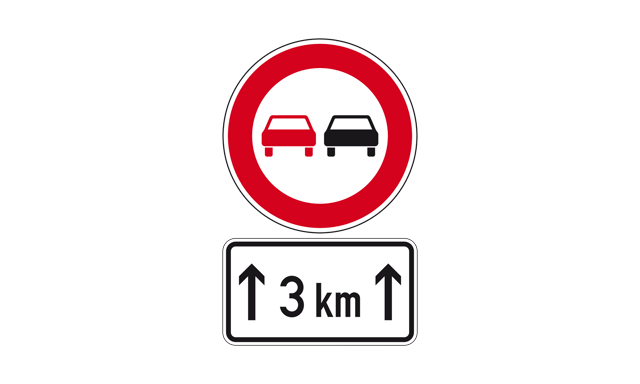
Wyjaśnienie
This traffic sign signals a restriction on overtaking on multi-lane motor vehicles or motorcycles with side car. The black arrows with the km indication indicate that the restriction on overtaking applies for 3 km. The restriction on overtaking comes into force starting from the traffic sign.
-
Question 39 of 69
O czym informują te znaki drogowe?
1.4.41-1313 Punktów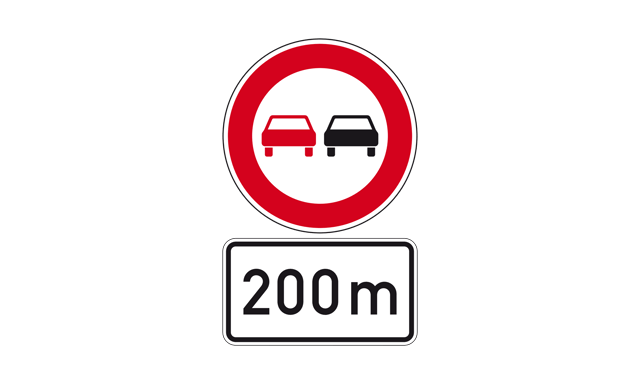
Wyjaśnienie
With this traffic sign the car driver is prohibited to overtake multi-lane vehicles and motorcycles with side car. The additional sign prohibits overtaking in 200 meters. Since it contains no black arrows, it does not mean that you are not allowed to overtake in the next 200 meters.
-
Question 40 of 69
Jakie zakazy znosi ten znak drogowy?
1.4.41-1332 Punktów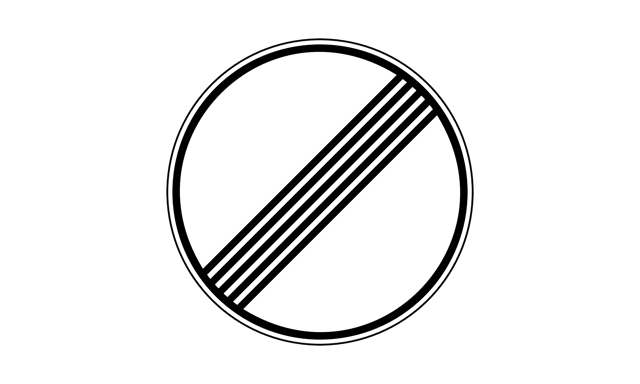
Wyjaśnienie
This traffic sign cancels all road restrictions. For example, road restrictions include restrictions on overtaking and speed limits. Stopping restrictions such as a parking ban are not covered by road restrictions.
-
Question 41 of 69
O czym informują te znaki drogowe?
1.4.41-1343 Punktów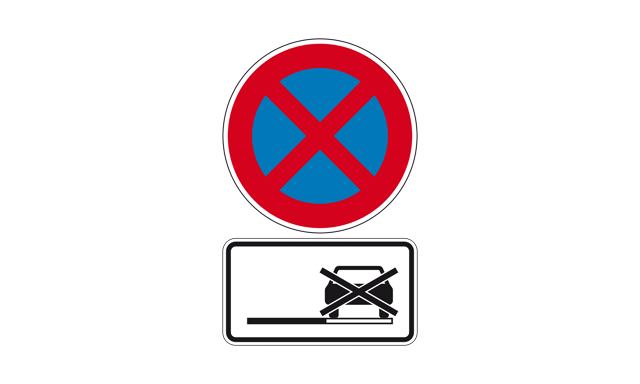
Wyjaśnienie
The traffic sign signals the car driver that it is forbidden to come to a stop on the road. The additional sign extends the stopping restriction and also prohibits stopping on the side strip for all vehicles, not just for trucks.
-
Question 42 of 69
Co jest dozwolone w rozpoczynającej się tu strefie?
1.4.41-1352 Punktów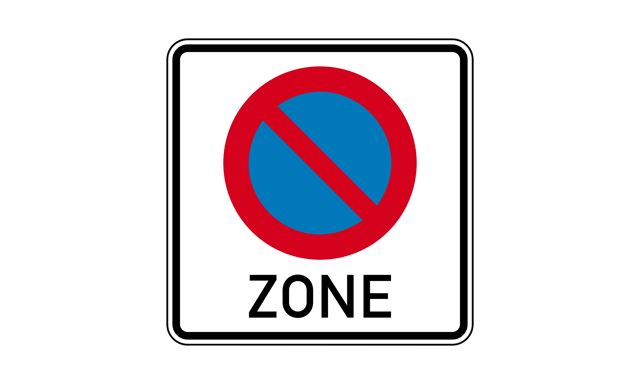
Wyjaśnienie
With the traffic sign "No parking. Waiting is allowed.", there is a restricted stopping ban in an entire area without stopping signs being placed here in certain streets. As a car driver, you are allowed to wait up to three minutes throughout the entire zone. Situations of loading and unloading or getting in and out of the car may also take longer.
-
Question 43 of 69
Co się tutaj kończy?
1.4.41-1362 Punktów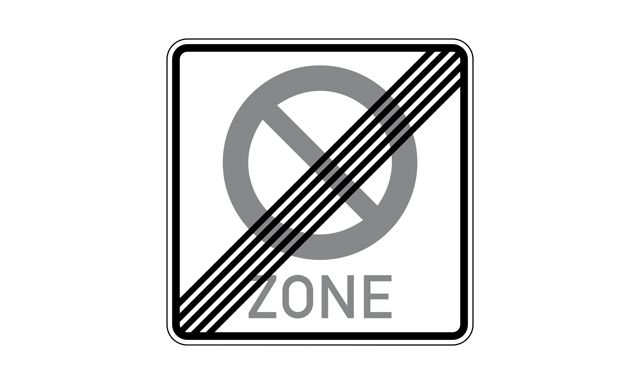
Wyjaśnienie
Here the no parking zone ends. Note that this traffic sign is often only on placed on the left side of the road and does not suspend the stopping restriction.
-
Question 44 of 69
Kiedy należy włączyć kierunkowskaz?
1.4.41-1403 Punktów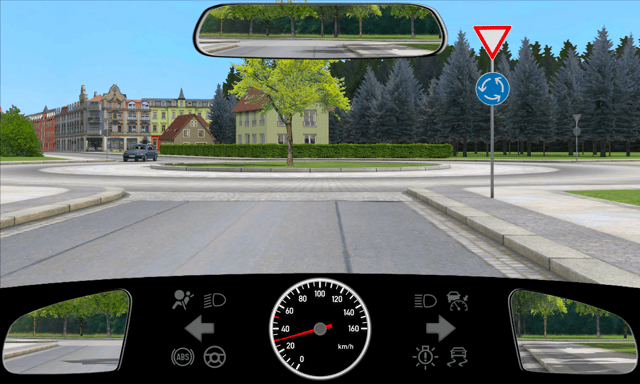
Wyjaśnienie
If you enter the roundabout, you do not need to indicate this because the entrance to the circle is always to the right. On the other hand, if you leave the roundabout, you will need to indicate this to make it easier for other drivers to enter the circle.
-
Question 45 of 69
Zbliża się Pani/Pan do pokazanej poniżej kombinacji znaków drogowych. Na co należy tu zwrócić uwagę?
1.4.41-1414 Punktów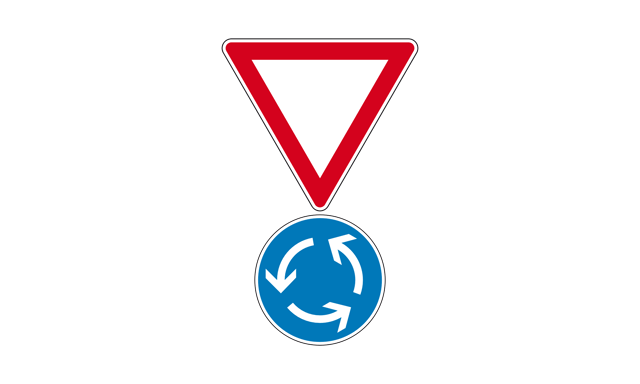
Wyjaśnienie
Vehicles driving in the roundabout have right of way. Indicating when entering the roundabout is not necessary, as a roundabout is always entered from the right. Therefore, the answer "Entering the roundabout must be indicated" is wrong. You only indicate when you leave a roundabout. This makes sense because this makes it easier for vehicles to enter the roundabout.
-
Question 46 of 69
Na co wskazuje niniejszy znak drogowy?
1.4.41-1452 Punktów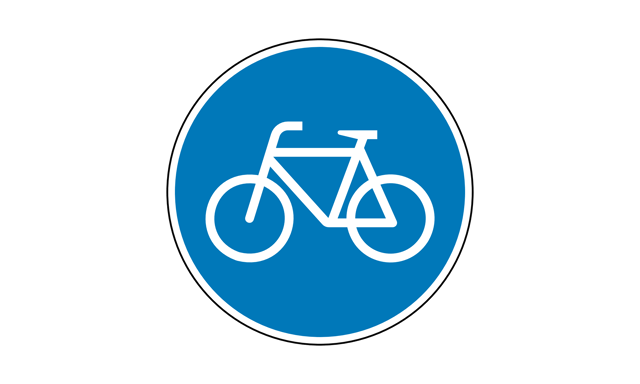
Wyjaśnienie
This traffic sign identifies a cycle path that cyclists must use but is prohibited for other road users. Cyclists crossing the road have their own warning sign.
-
Question 47 of 69
Co zostaje zakomunikowane poprzez niniejszą kombinację znaków drogowych?
1.4.41-1463 Punktów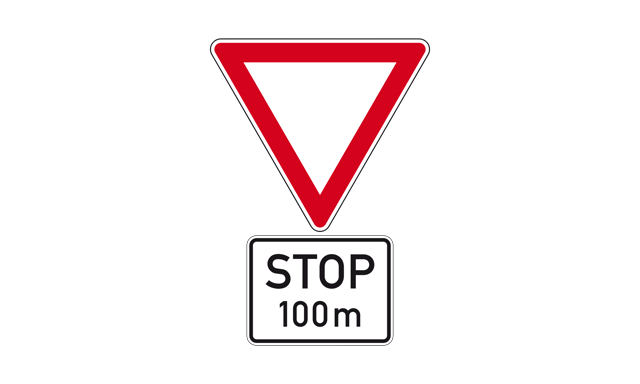
Wyjaśnienie
The traffic sign announces that after a hundred meters you will find a priority road where you will find the traffic sign "Give way". In any case, you must stop there at the stop line or line of sight.
-
Question 48 of 69
Na co wskazuje niniejszy znak drogowy?
1.4.41-1472 Punktów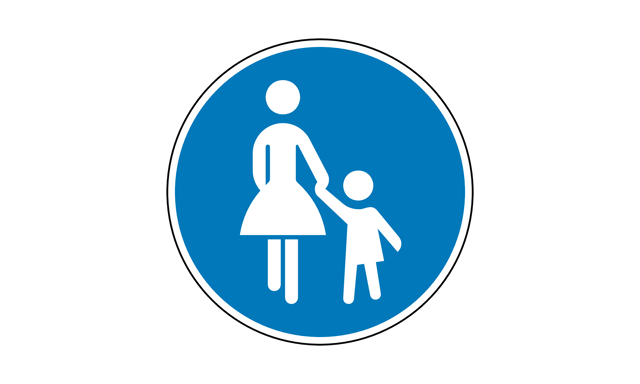
Wyjaśnienie
The traffic sign "Footway" marks paths which may be used exclusively by pedestrians and cyclists up to 10 years. Car drivers, cyclists and other road users may not be traveling on these routes. However, exceptions may be regulated by additional signs.
-
Question 49 of 69
Jak musisz zachować się na tej drodze, kiedy prowadzisz pojazd mechaniczny w ruchu dostawczym?
1.4.41-1493 Punktów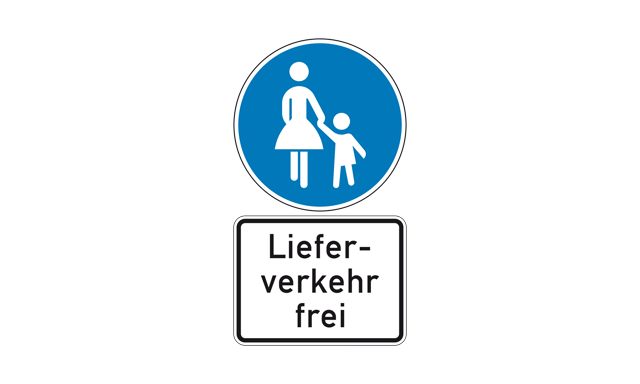
Wyjaśnienie
Since the traffic sign "Footway" is combined here with the additional sign "Delivery vehicles only", a distributor may drive on a road that is marked this way. You have to drive at walking speed, regardless of whether pedestrians are visible or not. Pedestrians have priority, you should be especially considerate of them.
-
Question 50 of 69
Na co wskazuje niniejszy znak drogowy?
1.4.41-1522 Punktów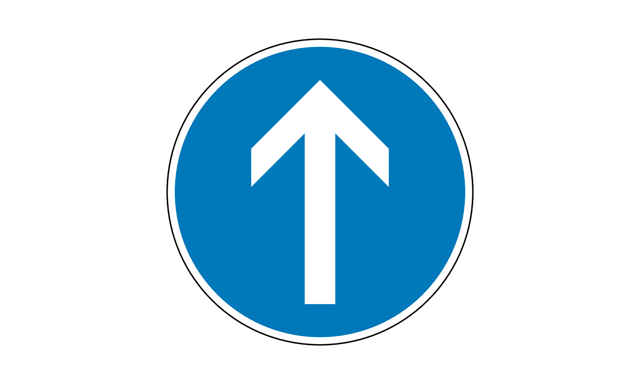
Wyjaśnienie
This traffic sign means "You must go straight ahead". You can only drive straight ahead and are not allowed to turn. The one-way street sign has the same colors but is rectangular.
-
Question 51 of 69
Jak musisz zachować się w przypadku tego znaku drogowego?
1.4.41-1534 Punktów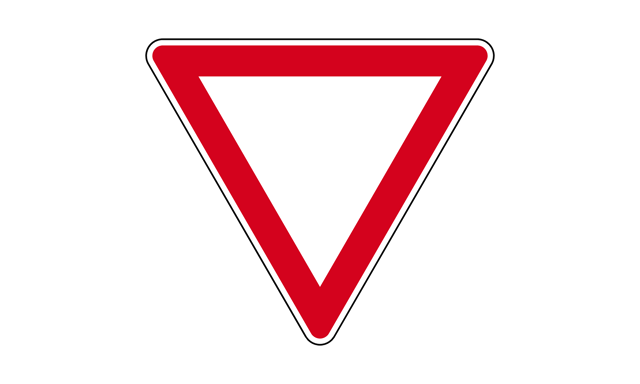
Wyjaśnienie
The traffic signal "Give way" signals that you are driving on a subordinate road and the cross traffic has priority. Drive slowly and stay ready to brake so that you do not miss a vehicle that is entitled to drive.
-
Question 52 of 69
Na co wskazuje niniejszy znak drogowy?
1.4.41-1542 Punktów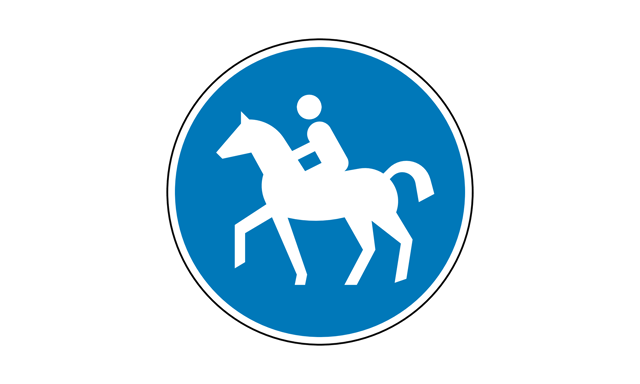
Wyjaśnienie
This traffic sign shows you a riding path. Here riders move with their horses. Other road users are not allowed to use this path.
-
Question 53 of 69
Jak należy zachować się w takiej sytuacji drogowej?
1.4.41-1564 Punktów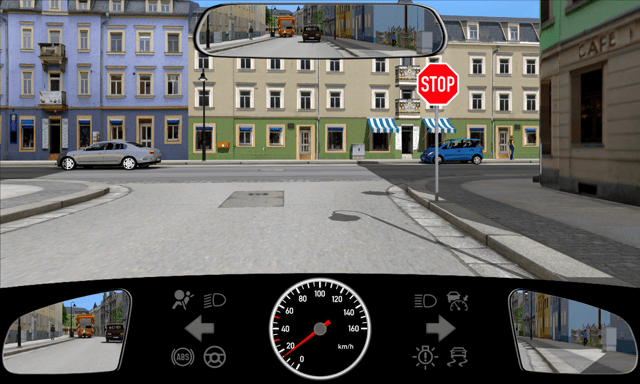
Wyjaśnienie
At the traffic sign "Stop! Yield to cross traffic" you have to stop and give way. You always have to stop, even if there is no cross traffic. Since there is no stop line, stop at the line of sight. From the line of sight, you can see the street you want to enter.
-
Question 54 of 69
Na co muszą Państwo zwrócić uwagę w przypadku tego znaku drogowego?
1.4.41-1592 Punktów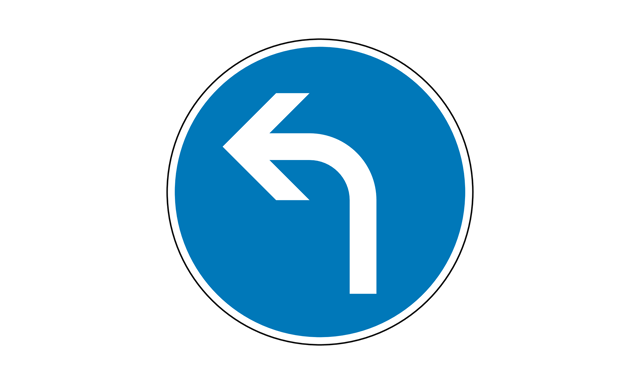
Wyjaśnienie
This traffic sign regulates the direction of travel. You may only turn left here. The change of the direction of travel must be indicated.
-
Question 55 of 69
Co obowiązuje w przypadku tego znaku drogowego?
1.4.41-1602 Punktów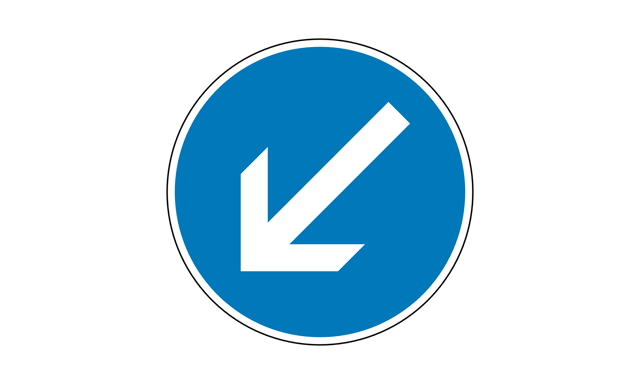
Wyjaśnienie
This traffic sign prescribes from which side you have to circuit the obstacle. You can find the regulation sign at central, stop islands or construction sites. If you meet the sign at an intersection or T-junction, you may turn in the appropriate direction.
-
Question 56 of 69
Co obowiązuje w obszarze 15 m przed i za tym znakiem drogowym?
1.4.41-1612 Punktów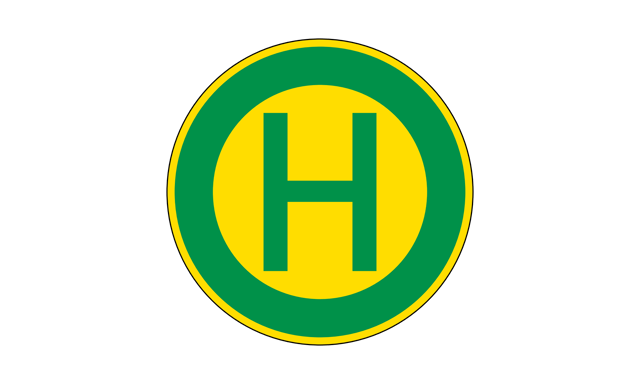
Wyjaśnienie
At the traffic sign you can see that there is a tram or bus stop here. 15 meters before and after the traffic sign, drivers are not allowed to park their vehicles. Unless public transport is impeded or passengers are endangered, waiting is allowed for up to three minutes.
-
Question 57 of 69
Co obowiązuje przy tym znaku drogowym?
1.4.41-1622 Punktów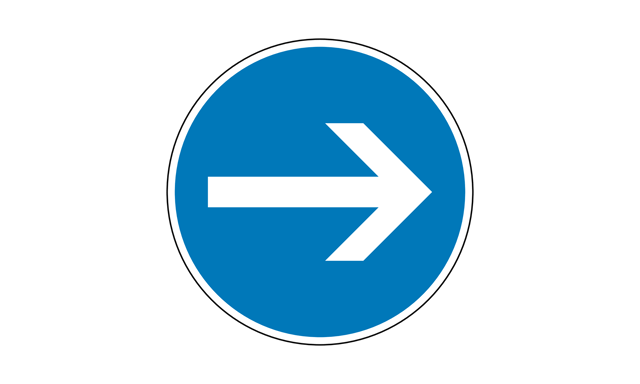
Wyjaśnienie
The given direction of travel is binding. The car driver must turn right before the traffic sign and indicate this process to other road users.
-
Question 58 of 69
Co obowiązuje przy tym znaku drogowym?
1.4.41-1632 Punktów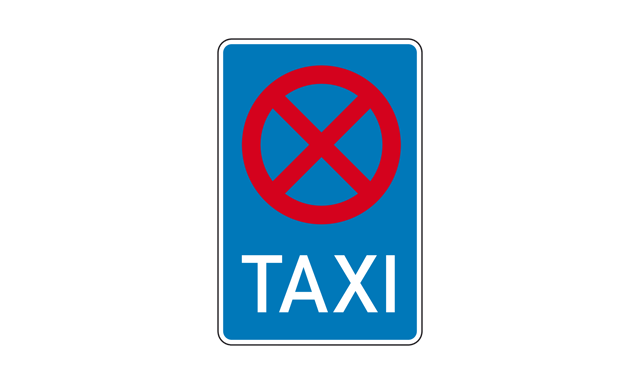
Wyjaśnienie
The traffic sign indicates a taxi stand. There is basically a stopping restriction for all other vehicles. The car driver must always expect departing and arriving taxis and passengers in this area.
-
Question 59 of 69
Na co wskazuje ta kombinacja znaków drogowych?
1.4.41-1642 Punktów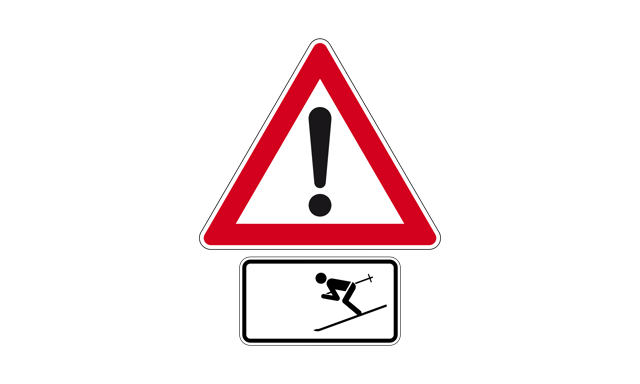
Wyjaśnienie
This sign means "Danger zone" and the additional sign stands for "Winter sports allowed". The combination indicates that winter sportspersons may use the road and road users must pay particular attention to it.
-
Question 60 of 69
Czego muszą Państwo przestrzegać takiej sytuacji komunikacyjnej?
1.4.41-1654 Punktów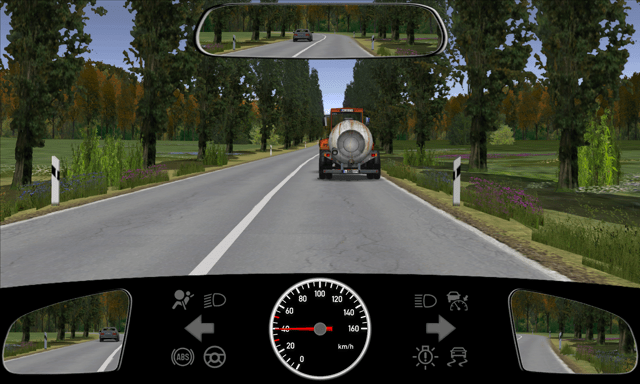
Wyjaśnienie
You must not drive over the lane boundary (solid line) to the left, which is located at the middle of the lane. Driving on it is also prohibited.
-
Question 61 of 69
Chcą Państwo wyprzedzać. Co należy zrobić?
1.4.41-1673 Punktów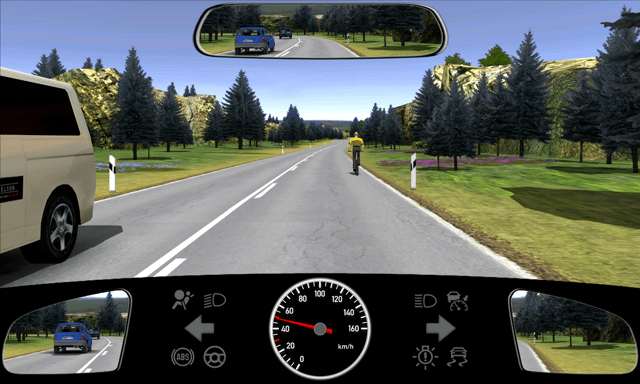
Wyjaśnienie
You may overtake if other road users are not endangered. The one-sided lane boundary allows you to cross the two lines from the side where the broken line is located.
-
Question 62 of 69
Jako mieszkańcy chcieliby Państwo wjechać na tak oznakowanąa drogę dla rowerów. O czym muszą Państwo pamiętać?
1.4.41-1682 Punktów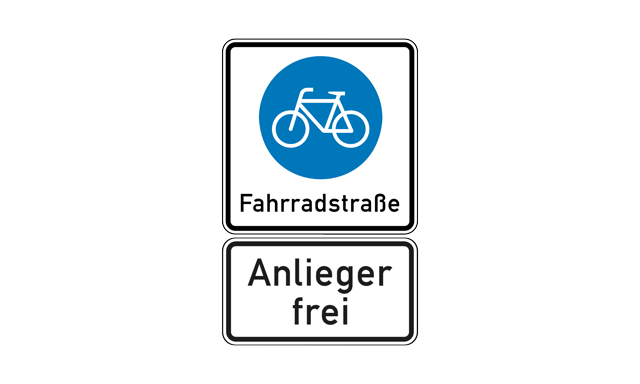
Wyjaśnienie
A maximum speed of 30 km/h applies to traffic. Cycling traffic must not be endangered or obstructed. If necessary, motor vehicle traffic must reduce speed further. Side-by-side cycling is permitted.
-
Question 63 of 69
Kto może wjechać na tak oznakowaną drogę?
1.4.41-1692 Punktów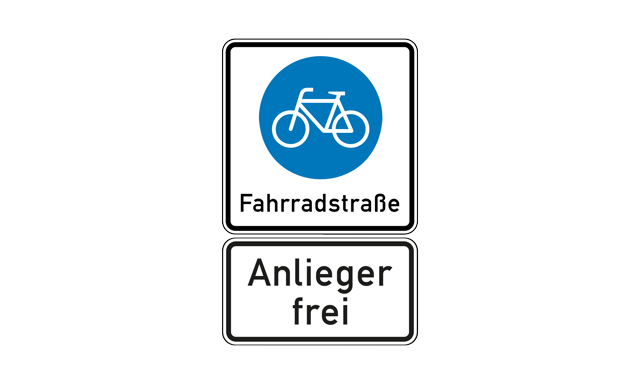
Wyjaśnienie
Vehicular traffic other than cyclists may not use cycle lanes unless permitted by additional sign. The additional sign allows residents to enter the bicycle lane.
-
Question 64 of 69
Państwa pas ruchu jest oznaczony tym znakiem drogowym. O czym muszą Państwo pamiętać?
1.4.41-1703 Punktów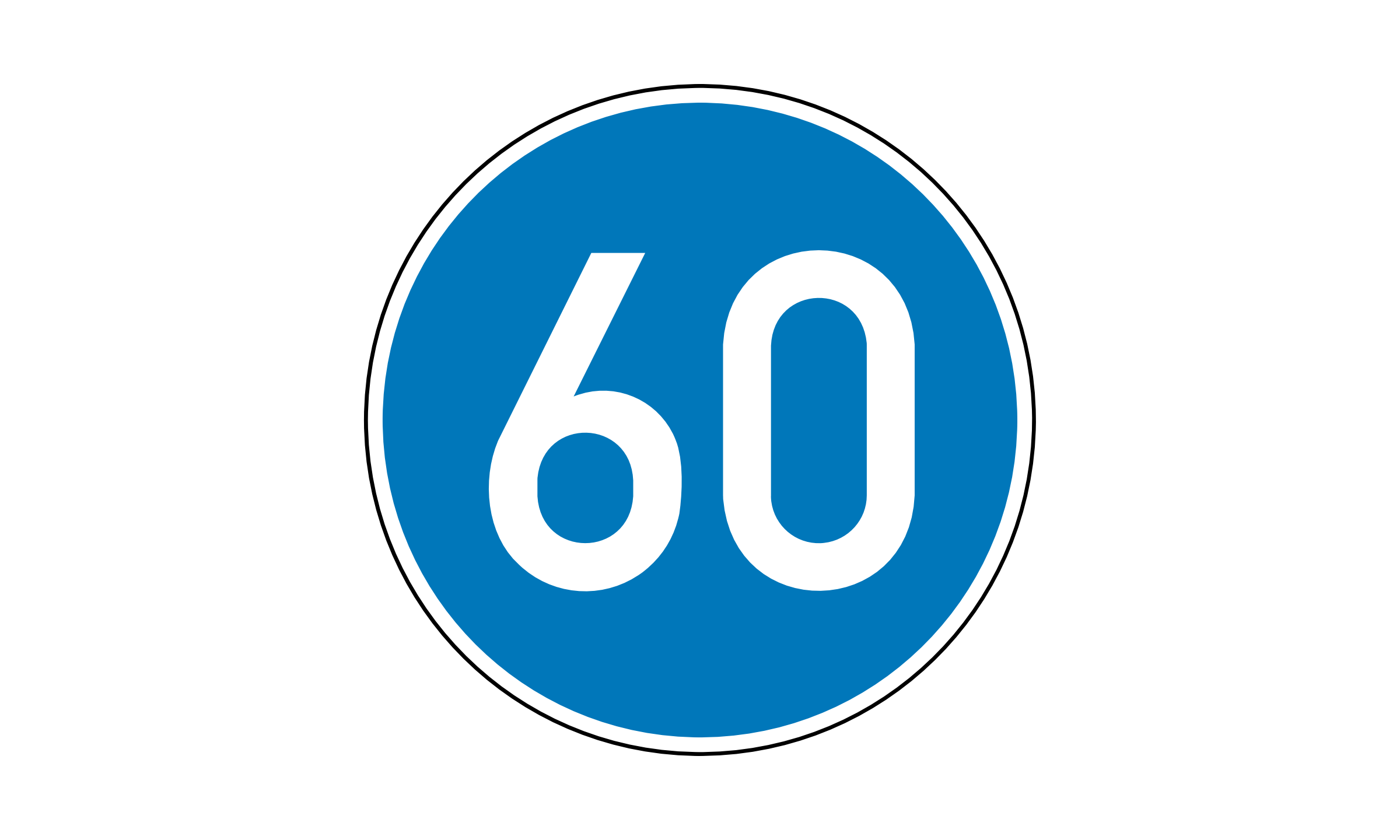
Wyjaśnienie
This traffic sign indicates the prescribed minimum speed. You must therefore drive at least 60 km/h, provided that the road and traffic conditions allow it.
-
Question 65 of 69
Z jaką maksymalną prędkością mogą poruszać się pojazdy w tak oznakowanej strefie?
1.4.41-1712 PunktówWyjaśnienie
Cyclists, light electric vehicles and other authorized vehicles may not drive more than 30 km/h in bicycle zones.
-
Question 66 of 69
Co obowiązuje w przypadku tego znaku drogowego?
1.4.41-1723 Punktów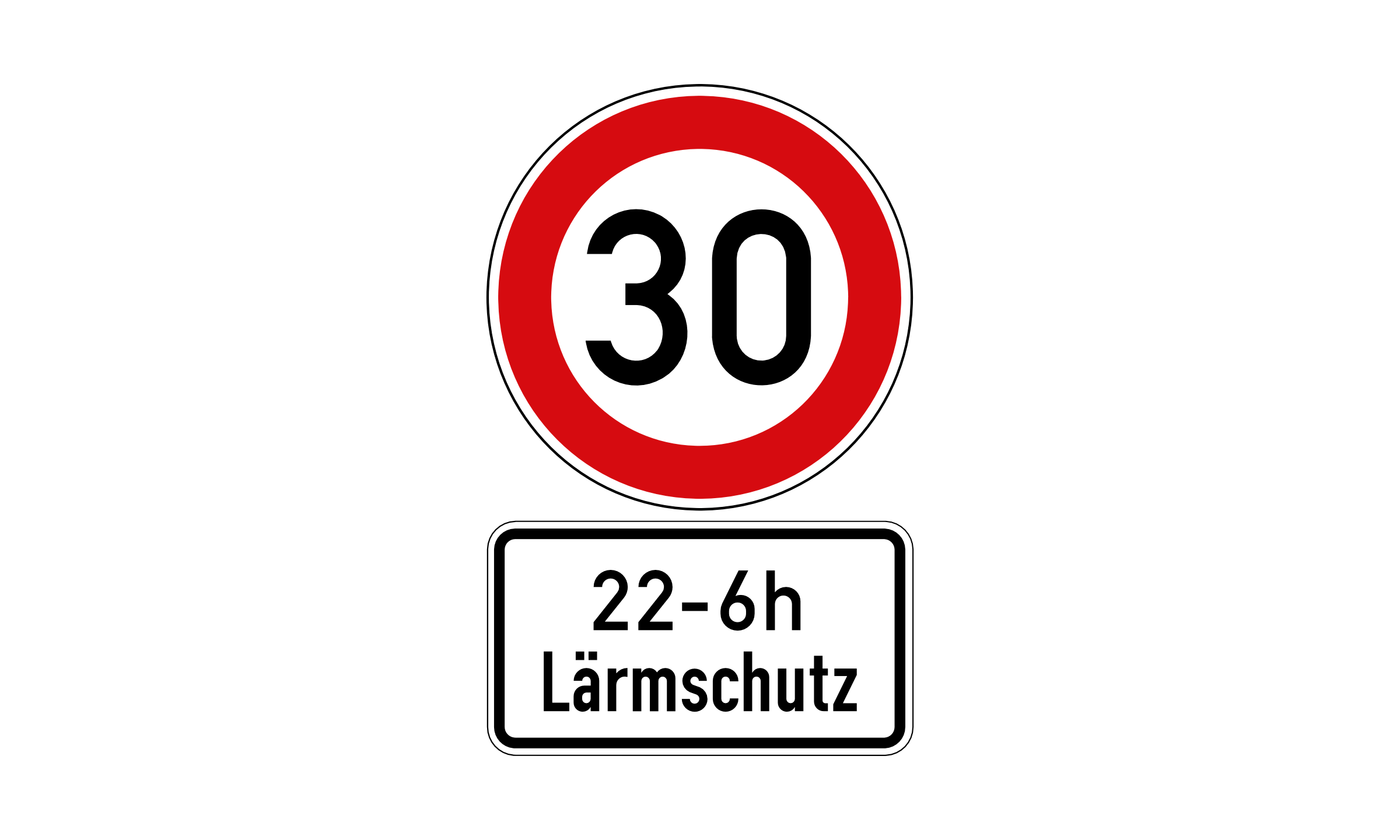
Wyjaśnienie
The additional sign limits the speed limit between 10 pm and 6 am.
-
Question 67 of 69
Jak należy postąpić, widząc ten znak drogowy?
1.4.41-1732 Punktów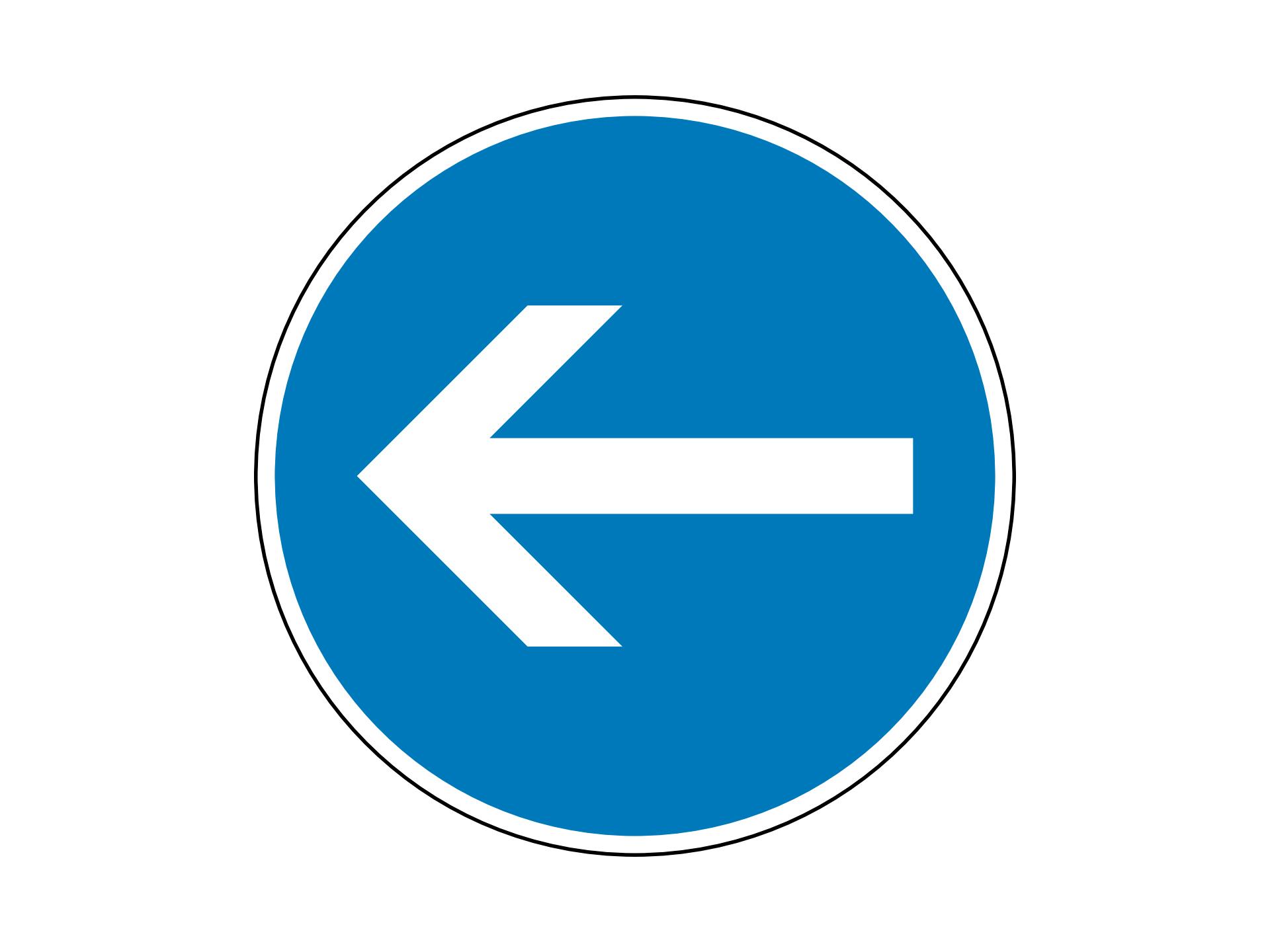
Wyjaśnienie
The arrow on this traffic sign always shows the direction of travel. If it is a straight arrow, you have to turn in front of the sign. If it is a curved arrow, you must turn according to the sign. You have to flash to indicate the change in driving direction.
-
Question 68 of 69
Który znak drogowy oznacza zakaz zawracania?
1.4.41-1743 PunktówWyjaśnienie
All traffic signs show you that turning is prohibited. The traffic sign tells you that a tunnel begins here. Turning is strictly prohibited in the tunnel. The traffic sign “Turning Prohibited” shows you that turning is prohibited here. This traffic sign tells you that you are on a highway. U-turns are strictly prohibited on the highway.
-
Question 69 of 69
Od którego znaku drogowego nie wolno przekraczać dopuszczalnej prędkości maksymalnej 60 km/h?
1.4.41-1753 PunktówWyjaśnienie
Traffic signs with a red border generally indicate a ban. On a road with such a traffic sign you are not allowed to exceed the maximum permitted speed of 60 km/h.