
2.1.08 Autopista
Aprenda las reglas de Autobahn más importantes para el examen de manejo de alemán de una manera fácil y visual. Esta guía le ayuda a comprender las fusiones, las salidas, los atascos, los adelantamientos y la conducción segura en autopistas.
🚗 Reglas de oro
- Manténgase a la derecha siempre que sea posible
- Utilice los espejos antes de cambiar de carril
- Mantener distancia segura
- No frenes de repente
- Indique siempre temprano
⚠ Importante
- Construir carriles de rescate en los atascos
- Utilice luces de emergencia en los extremos del atasco
- El carril de aceleración permite una mayor velocidad
- Nunca adelantar por la derecha
❌ Evitar
- Cortar carriles de repente
- Conducir demasiado rápido hacia las salidas
- Frenar antes del carril de desaceleración
- Presionar a los conductores con los faros
🔀 Principio de fusión de zip
Cuando un carril termina, los vehículos deben incorporarse suavemente como una cremallera.
Los conductores que ya están en el carril deben permitir que los autos del carril final se incorporen de manera segura.
🛣 Salir de la autopista
Pasos correctos
- Terminar de adelantar temprano
- Pasar al carril derecho
- Indicar
- Ingresar al carril de desaceleración
- Frenar sólo dentro del carril de desaceleración
Consejo importante
Los conductores suelen subestimar la velocidad después de conducir rápido durante mucho tiempo. Siempre revisa tu velocímetro antes de entrar a una curva de salida.
🚨 Atasco y carril de rescate
Al acercarse a un atasco
- Reduzca la velocidad inmediatamente
- Enciende las luces de emergencia
- Advierta a los conductores detrás de usted
Carril de rescate
Formar un carril de rescate para vehículos de emergencia. Conduzca lo más a la derecha posible.
🚧 Zonas de construcción
- Los carriles son más estrechos
- Los vehículos podrán cruzar las marcas amarillas.
- Aumenta el riesgo de accidentes
- Adelantar no suele ahorrar tiempo
↩ Curvas peligrosas
Posibles peligros
- Atasco de tráfico
- Vehículos rotos
- Carril más estrecho
- Obstáculos inesperados
Comportamiento correcto
- Reduce la velocidad antes de la curva
- Mantente alerta
- Prepárate para parar
🚙 Reglas de adelantamiento
Permitido
- Adelantar solo por la izquierda
- Volver al carril derecho después de adelantar
Prohibido
- Adelanto por la derecha
- Luces delanteras intermitentes para obligar a los demás a alejarse
🏎 Carril de aceleración
Los vehículos que entran en la autopista utilizan el carril de aceleración para igualar la velocidad del tráfico de la autopista.
- Aquí puedes conducir más rápido que el tráfico en la autopista.
- Mantente en tu carril
- No cortes las líneas divisorias
⚡ Velocidad y distancia de seguridad
Medios de mayor velocidad
- Mayor distancia de reacción
- Mayor distancia de frenado
- Mayor riesgo de accidente
Conducción segura
- Mantener mayor distancia de seguridad
- Conduce suavemente
- Igualar la velocidad del flujo de tráfico
✅ Consejos de examen para recordar
- ✔ Construir carriles de rescate
- ✔Usa espejos con frecuencia
- ✔ Manténgase a la derecha después de adelantar
- ✔ Frenar sólo en el carril de desaceleración
- ✔ Nunca adelantar por la derecha
- ✔ Reduce la velocidad antes de las curvas
- ✔ Esté atento a los camiones que cambian de carril
- ✔ Señalar siempre los cambios de carril
Preguntas de práctica (21)
-
Pregunta 1 de 21
¿Qué debe tener en cuenta aquí?
2.1.08-0053 puntos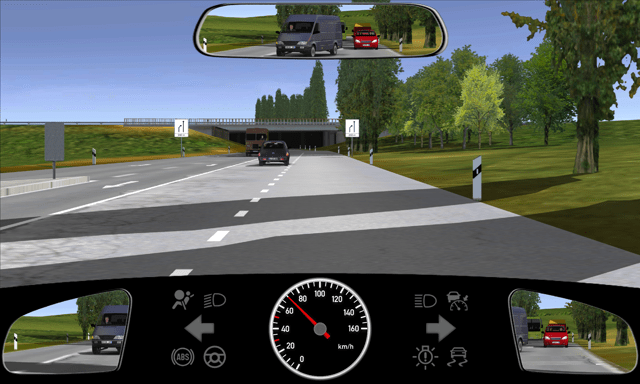
Explicación
The sign announces the end of the left lane. The traffic flow will condense from two lanes to a single lane. Halting traffic might occur. The vehicle in the left lane will change the lane. You have to allow the vehicles on the left side of the lane to change over to your lane according to the zip merging principle.
-
Pregunta 2 de 21
Aquí se forma un atasco. ¿Cuál es el comportamiento correcto?
2.1.08-0084 puntos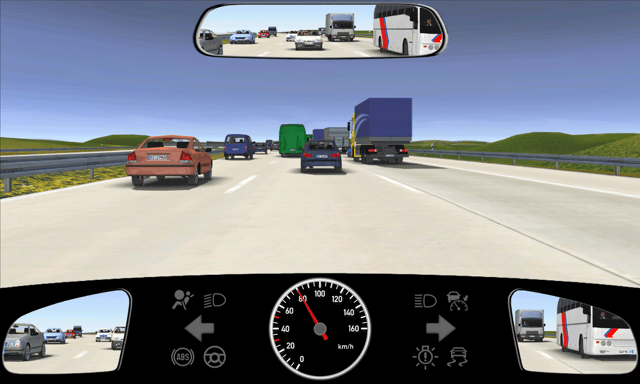
Explicación
If you drive towards a traffic jam, turn on your hazard lights to alert other road users. It is important to build a rescue lane for any approaching rescue vehicles. In this case, drive as far to the right as possible.
-
Pregunta 3 de 21
En autopista, ¿con qué ha de contar si hay una pendiente de subida?
2.1.08-0104 puntosExplicación
When driving uphill on motorways, you should expect slow-moving trucks in the right lane, sudden overtaking manoeuvres by other road users and large speed differences between vehicles. All 3 answers are correct.
-
Pregunta 4 de 21
¿Qué tiene que hacer?
2.1.08-0114 puntosExplicación
Since you are currently being overtaken by a car on the left-hand side, you must maintain the lane and reduce the speed until the truck in front of you has completed its overtaking maneuver and changes to the right-hand lane.
-
Pregunta 5 de 21
¿A qué tiene que prestar atención cuando vaya a acceder a una autopista?
2.1.08-0135 puntosExplicación
On the freeway, the continuous traffic always has the right of way and does not have to allow entrance. On the acceleration lane the driver may drive faster than the rest of the vehicles.
-
Pregunta 6 de 21
Va circulando por la autopista a la velocidad recomendada y quiere abandonarla en la siguiente salida. ¿Qué tiene que hacer?
2.1.08-0144 puntosExplicación
Finish overtaking in good time and get on the right lane. Before changing to the deceleration lane look around and indicate. On the deceleration lane, check your speed on the speedometer in order to assess it right. Only on the deceleration lane you should reduce the speed significantly, so as not to hinder subsequent traffic on the continuous lane.
-
Pregunta 7 de 21
¿Qué debería hacer en este momento?
2.1.08-0164 puntosExplicación
When approaching a jam end on the highway, you must reduce your speed and warn the road users behind you by switching on the hazard lights. A rescue lane is to be formed.
-
Pregunta 8 de 21
En esta situación, ¿qué es lo correcto?
2.1.08-0185 puntos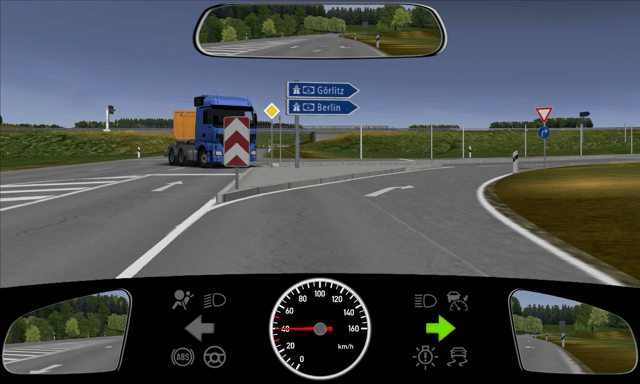
Explicación
The curve is difficult to assess for the car driver. There may be other road users or even obstacles on the route. Therefore, it makes sense to slow down the pace even before the turn and mentally adjust to a possible danger situation. Because even for oncoming drivers this is a difficult spot and caution is required.
-
Pregunta 9 de 21
Usted va circulando, como mínimo, a 20 km/h más que el camión verde. ¿Qué debería hacer?
2.1.08-0214 puntos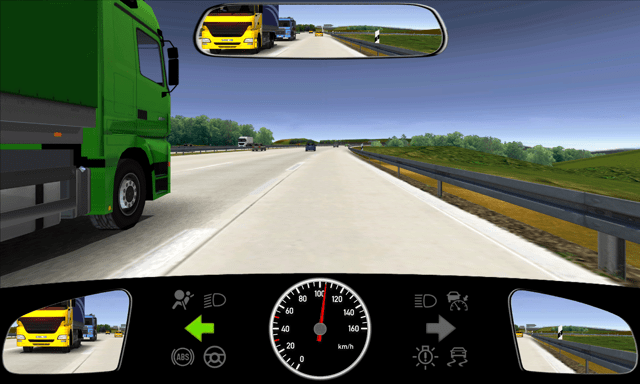
Explicación
You are on an acceleration lane to the freeway. On the acceleration lane it is permissible to drive faster than the vehicles on the continuous lane. Therefore, you can drive onto the highway at a faster pace in front of the green truck.
-
Pregunta 10 de 21
¿Cómo debe comportarse en esta situación?
2.1.08-0243 puntosExplicación
Next to you is a red car that changes into the middle lane. Therefore, you cannot change the lane, otherwise you would endanger other road users.
-
Pregunta 11 de 21
Usted desea conducir por la autopista. ¿Qué línea debe seguir?
2.1.08-0254 puntosExplicación
While driving onto the freeway you should continue to follow the third driving line, so stay true to the lane and do not cut the boundary line.
-
Pregunta 12 de 21
¿Para qué debe estar preparado ahora?
2.1.08-0263 puntosExplicación
No traffic jam can be seen in this situation. Since the motorcycle is driving on the left, it will not leave the motorway. On the other hand, the car driving on your left flashes to the right. You can be prepared for the driver to leave the motorway.
-
Pregunta 13 de 21
Quiere abandonar la autopista. ¿Qué da lugar aquí a una situación peligrosa?
2.1.08-0274 puntosExplicación
The motorbike behind you (see right wing mirror) creates a dangerous situation for you. Take this into account when leaving the motorway.
-
Pregunta 14 de 21
¿Qué es correcto hacer en este momento?
2.1.08-0284 puntosExplicación
There is an object on the roadway in the right lane in front of the truck. Truck will avoid the object by using the left lane. You should therefore stay in the left lane. If you continue to drive unchanged, you could collide with the truck. You should therefore reduce your speed.
-
Pregunta 15 de 21
¿Por qué tiene que reducir la velocidad en este momento?
2.1.08-0294 puntosExplicación
The right lane is blocked in front of the truck. He has to change to the left lane. To allow him to do this, you should reduce your speed. The car driving behind you is no reason for you to slow down. The maximum permissible speed here is 120 km/h. Keep this in mind.
-
Pregunta 16 de 21
Quiere salir de la autovía. ¿Qué es correcto hacer?
2.1.08-0303 puntos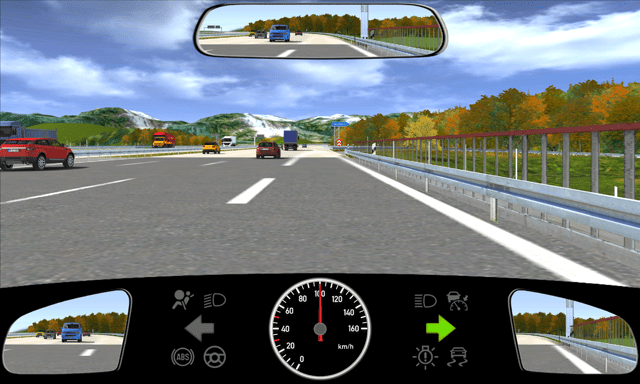
Explicación
As soon as you have entered the deceleration lane, you should brake. If you brake before entering the deceleration lane, you will unnecessarily interfere with traffic on the motorway. You should check your speedometer more often to make sure you are not entering the bend too fast. On motorways, there is a danger that you will get too used to the high speed and therefore enter an exit too fast. If you were to slow down at the turn, you would not be able to reduce your speed in time. In general, you should always brake before a bend and not only in the bend.
-
Pregunta 17 de 21
En autovía, ¿por qué debería mantener la velocidad recomendada de 130 km/h?
2.1.08-0313 puntosExplicación
The higher the speed, the longer the reaction distance, braking distance, etc. If all vehicles travel at a similar speed, the traffic flow becomes more even.
-
Pregunta 18 de 21
¿Con qué tiene que contar en este momento?
2.1.08-0324 puntosExplicación
Due to the sudden traffic jam, the driver of the truck sees the end of the traffic jam too late. Due to the traffic jam, the motorcycle will try to go through the rows of vehicles.
-
Pregunta 19 de 21
¿Con qué tiene que contar al tomar esta salida?
2.1.08-0333 puntos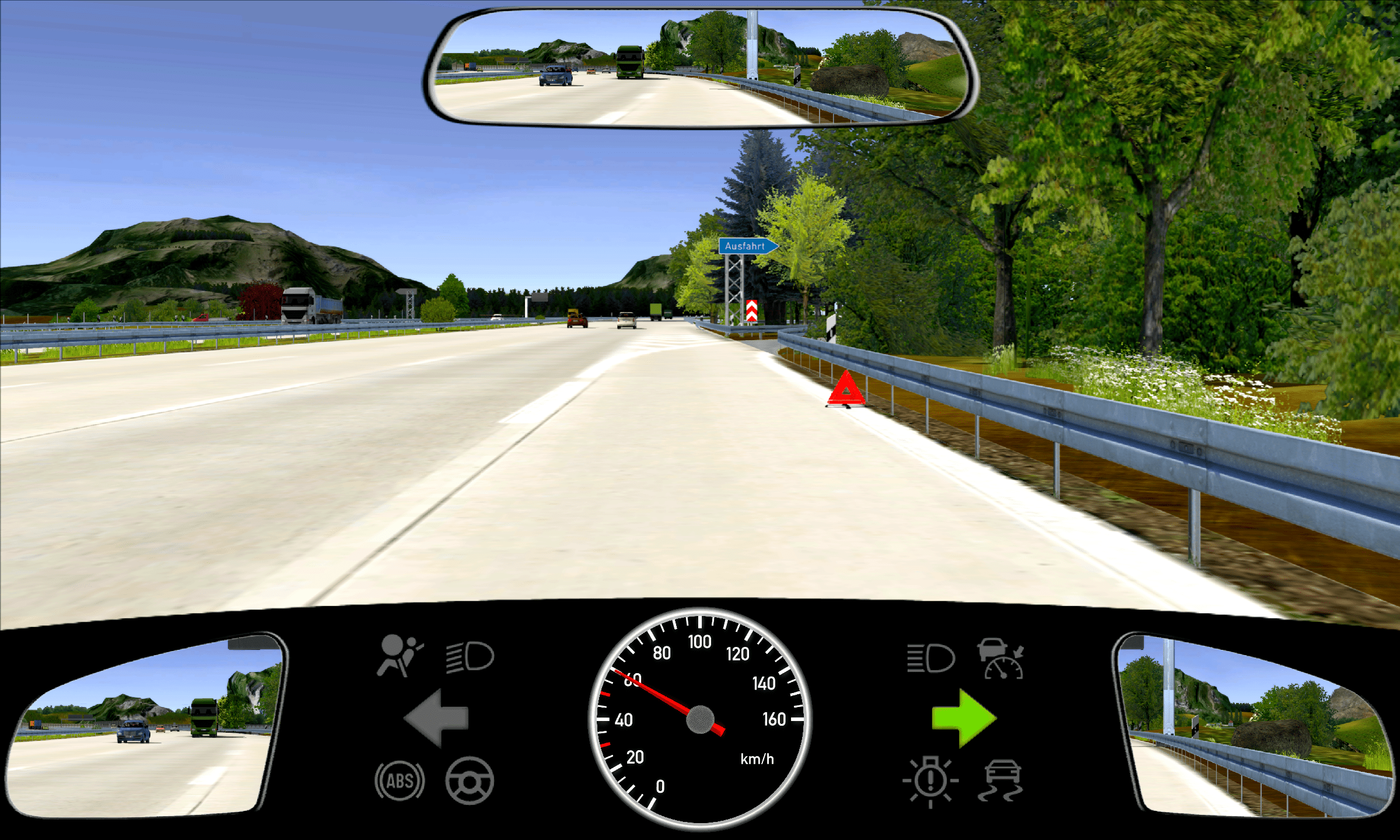
Explicación
A warning triangle indicates a nearby obstacle, e.g. people, a defective vehicle or a fallen load, in the exit lane. Therefore, enter the exit at a very reduced speed.
-
Pregunta 20 de 21
¿Por qué debería evitar adelantar en una zona de obras?
2.1.08-1024 puntosExplicación
When overtaking in the construction site area, the risk of accidents is significantly increased, because there is a risk that the vehicles that you want to overtake run over the yellow lane marking. The lanes are mostly narrower and the distractions on the edge of the road can lead to inattentiveness. Overtaking in the construction site area often saves almost no time, since most drivers in the construction site area only drive the maximum speed.
-
Pregunta 21 de 21
¿Qué puede hacer para reducir el riesgo de circular por una autovía en el sentido contrario al obligatorio?
2.1.08-1033 puntosExplicación
To avoid driving against the direction of travel on the motorway, you should always pay attention to the relevant traffic signs. It is very important to pay attention to the exact signs, especially when the traffic routing has changed.