
1.1.02 Ponašanje prema pješacima
Pješaci su najranjiviji sudionici u cestovnom prometu. Kao vozač, morate uvijek predvidjeti njihovo ponašanje, posebno djece i starijih osoba koji možda ne poštuju striktno pravila. Obrambena vožnja i partnersko ponašanje su ključni.
verified Temeljna načela ispita
Defenzivna vožnja
Uvijek vozite s očekivanjem da bi pješaci mogli pogriješiti. Smanjite brzinu u područjima s gustim prometom ili ograničenom vidljivošću.
Ponašanje poput partnera
Ne inzistirajte na svojoj prednosti ako je pješak već na cesti ili je očito zbunjen. Dajte prednost sigurnosti nad strogim pridržavanjem pravila.
child_care Djeca u prometu
Visoki rizikIspravno ponašanje
- check Značajno smanjite brzinu kada vidite djecu koja se igraju u blizini ceste.
- check Budite spremni odmah kočiti; bitna je udaljenost reakcije.
- check Održavajte siguran bočni razmak prilikom mimoilaženja.
Pogrešne ideje
- close Pod pretpostavkom da će se djeca zaustaviti na rubu i pogledati na obje strane.
- close Trubljenjem za upozorenje djeci (to ih može preplašiti i istrčati na cestu).
- close Ubrzavajući kako bi ih brzo prošao.
Napomena o ispitu
U ispitnim pitanjima, ako vidite loptu kako se kotrlja po ulici, UVIJEK pretpostavite da će dijete odmah potrčati za njom bez gledanja. Točan odgovor je uvijek kočiti.
horizontal_rule Zebra prijelazi (pješački prijelazi)

Približavam se zebri
Ključno pravilo: Umjerena brzina i spremnost na kočenje.
Približavajući se
Približite se umjerenom brzinom. Ako pješak čeka ili stupa na prijelaz, morate stati.
Nema pretjecanja
Pretjecanje na zebri je strogo zabranjeno kako bi se osigurala vidljivost pješaka.
Zaustavljanje
Ne zaustavljajte se i ne parkirajte neposredno na prijelazu ili do 5 metara prije njega.
Prometne gužve
Držite prijelaz slobodnim ako je promet pojačan. Nemojte blokirati put pješacima.
directions_bus Autobusi, tramvaji i stanice
1
Autobus se približava stanici s upaljenim svjetlima opasnosti
expand_more
NE smijete pretjecati autobus dok je u pokretu. Ostani dok ne prestane. To ukazuje na opasnu situaciju u kojoj djeca mogu prelaziti.
2
Autobus stoji na stanici s upaljenim svjetlima opasnosti
expand_more
Možete proći autobus na tempo hoda (4-7 km/h). Ovo se odnosi na promet u OBA smjera (osim ako ne postoji fizička prepreka poput medijana). Morate biti u mogućnosti odmah se zaustaviti ako putnik stane na cestu.
3
Prolazak tramvaja
expand_more
Obično prođite tramvaje s desne strane. Ako se putnici ukrcavaju ili iskrcavaju, a nema sigurnosnog otoka, morate stati i pričekati dok se put ne oslobodi. Vozite pažljivo pored zaustavljenih tramvaja.
warning Tipične ispitne zamke
Zamka "mahanje".
Scenarij: Pješak čeka prijelaz, ali oklijeva. Ti stani.
Odgovor na zamku: – Mahnem rukom da pješaku dam znak da prijeđe.
Netočno! Ne mašite. Možete im signalizirati opasnost (npr. automobil koji vas pretječe). Samo strpljivo čekaj.
Parkirana vozila i ograničena vidljivost
Scenarij: Vožnja uskom ulicom s automobilima parkiranim s obje strane.
Fokus ispita: Morate predvidjeti pješake koji izlaze iza vozila. Ispravno ponašanje je uvijek smanjiti brzinu i zadrži a veliki bočni razmak ako je moguće.
Pitanja za vježbu (33)
-
Pitanje 1 od 33
What conduct must you expect of children at zebra crossings?
1.1.02-0055 BodoviObjašnjenje
Children generally do not have the necessary training to always behave according to the rules in road traffic. Therefore, it is quite conceivable that they do not know the meaning of a zebra crossing and enter the road despite approaching vehicles or suddenly run back after crossing.
-
Pitanje 2 od 33
What do you have to reckon with when children are waiting at traffic lights?
1.1.02-0224 BodoviObjašnjenje
Due to a lack of life experience as well as insufficient education, children do not always behave according to the rules in road traffic and, for example, get into the lane during a scuffle. Furthermore, you must expect children to suddenly run across the road, even if the traffic lights are still red or the lights of the cross-traffic are just changing.
-
Pitanje 3 od 33
What do you have to reckon with when elderly persons using walking frames cross the road?
1.1.02-0274 BodoviObjašnjenje
When elderly people with walking aids cross the road, you have a higher duty of care. The principle of trust is suspended. You must expect these people to stop suddenly or turn around unexpectedly. Older people also take a comparatively long time to cross the road.
-
Pitanje 4 od 33
A person in a wheelchair is travelling along the road although there is a pavement on the right. What do you do?
1.1.02-0284 BodoviObjašnjenje
Disabled and elderly people sometimes do not behave in a roadworthy manner due to physical limitations. Therefore, please be especially careful and be sure to show consideration. Expect the wheelchair user to suddenly and unexpectedly swerve and drive even further into the lane. In such situations, it is not permitted to use the horn or drive around the person at high speed.
-
Pitanje 5 od 33
Having crossed the road, a person in a wheelchair cannot get up the curb and onto the pavement. What do you do?
1.1.02-0294 BodoviObjašnjenje
You should help the person. To do this, you may stop and switch on the hazard warning lights to warn other road users of possible dangers. It is not permitted to honk your horn and drive around the person in this situation. This would frighten and unsettle the wheelchair user.
-
Pitanje 6 od 33
Who has a severe visual handicap?
1.1.02-0324 Bodovi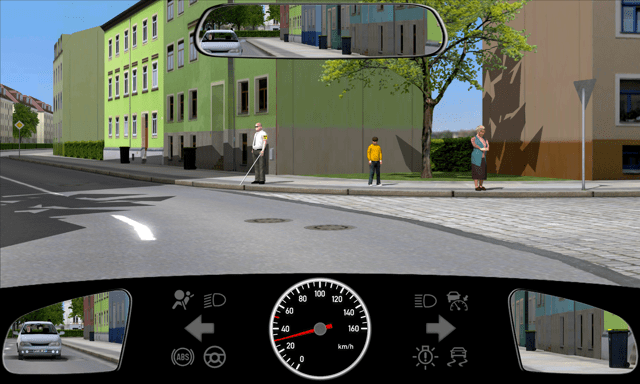
Objašnjenje
You must expect a severe visual impairment in the case of persons with the following markings: If a person is wearing a yellow armband with three black dots and/or a white blind person's cane extended diagonally.
-
Pitanje 7 od 33
How do you behave?
1.1.02-0394 Bodovi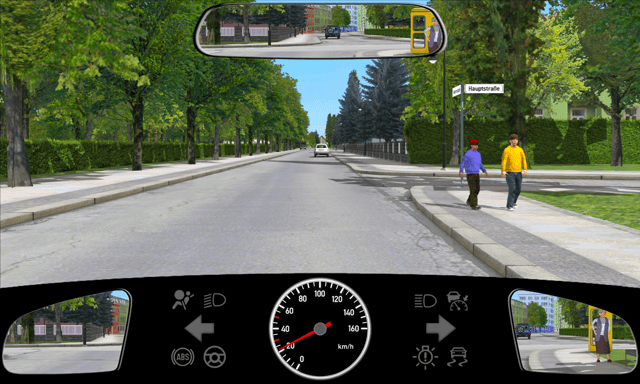
Objašnjenje
Reduce speed and watch the two children very closely. Be careful and ready to brake. Stop if the children's behaviour makes this necessary.
-
Pitanje 8 od 33
What risks must you be aware of?
1.1.02-0415 Bodovi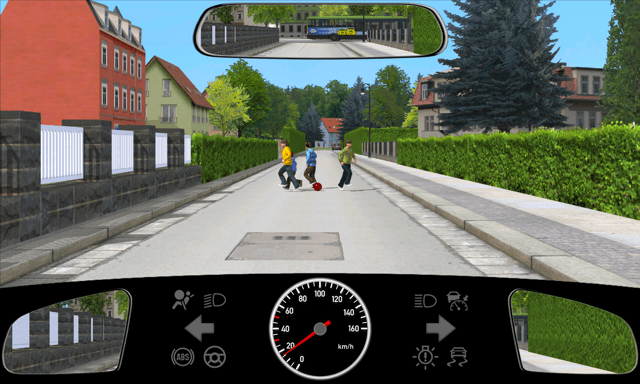
Objašnjenje
If a ball is lying on the road, it can be assumed that a child will come and fetch it. For you as a driver, this means: stop immediately so that the child can fetch the ball safely. With children, you have to expect that they will behave in a way that is contrary to traffic regulations and that they will not be able to assess dangers correctly.
-
Pitanje 9 od 33
How should you behave?
1.1.02-0425 Bodovi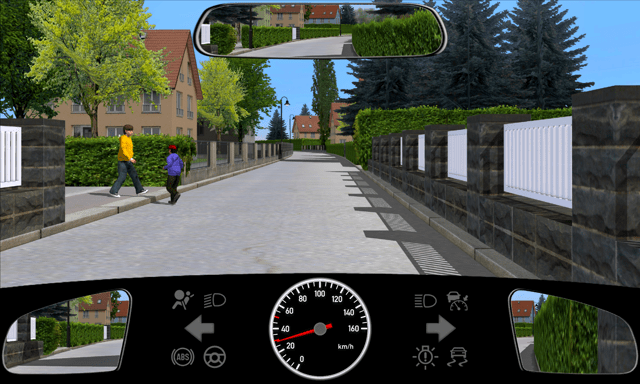
Objašnjenje
The rule here is: reduce speed immediately, be ready to brake and drive slowly past the situation. It can be assumed that children who are playing are not paying attention to the traffic and are not behaving in a way that is appropriate for the traffic.
-
Pitanje 10 od 33
How must you behave?
1.1.02-0435 Bodovi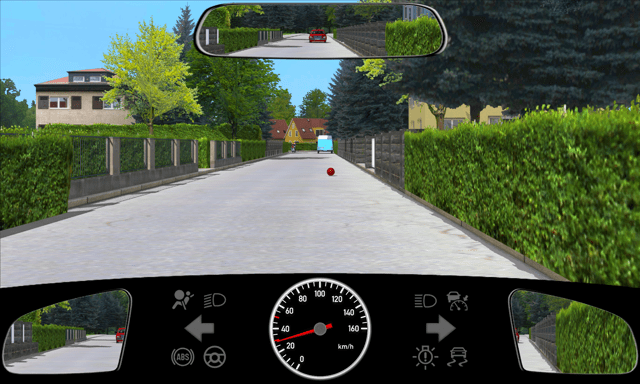
Objašnjenje
Most likely, a child will come running into the road after the ball without paying attention to the traffic. Immediately slow your vehicle down to walking speed. Be especially alert and ready to brake!
-
Pitanje 11 od 33
What should you do now?
1.1.02-0485 Bodovi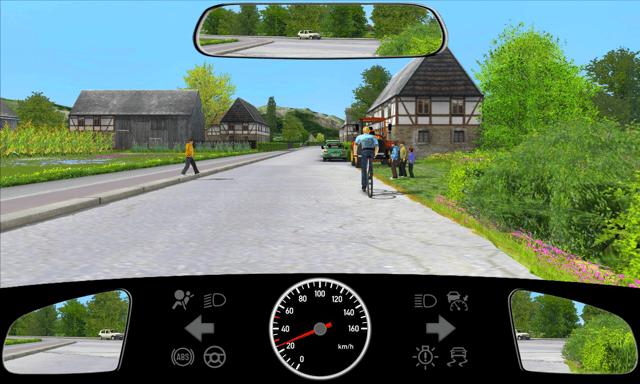
Objašnjenje
Since there are children both on the left and right on the street, you should brake to walking pace and remain ready to brake.
-
Pitanje 12 od 33
Why must you drive slowly here and be ready to brake?
1.1.02-0505 BodoviObjašnjenje
The child behind the van on the left runs towards the roadway. You cannot see whether it will stop. Therefore, be especially attentive and careful in this unclear traffic situation. Drive slowly and be ready to brake.
-
Pitanje 13 od 33
What is the correct course of action in this situation?
1.1.02-0514 Bodovi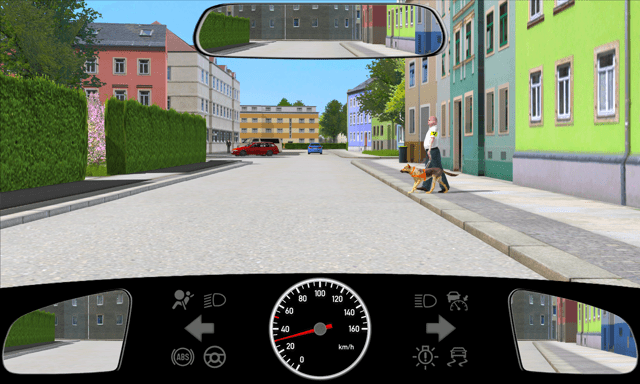
Objašnjenje
The man is wearing a yellow armband and has a guide dog with him. He is blind or visually impaired and cannot see the traffic situation. Special care must be taken for blind people. Therefore, you must let him cross the road in front of you.
-
Pitanje 14 od 33
Why must you anticipate that children might behave unpredictably in road traffic situations?
1.1.02-0524 BodoviObjašnjenje
Children often behave unpredictably, which is why other road users always have to count on the unexpected. Due to external stimuli in the environment, small children are constantly distracted from the road and traffic. They continuously let their eyes hike in the area and get stuck with interesting events or objects. The noise perception also only develops in the course of life and is only available to a limited extent in children. That is why children can usually not assign the many noises in road traffic to a certain direction and it is more difficult for them to assess them purely acoustically from which direction a vehicle approaches. In addition to the perception of the direction, the perception of distances, speeds and braking distance in childhood is not yet fully pronounced. Therefore, children can often only overlook the traffic situation incompletely.
-
Pitanje 15 od 33
What must you heed in this situation?
1.1.02-1084 Bodovi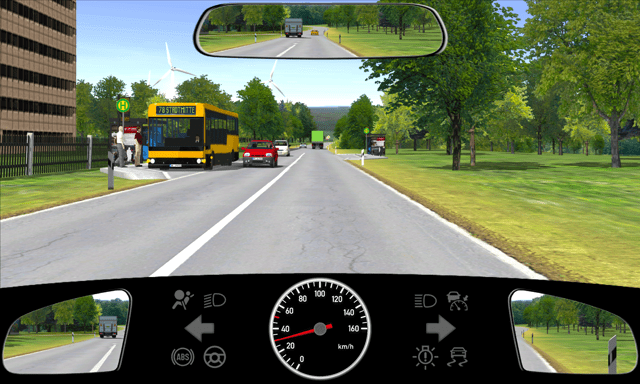
Objašnjenje
When public transport and school buses are at a stop and their hazard warning lights are switched on, the following applies: Vehicles may only pass them at walking speed and at a sufficient distance. This applies to oncoming traffic as well as to vehicles travelling in the same direction as the bus. Any danger to passengers must be ruled out by you as the driver of the vehicle.
-
Pitanje 16 od 33
The tram has just become stationary at the stop. What is the right course of action?
1.1.02-1164 Bodovi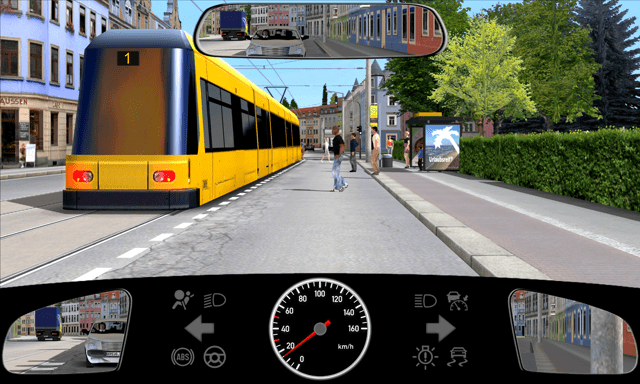
Objašnjenje
You may carefully pass a stopping tram at walking speed - but only if this does not endanger or obstruct any passengers.
-
Pitanje 17 od 33
What should you do?
1.1.02-1195 Bodovi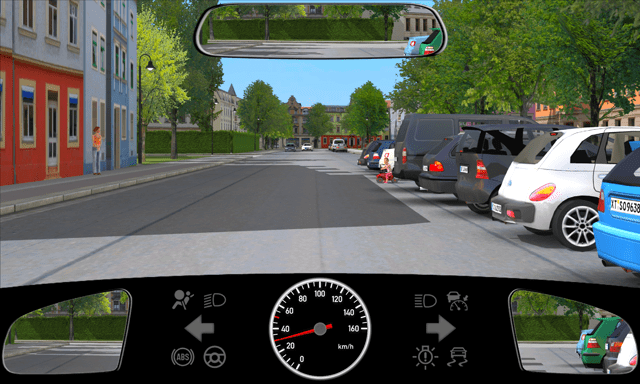
Objašnjenje
Special caution is always required towards children in road traffic. In this situation, you must expect that the small child will continue to drive onto the road behind the van. Slow down to walking speed and remain alert and ready to brake at all times. Stop if necessary if you are not sure how the child will behave. It would be grossly negligent to just honk your horn and drive on.
-
Pitanje 18 od 33
What should you do?
1.1.02-1214 Bodovi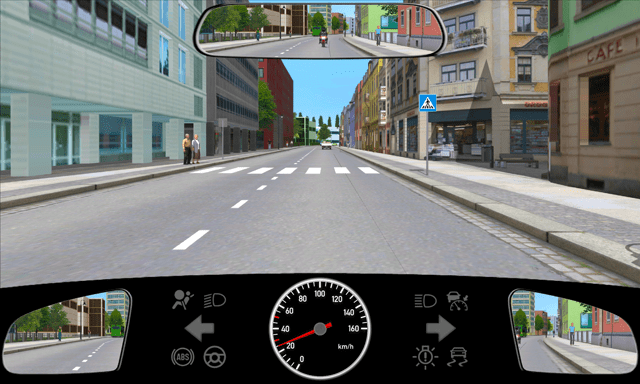
Objašnjenje
When pedestrians wait at a zebra crossing to cross the road, they have priority. This also applies if they are on the left-hand side of the road. You should therefore brake in good time. Pedestrians must be able to see that you are complying with your obligation to stop. Even if the pedestrians stop first and wait, you must give them the right of way in a clearly visible manner.
-
Pitanje 19 od 33
What actions should you anticipate at such stops?
1.1.02-1224 Bodovi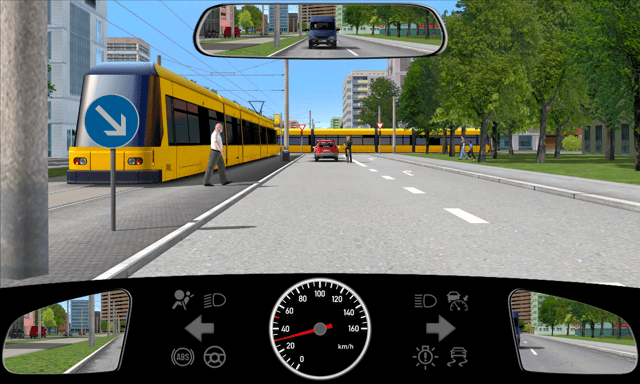
Objašnjenje
Pedestrians are required to wait at such traffic islands. You are therefore allowed to pass the tram even if the tram doors are still open. But because people often behave carelessly when getting on and off the tram, dangerous situations arise time and again. For example, without paying attention to the traffic, passengers simply run across the carriageway to reach the tram.
-
Pitanje 20 od 33
You want to turn right. What must you be prepared for?
1.1.02-1234 Bodovi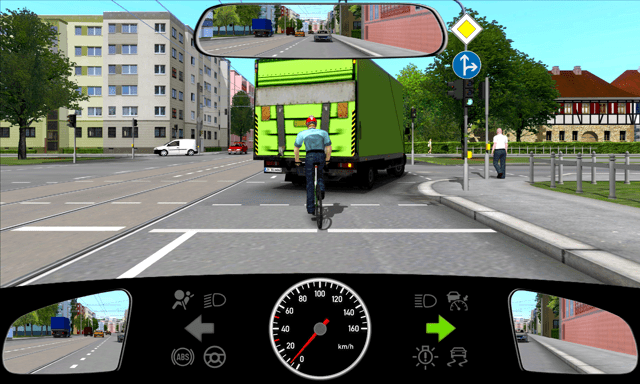
Objašnjenje
If you want to turn right, road users travelling in a straight line here have priority. These may be pedestrians or cyclists who want to cross the road. If a truck turns right in front of you, it is also possible that a pedestrian will let it pass. In that case, the lorry would block your view of the other side of the road and thus of the road users travelling from there.
-
Pitanje 21 od 33
What must you be prepared for?
1.1.02-1244 Bodovi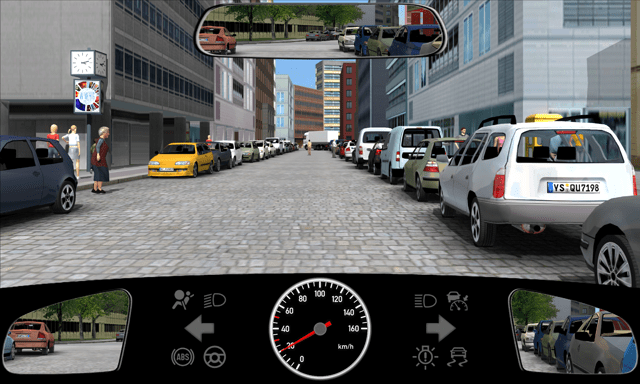
Objašnjenje
Where there are many parked cars, you should always drive carefully and considerately. On the one hand, your view is obstructed by the parked vehicles. Secondly, you must always be aware that car doors may be carelessly opened. Other road users may also want to cross the lane between the parked cars.
-
Pitanje 22 od 33
What should you anticipate?
1.1.02-1254 Bodovi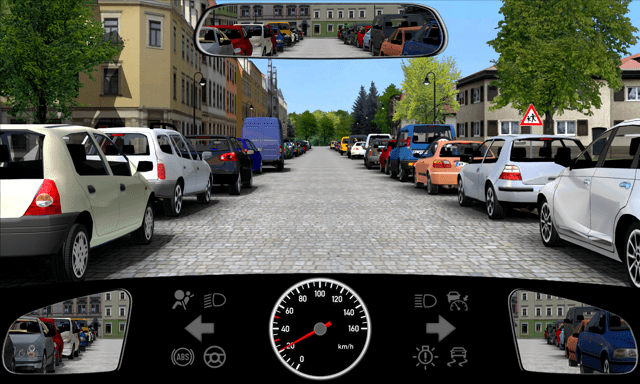
Objašnjenje
The "Children" danger sign on the right makes it clear that increased attention and a special degree of caution are necessary at this point. In addition to children, adults can of course also suddenly step onto the roadway between parked vehicles here, requiring heavy braking.
-
Pitanje 23 od 33
Why are older pedestrians at more risk than younger ones from road traffic?
1.1.02-1264 BodoviObjašnjenje
Older road users see less well, hear less well, react more slowly and misjudge the speed of vehicles. Be prepared for these people to recognise dangers too late and react too late or not at all.
-
Pitanje 24 od 33
What actions should you anticipate from persons at the pedestrian crossing?
1.1.02-1284 BodoviObjašnjenje
Zebra crossings have a protective function for pedestrians. They give them priority over other road users. Some pedestrians thoughtlessly trust this protection and cross the roadway without paying attention to the traffic. At zebra crossings, be aware that pedestrians and especially elderly or vulnerable people may enter the roadway without looking left and right. It is also possible that pedestrians will turn halfway around when the traffic lights turn red.
-
Pitanje 25 od 33
A pedestrian with a white stick wants to cross the road in front of you. What should you do?
1.1.02-1294 BodoviObjašnjenje
The white cane shows you that this road user is blind or at least severely visually impaired. The stick is also the sign that the person is allowed to participate in road traffic without an escort. You must always treat blind and visually impaired people with increased consideration. Reduce your speed and stop if necessary. Do not honk: you would frighten and unsettle the person.
-
Pitanje 26 od 33
What should you anticipate?
1.1.02-1304 Bodovi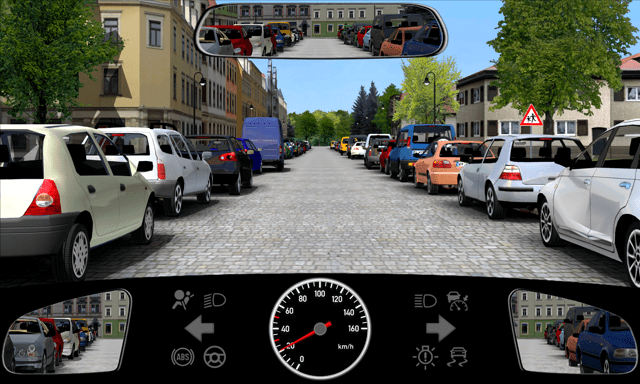
Objašnjenje
The "Children" danger sign on the right warns you to take extra care. With many parked vehicles, however, you must always assume that people will step onto the carriageway unexpectedly. Of course, in addition to children, adults can also fail to behave in a roadworthy manner and suddenly appear between the vehicles.
-
Pitanje 27 od 33
What should you anticipate?
1.1.02-1313 Bodovi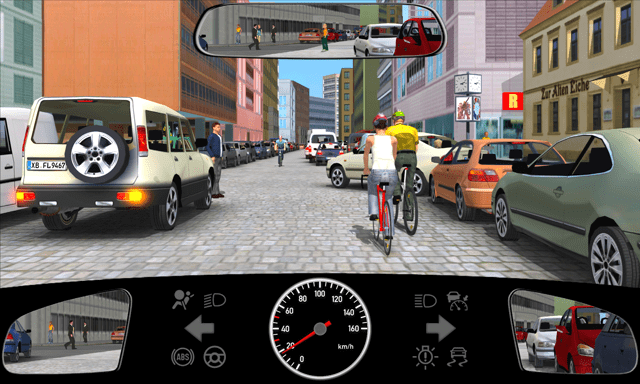
Objašnjenje
In a traffic situation with several parked vehicles and different road users, the parked vehicles impair your visibility. Pedestrians can be expected to emerge between cars to cross the road. It is also possible for people to get out of vehicles or for vehicles to drive off without paying attention to the current traffic situation.
-
Pitanje 28 od 33
What is your assessment of this situation?
1.1.02-1324 Bodovi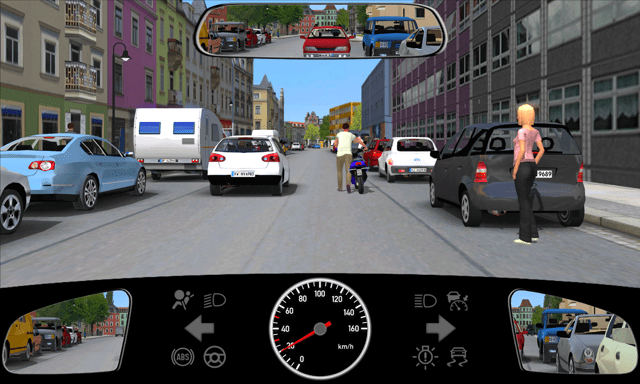
Objašnjenje
You should only pass the waiting pedestrian at the side of the road with an appropriate safe distance and very carefully. The same applies to a moped rider who is properly pushing his moped on the right-hand side of the road. If necessary, you can also change to the left lane.
-
Pitanje 29 od 33
A person at the side of the road is wearing a yellow armband with three black spots. What does this armband indicate?
1.1.02-1334 BodoviObjašnjenje
If you see a person at the side of the road wearing a yellow armband with three black dots, this means for you: the principle of trust has been suspended. You now have an increased duty of care. This is because the armband indicates a physical limitation in the form of a severe visual impairment. If visually impaired persons wear this armband and/or a white stick, they are allowed to move in traffic without an escort.
-
Pitanje 30 od 33
What should you anticipate when pedestrians are crossing the road?
1.1.02-1354 BodoviObjašnjenje
When a pedestrian crosses the roadway, it is not certain that he will continue this action to the opposite side of the road. It is also quite possible that he will stop, turn around or continue with a delay.
-
Pitanje 31 od 33
Why must you drive slowly now, and be ready to brake?
1.1.02-1365 BodoviObjašnjenje
You must drive slowly and be ready to brake because passengers can cross the road in front of the bus.
-
Pitanje 32 od 33
Why are you required to brake here?
1.1.02-1375 BodoviObjašnjenje
A child is behind the parked vehicle and will probably cross the road in the next moment.
-
Pitanje 33 od 33
What is the right course of action now?
1.1.02-1384 BodoviObjašnjenje
Since the dog, most likely, will run onto the street from the left, you have to reduce your speed and prepare for a braking for danger.