
1.4.40 Sinal de perigo
⚠️ Aprenda facilmente os sinais de perigo alemães mais importantes: cruzamentos, encostas, estradas estreitas, crianças, pedestres, estradas escorregadias, canteiros de obras, passagens de nível e outros perigos.
O que significam os sinais de perigo
Sinais de perigo avisam antes de um lugar arriscado. Seu trabalho é desacelerar, observar com atenção e estar pronto para frear.
Sinal de perigo = Reduza a velocidade + preste atenção
Fora das áreas urbanas, o perigo geralmente está relacionado 150–250 m à frente.
🧠 Regras de memória rápida
Desacelerar
Os sinais de perigo geralmente significam que você deve reduzir a velocidade.
Olhe para frente
Espere perigos ocultos, frenagens repentinas ou trânsito pouco claro.
Pronto para frear
Crianças, pedestres, animais e engarrafamentos podem aparecer repentinamente.
Mantenha distância
Aumente a distância de segurança, especialmente em estradas escorregadias ou sujas.
Sinais de perigo
Sinais de perigo de trânsito alemão
Estes sinais alertam os condutores sobre os perigos que se avizinham, ajudando-os a abrandar, a permanecer alertas e a reagir com segurança.
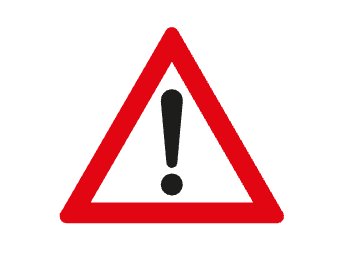
Código 101
Ponto de perigo
Avisa sobre um perigo geral ou área perigosa à frente.
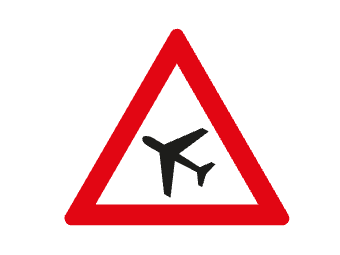
Código 101-10*
Aeronave
Avisa que aeronaves voando baixo podem estar próximas.
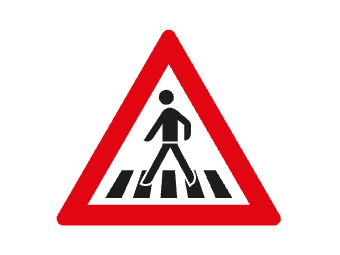
Código 101-11*
Passagem de pedestres
Avisa sobre uma passagem de pedestres à frente.
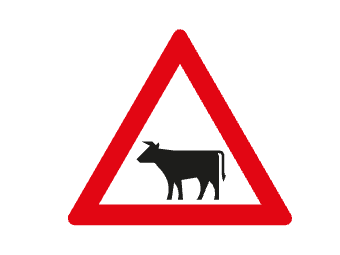
Código 101-12*
Movimentação de Gado / Animais
Avisa que animais podem estar na estrada ou perto dela.
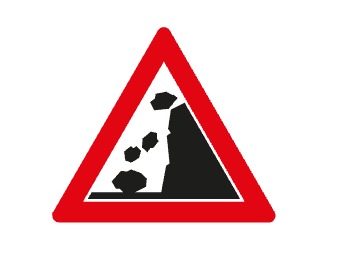
Código 101-15*
Pedras caindo
Avisa sobre queda de pedras ou detritos na estrada.
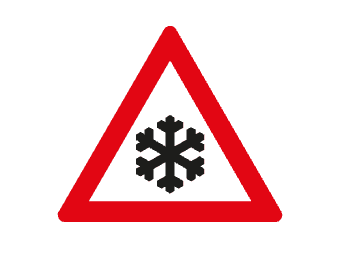
Código 101-51*
Neve ou gelo
Alerta sobre condições escorregadias causadas por neve ou gelo.
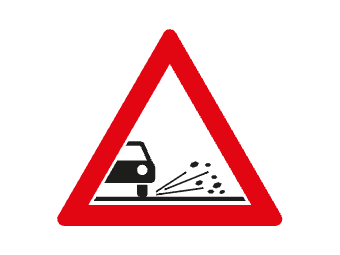
Código 101-52*
Cascalho solto
Avisa sobre cascalho solto ou lascas na estrada.
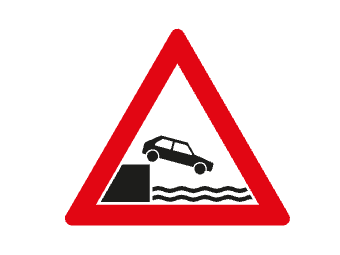
Código 101-53*
Beira-mar
Avisa que a estrada está próxima de uma orla ou aterro.
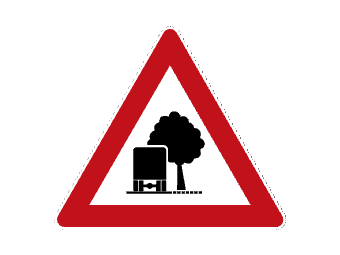
Código 101-54*
Folga insuficiente
Alerta que veículos grandes podem ter espaço limitado.
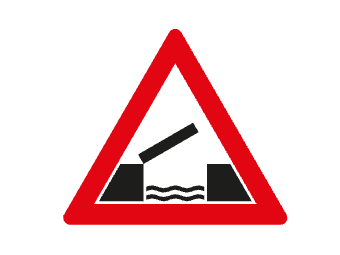
Código 101-55*
Ponte Móvel
Avisa sobre uma ponte móvel à frente.
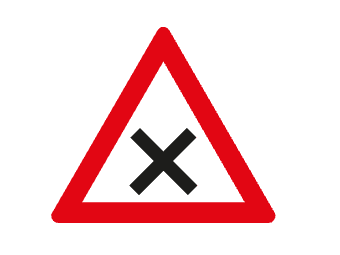
Código 102
Interseção com prioridade da direita
Avisa sobre um cruzamento onde o tráfego da direita tem prioridade.
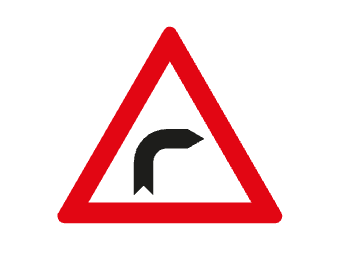
Código 103
Curva Direita
Avisa sobre uma curva para a direita à frente.
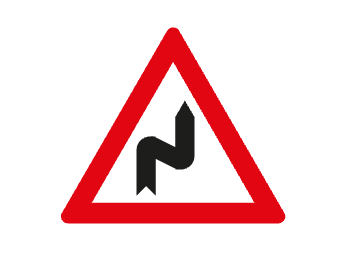
Código 105
Curva dupla, primeira à direita
Avisa sobre duas curvas, começando com uma curva à direita.
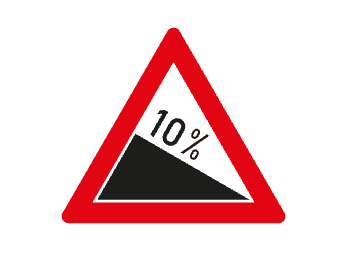
Código 108
Descida íngreme
Alerta sobre um trecho de estrada em declive íngreme.
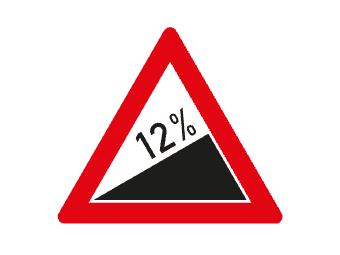
Código 110
Subida íngreme
Avisa sobre uma seção de estrada íngreme e íngreme.
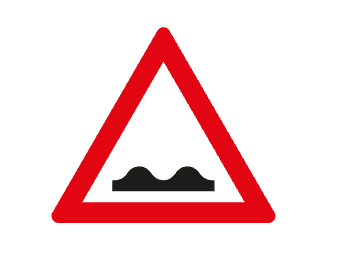
Código 112
Estrada irregular
Avisa sobre uma superfície de estrada irregular à frente.
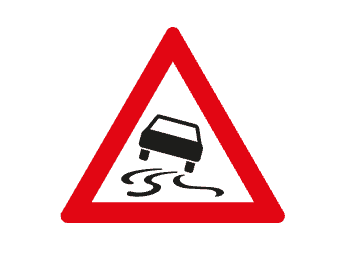
Código 114
Risco de derrapagem ou escorregamento
Avisa que a estrada pode estar escorregadia.
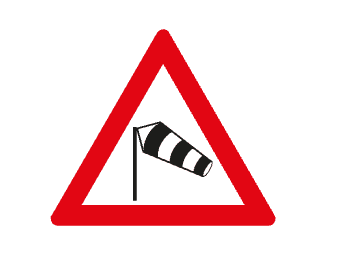
Código 117
Ventos laterais
Alerta sobre ventos laterais fortes que podem afetar o controle do veículo.
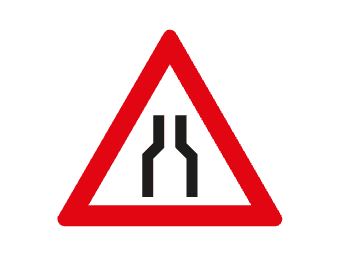
Código 120
Via estreita
Avisa que a estrada fica mais estreita à frente.
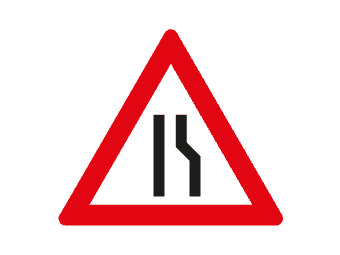
Código 121
Estrada estreita à direita
Avisa que a estrada estreita pelo lado direito.
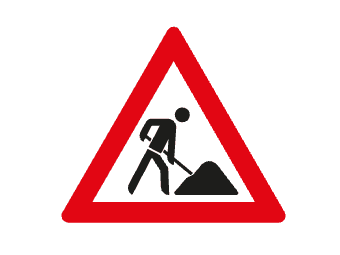
Código 123
Obras Rodoviárias
Avisa sobre trabalhos de construção ou manutenção futuros.
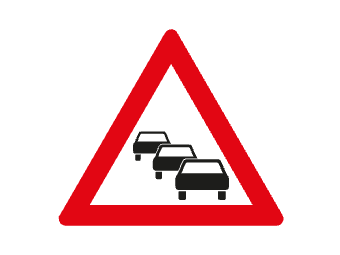
Código 124
Engarrafamento
Avisa sobre possíveis congestionamentos ou tráfego lento.
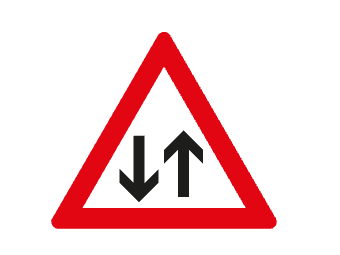
Código 125
Tráfego que se aproxima
Avisa que o tráfego em sentido contrário pode estar presente.
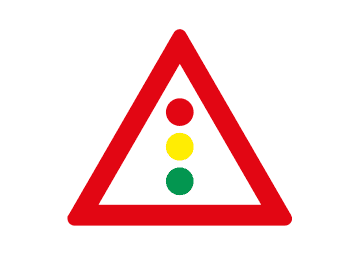
Código 131
Sinais de trânsito
Avisa sobre semáforos à frente.
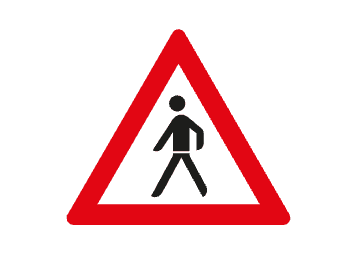
Código 133
Pedestres
Avisa que pedestres podem estar atravessando ou caminhando nas proximidades.
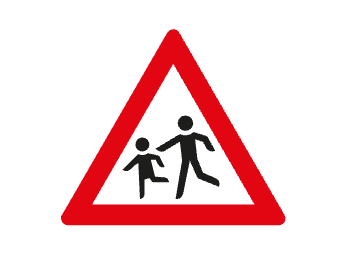
Código 136
Crianças
Avisa que crianças podem estar perto ou atravessando a rua.
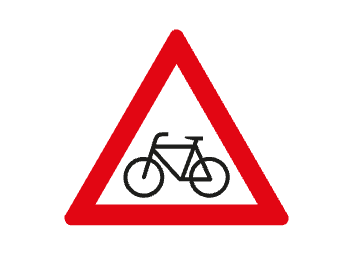
Código 138
Ciclistas
Avisa sobre tráfego de bicicletas à frente.
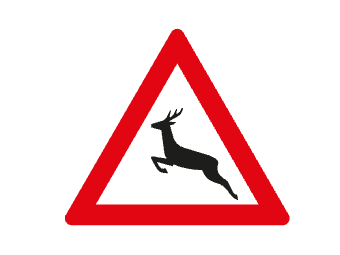
Código 142
Animais selvagens
Avisa que animais selvagens podem atravessar a estrada.
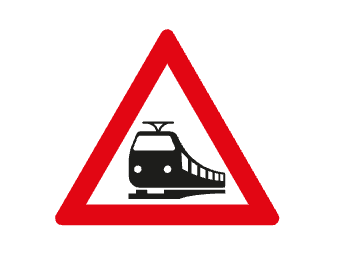
Código 151
Travessia Ferroviária
Avisa sobre um cruzamento ferroviário à frente.
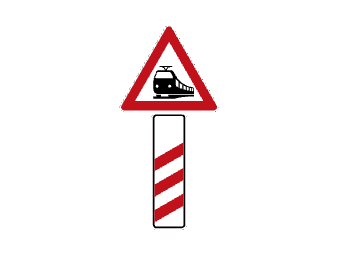
Código 156
Cruzamento Ferroviário com Marcador de Três Listras
Avisa sobre um cruzamento ferroviário com placas de marcação de distância.
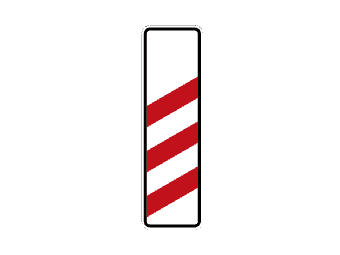
Código 157
Marcador de distância com três listras
Mostra que um cruzamento ferroviário está cerca de 240 metros à frente.
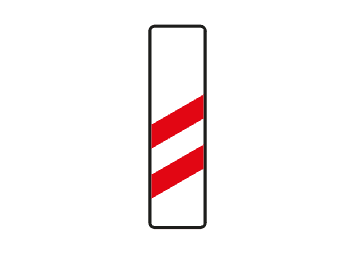
Código 159
Marcador de distância com duas listras
Mostra que um cruzamento ferroviário está cerca de 160 metros à frente.
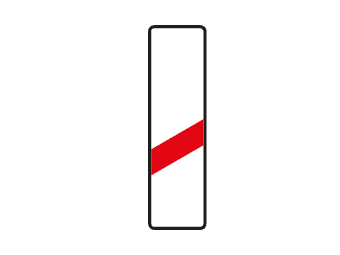
Código 162
Marcador de distância de uma faixa
Mostra que um cruzamento ferroviário está cerca de 80 metros à frente.
🚧 Sinais de perigo comuns
Intersecção confusa
Desacelerar. A direita antes da esquerda pode ser aplicada. Observe o tráfego de ambos os lados.
Crianças
Perto de escolas, jardins de infância ou parques infantis. As crianças podem correr para a estrada.
Passagem de pedestres
Os pedestres têm prioridade. Aproxime-se lentamente e nunca ultrapasse no cruzamento.
Descida íngreme
Use uma marcha mais baixa. Os freios podem superaquecer e aumentar a distância de frenagem.
Subida íngreme
Mude para baixo, se necessário. Não fique muito lento e obstrua o trânsito.
Canteiro de obras
Espere trabalhadores, máquinas, sujeira, ferramentas, pistas estreitas e engarrafamentos.
🛣 Perigos das condições da estrada
Neve / Gelo
Reduza a velocidade, aumente a distância, evite travagens ou manobras bruscas.
Escorregadio quando molhado
A aderência à estrada é menor. Freie suavemente e evite movimentos bruscos.
Cascalho solto
Mantenha distância. Evite acelerações fortes e direção rápida.
Estrada irregular
Sulcos e saliências podem reduzir a aderência do pneu. Dirija com cuidado.
Vento cruzado
Seu veículo pode ser empurrado lateralmente, especialmente em pontes ou estradas abertas.
Pedras caindo
Espere pedras na estrada. Não pare ou estacione nesta área.
🚗 Perigos de trânsito
🚘 Tráfego próximo
- Espere veículos vindos da direção oposta
- Cuidado com o brilho dos faróis
- Nenhuma direção tem prioridade automaticamente
- Dirija devagar e mantenha-se à direita
🚦 Engarrafamento
- O veículo da frente pode frear repentinamente
- Aumentar a distância de segurança
- Observe vários veículos à frente
- Esteja pronto para frear
↔️ Estreitamento de estradas
- Reduzir velocidade
- Não ultrapasse
- Use mesclagem de zíper se as pistas se fundirem
- Ceda se o tráfego em sentido contrário tiver prioridade
🚴 Ciclistas
- Ciclistas podem atravessar a estrada
- Ciclovia pode acabar repentinamente
- Observe atentamente antes de virar
- Mantenha distância segura
🐎 Animais e perigos especiais
Cavaleiros
Espere cavalos e cavaleiros na estrada.
Gado
Os animais podem sujar a estrada e torná-la escorregadia.
Aeronave
O ruído repentino das aeronaves pode distrair ou assustar os motoristas.
Costa
Na neblina ou na escuridão, a água pode ser confundida com a estrada.
🚂 Sinais de perigo de passagem de nível
3 listras
A passagem de nível é sobre 240 metros ausente.
2 listras
A passagem de nível é sobre 160 metros ausente.
1 faixa
A passagem de nível é sobre 80 metros ausente.
📚 Tabela de sinalização rápida de perigo
| Perigo | O que você deve fazer |
|---|---|
| Área infantil/escola | Diminua a velocidade, esteja pronto para frear |
| Passagem de pedestres | Deixe os pedestres atravessarem, não ultrapasse |
| Descida íngreme | Use marcha mais baixa, proteja os freios |
| Estrada escorregadia | Reduza a velocidade, evite travagens bruscas |
| Canteiro de obras | Espere trabalhadores, sujeira, máquinas, congestionamento |
| Estreitamento de estrada | Diminua a velocidade, entre com cuidado, evite ultrapassagens |
🎯 Dicas fáceis para exames
✅ Lembre-se
- Sinal de perigo = diminua a velocidade e observe com atenção
- Fora das cidades: perigo geralmente 150-250 m à frente
- Crianças e pedestres podem aparecer repentinamente
- Estradas escorregadias precisam de direção e frenagem suaves
- Use marcha mais baixa em descidas longas
❌ Erros Comuns
- Dirigindo muito rápido após um sinal de alerta
- Ultrapassagem perto de cruzamentos ou gargalos
- Frenagem forte em estradas escorregadias
- Ignorando crianças perto de escolas
- Parando em áreas com pedras caindo
Perguntas de Prática (37)
-
Pergunta 1 de 37
What do you do when you see this traffic sign?
1.4.40-0014 Pontos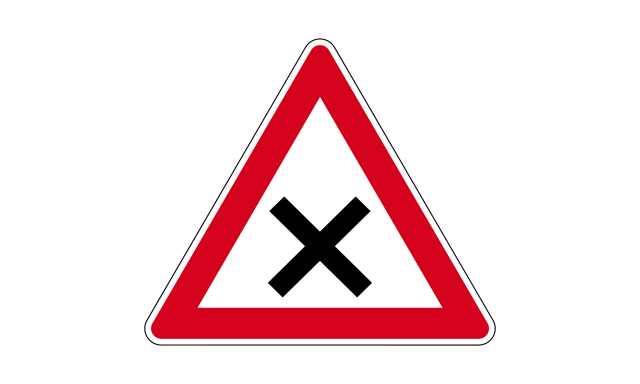
Explicação
This traffic sign alerts you about an approaching, confusing intersection or T-junction. You should slow down your speed and be ready to brake, since the right road user has priority here. You should also pay close attention to the traffic on the left, since you have to expect that it will not fulfill its obligation to wait and possibly ignore your right of way. Adjust your speed so that you can see the traffic coming from the right and, if necessary, brake without any problems.
-
Pergunta 2 de 37
What does this traffic sign require of you?
1.4.40-0065 Pontos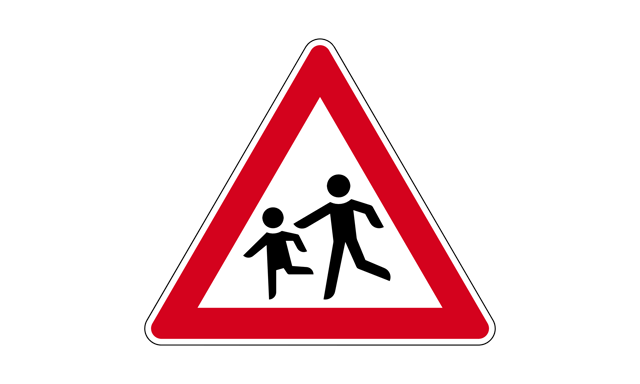
Explicação
The sign will point you to a school, kindergarten or playground nearby. Here you have to drive with adapted speed and increased attention. Children could suddenly run onto the road without paying attention to the traffic. Always be ready to brake.
-
Pergunta 3 de 37
What does this traffic sign combination indicate?
1.4.40-0093 Pontos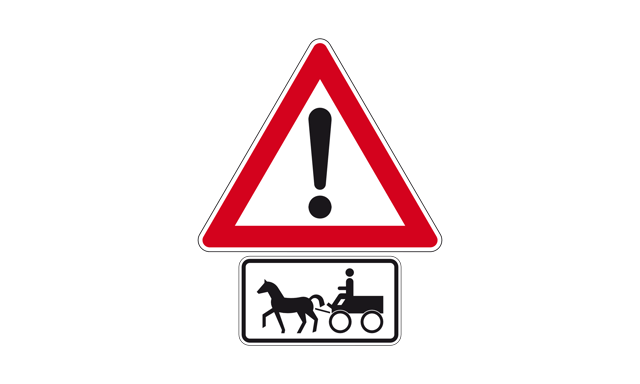
Explicação
The exclamation mark stands for a general hazard warning. The exact nature of the hazard is shown by the additional sign: Here you must expect horse and cart on the road.
-
Pergunta 4 de 37
What must you anticipate when you see this road sign?
1.4.40-0103 Pontos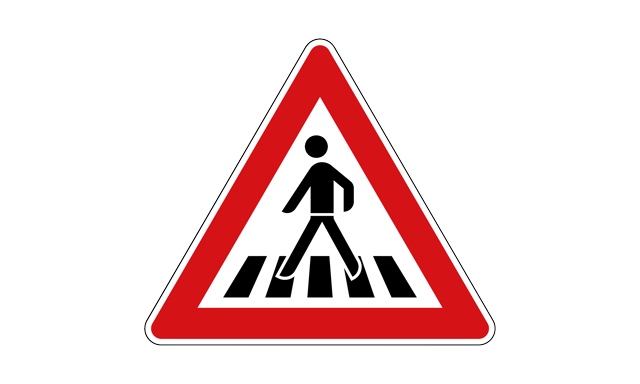
Explicação
This is a danger sign warning you of a pedestrian crossing. The pedestrian crossing may be difficult to see. Pedestrians will use the pedestrian crossing to cross the roadway. Be especially alert.
-
Pergunta 5 de 37
What must you do upon seeing this traffic sign?
1.4.40-0113 Pontos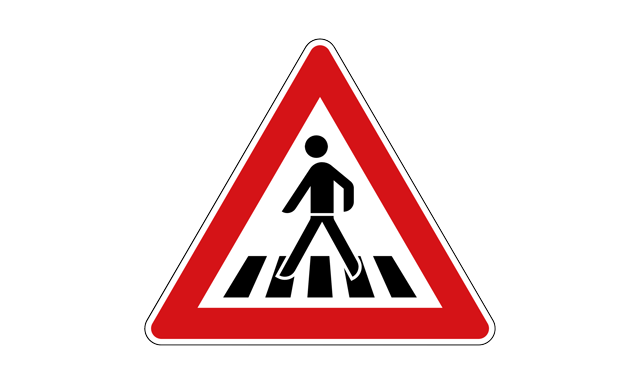
Explicação
This danger sign indicates that there is a pedestrian crossing in the immediate vicinity. You must watch out for pedestrians and let them cross the road. You should approach at a moderate speed, stop under certain circumstances and never overtake at the crossing.
-
Pergunta 6 de 37
What danger is indicated to you by this traffic sign?
1.4.40-0123 Pontos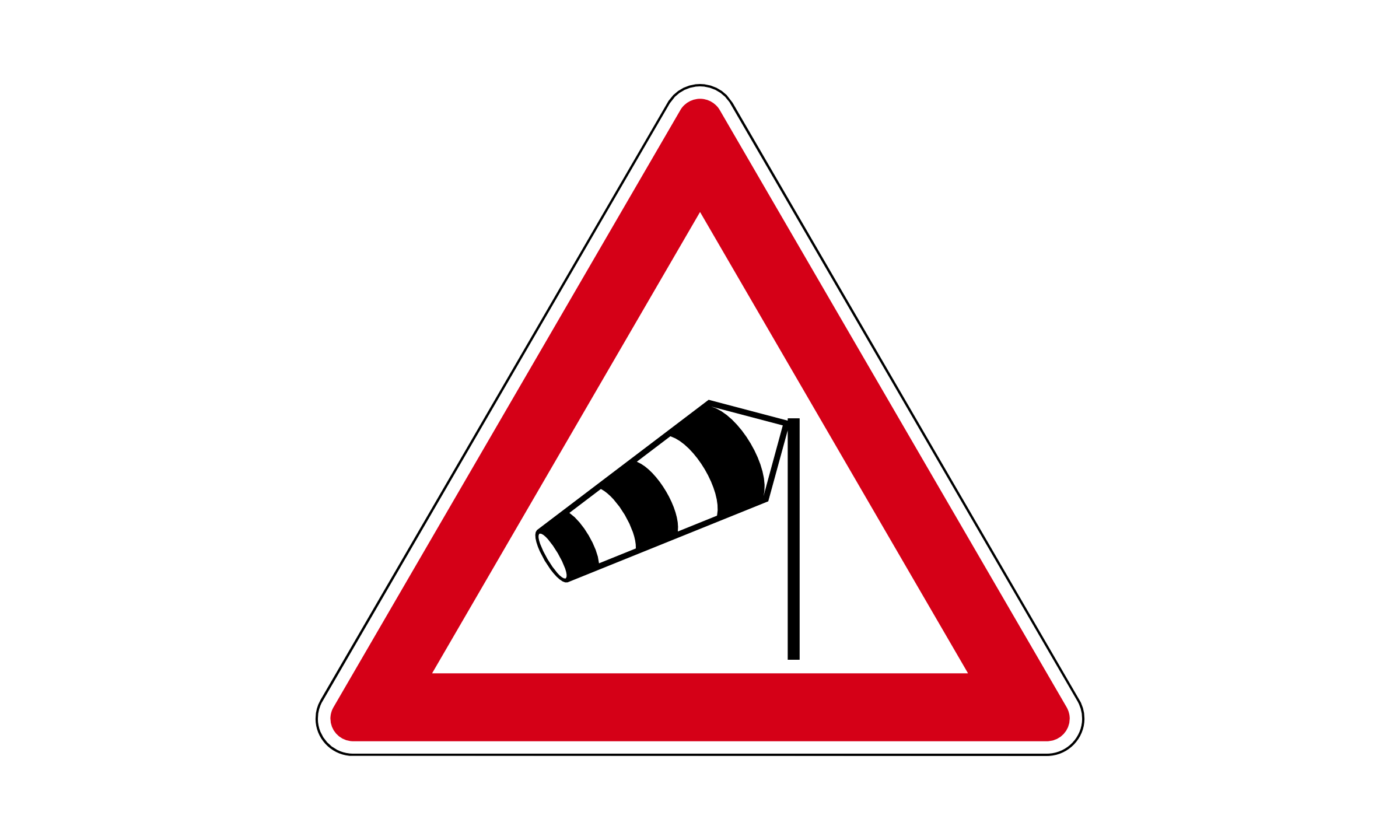
Explicação
This traffic sign warns of strong crosswinds and that your vehicle could be displaced sideways.
-
Pergunta 7 de 37
You are driving on a road with one lane in each direction. Which roadsign indicates that you must always give way to oncoming traffic?
1.4.40-0133 PontosExplicação
The traffic sign “road narrowed on one side from the right” means that your lane will narrow significantly. Here you have to give way to oncoming traffic. The traffic sign “Give priority to oncoming traffic” shows with the red arrow that you must give priority to oncoming traffic.
-
Pergunta 8 de 37
You pass this traffic sign while driving outside a built-up area. How far off is the hazard to be expected?
1.4.40-1012 Pontos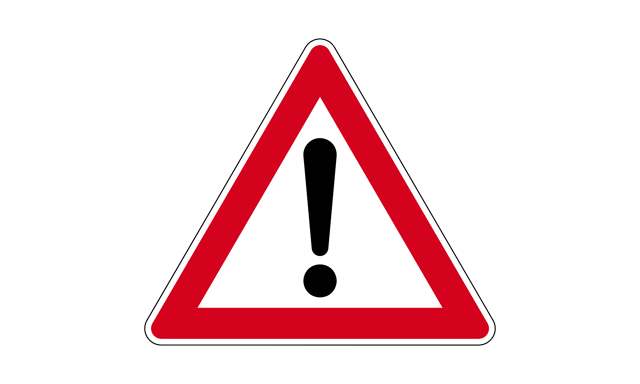
Explicação
The sign warns of danger ahead. Expect the dangerous area outside of built-up areas at a distance of 150 - 250 m. Reduce your speed and drive with increased attention.
-
Pergunta 9 de 37
What must you be prepared for when you pass these traffic signs?
1.4.40-1033 Pontos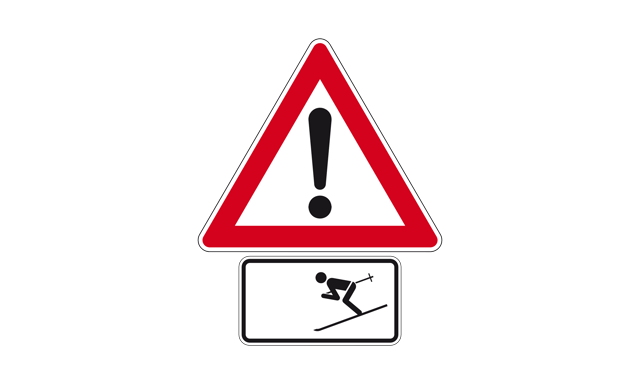
Explicação
You must be prepared for skiers and tobogganers crossing the road. This traffic sign informs you that on this road winter sports can be operated and no winter road clearance clears the snow. You need to expect increased danger of slipping due to the snow that sticks to the road.
-
Pergunta 10 de 37
What do you do when you see this traffic sign?
1.4.40-1053 Pontos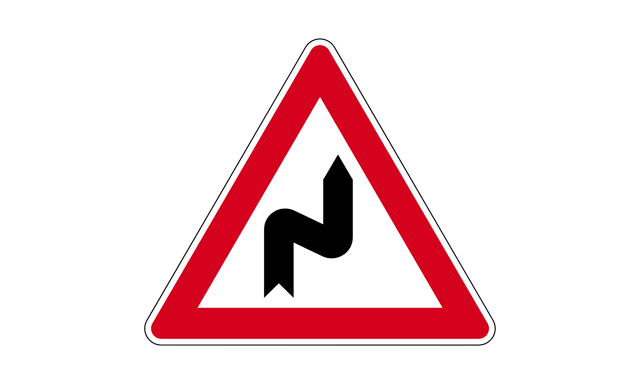
Explicação
The sign warns you of a double bend. First expect a right turn, then a left turn. You could drive onto the oncoming lane. Adjust your speed and drive far to the right to avoid collision with oncoming traffic.
-
Pergunta 11 de 37
What do you have to expect after these traffic signs?
1.4.40-1062 Pontos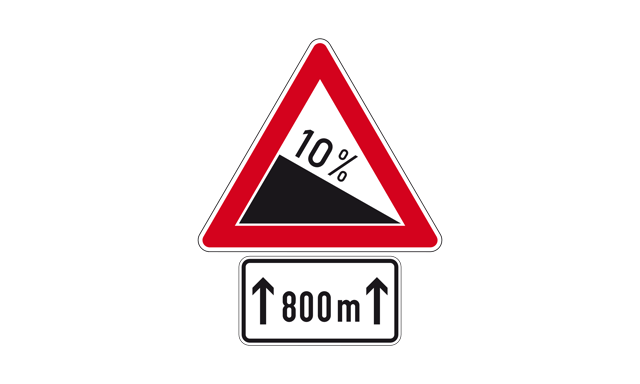
Explicação
After this traffic sign, an incline of 10% starts. The additional sign informs about the length of the danger zone of 800 meters. The arrows to the right and left indicate that the incline starts from the sign. Without arrows it would mean that the incline begins at a distance of 800 meters.
-
Pergunta 12 de 37
What should you do when you approach this traffic sign?
1.4.40-1082 Pontos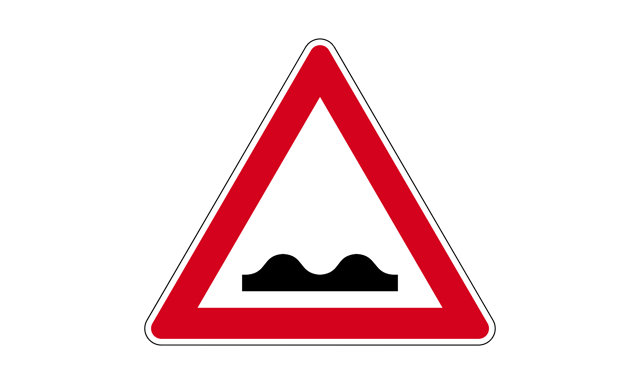
Explicação
The road in front of you is uneven and may have diagonal or longitudinal grooves. This sign warns against them. You cannot only get into a skid in damp and cold weather. Avoid fast steering movements.
-
Pergunta 13 de 37
What dangers can arise if this traffic sign is ignored?
1.4.40-1092 Pontos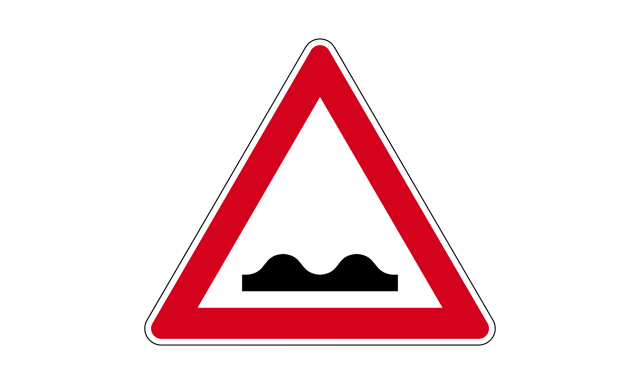
Explicação
Due to inappropriate driving there is a risk of skidding on this section of the route with endangerment of oncoming traffic. The route is uneven with possible diagonal and longitudinal grooves. This means that your tires will have lower grip. You need to throttle your speed in order to be able to steer the vehicle safely.
-
Pergunta 14 de 37
What does this traffic sign warn you of?
1.4.40-1123 Pontos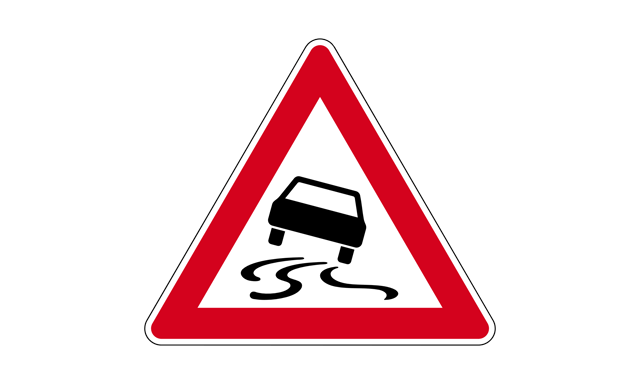
Explicação
The road in front of you has an increased risk of skidding when it's wet or dirty. You should reduce your speed and not brake or steer abruptly.
-
Pergunta 15 de 37
What do you do when you see this traffic sign?
1.4.40-1143 Pontos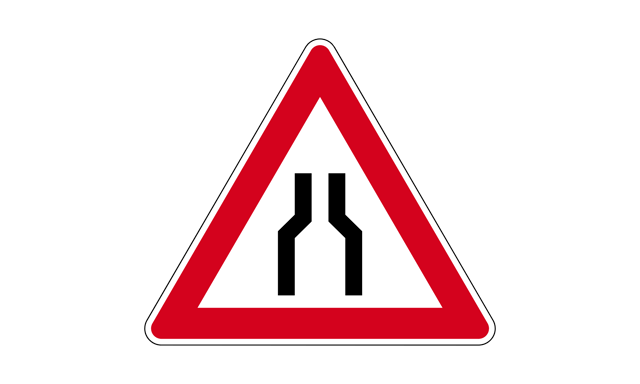
Explicação
This is a warning sign and it warns drivers of an imminent narrowing of the road. You have to expect oncoming traffic and behave as follows: Reduce your speed and refrain from overtaking maneuvers. Stopping in front of the bottleneck is only required if an oncoming vehicle is already in the bottleneck. Instead of a specific priority, zip merging applies, according to which the drivers are merging into the lane.
-
Pergunta 16 de 37
What must you reckon with when you see these traffic signs?
1.4.40-1152 Pontos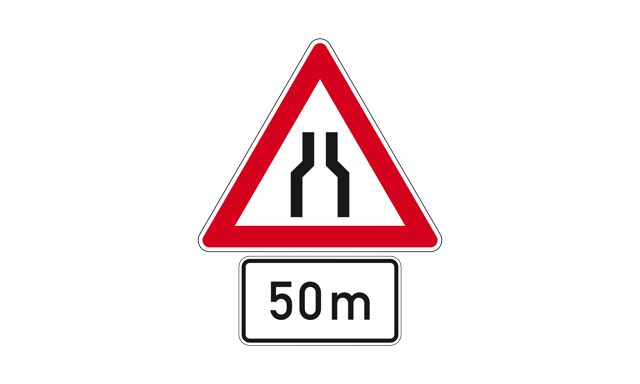
Explicação
Expect a narrowed lane 50 m ahead. Please drive slowly and ready for braking to the danger area to be able to react to traffic congestion.
-
Pergunta 17 de 37
What must you reckon with when you see this traffic sign?
1.4.40-1162 Pontos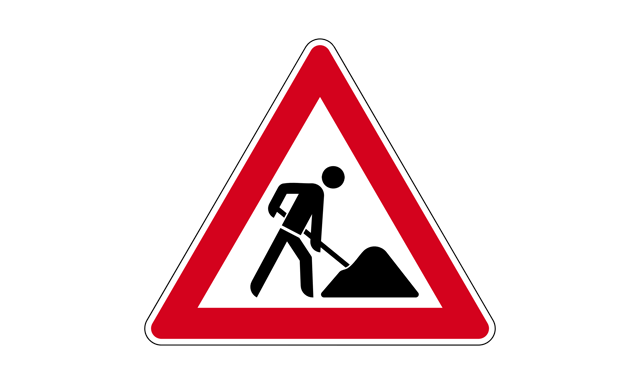
Explicação
When there's a construction site it is to be expected that construction site vehicles and workers can come very close to flowing traffic. Also building materials and tools could be on the road. Even if the construction site is not operated at the moment, a soiled road is to be expected. There is a risk of slipping and skidding.
-
Pergunta 18 de 37
What must you reckon with when you see this traffic sign?
1.4.40-1183 Pontos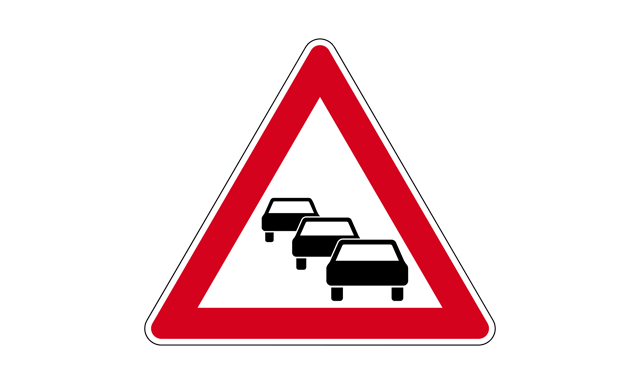
Explicação
This traffic sign warns against congestion on this section. Adjust your speed and the safety distance to the vehicle ahead according to the dangerous situation. The vehicle in front of you could suddenly brake. Also keep an eye on the traffic flow in front of the vehicle in front of you. You may drive a little offset within the lane.
-
Pergunta 19 de 37
What does this traffic sign indicate?
1.4.40-1212 Pontos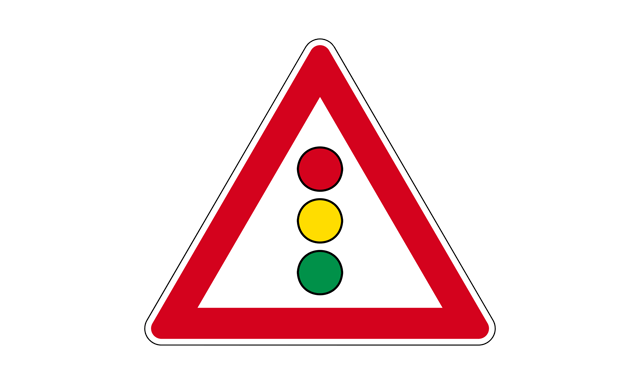
Explicação
Please pay attention to a badly recognizable light indicator like a traffic light. In the further course of the road a danger spot like an intersection or a construction site area might possibly follow.
-
Pergunta 20 de 37
What do these traffic signs indicate?
1.4.40-1272 Pontos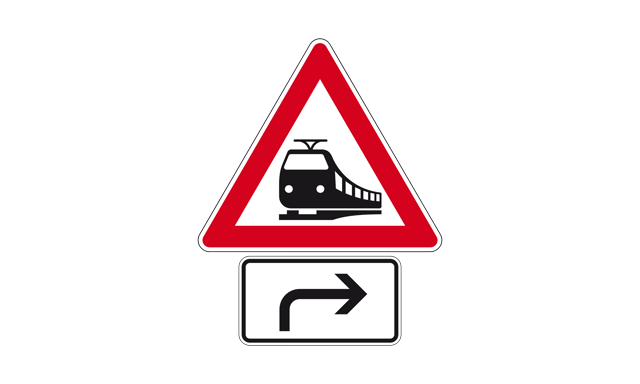
Explicação
Pay attention to an unguarded level crossing, if you drive to the right at this point or turn. If you continue straight ahead, this sign has no meaning for you.
-
Pergunta 21 de 37
What does this traffic sign indicate?
1.4.40-1302 Pontos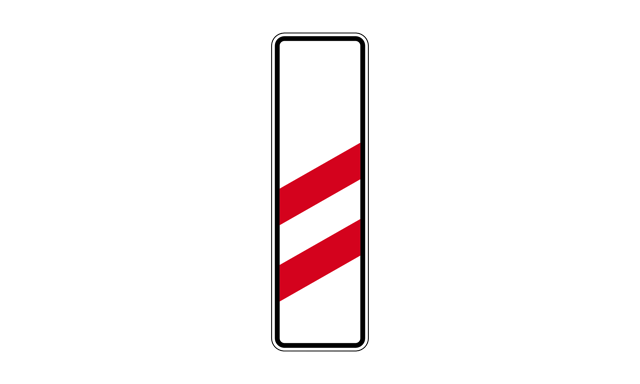
Explicação
The sign that warns you of a level crossing ahead informs you about a level crossing that is 160 meters away. Approach the danger zone cautiously and ready to brake in case a train crosses your path.
-
Pergunta 22 de 37
What does this traffic sign indicate?
1.4.40-1312 Pontos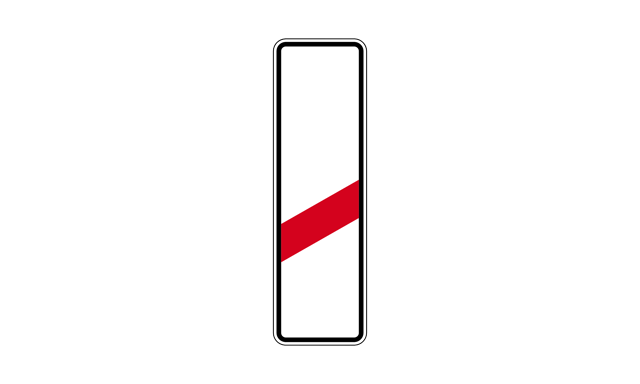
Explicação
The traffic sign is a distance beacon. This traffic sign is always placed on both sides of the road. It belongs to the group of danger signs. The traffic sign shown is a one-lane distance beacon. The single red stripe means that there is a level crossing 80 meters away.
-
Pergunta 23 de 37
What does this traffic sign combination indicate?
1.4.40-1322 Pontos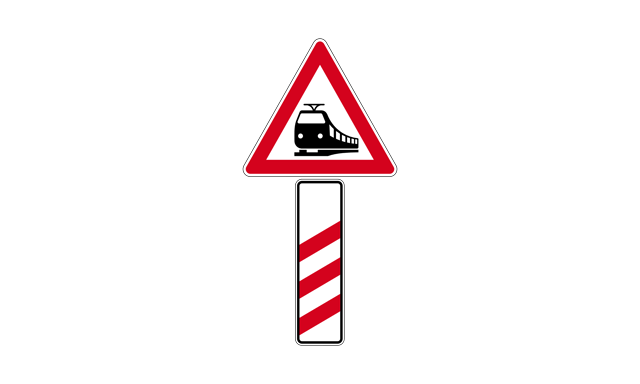
Explicação
About 240 meters in front of you there is a railroad crossing. The level crossing ahead marker warns from this danger. Each line represents a distance of 80 m.
-
Pergunta 24 de 37
What do you have to be aware of when you see this traffic sign combination?
1.4.40-1352 Pontos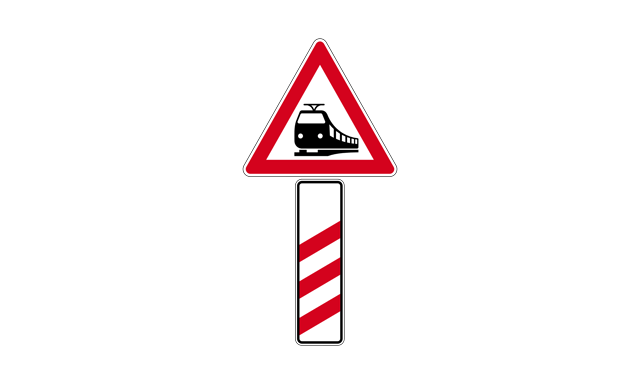
Explicação
The traffic signs warn you of a railroad crossing 240 meters away. From the three-lined level crossing ahead marker to the danger zone including the intersection overtaking other motor vehicles is prohibited. An overtaking maneuver in this area could endanger you and other road users.
-
Pergunta 25 de 37
What does this traffic sign combination indicate?
1.4.40-1423 Pontos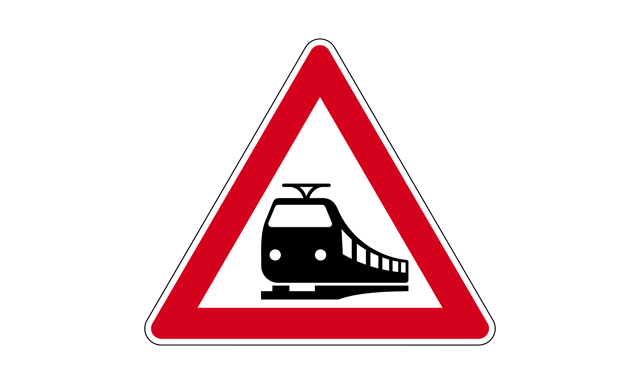
Explicação
This traffic sign indicates that you will shortly be crossing a railroad crossing. A train station or underpass does not have to be present.
-
Pergunta 26 de 37
What must you anticipate with this road sign?
1.4.40-1433 Pontos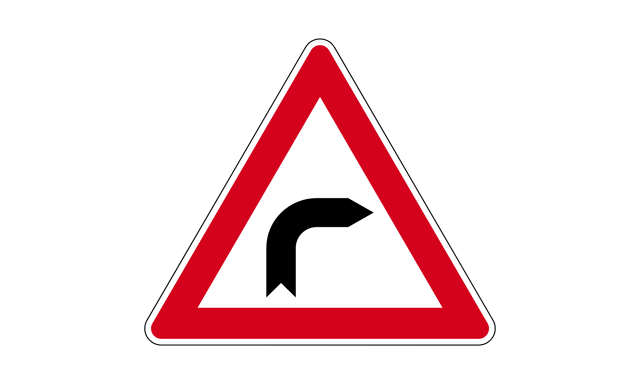
Explicação
This traffic sign warns of a sharp right turn. You should be aware that oncoming vehicles could cut the curve and reach into your lane. It is also to be expected that vehicles driving ahead will brake sharply.
-
Pergunta 27 de 37
What must you anticipate with this road sign?
1.4.40-1444 Pontos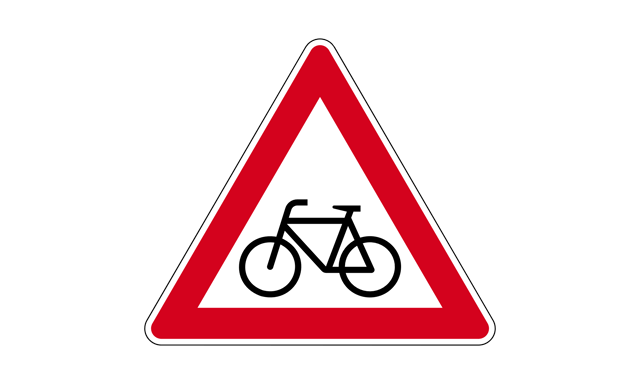
Explicação
This traffic sign warns that cyclists can cross the road and could get into your lane, for example when a bike path ends and leads to the road.
-
Pergunta 28 de 37
What does this traffic sign indicate?
1.4.40-1473 Pontos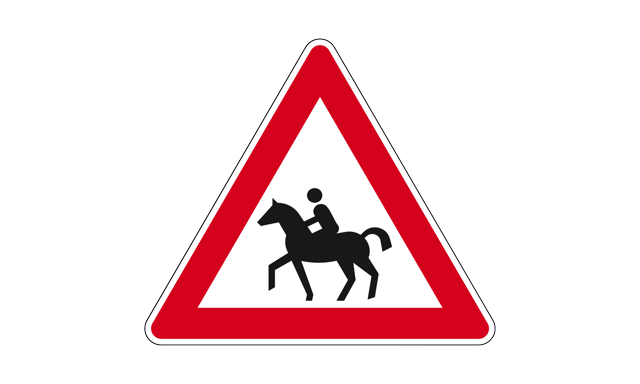
Explicação
This sign (triangular) indicates a danger zone in connection with horses.
-
Pergunta 29 de 37
What does this traffic sign indicate?
1.4.40-1483 Pontos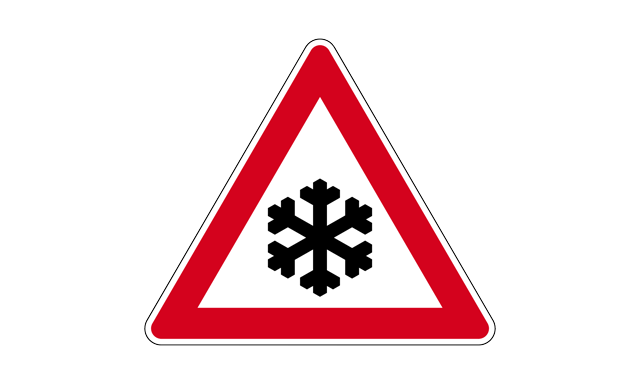
Explicação
This traffic sign indicates that it is slippery with snow and icy roads.
-
Pergunta 30 de 37
What must you anticipate with this road sign?
1.4.40-1493 Pontos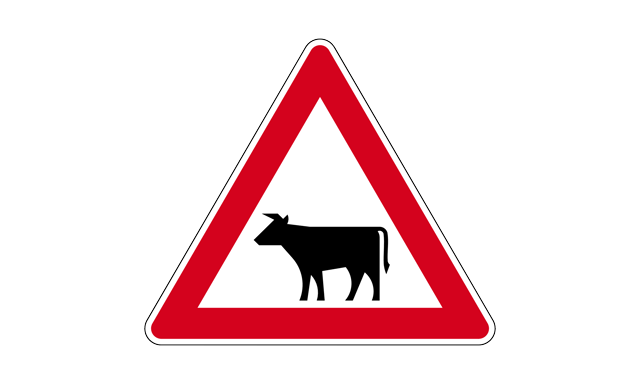
Explicação
This sign indicates that the road is very dirty and that you must watch out for grazing animals on the road.
-
Pergunta 31 de 37
How should you act at a point of danger indicated by this sign?
1.4.40-1503 Pontos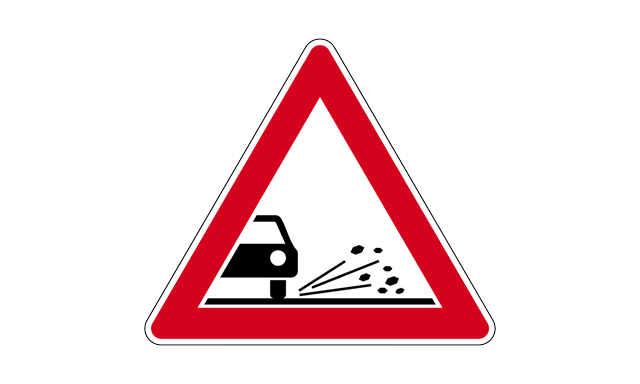
Explicação
You should keep as much distance as possible from the vehicle in front, avoid sudden steering movements and avoid strong acceleration as there is gravel and grit on this road.
-
Pergunta 32 de 37
What does this traffic sign indicate?
1.4.40-1512 Pontos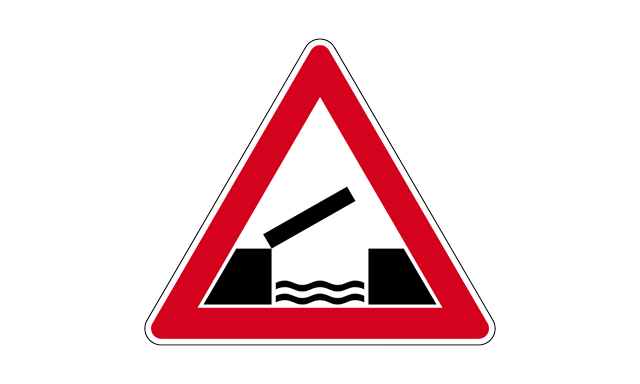
Explicação
This sign indicates a movable bridge.
-
Pergunta 33 de 37
What must you be aware of when you see this road traffic sign?
1.4.40-1522 Pontos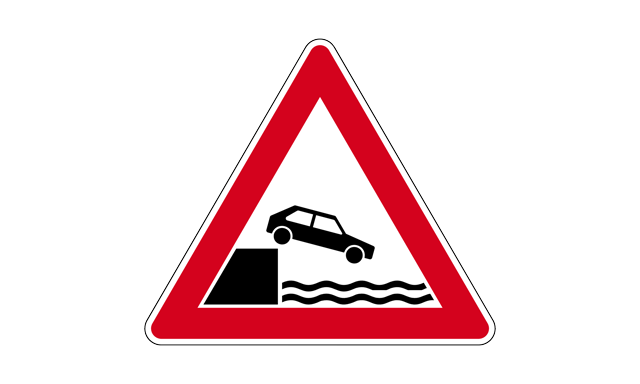
Explicação
The shape of the sign indicates caution and the picture on the sign indicates what to look out for. This road leads to a shore. Water surfaces are difficult to distinguish from the actual roadway in darkness or poor visibility.
-
Pergunta 34 de 37
What must you be aware of when you see this road traffic sign?
1.4.40-1533 Pontos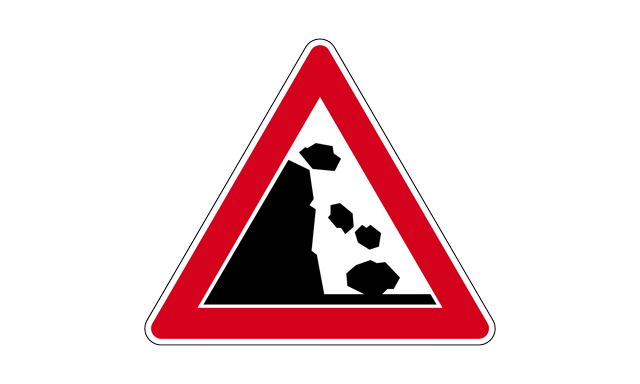
Explicação
Please watch out for stones that might be lying on the roadway. Avoid stopping and parking. Vehicles in front may suddenly slow down due to falling stones.
-
Pergunta 35 de 37
What must you anticipate with this road sign?
1.4.40-1542 Pontos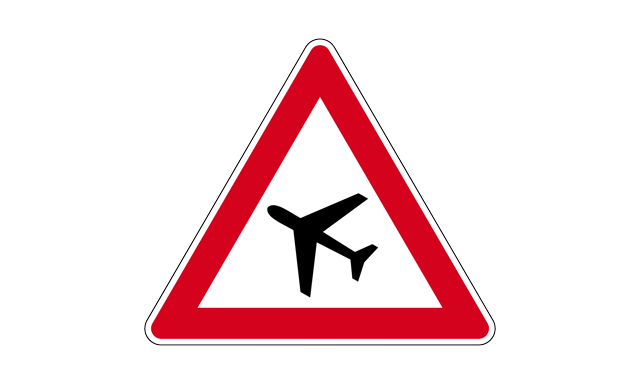
Explicação
This sign says that you should expect distractions from other road users, sudden aircraft noise and sudden braking vehicles. All answers are correct.
-
Pergunta 36 de 37
You are driving a motor vehicle with a manual gearbox. What must you consider when you see this road sign?
1.4.40-1563 Pontos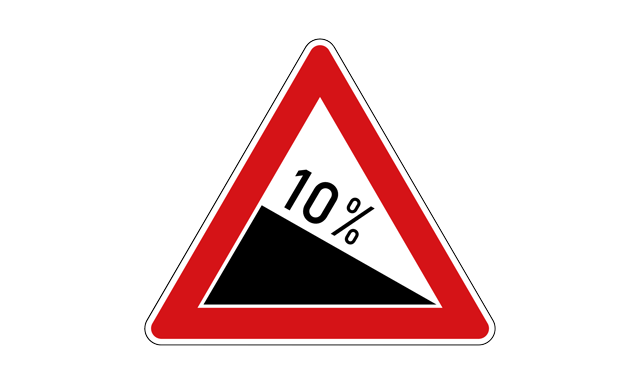
Explicação
In order not to exceed the speed on the slope, you may have to brake lightly throughout. If the brake heats up, the braking effect will diminish over time. Bear in mind that this also increases the braking distance. To avoid unnecessary strain on the brake, you can select lower gears to increase the engine braking effect.
-
Pergunta 37 de 37
You are driving a motor vehicle with a manual gearbox. What is the correct thing to do when you see this traffic sign?
1.4.40-1572 Pontos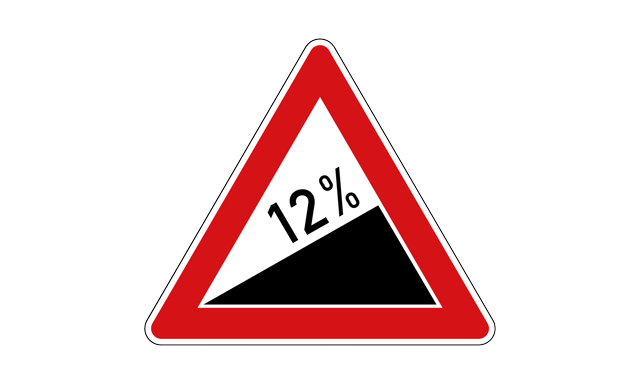
Explicação
In order to maintain the speed on the incline, you may have to shift down a gear, as otherwise the torque may not be sufficient to propel the vehicle further at the low speed.