
1.4.40 Danger sign
⚠️ Learn the most important German danger signs easily: intersections, slopes, narrowing roads, children, pedestrians, slippery roads, construction sites, level crossings, and other hazards.
What Danger Signs Mean
Danger signs warn you before a risky place. Your job is to slow down, watch carefully, and be ready to brake.
Danger Sign = Reduce Speed + Pay Attention
Outside built-up areas, the danger is usually about 150–250 m ahead.
🧠 Quick Memory Rules
Slow Down
Danger signs usually mean you must reduce speed.
Look Ahead
Expect hidden dangers, sudden braking, or unclear traffic.
Ready To Brake
Children, pedestrians, animals, and traffic jams can appear suddenly.
Keep Distance
Increase safety distance, especially on slippery or dirty roads.
Danger Signs
German Traffic Danger Signs
These signs warn drivers about hazards ahead, helping them slow down, stay alert, and react safely.
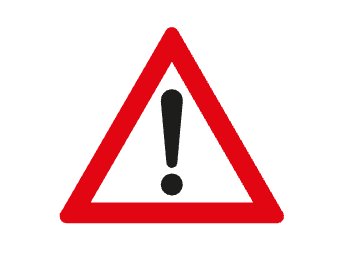
Code 101
Danger Point
Warns of a general danger or hazardous area ahead.
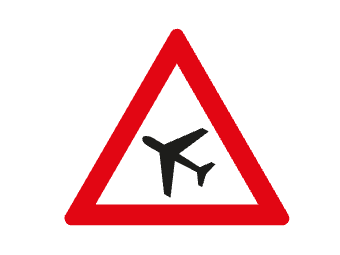
Code 101-10*
Aircraft
Warns that low-flying aircraft may be nearby.
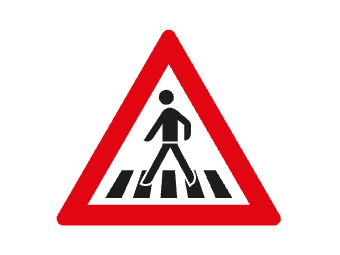
Code 101-11*
Pedestrian Crossing
Warns of a pedestrian crossing ahead.
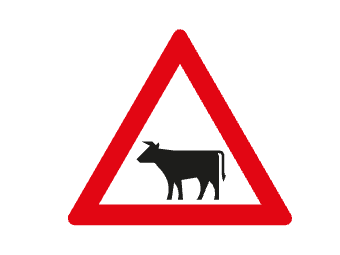
Code 101-12*
Cattle Drive / Animals
Warns that animals may be on or near the road.
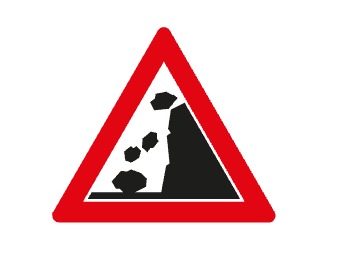
Code 101-15*
Falling Rocks
Warns of falling rocks or debris on the road.
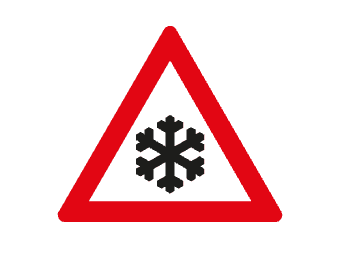
Code 101-51*
Snow or Ice
Warns of slippery conditions caused by snow or ice.
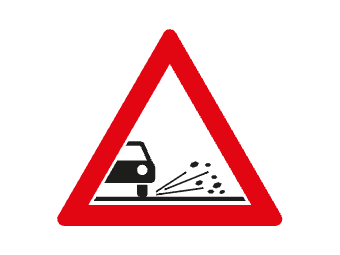
Code 101-52*
Loose Gravel
Warns of loose gravel or chippings on the road.
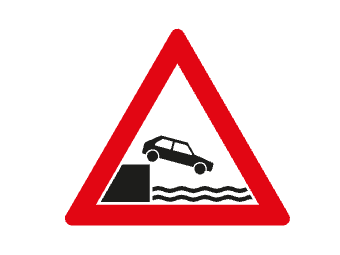
Code 101-53*
Waterfront
Warns that the road is close to a waterfront or embankment.
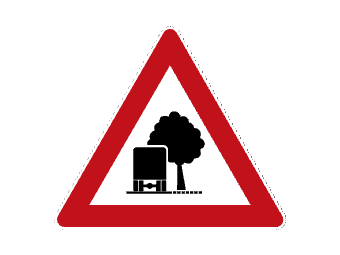
Code 101-54*
Insufficient Clearance
Warns that large vehicles may have limited clearance.
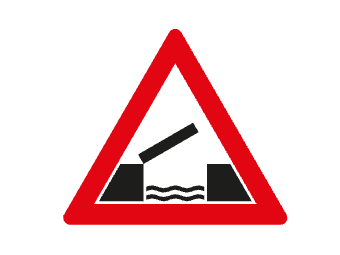
Code 101-55*
Movable Bridge
Warns of a movable bridge ahead.
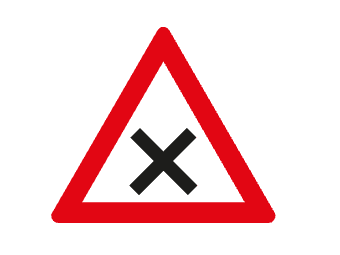
Code 102
Intersection with Priority from the Right
Warns of an intersection where traffic from the right has priority.
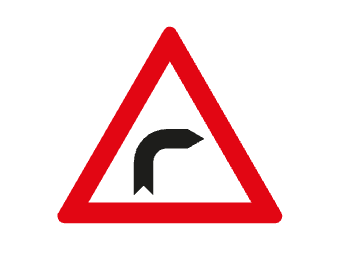
Code 103
Right Curve
Warns of a right-hand curve ahead.
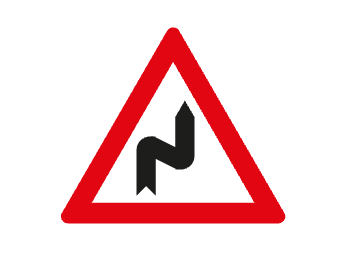
Code 105
Double Curve, First to the Right
Warns of two curves, beginning with a right-hand curve.
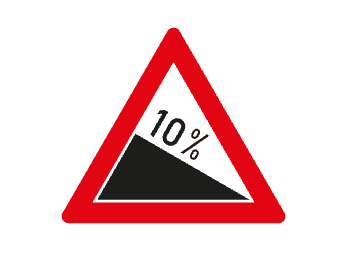
Code 108
Steep Descent
Warns of a steep downhill road section.
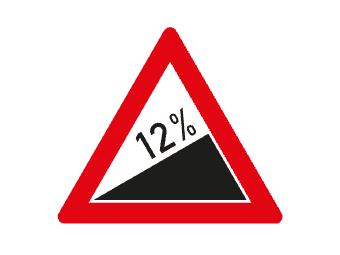
Code 110
Steep Ascent
Warns of a steep uphill road section.
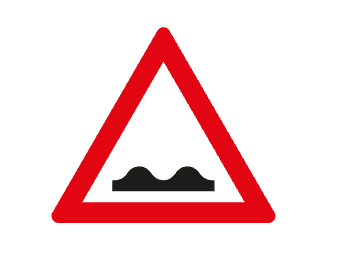
Code 112
Uneven Road
Warns of an uneven road surface ahead.
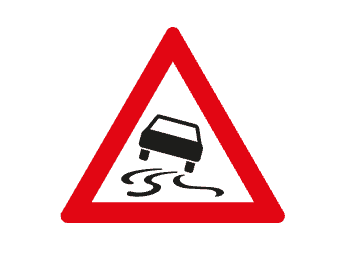
Code 114
Skid or Slip Hazard
Warns that the road may be slippery.
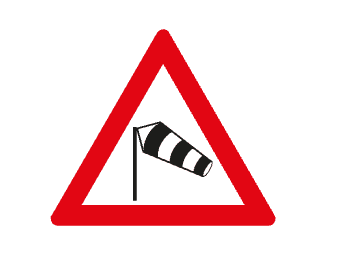
Code 117
Side Winds
Warns of strong side winds that may affect vehicle control.
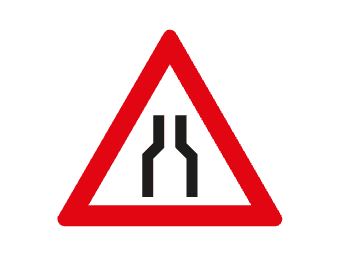
Code 120
Road Narrows
Warns that the road becomes narrower ahead.
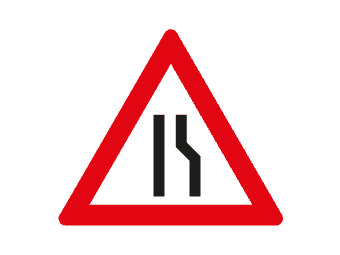
Code 121
Road Narrows on the Right
Warns that the road narrows from the right side.
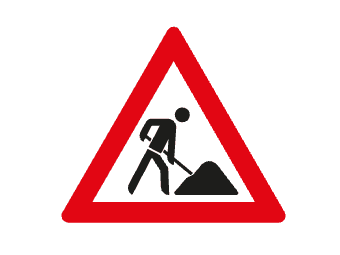
Code 123
Road Works
Warns of construction or maintenance work ahead.
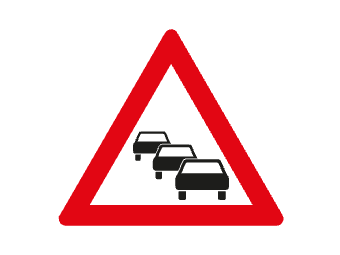
Code 124
Traffic Jam
Warns of possible congestion or slow traffic.
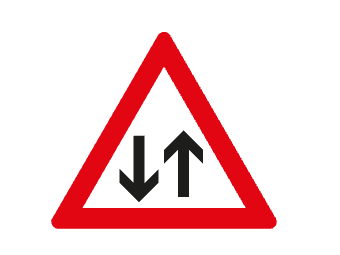
Code 125
Oncoming Traffic
Warns that oncoming traffic may be present.
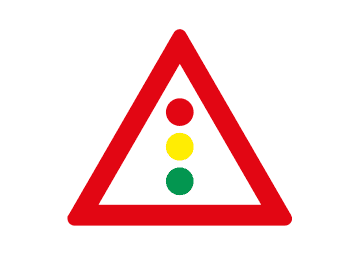
Code 131
Traffic Signals
Warns of traffic lights ahead.
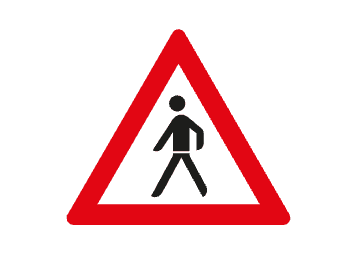
Code 133
Pedestrians
Warns that pedestrians may be crossing or walking nearby.
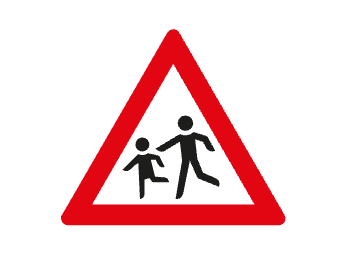
Code 136
Children
Warns that children may be near or crossing the road.
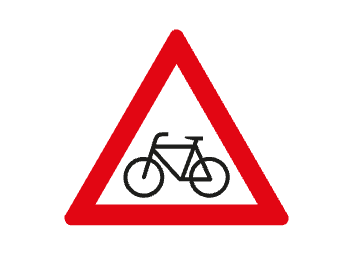
Code 138
Cyclists
Warns of bicycle traffic ahead.
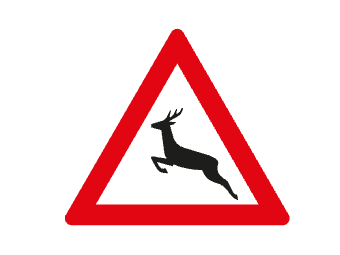
Code 142
Wild Animals
Warns that wild animals may cross the road.
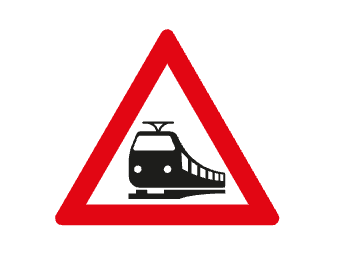
Code 151
Railway Crossing
Warns of a railway crossing ahead.
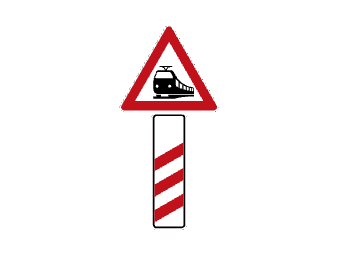
Code 156
Railway Crossing with Three-Stripe Marker
Warns of a railway crossing with distance marker boards.
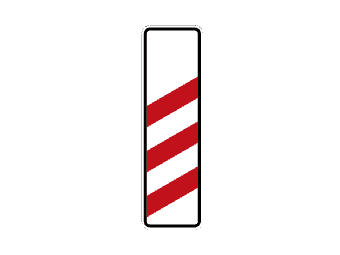
Code 157
Three-Stripe Distance Marker
Shows that a railway crossing is about 240 meters ahead.
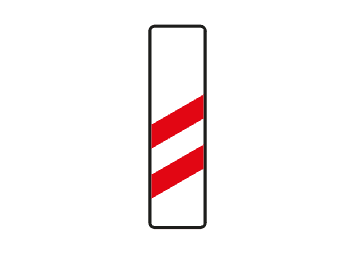
Code 159
Two-Stripe Distance Marker
Shows that a railway crossing is about 160 meters ahead.
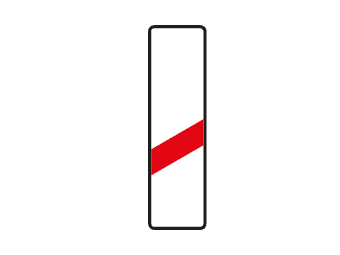
Code 162
One-Stripe Distance Marker
Shows that a railway crossing is about 80 meters ahead.
🚧 Common Danger Signs
Confusing Intersection
Slow down. Right-before-left may apply. Watch traffic from both sides.
Children
Near schools, kindergartens, or playgrounds. Children may run onto the road.
Pedestrian Crossing
Pedestrians have priority. Approach slowly and never overtake at the crossing.
Steep Downhill
Use a lower gear. Brakes can overheat and braking distance increases.
Steep Uphill
Shift down if needed. Do not become too slow and obstruct traffic.
Construction Site
Expect workers, machines, dirt, tools, narrow lanes, and traffic jams.
🛣 Road Condition Dangers
Snow / Ice
Reduce speed, increase distance, avoid sudden braking or steering.
Slippery When Wet
Road grip is lower. Brake gently and avoid abrupt movements.
Loose Gravel
Keep distance. Avoid strong acceleration and fast steering.
Uneven Road
Grooves and bumps can reduce tire grip. Drive carefully.
Crosswind
Your vehicle can be pushed sideways, especially on bridges or open roads.
Falling Rocks
Expect stones on the road. Do not stop or park in this area.
🚗 Traffic Dangers
🚘 Oncoming Traffic
- Expect vehicles from the opposite direction
- Be careful with headlight glare
- No direction automatically has priority
- Drive slowly and keep right
🚦 Traffic Jam
- Vehicle in front may brake suddenly
- Increase safety distance
- Watch several vehicles ahead
- Be ready to brake
↔️ Road Narrowing
- Reduce speed
- Do not overtake
- Use zipper merge if lanes merge
- Give way if oncoming traffic has priority
🚴 Cyclists
- Cyclists may cross the road
- Bike path may end suddenly
- Watch carefully before turning
- Keep safe distance
🐎 Animals & Special Hazards
Riders
Expect horses and riders on the road.
Cattle
Animals may dirty the road and make it slippery.
Aircraft
Sudden aircraft noise can distract or scare drivers.
Shore
In fog or darkness, water can be confused with the road.
🚂 Level Crossing Danger Signs
3 Stripes
Level crossing is about 240 m away.
2 Stripes
Level crossing is about 160 m away.
1 Stripe
Level crossing is about 80 m away.
📚 Quick Danger Sign Table
| Danger | What You Should Do |
|---|---|
| Children / school area | Slow down, be ready to brake |
| Pedestrian crossing | Let pedestrians cross, do not overtake |
| Steep downhill | Use lower gear, protect brakes |
| Slippery road | Reduce speed, avoid sudden braking |
| Construction site | Expect workers, dirt, machines, congestion |
| Road narrowing | Slow down, merge carefully, avoid overtaking |
🎯 Easy Exam Tips
✅ Remember
- Danger sign = slow down and watch carefully
- Outside towns: danger usually 150–250 m ahead
- Children and pedestrians can appear suddenly
- Slippery roads need gentle steering and braking
- Use lower gear on long downhill roads
❌ Common Mistakes
- Driving too fast after a warning sign
- Overtaking near crossings or bottlenecks
- Braking hard on slippery roads
- Ignoring children near schools
- Stopping in falling-rock areas
Practice Questions (37)
-
Question 1 of 37
What do you do when you see this traffic sign?
1.4.40-0014 Points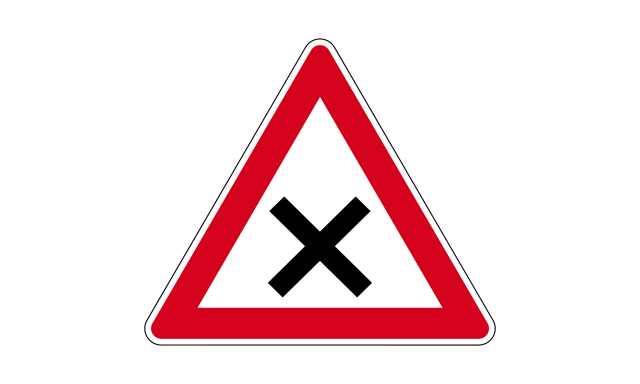
Explanation
This traffic sign alerts you about an approaching, confusing intersection or T-junction. You should slow down your speed and be ready to brake, since the right road user has priority here. You should also pay close attention to the traffic on the left, since you have to expect that it will not fulfill its obligation to wait and possibly ignore your right of way. Adjust your speed so that you can see the traffic coming from the right and, if necessary, brake without any problems.
-
Question 2 of 37
What does this traffic sign require of you?
1.4.40-0065 Points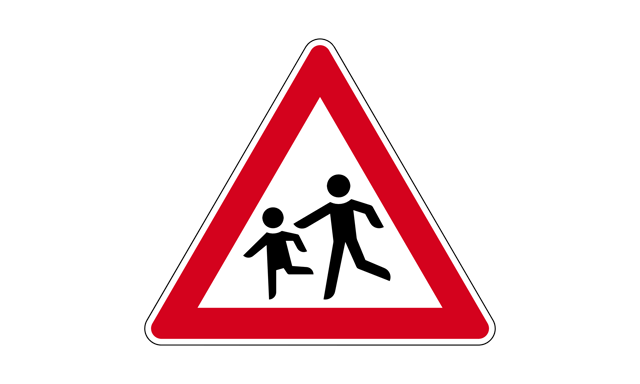
Explanation
The sign will point you to a school, kindergarten or playground nearby. Here you have to drive with adapted speed and increased attention. Children could suddenly run onto the road without paying attention to the traffic. Always be ready to brake.
-
Question 3 of 37
What does this traffic sign combination indicate?
1.4.40-0093 Points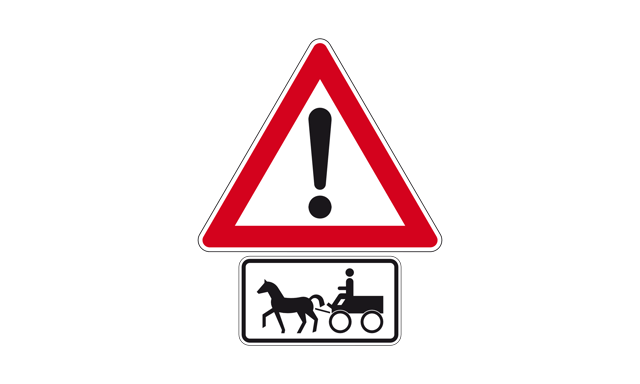
Explanation
The exclamation mark stands for a general hazard warning. The exact nature of the hazard is shown by the additional sign: Here you must expect horse and cart on the road.
-
Question 4 of 37
What must you anticipate when you see this road sign?
1.4.40-0103 Points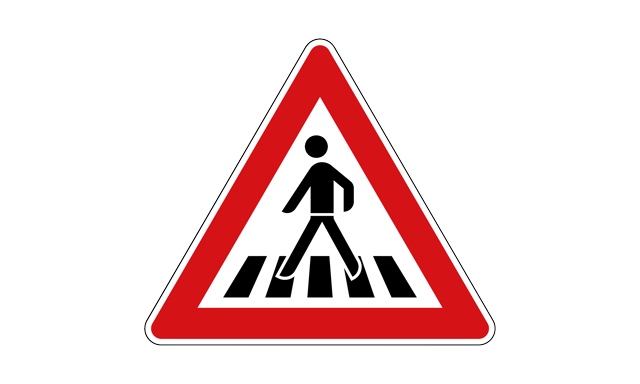
Explanation
This is a danger sign warning you of a pedestrian crossing. The pedestrian crossing may be difficult to see. Pedestrians will use the pedestrian crossing to cross the roadway. Be especially alert.
-
Question 5 of 37
What must you do upon seeing this traffic sign?
1.4.40-0113 Points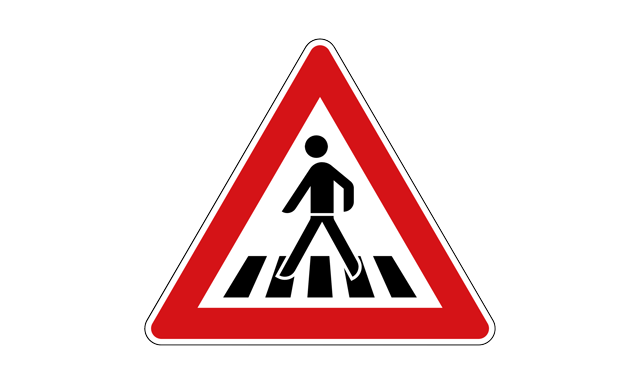
Explanation
This danger sign indicates that there is a pedestrian crossing in the immediate vicinity. You must watch out for pedestrians and let them cross the road. You should approach at a moderate speed, stop under certain circumstances and never overtake at the crossing.
-
Question 6 of 37
What danger is indicated to you by this traffic sign?
1.4.40-0123 Points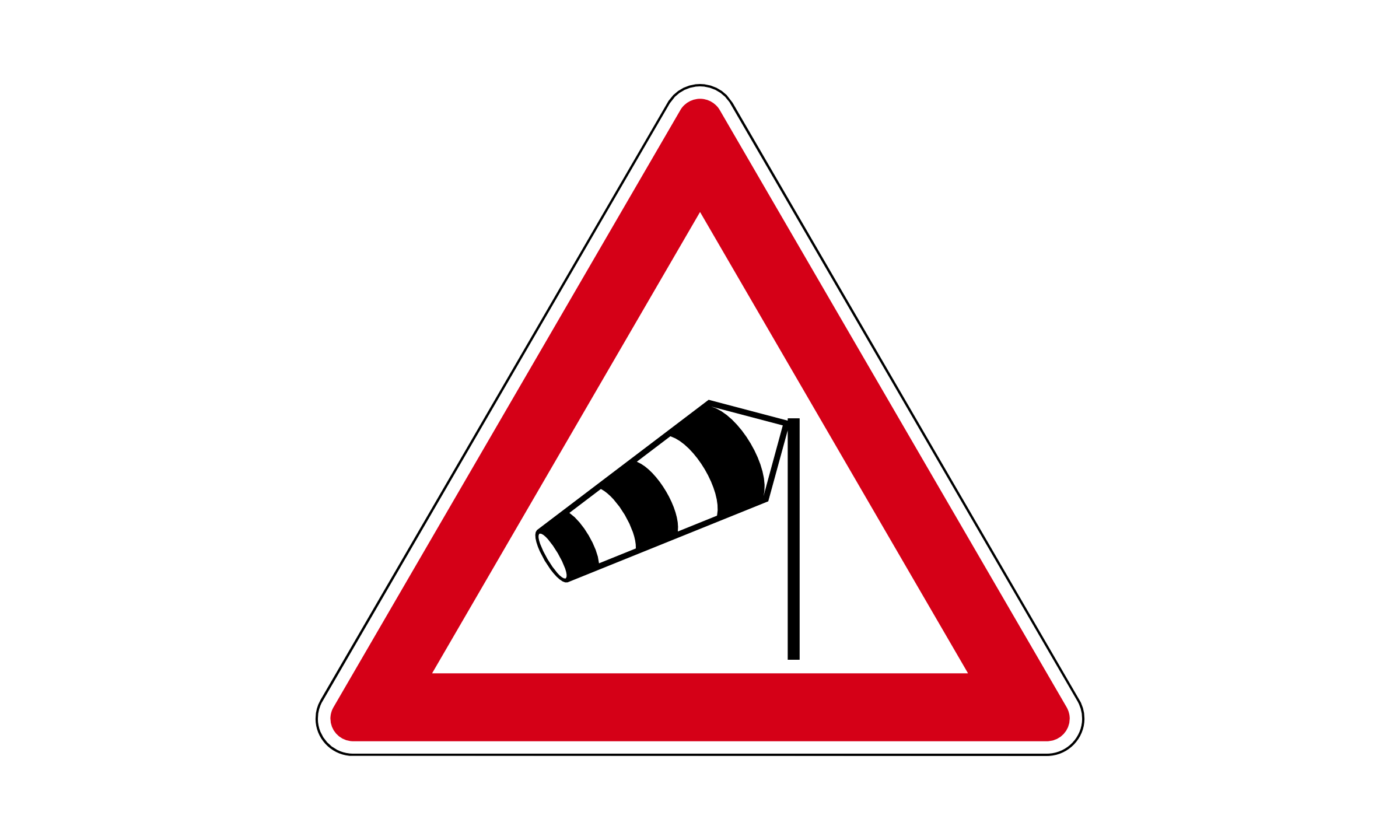
Explanation
This traffic sign warns of strong crosswinds and that your vehicle could be displaced sideways.
-
Question 7 of 37
You are driving on a road with one lane in each direction. Which roadsign indicates that you must always give way to oncoming traffic?
1.4.40-0133 PointsExplanation
The traffic sign “road narrowed on one side from the right” means that your lane will narrow significantly. Here you have to give way to oncoming traffic. The traffic sign “Give priority to oncoming traffic” shows with the red arrow that you must give priority to oncoming traffic.
-
Question 8 of 37
You pass this traffic sign while driving outside a built-up area. How far off is the hazard to be expected?
1.4.40-1012 Points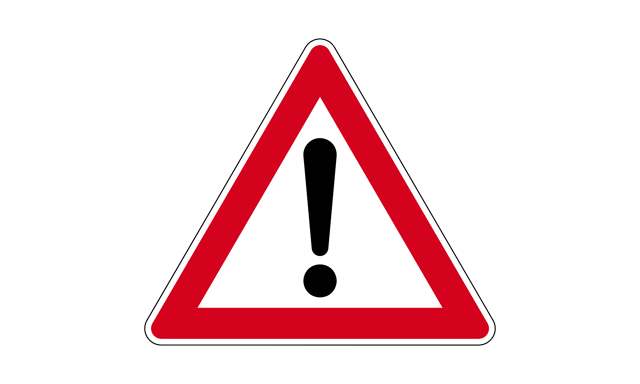
Explanation
The sign warns of danger ahead. Expect the dangerous area outside of built-up areas at a distance of 150 - 250 m. Reduce your speed and drive with increased attention.
-
Question 9 of 37
What must you be prepared for when you pass these traffic signs?
1.4.40-1033 Points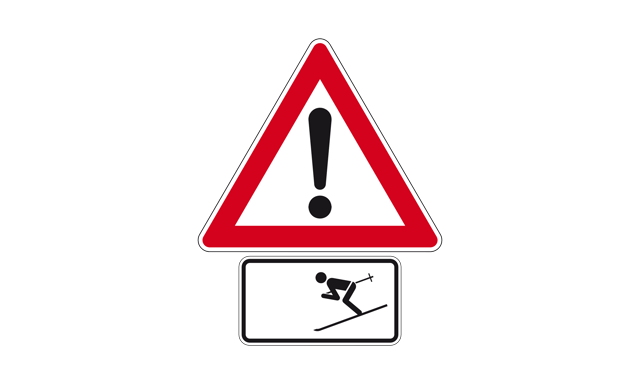
Explanation
You must be prepared for skiers and tobogganers crossing the road. This traffic sign informs you that on this road winter sports can be operated and no winter road clearance clears the snow. You need to expect increased danger of slipping due to the snow that sticks to the road.
-
Question 10 of 37
What do you do when you see this traffic sign?
1.4.40-1053 Points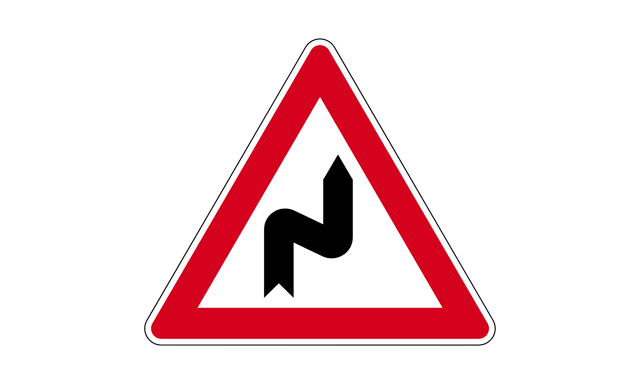
Explanation
The sign warns you of a double bend. First expect a right turn, then a left turn. You could drive onto the oncoming lane. Adjust your speed and drive far to the right to avoid collision with oncoming traffic.
-
Question 11 of 37
What do you have to expect after these traffic signs?
1.4.40-1062 Points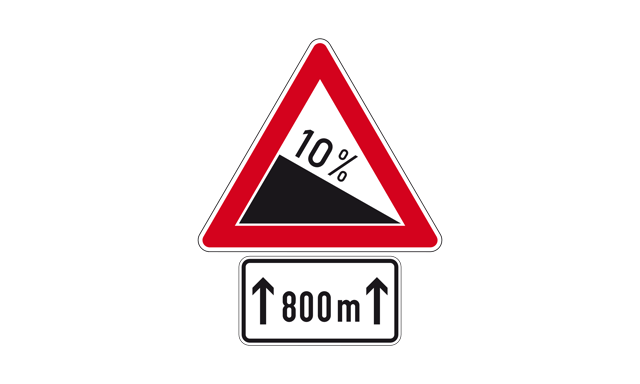
Explanation
After this traffic sign, an incline of 10% starts. The additional sign informs about the length of the danger zone of 800 meters. The arrows to the right and left indicate that the incline starts from the sign. Without arrows it would mean that the incline begins at a distance of 800 meters.
-
Question 12 of 37
What should you do when you approach this traffic sign?
1.4.40-1082 Points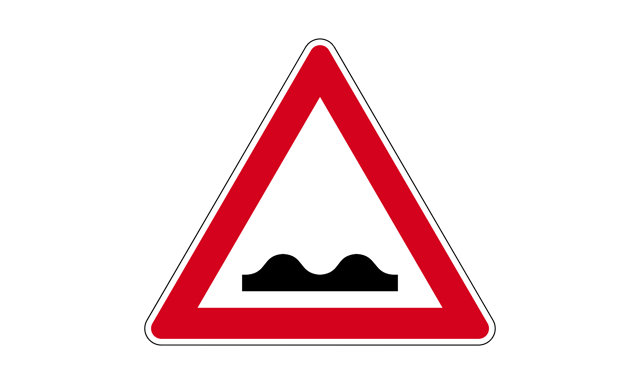
Explanation
The road in front of you is uneven and may have diagonal or longitudinal grooves. This sign warns against them. You cannot only get into a skid in damp and cold weather. Avoid fast steering movements.
-
Question 13 of 37
What dangers can arise if this traffic sign is ignored?
1.4.40-1092 Points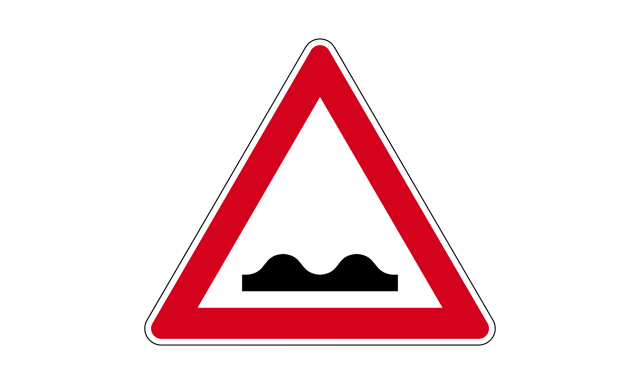
Explanation
Due to inappropriate driving there is a risk of skidding on this section of the route with endangerment of oncoming traffic. The route is uneven with possible diagonal and longitudinal grooves. This means that your tires will have lower grip. You need to throttle your speed in order to be able to steer the vehicle safely.
-
Question 14 of 37
What does this traffic sign warn you of?
1.4.40-1123 Points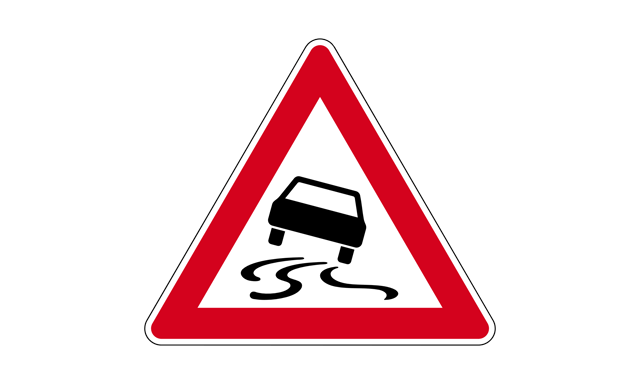
Explanation
The road in front of you has an increased risk of skidding when it's wet or dirty. You should reduce your speed and not brake or steer abruptly.
-
Question 15 of 37
What do you do when you see this traffic sign?
1.4.40-1143 Points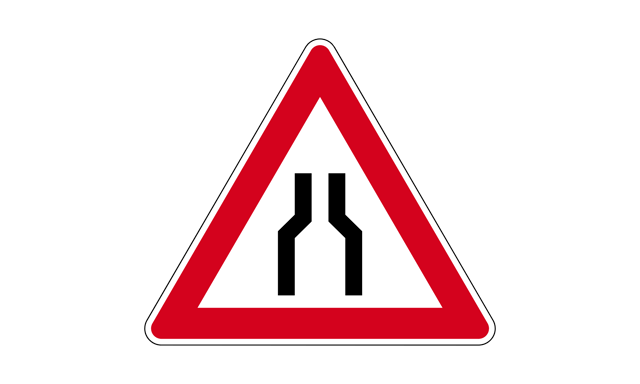
Explanation
This is a warning sign and it warns drivers of an imminent narrowing of the road. You have to expect oncoming traffic and behave as follows: Reduce your speed and refrain from overtaking maneuvers. Stopping in front of the bottleneck is only required if an oncoming vehicle is already in the bottleneck. Instead of a specific priority, zip merging applies, according to which the drivers are merging into the lane.
-
Question 16 of 37
What must you reckon with when you see these traffic signs?
1.4.40-1152 Points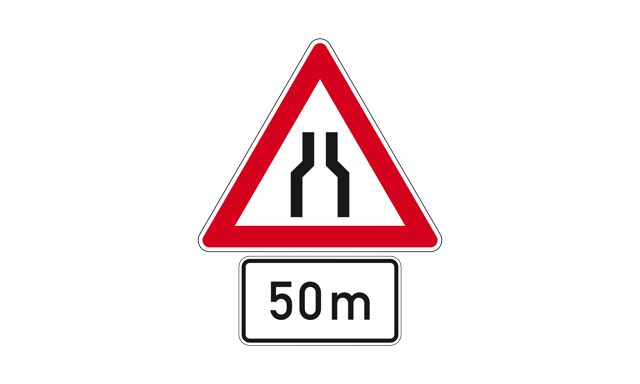
Explanation
Expect a narrowed lane 50 m ahead. Please drive slowly and ready for braking to the danger area to be able to react to traffic congestion.
-
Question 17 of 37
What must you reckon with when you see this traffic sign?
1.4.40-1162 Points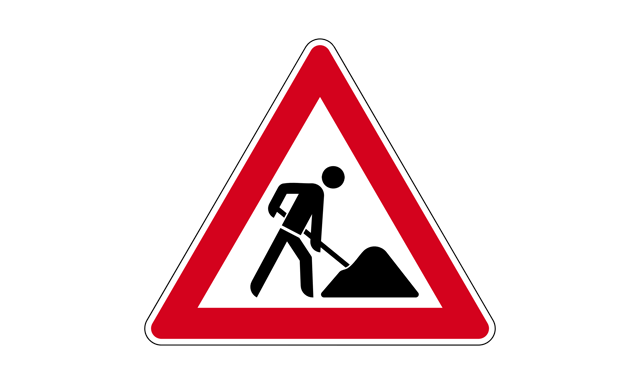
Explanation
When there's a construction site it is to be expected that construction site vehicles and workers can come very close to flowing traffic. Also building materials and tools could be on the road. Even if the construction site is not operated at the moment, a soiled road is to be expected. There is a risk of slipping and skidding.
-
Question 18 of 37
What must you reckon with when you see this traffic sign?
1.4.40-1183 Points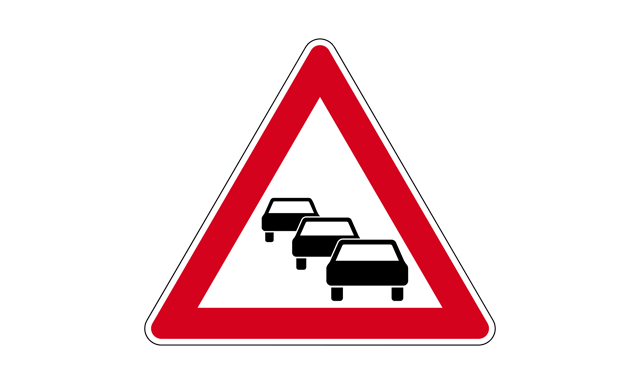
Explanation
This traffic sign warns against congestion on this section. Adjust your speed and the safety distance to the vehicle ahead according to the dangerous situation. The vehicle in front of you could suddenly brake. Also keep an eye on the traffic flow in front of the vehicle in front of you. You may drive a little offset within the lane.
-
Question 19 of 37
What does this traffic sign indicate?
1.4.40-1212 Points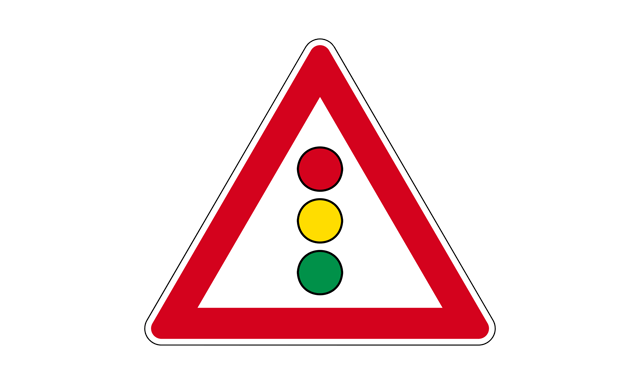
Explanation
Please pay attention to a badly recognizable light indicator like a traffic light. In the further course of the road a danger spot like an intersection or a construction site area might possibly follow.
-
Question 20 of 37
What do these traffic signs indicate?
1.4.40-1272 Points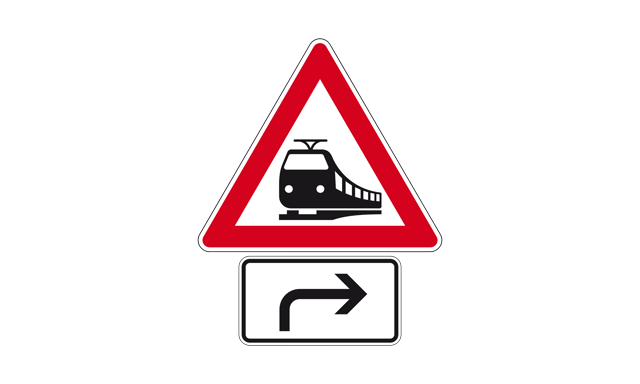
Explanation
Pay attention to an unguarded level crossing, if you drive to the right at this point or turn. If you continue straight ahead, this sign has no meaning for you.
-
Question 21 of 37
What does this traffic sign indicate?
1.4.40-1302 Points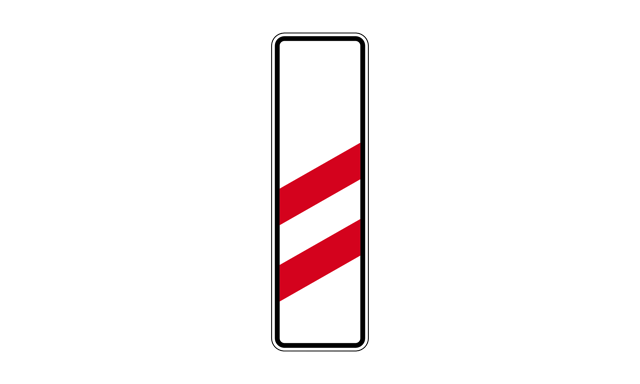
Explanation
The sign that warns you of a level crossing ahead informs you about a level crossing that is 160 meters away. Approach the danger zone cautiously and ready to brake in case a train crosses your path.
-
Question 22 of 37
What does this traffic sign indicate?
1.4.40-1312 Points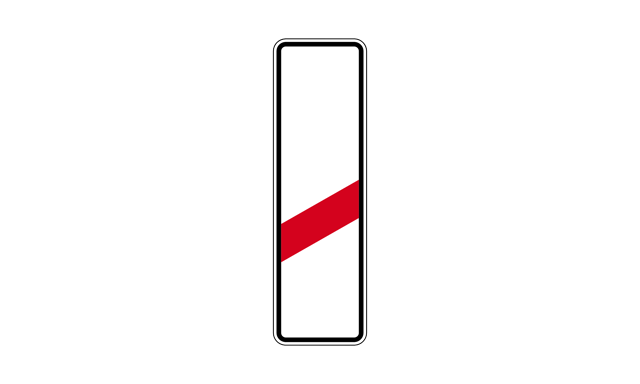
Explanation
The traffic sign is a distance beacon. This traffic sign is always placed on both sides of the road. It belongs to the group of danger signs. The traffic sign shown is a one-lane distance beacon. The single red stripe means that there is a level crossing 80 meters away.
-
Question 23 of 37
What does this traffic sign combination indicate?
1.4.40-1322 Points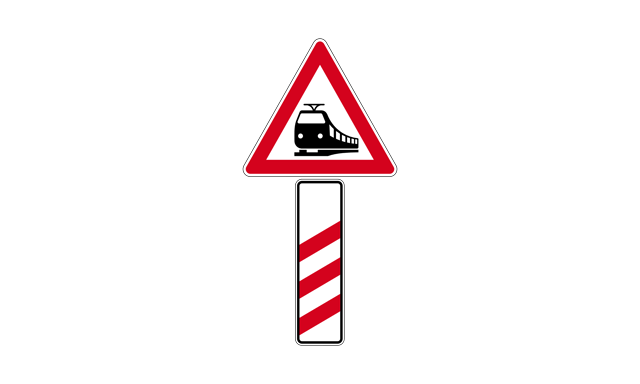
Explanation
About 240 meters in front of you there is a railroad crossing. The level crossing ahead marker warns from this danger. Each line represents a distance of 80 m.
-
Question 24 of 37
What do you have to be aware of when you see this traffic sign combination?
1.4.40-1352 Points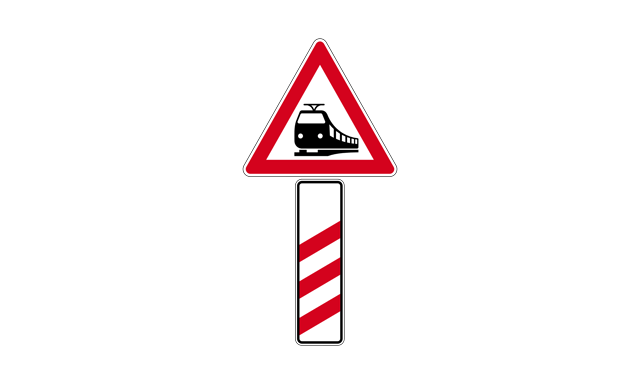
Explanation
The traffic signs warn you of a railroad crossing 240 meters away. From the three-lined level crossing ahead marker to the danger zone including the intersection overtaking other motor vehicles is prohibited. An overtaking maneuver in this area could endanger you and other road users.
-
Question 25 of 37
What does this traffic sign combination indicate?
1.4.40-1423 Points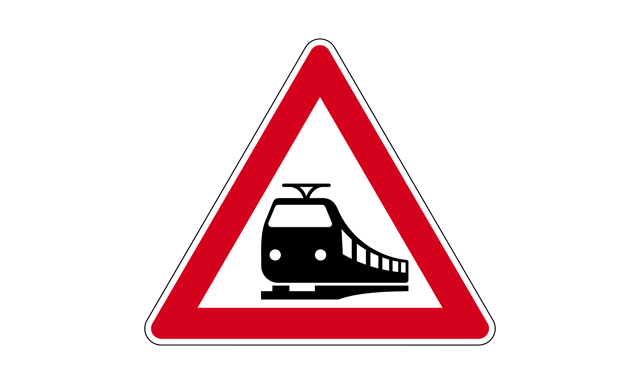
Explanation
This traffic sign indicates that you will shortly be crossing a railroad crossing. A train station or underpass does not have to be present.
-
Question 26 of 37
What must you anticipate with this road sign?
1.4.40-1433 Points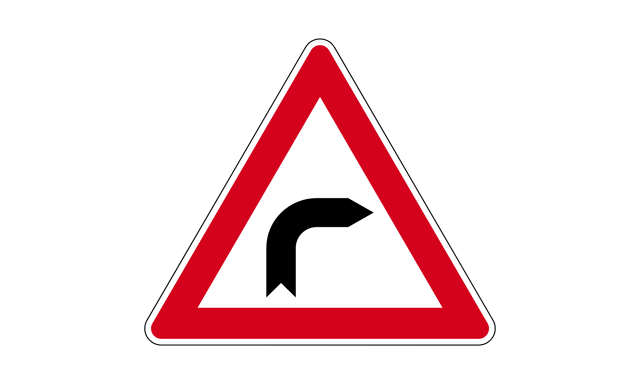
Explanation
This traffic sign warns of a sharp right turn. You should be aware that oncoming vehicles could cut the curve and reach into your lane. It is also to be expected that vehicles driving ahead will brake sharply.
-
Question 27 of 37
What must you anticipate with this road sign?
1.4.40-1444 Points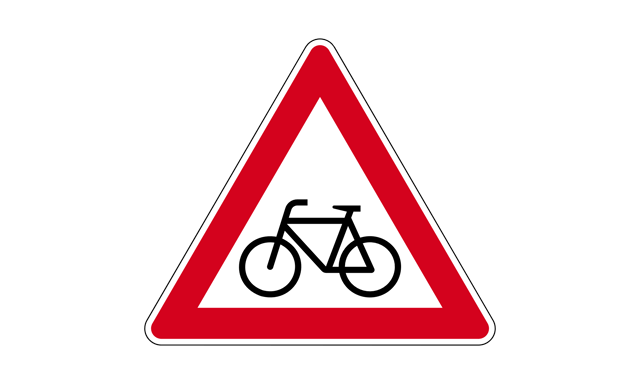
Explanation
This traffic sign warns that cyclists can cross the road and could get into your lane, for example when a bike path ends and leads to the road.
-
Question 28 of 37
What does this traffic sign indicate?
1.4.40-1473 Points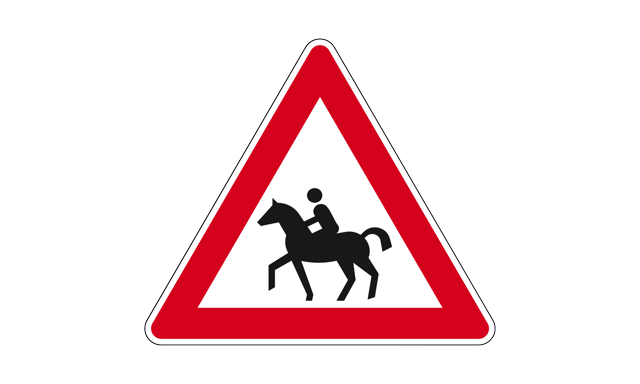
Explanation
This sign (triangular) indicates a danger zone in connection with horses.
-
Question 29 of 37
What does this traffic sign indicate?
1.4.40-1483 Points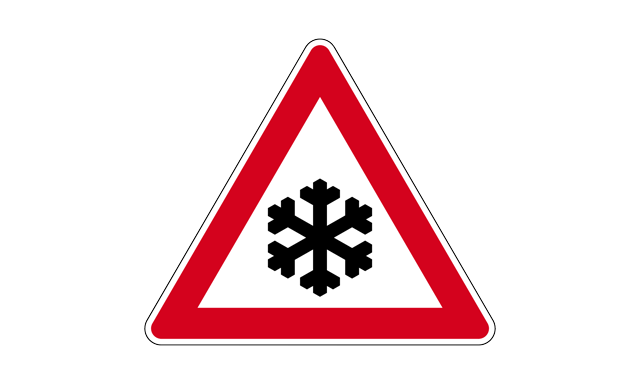
Explanation
This traffic sign indicates that it is slippery with snow and icy roads.
-
Question 30 of 37
What must you anticipate with this road sign?
1.4.40-1493 Points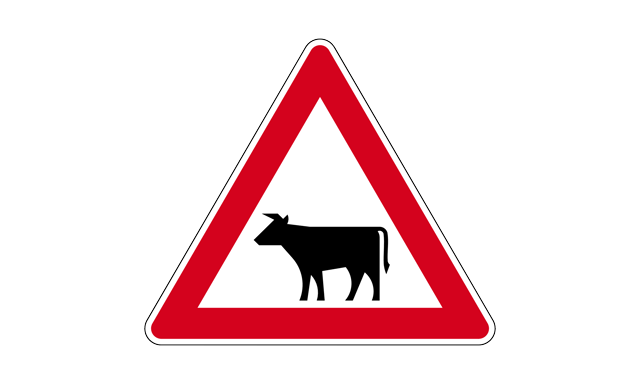
Explanation
This sign indicates that the road is very dirty and that you must watch out for grazing animals on the road.
-
Question 31 of 37
How should you act at a point of danger indicated by this sign?
1.4.40-1503 Points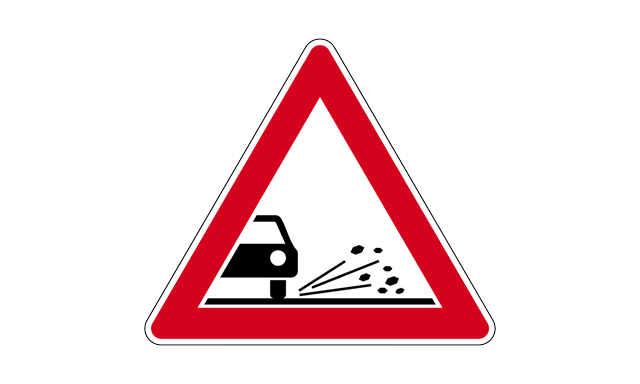
Explanation
You should keep as much distance as possible from the vehicle in front, avoid sudden steering movements and avoid strong acceleration as there is gravel and grit on this road.
-
Question 32 of 37
What does this traffic sign indicate?
1.4.40-1512 Points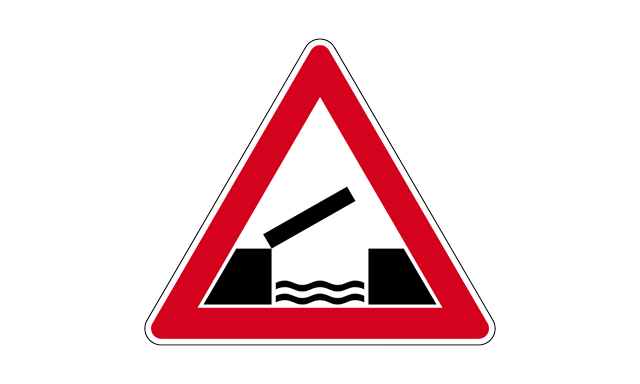
Explanation
This sign indicates a movable bridge.
-
Question 33 of 37
What must you be aware of when you see this road traffic sign?
1.4.40-1522 Points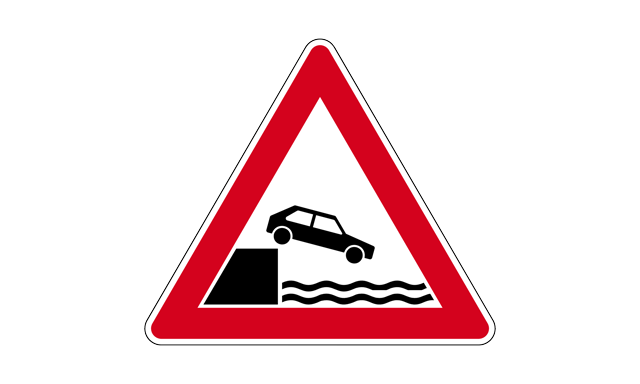
Explanation
The shape of the sign indicates caution and the picture on the sign indicates what to look out for. This road leads to a shore. Water surfaces are difficult to distinguish from the actual roadway in darkness or poor visibility.
-
Question 34 of 37
What must you be aware of when you see this road traffic sign?
1.4.40-1533 Points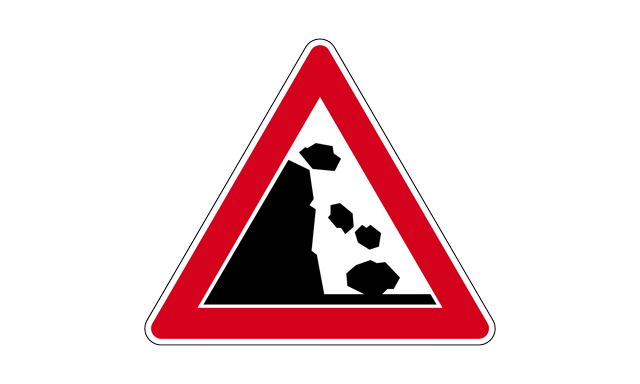
Explanation
Please watch out for stones that might be lying on the roadway. Avoid stopping and parking. Vehicles in front may suddenly slow down due to falling stones.
-
Question 35 of 37
What must you anticipate with this road sign?
1.4.40-1542 Points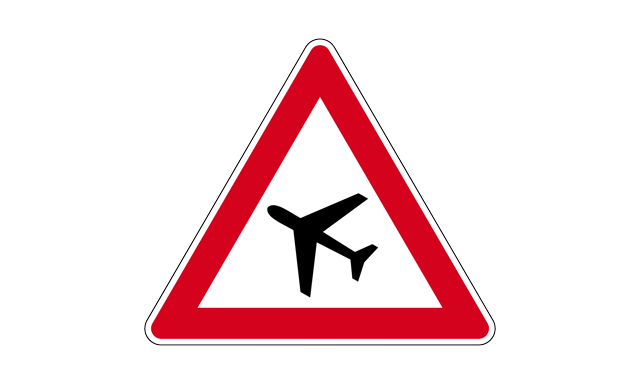
Explanation
This sign says that you should expect distractions from other road users, sudden aircraft noise and sudden braking vehicles. All answers are correct.
-
Question 36 of 37
You are driving a motor vehicle with a manual gearbox. What must you consider when you see this road sign?
1.4.40-1563 Points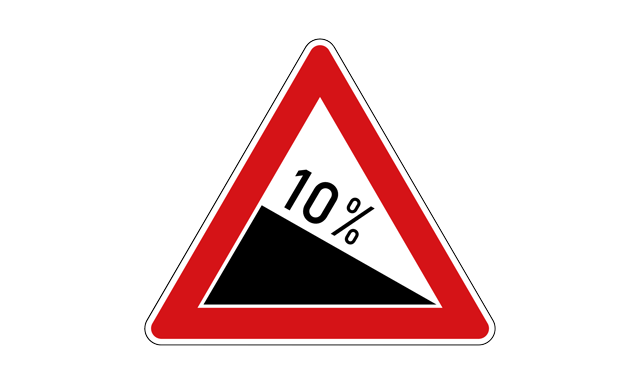
Explanation
In order not to exceed the speed on the slope, you may have to brake lightly throughout. If the brake heats up, the braking effect will diminish over time. Bear in mind that this also increases the braking distance. To avoid unnecessary strain on the brake, you can select lower gears to increase the engine braking effect.
-
Question 37 of 37
You are driving a motor vehicle with a manual gearbox. What is the correct thing to do when you see this traffic sign?
1.4.40-1572 Points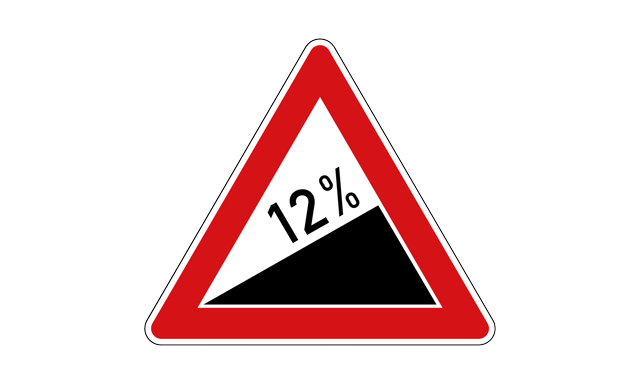
Explanation
In order to maintain the speed on the incline, you may have to shift down a gear, as otherwise the torque may not be sufficient to propel the vehicle further at the low speed.