
2.7.05 Use and maintenance of tyres
Learn the most important tyre rules for the German driving exam in a simple and visual way. This guide helps you quickly understand safety, tyre pressure, winter tyres, tread depth, and wheel changing.
📅 Tyre Manufacturing Date (DOT)
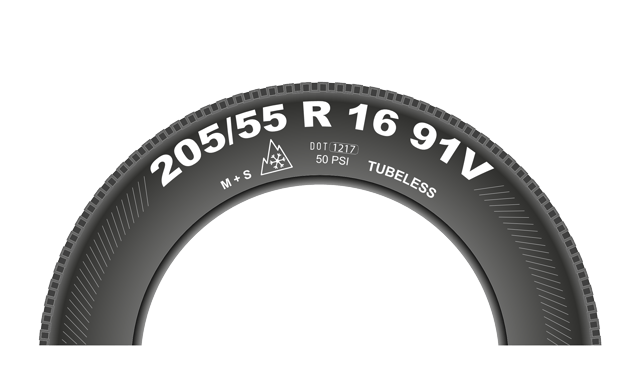
Example: 1217
- 12 = 12th week
- 17 = Year 2017
The DOT number on the tyre shows the manufacturing week and year. This helps identify the age of the tyre and whether it is still safe to use.
🛞 Tyre Pressure
✅ Correct Practice
- Check tyre pressure weekly
- Check when tyres are cold
- Check after every tyre change
- Check before long trips
- Follow manufacturer instructions
⚠️ Low Pressure Dangers
- Poor steering behaviour
- Dangerous cornering stability
- Higher tyre wear
- More fuel consumption
- Safety risk for all road users
📏 Minimum Tread Depth
Cars & Most Vehicles
1.6 mm
Legal minimum tread depth.
Mopeds
1.0 mm
Minimum tread depth for mopeds.
🔍 TWI Indicator
The Tread Wear Indicator (TWI) shows whether the tyre is worn out.
🌦️ Weather & Road Conditions
☀️ Dry Road
Best tyre grip and driving stability.
🌧️ Wet / Snow / Ice
Grip becomes much worse and braking distance increases.
🌡️ Temperature
Summer tyres become hard in cold weather. Winter tyres wear faster in heat.
❄️ Winter Tyres
Winter tyre symbols mean the tyre is suitable for snowy and winter conditions.
🚫 Maximum Speed
Do not exceed the tyre speed index.
190 km/h
After installing winter tyres, always:
- Check tyre pressure
- Follow manufacturer specifications
- Respect maximum tyre speed
⚠️ Tyre Damage & Warning Lights
Possible Causes
- Nails or foreign objects
- Missing valve cap
- Air pressure loss
- High heat from motorway driving
Tyre Pressure Warning Light
- Usually means pressure is too low
- Visually inspect tyres first
- If tyres look fine but light stays on → visit garage
🔧 Wheel Change Steps
- Park on solid anti-slip ground
- Secure vehicle against rolling
- Use manufacturer jack points
- Loosen wheel nuts while vehicle is on ground
- Lift vehicle with jack
- Remove wheel nuts
- Install wheel securely
⚠️ Important
If wheel nuts are not tightened correctly, the wheel may fall off while driving and cause a serious accident.
🛞 Spare Wheel Checks
✅ Secure Mounting
Check that the spare wheel is attached safely.
🔒 Double Lock
Important for spare wheels mounted outside the vehicle.
💨 Tyre Pressure
Check pressure regularly so it is ready in emergencies.
🧠 Quick Exam Notes
Practice Questions (13)
-
Question 1 of 13
What is the meaning of the date of manufacture "1217" specified on the tyre?
2.7.05-0012 Points
Explanation
The date of manufacture indicated on the tire is made up of the manufacturing week and the year of manufacture. So "1217" means: 12th week in the year 2017.
-
Question 2 of 13
When should you check the tyre pressure?
2.7.05-0022 PointsExplanation
You should check the tyre pressure regularly when the tyres are cold and immediately after each tyre change. It is not necessary to check after every journey.
-
Question 3 of 13
Your tyre inflation pressure is clearly too low while you driving on public roads. What is the consequence of this?
2.7.05-0053 PointsExplanation
A low tyre pressure results that a larger area of the tyre lies on the asphalt while driving. In addition, the tyre no longer has a round shape and can no longer roll cleanly. If the tyre pressure is significantly too low, the driving stability in curves decreases dangerously and the steering behaviour deteriorates.
-
Question 4 of 13
What must you check when regularly inspecting your vehicle’s tyres?
2.7.05-0063 PointsExplanation
You should check your tires at regular intervals. It is important that you control the external state of the tires, make sure that the tires have no external damage and that the legally required minimum profile depth of 1.6 mm is not undercut. Especially in front of longer journeys or with a higher load, you should make sure to check the tire pressure beforehand.
-
Question 5 of 13
What should be noted when changing a tyre using a car jack?
2.7.05-1012 PointsExplanation
To attach the jack, the vehicle driver must use the mounting points provided by the manufacturer. A safe surface with anti-slip properties is absolutely necessary for this.
-
Question 6 of 13
You have to remove a defective tyre. In what sequence should you proceed?
2.7.05-1023 PointsExplanation
Secure the vehicle against rolling away unintentionally. Put the jack on. Loosen the wheel nuts while the vehicle is still in contact with the ground. Lift with the help of the jack. Unscrew the wheel nuts.
-
Question 7 of 13
What does the red symbol on the tyre indicate?
2.7.05-1033 Points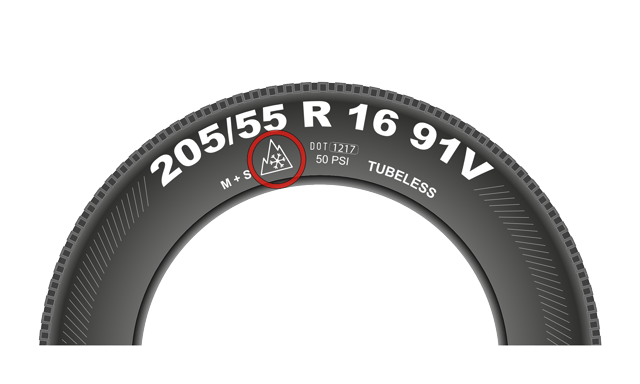
Explanation
The symbol means that this tyre is suitable for winter weather conditions and supports the driving characteristics even in snow. Snow chains are not required.
-
Question 8 of 13
To what must you pay particular attention when driving with winter tyres?
2.7.05-1043 PointsExplanation
With winter tyres, you must ensure that you do not exceed the maximum permitted speed for the tyres. You can check this in the speed index.
-
Question 9 of 13
Your car is equipped with winter tyres. What is the meaning of the speed label "max. 190 km/h" on your dashboard?
2.7.05-1053 PointsExplanation
You must not exceed the maximum speed of 190 km / h on your winter tires.
-
Question 10 of 13
What should you remember when putting winter tyres on your car?
2.7.05-1063 PointsExplanation
After installing winter tires, you should check the tire pressure according to the manufacturer's specifications and take into account the maximum permissible speed of the tires. This must not be exceeded.
-
Question 11 of 13
This indicator lamp lights up. What could be the cause of this?
2.7.05-1073 Points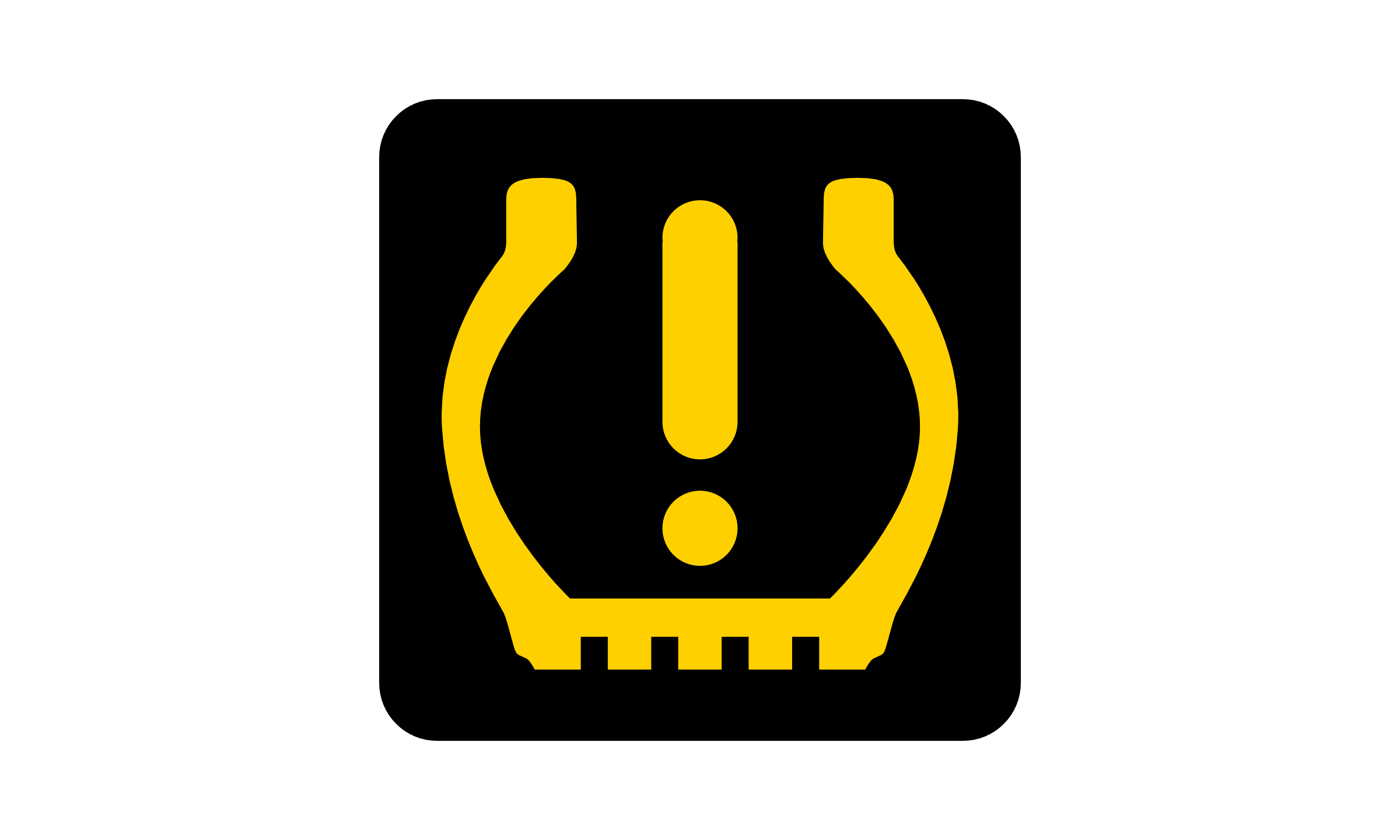
Explanation
The tyre pressure indicator light usually shows that the tyre pressure is too low, so check your tyre pressure. However, a lot can also go wrong with the tyre pressure sensors if you have recently changed your tyres. First check whether you notice anything on the outside of the tyre. If the tyre is visually OK and the indicator light is still on, ask the garage.
-
Question 12 of 13
What is the legally prescribed minimum tread depth across the main profile of all the tyres on your car?
2.7.05-1083 PointsExplanation
The legally regulated minimum profile depth for tyres is 1.6 mm. The main tread features are the grooves in the centre tread areas.
-
Question 13 of 13
What are the possible consequences if the wheel nuts are not re-tightened following a tyre change?
2.7.05-2173 PointsExplanation
If the wheel fasteners are not tightened after a wheel change or this has been neglected due to negligence, the wheel may fall off the vehicle while driving due to vibration. This can cause a serious accident. The wheel cannot come off the rim.