
2.1.04 Darkness and poor visibility
Darkness & Poor Visibility
At night, in rain, fog, glare, or shaded roads, your main job is simple: see early, be seen, slow down, and be ready to stop.
Golden Rule
Never drive faster than you can safely stop.
If visibility is poor, your stopping distance must fit inside what you can actually see.
At Night
Look carefully for pedestrians, cyclists, animals, and broken-down vehicles.
In Rain / Wet Roads
Reflections, water drops, and streaks scatter light and make glare worse.
On Avenues
Trees create light-shadow changes and narrow roads. Drive especially attentively.
Key Situations You Must Know
1. Oncoming vehicle dazzles you
Reduce your speed immediately. You must be able to stop at any time if danger appears. If pedestrians are on or near the lane, you may even need to stop.
2. Game / wild animals on the road
Hold the steering wheel tightly and brake. Dip the high beam because it dazzles animals and can make them stay on the road. Honk to scare them away.
Memory formula:
Brake → Dip lights → Honk → Do not dodge fast
Avoid sudden high-speed evasive maneuvers. They can end in a tree or oncoming traffic.
3. High beam rules
High beam helps you see farther, for example broken-down vehicles. But it can dazzle drivers in front, oncoming traffic, pedestrians, cyclists, and animals.
4. Wet road + oncoming traffic
Do not turn on high beam here. Wet roads reflect light strongly. Water drops and streaks on the windscreen scatter light and make visibility worse.
5. People at the roadside at night
Slow down and keep checking the roadside with your eyes. If you are blinded, move to the right and stop if necessary.
6. Narrow avenues
If oncoming traffic approaches, drive only so fast that you can stop within half the visible distance. The road may be narrow, and tree roots can make the roadside uneven.
Important exam phrase:
Stop within half the visibility.
7. Steamed-up, iced, or dirty windows
Clear all windows before driving. Poor visibility through the windscreen or side windows strongly increases accident risk.
8. Low sun glare
Low sun can dazzle you and make you notice others too late. Stay focused, use sunglasses, and lower the sun visor.
Exam Cheat Sheet
Do
- ✅ Reduce speed when dazzled
- ✅ Be ready to stop
- ✅ Dip high beam for animals and traffic
- ✅ Honk at wild animals
- ✅ Clear all windows before driving
- ✅ Use sun visor or sunglasses against low sun
Do Not
- ❌ Do not speed up when dazzled
- ❌ Do not use high beam against oncoming traffic
- ❌ Do not dazzle vehicles in front of you
- ❌ Do not dodge animals at high speed
- ❌ Do not drive with iced or steamed-up windows
Mini Quiz
Question 1
You are dazzled by oncoming headlights. What do you do?
Slow down and be ready to stop.
Question 2
There is a deer on the road. What is the correct sequence?
Brake, dip lights, honk.
Question 3
On a narrow avenue with oncoming traffic, how fast may you drive?
Only fast enough to stop within half the visible distance.
Practice Questions (6)
-
Question 1 of 6
What must you do if wild animals suddenly appear in the full beam of your headlights?
2.1.04-0023 PointsExplanation
Hold the steering wheel tightly and brake. Dip the high beam, because it dazzles the game and therefore remains on the road. Honk to scare it away. Avoid trying to dodge at high speed. These maneuvers often end at a tree or in oncoming traffic. That's why the following rules apply when there's game on the road: slow down, dip the lights and honk to scare off the game.
-
Question 2 of 6
What do you have to be aware of in this situation?
2.1.04-0054 Points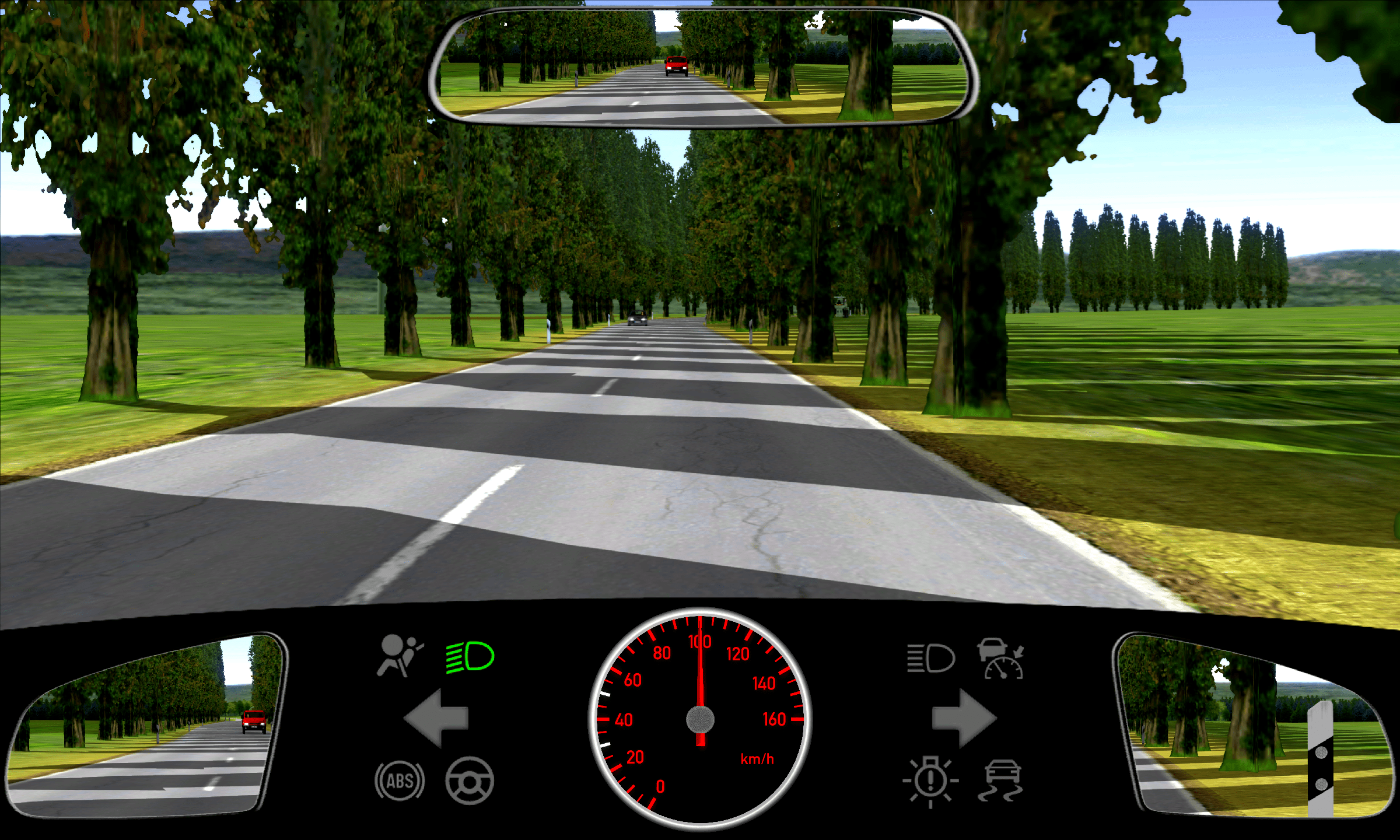
Explanation
Due to the large number of trees and the constant change between light and shade, you have to drive particularly attentively, as it is much more difficult to recognise other road users.
-
Question 3 of 6
You are driving on a country road in darkness and rain and encounter oncoming vehicles with dipped headlights. What must you remember?
2.1.04-1024 PointsExplanation
You must not turn on the high beam in this situation, as this can strongly dazzle oncoming traffic. Especially on wet roads, the reflection of the light is greatly increased. Further interferences include drops of water and streaks on the windscreen, which scatter the light and cloud the view.
-
Question 4 of 6
What risks could arise if you drive with your main beam lights on?
2.1.04-1034 PointsExplanation
With high beam on, you can dazzle drivers in front of you and oncoming traffic, which may result in recognizing pedestrians and cyclists not at all or way too late. Game that is crossing the road can also be dazzled, which may lead to the animals remaining in the cone of light. With high beam you can recognize vehicles that broke down better.
-
Question 5 of 6
Driving at night-time on a rural road, you see persons on your side of the road. What do you do if you are dazzled by an oncoming vehicle?
2.1.04-1044 PointsExplanation
If you detect people on the side of the road at night as a car driver, you should slow down. Regular eye-contact with the roadside is ideal to avoid an accident. If you are also blinded, you can move to the right and stop.
-
Question 6 of 6
What increases the risk of an accident?
2.1.04-1063 PointsExplanation
The risk of accidents is significantly increased if your windscreen and side windows are steamed up or iced over, as you can only see the traffic to a limited extent. Clear all windows before you set off. You could also be dazzled if you drive towards the low sun. This could make you notice other road users later and increase the risk of an accident. Be extra focussed, wear sunglasses or roll down your sun visor.