
1.4.42 Directional sign
Directional signs guide you, inform you, or announce special road situations. They do not always force a direction — many signs simply tell you what is coming, where you are, or what rules now apply.
🟨
Priority signs
Who may go first?
🛣️
Road type signs
Motorway, motor road, town end.
🅿️
Parking info
Who may park, how, and where?
🚧
Special places
Tunnel, customs, dead end, emergency bay.
The easy learning formula
For every sign in this chapter, ask these three exam questions:
1
Does it give priority?
Priority road, one-time priority, bottleneck priority.
2
Does a special rule start?
Motorway, motor road, tunnel, traffic-calmed area.
3
Is it only information?
Dead end, first aid, detour, road number, diversion arrow.
Directional Signs
German Traffic Directional Signs
Directional signs give guidance about priority, parking, services, routes, exits, road markings, and destination information.
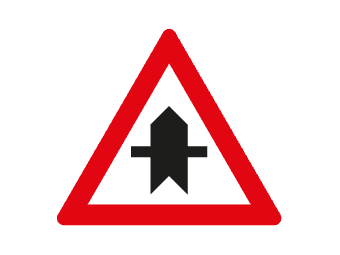
Code 301
Priority at the Next Intersection
Indicates priority at the next junction or intersection.
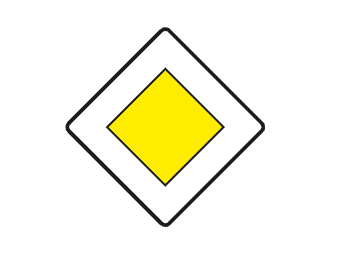
Code 306
Priority Road
Shows that traffic on this road has priority.
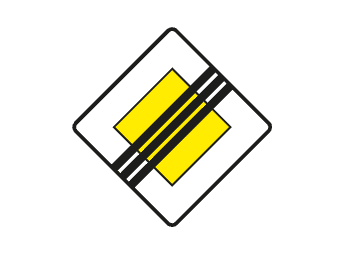
Code 307
End of Priority Road
Marks the end of the priority road.
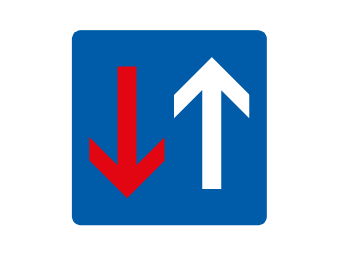
Code 308
Priority over Oncoming Traffic
Gives your direction priority over opposing traffic.
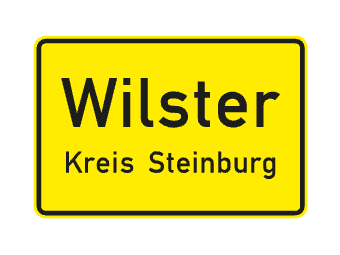
Code 310
Town Sign Front
Marks the start of a built-up area.
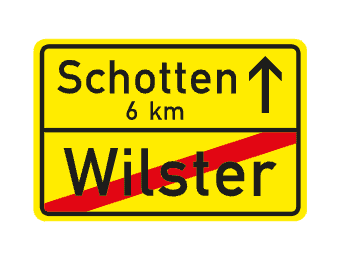
Code 311-50
Town Sign Back
Marks the end of a built-up area.
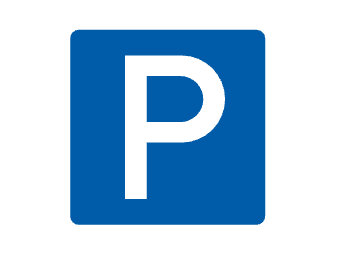
Code 314
Parking
Indicates an area where parking is allowed.
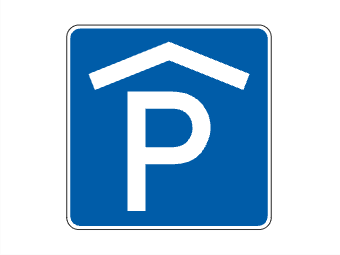
Code 314-50
Parking Garage
Indicates a parking garage or multi-storey car park.
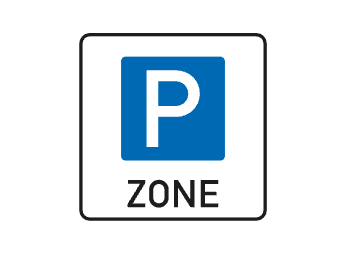
Code 314.1
Start of Managed Parking Zone
Marks the start of an area with managed parking rules.
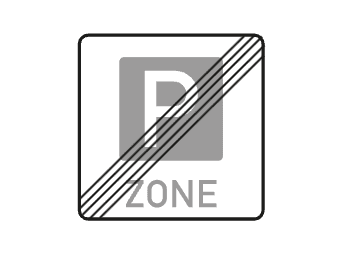
Code 314.2
End of Managed Parking Zone
Marks the end of a managed parking zone.
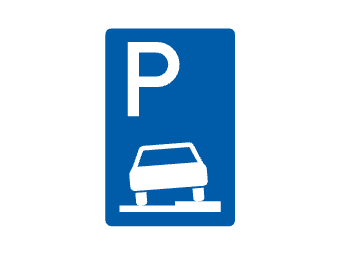
Code 315
Parking on Sidewalks
Shows where vehicles may park partly or fully on the sidewalk.
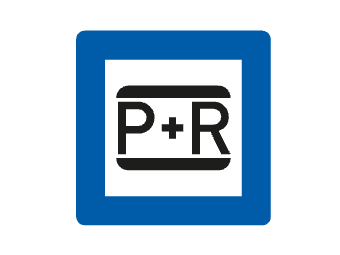
Code 316
Park and Ride
Indicates parking with access to public transport.
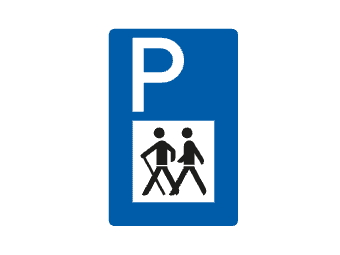
Code 317
Hikers' Parking Area
Indicates parking intended for hikers or trail access.
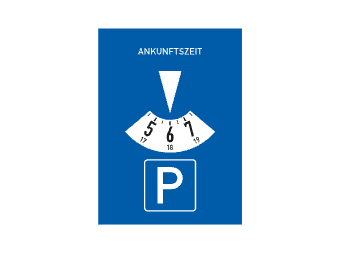
Code 318
Parking Disc
Indicates that a parking disc is required.
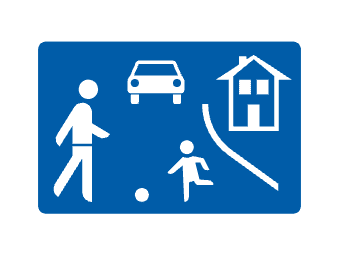
Code 325.1
Start of Traffic-Calmed Area
Marks an area where pedestrians have priority and vehicles must move very slowly.
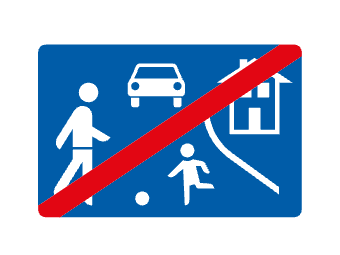
Code 325.2
End of Traffic-Calmed Area
Marks the end of a traffic-calmed area.
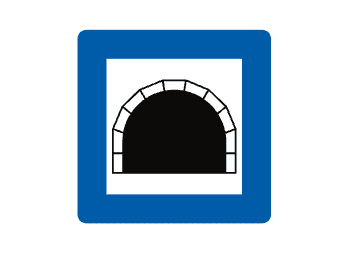
Code 327
Tunnel
Indicates the beginning of a tunnel.
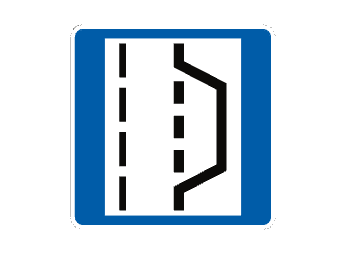
Code 328
Emergency Stopping Bay
Indicates a place to stop in emergencies or breakdowns.
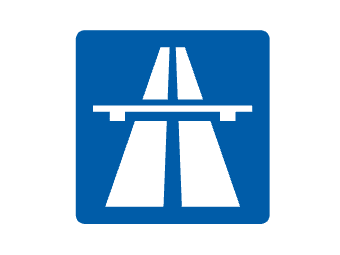
Code 330.1
Motorway
Marks the start of a motorway.
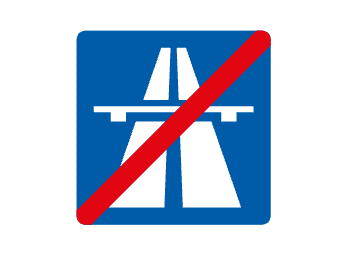
Code 330.2
End of Motorway
Marks the end of a motorway.
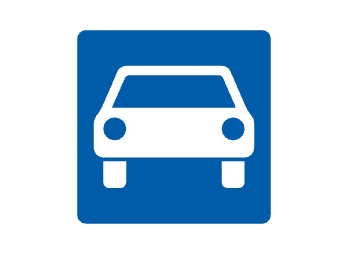
Code 331.1
Motor Vehicle Road
Marks a road reserved for motor vehicles.
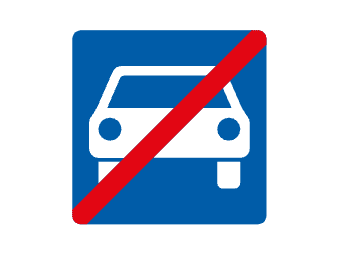
Code 331.2
End of Motor Vehicle Road
Marks the end of a motor vehicle road.
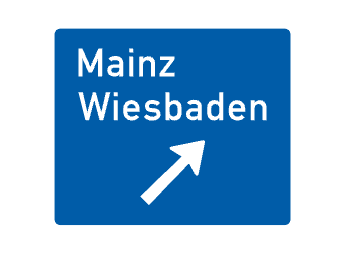
Code 332
Motorway Exit Board
Shows an upcoming motorway exit.
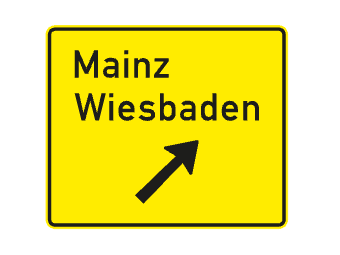
Code 332.1
Exit Board on Other Roads
Shows an upcoming exit on non-motorway roads.
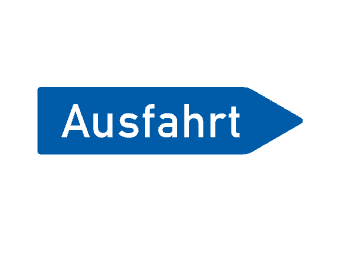
Code 333
Motorway Exit
Indicates the actual exit from the motorway.
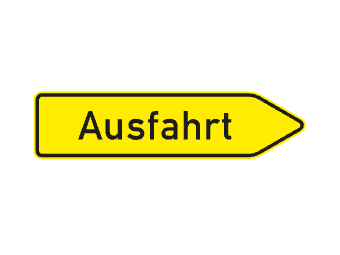
Code 333.1
Exit from Other Roads
Indicates an exit from a non-motorway road.
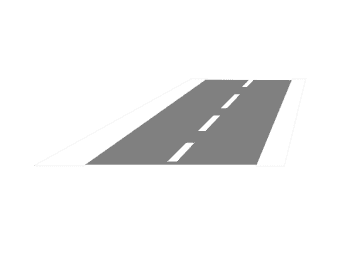
Code 340
Guide Line
Separates lanes and helps guide traffic flow.
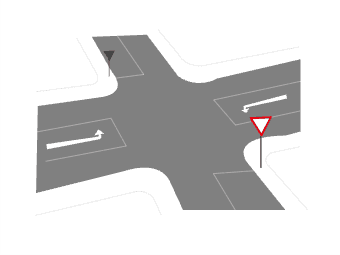
Code 341
Waiting Line
Shows where drivers should wait when required.
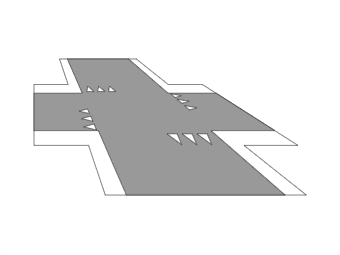
Code 342
Shark Teeth Markings
Emphasize that traffic must give way.
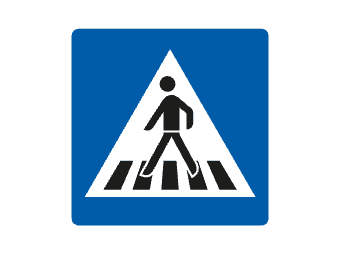
Code 350
Pedestrian Crossing
Indicates a marked pedestrian crossing.
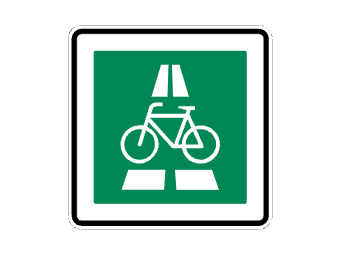
Code 350.1
Cycle Highway
Indicates a high-quality route for bicycle traffic.
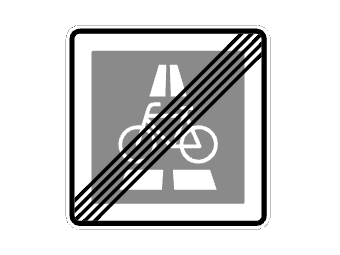
Code 350.2
End of Cycle Highway
Marks the end of a cycle highway.
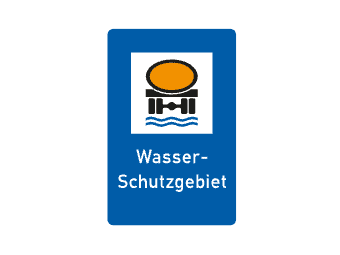
Code 354
Water Protection Area
Indicates an area where water protection rules apply.
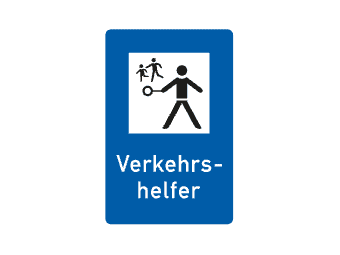
Code 356
Traffic Assistant
Indicates traffic helpers, often near schools or crossings.
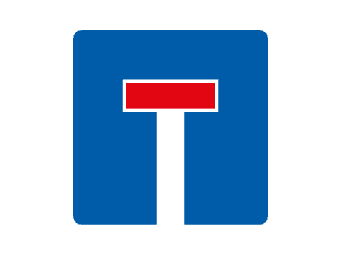
Code 357
Dead End
Shows that the road has no through route for vehicles.
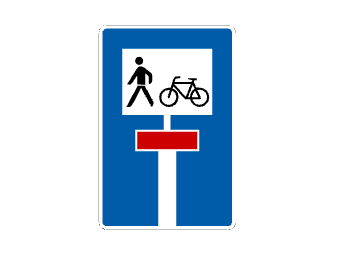
Code 357-50
Dead End Open to Cyclists and Pedestrians
Shows that only cyclists and pedestrians can continue through.
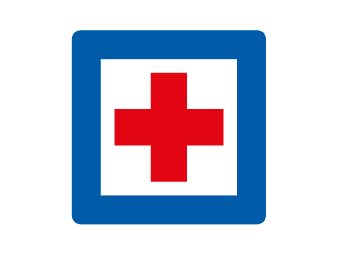
Code 358
First Aid
Indicates first aid assistance nearby.
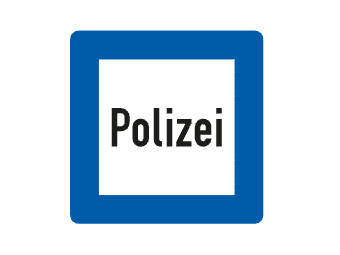
Code 363
Police
Indicates a police station or police assistance.
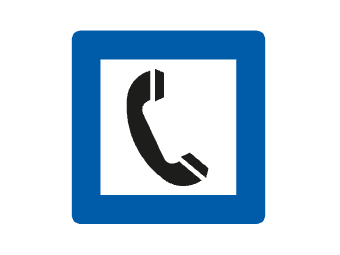
Code 365-50
Telephone
Indicates a public telephone.
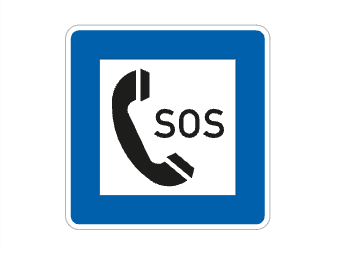
Code 365-51
Emergency Telephone
Indicates an emergency call point.
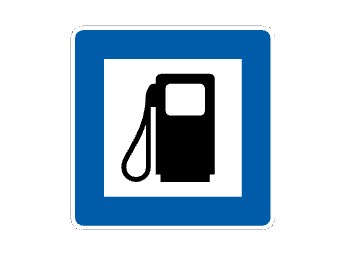
Code 365-52
Fuel Station
Indicates a fuel station nearby.
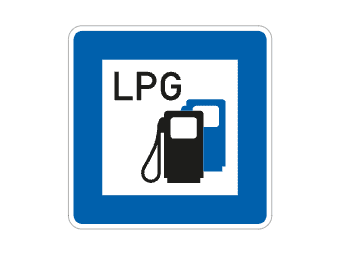
Code 365-53
Fuel Station with LPG
Indicates a station offering LPG fuel.
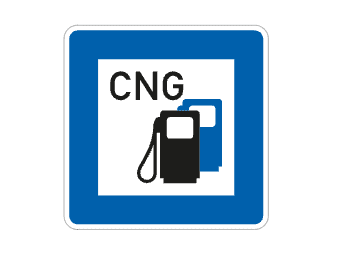
Code 365-54
Fuel Station with Natural Gas
Indicates a station offering natural gas fuel.
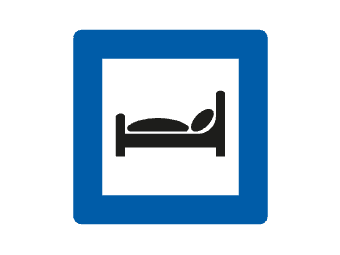
Code 365-55
Motorway Hotel
Indicates hotel accommodation near a motorway.
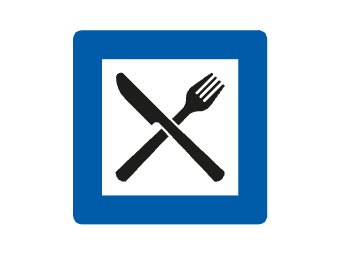
Code 365-56
Motorway Restaurant
Indicates a restaurant near a motorway.
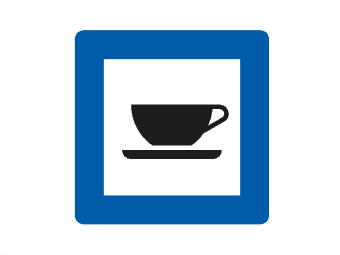
Code 365-57
Motorway Kiosk
Indicates a kiosk or small service point near a motorway.
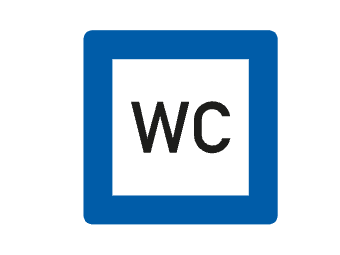
Code 365-58
Toilets
Indicates public toilet facilities.
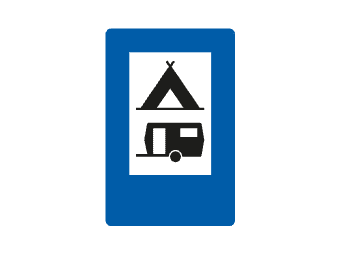
Code 365-60
Camping and Caravan Site
Indicates a place for tents and caravans.
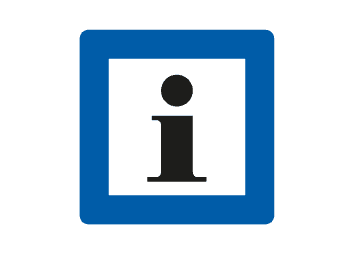
Code 365-61
Tourist Information
Indicates a tourist office or information point.
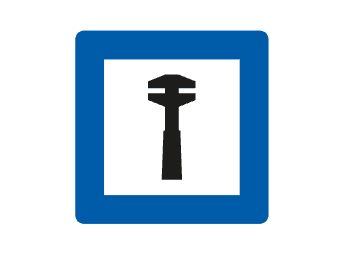
Code 365-62
Breakdown Assistance
Indicates help for vehicle breakdowns.
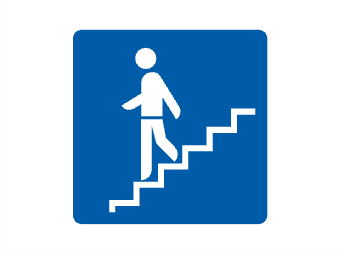
Code 365-63
Pedestrian Underpass
Indicates an underpass for pedestrians.
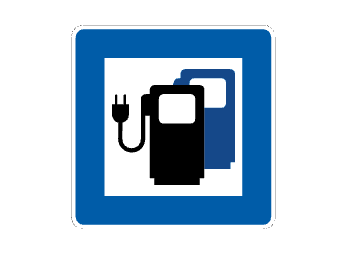
Code 365-65
Electric Vehicle Charging Station
Indicates charging facilities for electric vehicles.
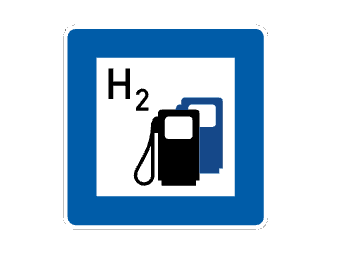
Code 365-66
Hydrogen Fuel Station
Indicates a hydrogen refueling station.
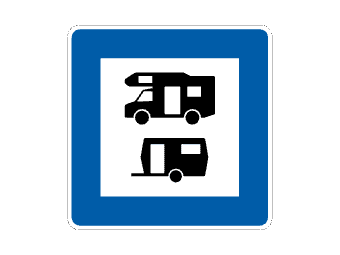
Code 365-68
Motorhome and Caravan Site
Indicates parking or camping for motorhomes and caravans.
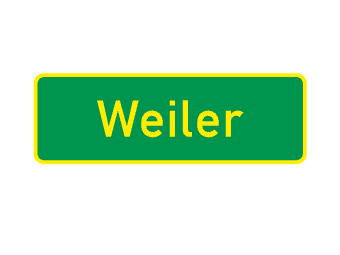
Code 385
Place Information Board
Provides information about a place or locality.
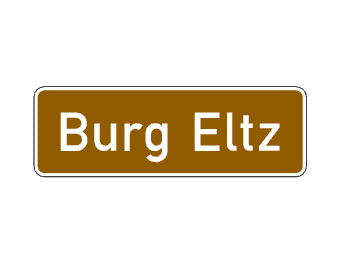
Code 386.1
Tourist Information Sign
Points to a tourist attraction or destination.
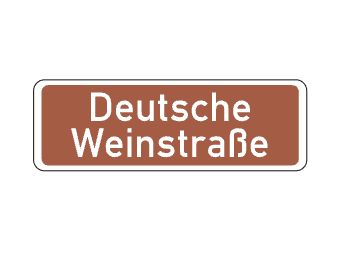
Code 386.2
Tourist Route
Indicates a designated tourist route.
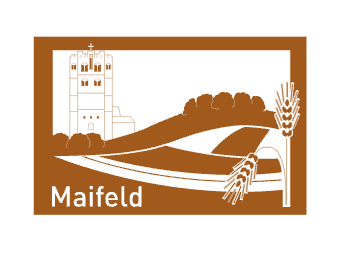
Code 386.3
Tourist Information Board
Provides larger tourist information along the route.
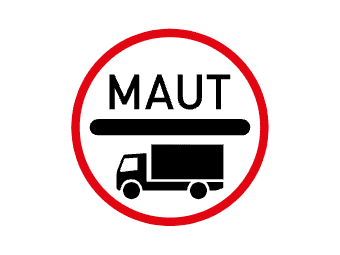
Code 390
Toll Requirement
Indicates that a road toll applies.
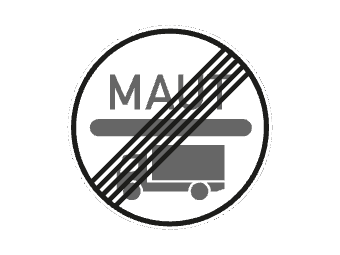
Code 390.2
End of Toll Requirement
Marks the end of a toll section.
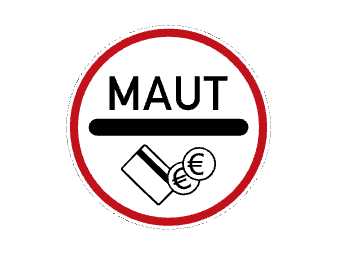
Code 391
Toll Road Section
Indicates a specific route section subject to tolls.
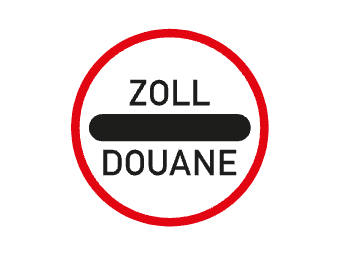
Code 392
Customs Office
Indicates a customs checkpoint or customs office.
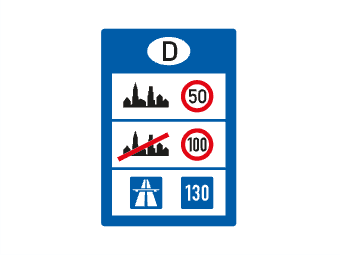
Code 393
Border Crossing Information Board
Provides information at border crossing points.
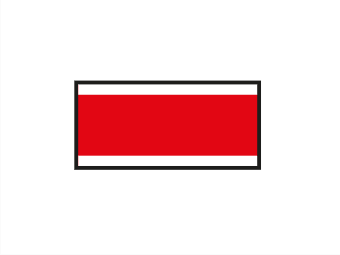
Code 394
Lamp Ring for Lights Not On All Night
Marks street lamps that are not lit throughout the night.
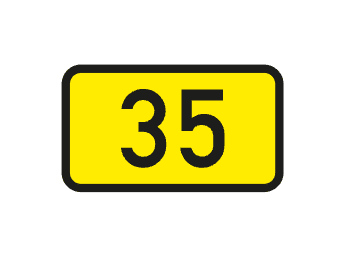
Code 401
Federal Road Number Sign
Shows the route number of a federal road.
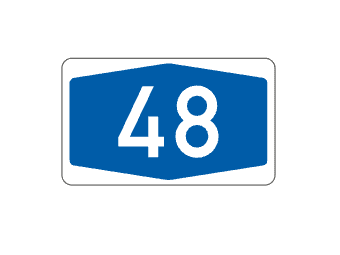
Code 405
Motorway Number Sign
Shows the route number of a motorway.
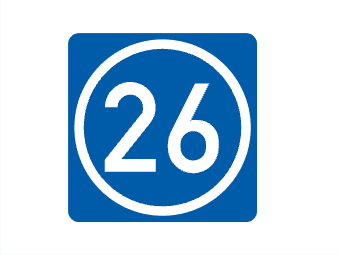
Code 406
Motorway Junction Number
Identifies motorway exits, interchanges, and junctions.
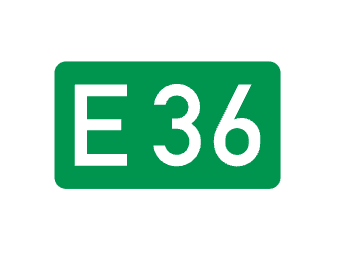
Code 410
European Route Number Sign
Shows the route number of a European road.
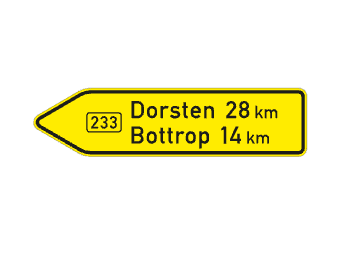
Code 415
Arrow Direction Sign on Federal Roads
Points toward destinations on federal roads.
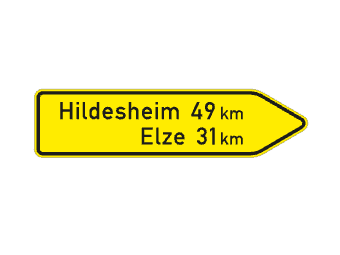
Code 418
Arrow Direction Sign on Other Roads
Points toward destinations on other roads.
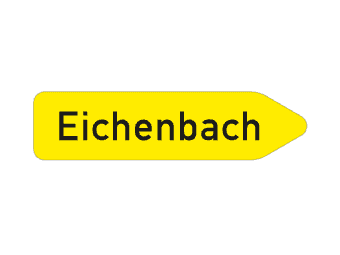
Code 419
Arrow Direction Sign on Minor Roads
Points toward destinations on roads of lower traffic importance.
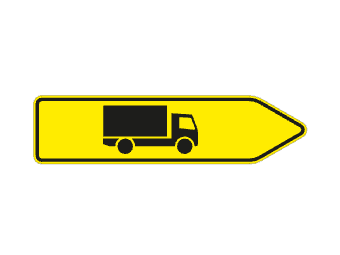
Code 421
Arrow Direction Sign for Specific Traffic Types
Directs certain vehicle or traffic types.
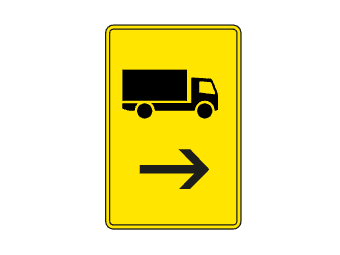
Code 422
Direction Sign for Specific Traffic Types
Provides route guidance for specific traffic types.
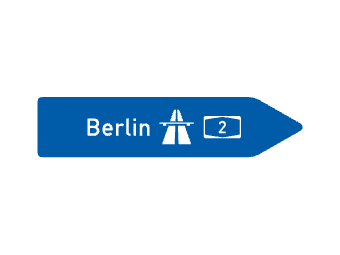
Code 430
Arrow Direction Sign to Motorway
Points the way toward a motorway.
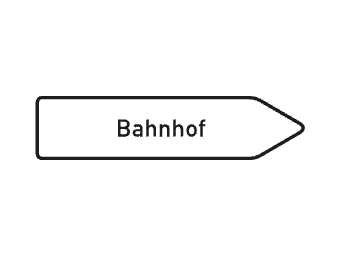
Code 432
Arrow Direction Sign to Major Destinations
Points toward destinations with major traffic importance.
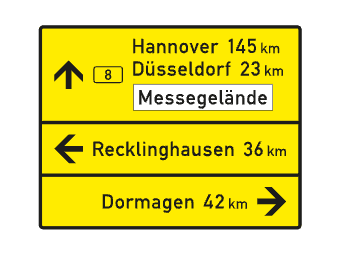
Code 434
Table Direction Sign
Displays route directions in a table-style layout.
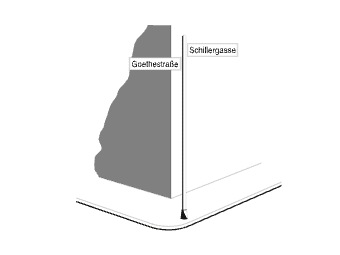
Code 437
Street Name Sign
Displays the name of a street.
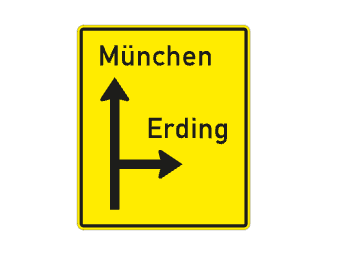
Code 438
Advance Direction Sign Outside Motorways
Gives advance route information on non-motorway roads.
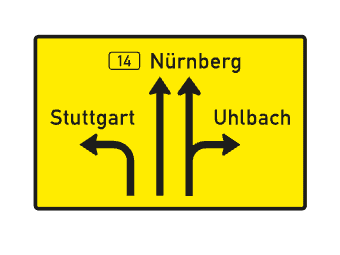
Code 439
Structured Advance Direction Sign Outside Motorways
Shows organized advance route guidance on non-motorway roads.
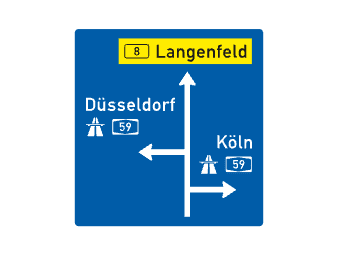
Code 440
Advance Direction Sign to Motorway
Gives advance guidance toward a motorway.
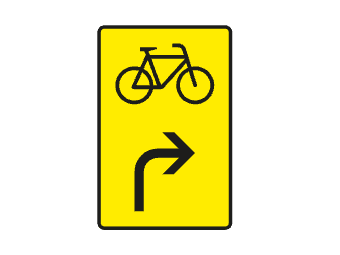
Code 442
Advance Direction Sign for Specific Traffic Types
Gives advance route guidance for certain vehicle types.
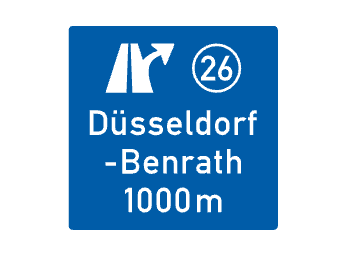
Code 448
Motorway Exit or Interchange Notice
Announces a motorway exit, interchange, or junction.
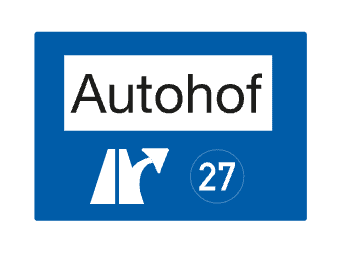
Code 448.1
Service Area Near Motorway Exit
Indicates a service area close to a motorway exit.
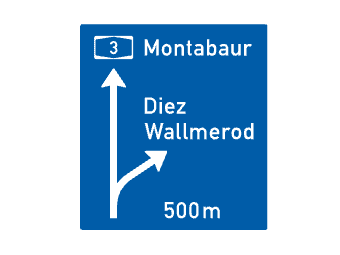
Code 449
Advance Direction Sign on Motorways
Gives advance destination guidance on motorways.
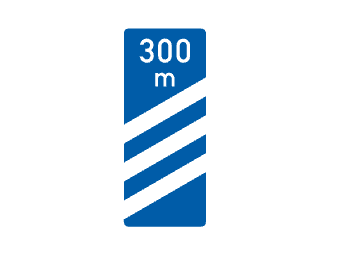
Code 450
Motorway Exit Distance Marker
Shows decreasing distance to a motorway exit.
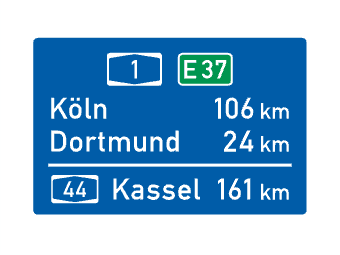
Code 453
Motorway Distance Board
Shows distances to upcoming destinations on a motorway.
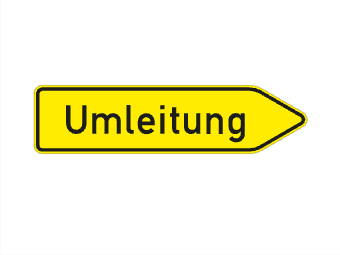
Code 454
Diversion Direction Sign
Guides drivers along a diversion route.
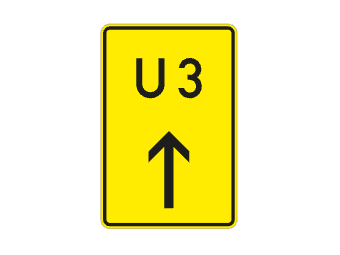
Code 455.1
Diversion Begins or Continues
Announces or continues a diversion route.
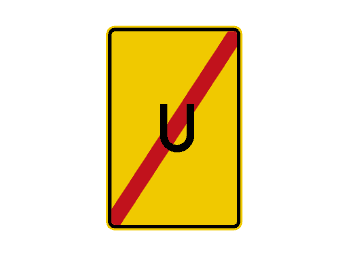
Code 455.2
End of Diversion
Marks the end of the diversion route.
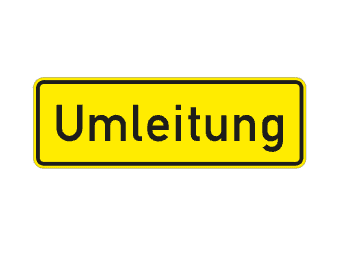
Code 457.1
Diversion Announcement
Announces an upcoming diversion.
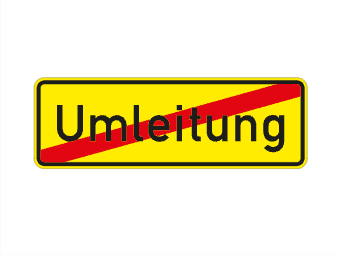
Code 457.2
End of Diversion Announcement
Marks the end of the announced diversion.
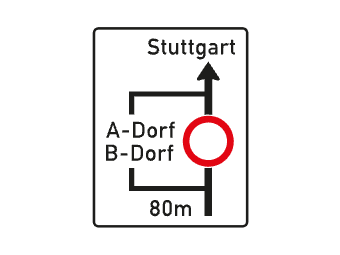
Code 458
Diversion Route Diagram
Shows a diagram of the diversion route.
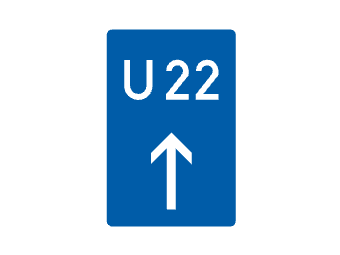
Code 460
Alternative Diversion Route
Indicates a recommended alternative route when needed.
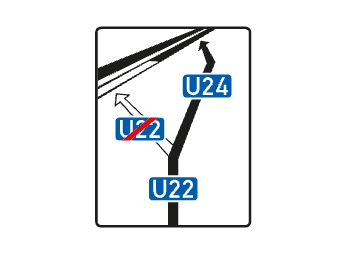
Code 466
Continuing Alternative Diversion Route
Continues guidance along an alternative diversion route.
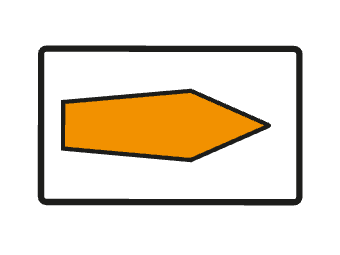
Code 467.1
Route Recommendation Arrow
Recommends a route to redirect traffic.
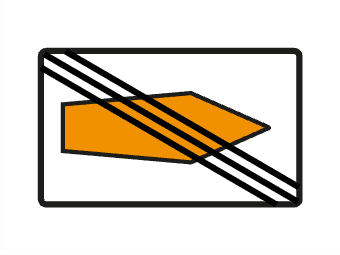
Code 467.2
End of Route Recommendation
Marks the end of a recommended route.
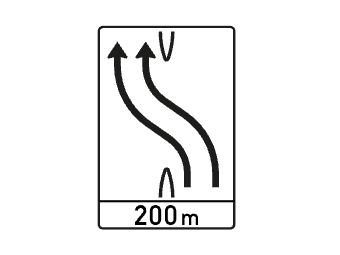
Code 501
Transfer to Opposite Carriageway
Shows traffic being guided onto the opposite carriageway.
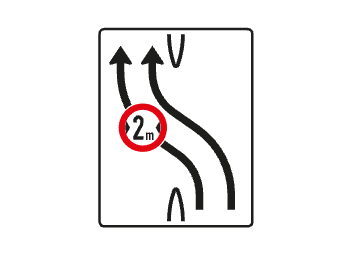
Code 505
Transfer to Opposite Carriageway with Narrow Left Lane
Shows a lane shift with a narrowed left lane.
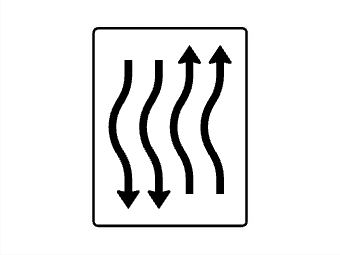
Code 514
Short Lane Shift with Oncoming Traffic
Shows a temporary lane shift where oncoming traffic is present.
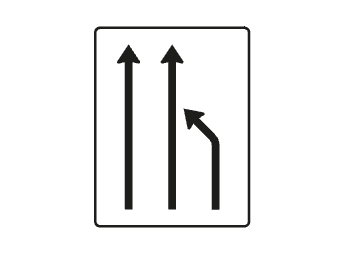
Code 531
Lane Ends
Indicates that a traffic lane ends or narrows.
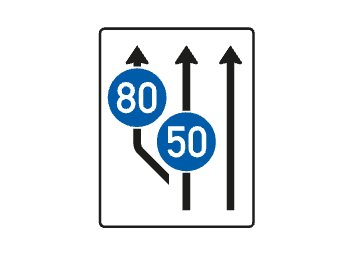
Code 545
Lane Expansion with Minimum Speed
Shows added lanes and a minimum speed requirement.
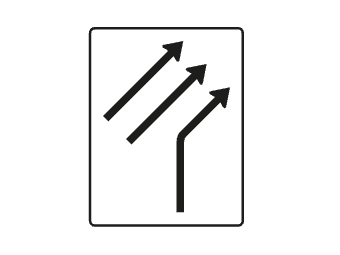
Code 551
Merging Traffic Flows
Shows separate traffic streams merging together.
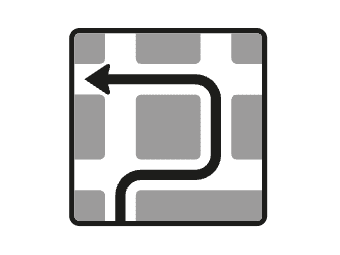
Code 590
Block Bypass
Shows a route around a block or closed section.
Part 1
Priority and right-of-way signs
One-time priority
next junction onlyYou have priority only at the next intersection or junction. It has no effect after that.
Memory: one sign = one place.
Priority road
repeatedYou are on a priority road. The sign is repeated at intersections or junctions where you have priority.
Outside built-up areas: parking on the road is prohibited.
End of priority road
rule endsThe previous priority route ends. From here, pay attention to new priority signs such as Give Way or Stop.
Turning priority road
An extra plate can show that the priority road bends left or right. If you follow the bending priority road, you are still changing direction, so you must indicate. Watch pedestrians and stop if necessary.
Priority over oncoming traffic
You may pass a bottleneck first if it is free. If oncoming traffic is already inside, let it drive out first.
Part 2
Road type signs
Motorway begins
The motorway starts here. All motorway rules apply from this sign.
- • No stopping except emergencies.
- • Use only vehicles allowed on motorways.
- • Follow motorway speed and lane rules.
Motor road begins
Your vehicle must be able to reach at least 60 km/h by design. The beginning is always marked by a traffic sign.
Exam wording: “able to achieve” does not mean you must always drive 60 km/h.
Traffic-calmed area begins
Drive only at walking speed, around 4–7 km/h. Pedestrians may use the whole street, children may play, and parking is allowed only in marked areas.
Traffic-calmed area ends
Normal speed rules apply again. When leaving, you do not have priority; enter the road carefully.
Part 3
Special places and what to do
🚇
Tunnel
Turn on low beam. Daytime running lights are not enough. Remove sunglasses before entering.
🛃
Customs office
Reduce speed, expect traffic jams or controls, and follow customs officers’ instructions.
🆘
Emergency lay-by
Use only for emergencies or breakdowns — not for breaks.
⛑️
First aid station
Shows where help is available. It does not warn of a danger zone.
Part 4
Parking and stopping information signs
| Sign meaning | What you must remember | Common exam trap |
|---|---|---|
| Residents’ parking | Only residents with the correct numbered permit may park. | Other drivers must use another parking place. |
| Disabled parking | Only vehicles with an official permit for disabled or blind people may park. | Even short parking is forbidden for others. |
| Parking with ticket | Place the ticket visibly behind the front or rear window. | A parking disc does not replace a ticket unless the meter is out of order. |
| Parking partly on sidewalk/verge | Allowed only as shown and usually only for vehicles up to 2.8 t total weight. | Do not assume all vehicles may park there. |
| Priority road outside built-up area | You may wait at the right side or park on the hard shoulder. | Parking on the roadway itself is prohibited. |
Part 5
Information and route signs
Dead end
You may drive normally, but the road ends. Turning around may be difficult.
Federal highway number
The number identifies the road. It is not a speed limit.
Numbered detour
Several detours may exist, so numbers show which route to follow.
Diversion arrow
Shows an alternative route on traffic-jam-prone motorway sections. You are not required to follow it.
Town/village sign
Can indicate the end of a built-up area and the next town. Watch which side of the road the sign is on.
Lantern sign
If lanterns are not lit all night, secure your parked vehicle with parking lights.
Part 6
Pedestrians, cyclists, and traffic helpers
Pedestrian crossing
Pedestrians have priority. Drive moderately, be ready to brake, do not overtake at the crossing, and do not stop on it in traffic jams.
Crossing guard
Traffic helpers may stop traffic so children can cross. Expect children on the road and traffic flow to stop.
Bicycle lane / safe area
You may use it only if necessary and only if cyclists are not endangered or obstructed. Parking is strictly prohibited.
Part 7
Guidelines and waiting lines
Waiting lines at right-before-left junctions
At confusing intersections with right-before-left priority, waiting lines may appear. Approach carefully and be ready to yield to traffic from the right.
Guidelines separating lanes
You may cross guidelines only to avoid obstacles or overtake, and only if no road user is endangered.
Quick reference: do this in the exam
Priority applies only at the next junction.
Indicate if you follow the bend.
Low beam on; sunglasses off.
Walking speed, children may play, parking only marked spaces.
Only emergency or breakdown.
Pedestrians first; no overtaking.
Mini quiz
Open each question after answering in your head.
A sign gives you priority at the next junction. Does it apply to the junction after that?
No. One-time priority applies only at the next intersection or junction.
You follow a turning priority road to the left. Must you indicate?
Yes. You are changing direction, so you must indicate, even though you remain on the priority road.
Can you stop in an emergency lay-by for a short rest?
No. It is only for emergencies or breakdowns.
Are daytime running lights enough in a tunnel?
No. You must use low beam.
Does a federal highway number show a speed limit?
No. It identifies the road number.
Final checklist before exam practice
Practice Questions (32)
-
Question 1 of 32
What does this traffic sign indicate?
1.4.42-0013 Points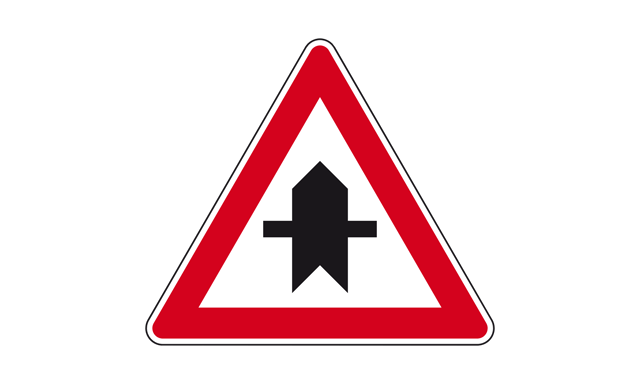
Explanation
This traffic sign grants you priority in a specific place. Thus, the right of way for the driver is limited and has no general validity.
-
Question 2 of 32
What does this traffic sign indicate?
1.4.42-0052 Points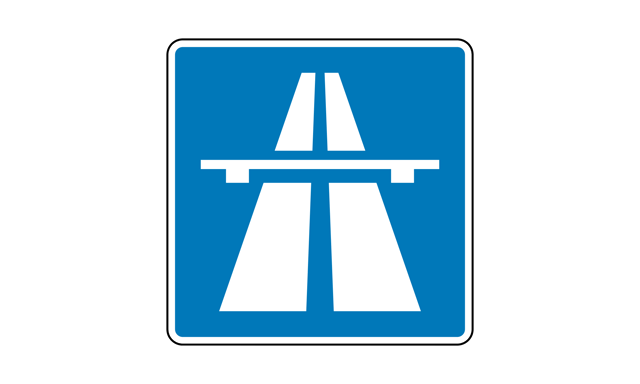
Explanation
The traffic sign indicates that the motorway starts here. This also gives effect to all the rules that apply to this particular type of road.
-
Question 3 of 32
What do the white markings on the road mean in this situation?
1.4.42-0093 Points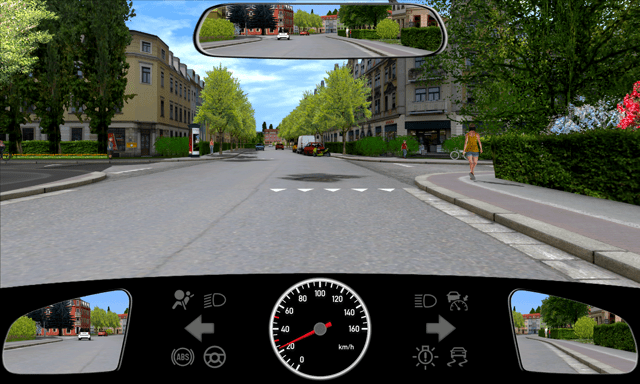
Explanation
At intersections and junctions with “right before left” regulation, especially in confusing places, are also used by waiting lines. Wartelinia are often used that look as similar to many small way to go-along.
-
Question 4 of 32
What is the rule created by the road markings in this situation?
1.4.42-0104 PointsExplanation
You have to nourish yourself this intersection carefully, as it applies right to the left. At intersections and junctions with “right before left” regulation, especially in confusing places, are also used by waiting lines. Wartelinia are often used that look as similar to many small way to go-along.
-
Question 5 of 32
From which road sign onwards are you only allowed to drive at walking speed?
1.4.42-0113 PointsExplanation
In a traffic-calmed area, you may only drive your vehicle at walking speed, as you must expect pedestrians or children playing at any time.
-
Question 6 of 32
At which traffic sign at the next junction do you generally have right of way?
1.4.42-0123 PointsExplanation
The traffic sign “One-time right of way” signals to you that you have the right of way at the next intersection or junction. However, this sign has no effect on the intersection after that.
-
Question 7 of 32
Which traffic sign gives right of way?
1.4.42-1023 Points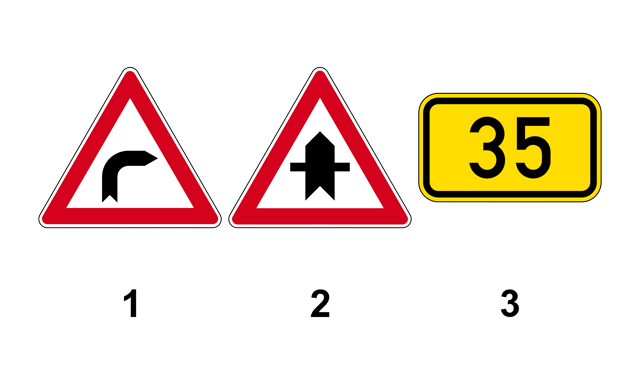
Explanation
The correct traffic sign to observe the right of way is number two. Number one indicates that a dangerous turn is in front of the driver while number three indicates the number of a national highway.
-
Question 8 of 32
What is allowed on priority roads outside built-up areas?
1.4.42-1043 Points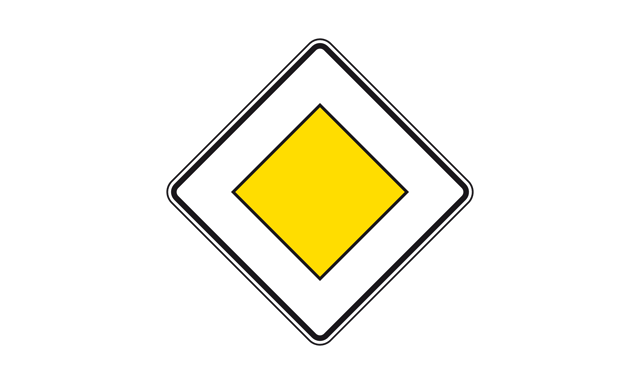
Explanation
On priority roads outside of built-up areas, you may: 1. wait at the right side of the road; 2. park on a hard shoulder. On the other hand, parking on the road is prohibited. Parking vehicles constitute a hindrance and/or danger to flowing traffic, since vehicles are traveling much faster here than within the closed local area. Since a hard shoulder is not considered a lane, you may use it for parking. If there is a possibility to dodge on a hard shoulder, you should also use this for waiting shortly.
-
Question 9 of 32
What do you do when you see this traffic sign?
1.4.42-1073 Points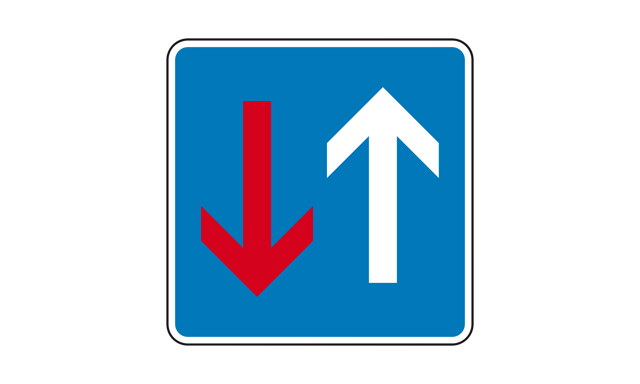
Explanation
The traffic sign gives you priority over oncoming traffic. The oncoming traffic is obliged to wait in front of the obstacle. Nevertheless, you must prepare for stopping when oncoming traffic is already in the bottleneck. You have to let those drivers drive out. You may proceed with right of way if the bottleneck is free.
-
Question 10 of 32
What do these traffic signs allow?
1.4.42-1092 Points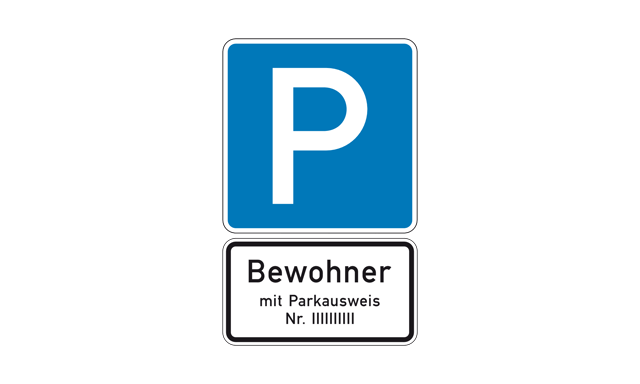
Explanation
This traffic sign indicates a parking lot that may only be used by residents with a correspondingly numbered parking pass. Other road users are not allowed to park there and have to switch to other parking places.
-
Question 11 of 32
Are you allowed to park here?
1.4.42-1102 Points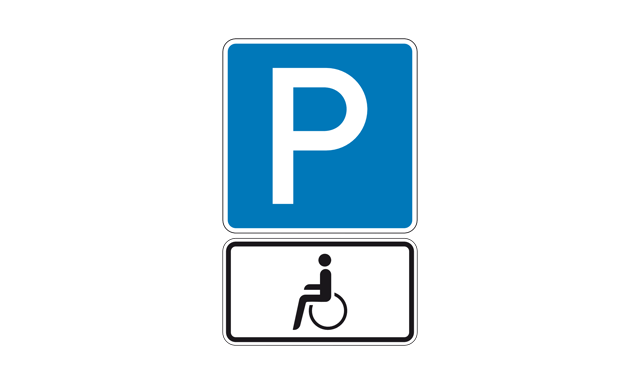
Explanation
There are special parking spaces for people with impaired mobility or the blind. An official parking permit identifies the vehicles of these persons or their escorts. Even short parking on these areas is forbidden to other drivers.
-
Question 12 of 32
What must you observe when parking here?
1.4.42-1112 Points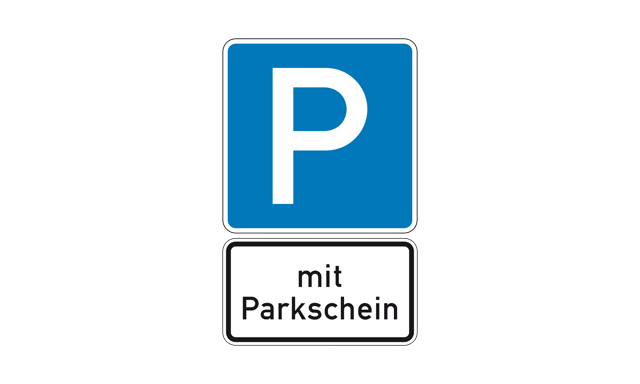
Explanation
In this parking lot you are only allowed to park with a valid ticket. Attach the parking ticket legibly behind the front or rear window of your car. Be sure not to exceed the parking time stated on the ticket. The parking disc does not replace the parking ticket: the parking disc is only valid if the parking meter is out of operation.
-
Question 13 of 32
Which vehicles are allowed to park here?
1.4.42-1122 Points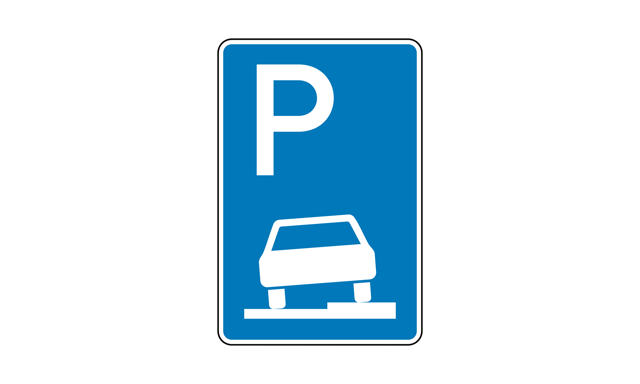
Explanation
The traffic sign regulates the parking situation for the road user. The sign allows parking partly on the sidewalk, the side strip and on the green verge for vehicles up to a total weight of 2.8 tons.
-
Question 14 of 32
What must a motor vehicle's maximum speed, determined by its construction, be at least if you want to use this road?
1.4.42-1163 Points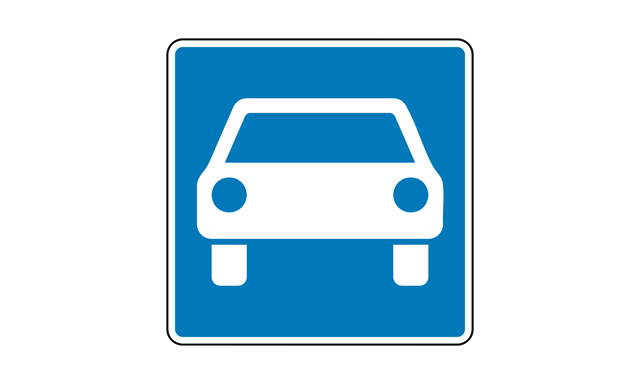
Explanation
You must be able to achieve at least a maximum speed of 60 km/h on a motor road with your vehicle. The beginning of a motor road is always marked by a traffic sign.
-
Question 15 of 32
What does this traffic sign indicate?
1.4.42-1192 Points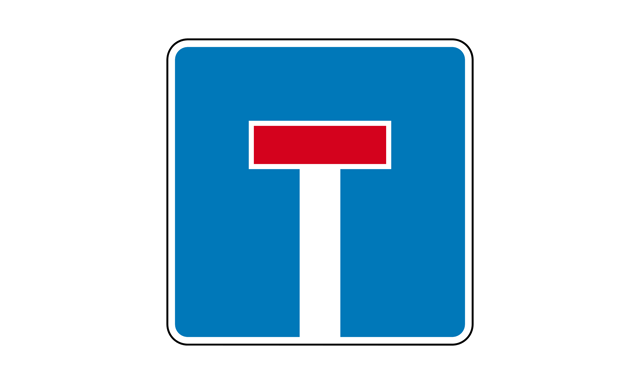
Explanation
This is a dead end. You can drive normally in a dead end, but the road ends so you might have trouble to turn your car around to leave the street again.
-
Question 16 of 32
What does this traffic sign indicate?
1.4.42-1202 Points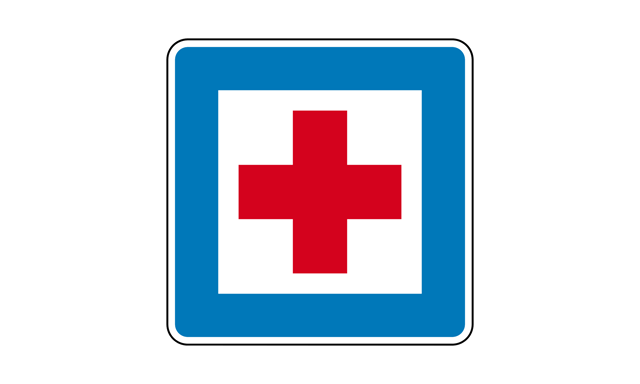
Explanation
This traffic sign shows that a first aid station such as "Red Cross" or "Samaritan" is present at this point. However, it does not indicate any danger zone.
-
Question 17 of 32
What must you remember when you see this traffic sign?
1.4.42-1252 Points
Explanation
If you see this sign at lanterns, then you have to secure your vehicle with your parking light. Since these lanterns are not lit up all night, it's very unsafe to leave an unlit car here.
-
Question 18 of 32
What does this traffic sign indicate?
1.4.42-1262 Points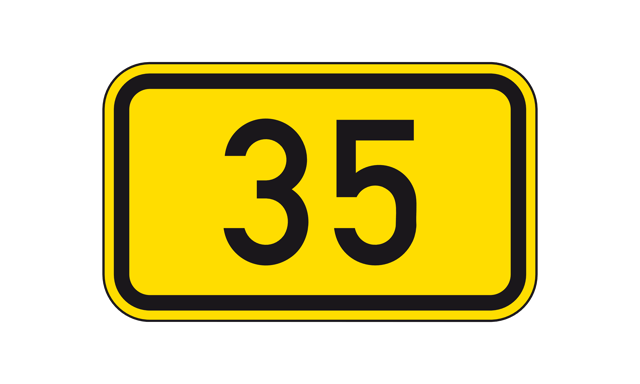
Explanation
This traffic sign refers to a main road. The number stands for the number of the respective federal highway and not for example for a speed limit.
-
Question 19 of 32
What does this traffic sign indicate?
1.4.42-1282 Points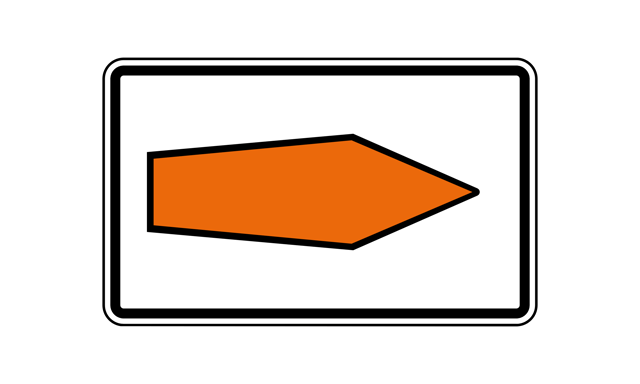
Explanation
The diversion arrow points out to you as a car driver that you are on a traffic jam-prone section of the motorway and points out an alternative route. But you are not obliged to follow this.
-
Question 20 of 32
You drive into a brightly lit tunnel which is indicated like this. What do you do?
1.4.42-1324 Points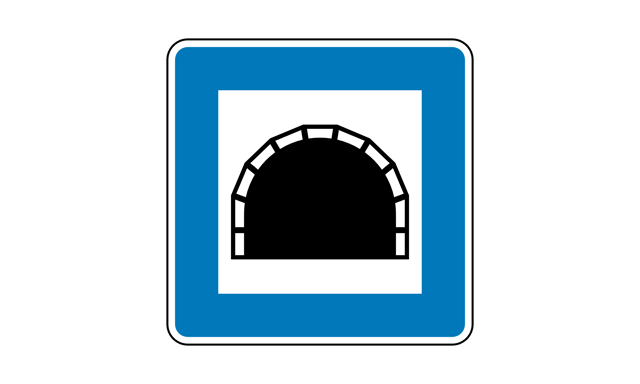
Explanation
Even a brightly lit tunnel cannot reach daylight conditions, so you need to drive in with low beam to make your vehicle recognizable. The daytime running light is simply not enough in this case.
-
Question 21 of 32
What does this traffic sign combination indicate?
1.4.42-1333 Points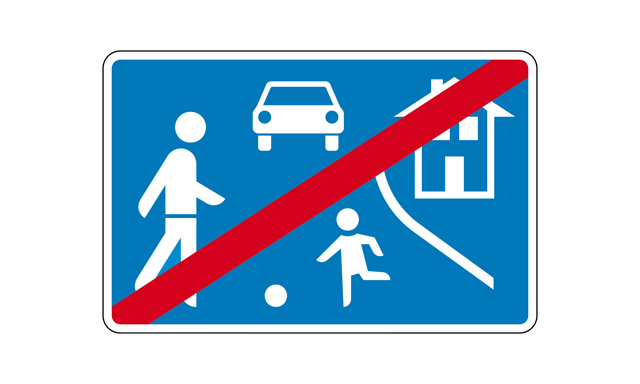
Explanation
The traffic sign points to the end of the traffic-calming zone. Now higher speed rules apply again. As a car driver, you have no right of way when you leave and must be careful when entering.
-
Question 22 of 32
What does this traffic sign indicate?
1.4.42-1352 Points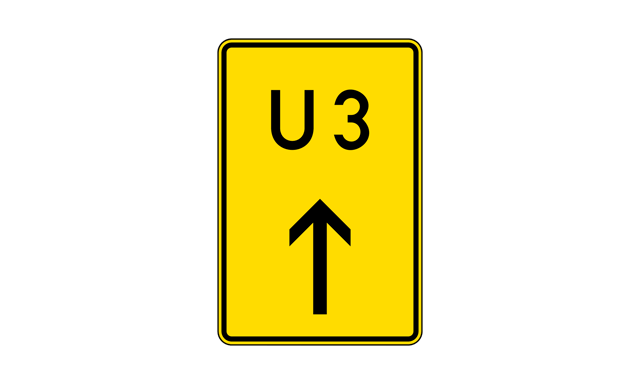
Explanation
This traffic sign indicates a numbered detour. Since there are several detours, they are numbered. So, you know exactly where to drive.
-
Question 23 of 32
What do you have to be aware of when you see this traffic sign combination?
1.4.42-1364 Points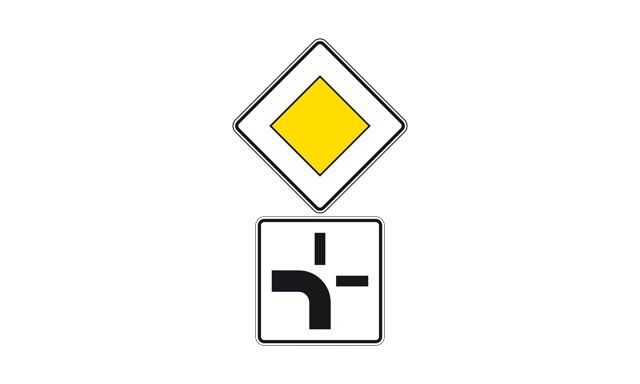
Explanation
The priority road is turning due to the additional sign. It's a turning priority road. If you stay on the priority road, you will need to indicate that. You have to take care of pedestrians crossing the street, if necessary, you have to stop. The answer: "Driving to the left is mandatory" is wrong, since this traffic sign does not dictate a direction of travel.
-
Question 24 of 32
What must you do upon seeing this traffic sign?
1.4.42-1384 Points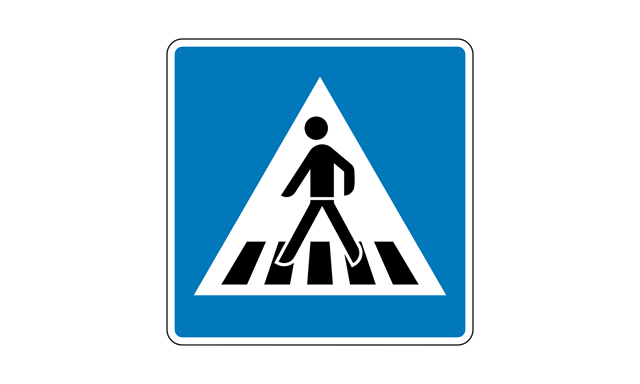
Explanation
On pedestrian crossings pedestrians have precedence, so vehicles should always drive at moderate speed and be ready to brake at any time. There's a strict restriction on overtaking at pedestrian crossings and with halting traffic it is forbidden to come to a stop at the crossing.
-
Question 25 of 32
What must you be prepared for here?
1.4.42-1393 Points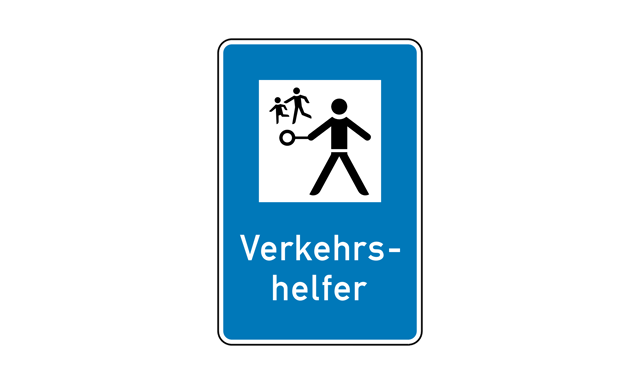
Explanation
The traffic sign 'crossing guard', formerly school crossing guards, means that traffic assistance regulates traffic. They are allowed to stop traffic to allow children to cross the road. You need to be prepared for the flow of traffic to stop and for children to walk on the road more often than usual.
-
Question 26 of 32
What does this traffic sign combination mean to you?
1.4.42-1414 Points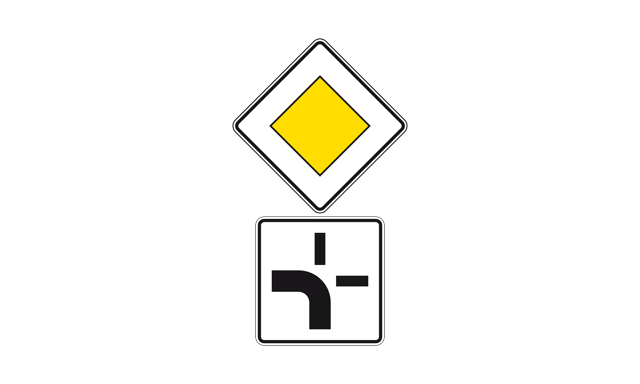
Explanation
The traffic sign indicates the course of the priority road. The additional sign indicates the bend to the left; if you follow this direction, you will still be on the priority road.
-
Question 27 of 32
What do you have to be aware of when you see this traffic sign?
1.4.42-1422 Points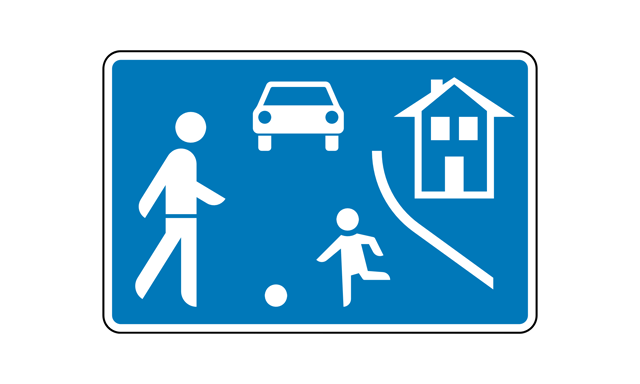
Explanation
For this question, all three answers are correct. In a "traffic calming zone", pedestrians may use the entire width of the street, children can play on the street and you may only drive at walking speed.
-
Question 28 of 32
What does this traffic sign indicate?
1.4.42-1432 Points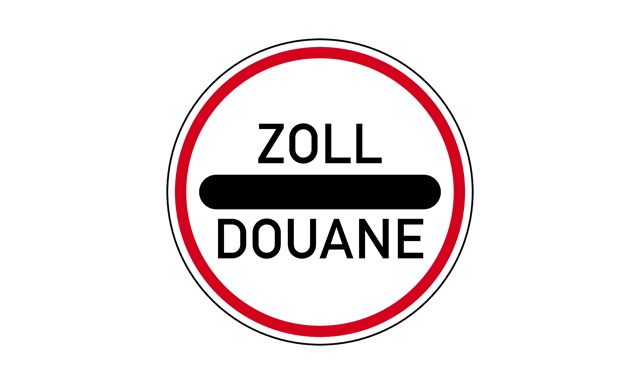
Explanation
When you see this traffic sign, you approach a customs office. This means that you may encounter a traffic jam and therefore have to reduce your speed. You may also be controlled, so have all the papers at hand. Follow the instructions of the customs officers.
-
Question 29 of 32
What is correct in this situation?
1.4.42-1442 Points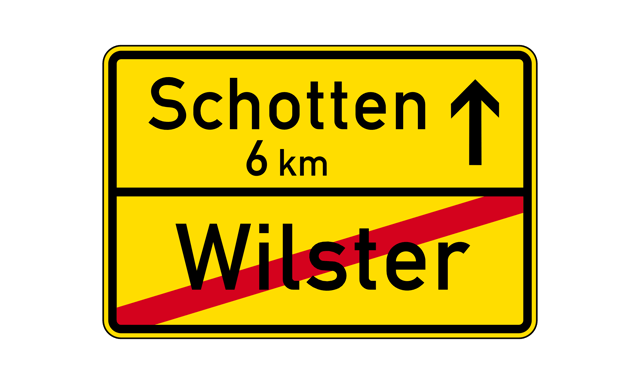
Explanation
The village sign indicates the end of a closed village in the lower part. The upper part indicates the next town. You are standing on the left side of the road.
-
Question 30 of 32
What do you have to observe in a traffic situation like this one?
1.4.42-1453 Points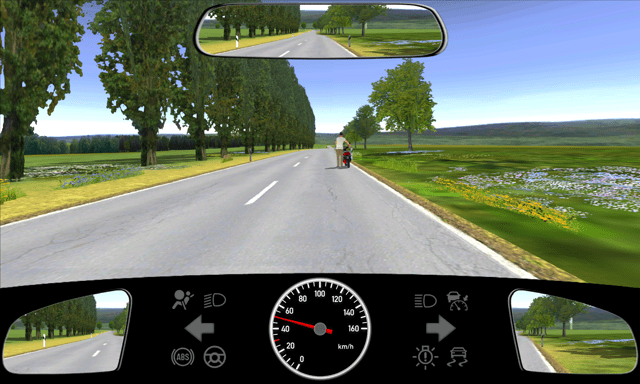
Explanation
Guidelines have the task of separating the lanes. Therefore, you may only drive over them if you avoid obstacles or overtake vehicles. This is only allowed if no road user is endangered.
-
Question 31 of 32
What does this traffic sign indicate?
1.4.42-1464 Points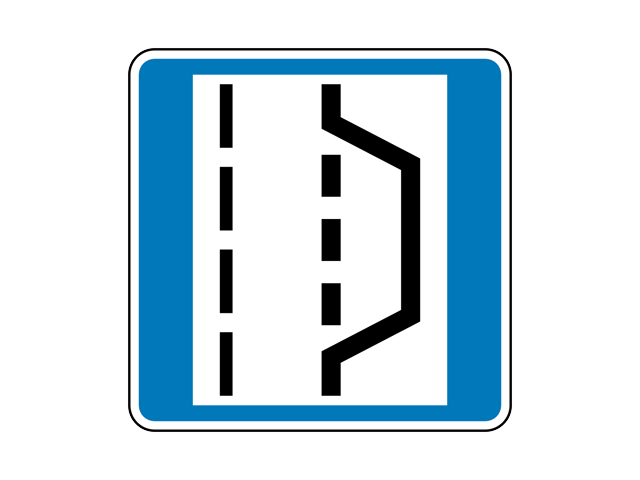
Explanation
If you are driving a vehicle, you may only stop in an emergency stop and breakdown bay in the event of an emergency or breakdown.
-
Question 32 of 32
You are driving on a road that has a protective lane for cyclists. How may you use the protective lane?
1.4.42-1473 Points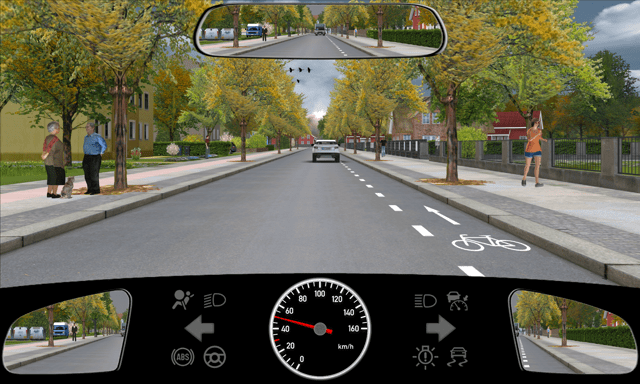
Explanation
You may use the cycle lane if necessary, provided you do not endanger or obstruct cyclists.